Key takeaways
- AI rank trackers measure something different from classic rank trackers. You are tracking mentions, citations and share of voice inside AI answers, not a position on a results page.
- Entry prices run from roughly $20 to $250 a month, but coverage is usually gated by plan. Check how many engines and prompts the tier you would actually buy includes.
- Accuracy is the weakest-evidenced claim in this market. I found no independent benchmark of AI tracker accuracy, so treat vendor claims with suspicion and run a trial.
- Pick by job: monitoring only, an add-on to an SEO suite, enterprise reporting, or a tool that also helps you fix gaps.
- Disclosure: this site is published by 1001 SEO Media, which uses Promptwatch for its own AI visibility work. Promptwatch is included below, and I have tried to treat it like the rest.
What an AI search rank tracker actually does
A classic rank tracker checks where your URL lands for a keyword, using a fixed location, device and engine. An AI search rank tracker runs a set of prompts against ChatGPT, Google AI Overviews, Perplexity, Gemini, Copilot and others, then records whether your brand is named, where it sits in the answer, how it is described, and which sources get cited.
That sounds like the same thing with a new label. It is not, and the difference matters when you compare tools.
AI answers are not stable lists. They vary by run, by model version and by retrieval changes. Promptwatch Data's sources per response report shows how different the engines are: ChatGPT cites about 5 sources per web-search answer, Google AI Overviews about 10, and Perplexity almost exactly 10 every day. Copilot's average swung from under 2 to nearly 17 within a few weeks before settling low. So a "citation share" number is not comparable across engines without adjustment, and a one-week dip can be the engine changing rather than your content.
There is a second wrinkle. ChatGPT often runs several searches behind a single prompt. Promptwatch's ChatGPT query fanouts report says one prompt can trigger 3 to 8+ separate searches, and the fanout queries are short and keyword-like (about 53 characters from April 2026). A tracker that only records the literal prompt and the final answer misses what decided which pages got cited.
How I compared the 12 tools
I used four criteria, in this order.
- Coverage: which engines are tracked, and which are on the entry plan versus the top plan.
- Data method: whether the tool captures what users see or leans on API outputs, and whether it exposes fanouts and citations.
- Price per useful unit: prompts, responses or checks, not just the headline monthly fee.
- What happens after the report: whether the tool helps you act.
A caveat on the numbers. They come from vendor pages and vendor-written roundups, and several conflict. SE Ranking shows up at about $99, $103.20, $189 and $399 depending on the source, probably because of plan, billing period and whether AI features are an add-on. Rankscale is quoted at both about $20 and about $79 (likely Essentials versus Pro). Profound appears at $99 in one roundup while another says its entry plan tracks only ChatGPT. Confirm every figure on the vendor's pricing page before you commit.
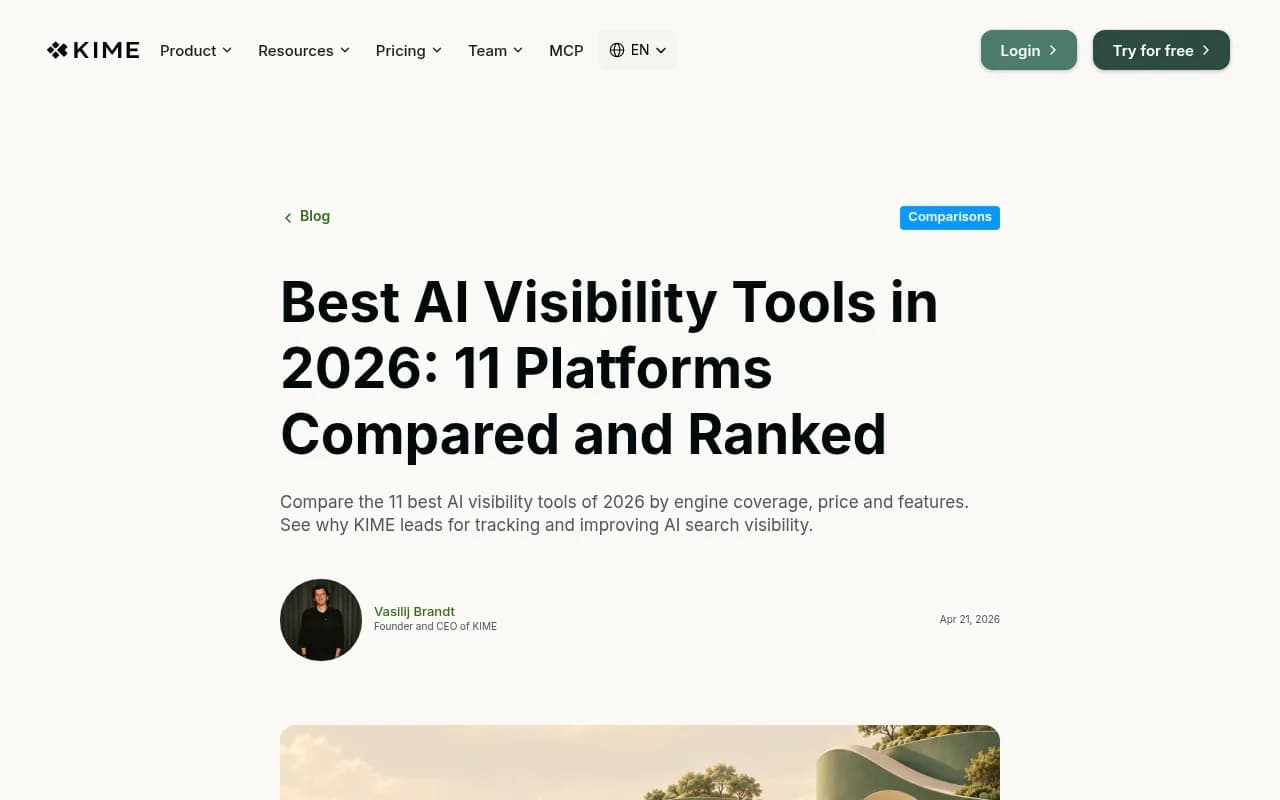
That roundup, from KIME, is a good example of the genre. It is useful for the engine-by-plan note (Profound's entry plan reportedly tracks only ChatGPT, KIME's tracks two engines), but it ranks its own product first, so read it as a vendor view.
The 12 tools at a glance
| Tool | Entry price (as reported) | Engines | Best for |
|---|---|---|---|
| Promptwatch | Free tier; paid from $95/mo | 10+ real-UI engines on paid plans | Teams that want to fix gaps, not just watch them |
| Profound | Reported from $99/mo; enterprise tiers | Up to 10+ | Enterprise analysts |
| Scrunch | $250/mo annual (350 prompts) | ~7+ | Technical GEO teams |
| Otterly.AI | ~$29/mo | ~6 | SMBs, agencies starting out |
| Peec AI | ~$103/mo | ~3 | B2B SaaS share of voice |
| Semrush AI Toolkit | ~$99/mo per domain | 7-8 | Existing Semrush users |
| SE Ranking | ~$99 to $189/mo (varies) | ~5 | SEO teams doing classic and AI tracking |
| Rankscale | ~$20 to $99/mo | ~4+ | Solo marketers, startups |
| Ahrefs Brand Radar | $50 to $250/mo prompt packs | Several | Large-scale research |
| Nightwatch | ~$90/mo | ChatGPT, AI Mode, AI Overviews | Local rank tracking plus AI |
| AccuRanker | From $224/mo | AI Overviews among 50+ SERP features | High keyword volumes |
| ZipTie | Check current plan | Several | Lightweight, low-cost monitoring |
Tools built for AI visibility first
Promptwatch
Promptwatch is the one I would look at first if the goal is a result rather than a report. It monitors the real interfaces of ChatGPT, Google AI Overviews, AI Mode, Gemini, Perplexity, Copilot, Meta AI and others, which matters because user-facing answers and citations can differ from API output. It also adds IP-verified AI crawler logs, visitor analytics for AI-referred traffic, and an Action Board that turns gaps into a to-do list. The Content Agent (Business plan and up) writes and publishes against those gaps, and published pages are then tracked for crawls, citations and clicks.
Pricing runs from a free Explore plan (ChatGPT only, 10 prompts) through Essential at $95/month with all models, to Business at $579/month. Agency plans start at $199/month. Confirm at promptwatch.com/pricing. The honest tradeoff: if you only want a cheap dashboard of mentions, you will be paying for depth you may not use.

Profound
Profound is the enterprise name most people cite. Coverage is broad at the top tier, but check what the plan you can afford includes, since one roundup says the entry plan tracks only ChatGPT.

Scrunch
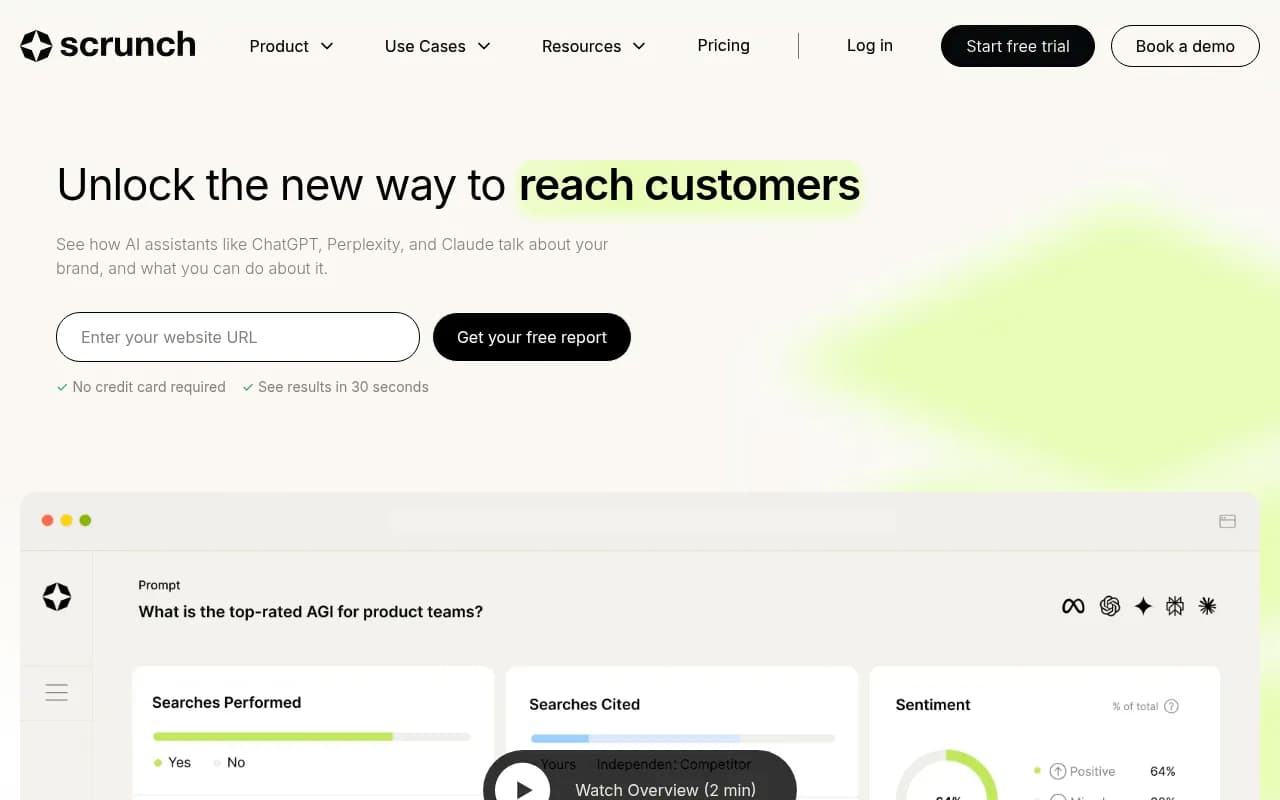
Scrunch leans technical. Its pitch is AI crawler analytics and agent experience optimization, with a reported entry of $250/month billed annually for 350 prompts. That suits teams with developers who care how bots read the site.
Otterly.AI
Otterly.AI is the cheapest credible entry at about $29/month and covers around six surfaces. It is a monitor, not a fixer. For a small team that wants to see whether it is mentioned at all, that is plenty.

Peec AI
Peec AI is built around share of voice and multi-language tracking, popular with European agencies and B2B SaaS teams. Around $103/month, but only about three engines in the roundups I read, so check that your target engines are covered.

Rankscale
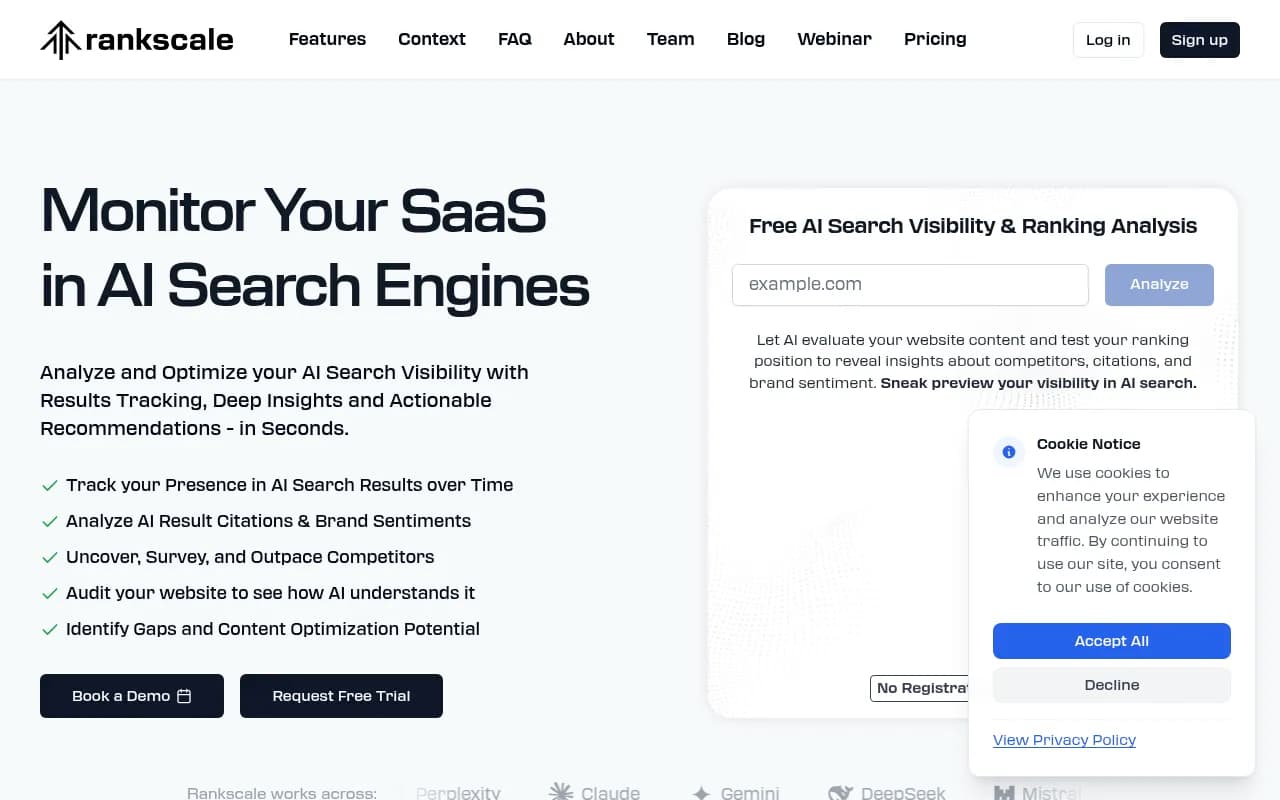
Rankscale is credit-based and inexpensive, from about $20/month on Essentials up to about $99 on Pro. Good for a solo marketer running a small prompt set.
ZipTie
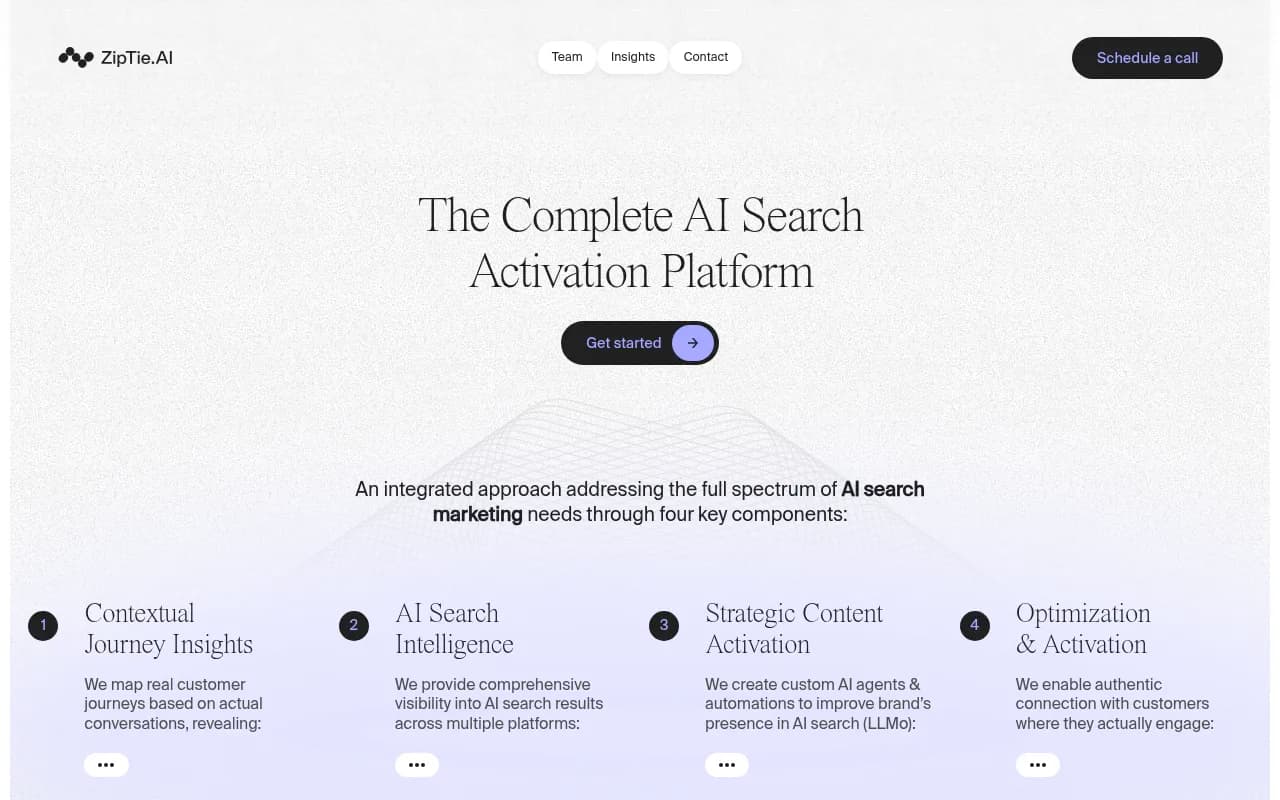
ZipTie is the lightweight option. Low cost, simple reports, less depth. I could not confirm current plan pricing, so check before relying on it.
Tools that add AI tracking to an SEO suite
Semrush AI Toolkit
At roughly $99/month per domain (billed annually, up to 25 custom prompts and one domain in one source), the AI Toolkit is the path of least resistance if your team already lives in Semrush. The limit is prompt volume: 25 prompts is a small sample for a real category.
SE Ranking
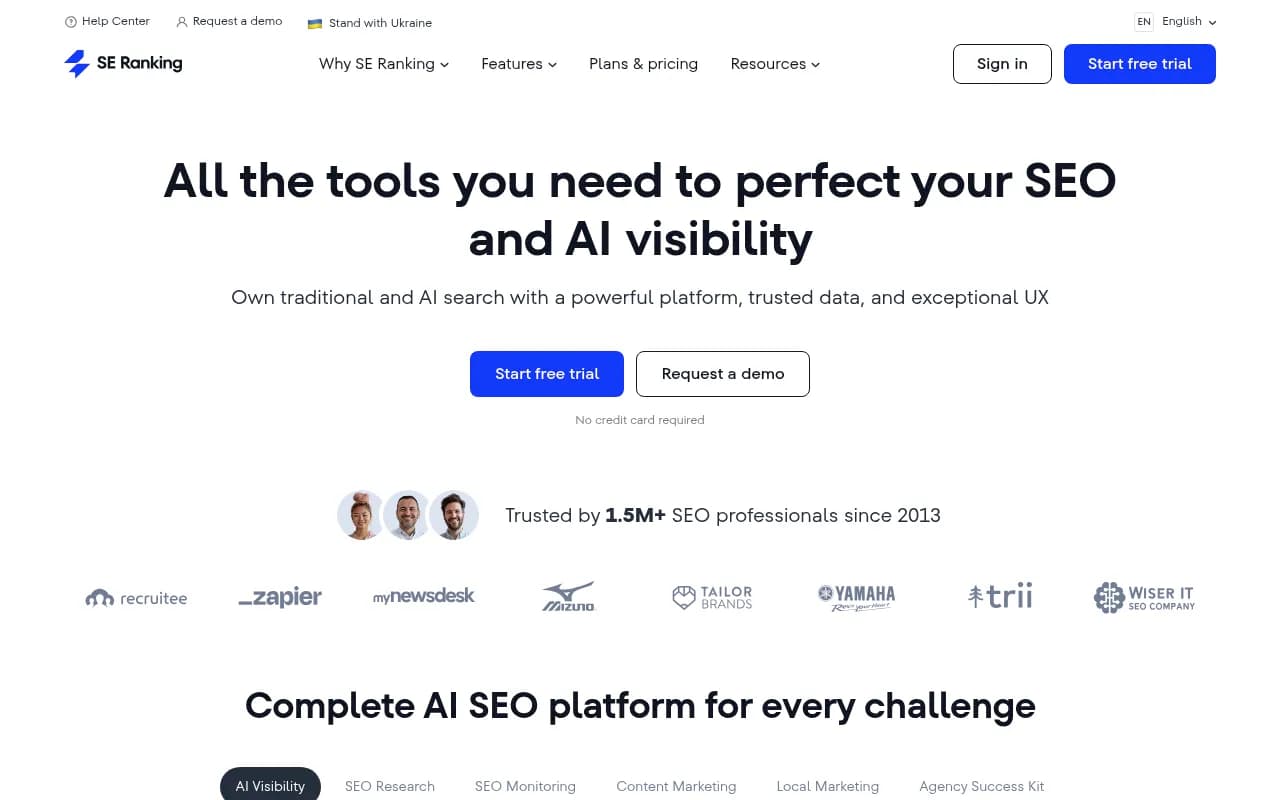
SE Ranking is a good fit when you want classic rank tracking and AI visibility in one bill. The pricing is the muddiest in this list, so read the plan matrix carefully and confirm what is an add-on.
Ahrefs Brand Radar
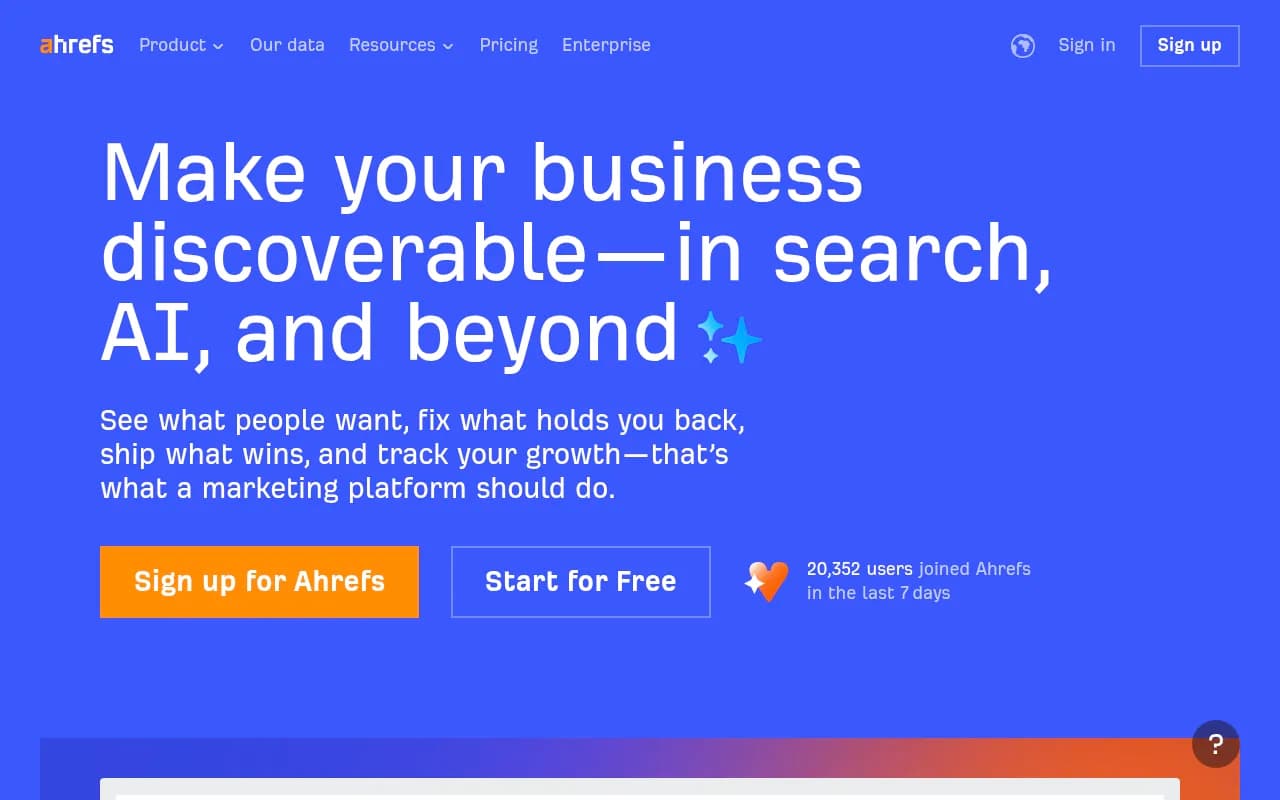
Ahrefs sells Brand Radar as prompt-check packs: $50 for 2,500 checks, $100 for 7,000, $250 for 25,000, per one roundup. It leans toward large-scale research rather than a tight tracked-prompt set.
Classic rank trackers with AI features
Nightwatch
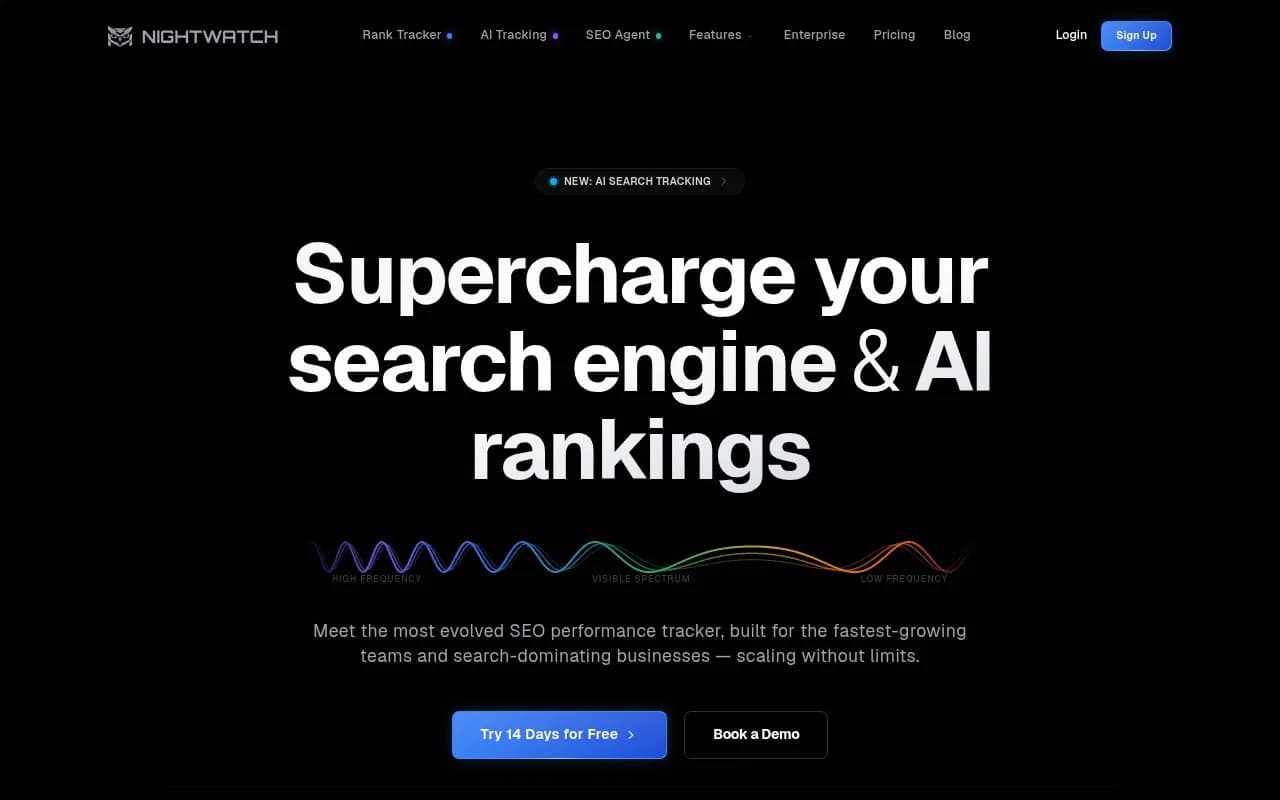
Nightwatch tracks at ZIP-code level across 100,000+ locations and now monitors ChatGPT, AI Mode and AI Overviews. Its 4.9/5 G2 accuracy rating is the highest in one comparison, but that rating concerns classic rank accuracy, not AI answer tracking. Do not read it as proof of AI accuracy.
AccuRanker
AccuRanker is priced for scale, from $224/month for 2,000 keywords, with on-demand refresh and 50+ SERP feature tracking including AI Overviews. Expensive if you track fewer than about 500 keywords.
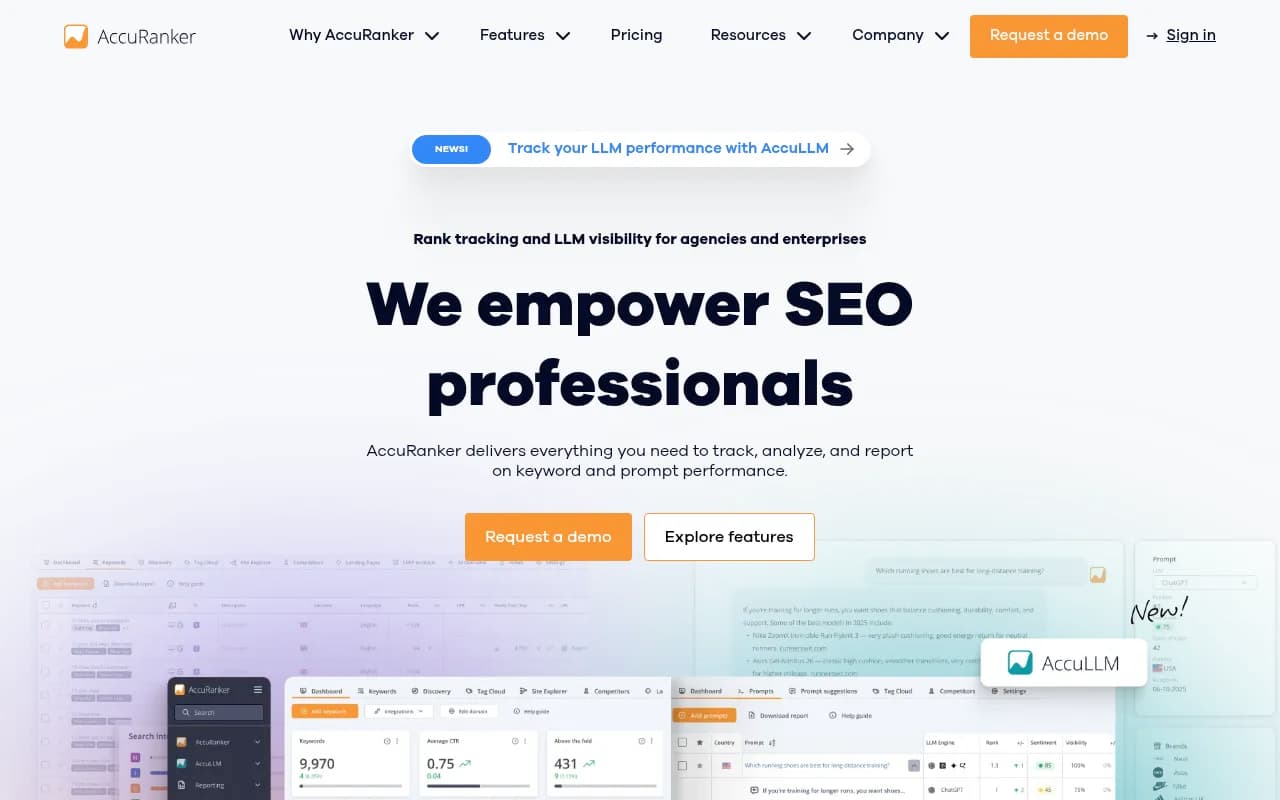
The comparison above is a useful reference for the classic side: update schedules, free trials and price per keyword set. Use it if your tracking need is still mostly Google positions.
Accuracy: what to check, since nobody has benchmarked it
I went looking for an independent accuracy test of AI trackers and did not find one. Every accuracy claim I saw was either the vendor's or borrowed from classic rank tracking. So test it yourself during the trial.
- Run the same 20 prompts by hand in each engine's real interface, then compare to the tool's output. Mismatches in cited sources are the telling ones.
- Ask whether the tool uses the real UI or an API. They can return different answers and citations.
- Re-run the same prompts on consecutive days. If your visibility swings 30% overnight with no content change, you may be seeing engine noise, which is normal for Copilot and sometimes ChatGPT.
- Check for fanout data. Without it you can see that you lost a citation but not why.
- Look at country and language handling. An answer from a US IP is not an answer from Germany.
A useful sanity check: Promptwatch's ChatGPT citation drop report shows average citations per response fell across GPT-5.3, GPT-5.4 and GPT-5-Mini around the March 4, 2026 rollout. If your tracker showed everyone's citations falling that week, it was measuring the engine, not you.
Coverage and price: what you really pay
The headline price is rarely the real one. Three things move the bill.
- Engines per plan. Entry tiers often cover one to three engines. If you need AI Overviews and ChatGPT and Perplexity, price that tier specifically.
- Prompt and response volume. 25 prompts is a spot check. 150 to 350 is a real monitor. Ask what a "prompt" costs when you add countries and models.
- What is bundled. Crawler logs, AI traffic attribution and content tools are extras elsewhere and part of the plan in some tools.
It also helps to know which prompts matter. Promptwatch Data's citation share by content type report found product pages made up 22.4% of ChatGPT citations (Sep 28 to Oct 4, 2026), so a tracker should let you see which of your page types get cited, not only whether the brand name appeared.
Which one should you pick?
- Tight budget, just want to see mentions: Otterly.AI, Rankscale or ZipTie. Expect monitoring only.
- Already in an SEO suite: add Semrush AI Toolkit or SE Ranking, and accept the smaller prompt sets.
- Enterprise reporting: Profound or Scrunch, after confirming coverage on the plan you are quoted.
- Local or very high keyword counts: Nightwatch or AccuRanker, with AI as a secondary layer.
- You want to improve visibility, not just measure it: Promptwatch, because the crawler logs, gap analysis and content workflow sit next to the tracking.
If you want to widen the shortlist, the AI rank tracking directory and the GEO software directory list many more options than fit here.
A short buying checklist
- Get the engines, prompts and countries in writing for the exact plan.
- Run a 7 to 14 day trial with 20 prompts you have checked by hand.
- Ask how often prompts run and whether history is kept after model retirements.
- Confirm exports, API access and client reporting if you serve clients.
- Decide up front what you will do with the data. A dashboard nobody acts on is the most expensive plan on any list.
Start with the free or trial tiers, compare two tools against the same prompt set, and pick the one whose output you can verify by hand.