Key takeaways
- AI Overview tracking is a different job from ChatGPT tracking. In Searchable's data, only 25.2% of 80,525 prompt-and-domain pairs cited by AI Overviews were also cited by ChatGPT, so a ChatGPT-only tool won't tell you much about Google.
- Most trackers only record whether you were cited, not where in the answer. If position matters, check this before you pay.
- Look for timestamped SERP snapshots, URL-level citations, country-level presence and share of voice against competitors.
- Tools that only monitor leave you with a dashboard. Platforms that also help you fix gaps, like Promptwatch, tend to pay off faster.
- A note on honesty: I did not run hands-on tests of every tool here, and I did not verify current pricing. This guide draws on vendor documentation, third-party roundups and first-party citation data. Confirm pricing on each vendor's site.
Why AI Overview tracking is its own category
Google Search Console doesn't give you granular AI Overview data. It won't show you which URLs were cited in an AI-generated answer. That gap is why purpose-built trackers exist.
The second problem is non-determinism. An AI Overview can show up for a query on one device and not on another. Citations shift by location, time and phrasing. So a single check tells you almost nothing, and a good tracker has to sample repeatedly and keep evidence.
The third problem is that Google is not ChatGPT. Searchable's data found only 25.2% overlap between AI Overview citations and ChatGPT citations across 80,525 prompt-and-domain pairs. That is vendor data, so treat it as supporting evidence, but it matches what I'd expect: the engines pull from different places.
Promptwatch Data points the same way. In its 30-day report on which domains Google AI Overviews cites, YouTube is about 4.1% of citations and Reddit about 2.7%. In its September 28 to October 4, 2026 social media report, AI Overviews drew 12.2% of citations from social platforms, while ChatGPT drew 0.46%. Different engine, different sources, different tracking needs.
What AI Overviews cite right now
Promptwatch's July 2026 AI Overviews citation types report gives a useful picture of what you are competing against. The July 1 to 31 averages:
| Content type | Share of AI Overview citations |
|---|---|
| Listicle | 18.0% |
| Product page | 16.3% |
| How-to | 15.1% |
| News article | 13.5% |
| Video | 5.9% |
| Social post | 5.1% |
| Landing page | 4.7% |
| Comparison | 3.6% |
From July 28, product pages were the most cited format every day, ending the month at 17.9% against 16.2% for listicles. It was the first time listicles lost the top spot. Listicles averaged about 26% in Q1 2026, so that is a real slide. Video grew from about 2.7% in January to over 6% by late July.
Why this matters for tracker choice: if a tool can't tell you which content type or which URL won the citation, you can't act on the result.
What to look for in an AI Overview tracker
Omnia's evaluation guide lists criteria I agree with, and I'd add a couple of my own.
- Timestamped SERP snapshots, so you can prove what Google actually showed.
- URL-level citation extraction, not just a vague visibility score.
- Presence by country, and ideally by city if you sell locally.
- Share of voice against named competitors.
- Citation position, which is rare. Searchable notes that most tools only record presence.
- Real-UI collection rather than API approximations, since what users see can differ from API output.
- A path from insight to action. A chart of where you lost isn't a plan.
A caveat on the sources. The vendor roundups from Searchable, Omnia, Writesonic, Otterly and LLM Pulse each rank their own product first. I've used them for criteria and tool names, not for rankings.
The 12 tools
1. Promptwatch
Promptwatch is the one I'd start with if you want to move past monitoring. It tracks Google AI Overviews and AI Mode through the real user interfaces, alongside ChatGPT, Gemini, Perplexity, Copilot and others, by country and language. Pin a monitor to exact coordinates and the answers come back as if asked from that spot, which matters for local queries.

What separates it from most trackers is what happens after you see a gap. Content gap analysis maps your pages against the prompts AI answers. The Action Board lists prioritized fixes. The Content Agent writes and publishes to WordPress, Webflow or Framer, then tracks whether each page gets crawled, cited and clicked. IP-verified crawler logs and visitor analytics tie citations to actual traffic. It is ISO/IEC 27001 certified and rated 4.7/5 on G2.
Plans start at $95/mo (Essential), with a free Explore tier limited to ChatGPT. Check promptwatch.com/pricing before buying. The honest downside: if you only want a quick presence check on a handful of keywords, it is more platform than you need.
2. SE Ranking
SE Ranking is a classic rank tracker with AI Overview tracking built in. Searchable names it, along with Advanced Web Ranking, as suited to teams that want organic rankings and AI Overview citations side by side. That combination is the main appeal: one dashboard, familiar workflow.
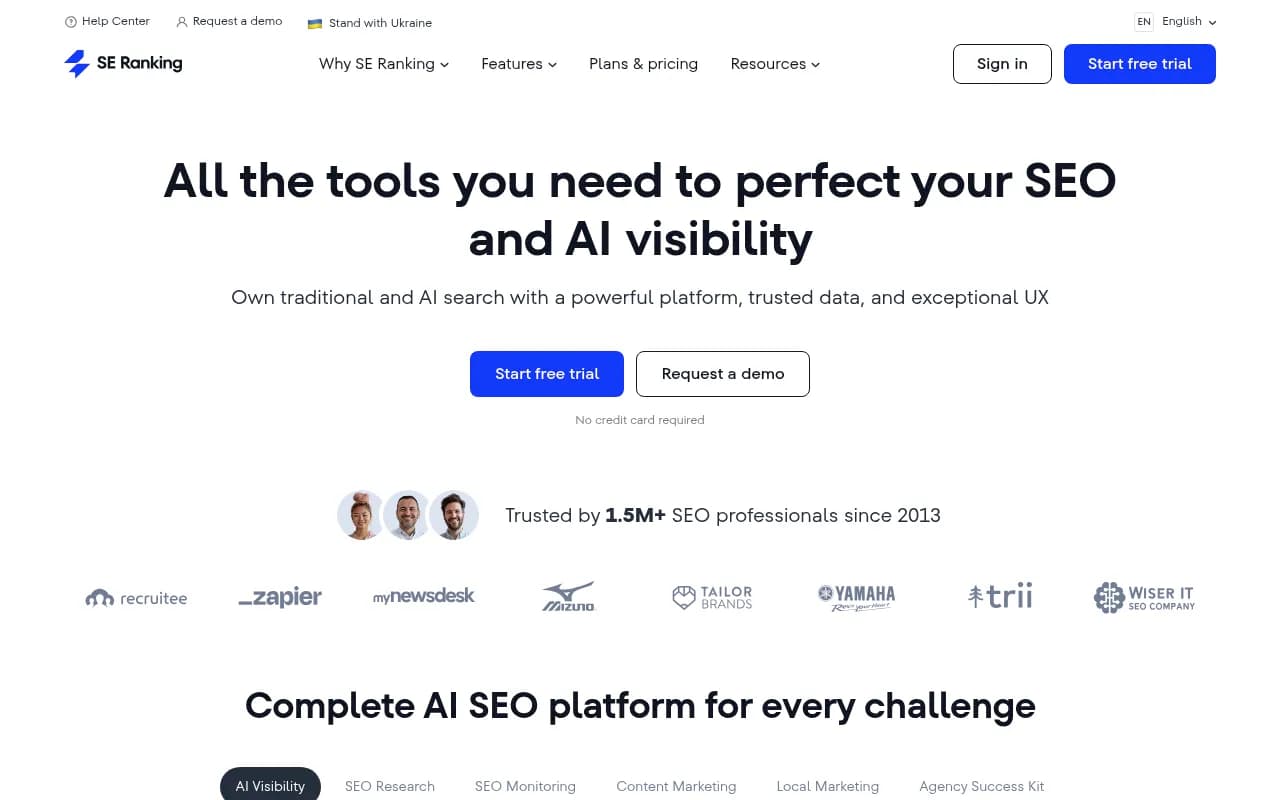
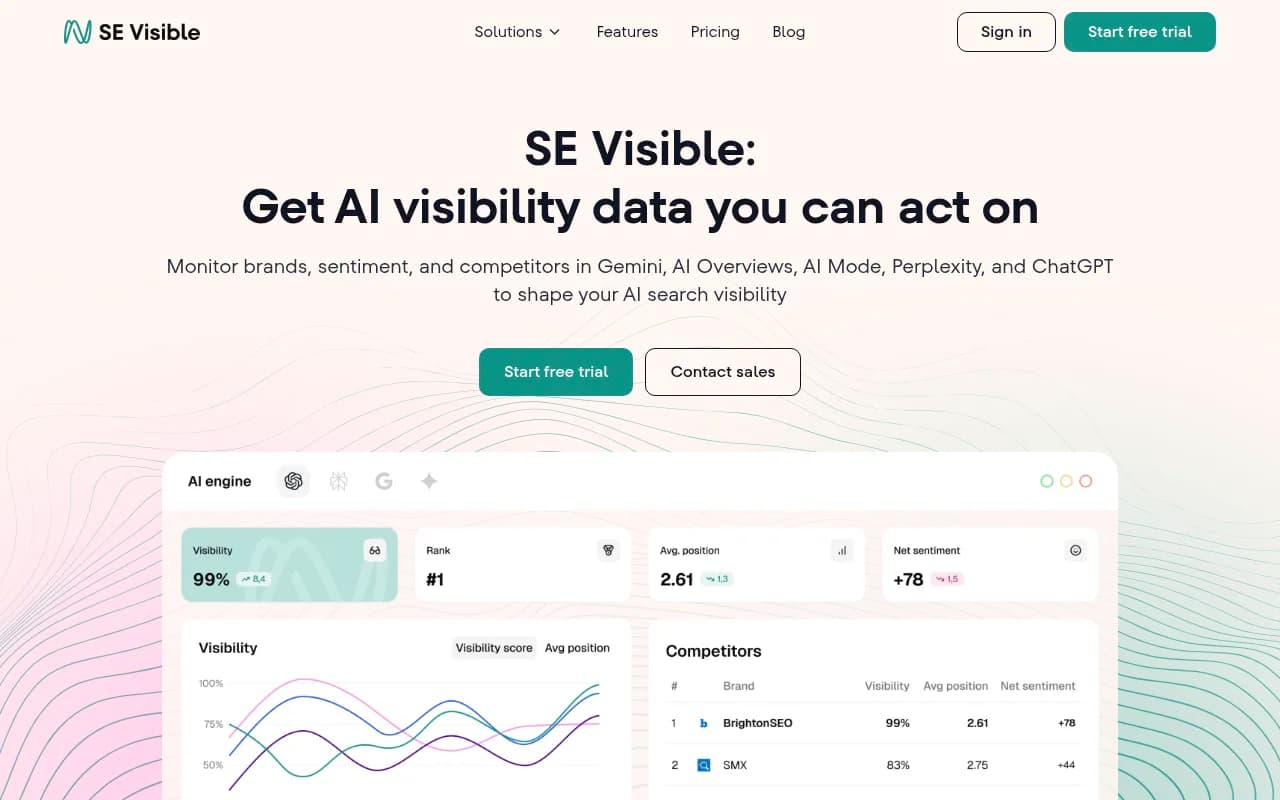
Its AI-specific depth is lighter than the dedicated platforms. A separate product, SE Visible, targets AI visibility alone.
3. Advanced Web Ranking
Twenty-plus years of SERP tracking behind it, and a long reputation for accuracy. It fits agencies and in-house teams that already live in rank-tracking data and want AI Overview presence added to it rather than a new tool to learn.
4. Semrush
Semrush folds AI visibility into its larger suite. If your team already pays for it, turning on AI tracking costs little effort. The tradeoff, common to the big SEO suites: prompt sets can be more fixed and the AI-specific data shallower than at specialists. Semrush One is the bundled offering.
5. Ahrefs Brand Radar
Brand Radar adds AI mention monitoring to Ahrefs. It suits teams that already trust Ahrefs data and want brand-level AI visibility next to backlinks and keywords. Don't expect crawler logs or traffic attribution.

6. Profound
Profound is a strong monitoring platform aimed at larger brands. It tracks visibility across multiple AI engines with solid reporting. Pricing sits at the higher end, and it is more about measurement than execution.

7. Otterly.AI
Otterly is the affordable pick. It monitors Google AI Overviews, ChatGPT with search and Perplexity, and it is easy to set up. It is a prompt tracker in the plain sense: good at "were we mentioned," thin on what to do next.

8. LLM Pulse
LLM Pulse's own roundup of 15 tools names it best overall, which you can discount as self-interest. Still, it tracks AI Overview citations and sits among the more focused specialists.
9. Omnia
Omnia's pitch is evidence: archived SERPs, URL-level citations and geo-specific presence. It also turns citation data into content and publishing tasks. Worth a look if auditability is your priority.
10. Searchable
Searchable tracks AI Overviews alongside ChatGPT and Perplexity and reports whether you were mentioned or cited, your position and how engines describe you. Its position data is the part I'd test, given how few tools offer it.
11. ZipTie
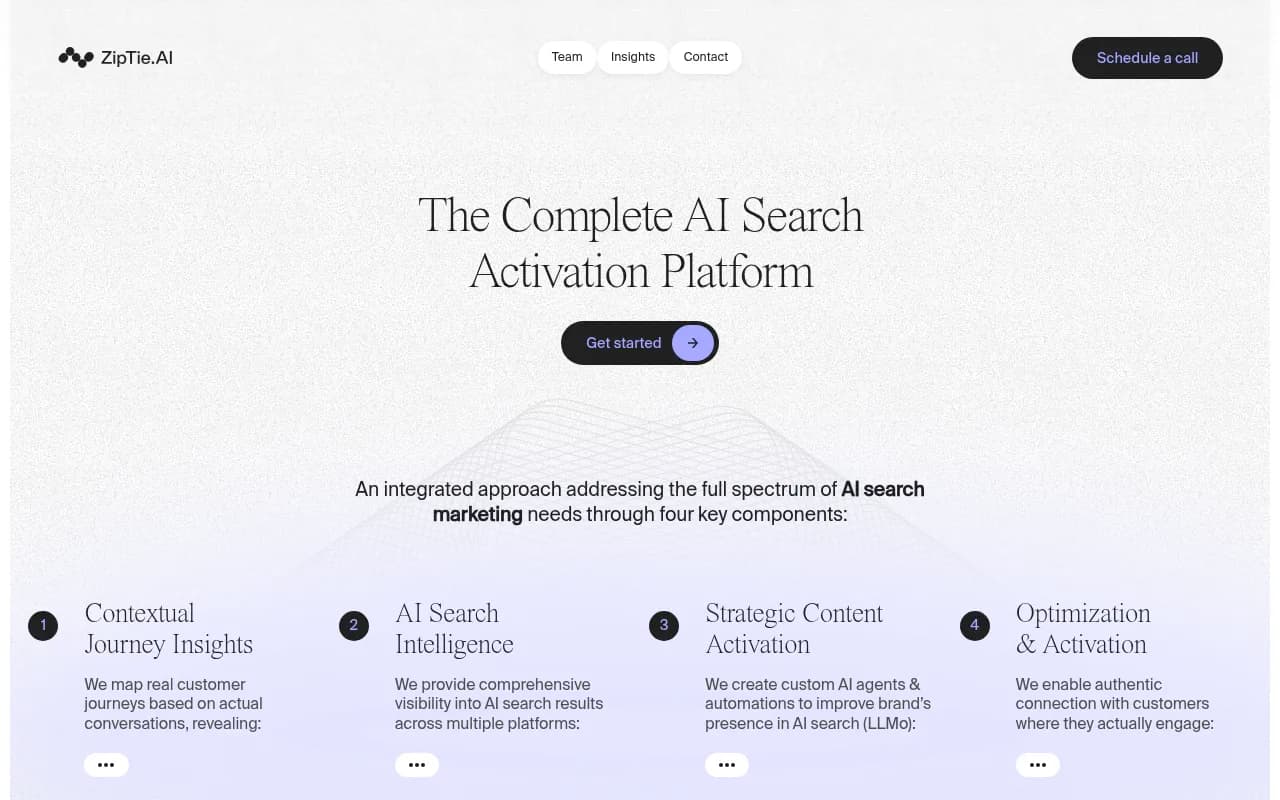
ZipTie captures full response screenshots for every query. One reviewer noted this settles arguments about what an AI engine actually said, and I agree. When a client asks "but did it really say that," screenshots end the debate.
12. Writesonic
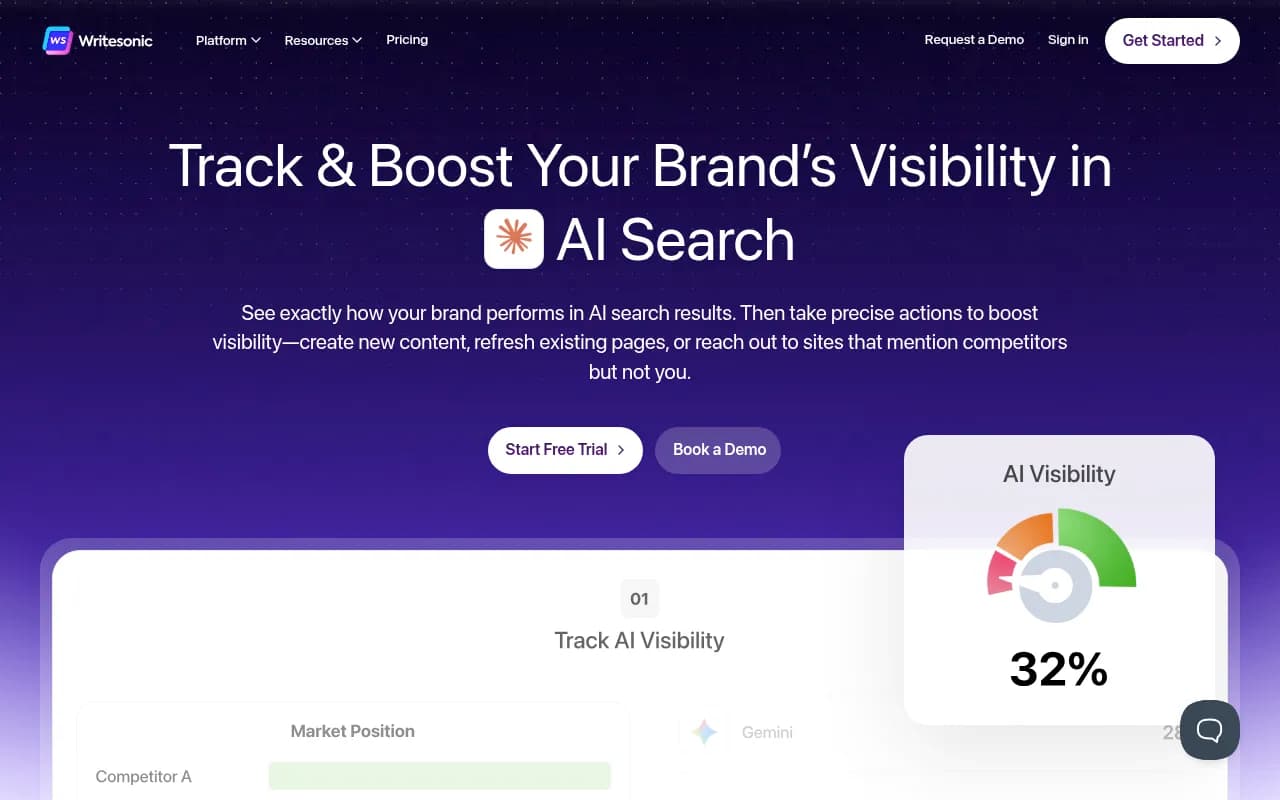
Writesonic tracks AI Overviews, ChatGPT and Perplexity and pairs that with content creation. It suits content teams that want tracking and drafting in one place, though its tracking depth is not its main selling point.
Comparison table
| Tool | Best for | Main strength | Main limit |
|---|---|---|---|
| Promptwatch | Teams that want to fix gaps, not just see them | Real-UI tracking plus content agent, crawler logs, traffic attribution | More than needed for a light check |
| SE Ranking | Organic plus AI side by side | Familiar rank tracker | Lighter AI depth |
| Advanced Web Ranking | Agencies with rank-tracking habits | SERP accuracy | Less AI-native |
| Semrush | Existing Semrush users | Bundled with the suite | Shallower AI data |
| Ahrefs Brand Radar | Ahrefs users | Brand-level AI mentions | No crawler or traffic data |
| Profound | Larger brands | Reporting depth | Price, monitoring-first |
| Otterly.AI | Budget monitoring | Easy setup | Little guidance on fixes |
| LLM Pulse | Focused AI Overview citation tracking | Specialist coverage | Vendor-claimed ranking |
| Omnia | Audit-minded teams | SERP evidence, task generation | Newer player |
| Searchable | Position-aware tracking | Position and description data | Verify depth yourself |
| ZipTie | Proof of what AI said | Full response screenshots | Narrower workflow |
| Writesonic | Content teams | Tracking plus drafting | Tracking depth |
How to choose
If you already pay for an SEO suite
Turn on the AI tracking in SE Ranking, Semrush or Ahrefs for a month. If the data answers your questions, stop. If you keep wishing you could see crawler activity or traffic from AI, move to a dedicated platform.
If you need proof for clients or executives
Prioritize snapshots and screenshots. ZipTie and Omnia lean this way. Promptwatch also stores the full responses it collects.
If you want action, not charts
Pick a platform that connects tracking to content. This is where I'd spend the money. A citation count that never changes your content calendar is a vanity metric. Promptwatch's Action Board and Content Agent exist for exactly this reason.
If budget is tight
Otterly and the lower tiers of Promptwatch Essential are reasonable starting points. For a broader scan of options, the directories at ai-rank-tools.com and bestgeosoftware.com list many more.
A simple testing process
Because I haven't run these side by side, here is how I'd do it before committing:
- Pick 25 prompts across informational, commercial and branded intent, including your top organic keywords.
- Run them in two or three tools for 14 days.
- Compare the same prompt across tools. Do they agree on whether an AI Overview appeared?
- Check whether each tool gives you the cited URLs, not only a score.
- Spot check five results manually in a clean browser, in the right country.
- Ask which tool told you something you could act on this week.
Expect disagreement. Because AI Overview presence isn't deterministic, two honest tools can report different results. What you want is consistency within a tool over time, and evidence behind each reading.
What to do with the data
Tracking is only useful if it changes what you publish. With product pages now leading AI Overview citations and listicles sliding, check whether your product and category pages are structured to be cited. How-to content holds about 15% of citations, so it's still worth maintaining. Video is small but rising, so don't ignore it if you can produce it.
Also budget by engine. Promptwatch's AI Overviews data shows Trustpilot matters more in ChatGPT than in AI Overviews, and Reddit is the one social channel earning citations in both. Effort that helps in one engine may do little in another.
Bottom line
For most teams, I'd start with Promptwatch if you want tracking that leads to published content and measurable AI traffic, SE Ranking or Advanced Web Ranking if you want AI Overviews inside a familiar rank tracker, and Otterly if you only need cheap monitoring. Test two for two weeks on the same prompts, trust the one that shows its evidence, and confirm pricing on each vendor's site before you commit.