Key takeaways
- Traditional SEO and AI SEO are not competing strategies -- they share the same technical foundations, but diverge sharply on how content gets surfaced and credited.
- Traditional SEO optimizes for rankings and clicks; AI SEO optimizes for citations and mentions inside AI-generated answers.
- Backlinks still matter, but AI models weight semantic authority, entity associations, and E-E-A-T signals more heavily than raw link counts.
- The biggest mistake brands make in 2026 is treating these as an either/or choice. You need both.
- Tracking AI visibility requires different tools than traditional rank trackers -- platforms like Promptwatch monitor citations across ChatGPT, Perplexity, Claude, Gemini, and more.
The search landscape in 2026
Google still processes billions of queries every day. That's not changing. But something else is happening alongside it: a growing share of people are getting answers without ever clicking a link.
They're asking ChatGPT "what's the best project management tool for a 10-person team?" They're reading Perplexity's synthesized answer to "how do I fix a crawl budget issue?" They're getting a Google AI Overview that answers their question before they scroll to the first organic result.
This isn't a replacement for traditional search. It's a parallel channel -- and right now, most brands are invisible in it.
The question for 2026 isn't "should I do AI SEO or traditional SEO?" It's "do I understand how they differ, and am I doing both well?"
What traditional SEO actually is (and what it still does well)
Traditional SEO is the practice of optimizing web pages to rank in search engine results pages (SERPs), primarily Google. The core levers are:
- Keyword research and targeting
- On-page optimization (title tags, headers, meta descriptions, internal linking)
- Technical health (crawlability, page speed, Core Web Vitals, structured data)
- Backlink acquisition and domain authority
- Content depth and topical coverage
It's a well-understood discipline with 25+ years of data behind it. The feedback loop is clear: publish content, earn links, rank higher, get traffic.
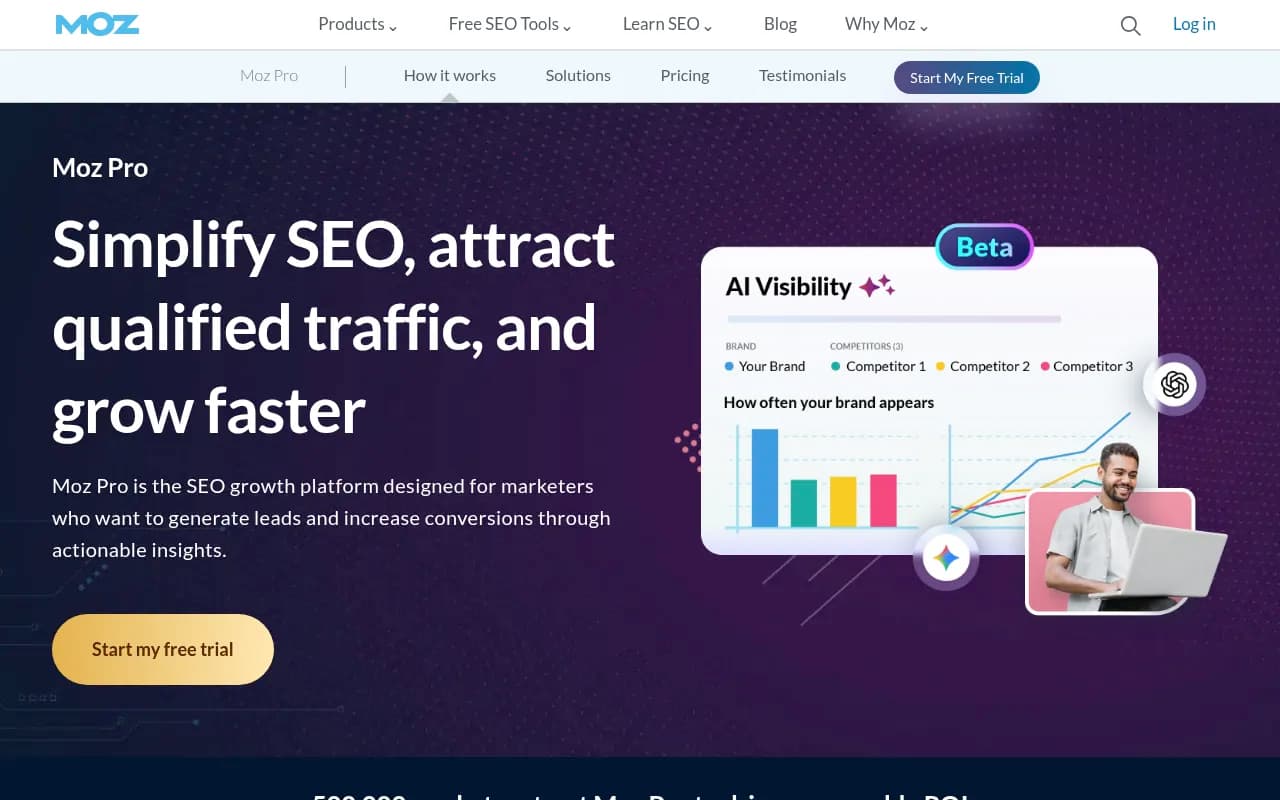
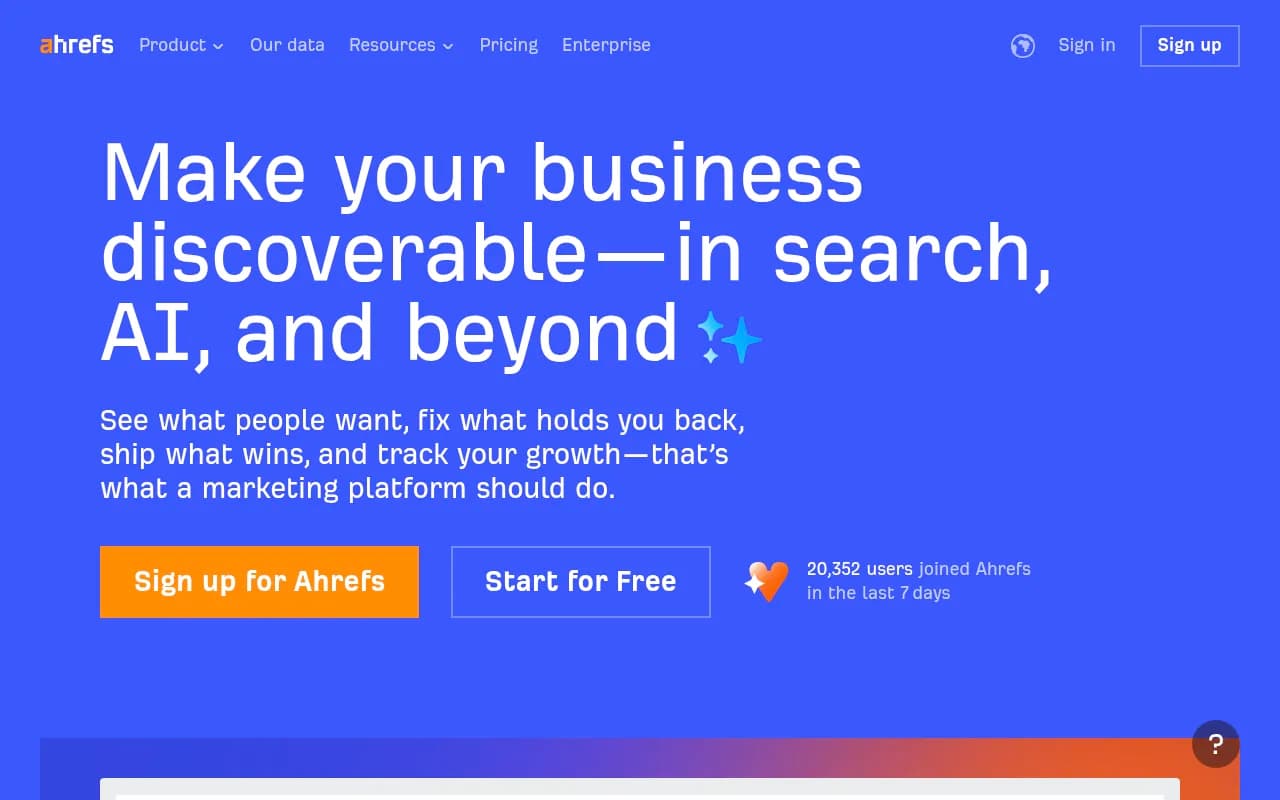
Traditional SEO tools like Semrush, Ahrefs, and Moz Pro are built around this model. They track keyword positions, analyze backlink profiles, and audit technical issues.
What traditional SEO does well is measurable, click-based traffic. You rank for a keyword, someone clicks your result, they land on your page. Attribution is relatively straightforward.
What it doesn't do: tell you whether ChatGPT recommends your brand when someone asks a relevant question.
What AI SEO actually is
AI SEO -- sometimes called GEO (Generative Engine Optimization) or AEO (Answer Engine Optimization) -- is the practice of making your content visible inside AI-generated responses.
When someone asks Perplexity "what's the best CRM for a startup?", Perplexity doesn't rank ten blue links. It synthesizes an answer and cites a handful of sources. AI SEO is about being one of those sources.
The mechanisms are different from traditional SEO:
- AI models don't crawl and index the way Google does. They're trained on large datasets and then retrieve information at query time using retrieval-augmented generation (RAG).
- They prioritize semantic relevance over keyword density. A page that comprehensively answers a question beats a page that repeats a keyword 15 times.
- They weight entity associations -- your brand being consistently associated with a topic across multiple credible sources matters more than a single highly-optimized page.
- They surface content from Reddit threads, YouTube videos, and third-party publications, not just your own website.
One Reddit user in the GrowthHacking community put it well: "The biggest difference is that traditional search relies heavily on links, while AI search relies on semantic entity associations and 'answer-ability'."
That's a useful framing. Traditional SEO asks: "does this page rank?" AI SEO asks: "does this content get cited?"
Side-by-side comparison
| Dimension | Traditional SEO | AI SEO |
|---|---|---|
| Primary goal | Rank in Google SERPs | Get cited in AI-generated answers |
| Success metric | Keyword position, organic traffic | Citation frequency, brand mentions in LLMs |
| Content format | Keyword-optimized pages | Comprehensive, question-answering content |
| Link signals | Backlinks are central | Entity associations and semantic authority matter more |
| Technical foundation | Crawlability, indexing, page speed | Same -- plus AI crawler accessibility |
| Keyword targeting | Exact match and semantic variants | Conversational prompts and question-based queries |
| Attribution | Click-based (GA4, GSC) | Citation tracking, LLM referral traffic |
| Tools | Semrush, Ahrefs, Screaming Frog | Promptwatch, Profound, Rankscale |
| Content freshness | Important | Very important -- AI models prefer recent, authoritative sources |
| Third-party presence | Helpful for links | Critical -- AI cites Reddit, YouTube, review sites heavily |
Where they overlap (more than you'd think)
Here's what gets lost in the "AI SEO vs traditional SEO" framing: most of the foundations are identical.
Google's AI Overviews pull from the same index as organic search. Perplexity crawls the web. Claude and ChatGPT are trained partly on publicly available web content. If your site has crawl errors, thin content, or no topical authority, you'll struggle in both channels.
The Damteq team made this point clearly in their 2026 analysis: "To grow your visibility in AI search, you still need strong technical foundations, a clear site structure, strong authority signals, and content that follows Google's E-E-A-T principles. And all of that comes from a good SEO strategy."
So the practical implication is: fix your traditional SEO first. A site that Google can't properly crawl is a site that AI models will also struggle to understand.
Where the two diverge is in the layer on top of those foundations. Once your technical house is in order, AI SEO requires a different content strategy and a different measurement approach.
Where AI SEO genuinely diverges
1. Conversational query structure
Traditional SEO targets queries like "best CRM software" or "CRM software pricing." AI SEO targets the prompts people actually type into ChatGPT: "I'm a solo consultant, what CRM should I use to manage 50 clients without spending more than $30/month?"
These are longer, more specific, and more intent-rich. Content that answers them directly -- with concrete recommendations, comparisons, and caveats -- gets cited. Generic listicles don't.
2. The citation gap vs the ranking gap
In traditional SEO, you either rank or you don't. In AI SEO, there's a subtler problem: your competitor might be getting cited for 40 prompts in your category while you're cited for 3. You'd never know this from a rank tracker.
This is the "answer gap" -- the prompts where AI models have something to say about your competitors but nothing to say about you. Closing that gap requires knowing which prompts exist, which ones your competitors win, and what content you'd need to create to compete.
Promptwatch has a feature called Answer Gap Analysis that surfaces exactly this -- the specific prompts where competitors are visible but you're not.

3. Third-party content matters more
AI models don't just cite your website. They cite Reddit discussions, YouTube reviews, G2 listings, industry publications, and news articles. A brand that only optimizes its own site is leaving a huge surface area unaddressed.
In traditional SEO, you'd call this "off-page SEO" and focus on link building. In AI SEO, the equivalent is making sure your brand appears in the right third-party conversations -- which means PR, community engagement, review generation, and sometimes just being present in the places AI models trust.
4. Measurement is completely different
You can't track AI visibility in Google Search Console. You can't see your citation rate in Ahrefs. Traditional rank trackers show you keyword positions -- they don't show you whether Gemini mentioned your brand when someone asked about your category.
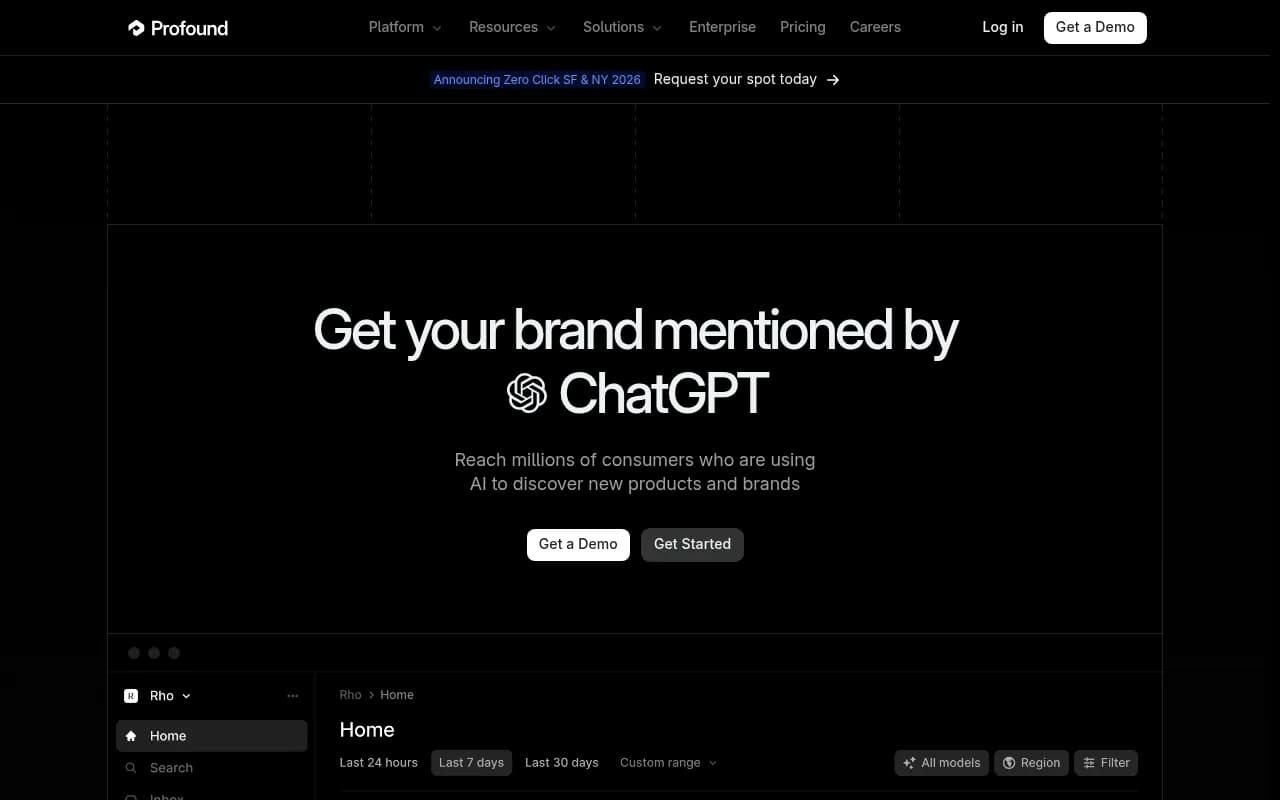
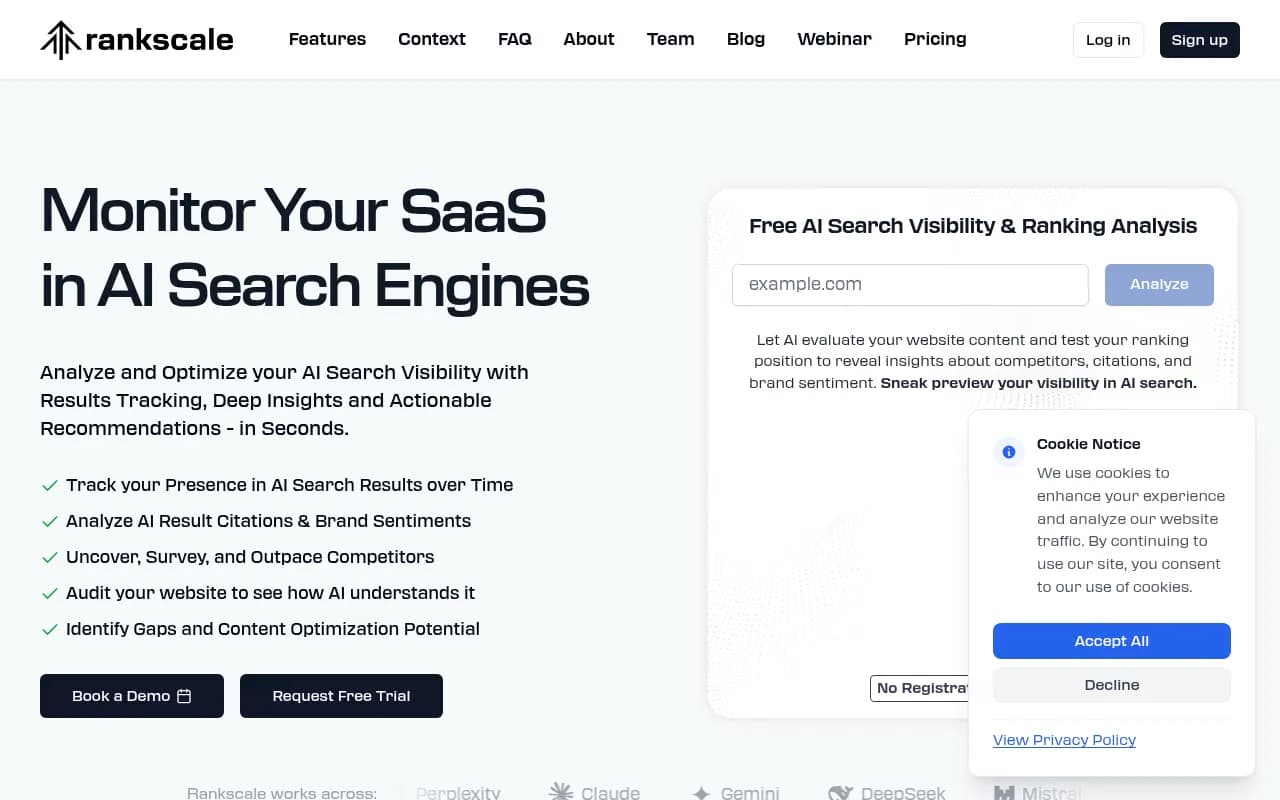
This is where dedicated AI visibility tools become necessary. Tools like Profound, Rankscale, and Promptwatch monitor AI responses at scale, track citation frequency across models, and show you which pages are being cited and by which AI engines.
The ranking vs citation gap in practice
Let's make this concrete. Imagine you run a project management software company.
In traditional SEO, you'd track your position for "project management software," "best project management tools," and 50 related keywords. You'd know if you're on page one.
In AI SEO, the relevant question is: when someone asks ChatGPT "what project management tool should I use for a remote team of 20?", does your brand come up? What about "best project management software for agencies"? Or "Asana vs Monday vs ClickUp for marketing teams"?
These are different prompts, and your visibility in each one is independent of your Google ranking. You might rank #2 for "project management software" on Google and be completely absent from ChatGPT's recommendations.
That gap is real, it's measurable, and it's where a lot of brand visibility is being won and lost right now.
Common mistakes in 2026
Treating AI SEO as a separate silo
Some teams have split into "traditional SEO" and "AI SEO" workstreams that don't talk to each other. This is inefficient. The content that ranks in Google and the content that gets cited by AI models is largely the same content -- just written differently and distributed more broadly.
Ignoring technical SEO because "AI is different"
AI crawlers still need to access your pages. If you have blocked resources, crawl errors, or pages that load slowly, AI models may not have fresh information about you. Promptwatch's AI Crawler Logs feature, for instance, shows exactly which pages AI bots are visiting and what errors they're hitting -- the kind of visibility that traditional SEO tools don't provide.
Publishing thin content at scale
Some teams responded to the AI content wave by publishing hundreds of low-effort AI-generated articles. This doesn't work in either channel. Google's quality signals penalize thin content, and AI models don't cite it. The bar for content that gets cited is actually higher than the bar for content that ranks -- it needs to be genuinely useful, specific, and credible.
Not measuring AI visibility at all
The most common mistake is simply not tracking this. If you don't know your citation rate across ChatGPT, Perplexity, and Gemini, you can't improve it. You're flying blind in a channel that's growing fast.
A practical playbook for 2026
Here's how to approach both channels without losing your mind:
Start with technical foundations. Run a full crawl with Screaming Frog or Sitebulb. Fix crawl errors, improve page speed, implement structured data. This benefits both Google rankings and AI discoverability.
Build topical authority. Pick the 5-10 topics most relevant to your business and own them completely. Comprehensive, well-researched content on a narrow set of topics beats shallow coverage of everything. This is the same advice for both traditional and AI SEO.
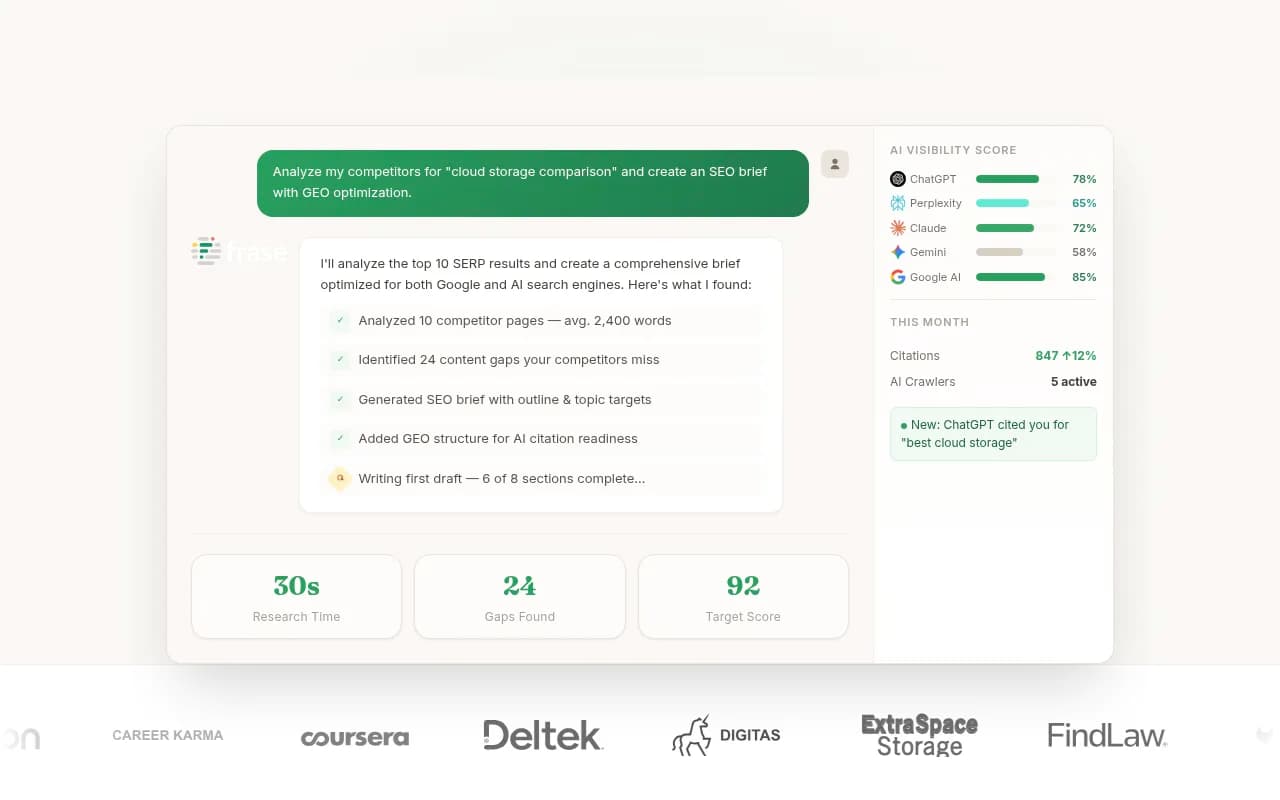
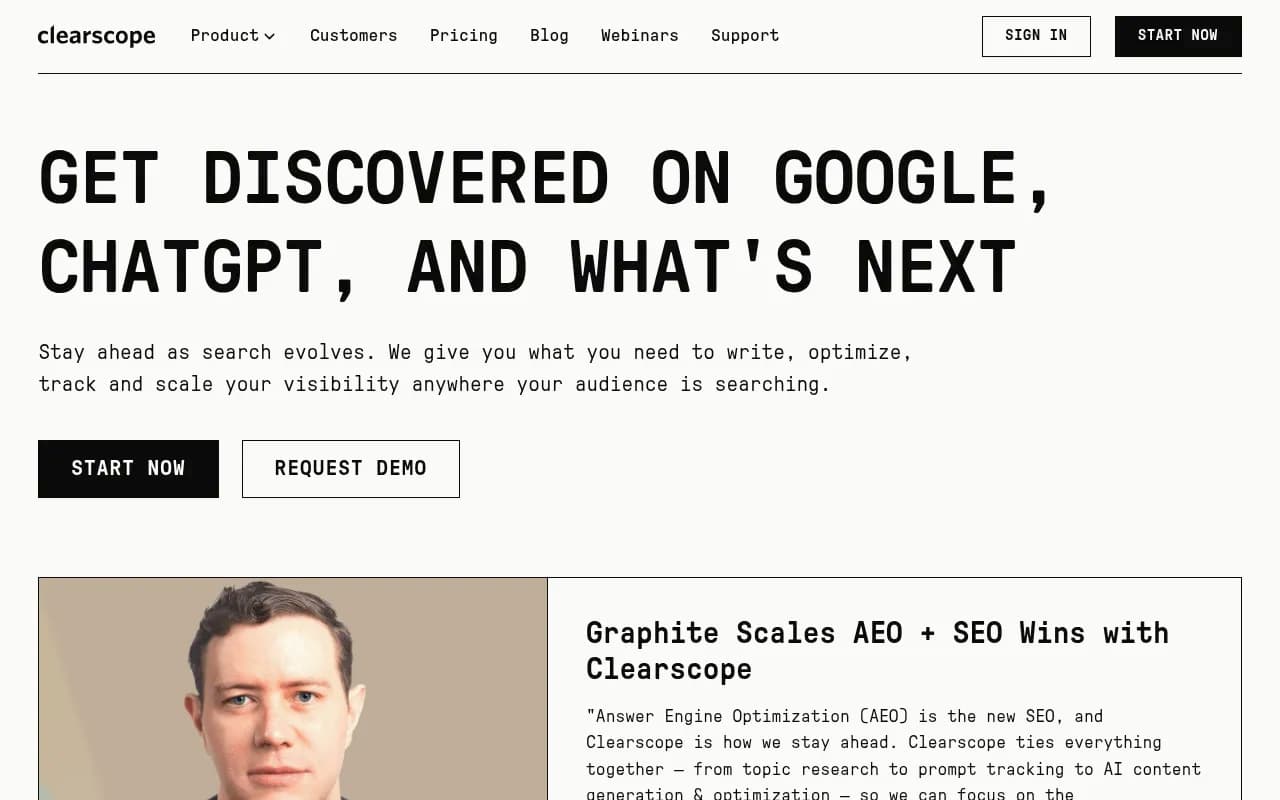
Optimize for questions, not just keywords. Reframe your content strategy around the questions your customers actually ask. Use tools like Frase or Clearscope to understand what questions exist in your space and how well your content answers them.
Expand your third-party footprint. Get your brand mentioned in the places AI models trust: industry publications, Reddit communities, YouTube reviews, G2 and Capterra listings. This is the off-page work that traditional SEO has always included, but it matters even more for AI visibility.
Track AI visibility separately. Set up monitoring for your brand across the major AI models. Know your citation rate, which prompts you're winning, and which competitors are beating you. Without this data, you can't prioritize.
Close the answer gap. Identify the prompts where competitors are visible but you're not. Create content that directly addresses those prompts. This is the highest-leverage AI SEO activity most brands aren't doing yet.
Tools worth knowing
For traditional SEO, the established platforms still do the job well:
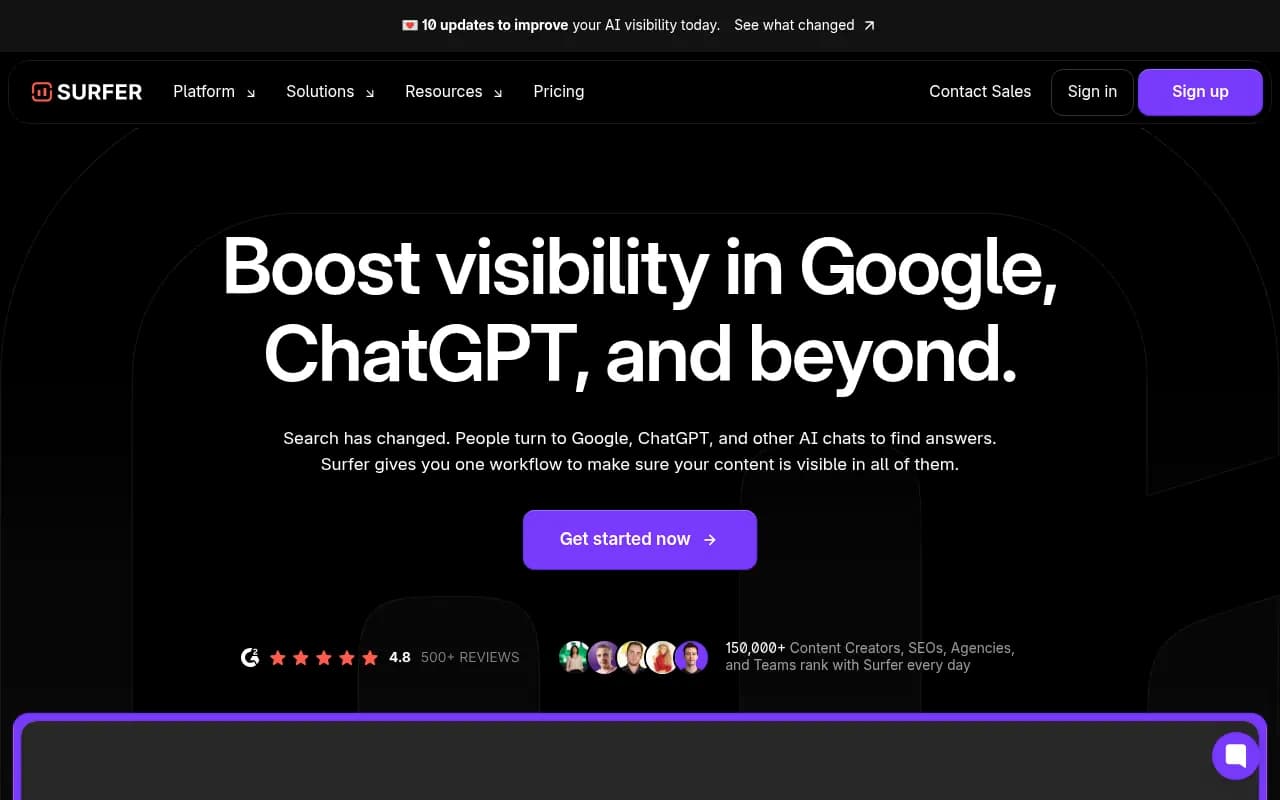
For AI visibility tracking and optimization, the field is newer but maturing fast:

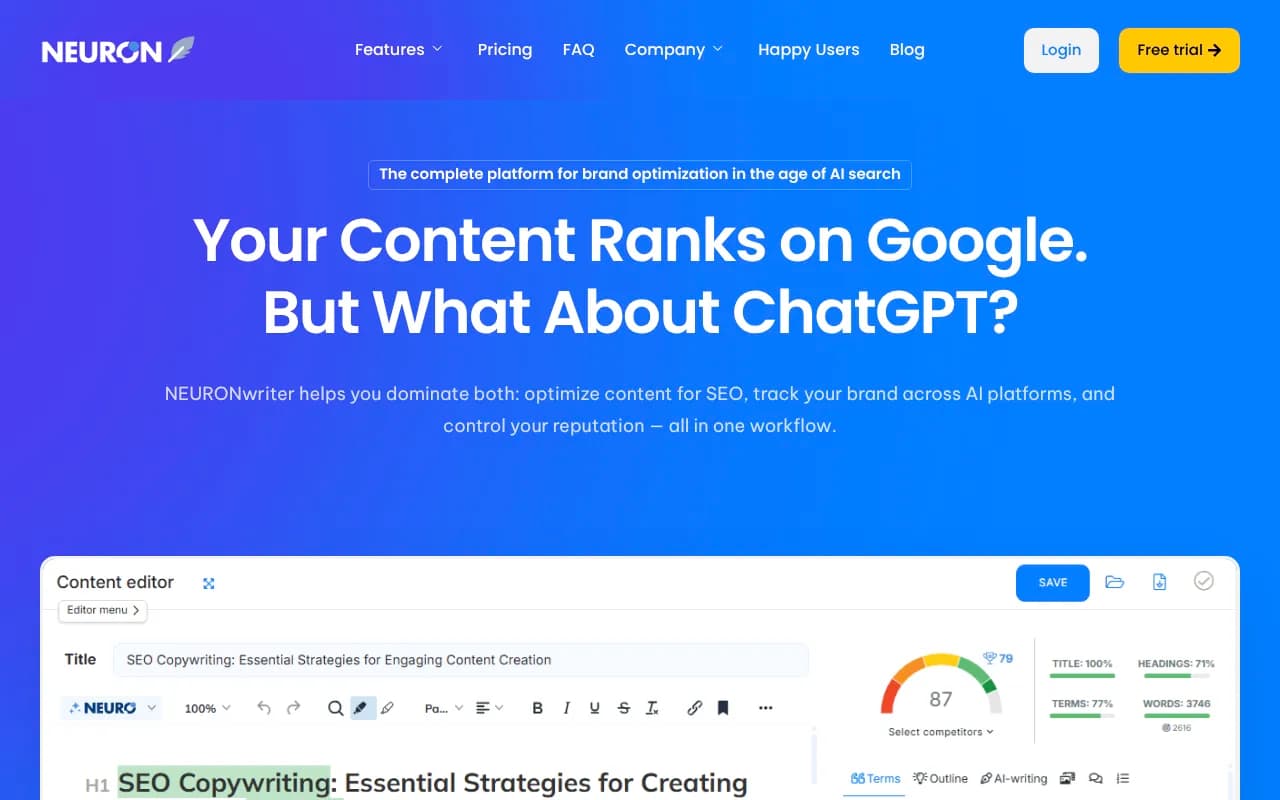
For content optimization that works across both channels:
The bottom line
Traditional SEO isn't dying. Google isn't going anywhere. But the share of search that happens inside AI interfaces is growing, and the brands that show up there are building a visibility advantage that compounds over time.
The playbook for 2026 isn't complicated: get your technical foundations right, build genuine topical authority, answer real questions in depth, and measure both your Google rankings and your AI citation rate. The teams that do all four will be in a strong position. The teams that only do the first two will find themselves invisible in a channel their customers are increasingly using.
The gap between "we rank on Google" and "we get cited by AI" is real -- and right now, it's still early enough to close it.