Key takeaways
- Traditional SEO optimizes for Google and Bing rankings; GEO optimizes for citations inside AI-generated answers from ChatGPT, Perplexity, Claude, and similar tools.
- You can rank #1 on Google and still be completely invisible in AI search -- these are separate visibility problems requiring different strategies.
- The metrics are different too: SEO tracks rankings and organic traffic; GEO tracks citation frequency, brand mention rate, and which AI models reference your content.
- Most GEO tools are monitoring-only dashboards; a smaller number (including Promptwatch) close the loop by helping you create content that actually gets cited.
- You don't have to choose -- in 2026, the smartest teams run both in parallel, with overlapping content quality principles but distinct measurement frameworks.
Why this question matters right now
Nearly 60% of Google searches now end without a click. That number has been climbing for years, but AI Overviews accelerated it dramatically. And that's just Google. Add ChatGPT, Perplexity, Claude, and Gemini into the mix, and you have a search landscape where a huge chunk of your potential audience is getting answers without ever visiting your site.
So when people ask "what's the difference between AI SEO and GEO?" they're really asking a more urgent question: where do I need to show up now, and how do I get there?
Let's answer that properly.
What traditional SEO actually is (and what it still does well)
SEO -- Search Engine Optimization -- is the practice of making your website rank higher in Google and Bing results. It has three main components:
- Technical SEO: Site speed, crawlability, mobile optimization, structured data, XML sitemaps. The infrastructure layer.
- On-page SEO: Title tags, headings, keyword placement, content quality, internal linking. What you control on each page.
- Off-page SEO: Backlinks, brand mentions, domain authority. How the rest of the web vouches for you.
Google processes roughly 8.5 billion searches per day. That's not going away. Businesses still generate enormous revenue from organic search traffic, and page-one rankings still drive real clicks for high-intent queries.
What changed isn't that SEO stopped working. It's that SEO alone is no longer sufficient coverage. The audience fragmented. Some of your potential customers are still Googling. Others are asking ChatGPT. Others are using Perplexity to research before they buy. If you're only optimizing for traditional search, you're invisible to a growing slice of your market.
For traditional SEO, tools like Semrush and Ahrefs remain the standard. Screaming Frog handles technical crawls. Surfer SEO and Clearscope help with content optimization.
What GEO is -- and how it actually works
GEO stands for Generative Engine Optimization. The goal is to get AI models to cite your content, mention your brand, or recommend your product when users ask relevant questions.
Here's the key mechanical difference: traditional search engines link to sources. Generative AI synthesizes information and delivers a direct answer -- sometimes with citations, sometimes without. When Perplexity answers a question about "best project management software for remote teams," it's not showing you a list of blue links. It's writing a paragraph that names specific tools, and those tools get the visibility.
Getting named in that paragraph is what GEO is about.
The inputs that influence AI citations are somewhat different from classic ranking factors:
- Topical authority: AI models favor sources that cover a subject comprehensively and consistently, not just pages that rank for individual keywords.
- Citation patterns: What other sources link to you, and whether those sources are themselves cited by AI.
- Content structure: Clear, direct answers to specific questions are easier for AI to extract and cite.
- Brand presence across the web: Reddit discussions, YouTube content, third-party reviews, and forum mentions all feed into what AI models "know" about your brand.
- Freshness and crawlability: AI crawlers (from OpenAI, Anthropic, Perplexity, etc.) visit your site independently of Google's crawler. If they can't read your pages, you won't be cited.
One thing worth saying plainly: GEO is harder to measure than SEO. You can't just check a rank. You have to actually query AI models, observe whether your brand appears, and track that over time across multiple models and prompt variations.
AEO: the third term you'll keep seeing
You'll also hear "AEO" -- Answer Engine Optimization. Some people use it interchangeably with GEO. Others draw a distinction:
- AEO typically refers to optimizing for featured snippets, "People Also Ask" boxes, and zero-click results within Google itself. It's about structured content that answers questions directly.
- GEO refers specifically to generative AI systems -- ChatGPT, Claude, Perplexity, Gemini, etc.
In practice, the tactics overlap heavily. Content that wins featured snippets (clear question-answer structure, concise definitions, well-organized headers) also tends to get cited by AI models. So if someone tells you to "do AEO," they're probably pointing you toward the same content improvements that help with GEO.
For this guide, we'll use GEO as the umbrella term for AI-era optimization, since that's where most of the tooling and measurement conversation is happening.
How the metrics differ
This is where the practical split becomes most obvious.
| Metric | Traditional SEO | GEO |
|---|---|---|
| Primary KPI | Keyword rankings, organic traffic | Citation rate, brand mention frequency in AI answers |
| Measurement tool | Rank trackers, Google Search Console | AI monitoring platforms |
| Success signal | Page 1 position, click-through rate | Named in AI response, cited as source |
| Content goal | Rank for target keywords | Be recognized as authoritative source on a topic |
| Competitor comparison | SERP position vs competitors | Share of AI mentions vs competitors |
| Traffic attribution | GA4, GSC | AI traffic logs, referral tracking from AI platforms |
The Reddit thread on this topic put it well: "Traditional SEO you watch rankings and traffic, GEO you watch engagement in AI outputs, clicks from AI referrals." That's the core of it.
You can have a technically clean site, solid page-one rankings, and evergreen content pulling steady impressions -- and still be completely absent from AI-generated answers. That's the gap GEO addresses.
Which tools do SEO vs GEO in 2026
Traditional SEO tools
These are mature, well-understood platforms. They track rankings, audit technical issues, analyze backlinks, and help you optimize content for Google.
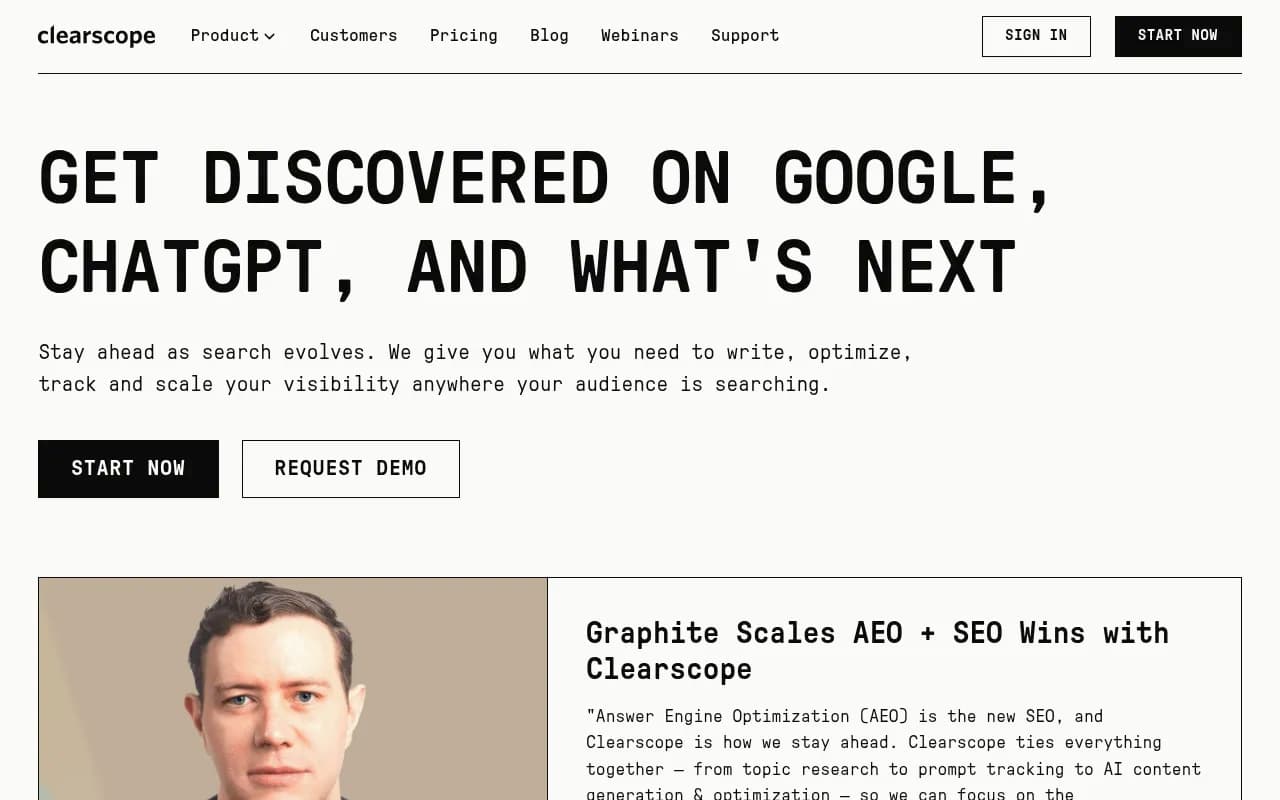
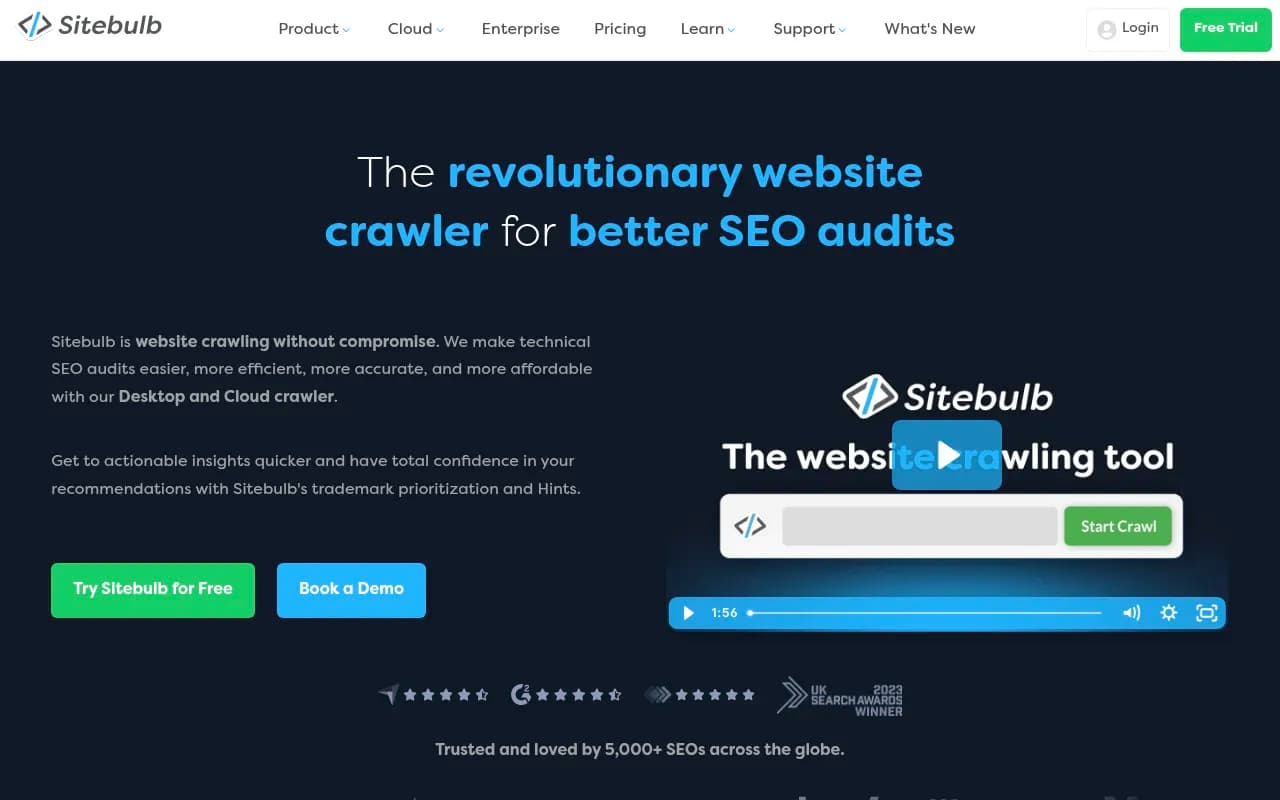
Most of these tools have added some AI search features -- Semrush has an AI Overviews tracker, Ahrefs has Brand Radar -- but they're primarily built around traditional search. Their AI features tend to use fixed prompt sets and don't give you the depth of monitoring or the content optimization loop that dedicated GEO platforms offer.
GEO / AI visibility tools
This category exploded in 2025 and is still maturing fast. The range is wide: some tools are simple brand mention trackers, others are full optimization platforms.
A few worth knowing:

Promptwatch is the most complete option in this category. It monitors 10 AI models (ChatGPT, Claude, Perplexity, Gemini, Grok, DeepSeek, Copilot, Meta AI, Mistral, and Google AI Overviews), tracks which pages get cited and how often, and -- critically -- helps you do something about gaps. The Answer Gap Analysis shows you which prompts competitors appear for that you don't. The built-in content generation tool creates articles grounded in citation data, not generic SEO filler. Most GEO tools stop at showing you the problem. Promptwatch helps you fix it.

Profound is a solid monitoring platform with good depth on prompt tracking and brand visibility across AI engines. Strong feature set, though it sits at a higher price point and doesn't include content generation.

AthenaHQ covers 8+ AI search engines and gives you visibility tracking and competitive benchmarking. Monitoring-focused -- you'll need separate tools for content optimization.

Otterly.AI is one of the more affordable entry points for AI visibility monitoring. Good for teams that want basic tracking without a big budget commitment. Doesn't include crawler logs or content generation.

Peec.ai handles multi-language AI visibility tracking, which makes it useful for international brands. Core functionality is monitoring rather than optimization.
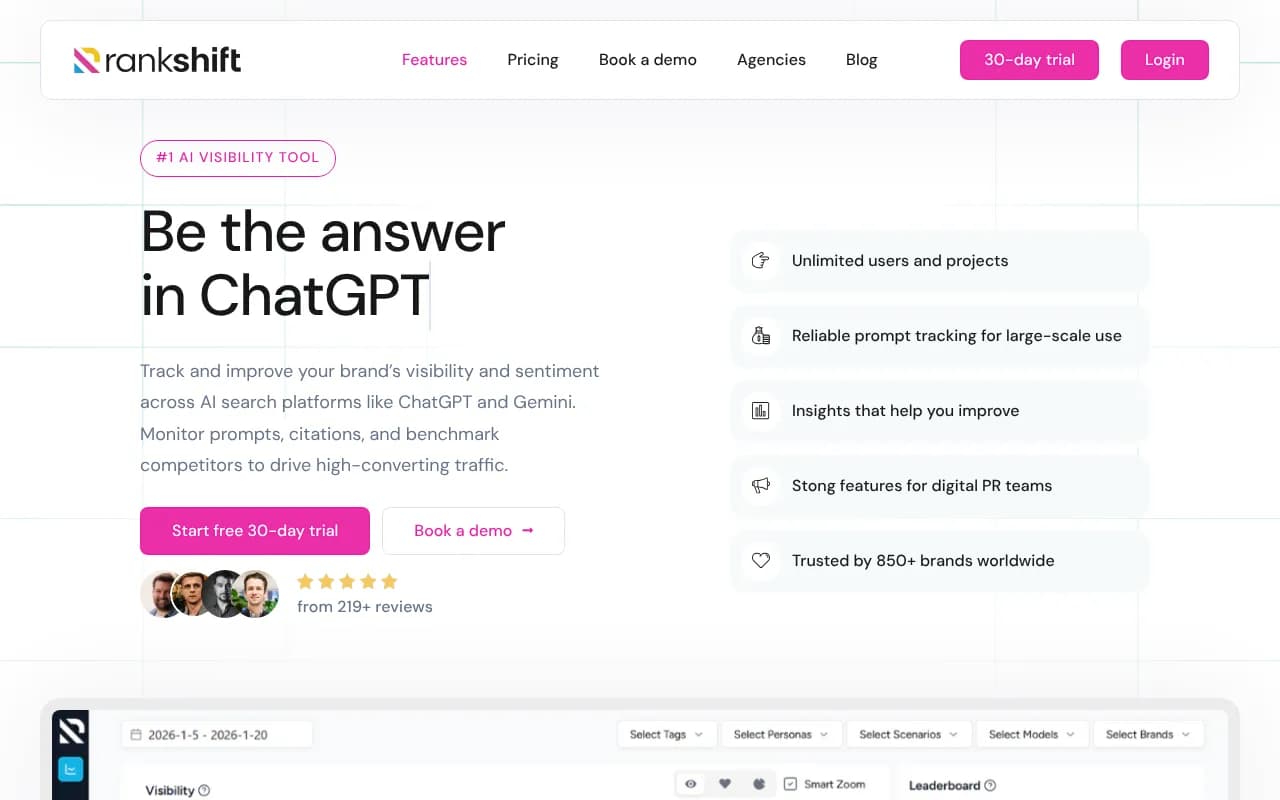
Rankshift focuses specifically on LLM tracking for GEO -- clean interface, useful for teams that want straightforward visibility data without a lot of complexity.
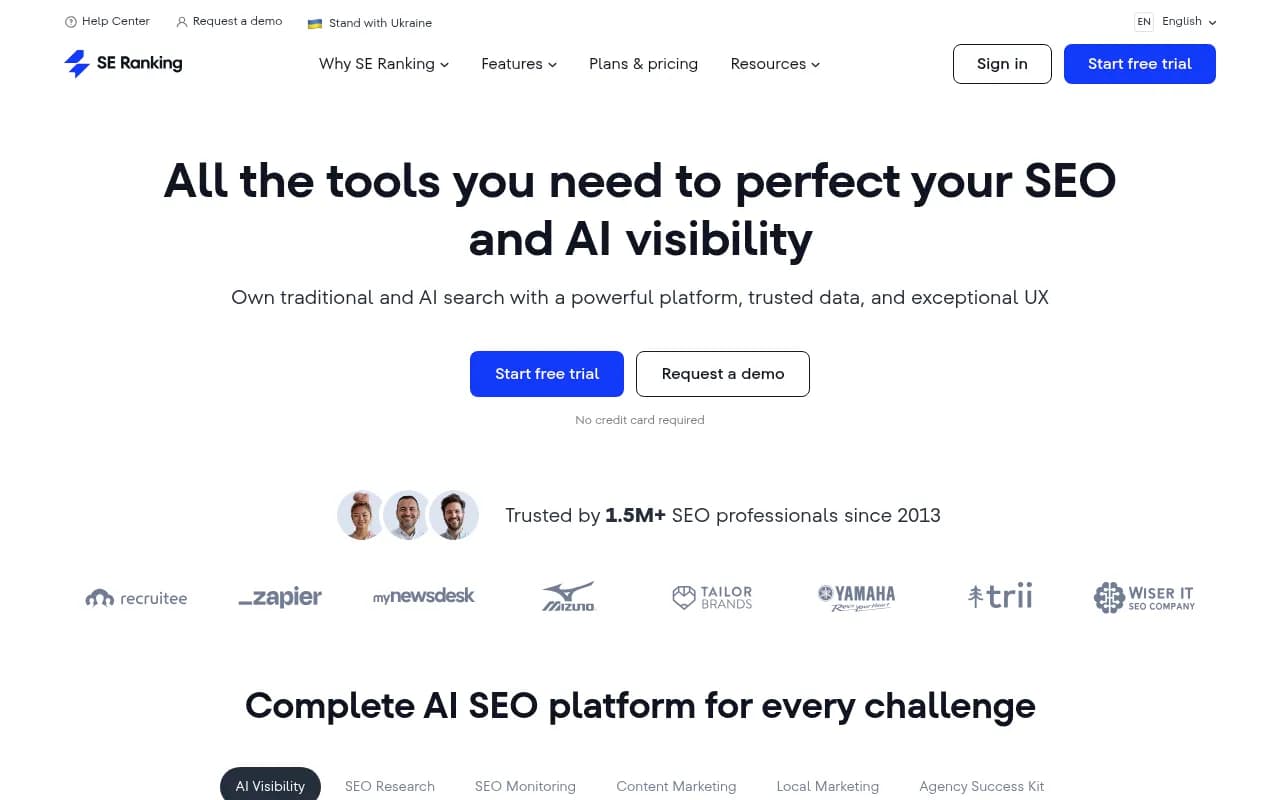
SE Ranking is an interesting hybrid: it started as a traditional SEO platform and has built out an AI visibility toolkit alongside its core rank tracking. If you want one platform that covers both SEO and GEO monitoring (without deep optimization features for either), it's worth a look.
Comparison: SEO tools vs GEO tools
| Tool | Primary focus | AI model monitoring | Content generation | Crawler logs | Price range |
|---|---|---|---|---|---|
| Semrush | Traditional SEO | Limited (fixed prompts) | Yes (separate tool) | No | $139+/mo |
| Ahrefs | Traditional SEO | Brand Radar (basic) | No | No | $129+/mo |
| Moz Pro | Traditional SEO | No | No | No | $99+/mo |
| Promptwatch | GEO / AI visibility | 10 models | Yes (AI writing agent) | Yes | $99+/mo |
| Profound | GEO / AI visibility | Multiple models | No | No | Higher tier |
| AthenaHQ | GEO / AI visibility | 8+ models | No | No | Mid-range |
| Otterly.AI | GEO monitoring | Multiple models | No | No | Budget-friendly |
| SE Ranking | SEO + GEO hybrid | AI toolkit add-on | Limited | No | $65+/mo |
| Peec.ai | GEO monitoring | Multiple models | No | No | Mid-range |
The content overlap: what works for both
Here's the good news: the content principles that help with GEO largely reinforce good SEO practice. You're not starting from scratch.
Things that help both:
- Comprehensive topic coverage: Thin pages that target a single keyword don't win in traditional search anymore, and they definitely don't get cited by AI. Go deep on topics.
- Clear structure: Headers, bullet points, and direct answers help both Google's featured snippets and AI models extract useful information.
- E-E-A-T signals: Experience, expertise, authoritativeness, trust. Google cares about this. AI models also favor sources that demonstrate real expertise.
- Technical health: A site that's slow, poorly structured, or blocks crawlers will struggle in both traditional search and AI citation. AI crawlers from OpenAI, Anthropic, and Perplexity visit your site separately from Googlebot -- if they hit errors or can't read your pages, you won't be cited.
What GEO adds on top:
- Brand presence off your site: Reddit threads, YouTube videos, third-party reviews, and forum discussions all influence what AI models "know" about your brand. This is a channel traditional SEO mostly ignores.
- Prompt-level thinking: Instead of keyword research, you're thinking about the specific questions people ask AI models. What prompts should trigger your brand? Which ones are competitors winning that you're not?
- Citation monitoring: You need to actually query AI models regularly and track whether you appear. There's no equivalent of Google Search Console for this (yet) -- you need dedicated tooling.
Which should you prioritize?
Honestly, it depends on where your audience is in their research process.
If you're in a category where people still search Google for specific product names or service queries, traditional SEO remains high-value. Don't abandon it.
If you're in a category where people ask broad research questions ("what's the best CRM for a 10-person sales team?"), AI search is already eating into your discovery funnel. GEO should be a priority now, not something you get to later.
For most businesses in 2026, the answer is both -- with the understanding that they require different measurement frameworks, different content approaches, and different tools. The teams winning right now aren't choosing between SEO and GEO. They're running them in parallel, using the content quality overlap to their advantage, and tracking each channel separately.
The practical starting point: audit where you currently stand in AI search. Pick a handful of prompts relevant to your category and query ChatGPT, Perplexity, and Claude. See if your brand appears. If it doesn't, you have a GEO gap -- and that gap is worth measuring properly before you start creating content to fill it.
Tools like Promptwatch make that audit systematic rather than manual, and they connect the monitoring to the content work needed to actually improve your visibility.