Key takeaways
- The best AI visibility tools in 2026 have moved beyond simple brand mention tracking to offer content gap analysis, AI crawler logs, and traffic attribution
- Profound raised $96M in February 2026 and rebuilt its product around AI agents, making it one of the most improved platforms since late 2025
- Most monitoring-only tools (Otterly.AI, Peec.ai, basic trackers) haven't added meaningful optimization capabilities -- they still show you data but leave you to figure out what to do with it
- The biggest gap in the market remains the connection between AI visibility data and actual content action: most tools stop at the dashboard
- Platforms that added content generation, crawler log analysis, and traffic attribution have pulled significantly ahead of those that didn't
The AI search visibility tool market barely existed two years ago. A handful of scrappy startups were running manual prompt queries against ChatGPT and calling it "brand monitoring." Fast forward to early 2026, and there are well over 50 tools in this space, several with serious funding, and a genuine split emerging between platforms that have grown up and those that are still doing roughly what they did in 2024.
This guide is about that split. Not a comprehensive list of every tool, but an honest look at which platforms have made real progress, what specifically changed, and where the industry as a whole is still falling short.
What the market looked like in early 2025
To understand what's changed, it helps to remember where things started. In early 2025, most AI visibility tools offered some version of the same thing: you enter a list of prompts, the tool runs them against one or two LLMs (usually ChatGPT and Perplexity), and you get a dashboard showing whether your brand was mentioned. That was it.
The metrics were thin. Share of voice was the headline number. Citation counts were tracked but rarely contextualized. There was almost no competitive depth -- you could see your own mentions but comparing yourself to competitors required manual work. Content recommendations, if they existed at all, were generic. Nobody was tracking AI crawler activity on your actual website. Traffic attribution from AI sources was essentially unmeasured.
It was a monitoring category, not an optimization category. And for most teams, the honest answer to "what do I do with this data?" was: we're not sure yet.
Tools that have genuinely improved
Profound
Profound is probably the most dramatic transformation story in this space. In November 2025, it was a solid enterprise monitoring tool with good prompt coverage and clean reporting. By February 2026, it had raised $96M in a Series C and hit a $1B valuation, and the product had been substantially rebuilt around AI agents.
The shift matters because it moved Profound from "here's your visibility data" toward "here's what to do about it." The AI agent layer can now surface specific content recommendations, flag pages that AI models are ignoring, and help teams prioritize where to focus. It's still primarily an enterprise play -- pricing reflects that -- but the product is meaningfully more useful than it was 12 months ago.

SE Ranking's AI visibility module
SE Ranking launched its dedicated AI visibility toolkit as part of its broader SEO platform, which is a smart positioning move. Rather than asking teams to adopt a standalone GEO tool, it baked AI visibility tracking into workflows they already had. The result is that SEO teams can now see traditional keyword rankings and AI citation data side by side without switching tools.
The coverage across LLMs has expanded, and the competitive benchmarking features are more granular than they were. It's not the deepest AI visibility tool on the market, but the integration story is genuinely useful for teams that don't want to manage five separate platforms.
Promptwatch
Promptwatch has built what is probably the most complete action loop in the category. The gap between "we can see our AI visibility" and "we can actually improve it" is where most tools fail, and Promptwatch has focused specifically on closing that gap.
The Answer Gap Analysis shows you exactly which prompts competitors are visible for that you're not -- not just as a list, but with the specific content angles and topics that AI models want answers to. The built-in AI writing agent then generates content grounded in real citation data (880M+ citations analyzed) rather than generic SEO filler. And the crawler log feature shows you which AI bots are actually visiting your site, which pages they're reading, and where they're hitting errors.
That combination -- find the gap, create the content, see the crawler activity, track the results -- is what separates it from tools that are still primarily dashboards.

LLMrefs
LLMrefs has matured considerably. The core insight -- building AI visibility tracking around keywords you already monitor rather than requiring you to manually define every prompt -- has proven genuinely useful for SEO teams. The platform auto-generates realistic conversational prompts from your keyword list, which saves significant setup time and tends to produce more realistic coverage than manually crafted prompts.
The share of voice metrics and citation tracking have gotten more reliable, and the competitive analysis features have expanded. It's a strong choice for teams that want to connect their existing SEO work to AI visibility without starting from scratch.
AthenaHQ
AthenaHQ covers 8+ AI search engines and has improved its monitoring depth over the past year. The interface is cleaner, the prompt coverage is broader, and the reporting has gotten more useful for client-facing work. That said, it remains primarily a monitoring platform -- the optimization and content generation capabilities that would move it into the action tier aren't there yet.
What hasn't changed much
Basic monitoring-only tools
A significant chunk of the market -- Otterly.AI, Peec.ai, and several newer entrants -- are still doing essentially what they did in 2025. They run prompts, track mentions, show you a dashboard. That's not useless, but it's not enough anymore.
The problem isn't the data. It's that the data doesn't come with a path forward. You can see that your competitor is cited 40% more often than you for "best project management software." Great. Now what? These tools don't tell you which pages to create, which topics to cover, or how to structure content so AI models will actually cite it. You're left to figure that out yourself.


Traditional SEO platforms adding AI features
Semrush and Ahrefs have both added AI visibility features, and both have real limitations. Semrush uses fixed prompts, which means you're tracking a predetermined set of queries rather than the actual questions your customers are asking. Ahrefs Brand Radar has similar constraints -- fixed prompts, no AI traffic attribution, no content optimization layer.
These are useful as a first look at AI visibility for teams already inside these platforms, but they're not substitutes for dedicated GEO tools if you're serious about improving your AI search presence.
Scrunch
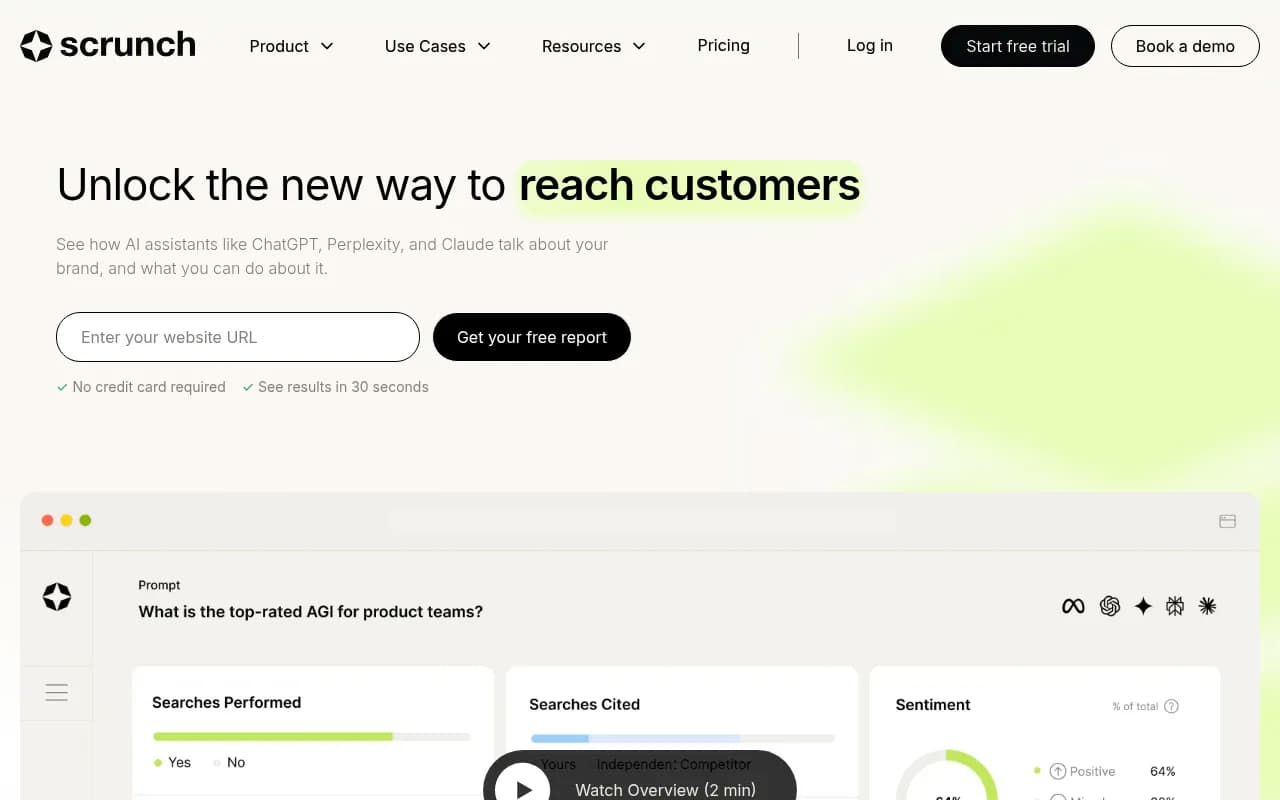
Scrunch has a solid feature set and reasonable pricing, but it hasn't added the content optimization or traffic attribution capabilities that would make it a full optimization platform. It's a competent monitoring tool that hasn't kept pace with the leaders on the action side of the equation.
The feature gaps that still exist across the market
Looking at the category as a whole in early 2026, a few capabilities are still surprisingly rare:
AI crawler log analysis. Most tools track what AI models say about you, but very few track how AI crawlers interact with your website. Knowing that GPTBot visited your pricing page three times last week but never returned to your blog is genuinely useful information -- it tells you something about what AI models are actually indexing. Only a handful of platforms (Promptwatch being the clearest example) surface this data in a usable way.
Traffic attribution from AI sources. This is the metric that connects AI visibility to business outcomes, and it's still poorly solved across the market. Most tools show you citation counts. Very few can tell you how many actual visitors came from AI-generated answers, which pages they landed on, and what they did next.
Content generation grounded in citation data. Lots of tools will tell you to "create more content." Fewer will generate that content using real data about what AI models actually cite -- which domains, which formats, which topics, which angles. Generic AI writing tools aren't the answer here; the content needs to be engineered around actual citation patterns.
Reddit and YouTube tracking. AI models frequently cite Reddit threads and YouTube videos in their responses. Most visibility tools ignore these sources entirely, which means you're missing a significant part of the picture of why your competitors are getting cited and you're not.
Prompt intelligence with volume and difficulty. Keyword tools have had search volume and difficulty scores for years. Most AI visibility tools still don't have equivalent metrics for prompts -- you can't easily tell whether a prompt is worth targeting or whether you have a realistic chance of ranking for it.
A comparison of where major tools stand
| Tool | Monitoring depth | Content optimization | Crawler logs | Traffic attribution | Prompt intelligence |
|---|---|---|---|---|---|
| Promptwatch | Strong | Yes (AI writing agent) | Yes | Yes | Yes (volume + difficulty) |
| Profound | Strong | Partial (AI agents) | No | Limited | Partial |
| LLMrefs | Good | Limited | No | No | Partial |
| SE Ranking | Good | No | No | No | No |
| AthenaHQ | Good | No | No | No | No |
| Otterly.AI | Basic | No | No | No | No |
| Peec.ai | Basic | No | No | No | No |
| Semrush | Limited (fixed prompts) | No | No | No | No |
| Ahrefs Brand Radar | Limited (fixed prompts) | No | No | No | No |
| Scrunch | Good | No | No | No | No |
Tools worth watching in 2026
A few newer or smaller platforms have shipped interesting features that deserve attention even if they're not yet at the scale of the leaders.
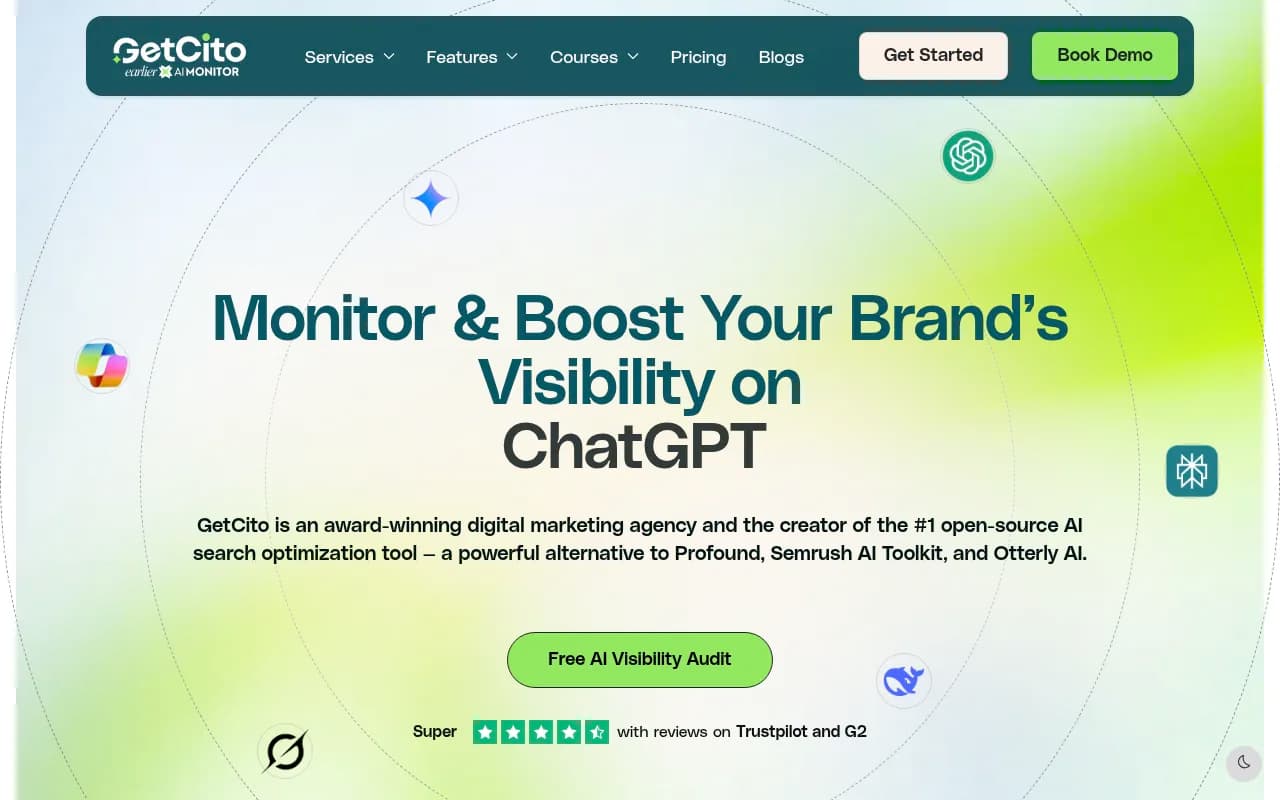
GetCito has been building out its optimization layer and shows promise for teams that want actionable recommendations without enterprise pricing.
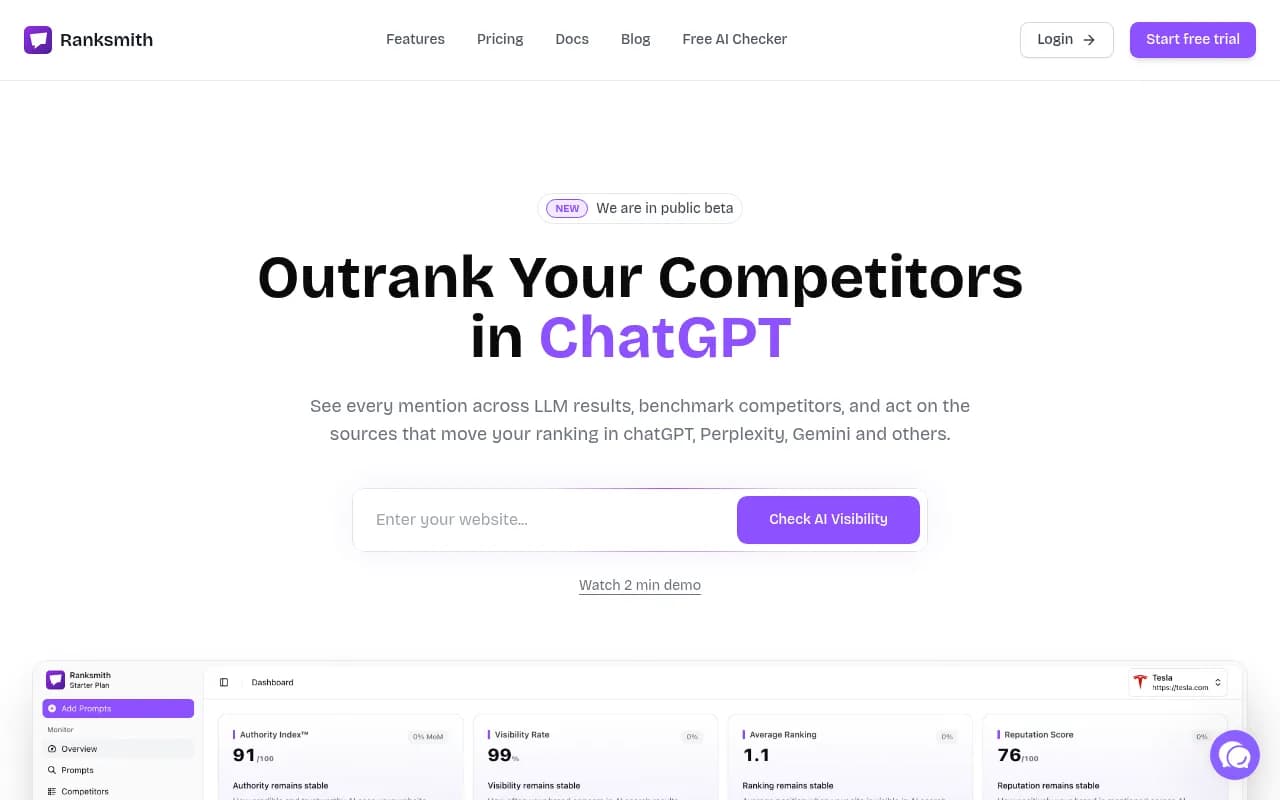
Ranksmith has focused on making AI visibility data actually interpretable for non-specialists -- the reporting is cleaner than most tools at its price point.
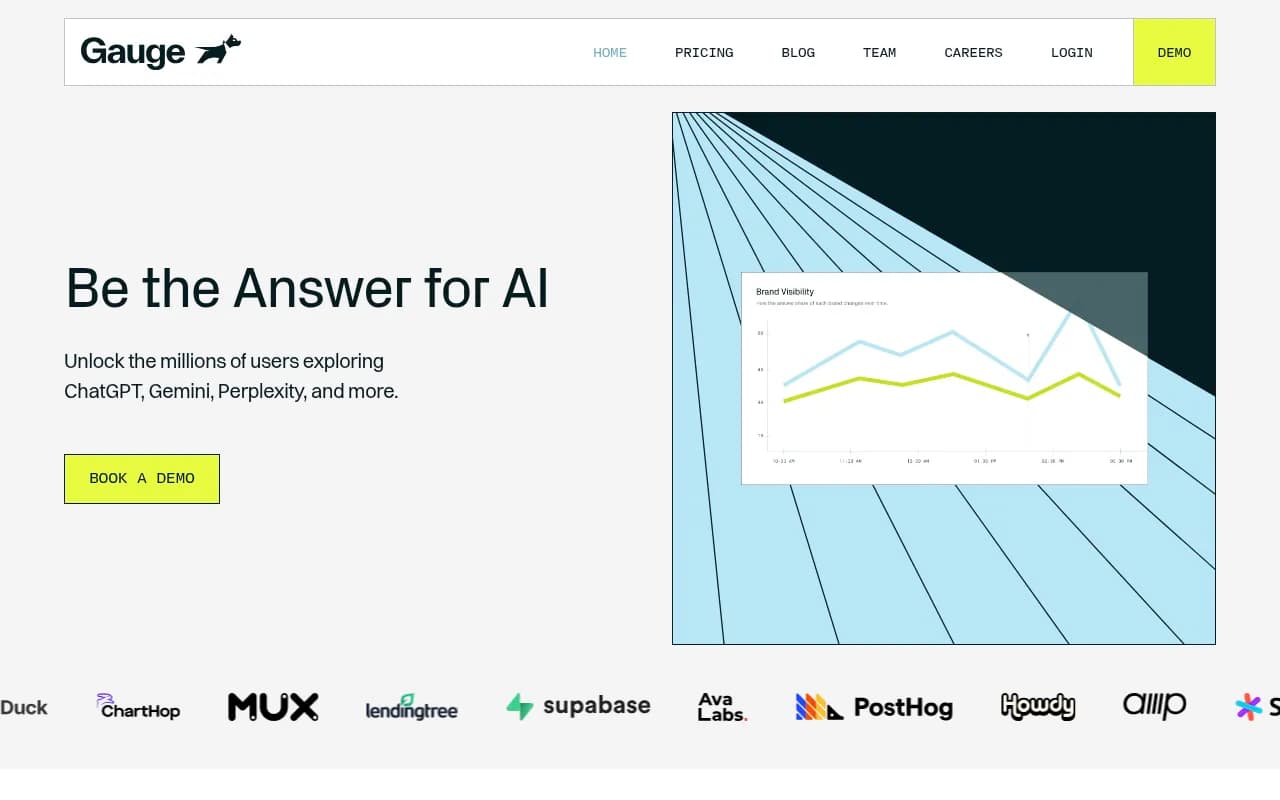
Gauge has taken a competitive intelligence angle that's useful for brands that care more about how they stack up against specific rivals than about their absolute visibility score.
Whitebox is taking an interesting agentic approach -- rather than just surfacing gaps, it attempts to automatically generate and ship content fixes. It's early, but the direction is right.
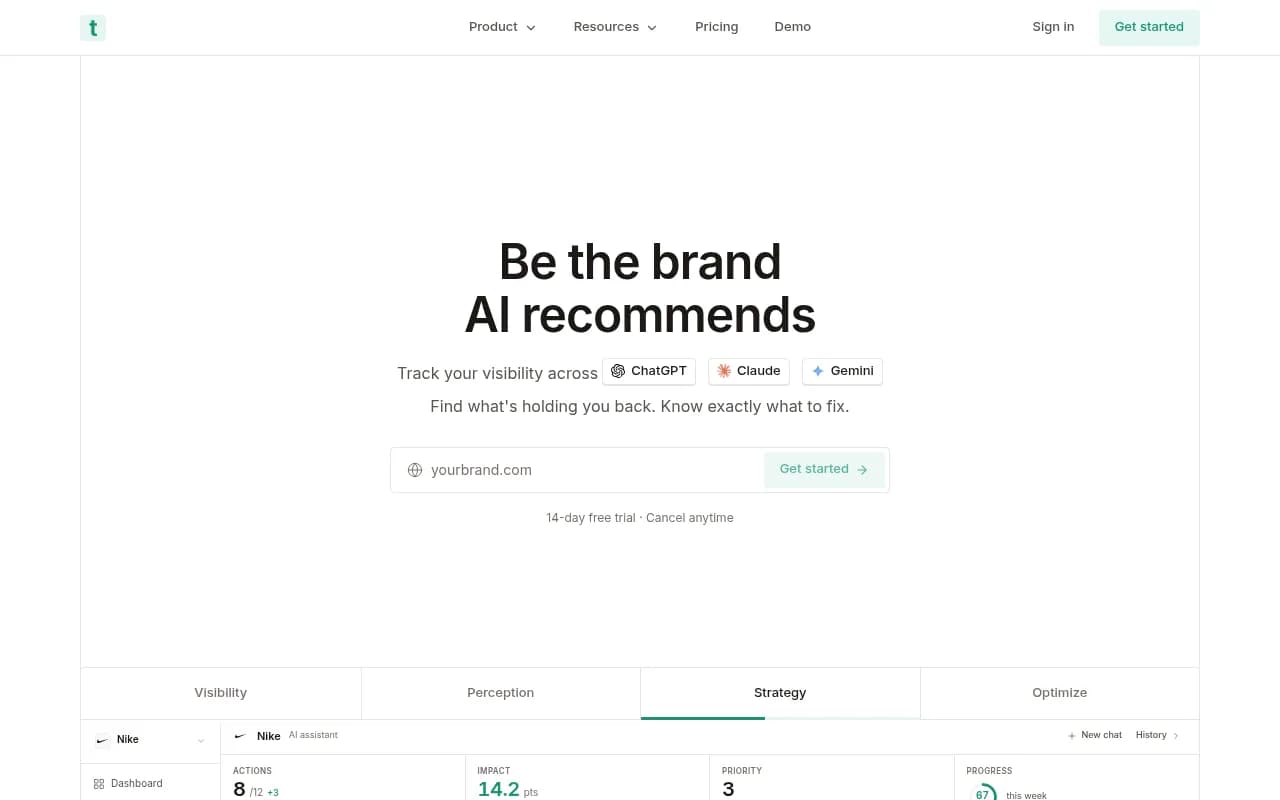
Trakkr.ai covers ChatGPT, Claude, Perplexity, and Gemini with clean multi-model tracking that's accessible for smaller teams.
What to look for when choosing a tool now
The monitoring-vs-optimization divide is the most important thing to get clear on before you evaluate any tool. If you just need to report AI visibility metrics to leadership, a monitoring-only tool might be fine. If you actually want to improve your AI search presence, you need a platform that closes the loop between data and action.
Beyond that, a few specific questions worth asking any vendor:
- Which AI models do you track, and how often do you run queries? (Coverage and freshness matter a lot -- a tool that runs queries weekly will miss significant changes.)
- Can you show me AI crawler activity on my own website? (If not, you're missing half the picture.)
- How do you connect AI visibility to actual traffic and revenue? (If the answer is "we don't," that's a significant limitation.)
- Do you track Reddit and YouTube as citation sources? (Most don't. The ones that do have a real advantage.)
- What does your content recommendation workflow look like? (Generic suggestions are nearly worthless. You want recommendations grounded in actual citation data.)
The tools that can answer those questions well -- Promptwatch most completely, Profound at the enterprise tier -- are the ones that have genuinely earned their position in 2026. The rest are still catching up.
The category is still young enough that the gap between leaders and laggards is wide. That's actually good news if you're evaluating tools right now -- the differences are real and visible, not just marketing. Pick the one that matches where you actually want to be: tracking your visibility, or improving it.