
Key takeaways
- AEO tools collect answers in two ways: polling each model's API, or capturing the consumer interface (the answer a real user sees, with its citations and shopping cards).
- The two methods can return different retrieval, citations and formatting. No one has published a clean measurement of how often they diverge, so test it yourself.
- Collection method is the first thing to check, before prompt counts or dashboards. Ask each vendor which method it uses per engine.
- Run-to-run variance is a bigger problem than most vendors admit. Ask how many runs per prompt per day feed each number.
- API polling is cheaper and steadier, and still has a place, mostly for training-data views of what a model believes.
Why the data source matters
AEO tools (also called AI visibility or GEO tools) are sampling systems. They run a set of prompts again and again, then report how often answers mention or cite your brand. That sounds simple until you ask where the answers come from.
There are two routes. The first is the API route: the tool calls OpenAI, Google, Anthropic or Perplexity through their developer endpoints. The second is the interface route: the tool drives the consumer product, through logged-out or logged-in sessions, and records what appears on screen.
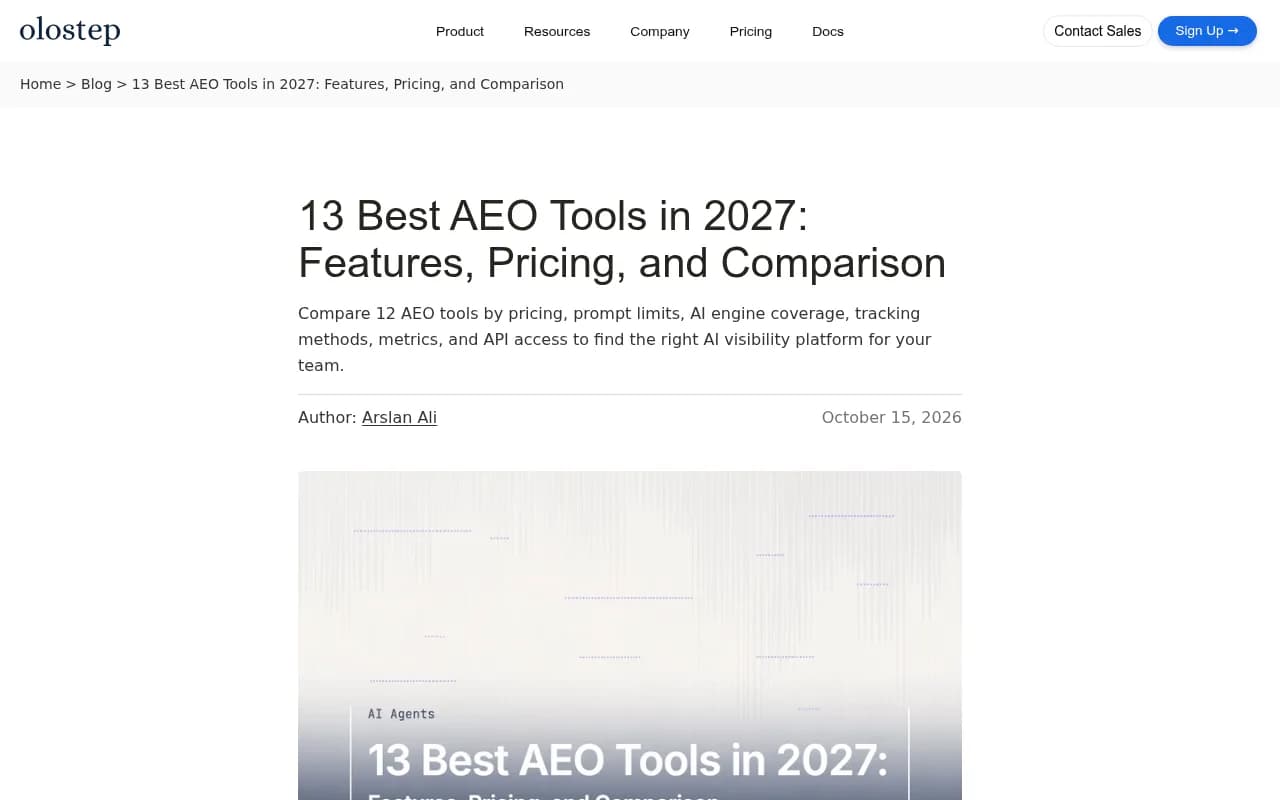
The Olostep guide to AEO tools puts it plainly: answers from the two routes can differ in retrieval, citations and formatting. It also calls it an open question whether API answers match what consumers see. Note that Olostep sells web data infrastructure, so it has a stake in scraping. Still, the caveat is fair.
The case for interface capture
AIMultiple's AEO tools review argues that scraping answers directly from the interface gives a more accurate view of AI visibility, because it reflects real-world AI search results. The logic is straightforward. A consumer product wraps the model in search, ranking, personalization, safety layers and UI widgets. An API call skips some of that. If your goal is to know what a buyer saw, you want the buyer's view.
This is the position Promptwatch takes. Its own methodology page describes collecting responses, citations and click data from the actual user interfaces of ChatGPT, Gemini, Perplexity, Claude, AI Overviews and others, across 26B+ data points. That is a first-party claim, but it is a clear one, and it is the design choice that the rest of its feature set (shopping carousels, citation snippets, per-country answers) depends on.

The case for API polling
Yotpo's ecommerce AEO guide leans the other way. It argues API connections return structured JSON instead of brittle HTML, which means higher stability and scalability. That is a real engineering advantage. Scrapers break when a UI changes; APIs have contracts. Be careful with one number in that article, though: the 34.8% of developers figure is about web-scraping APIs in general, not AEO tools.
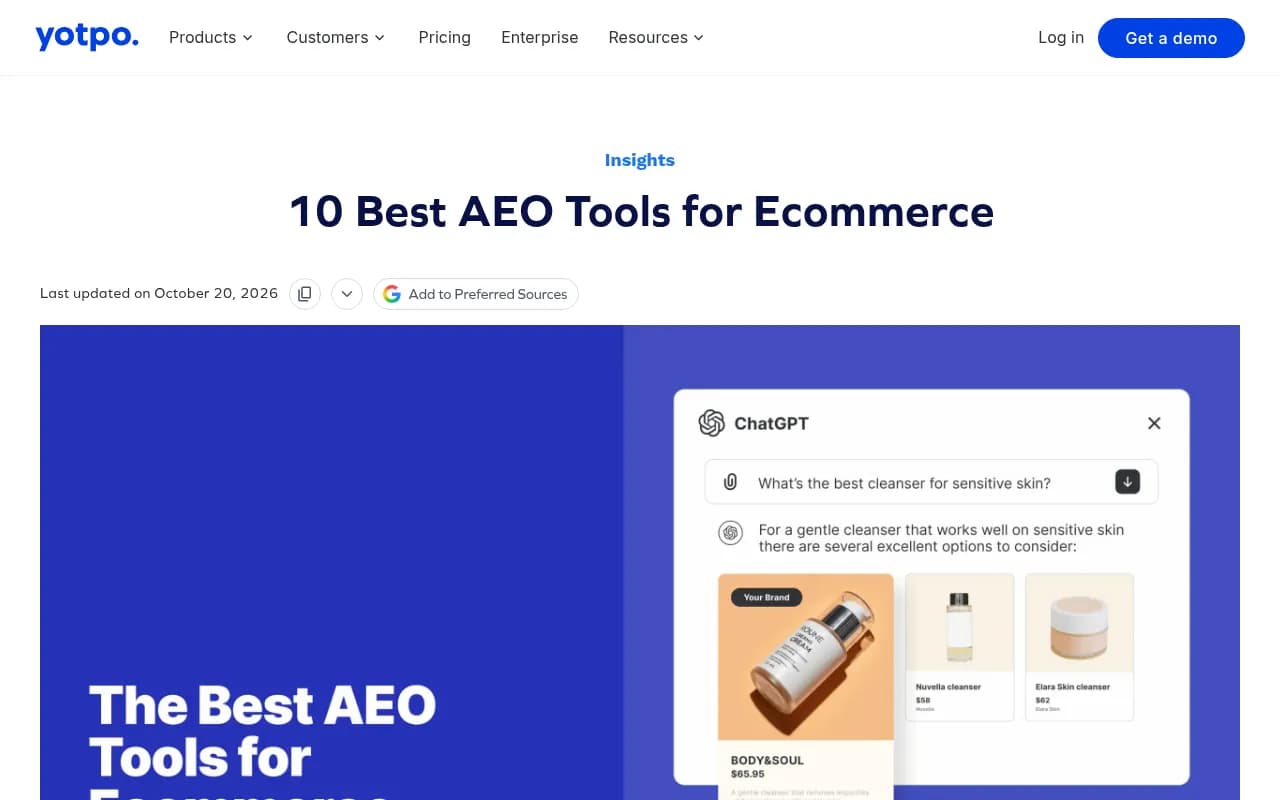
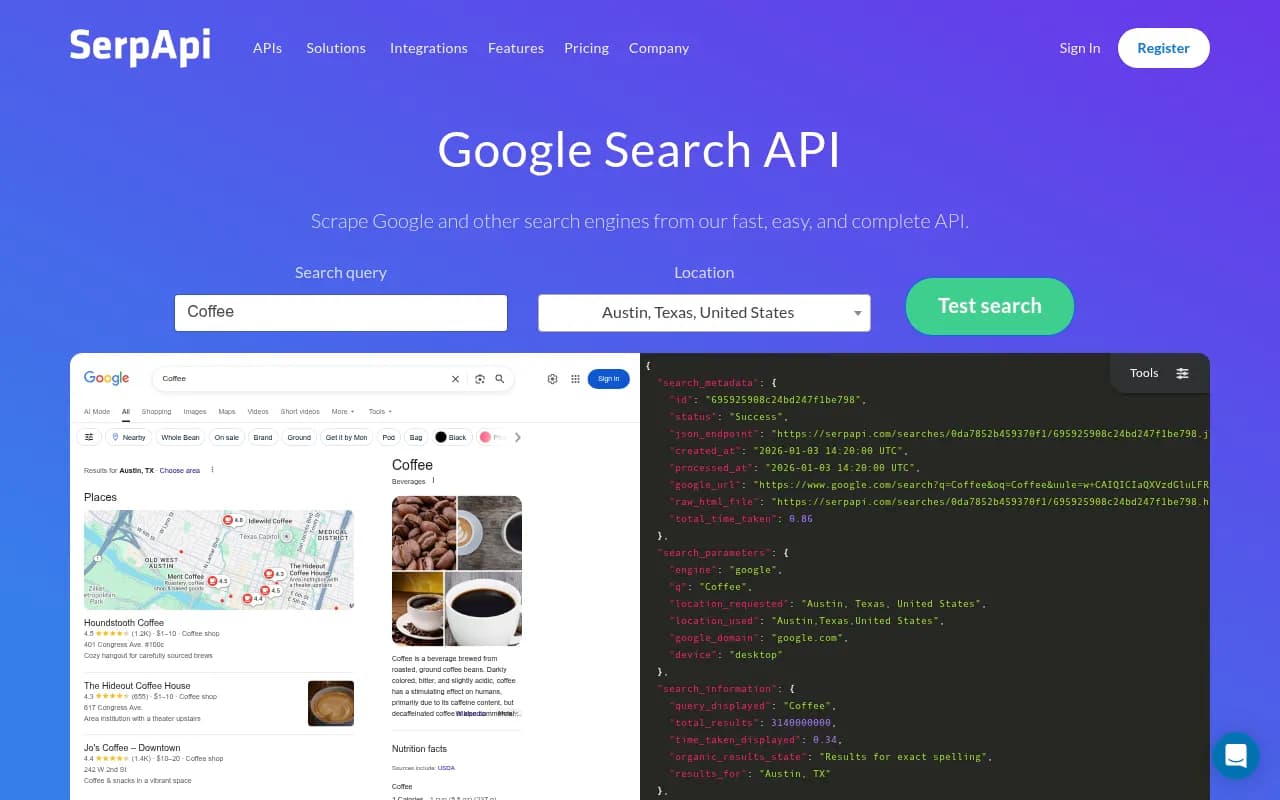
The same Yotpo piece lists SerpApi as a raw feed for Google AI Overviews citations. That is a hybrid worth knowing about: a vendor-managed scraping API that hands you structured data. You get interface-level answers without running browsers yourself.
Where I land
I think interface capture is the better default for brand monitoring, because the question you are answering is "what did a user see?" API polling is not worthless. It tells you what a model believes from training data, with no search layer on top, and that is useful for reputation questions. The honest answer is that you want both, labeled clearly, and you want the vendor to tell you which is which.
What each method gets right and wrong
| Dimension | Real interface capture | API polling |
|---|---|---|
| Matches what users see | Closest available | Can differ in retrieval and citations |
| Citations and source lists | As displayed in the product | As the API chooses to return them |
| Shopping cards, widgets | Capturable | Usually absent |
| Country and language | Realistic if sessions are localized | Depends on API parameters |
| Stability | Breaks when the UI changes | Stable contracts |
| Cost per response | Higher | Lower |
| Best use | Visibility, citations, competitor share | Training-data view of a model |
Two caveats. First, "interface capture" is not one thing. Logged-out sessions, logged-in sessions and personalized accounts all behave differently. Promptwatch, for example, tracks Perplexity with account memory and search-history personalization turned off, so earlier sessions do not shape recorded answers. Ask every vendor the same question. Second, nobody has published a head-to-head measurement of API versus UI divergence that I could verify. Treat claims in either direction, including AIMultiple's, as informed opinion until you test.
The variance problem nobody talks about
Collection method is half the story. The other half is how many times a prompt gets run.
A SparkToro study found less than a 1 in 100 chance that ChatGPT or Google's AI returns the same brand list in any two responses. The limits matter: 12 prompts, run manually by volunteers in late 2025, not peer-reviewed, and co-authored with an AI-tracking vendor. Still, anyone who has pasted the same prompt into ChatGPT twice has seen the effect.
The consequence is practical. A tool that runs each prompt once a day gives you one data point per day, and your "visibility score" can swing for no reason. Ask vendors how many runs per prompt per day they do, and how those runs become share of voice.
Engines also differ from each other. A University of Toronto preprint (arXiv 2509.08919) found they differ in domain diversity, freshness, cross-language stability and phrasing sensitivity. Promptwatch's average sources per response data shows the same thing from a citation angle. ChatGPT cites about 5 sources per web-search answer, Google AI Overviews about 10, and Perplexity almost exactly 10 every day. Copilot's average swung from under 2 to nearly 17 sources within a few weeks before settling low, which Promptwatch reads as Microsoft re-architecting retrieval. Its advice is to judge Copilot on monthly trends, not weekly snapshots. That kind of observation is only possible if you capture what the product actually returns.
The core metrics, defined
All of these depend on sampling, so all of them inherit the quality of your collection method.
- Mention rate: the share of sampled answers that name your brand.
- Citation rate: the share of sampled answers that link to your domain.
- Share of voice: your mentions divided by all mentions of you and tracked competitors.
- Sentiment: how answers describe you.
For how Promptwatch defines these, see its docs on citations versus mentions and share of voice.
Ten platforms compared
The table below uses entry-tier pricing checked by Olostep on October 15, 2026. The collection method column is where I have to be careful: I could not confirm UI versus API per engine from vendor documentation for most of these tools, so I only mark what I could source. Verify the rest in a demo.
| Tool | Entry price | Entry prompts | Engines at entry tier | Collection method |
|---|---|---|---|---|
| Promptwatch | $95/mo Essential | 50 | All supported models on every paid plan | Real UI capture (stated by vendor) |
| Profound | No public paid price; Enterprise custom | Trial: 50 daily for 7 days | Trial: ChatGPT, Gemini, AI Overviews | Vendor says "real prompt data"; confirm per engine |
| Peec AI | EUR 85/mo | 50 | 3 models of your choice | Ask vendor |
| Otterly.AI | $29/mo ($25 annual) | 15 | ChatGPT, AI Overviews, Perplexity, Copilot | Ask vendor |
| Scrunch | $250/mo | 125 | ChatGPT, Perplexity, AI Overviews, Copilot | Ask vendor |
| AthenaHQ | $295/mo | 3,600 credits | 11 models | Ask vendor |
| Semrush AI Visibility Toolkit | $99/mo | 25 | Includes AI Mode and ChatGPT | Ask vendor |
| Ahrefs Brand Radar | From $50/mo; $699/mo all models | 2,500 checks/mo | Varies by package | Ask vendor |
| HubSpot AEO (beta) | $50/mo ($45 annual) | 25 | ChatGPT, Gemini, Perplexity | Ask vendor |
| Goodie AI | $295/mo | 110 | Not captured | Ask vendor |
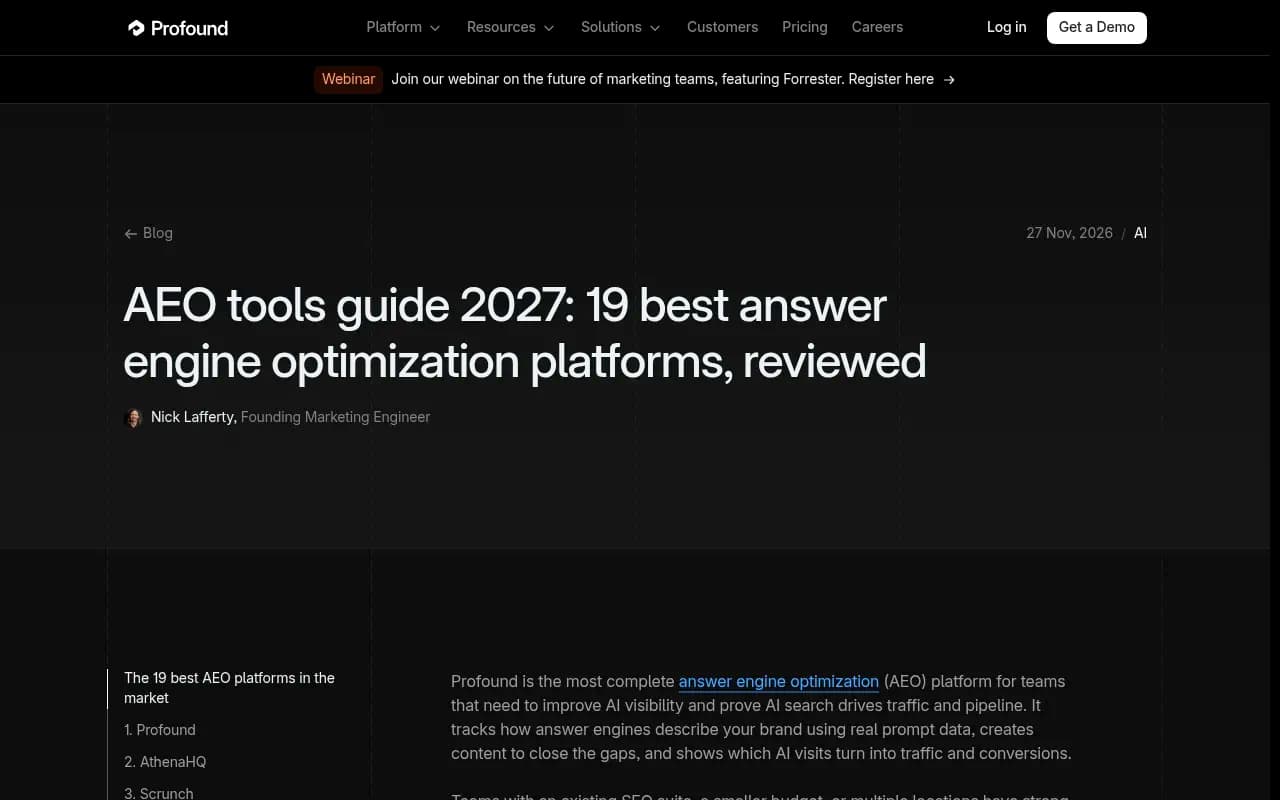
A few notes on reading this. Coverage is thin at the bottom: at least 7 of the 12 entry tiers Olostep reviewed cover four engines or fewer, and many skip Claude. Promptwatch's price is its own published figure; confirm everything at promptwatch.com/pricing. Profound's guide claims daily tracking on "1.9B+ real prompts" across all major engines, which is a vendor claim worth probing in a demo.
Quick notes on each
Profound is the enterprise option and the one Promptwatch is most often compared with. Its pitch is real prompt data plus attribution and content creation. See the Promptwatch vs Profound page for a head-to-head from Promptwatch's side.

Peec AI is a clean, affordable dedicated tracker for smaller teams, with model choice at the entry tier.

Otterly.AI is the cheapest way in. Fifteen prompts is tight, but it covers four engines.

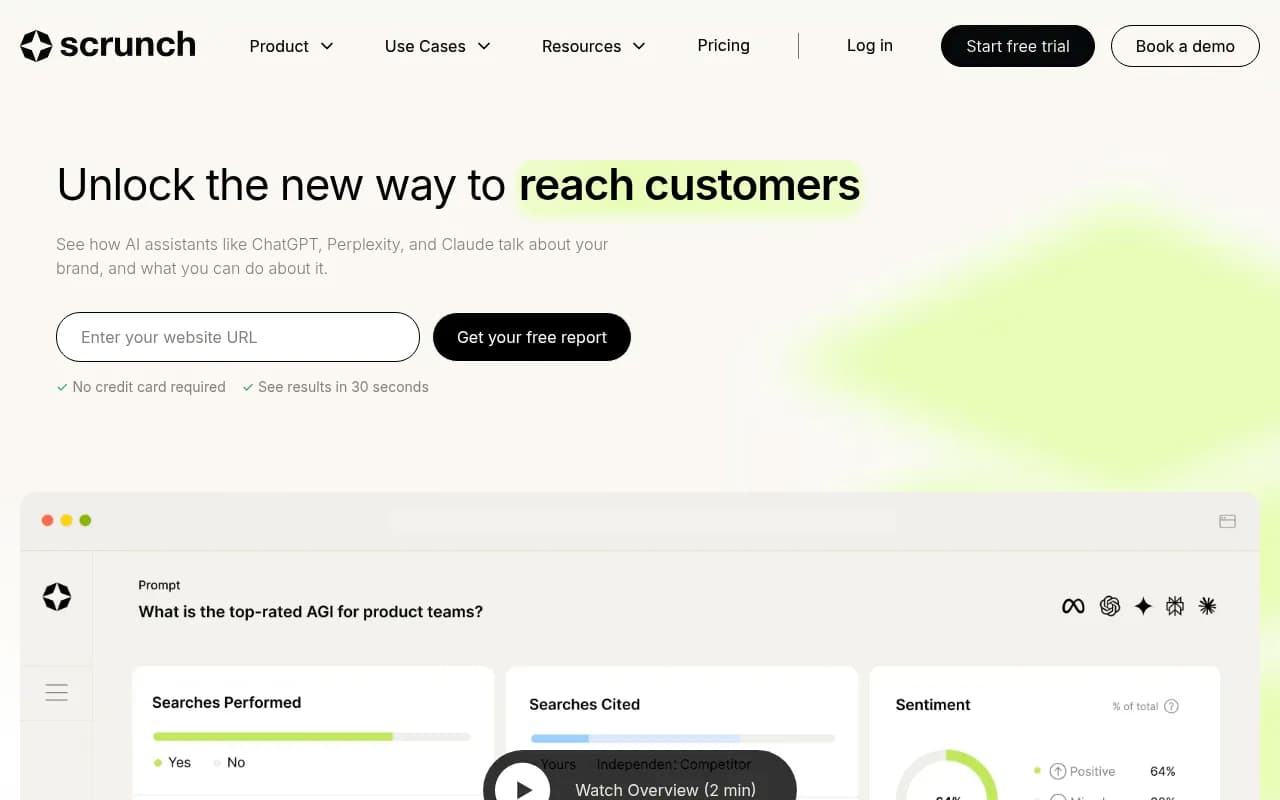
Scrunch sits in the middle on price with 125 prompts and four engines.
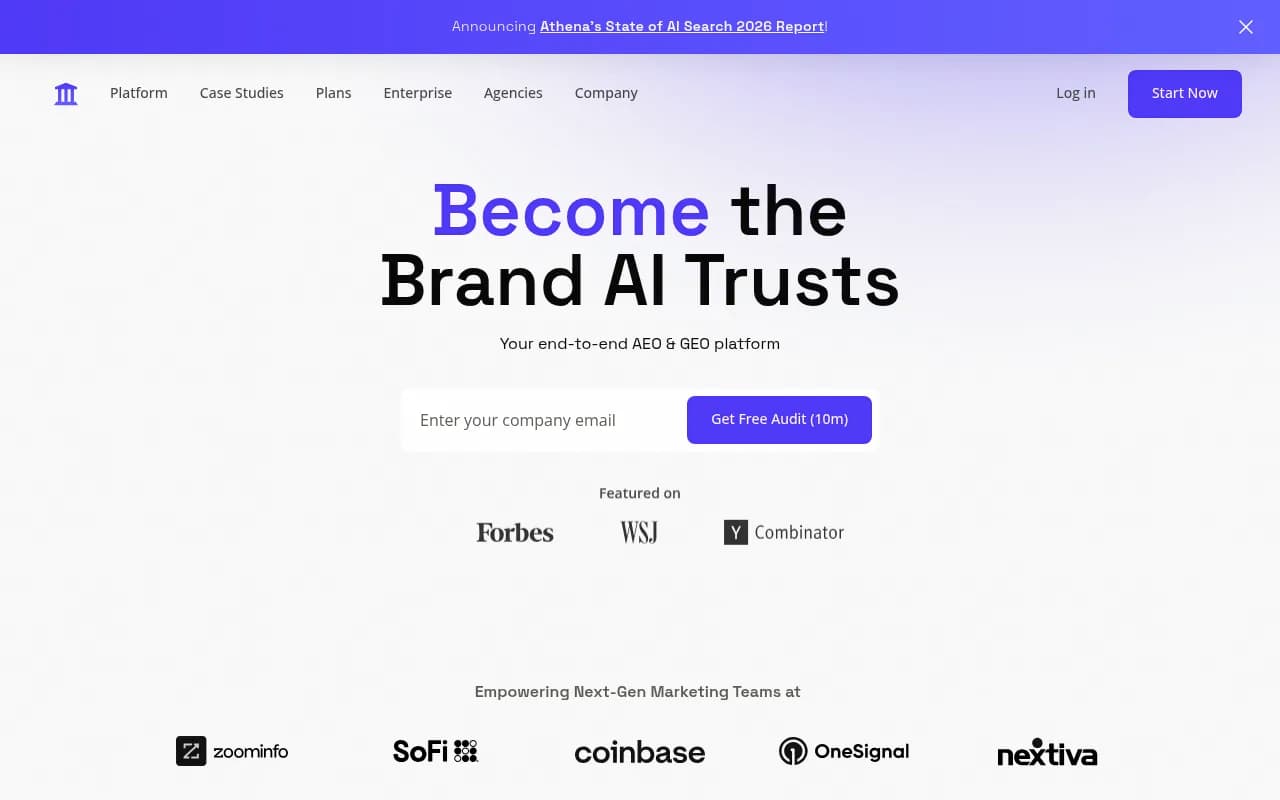
AthenaHQ prices in credits, where one credit is one AI response, and leans on prescriptive recommendations. Profound's own guide notes its prompt volume relies on an undisclosed estimation model.
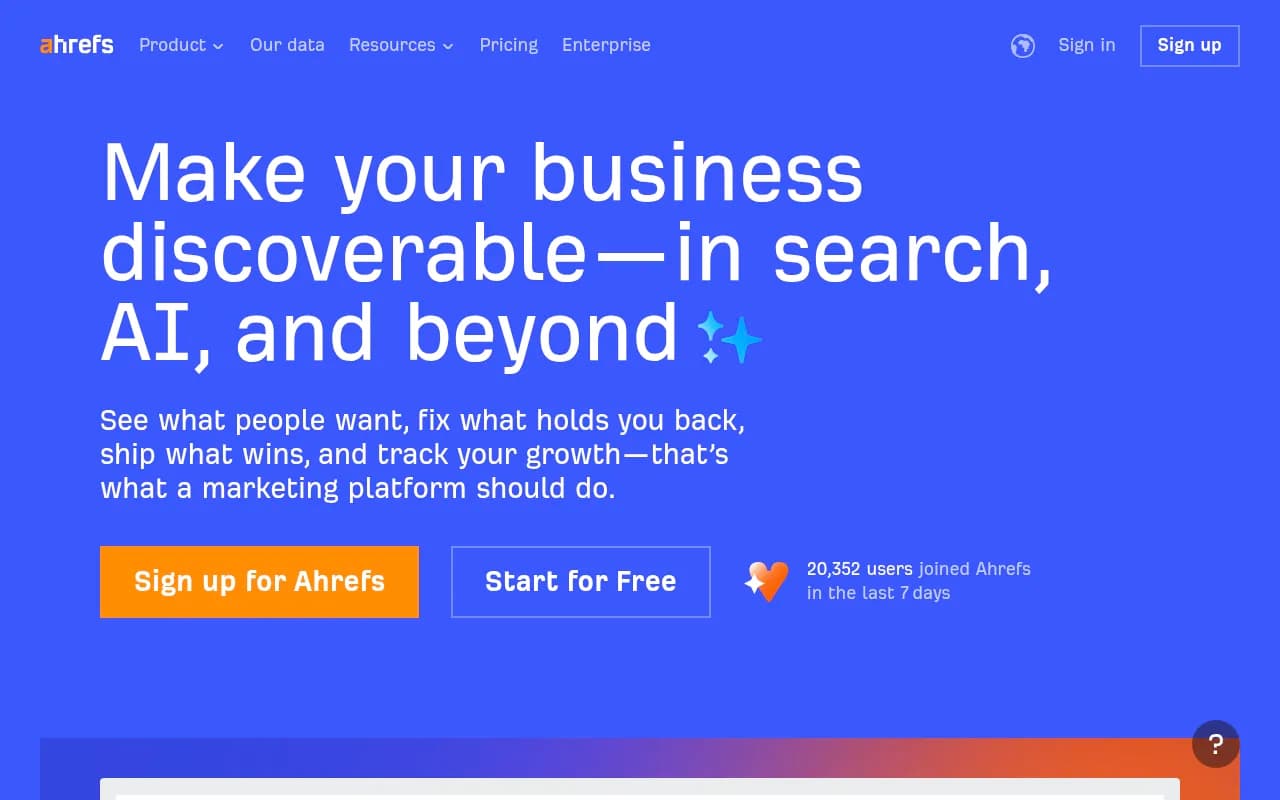
Semrush and Ahrefs add AI tracking to existing SEO suites. Convenient if you already pay for them, though their prompt sets are fixed or limited compared with dedicated tools.
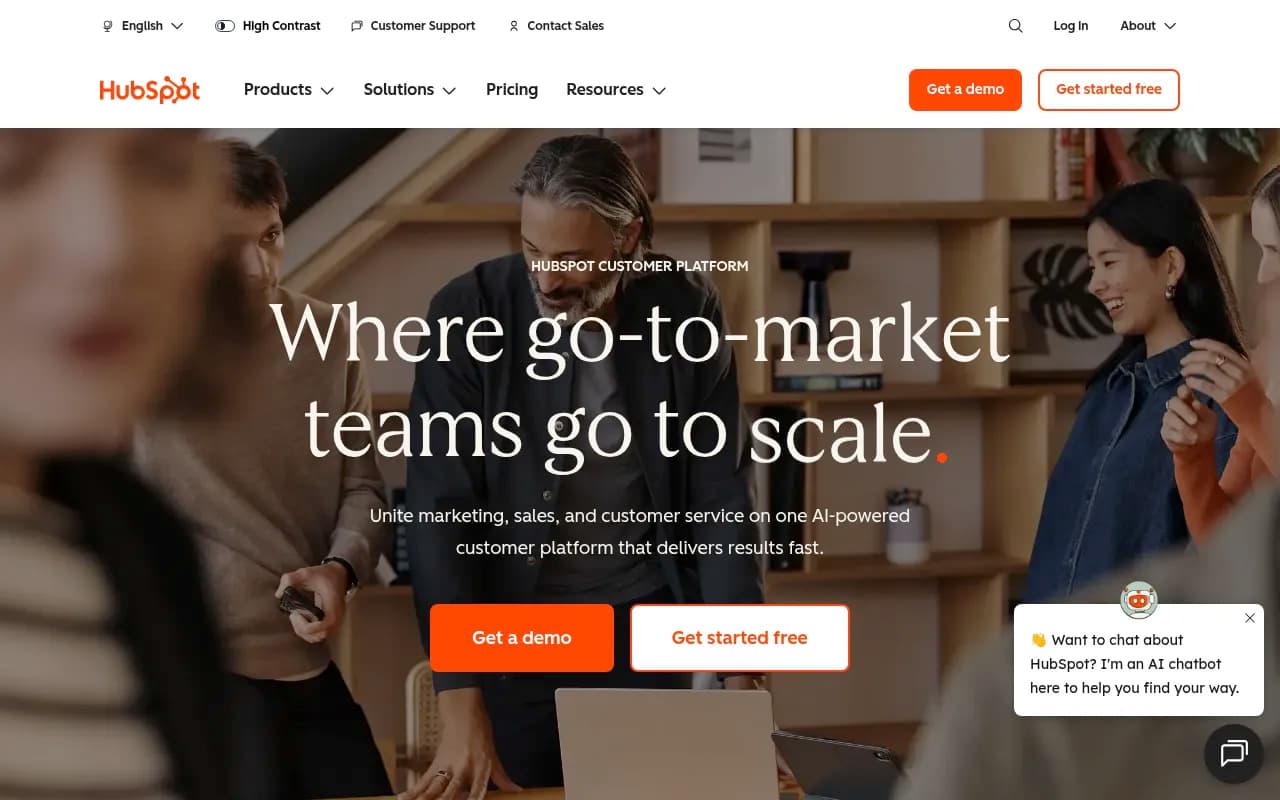
HubSpot AEO is cheap and in beta, a reasonable fit if your team already lives in HubSpot.
Goodie AI starts at $295 a month with 110 prompts, though I could not capture its engine list.
Build your own: the DIY route
If you have engineers, the open-source geo-aeo-tracker shows how it works. It uses Bright Data's AI Scraper API to collect structured responses from four AI engines and prints per-engine visibility in a CLI, including whether your site was cited and which competitors appeared. It is a useful way to learn the mechanics, and a sobering one: you own the proxies, the breakage and the variance handling.
For a broader view of scraping infrastructure, DataForSEO and SearchApi are the usual pay-as-you-go options.
How to test a vendor's data source in an hour
Olostep's suggested test is the right one, and it costs nothing.
- Ask the vendor which method it uses for each engine you care about. Write the answers down.
- Pick five of your own prompts, including a branded one and a competitor comparison.
- Run them yourself in the consumer apps, logged out, in the same country the tool tracks.
- Compare the brands named, the order, and the cited URLs against the tool's output.
- Repeat the manual run a few times to see your own variance. If the tool's numbers fall inside that spread, fine. If it shows brands you never see, ask why.
- Ask how many runs per prompt per day, and how location, language and persona are set.
The country, language and persona point is worth stressing. Answers change with all three, and a monitor that mixes markets will give you a blended number nobody can act on. Promptwatch fixes language and location per monitor for exactly that reason.
Beyond monitoring: what to look at after the data source
Once you trust the collection, the next question is what the tool does with it. Most products in the table above stop at a dashboard. A few add crawler logs, AI traffic attribution or content generation. Promptwatch is one of the end-to-end options: IP-verified AI crawler logs, visitor analytics for AI-referred traffic, a Content Agent that publishes to WordPress, Webflow or Framer, and tracking for whether each published page then gets crawled and cited. Its AI crawler logs are useful for telling an access problem from a content problem.
If you want to browse more options by category, the GEO software directory covers the field, and Promptwatch's side-by-side comparison of GEO platforms lays out feature coverage. A free AI visibility report is a quick way to run your own check against the interface method described above.
Recommendations by situation
| If you are... | Start with | Why |
|---|---|---|
| A brand that wants what buyers actually see, plus actions | Promptwatch | UI capture, crawler logs, content workflow |
| An enterprise with procurement and attribution needs | Profound or Promptwatch Business | Both cover enterprise depth; compare in demos |
| A small team testing the water | Otterly.AI or Peec AI | Low entry prices |
| Already deep in an SEO suite | Semrush or Ahrefs Brand Radar | Existing data and billing |
| An engineer who wants control | DIY with a scraping API | You own the method, and the maintenance |
FAQ
Is API polling always worse than UI capture?
No. It is cheaper, more stable and good for seeing what a model believes from training data. It is weaker for answering what a buyer saw, because citations and retrieval can differ.
Does the data source change my AEO strategy?
It changes how much you can trust the numbers. If your tool reports mentions your own manual tests never reproduce, you will optimize for the wrong prompts.
How many runs per prompt do I need?
More than one a day if the metric matters to you. Given how inconsistent AI answers are, a single daily sample is noisy. Ask each vendor how runs aggregate into share of voice.
Why do prices vary so much?
Interface capture costs more to run than API calls, and credit-based pricing (as at AthenaHQ) is not comparable to per-prompt pricing. Compare cost per response, not headline price.