Key takeaways
- "Slate" is three products: Technolutions' higher-ed CRM, slateteams.com's visual social platform, and slatehq.ai's AI marketing platform. This guide is about the last two.
- Slate's agency plan costs about $2,000/mo, and the social Slate jumps from $99 to $399 with no middle tier. Both create real price friction for agencies.
- If you need writing, SEO optimization, and publishing in one place, Frase, Surfer SEO, AirOps, Scalenut, and Jasper cover the written side well.
- If your real need is AI search visibility plus content that fixes gaps, Promptwatch is the one that closes the loop from tracking to publishing.
- Verify white-label, client seats, and approval features on each vendor's pricing page before you commit. Prices below come from vendor and third-party pages from early 2026.
First, which Slate do you mean?
Search results for "Slate alternatives" are a mess, because three unrelated products share the name. Getting this wrong wastes an afternoon.
- Slate by Technolutions is a higher-education admissions CRM. The ibl.ai comparison says implementations typically take 6 to 12 months and lists Salesforce Education Cloud, Element451, Ellucian CRM Recruit, and TargetX as alternatives. Nothing here is relevant to agencies, so we skip it.
- Slate (slateteams.com) is a visual social content platform with AI video clipping, brand-aware auto-captions, and Brand Hub governance. Customers are mostly sports and live-event teams. It has no AI writing, no SEO or AEO tracking, and no built-in scheduling.
- Slate (slatehq.com / slatehq.ai) is an AI marketing platform covering AI search tracking, SEO, content, and outreach.
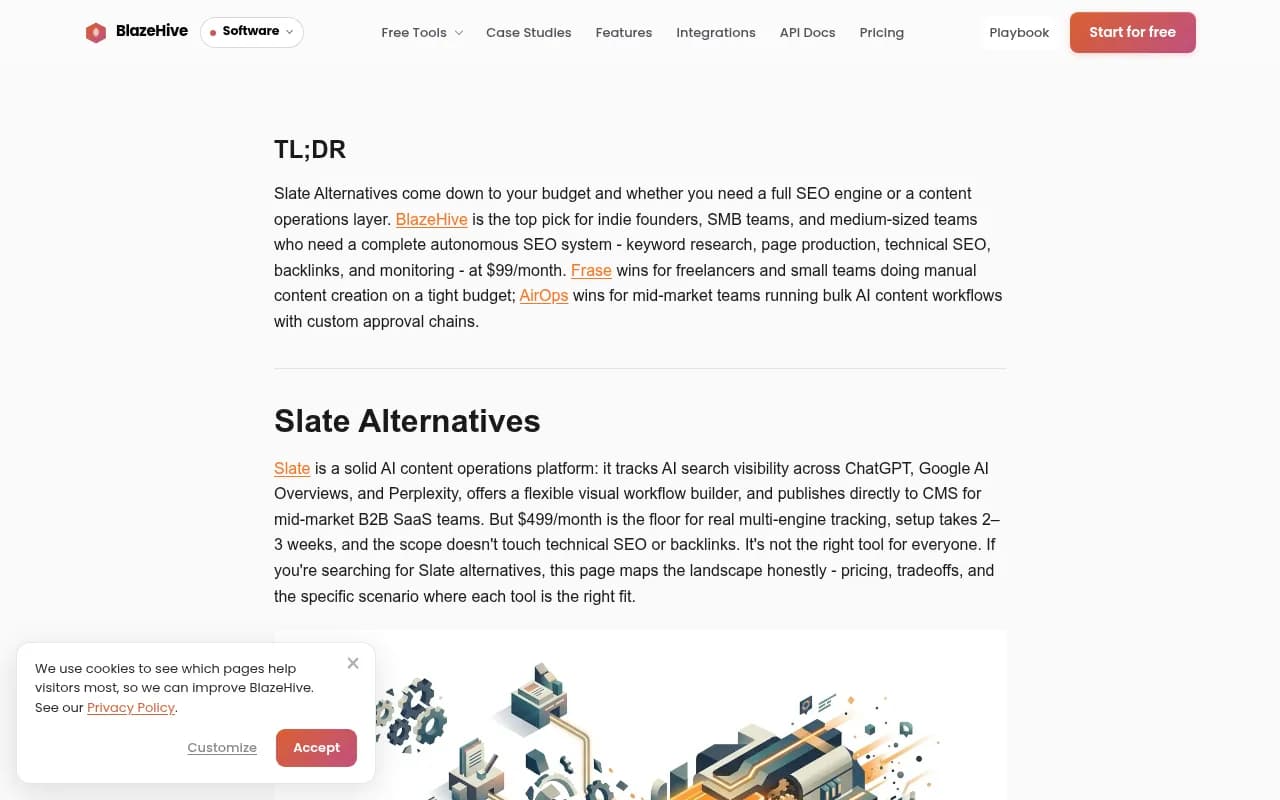
The tools below are most relevant if you are leaving the third one, or if you picked the second and found out it doesn't write anything.

Why agencies go looking for alternatives
The complaints are consistent, and they are mostly about price structure and scope rather than quality.
For the AI marketing Slate, published pricing is Solo at $199/mo, Pro at $499/mo, and an Agency plan around $2,000/mo (100,000 credits, 50,000 answers tracked, 10,000 pages, built for multiple client brands). Per Slate's own AI SEO post, Solo includes 4,500 answers tracked and Pro 15,000. One review site also reports 2 to 3 weeks of setup for workflows, approval chains, and brand rules. And it doesn't cover technical SEO audits or backlinks, so you still need other tools.
For the social Slate, the Creator plan is $99/mo and capped at one Brand Hub. Pro is $399/mo. An agency with two or three clients has nowhere to go but up. Add Sprout Social integration (Pro plus Sprout at $249/mo) and you start around $650/mo for a stack that still doesn't write a blog post.
A caveat on sources: Slate's blog ranks Slate first in its own lists, and DeepSmith's comparison pushes DeepSmith. Treat both as marketing, and use them for the facts they state rather than the rankings.
What agencies should require from content generation
- Multi-client structure: separate brand voice, knowledge, and reporting per client, without paying a tier jump for each.
- Research before writing: briefs grounded in SERP data or AI citation data, not a blank prompt.
- Optimization scoring: a way to check drafts against what ranks or gets cited.
- Publishing: CMS push, so nobody copy-pastes into WordPress at 6pm.
- Approvals: a review step clients can live with.
- Pricing that scales with output, not with how many brands you manage.
The seven alternatives at a glance
| Tool | Best for | Writes content | SEO/AI visibility data | Starting price (verify) |
|---|---|---|---|---|
| Promptwatch | AI search visibility plus content that fixes gaps | Yes (Content Agent) | Deep, with crawler logs | Agencies from $199/mo |
| Frase | Small teams, tight budgets | Yes | SEO and GEO | Professional about $103/mo |
| Surfer SEO | Agencies optimizing many client pages | Yes, plus scoring | SEO focus | Check vendor |
| AirOps | Programmatic and bulk content workflows | Yes | Some | Check vendor |
| Scalenut | SEO writing with planning | Yes | SEO | Check vendor |
| Jasper | Brand-voice marketing copy across channels | Yes | Limited | Check vendor |
| DeepSmith | Written pipeline for the social Slate gap | Yes, 14 channels | Limited | $80/mo Pro, $299/mo Scale |
1. Promptwatch
Slate's pitch is tying AI search tracking to content execution. Promptwatch does the same thing with more depth underneath, and it is the one I would test first if the reason you bought Slate was AI visibility.

The difference between a tracker and an optimization platform is what happens after you see a gap. Promptwatch's content gap analysis shows which prompts competitors win and you don't. The Content Agent then plans, writes, and publishes to WordPress, Webflow, or Framer, with a review inbox if clients want sign-off or fully hands-off if they don't. Published pages are tracked through IP-verified AI crawler logs, citations, and AI-driven visitor analytics, so you can show a client whether an article got read, cited, and clicked. Underperformers come back as items on the Action Board.
For agencies specifically, plans are built around unlimited projects: Kick-off at $199/mo, Growth at $399/mo, and Scale at $799/mo, with 10 seats, white-label reports, and a client portal. Compare that to a $2,000/mo agency tier. It tracks real ChatGPT, Google AI Overviews, AI Mode, Gemini, Perplexity, and Copilot interfaces rather than only API output. Confirm current pricing at promptwatch.com/pricing.
Honest limit: it is not a classic social content tool and does not do video clipping. It's for search and AI visibility content.
If you want to understand what kinds of pages actually get cited before you write them, Promptwatch's data on which content types ChatGPT cites most is a useful starting point. For the Sep 28 to Oct 4, 2026 period, product pages led at 22.4% of citations, followed by landing pages and listicles.
2. Frase
Frase is the budget pick. It researches, writes, and optimizes articles, and it now frames itself as SEO plus GEO. Per Slate's own AI SEO post, the Professional plan is about $103/mo with 75 content projects and 3 users. That is plenty for a freelancer or a two-person agency, and tight for anything bigger.
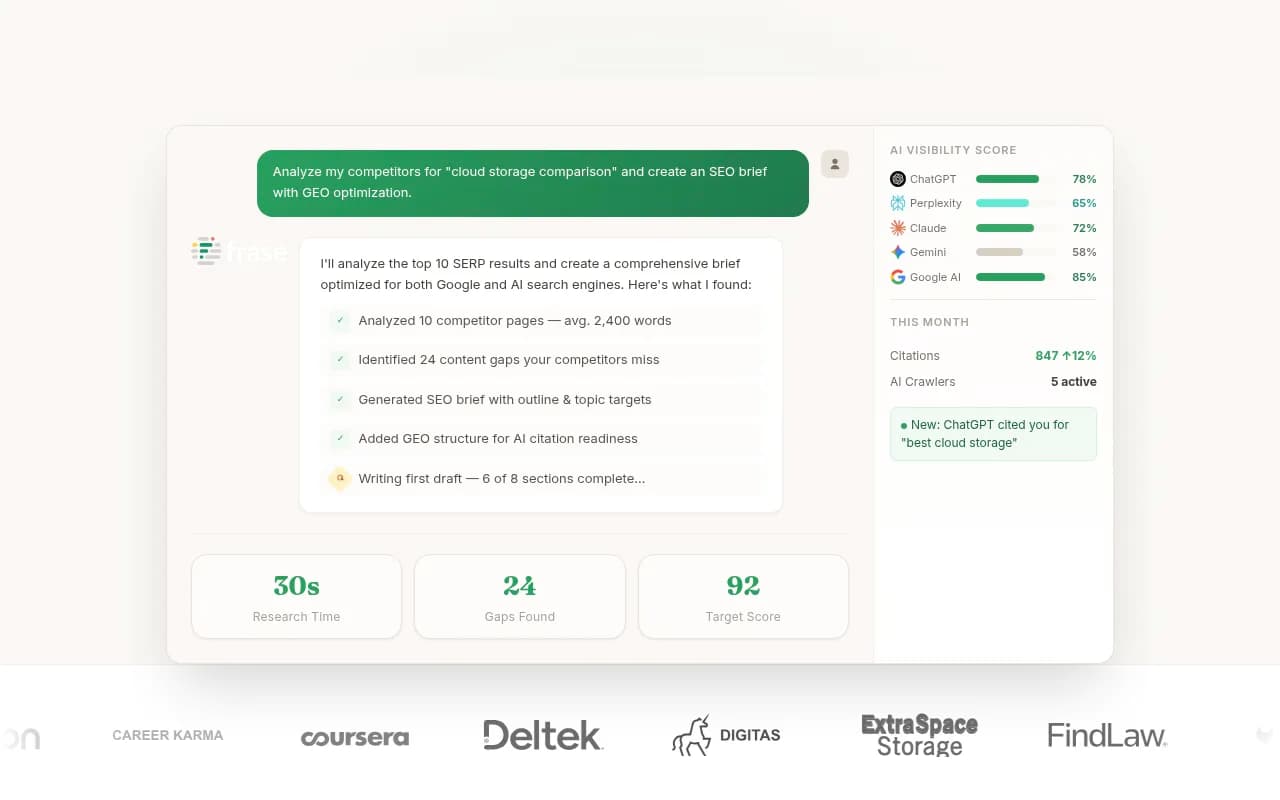
The trade-off is workflow depth. You won't get complicated approval chains or multi-client governance the way a content operations platform offers. If your process is a strategist, a writer, and an editor, that's fine.
3. Surfer SEO
Surfer is where many agencies already live. Slate's AI SEO article describes it as a fit for agencies managing multiple clients, which is a rare moment of agreement between a vendor and a competitor. Its strength is the content editor: you write or generate a draft and score it against what ranks.
It is an optimization layer more than a pipeline. Briefs, drafts, and scoring are good; ideation at scale and hands-off publishing are not its focus. Pair it with a research tool if volume is your problem.
4. AirOps
AirOps is the pick for programmatic work. Slate's own Jasper alternatives post names it best for B2B companies with large product catalogs or location-based pages. That matches how agencies use it: build a workflow once, run it across hundreds of rows of data, add human approval steps.
The cost is setup time. You are building systems, not opening a text box. It rewards agencies with a repeatable service line and punishes ones who just want to write ten posts.
5. Scalenut
Scalenut combines keyword planning, content briefs, and AI drafting in one place. It sits between Frase's simplicity and AirOps's power. For an agency that sells SEO blog content and wants one login for research through draft, it is a reasonable middle option.

Check how it handles multiple clients and exports before committing. Those are the details that vary most and matter most to agencies.
6. Jasper
Jasper is the old reference point for AI marketing copy, and it is now positioned around agents that automate marketing workflows. Its strength is brand voice across many content types: ads, emails, landing pages, social captions. That covers the gap the social Slate leaves on the writing side.
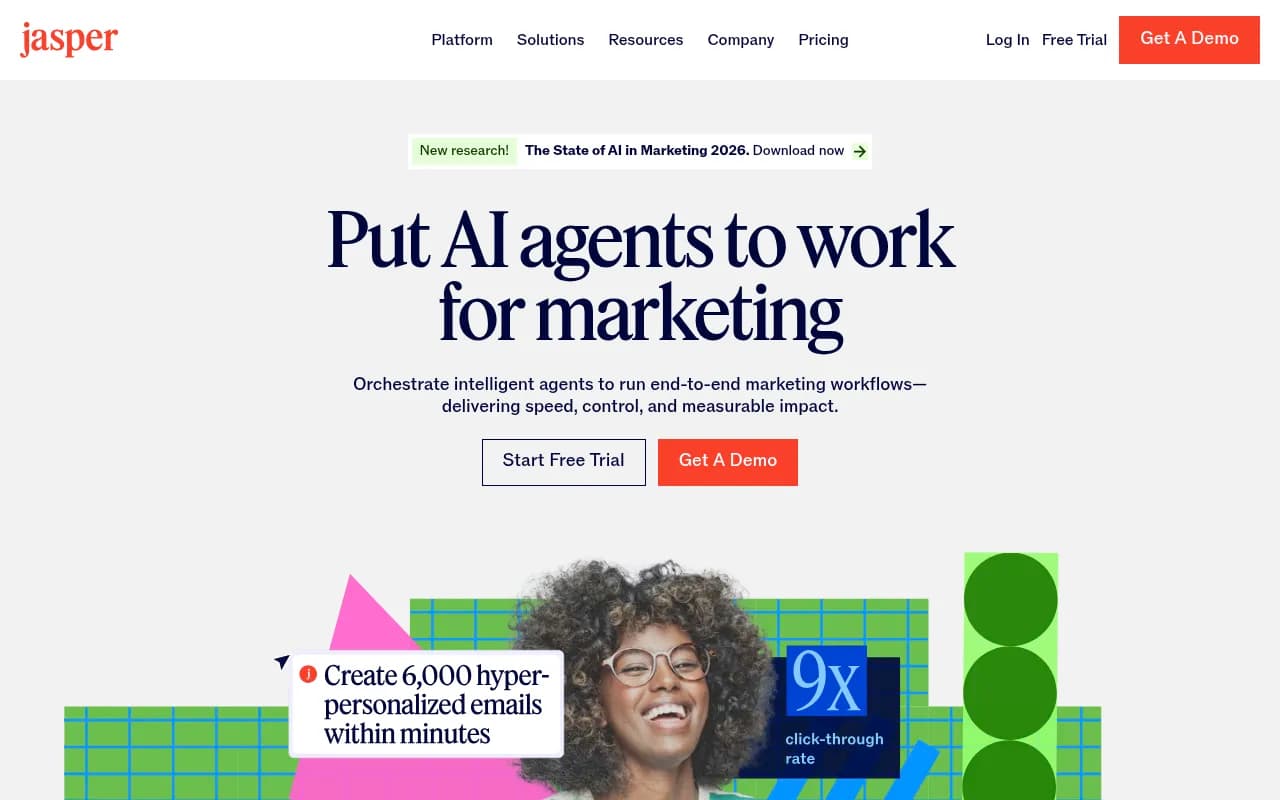
The complaint Slate's own blog makes about Jasper (briefs in Google Docs, SEO bolted on after) is partly self-serving, but it is not wrong. Jasper writes well. It does not tell you what AI engines cite.
7. DeepSmith
DeepSmith is the written-content answer if you were looking at the social Slate and noticed it doesn't write anything. The comparison page lists $80/mo Pro and $299/mo Scale, and says it publishes to 14 channels. The same page is DeepSmith's own marketing, so weigh its claims accordingly.
I don't have a catalog card for it, so test it directly. A trial will tell you more than the listicle will.
If you meant the visual social Slate
Some of you really do want video clips and branded captions, and just need the writing and scheduling Slate lacks. Then the stack looks different. DeepSmith's comparison lists these options with April 2026 prices:
| Tool | Job | Price |
|---|---|---|
| Canva | Design | Free or about $15/mo Pro |
| CapCut | Video editing | Free or about $7.99/mo |
| Adobe Express | Quick design | Free or about $10/mo |
| Buffer | Scheduling | Free or $6 per channel |
| Loomly | Calendar and approvals | $42/mo |
| Sprout Social | Enterprise social management | $249/seat/mo |
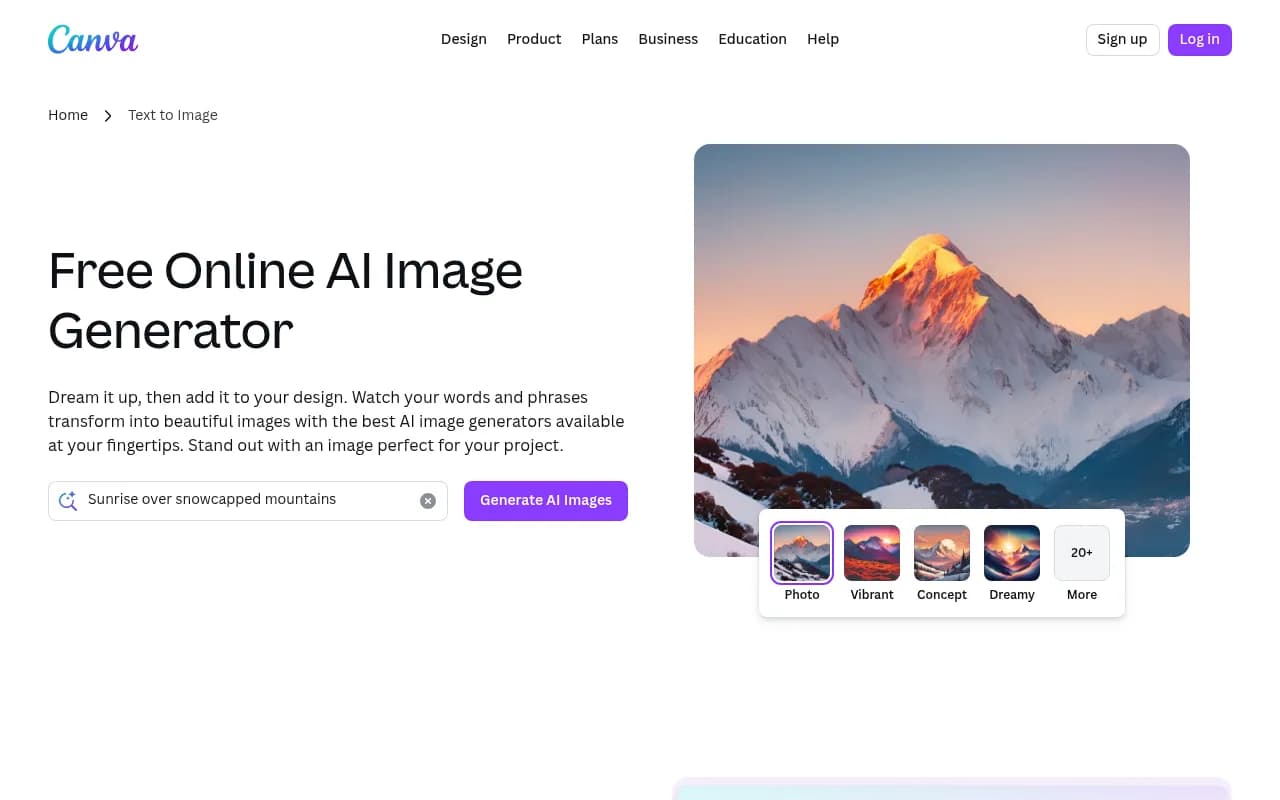
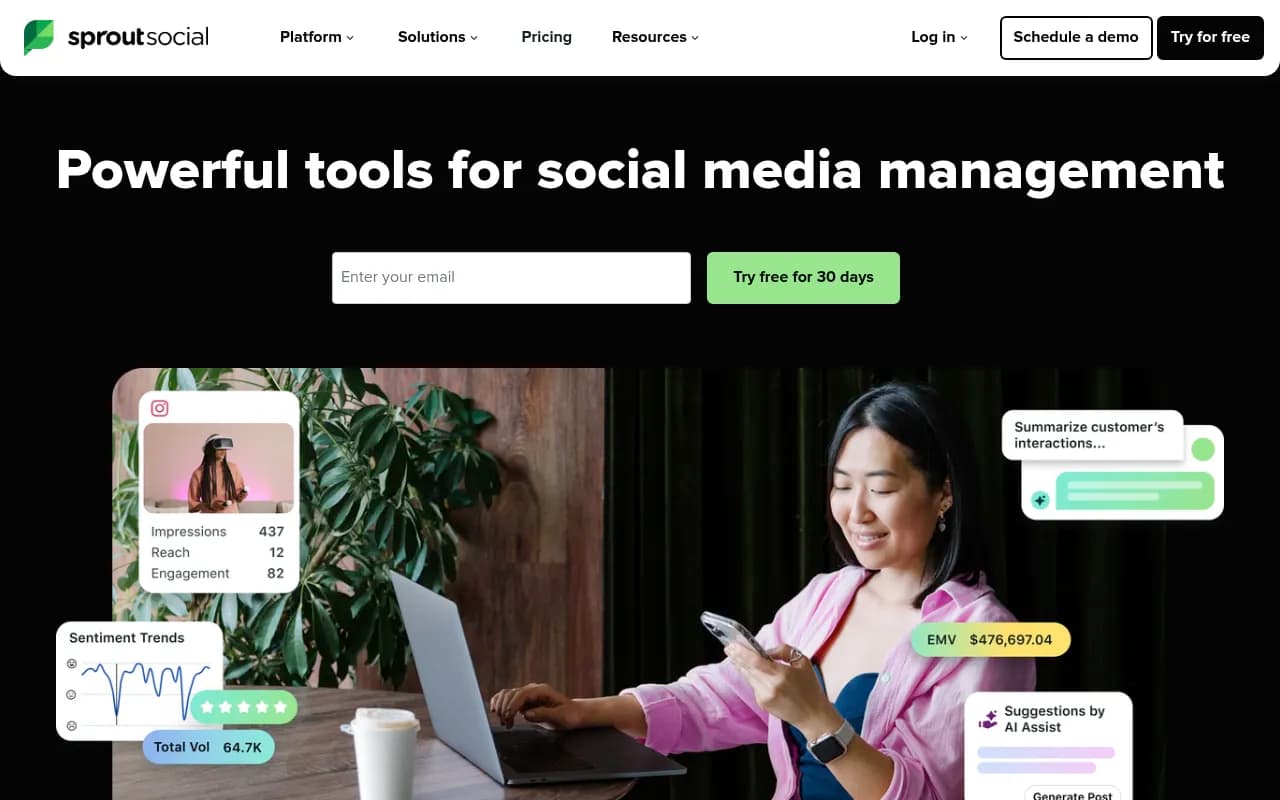
For an agency with several brands, Buffer plus Canva plus CapCut costs a fraction of Slate Pro, though you lose the sports-grade clipping and Brand Hub governance. Whether that trade works depends on whether your clients publish live events or just brand content.
How to choose
- You bought Slate for AI visibility: start with Promptwatch, then compare against Frase if budget is the constraint.
- You need volume and workflow: AirOps.
- You live in SEO content scoring: Surfer SEO, optionally with Frase or Scalenut for drafting.
- You write mostly marketing copy rather than SEO articles: Jasper.
- You wanted social video: Canva, CapCut, and Buffer, plus a writing tool from above.
More options exist in the wider catalog. The directory at bestgeosoftware.com covers GEO platforms, and agenticseotools.com lists tools that ship content with less human involvement.
Questions to ask on every demo
- How many client brands are included, and what happens at brand number four?
- Can each client have a separate brand voice and knowledge base?
- Does the tool publish directly to the client's CMS, and who owns the credentials?
- Are credits or answers metered, and what is the overage cost?
- Can I export white-label reports?
- How long until a new client workspace produces its first approved piece?
Ask the last one in particular. If setup takes weeks, that cost never shows on the pricing page.
Final take
Slate's agency tier is a big jump, and the social version has no middle option. Start by confirming which Slate you actually had, then pick from the list by job rather than by brand. Run two tools on one real client for two weeks. Count how many drafts shipped without edits, not how many the tool generated.