Key takeaways
- GetMint is a solid monitoring tool, but it stops at tracking. If you want help actually improving your AI visibility, several alternatives now close that loop.
- Promptwatch is the strongest pick for small teams that want monitoring plus automated content fixes, starting at $95/mo with all major LLMs included.
- Peec AI and Otterly.AI are the budget-friendly options, with Peec standing out for multi-language tracking without per-country fees.
- AthenaHQ and SE Visible (SE Ranking) work well if you want AI visibility bundled with broader SEO tooling.
- Before committing, decide whether you need a tracker or an optimization platform. The difference matters more than most buyers realize.
Why small teams look beyond GetMint
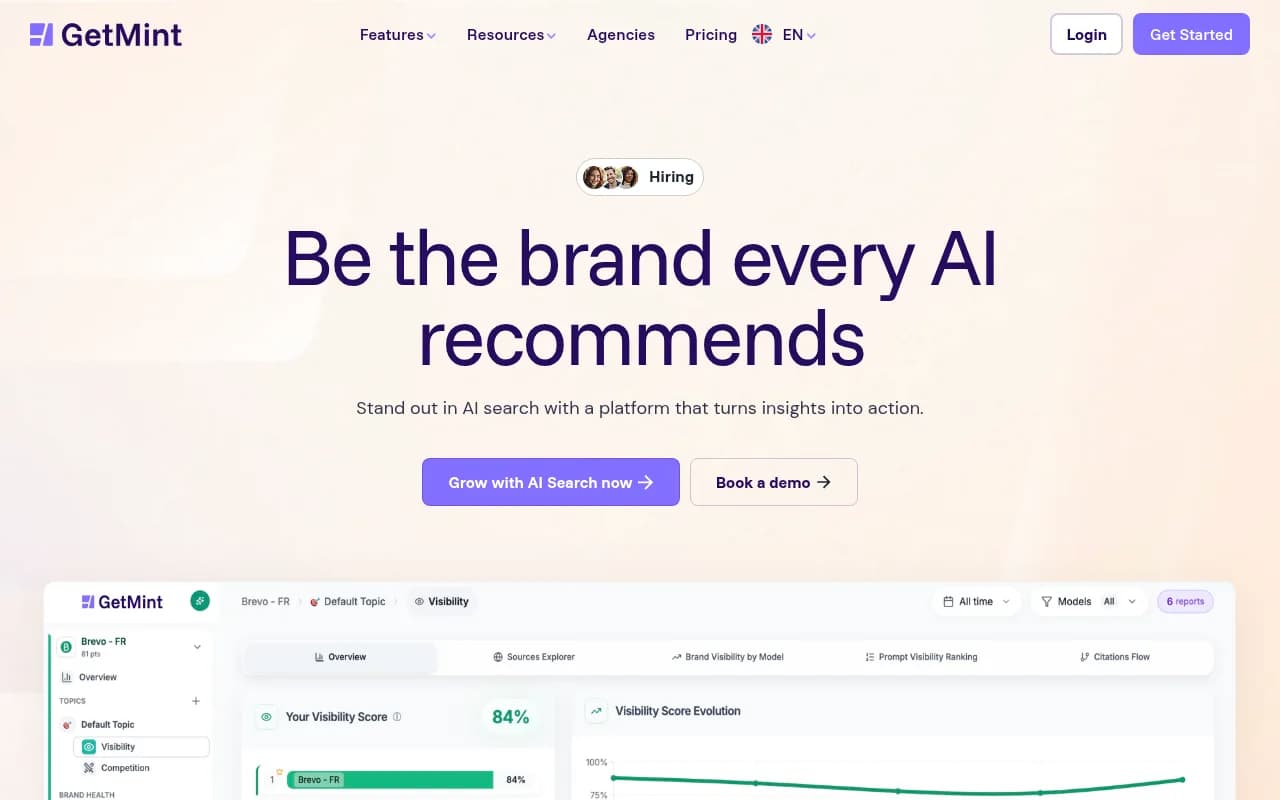
GetMint built its name on AI visibility and reputation monitoring, and honestly, it does that part reasonably well. You set up prompts, watch how ChatGPT, Gemini, and friends mention your brand, and get a dashboard telling you where you stand.
The problem for a small team is what happens next. Knowing you're invisible in Perplexity doesn't help much if the tool gives you no path to fix it. Monitoring-focused platforms, GetMint included, tend to leave the "now what?" question unanswered. You get a score, maybe a citation list, and then it's on you to figure out which pages to rewrite, what content to publish, and whether any of it worked.
There's also the budget question. Startups don't have $500/mo for an enterprise GEO platform, and per-country or per-model add-on fees add up fast when you're tracking more than a handful of prompts. So we compared the alternatives with two filters: does it fit a small-team budget, and does it do more than report the news?
Quick comparison
| Tool | Starting price | What it does beyond tracking | Best for |
|---|---|---|---|
| Peec AI | Entry-level tier, no per-country fees | Content optimization basics | Small marketing teams |
| Promptwatch | $95/mo (free tier available) | Content Agents, CMS publishing, crawler logs, action lists | Teams that want to fix visibility, not just measure it |
| Otterly.AI | Cheapest paid entry in the category | Basic monitoring only | Very tight budgets |
| AthenaHQ | Mid-range | Some content tooling | Clean, fast setup |
| SE Visible | Bundled with SE Ranking | Full SEO stack alongside AI tracking | Teams that still do traditional SEO |
| Goodie | Mid-range | AI search optimization focus | Brand-side marketers |
| LLM Pulse | Mid-range | Response tracking depth | Data-heavy teams |
| Rankshift | Mid-range | GEO-focused tracking | LLM-specific campaigns |
The 8 best GetMint alternatives
1. Peec AI
Peec AI keeps coming up in comparisons of tools for smaller teams, and the reason is simple: it strips away the enterprise bloat. Setup takes minutes, the interface is clean, and you get multi-language tracking without the per-country fees that some platforms charge. If your audience spans Germany and the US, that alone can halve your bill.
The trade-off is depth. Peec is a tracker at heart. You'll see where you stand across models, but content optimization is thin, and there's nothing like crawler analytics to explain why a page isn't getting cited.

2. Promptwatch
Here's the honest pitch: if GetMint's weakness is that it stops at monitoring, Promptwatch is the alternative built around the opposite assumption. It tracks the same things, ChatGPT, Claude, Gemini, Perplexity, Grok, AI Overviews, AI Mode, and newer models, but then keeps going.
A few things small teams tend to care about:
- AI crawler logs show when ChatGPTBot or PerplexityBot actually hit your site, which pages they read, and whether they hit errors. Most trackers in this price range have nothing like this, and it's the closest thing to an explanation for "why am I invisible?"
- Content Agents plan, write, and publish GEO-optimized articles straight to WordPress, Webflow, or Framer on a schedule you control. For a two-person marketing team, that's the difference between having a strategy and having a to-do list.
- Unified Actions turns your visibility data into a prioritized task list, so Monday morning starts with "fix this page" instead of "stare at a dashboard."
- Reddit and YouTube citation tracking, which matters because AI models lean heavily on both when recommending products.
The numbers behind it are real too: 4.5 billion citations and prompts analyzed, 1,840+ customers including Duolingo and Yelp, and a 4.7/5 G2 rating. Pricing starts at $95/mo for the Essential plan with all LLM tracking included, and there's a free tier if you just want to poke at it. Annual billing gets you 12 months for the price of 10.
Is it perfect? The deeper features take a week or two to learn, and if you literally only want a mention counter, it's more than you need. But for a startup that wants AI visibility to become an actual growth channel rather than a monthly report, it's the strongest option on this list.

3. Otterly.AI
Otterly is the cheapest paid entry point in this whole category, and for some teams that's the whole decision. You get essential AI monitoring across the major engines without enterprise pricing, and the team behind it has been iterating quickly.
Just go in with clear expectations: this is a lean tracker. No crawler logs, no visitor analytics from AI platforms, no content generation. Think of it as a smoke detector. It tells you there's a problem, and you bring your own fire department.

4. AthenaHQ
AthenaHQ sits in a comfortable middle ground. It tracks visibility across 8+ AI search engines, the design is genuinely pleasant to use, and setup is fast enough that you can be looking at data the same afternoon you sign up. Growing startups that want something more polished than Otterly without paying Profound-level prices tend to land here.
Its content optimization features exist but are lighter than what Promptwatch offers. Fine as a step up from a basic tracker, less fine if publishing workflow matters to you.

5. SE Visible (SE Ranking)
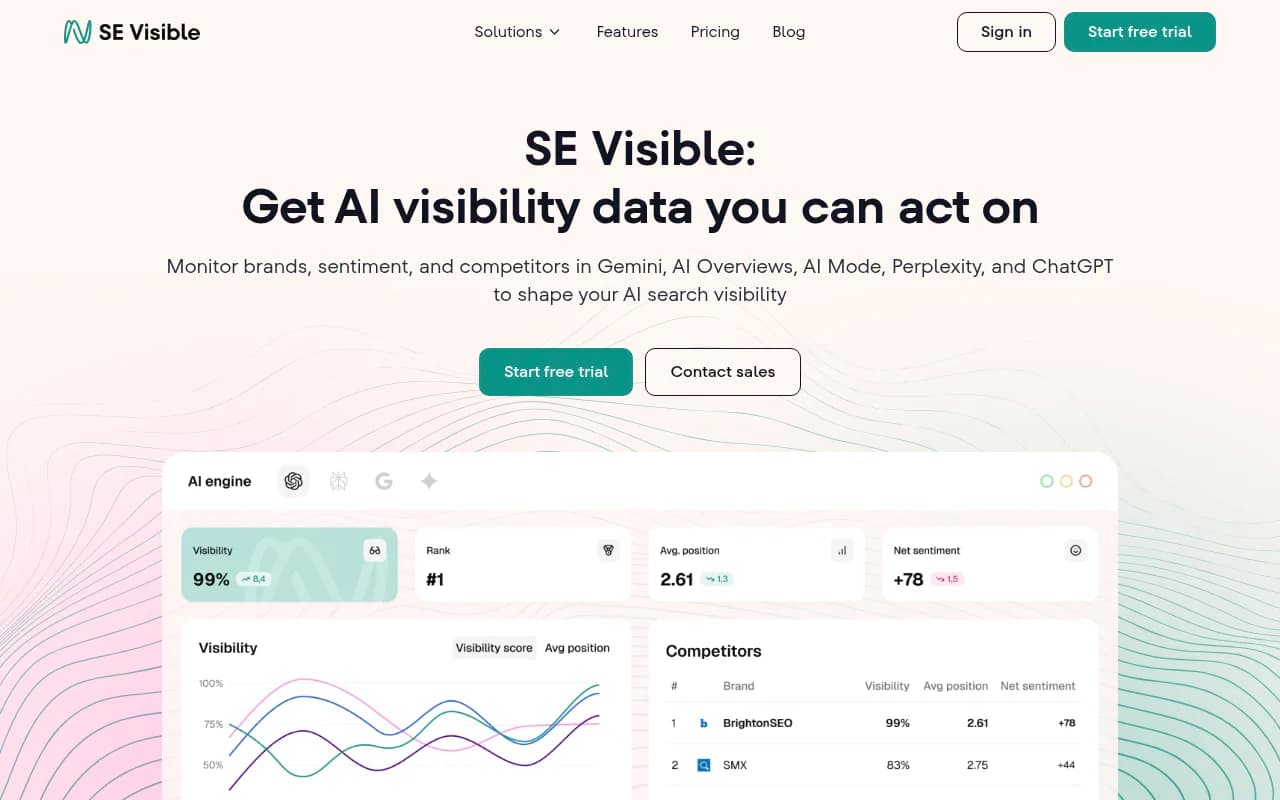
SE Ranking's AI visibility toolkit makes the most sense if your team still does traditional SEO alongside GEO work, which, realistically, most startups should. You get rank tracking, site audits, and keyword research in the same subscription as AI visibility monitoring, so there's one bill and one login instead of three tools.
The AI-specific data is shallower than dedicated GEO platforms. Fixed prompt sets and limited AI-side analytics mean you'll understand your Google rankings better than your ChatGPT presence. Worth it if SEO is your day job; skip it if AI search is your only concern.
6. Goodie
Goodie approaches the problem from the brand side, with a focus on how you appear in AI search results rather than raw prompt tracking. Marketers who care about sentiment and brand presentation tend to like it. The monitoring is solid, and the optimization guidance is more actionable than GetMint's.
It's a smaller product with a smaller ecosystem, so check that your must-have engines are covered before committing.
7. LLM Pulse
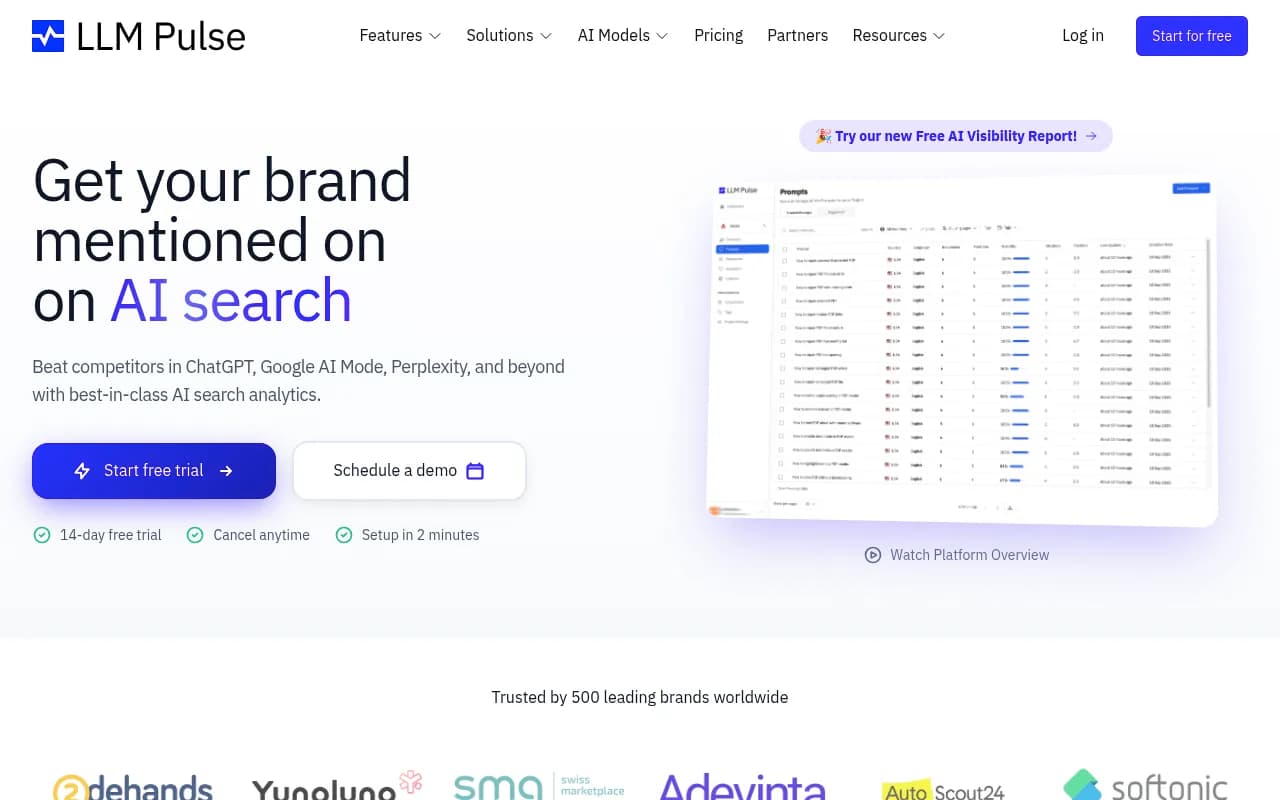
LLM Pulse goes deep on response tracking. If your team likes digging into how different models phrase things, how answers shift week to week, and what sources models pull from, the granularity here is better than most. It's a good fit for data-heavy teams that treat AI visibility as an analytics problem.
Like GetMint, though, it's monitoring-first. Content optimization and publishing aren't part of the picture, so plan on pairing it with a separate content workflow.
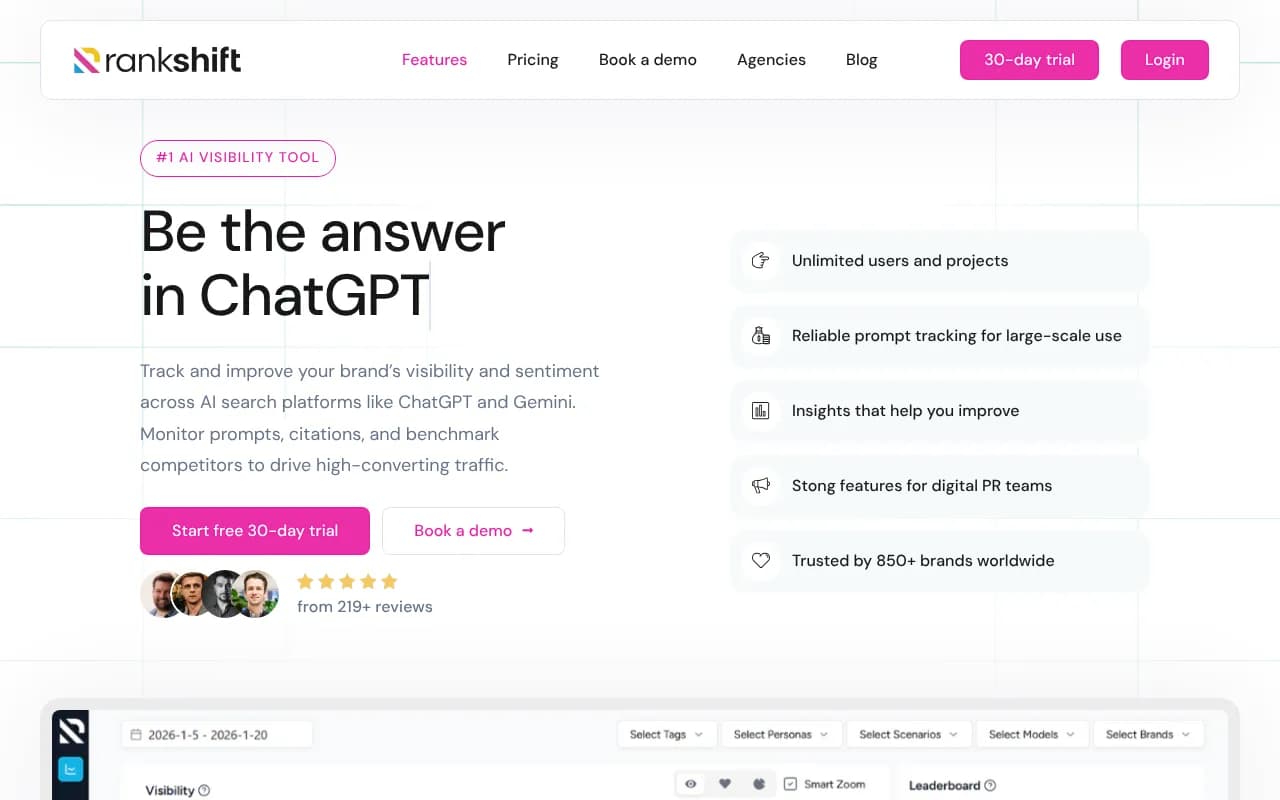
8. Rankshift
Rankshift rounds out the list as a GEO-focused tracking tool. It covers the major LLMs, keeps pricing in small-team territory, and does a decent job of showing share of voice against competitors. It's a reasonable GetMint substitute if you want a similar monitoring experience with slightly different emphasis on GEO campaigns.
It shares the category's common limitation: the gap between insight and execution is yours to fill.
How to choose between them
The whole category splits into two camps, and picking your camp first makes the decision much easier.
If you need a tracker: Otterly for the lowest cost, Peec AI if language coverage matters, LLM Pulse if you want response-level depth. Any of these will tell you where you stand for less than GetMint-style monitoring costs at scale.
If you need visibility plus a way to improve it: Promptwatch is the clear choice in this price range. Crawler logs explain the why, content gap analysis shows what's missing, and the Content Agent actually publishes the fixes. Peec and AthenaHQ gesture at optimization, but Promptwatch is the only one on this list with the full loop from data to published content.
If you need SEO and GEO together: SE Visible, no contest. Bundling beats juggling two subscriptions.
One practical tip before you buy anything: run a free audit first. Promptwatch and several others offer free AI visibility reports, and the results often surprise teams that assumed they were doing fine. Better to learn you're invisible in Claude before you've paid for a year of monitoring that tells you the same thing.
And if your team would rather have specialists handle the whole GEO effort, monitoring, content, and optimization included, that's exactly what we do at 1001 SEO Media. Sometimes the right tool decision is deciding you don't have the hours to work any tool properly.