Key takeaways
- Surfer SEO ($89/mo) is better for smaller teams and agencies that want real-time, data-driven scoring while writing -- it's faster to act on and cheaper to start with.
- Clearscope ($170/mo) targets enterprise editorial teams that care more about topical depth and content comprehensiveness than granular keyword scoring.
- The core philosophical difference: Surfer optimizes for what already ranks; Clearscope builds topical authority.
- Neither tool tracks AI search visibility -- if that's a gap you're worried about, you'll need a separate platform for it.
- For most content teams on a budget, Surfer wins on price and tactical depth. For large teams with editorial workflows, Clearscope's unlimited seats and grading system often justify the premium.
Both tools do the same thing on paper: analyze Google's top-ranking pages and tell you what your content is missing. But using them back-to-back, the experience is pretty different. Surfer feels like a real-time coach standing over your shoulder. Clearscope feels more like a professor grading your essay.
Which one is actually worth paying for in 2026? That depends on your team size, your workflow, and what you mean by "optimization."
What each tool actually does
Surfer SEO
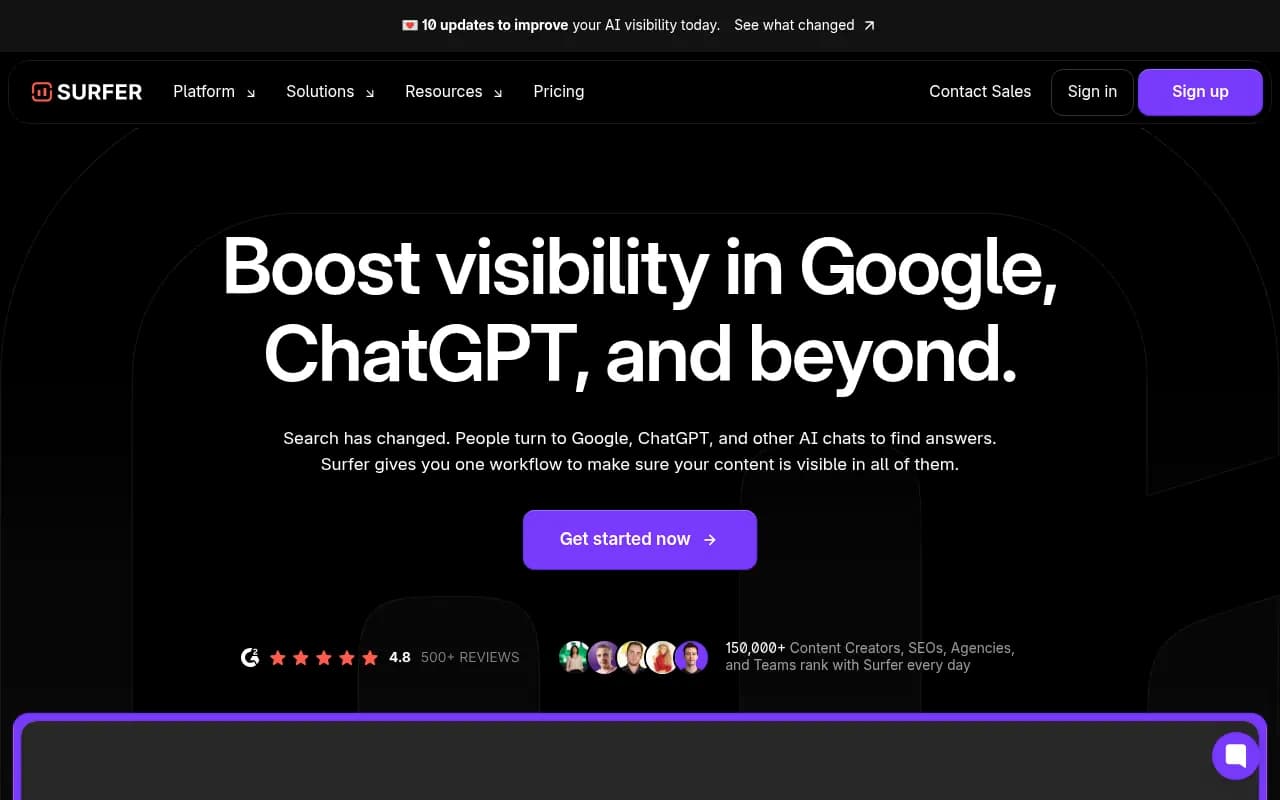
Surfer analyzes the top-ranking pages for your target keyword using NLP, then scores your content from 0-100 as you write. The Content Editor updates in real time -- add a keyword, watch your score tick up. It surfaces semantic terms, suggests word count ranges, and flags structural patterns from competing pages.
It also has an outline builder, a SERP analyzer, and a keyword research module. The AI writing feature is built in, though it's more of a drafting aid than a full replacement for a writer.
Surfer SEO integrates natively with Google Docs and WordPress, which matters a lot for teams that don't want to copy-paste between tools.
Clearscope
Clearscope takes a different approach. Instead of a numeric score, it grades your content like a teacher -- A++ down to F. The idea is that letter grades are more intuitive for editorial teams: an "A" means your content covers the topic thoroughly, not just that you've hit a keyword density target.
The platform focuses on semantic comprehensiveness. It tells you which related terms and subtopics the top-ranking pages cover, and how well your content addresses them. There's no native AI writer, which is a deliberate choice -- Clearscope is built for teams that already have writers and want to make their output better, not replace it.
Clearscope also supports unlimited user seats on its plans, which is a big deal for larger editorial teams where per-seat pricing becomes painful.

Feature comparison
Here's how the two tools stack up across the dimensions that actually matter for a content team:
| Feature | Surfer SEO | Clearscope |
|---|---|---|
| Starting price | $89/mo (Essential) | $170/mo (Essentials) |
| Content scoring | 0-100 numeric score | Letter grade (A++ to F) |
| Real-time editor | Yes | Yes |
| AI writing assistant | Yes (built-in) | No |
| Google Docs integration | Yes | Yes |
| WordPress integration | Yes | Limited |
| Keyword research | Yes | No |
| Outline builder | Yes | No |
| Unlimited seats | No (seat-based) | Yes |
| SERP analyzer | Yes | No |
| Content audit | Basic | More robust |
| Best for | Smaller teams, agencies | Enterprise editorial teams |
A few things worth noting from this table. Surfer packs in more features at a lower price point -- keyword research, outlines, SERP analysis. Clearscope strips all of that out and focuses purely on content quality. Neither approach is wrong; they're just targeting different workflows.
Pricing breakdown
Surfer SEO's pricing in 2026:
- Essential: $89/mo -- 1 user, 30 articles/month
- Scale: $129/mo -- 3 users, 100 articles/month
- Scale AI: $219/mo -- includes AI writing credits
Clearscope's pricing:
- Essentials: $170/mo -- unlimited users, 50 content reports/month
- Business: $350/mo -- more reports, additional features
- Enterprise: custom pricing
The pricing gap is real. Clearscope costs roughly twice as much as Surfer's entry plan. But Clearscope's unlimited seats change the math for larger teams. If you have 10 writers, Surfer's per-seat model gets expensive fast. Clearscope's flat pricing becomes competitive at scale.
How the scoring systems feel in practice
This is where the tools diverge most noticeably.
Surfer's 0-100 score is satisfying in a slightly dangerous way. It's easy to chase the number. Writers sometimes end up stuffing semantically related terms into sentences where they don't belong, just to push the score from 72 to 85. The score is a useful guide, not a mandate -- but it takes editorial discipline to treat it that way.
Clearscope's letter grades feel less gameable. An "A" means you've covered the topic well. The grading system maps more naturally to how editors think about content quality, which is probably why enterprise teams tend to prefer it. The downside is that it gives you less granular feedback on what specifically to change.
Where each tool falls short
Surfer's honest weakness: it optimizes for what already ranks. If the top 10 results for your keyword are all mediocre, Surfer will help you produce content that mirrors that mediocrity more efficiently. For competitive queries where differentiation matters, you still need editorial judgment that no score can provide. The AI writing feature is functional but not exceptional.
Clearscope's honest weakness: it's expensive for what you get if you're a small team. The lack of keyword research, outline tools, or an AI writer means you're paying $170/mo for content grading alone. That's a hard sell if you're a solo blogger or a startup with a two-person marketing team.
Both tools also share a blind spot worth mentioning: neither was built with AI search in mind. As more search happens through ChatGPT, Perplexity, and Google's AI Mode, traditional SERP-based optimization is only part of the picture. If you want to understand how AI models are citing your content -- or why they're not -- that requires a different kind of tool. Platforms like Promptwatch are built specifically for tracking and improving AI search visibility, which is increasingly where organic traffic is going.

Which tool fits which team
Choose Surfer SEO if:
- You're a small to mid-size team (1-5 writers) and budget matters
- You want one tool that covers keyword research, outlines, and content scoring
- Your writers work in Google Docs or WordPress and you don't want to disrupt that workflow
- You need real-time feedback while writing, not just a post-draft grade
- You're an agency producing high volumes of content and need fast turnaround
Choose Clearscope if:
- You have a larger editorial team where unlimited seats make the pricing competitive
- Your writers are experienced and you want a quality benchmark, not keyword prescriptions
- You care more about topical authority and content comprehensiveness than granular scoring
- You're in an enterprise environment where content monitoring and reporting matter
- You already have keyword research and planning handled elsewhere
What about the alternatives?
Surfer and Clearscope aren't the only options. A few worth knowing about:
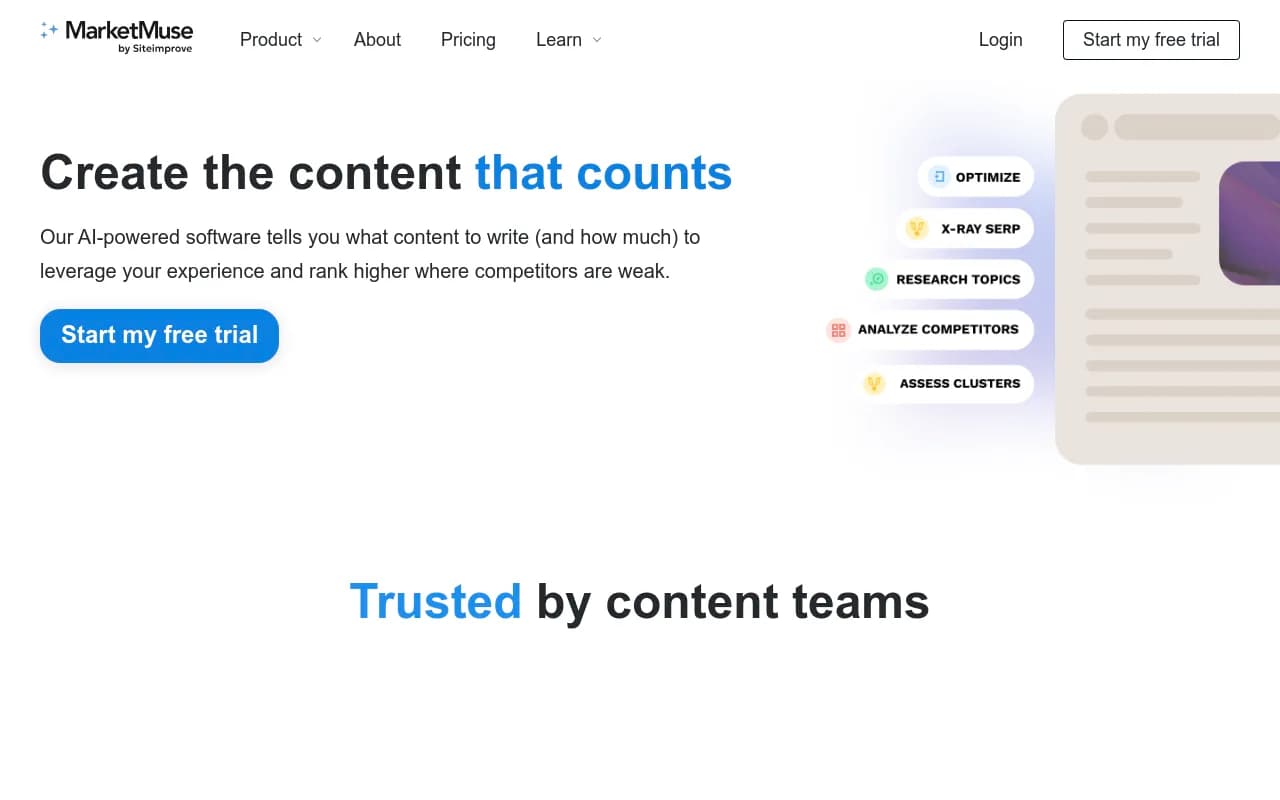
MarketMuse sits closer to Clearscope on the philosophy spectrum -- it's built around topical authority and content cluster planning, with stronger content strategy features than either tool. It's also priced at $149/mo for the Standard plan, which puts it between the two.
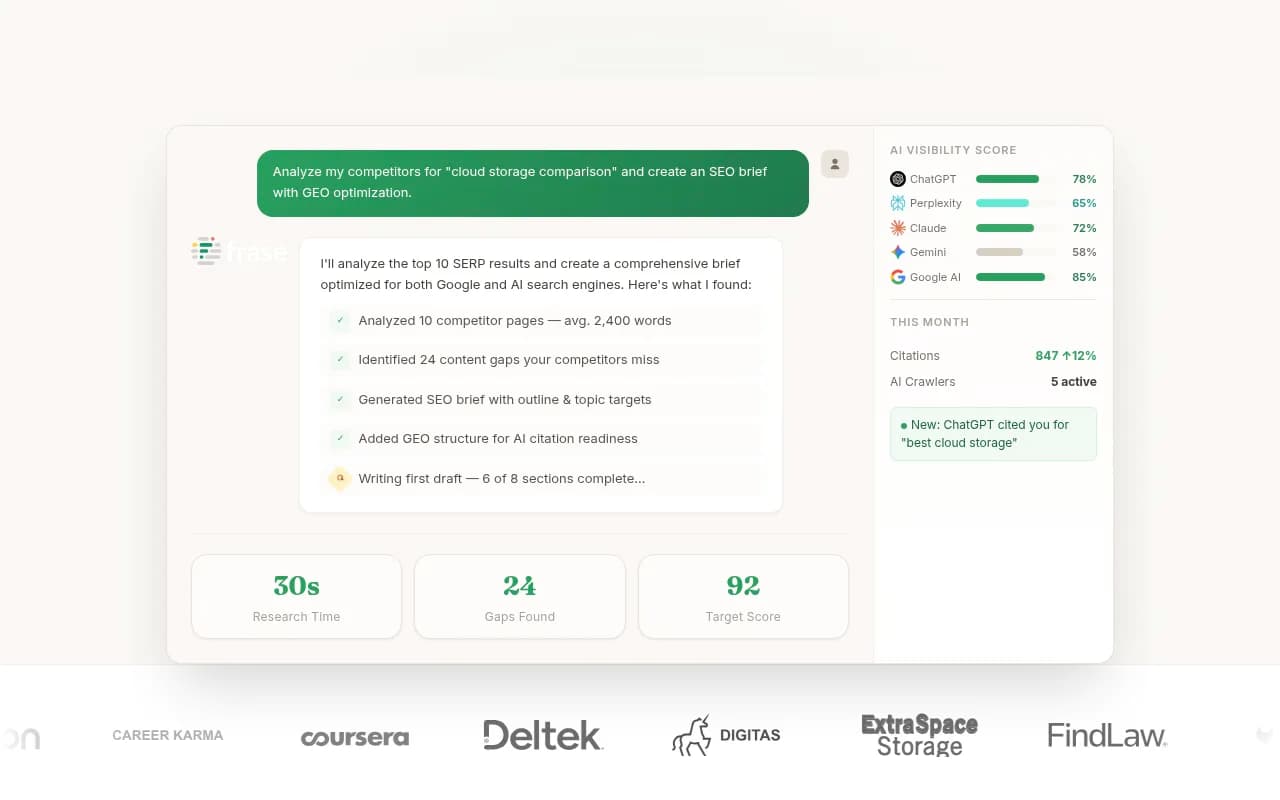
Frase is worth considering if you want a cheaper entry point. At $15/mo for a solo plan, it covers research, briefs, and content scoring. It's less polished than Surfer or Clearscope, but for freelancers or early-stage teams, the price difference is hard to ignore.
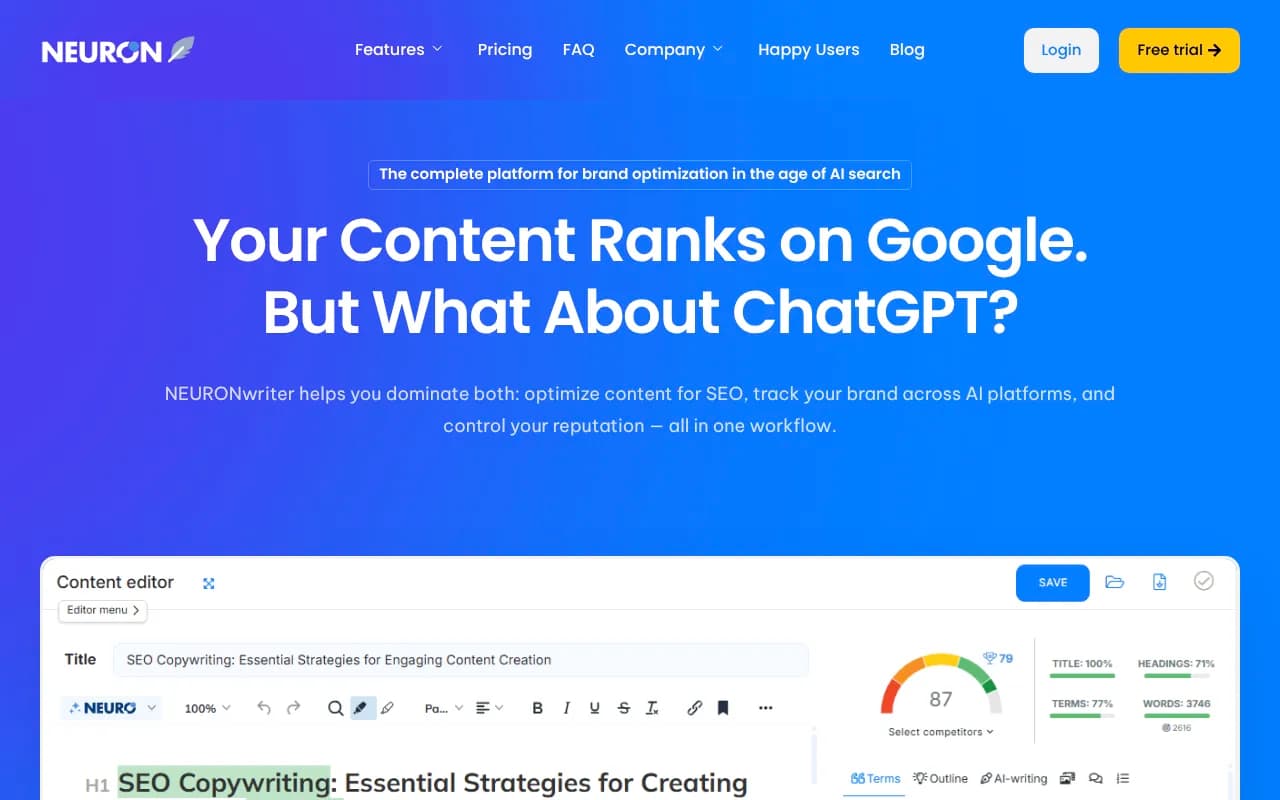
NeuronWriter is another alternative that often comes up in agency conversations -- it uses semantic NLP scoring similar to Surfer but at a lower price point, and it's popular with teams that want more control over their optimization parameters.
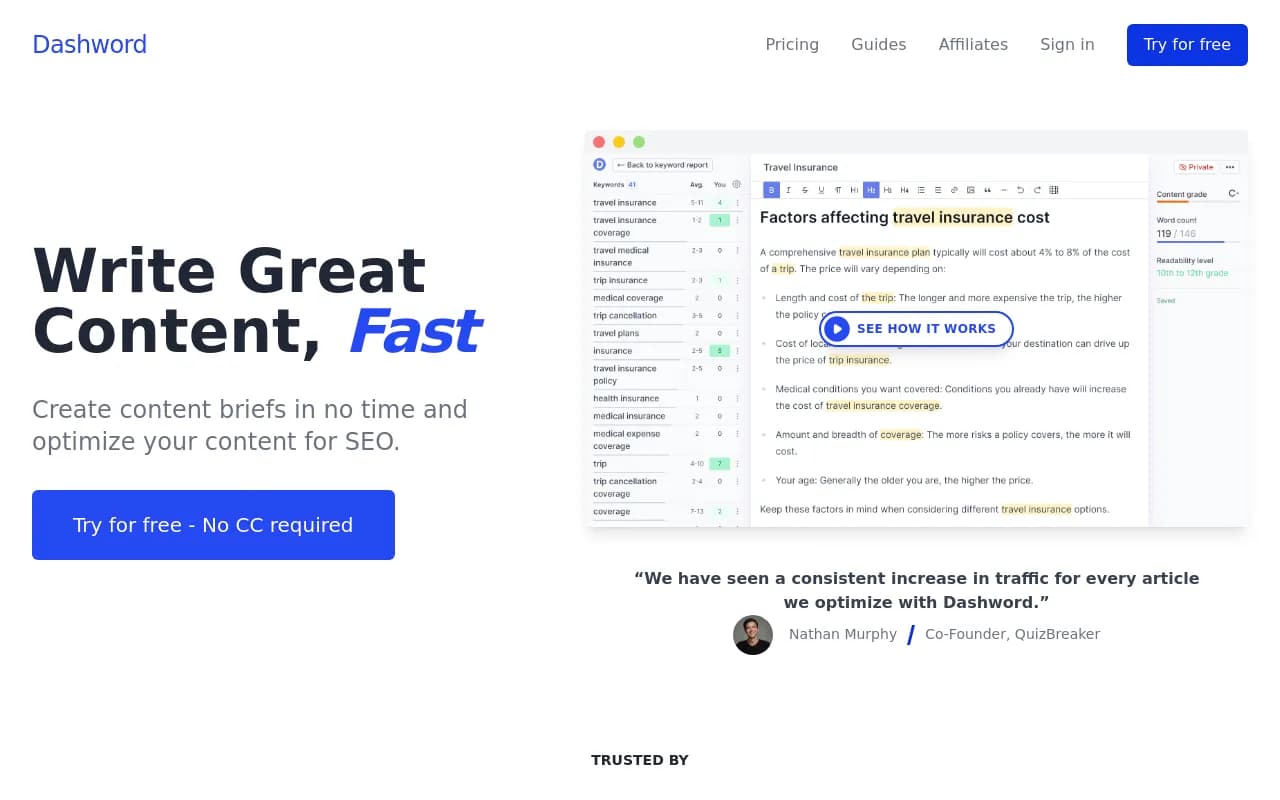
Dashword is a simpler, more affordable option for teams that want basic content scoring without the feature overhead of Surfer or the price tag of Clearscope.
The AI search question neither tool fully answers
Here's something worth sitting with: both Surfer and Clearscope were designed for Google's traditional 10 blue links. They analyze SERP results, optimize for ranking patterns, and measure success by where your content lands on a search results page.
That model still matters. Google's traditional search isn't going away. But a growing share of search queries now get answered by AI -- ChatGPT, Perplexity, Google AI Overviews, Claude. Those systems don't rank pages the same way Google does. They cite sources, synthesize answers, and often bypass the traditional SERP entirely.
Neither Surfer nor Clearscope tells you whether your content is being cited by AI models, which prompts trigger your competitors' pages instead of yours, or what topics AI systems are answering that your site doesn't cover. That's a different problem requiring different tooling.
If AI search visibility is on your radar -- and it should be in 2026 -- Promptwatch tracks citations across 10 AI models, identifies content gaps based on real prompt data, and helps you create content engineered to appear in AI answers. It's not a replacement for Surfer or Clearscope; it's what you add when traditional SEO optimization isn't enough.
The bottom line
For most content teams, Surfer SEO is the practical choice. It's cheaper, it does more, and the real-time scoring genuinely helps writers produce better-structured content faster. The score can be gamed, but that's a discipline problem, not a tool problem.
Clearscope earns its price tag for enterprise teams with lots of writers. Unlimited seats, a grading system that editors actually trust, and a focus on topical depth make it the better fit for organizations where content quality and consistency matter more than speed.
If you're still deciding, start with Surfer. Upgrade to Clearscope when your team grows to the point where per-seat pricing becomes the bigger pain than the monthly bill.