Key takeaways
- Nightwatch (from EUR 79/mo) and SE Ranking Core ($129/mo, 2,000 keywords, 100 daily prompts) give you the most tracking per dollar with AI included in the base plan.
- Semrush now puts AI visibility into its $139/mo SEO plan, but only tracks 500 keywords, and the heavier prompt quotas start at $199/mo.
- Ahrefs Brand Radar has the biggest AI prompt database and the best backlink data, but it is the priciest route to AI tracking, and it has no sentiment analysis.
- Check how each tool counts usage. Per-platform "checks" (Ahrefs, the SE Ranking add-on) get expensive fast when you track several engines.
- All four are still rank trackers first. If AI answers are the actual job, a dedicated platform is worth a look.
Why this comparison exists
For a decade the question was simple: where do we rank on Google? Now buyers read an AI answer that names three brands and no blue links. Every classic SEO vendor noticed, and every one of them has bolted AI tracking on. The catch is that "has AI tracking" covers a huge range, from 5 prompt checks to 500 daily prompts.
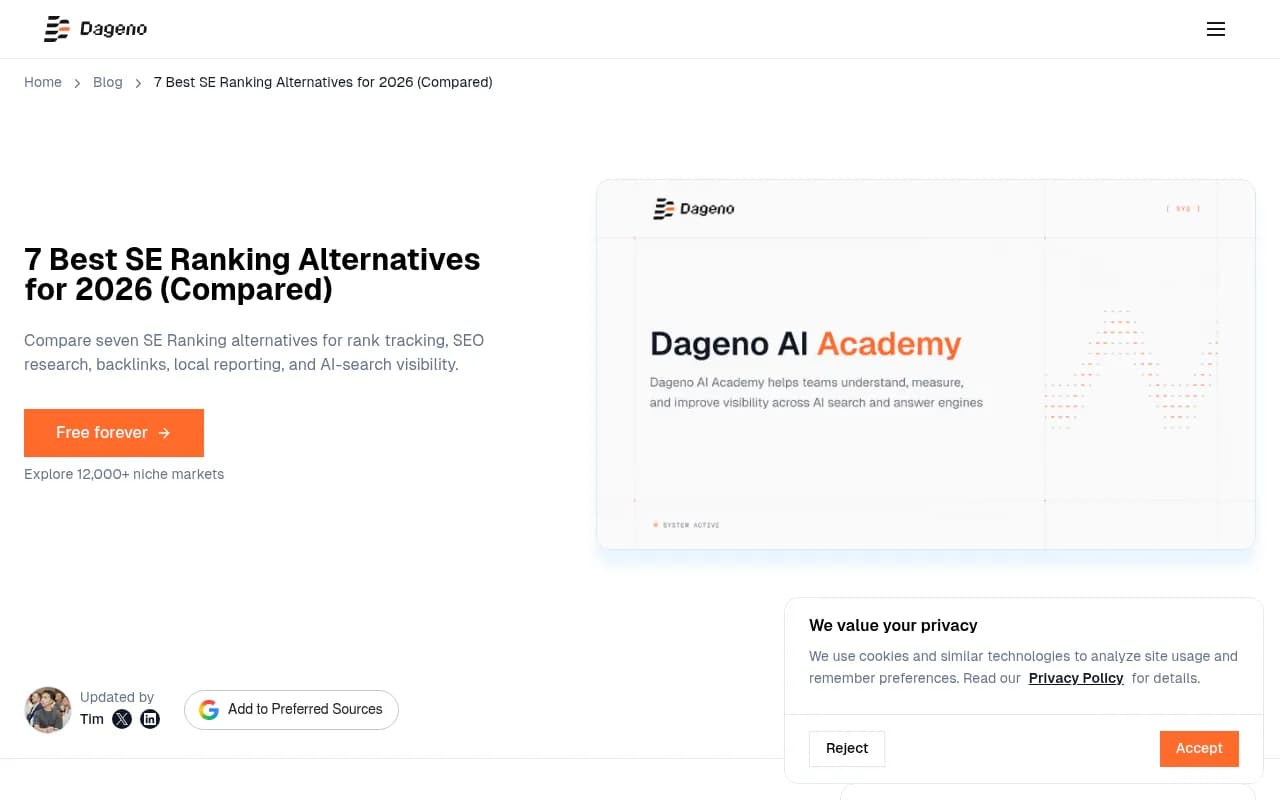
So this guide compares four tools many teams already own or are about to buy: Semrush, Ahrefs (with Brand Radar), SE Ranking and Nightwatch. I pulled pricing from each vendor's pricing page and cross-checked it against recent reviews. I did not find independent accuracy tests of any of their AI tracking, and I'll flag that gap again at the end because it matters.
A quick note on why prompt counts matter. Promptwatch's data on sources per response shows ChatGPT citing about 5 sources per web-search answer, while Google AI Overviews and Perplexity cite about 10. Citation slots are scarce, so knowing whether you are cited on a specific prompt matters more than a vague visibility number. And answers vary by engine, so the number of engines a plan covers is a real cost driver.
The four tools at a glance
| Tool | Entry price with AI | Daily keywords | AI prompts | Engines tracked |
|---|---|---|---|---|
| Semrush | $139/mo (SEO), $199/mo (Starter) | 500 | 50 daily on Starter | Google AI, ChatGPT, Perplexity, Gemini and more |
| Ahrefs | $129/mo (Lite) plus Brand Radar | 750 (Lite) | 150 checks on Lite | Broad, including Copilot and Grok |
| SE Ranking Core | $129/mo monthly ($103.20 annual) | 2,000 | 100 daily | AI Overviews, AI Mode, Gemini, ChatGPT |
| Nightwatch Starter | EUR 79/mo | 500 | 50 daily | ChatGPT, Claude, Gemini, Perplexity, AI Mode, AI Overviews |
Numbers are from the vendor pricing pages. Confirm current plans before buying, because all four have restructured recently.
Semrush
Semrush restructured its plans in 2026 and pushed AI visibility down into the entry tier. The $139/mo SEO plan ($117.33 annual) covers 5 websites and 500 daily keywords, plus AI search performance tracking, sentiment monitoring, visibility reports for any domain and custom prompt monitoring. The pricing page does not list a prompt quota for that plan, which is annoying.
The $199/mo Starter plan is where the numbers get concrete: 50 prompts tracked daily, one domain for AI brand performance, 300 AI visibility reports per day, an AI-ready Site Audit and MCP access. Coverage icons show Google Search, ChatGPT, Perplexity and Gemini "and more". Pro+ at $299/mo steps up to 15 websites and 1,500 keywords, though I did not get the full details of that tier or Guru.
Style Factory's review calls Semrush one of the largest AI visibility datasets around, second only to Ahrefs, and praises its prompt tracking, sentiment and share-of-voice reports. Where Semrush is clearly strongest is everything around the tracker: a keyword database of 28.5 billion keywords, a 43 trillion link index, PPC data and mature GA4, Looker Studio and API integrations.
The weakness is arithmetic. At roughly $0.28 per tracked keyword it is the most expensive way to track rankings on this list. You are paying for the suite, and the tracker rides along. One more gripe: Semrush limits you to one seat across plans, per Style Factory, so teams pay more as they grow. There is also a separate Semrush AI Visibility Toolkit at about $99/mo per domain for teams that only want the AI side.
Ahrefs and Brand Radar
Ahrefs Brand Radar is the odd one out because the AI product is a distinct module with its own pricing logic. The base plans (Lite $129, Standard $249, Advanced $449, Enterprise $1,499) include Brand Radar and a set of AI prompt checks: 150 on Lite, 300 on Standard, 600 on Advanced. Keyword allowances are tight for the money, 750 on Lite, 2,000 on Standard and 5,000 on Advanced.
The full Brand Radar AI add-on starts from $199/mo and lets you research any brand across 516 million+ organic prompts from Ahrefs' database as well as track your own. Custom prompt packages are priced by the check: Basic is $50/mo for 2,500 checks, Growth $100/mo for 7,000, Scale $250/mo for 25,000. One check equals one prompt on one platform in one location, so tracking 80 prompts daily on one platform is about the entire Basic pack. Add a second engine and you double the burn.
Style Factory reports a separate figure: $699/mo for access to every supported AI platform. Pricing reports differ between sources, so check the live page. Either way, this is the most expensive AI route here.
What you get for the money is real, though. Style Factory describes Ahrefs as having the largest AI visibility dataset and the broadest platform coverage, and the only one of the group tracking Microsoft Copilot and Grok. Brand Radar also tracks YouTube, TikTok and Reddit mentions, and lets you compare against up to 20 competitors. The ability to connect AI-cited pages to the backlink and ranking data behind them is a genuine edge nobody else offers. The downsides: no sentiment analysis, no free trial, and refresh cadence that varies from daily to monthly depending on the plan.
SE Ranking
SE Ranking used to be the cheap alternative. It is not really that anymore, with plans starting at $129/mo monthly. But the allowances are generous, and that is the point.
Core gives you 10 projects, 2,000 daily keywords, 100 daily prompts, 5 LLMs to track, unlimited AI source tracking, AI competitive research on 5 domains, 250k audit pages, MCP access and Data Studio, Matomo, GA and GSC integrations. Growth ($279 monthly, $223.20 annual) goes to 30 projects, 3 seats, 5,000 keywords and 250 daily prompts. Extra users cost around $16 each, which is cheap next to Semrush's one-seat limit.
Two things to watch. First, there is a separate AI Search add-on at $89/mo ($71.20 annual) with 75 daily prompts across 5 engines, billed at one check per prompt per platform. Some third-party roundups treat AI Mode as an add-on, while the pricing page lists Core with 100 prompts included. Read the plan details at checkout and confirm which engines are covered, because the pricing page and SE Ranking's own blog disagree on whether Perplexity is in the mix. Second, white-label reporting needs the Agency Pack at $69/mo and annual billing.
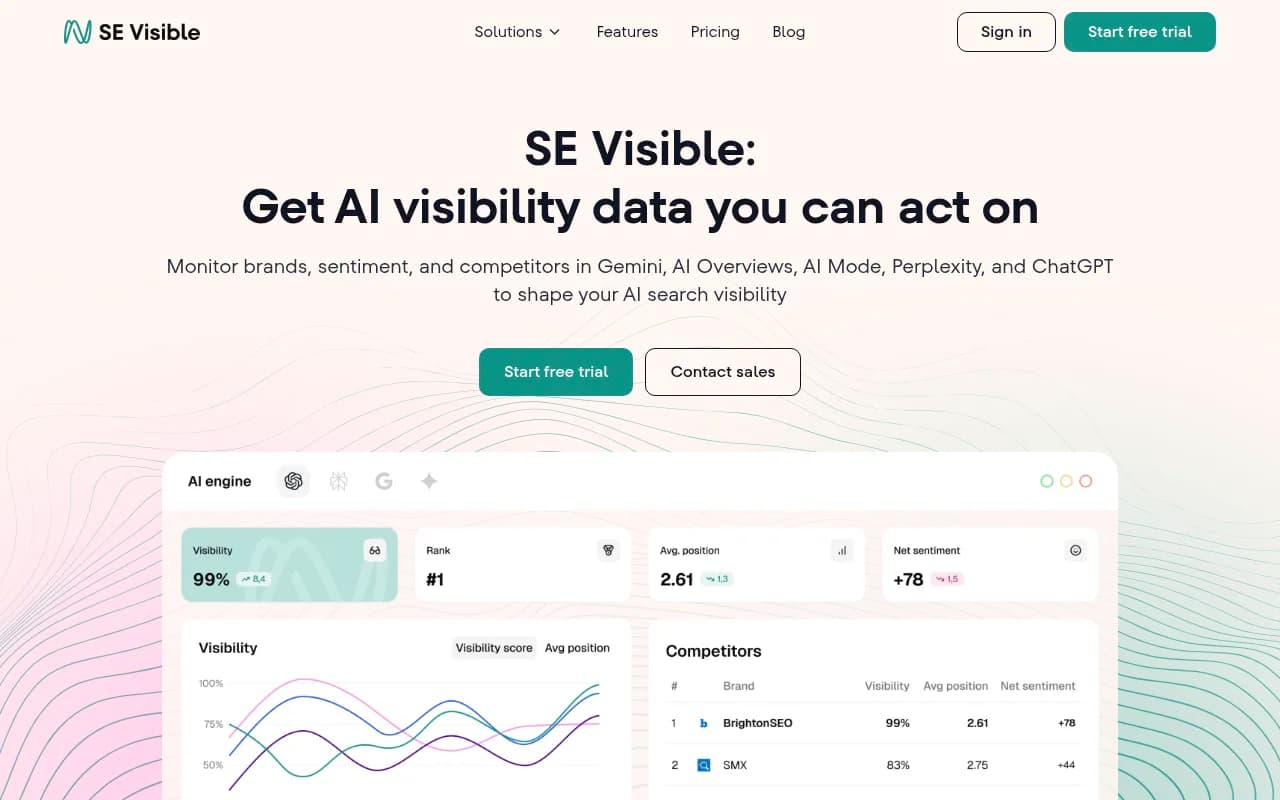
SE Ranking also has a standalone sister product for AI visibility, SE Visible, with topic-cluster prompt suggestions and sentiment tracking.
Technova Partners scored SE Ranking highest of eight trackers (23.5/25) mostly on tracking volume per euro. An agency that reviewed all three big suites after three years of use also prefers it, partly for the SE Ranking MCP connection with Claude, which can pull full project analysis rather than just research data. Treat that as one team's opinion, not a benchmark.
Nightwatch
Nightwatch is the specialist. It tracks Google, YouTube, Bing, Yahoo, DuckDuckGo and Google Maps across a claimed 107,000+ locations, and AI answers are in the base plan rather than a separate purchase.
Starter is EUR 79/mo for 500 keywords and 50 AI prompts tracked daily, 5 websites and 1,500 AI answers a month. Professional (EUR 159) gives 2,500 keywords, 150 prompts, 25 sites, Looker Studio, white-label reports and API access. Agency (EUR 399) reaches 7,500 keywords and 500 prompts. Every plan has unlimited seats and a 14-day trial, and annual billing saves 20%.
It is the only one of the four that lists Claude as a tracked platform, alongside ChatGPT, Gemini, Perplexity, AI Mode and AI Overviews. It also has sentiment analysis, citation analysis, a newer Citation Intelligence product and an MCP server. Geotoolbox notes its strength is location precision, showing how AI Mode answers change down to the neighborhood. The trade-off: fewer engines than AI-first specialists, and no backlinks, content or deep research, so you still need other tools. Also note the AI answer allowance is capped monthly (1,500 on Starter), so heavy multi-engine tracking will hit it.
Head-to-head: what matters most
| Question | Best pick | Why |
|---|---|---|
| Most keywords for the price | SE Ranking, Nightwatch | 2,000 keywords at $129, or 500 at EUR 79 with AI included |
| Biggest AI dataset and engine breadth | Ahrefs Brand Radar | 516M+ prompts, Copilot and Grok coverage |
| Best all-in-one with PPC and research | Semrush | Deepest toolset, strongest integrations |
| Local and multi-location AI tracking | Nightwatch | 107,000+ locations, neighborhood-level detail |
| Agencies on a budget | SE Ranking or Nightwatch | Extra seats cheap or unlimited, white-label available |
| Backlink-to-AI-citation analysis | Ahrefs | Links the data behind cited pages |
| Sentiment analysis | Semrush, SE Ranking, Nightwatch | Ahrefs lacks it |
How the costs really add up
Sticker prices mislead here. A few examples from the pages above:
- Semrush at $199/mo gets you 500 keywords and 50 daily prompts. SE Ranking Core at $129/mo gets you 2,000 keywords and 100 daily prompts. On paper, SE Ranking is cheaper and bigger.
- Ahrefs Standard at $249/mo gives 2,000 keywords and 300 AI checks, but a check is one prompt on one platform. Watching three engines turns 300 checks into 100 prompts.
- SE Ranking's add-on bills the same way: one prompt plus one AI platform equals one check.
- Nightwatch counts prompts daily, and caps AI answers monthly. Do the math on your prompt list times engines times days.
The open question I could not answer from the vendor pages: whether prompt counts mean unique prompts across all engines or per engine. Ask support before you commit, since it can change the cost by 3 to 5 times.
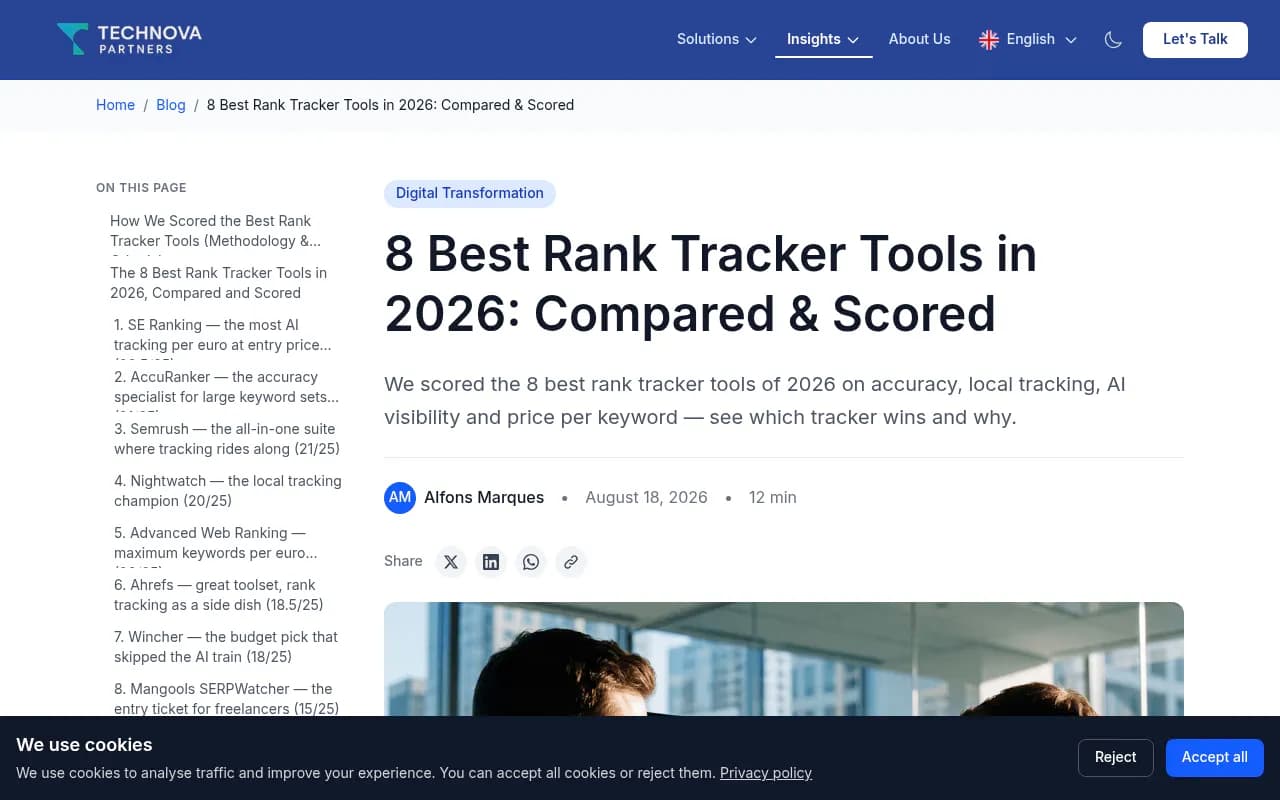
Technova Partners' scorecard above weights AI visibility at 25%, the same as tracking accuracy. Its scoring is editorial, so read it as one opinion, but the framing of price per tracked keyword is useful for your own spreadsheet.
Which one should you pick?
You already pay for Semrush
Turn on the AI features in your current plan and see how far 500 keywords and the included prompt monitoring gets you. Upgrade to Starter only if you need the daily prompt quota. Do not buy Semrush just for rank tracking.
You live in backlinks and organic research
Ahrefs makes sense, and Brand Radar's ability to tie AI citations to links is useful. Budget for the add-on or a prompt package, and do not expect sentiment reports.
You want one balanced suite for a team
SE Ranking. Its allowances, seats pricing and MCP access make it the best default for agencies and in-house teams under $300/mo, even if it is no longer a bargain.
You track local or multi-market rankings
Nightwatch. The location granularity and included AI answers for EUR 79 are hard to beat, as long as you are fine pairing it with a separate research tool.
The limits of all four
These are rank trackers that added an AI tab. They tell you whether a brand was mentioned or cited. They mostly do not tell you why, show which AI crawlers hit your pages, tie AI visitors to conversions, or fix anything. None of the research I found tested their AI data against real user interfaces, and that is the gap that matters, because AI answers in the actual product can differ from API output.
If AI search is becoming a real channel for you, a dedicated platform is worth evaluating alongside your classic tracker. Promptwatch tracks the real interfaces of ChatGPT, Google AI Overviews, AI Mode, Gemini, Perplexity and more, adds IP-verified AI crawler logs and AI traffic analytics, and has agents that write and publish content against visibility gaps. Most classic trackers stop at monitoring.

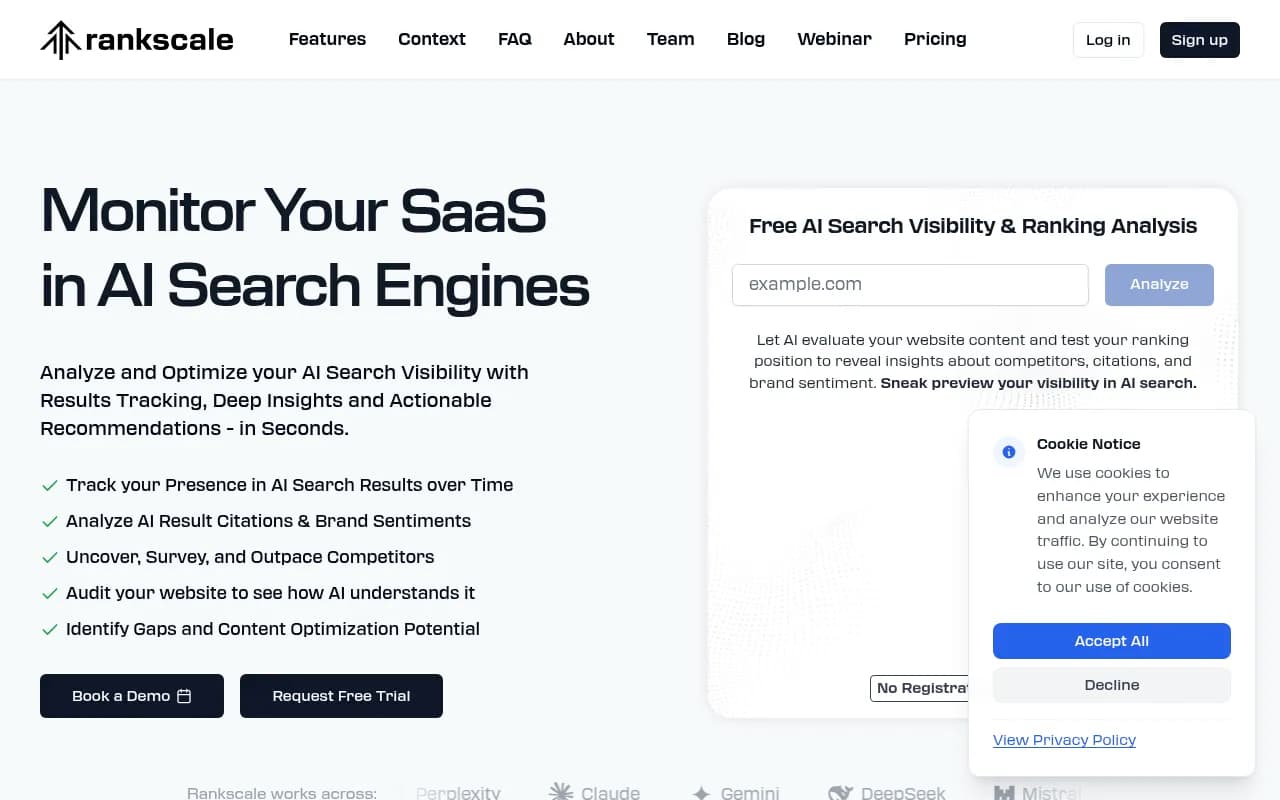
Some other lower-cost AI-first options to consider alongside these include Peec AI and Rankscale. For a wider look, the GEO software directory at bestgeosoftware.com lists far more.

Practical checklist before you buy
- List your real keyword count, locations and engines. Multiply prompts by engines by days.
- Ask each vendor whether prompt counts are per engine or total.
- Run the 14-day trials of SE Ranking and Nightwatch with your own prompt list. Semrush also offers a trial. Ahrefs has none, so ask for a demo.
- Recreate one real monthly client report in each tool and see which one gets you there fastest.
- Compare AI results for the same five prompts across tools. Differences will show you how much to trust any single number.
Bottom line
For most teams, SE Ranking offers the best balance of tracking depth and AI allowances, Nightwatch wins on local precision and entry price, Semrush wins if you want the whole marketing stack, and Ahrefs wins if backlinks and AI citations belong in the same view. None of them is the final word on AI visibility, so pick one for classic rankings and decide separately whether AI search deserves its own tool.
Pricing changes often. Verify current plans on each vendor's pricing page, and browse more options at surferstack.com.