Key takeaways
- AI search now drives roughly 25% of product discovery, and Gartner projects traditional organic traffic could drop more than 50% by 2028 -- so visibility in AI-generated answers is no longer optional.
- Most tools on the market are monitoring dashboards: they tell you where you're invisible, then leave you to figure out what to do about it.
- A real AI search platform closes the loop -- it finds gaps, helps you create content that gets cited, and tracks whether that content is actually working.
- The distinction matters because dashboards produce reports; platforms produce results.
- When evaluating tools, ask one question: "After I see the data, what does this tool help me do next?"
The problem with "visibility" as a goal
There's a version of this story that plays out in marketing teams every week. Someone sets up an AI visibility tracker, runs a few hundred prompts across ChatGPT and Perplexity, and gets back a dashboard showing their brand appears in 12% of relevant responses while a competitor appears in 41%. The number is alarming. The meeting is uncomfortable. And then... nothing changes.
The data sits in a tab. Someone screenshots it for a quarterly deck. The competitor's 41% doesn't budge.
This is the monitoring trap. And in 2026, with AI search now influencing a significant share of how people discover products and services, falling into it is genuinely costly.
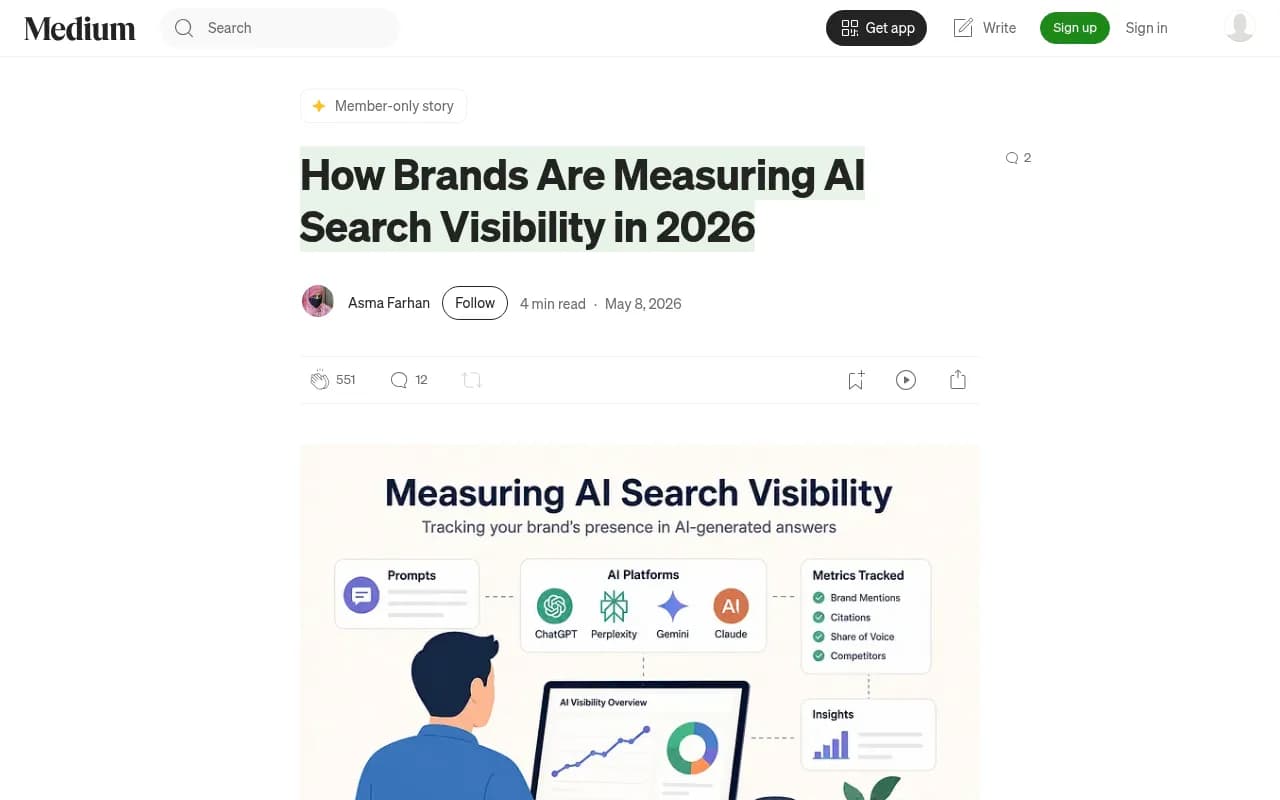
The category of "AI search visibility tools" has exploded in the past 18 months. There are now dozens of platforms promising to show you how your brand appears in ChatGPT, Gemini, Perplexity, Claude, and other AI engines. But most of them are doing roughly the same thing: running prompts, recording whether your brand gets mentioned, and presenting that as a score.
That's useful. It's just not sufficient.
What monitoring dashboards actually do
To be fair to monitoring tools, they solve a real problem. Before they existed, there was no systematic way to know whether AI models were recommending your brand. You'd have to manually query ChatGPT with hundreds of different prompts, record the responses, and somehow aggregate that into something meaningful. That's not a workflow -- it's a punishment.
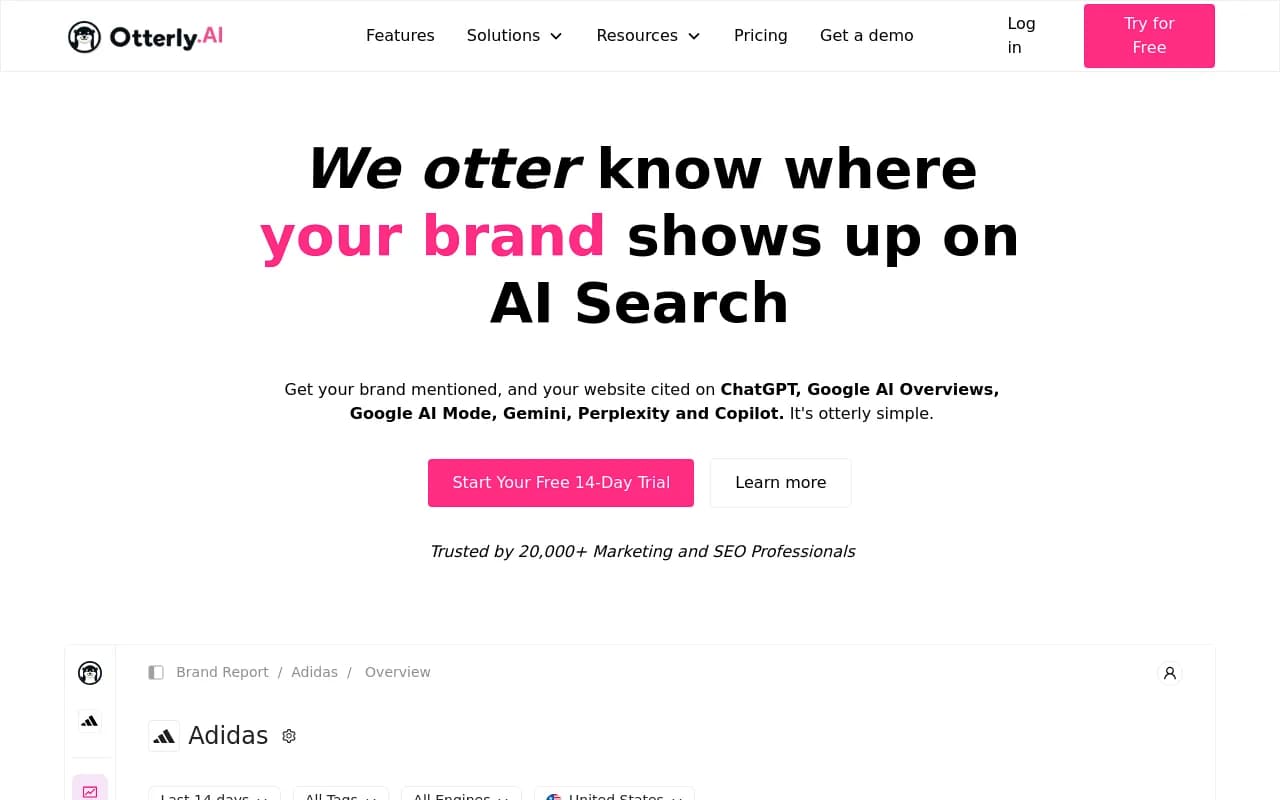
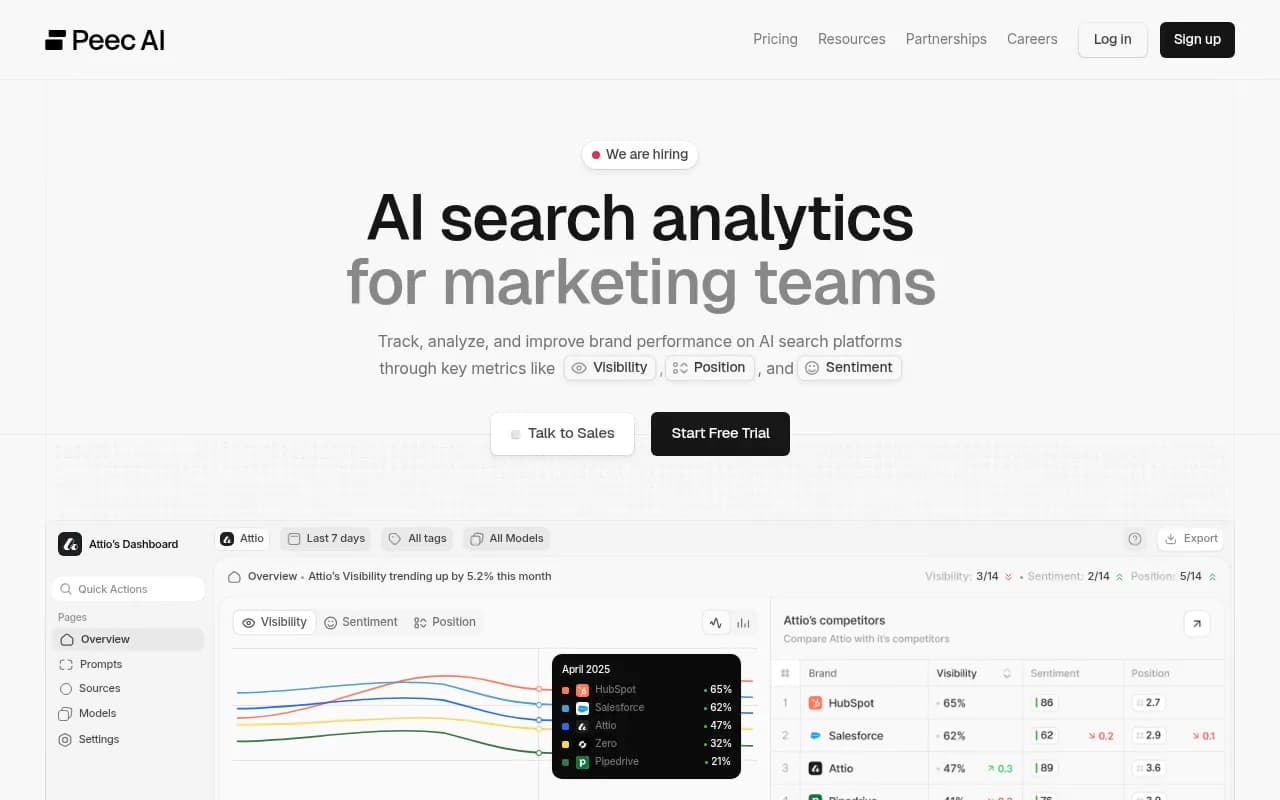
Monitoring dashboards automate this. They run your prompt set on a schedule, track brand mentions and citations, and show you trends over time. Some add competitive benchmarking so you can see how your share of voice compares to specific rivals. A few layer in sentiment analysis to flag whether AI models are saying positive or negative things about you.
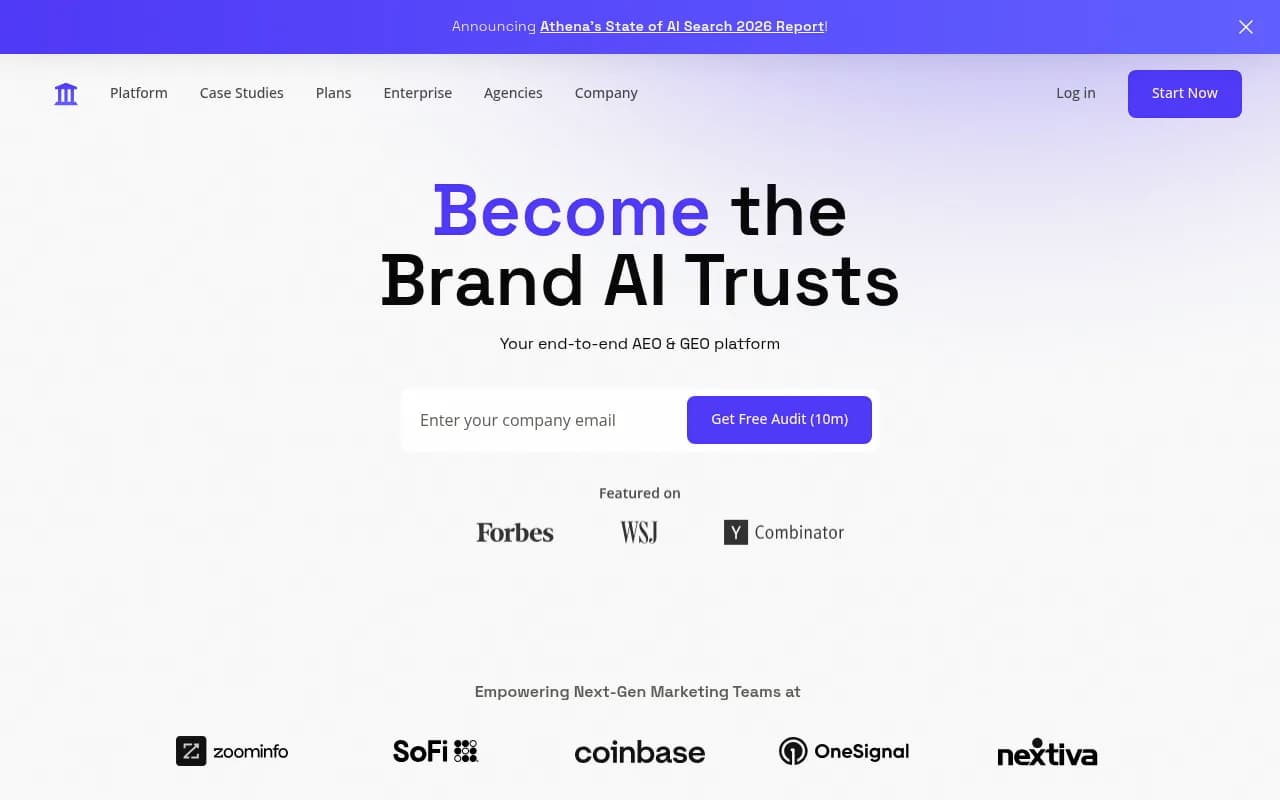
Tools like Otterly.AI, Peec AI, and AthenaHQ sit in this category. They're genuinely useful for establishing a baseline and keeping tabs on whether things are getting better or worse.
The limitation isn't what they measure. It's what they don't help you do after the measurement.
What a real AI search platform does differently
The distinction comes down to one question: what happens after you see the data?
A monitoring dashboard shows you that you're invisible for the prompt "best project management software for remote teams." A real AI search platform tells you why you're invisible, shows you exactly what content would need to exist on your site to change that, and then helps you create it.
That's a fundamentally different product. One is a thermometer. The other is a thermostat.
The practical difference looks like this:
- A monitoring dashboard shows your brand mention rate is 8% for a cluster of buying-intent prompts.
- A real platform shows you the specific prompts where competitors are cited but you're not, identifies the content gaps on your site that explain the absence, generates a draft article targeting those gaps, and then tracks whether your mention rate improves after you publish it.
That second workflow is what actually moves the number.
Why this distinction matters more in 2026
A few things have happened in the past year that make the monitoring-vs-platform gap more consequential.
First, AI search has matured from a novelty into a primary interface. Google's AI Overviews now appear on a large share of commercial queries. ChatGPT's user base has grown to the point where it influences purchasing decisions at scale. Perplexity has carved out a real audience among research-heavy buyers. These aren't experimental features anymore -- they're where decisions get made.
Second, the content gap between brands that are cited and brands that aren't has widened. AI models cite sources that comprehensively answer specific questions. If your website doesn't have a page that directly addresses "what's the difference between X and Y for a [specific use case]," you won't get cited for that prompt -- regardless of how strong your domain authority is or how well you rank in traditional search.
Third, the competitive window is closing. Early movers who figured out how to create content that gets cited by AI models have built up citation histories that are hard to displace. Brands still in monitoring mode are watching that gap grow.
A comparison of what each category offers
| Capability | Monitoring dashboard | Real AI search platform |
|---|---|---|
| Brand mention tracking | Yes | Yes |
| Share of voice vs competitors | Often | Yes |
| Citation source analysis | Sometimes | Yes |
| Prompt volume and difficulty scoring | Rarely | Yes |
| Content gap analysis | No | Yes |
| AI-assisted content generation | No | Yes |
| AI crawler log analysis | No | Yes (some platforms) |
| Traffic attribution from AI search | No | Yes (some platforms) |
| Reddit/YouTube citation tracking | No | Yes (some platforms) |
| Page-level citation tracking | No | Yes |
The monitoring-only tools cluster in the top half of that table. The platforms that actually help you act extend into the bottom half.
Tools worth knowing in each category
Monitoring-focused tools
Several tools do solid work in the monitoring space. If you're just starting out and need to establish a baseline before committing to a more comprehensive platform, these are reasonable starting points.
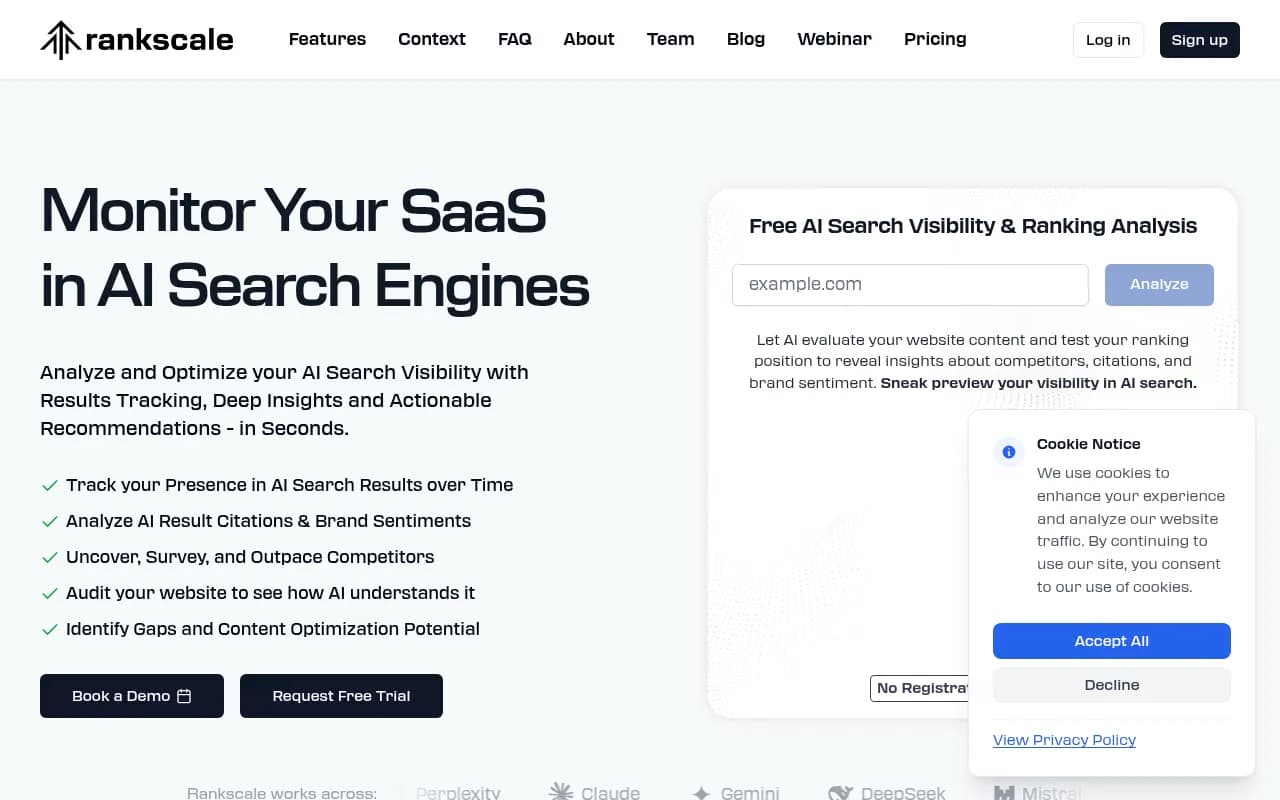
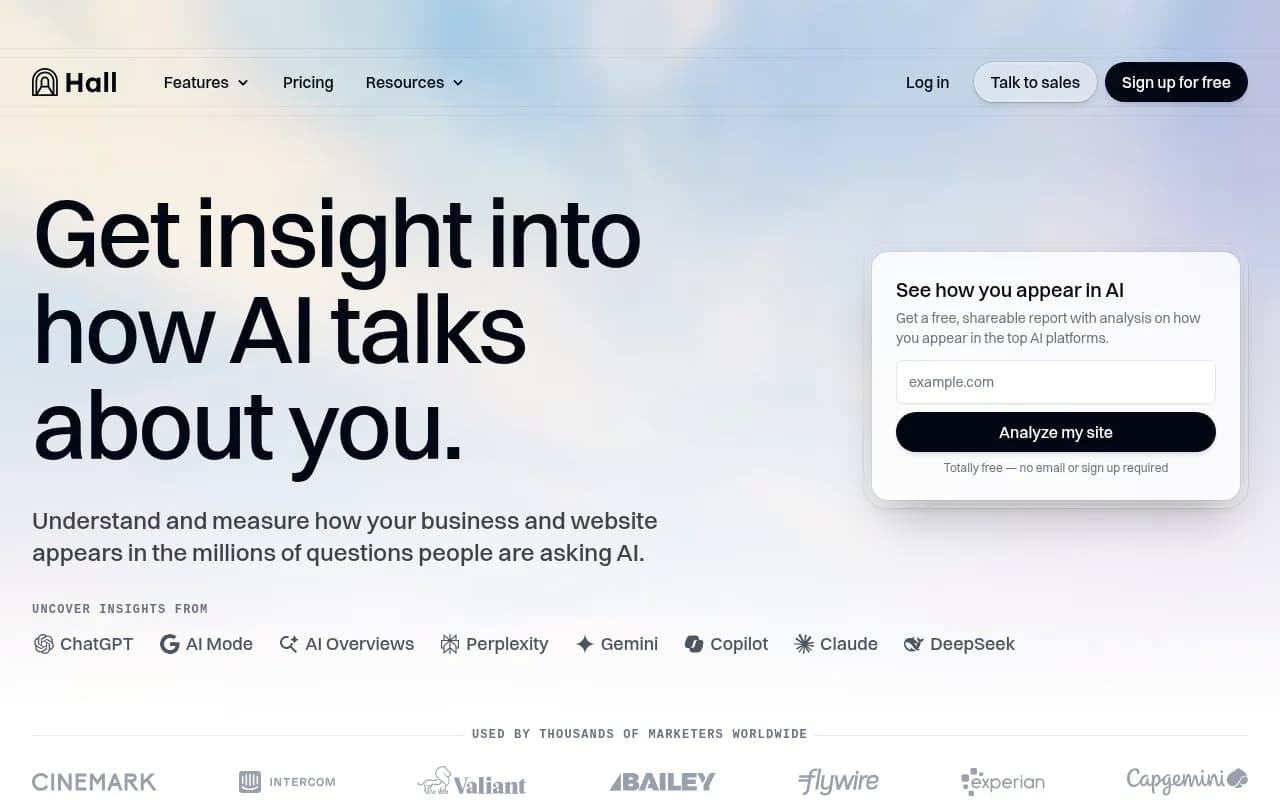
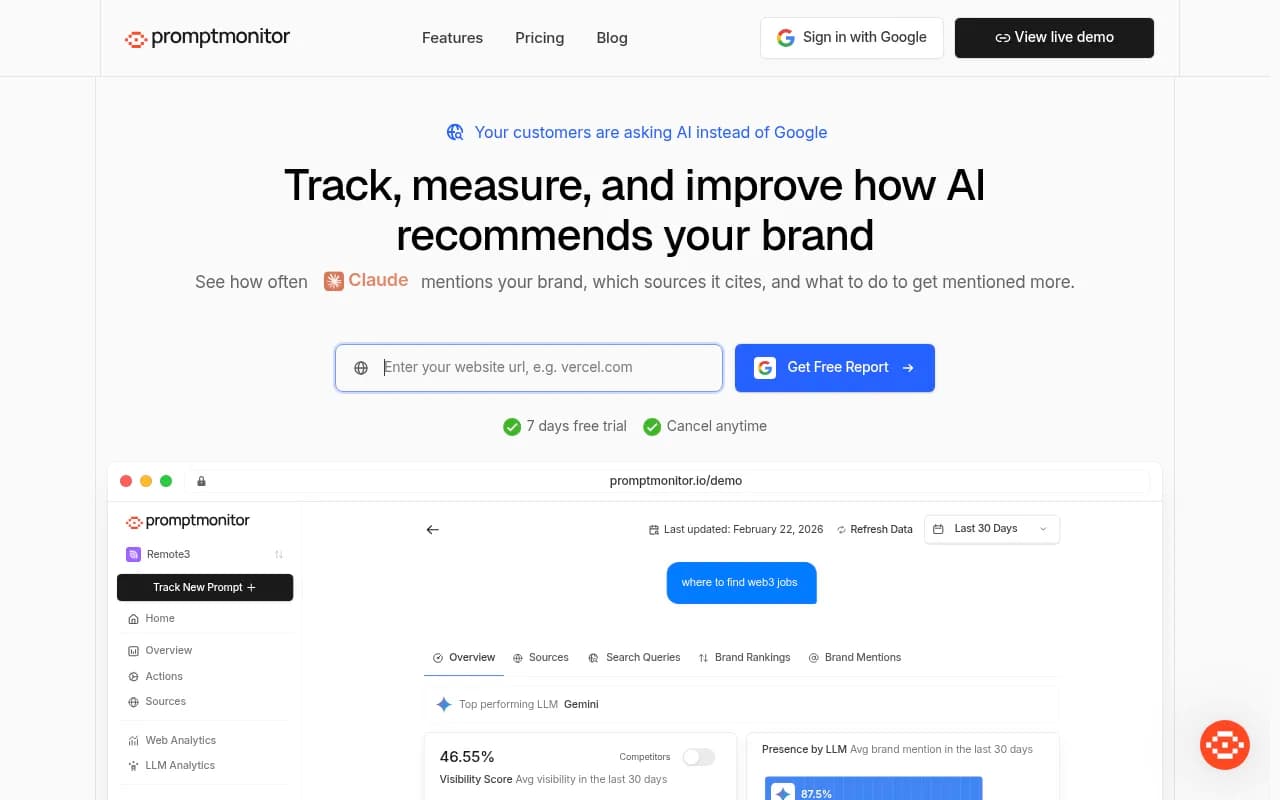
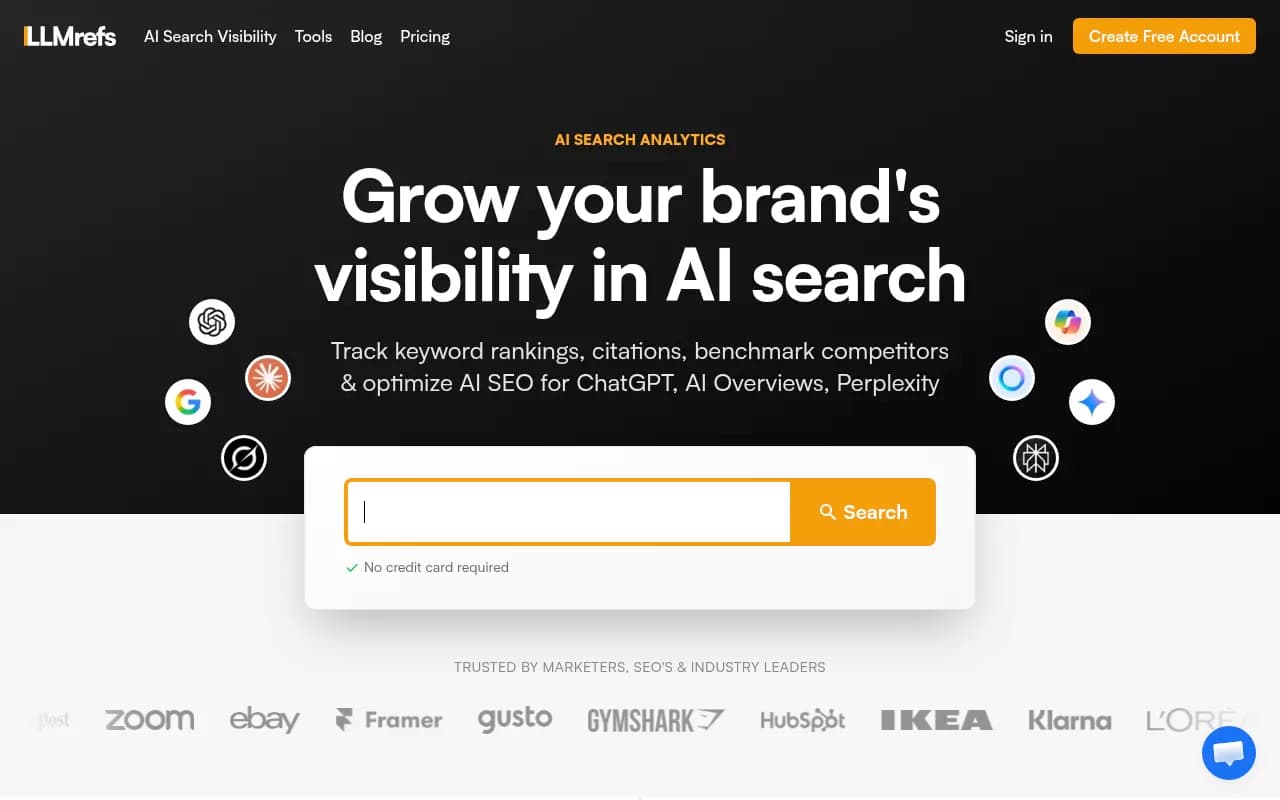
These tools vary in how many AI models they cover, how frequently they run prompts, and how granular their competitive data gets. Most are priced accessibly, which makes sense given the narrower feature set.
Platforms with optimization capabilities
A smaller set of tools has moved beyond monitoring into actual optimization workflows. These are the ones worth evaluating if your goal is to improve your visibility, not just measure it.

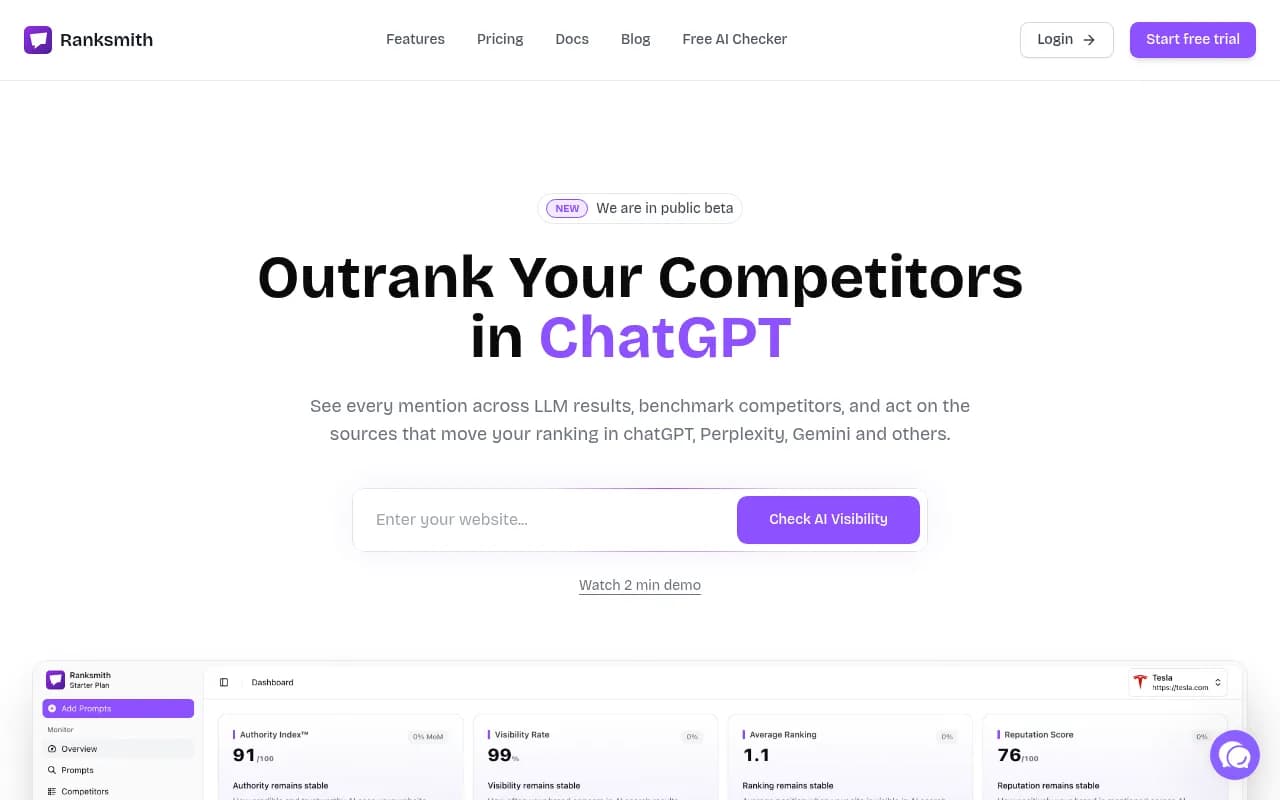
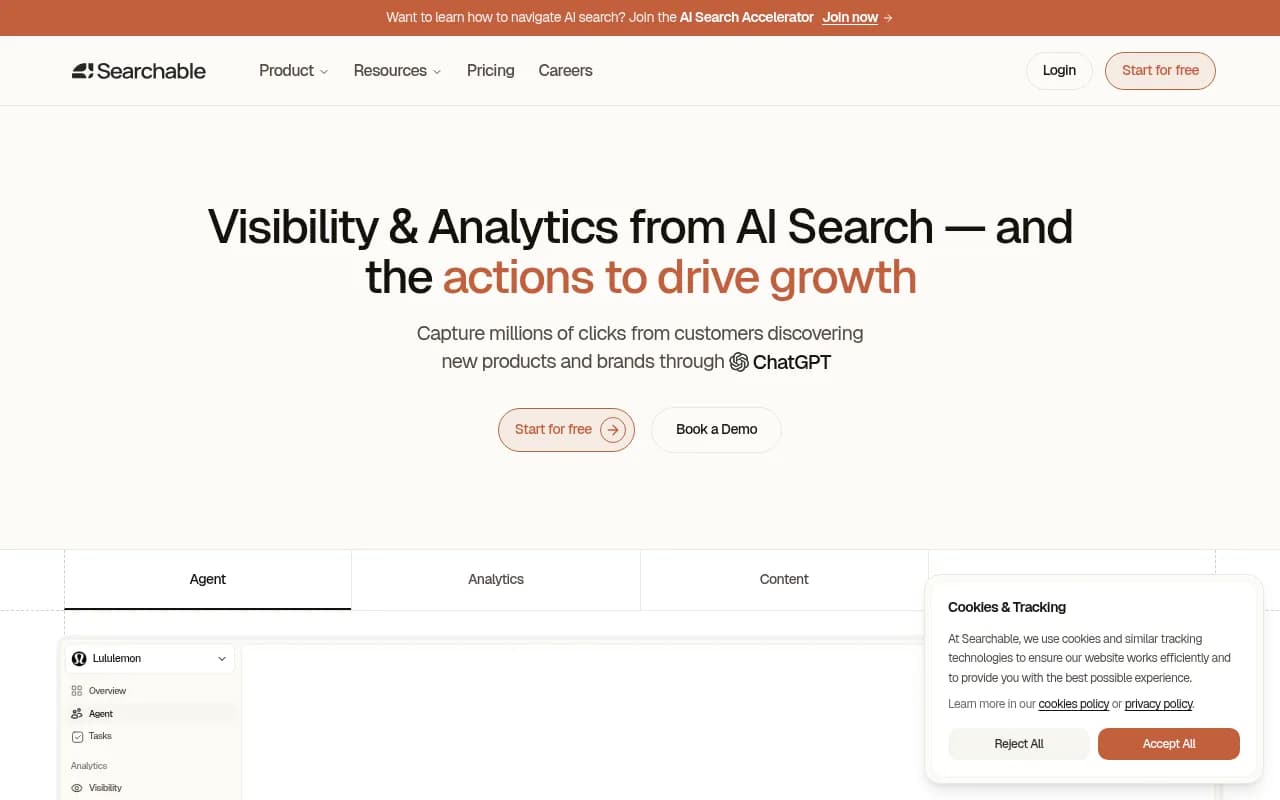
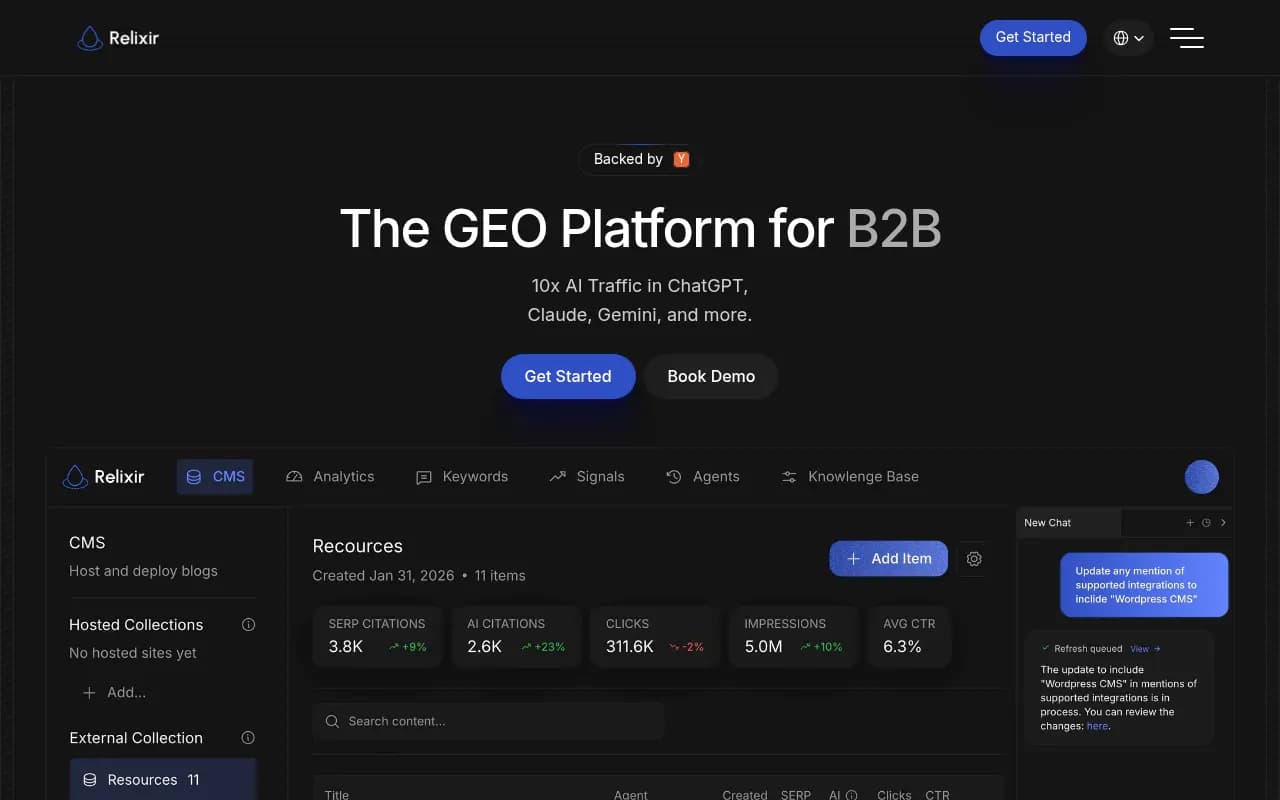
Profound and AthenaHQ have strong monitoring and some optimization features, though they tend toward the higher end of the pricing spectrum. Relixir takes an interesting approach with its AI-native CMS. Ranksmith focuses on making the data actionable with specific recommendations.
The platform that goes furthest in closing the full loop -- from gap identification through content creation to traffic attribution -- is Promptwatch. It's built around the idea that monitoring is only valuable if it leads somewhere. The Answer Gap Analysis shows exactly which prompts competitors are winning that you're not, the built-in writing agent generates content grounded in real citation data, and the traffic attribution layer connects AI visibility improvements to actual business outcomes.

That combination -- find the gap, create the content, measure the result -- is what separates a platform from a dashboard.
The metrics that actually matter
Part of the problem with monitoring dashboards is that they optimize for metrics that feel important but don't connect to outcomes. Brand mention rate is a good example. Knowing you're mentioned in 15% of responses is interesting. Knowing which specific prompts you're missing, what content would change that, and how much traffic those prompts could drive is actually useful.
Here are the metrics worth tracking, and what each one tells you:
Prompt-level citation rate: Not just "are we mentioned" but "for this specific prompt, are we cited, and if not, who is?" This is the diagnostic layer that tells you where to focus.
Answer gap count: How many prompts are competitors winning that you're not? This is your opportunity set. A monitoring tool shows you the gap exists. A platform helps you close it.
Page-level citation frequency: Which pages on your site are actually being cited by AI models? This tells you what's working so you can replicate it, and what's being ignored so you can fix it.
AI crawler activity: Are AI crawlers actually visiting your site? How often? Which pages? If ChatGPT's crawler hasn't indexed a key page in three months, that explains a lot about why you're not being cited.
Traffic attribution: The hardest metric to get right, but the most important. Are the people arriving from AI search actually converting? This is where visibility connects to revenue.
Most monitoring dashboards give you the first metric and maybe a version of the second. The rest require a platform that goes deeper.
How to evaluate any tool you're considering
When you're looking at a new AI visibility tool, the demo will almost always show you a beautiful dashboard with brand mention scores, competitive comparisons, and trend lines. That's the easy part to build.
Ask these questions instead:
-
"When I see that I'm invisible for a prompt, what does this tool help me do next?" If the answer is "we show you the data and you figure out the rest," that's a monitoring dashboard.
-
"Can I see which specific pages on my site are being cited, and which aren't?" Page-level tracking is a meaningful capability gap between tools.
-
"Does this tool track AI crawler activity on my site?" If AI crawlers aren't visiting your pages, no amount of content optimization will help. Knowing this is foundational.
-
"How does this connect to traffic and revenue?" A tool that can't help you attribute AI-driven visits to business outcomes is measuring something you can't fully act on.
-
"What does the content workflow look like?" If there isn't one, you're buying a monitoring dashboard.
None of this means monitoring dashboards are worthless. For teams that already have strong content operations and just need visibility data to feed into existing workflows, a lighter tool might be the right fit. But for most marketing teams, the bottleneck isn't data -- it's knowing what to do with it.
The broader shift happening in this category
What's interesting about the AI search visibility space in 2026 is that it's compressing a cycle that took traditional SEO tools about a decade to complete. Rank trackers came first, then keyword research tools, then content optimization platforms, then full-suite platforms that connected all of it. The AI search category is running through that same evolution in about two years.
The monitoring dashboards that exist today are the rank trackers of 2016. Useful, necessary, but not sufficient on their own. The platforms that are emerging -- the ones that connect monitoring to content creation to traffic attribution -- are what the category is maturing toward.
The brands that recognize this shift early and invest in platforms rather than dashboards will have a meaningful head start. The ones that stay in monitoring mode will have very detailed records of exactly how their competitors outpaced them.
That's not a comfortable position to be in when AI search is already influencing 25% of product discovery and that number is still climbing.
Practical next steps
If you're currently using a monitoring-only tool and want to move toward a more complete workflow, here's a reasonable path:
Start by auditing what you're actually doing with the data you already have. If your current tool produces reports that don't lead to specific content actions, that's your signal that the tool isn't the constraint -- the workflow is. Build the workflow first, even manually, so you know what you need the platform to automate.
Then evaluate platforms based on the questions above. The goal is to find something that fits into a real content production cycle, not just a reporting cycle.
Pay particular attention to citation source analysis and AI crawler logs. These two capabilities tell you the most about why your current visibility is what it is, and they're the features most commonly missing from monitoring-only tools.
Finally, set up traffic attribution before you start optimizing. You need a baseline to measure against. Whether that's a code snippet, a GSC integration, or server log analysis, get the attribution layer in place so that when your visibility improves, you can connect it to actual outcomes.
The distinction between monitoring and optimization isn't academic. It's the difference between knowing you have a problem and actually solving it.