Key takeaways
- Profound is the strongest option for enterprise teams that need deep LLM analytics and are willing to pay for custom pricing.
- Otterly.AI is the most accessible entry point, with a $29/month lite plan and solid multi-engine coverage for small teams.
- Rankscale sits in the mid-market, offering LLM monitoring with a clean interface but limited content optimization features.
- Nightwatch is primarily an SEO rank tracker that added AI monitoring, so it works best if you already use it for traditional SEO.
- None of these four tools close the loop from monitoring to content creation -- if that matters to you, read the section at the end.
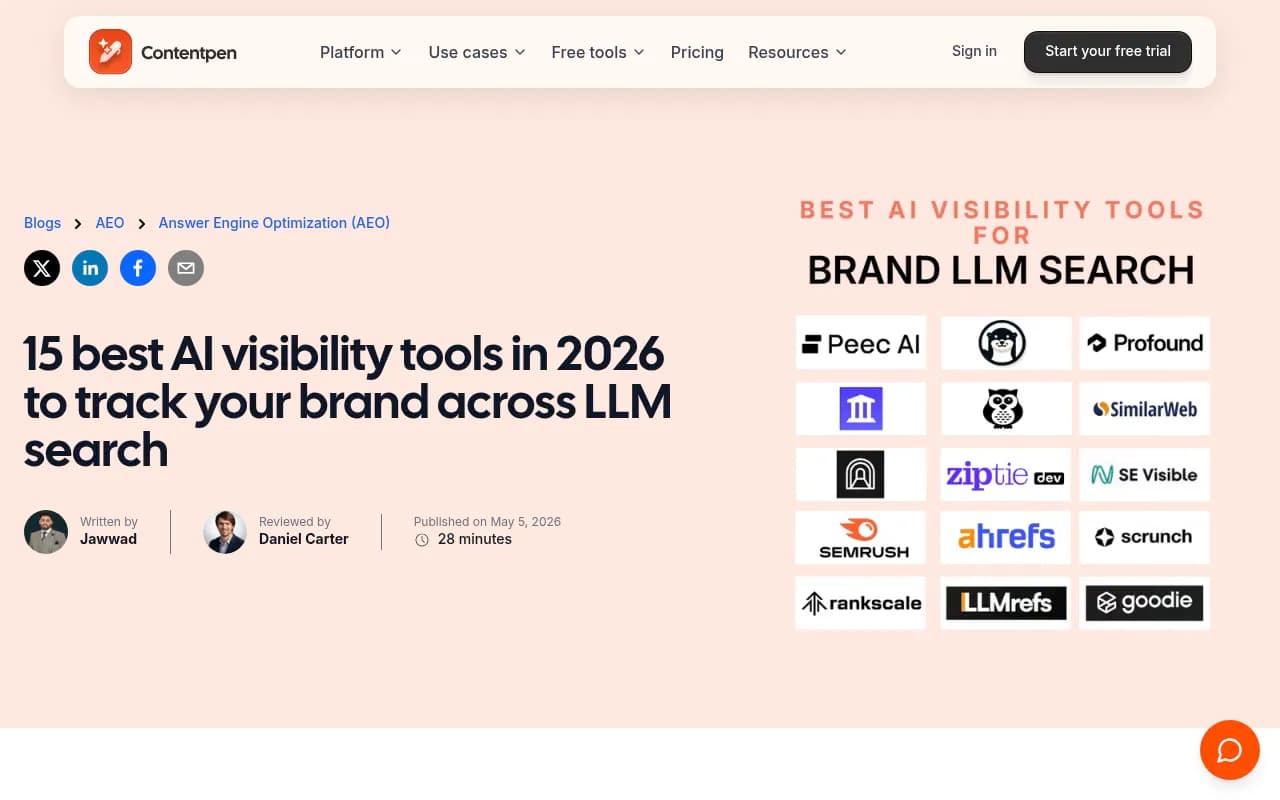
AI search visibility tools went from "nice to have" to genuinely necessary in about 18 months. ChatGPT alone now accounts for 56% of AI search referral traffic according to Otterly.AI's 2026 research, and that number keeps climbing. If you're not tracking how AI models talk about your brand, you're flying blind.
The problem is that the market exploded fast and the tools vary wildly in what they actually do. Profound, Otterly.AI, Rankscale, and Nightwatch are four names that come up constantly in marketing forums and comparison lists. But they're not doing the same thing, and they're not priced the same way. Picking the wrong one wastes money and, more importantly, time.
This guide breaks down each tool honestly, compares them across the dimensions that matter, and tells you which one to pick depending on your situation.
What these tools are actually competing on
Before getting into specifics, it helps to understand what separates a good AI visibility tool from a mediocre one. The core job is monitoring: you set up prompts, the tool queries AI engines, and you see whether your brand gets mentioned. That's table stakes in 2026.
What separates the tools is everything around that core:
- How many AI engines they cover (ChatGPT, Perplexity, Gemini, Claude, Copilot, Google AI Overviews, etc.)
- Whether they track citations and source analysis, not just mentions
- Whether they give you prompt volume data so you know which queries are worth targeting
- Whether they offer any content optimization or gap analysis
- How they handle competitive benchmarking
- Pricing relative to what you actually get
Let's go through each tool.
Profound

Profound is the most enterprise-oriented of the four. It monitors brand visibility across major LLMs and goes deeper than most tools on analytics, including a "Conversation Explorer" that shows how often specific topics and prompts are being discussed across AI engines. That's genuinely useful for prioritizing which queries to target.
Profound also provides actual AI search volume data, which is rare. Most tools show you whether you appear in a response but not how often that prompt is being asked. Knowing prompt volume helps you focus on queries that actually drive traffic rather than optimizing for questions nobody asks.
The platform supports up to 10 LLMs at the enterprise tier, which is among the widest coverage available. It handles multi-region and multi-language monitoring, and the competitive benchmarking features are solid.
The catch: Profound is custom-priced. There's no public self-serve plan you can sign up for and test in five minutes. For a startup or a small marketing team, that's a real barrier. You're looking at a sales conversation before you see a number, which means it's positioned squarely at mid-market and enterprise buyers.
If you're a large brand with a dedicated SEO or GEO team and budget to match, Profound is worth evaluating seriously. If you're a solo marketer or a small agency, the pricing conversation alone will probably rule it out.
Otterly.AI

Otterly.AI was one of the first purpose-built AI search monitoring platforms, and that head start shows. The interface is clean, setup is fast, and the platform covers the five major AI engines: Google AI Overviews/AI Mode, ChatGPT, Gemini, Copilot, and Perplexity.
The lite plan starts at $29/month for 15 prompts across 4 engines, which makes it the most accessible entry point in this comparison. For a small brand or a marketer who just wants to start tracking AI visibility without a big commitment, that's a reasonable place to start.
What Otterly.AI does well: monitoring, citation tracking, and brand mention analysis. The domain citation view shows which of your pages are being referenced in AI responses, which is useful for understanding what's already working.
What it doesn't do: content optimization. Otterly.AI is a monitoring dashboard. It tells you where you stand but doesn't help you improve. If you're invisible for a set of prompts, you'll know that -- but the tool won't tell you what content to create or help you create it. That gap is fine if you have a content team that can act on the data, but it's a real limitation if you're looking for an end-to-end solution.
The platform also lacks crawler log analysis (understanding which AI bots are crawling your site and how often), which is a feature that's becoming more important as AI indexing behavior diverges from traditional search crawlers.
For the price, Otterly.AI is solid. It's the right tool for teams that want to start monitoring without overcommitting.
Rankscale
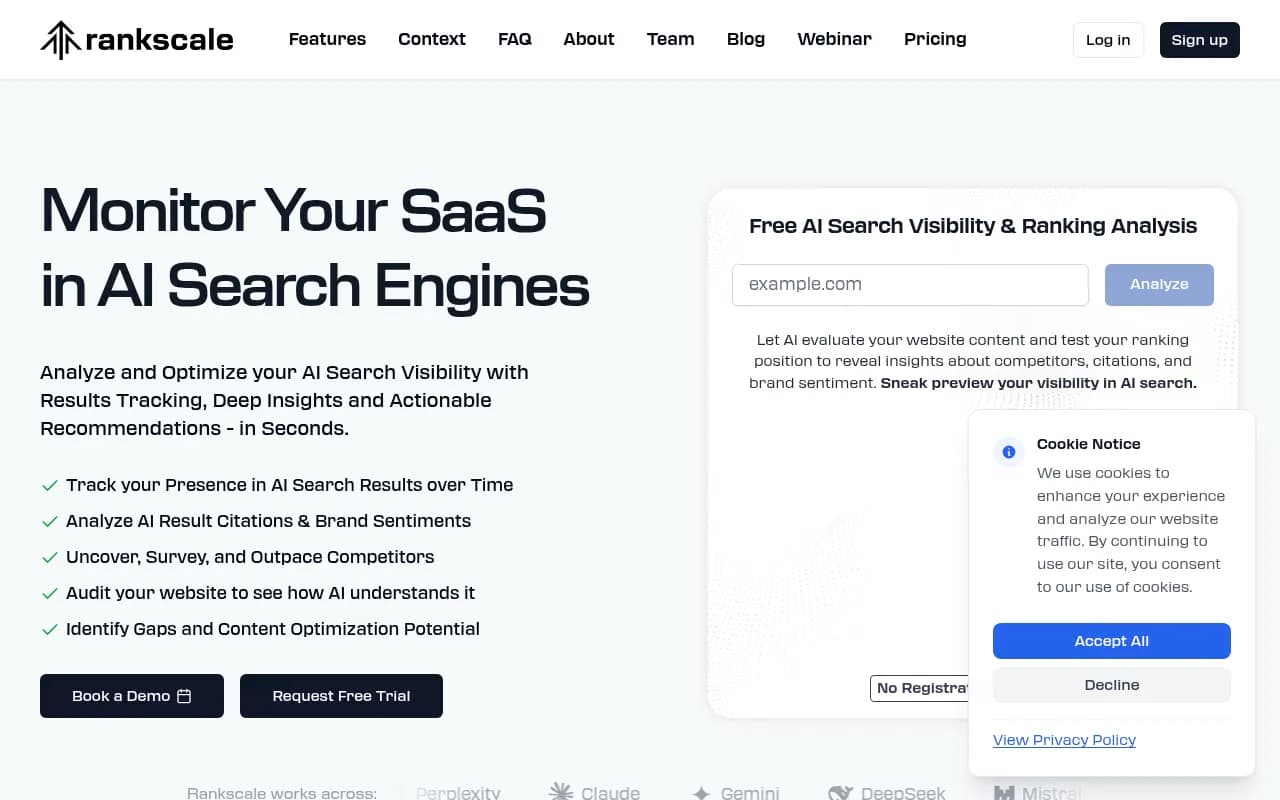
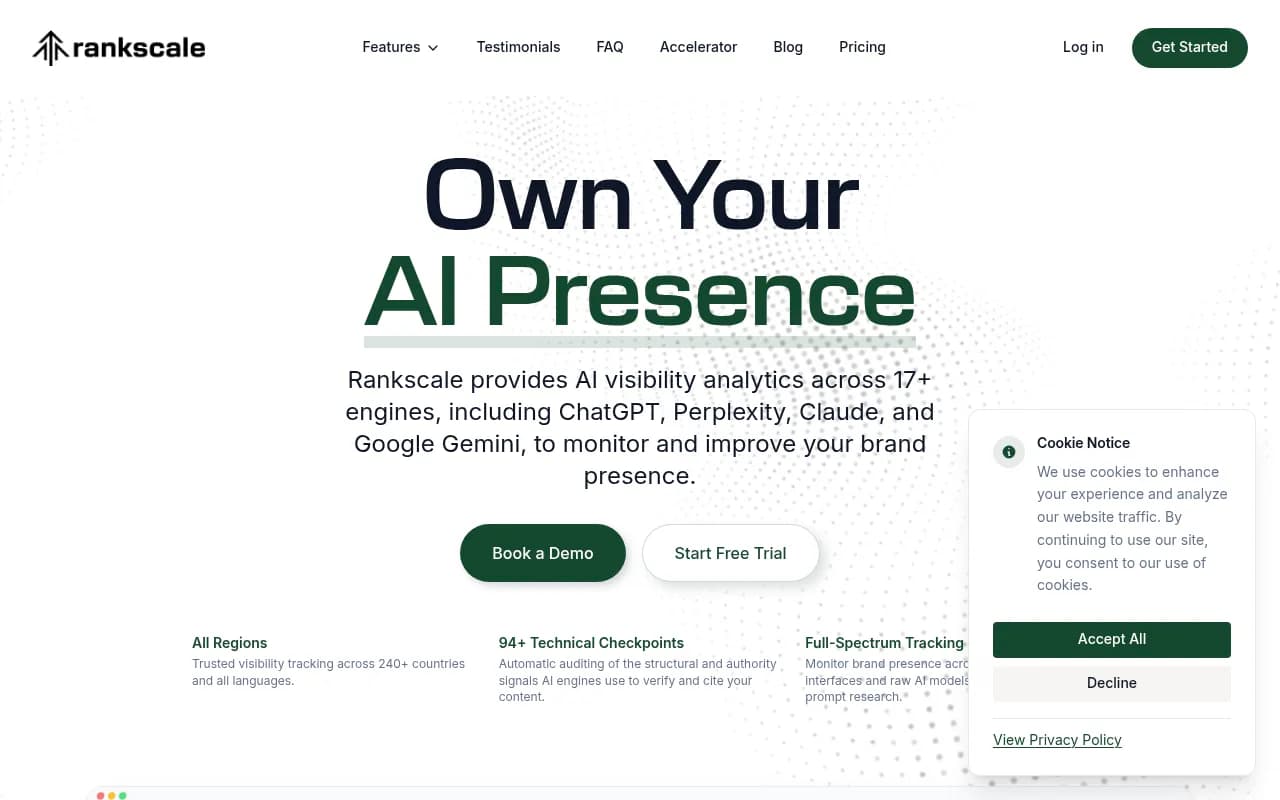
Rankscale is a mid-market LLM monitoring platform that covers AI search ranking and visibility. It tracks brand mentions and citations across AI engines and provides competitive positioning data.
The platform is less well-documented publicly than Profound or Otterly.AI, which makes it harder to evaluate from the outside. What's clear from user reviews and comparison lists is that Rankscale focuses on the monitoring side of the equation: you get data on where you appear, how often, and how you compare to competitors.
Where Rankscale fits: teams that want more than Otterly.AI's entry-level feature set but aren't ready for an enterprise platform like Profound. It occupies a reasonable middle ground in terms of depth and price.
The limitations are similar to Otterly.AI: monitoring-first, with limited content optimization capabilities. If you want to understand your AI visibility and track it over time, Rankscale works. If you want to close the loop and actually improve your visibility through content, you'll need to pair it with separate tools.
Nightwatch
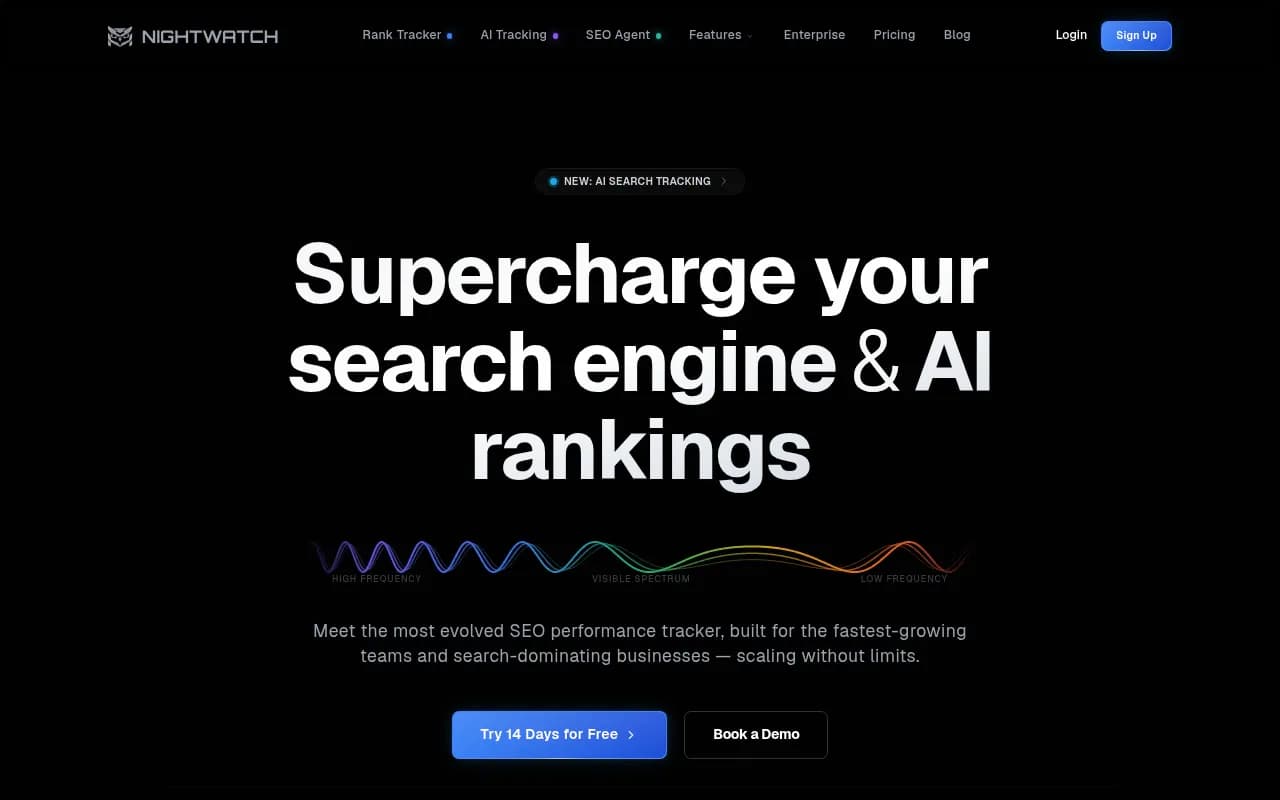
Nightwatch is primarily an SEO rank tracking platform that added AI search monitoring. That context matters a lot for how you evaluate it.
The AI monitoring features cover major engines and include brand mention tracking. For teams already using Nightwatch for traditional SEO rank tracking, adding AI visibility monitoring in the same platform is genuinely convenient. You get a unified view of both traditional and AI search performance without managing two separate tools.
The problem is that Nightwatch's AI monitoring features feel secondary to its core SEO product. The depth of LLM analysis, prompt intelligence, and competitive benchmarking doesn't match what dedicated AI visibility platforms offer. If AI search monitoring is your primary need, you'll hit the ceiling of what Nightwatch can do relatively quickly.
Where Nightwatch makes sense: you're already a Nightwatch customer for SEO, you want basic AI visibility tracking, and you don't want to add another tool to your stack. It's a convenience play, not a best-in-class AI monitoring play.
Head-to-head comparison
Here's how the four tools stack up across the dimensions that matter most:
| Feature | Profound | Otterly.AI | Rankscale | Nightwatch |
|---|---|---|---|---|
| AI engines covered | Up to 10 (enterprise) | 4-5 | Multiple | Multiple |
| Prompt volume data | Yes | Limited | Limited | No |
| Citation tracking | Yes | Yes | Yes | Basic |
| Competitive benchmarking | Strong | Basic | Moderate | Basic |
| Content gap analysis | No | No | No | No |
| Content generation | No | No | No | No |
| AI crawler logs | No | No | No | No |
| Reddit/YouTube insights | No | No | No | No |
| Multi-language/region | Yes | Limited | Limited | Yes |
| Starting price | Custom | $29/mo | Custom/mid | Bundled with SEO |
| Free trial | Sales-led | Yes | Varies | Yes |
| Best for | Enterprise | Small teams | Mid-market | Existing Nightwatch users |
What none of them do
Here's the honest assessment: all four tools are primarily monitoring platforms. They show you data. They tell you where you're visible and where you're not. What they don't do is help you fix the problem.
If you're invisible for a set of high-value prompts, knowing that is step one. But step two is figuring out what content to create to change that, and step three is actually creating it. None of these four tools take you through that full cycle.
This is the gap that separates monitoring tools from optimization platforms. A monitoring tool gives you a dashboard. An optimization platform gives you a dashboard plus a path to improvement.
For teams that want to go beyond monitoring, Promptwatch is worth looking at. It's built around what it calls an "action loop": find the prompts where competitors are visible but you're not, generate content specifically engineered to get cited by AI models, and then track whether your visibility improves. The content generation is grounded in citation data from 880M+ analyzed citations, not generic SEO templates.

That's a meaningfully different product than what Profound, Otterly.AI, Rankscale, or Nightwatch offer. If your goal is just to monitor, any of the four tools in this comparison will do the job. If your goal is to actually improve your AI visibility, you need something that helps you act on the data.
Which tool should you actually pick?
The right answer depends on where you are and what you need.
Pick Otterly.AI if you're just starting out with AI visibility monitoring, have a limited budget, and want to get up and running quickly. The $29/month lite plan is a low-risk way to see what AI search monitoring actually looks like in practice.
Pick Profound if you're at an enterprise or mid-market company with a dedicated team, need deep LLM analytics including prompt volume data, and have budget for a custom-priced platform. The Conversation Explorer and multi-LLM coverage at the enterprise tier are genuinely strong.
Pick Rankscale if you're in the mid-market, want more depth than Otterly.AI's entry tier, and are comfortable with a platform that's less publicly documented. Worth evaluating if the other options don't fit your budget or feature needs.
Pick Nightwatch if you're already a Nightwatch customer for traditional SEO and want to add basic AI visibility tracking without switching platforms. Don't pick it as a standalone AI monitoring solution.
Consider Promptwatch if monitoring alone isn't enough and you want to close the loop from gap analysis to content creation to traffic attribution. It's the only platform in the broader market rated as a "Leader" across all evaluation categories in a 2026 comparison of 12 GEO platforms, and the action-oriented approach is a genuine differentiator.
A note on the broader market
These four tools are a slice of a much larger and fast-moving category. The AI visibility tool market has expanded significantly since 2024, and new entrants keep appearing. A few others worth knowing about:

Peec AI is strong on multi-language monitoring, which matters if you operate across markets.
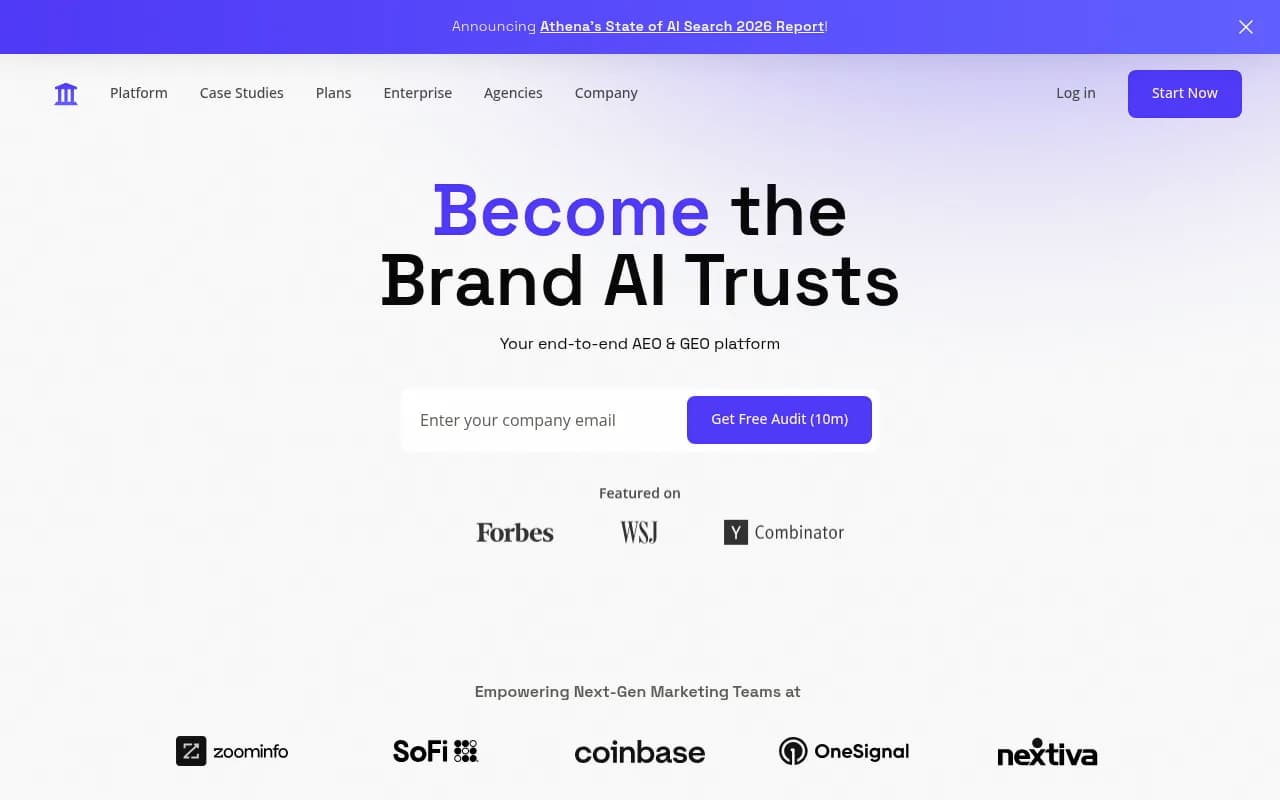
AthenaHQ covers 8+ AI engines and is monitoring-focused with a clean interface.
Scrunch AI includes SOC 2 Type II compliance and multi-seat licensing, which matters for larger teams with security requirements.
The category is still consolidating. Tools that exist today may look very different in 12 months, and pricing is shifting as competition increases. Whatever you pick, make sure you're not locked into a long contract before you've validated that the tool actually fits your workflow.
The most important thing is to start monitoring. Brands that understand their AI visibility now will have a meaningful head start over those that wait until AI search traffic becomes impossible to ignore.