Key takeaways
- AI search visibility is a fundamentally different metric from traditional SEO rankings -- your Google position tells you almost nothing about whether ChatGPT or Perplexity recommends you.
- The core metrics to track are citation rate, mention share, sentiment framing, and prompt coverage across multiple AI models.
- Most tools only monitor -- they show you the gap but don't help you close it. The ones worth paying for combine tracking with content gap analysis and optimization.
- What actually moves your score: publishing content that directly answers the prompts AI models are fielding, earning citations from sources AI models trust (Reddit threads, authoritative articles, review sites), and fixing crawlability issues that prevent AI bots from reading your pages.
- Tracking without acting is just expensive reporting. The loop that matters is: find gaps, create targeted content, watch citations climb.
Your SEO dashboard says traffic is steady. Rankings are holding. Domain authority is up. But when a potential buyer opens ChatGPT and asks "what's the best [your category] tool for [your use case]," your brand isn't in the answer.
That's not a fluke. It's a structural problem, and it's one that traditional analytics tools were never built to catch.
By March 2026, Comscore data showed ChatGPT at 33.86 million U.S. desktop unique visitors -- an 18.9% month-over-month increase. Anthropic's Claude surged 130.1% month-over-month. Across seven major AI chatbot platforms, combined U.S. desktop users hit 44.4 million. Meanwhile, up to 93% of AI Mode search sessions end without a website visit, meaning a brand could be heavily influencing buyer decisions inside these platforms while your analytics dashboard reports zero corresponding traffic.
This guide covers how to actually track your AI search visibility score, what the metrics mean, and -- more importantly -- what moves the needle.
What "AI search visibility score" actually means
Before you can track it, you need to know what you're measuring. AI search visibility isn't a single number from a single source. It's a composite of several signals across multiple platforms.
The core question is: when someone asks an AI model a question relevant to your category, does your brand appear in the response? And if it does, how prominently, how positively, and how consistently?
That breaks down into four trackable metrics:
Citation rate: How often your website or brand is cited as a source in AI-generated responses. This is the closest equivalent to a "ranking" in traditional SEO.
Mention share: Out of all the responses an AI model generates for prompts in your category, what percentage include your brand? Compare this to competitors to get a share-of-voice picture.
Sentiment framing: When AI models do mention you, what do they say? Being mentioned as "a decent option for small teams" is very different from "the leading platform for enterprise use cases." The framing matters because it directly shapes buyer perception.
Prompt coverage: How many of the relevant prompts in your category does your brand appear for? A brand might show up for 3 out of 50 relevant prompts -- that's 6% coverage. A competitor might show up for 35. That gap is your opportunity.
Why you can't track this with traditional tools
Google Search Console shows you clicks from Google. It doesn't show you anything that happens inside ChatGPT, Perplexity, Claude, or Gemini. Those platforms don't pass referral data the way traditional search does.
Even Google's own AI Overviews and AI Mode are only partially visible through GSC -- you can see some impression data, but the picture is incomplete and doesn't extend to third-party AI models at all.
The other issue is that AI responses are dynamic. The same prompt asked on Monday and Thursday can return different answers. AI models update their training data, adjust their retrieval logic, and weight sources differently over time. A one-time check tells you almost nothing. You need longitudinal tracking -- the same prompts, asked repeatedly, across multiple models, with results logged over time.
Setting up your tracking system
Step 1: Define your prompt set
Start with 20-50 prompts that represent how your actual customers search. These aren't keywords -- they're natural-language questions.
Good examples:
- "What's the best project management tool for remote teams?"
- "Which CRM should a B2B SaaS startup use?"
- "Compare [your category] tools for [specific use case]"
Bad examples (too vague):
- "project management"
- "CRM software"
The more specific your prompts, the more actionable your data. Vague prompts return vague answers that are hard to act on.
Group your prompts by intent: awareness prompts ("what is X"), consideration prompts ("best X for Y"), and decision prompts ("X vs Y", "should I use X or Y"). Each stage of the funnel behaves differently across AI models.
Step 2: Choose which AI models to monitor
At minimum, track ChatGPT, Perplexity, and Google AI Overviews. These three account for the majority of AI-assisted search behavior right now.
If your audience skews technical or enterprise, add Claude and Gemini. If you're in a market with significant international traffic, DeepSeek and Mistral are worth including. Each model has different citation preferences and different training data -- a brand that dominates in ChatGPT responses might be nearly invisible in Perplexity.
Step 3: Pick a tracking tool (and understand what it actually does)
This is where most teams go wrong. They pick a tool based on price or a demo, start collecting data, and then don't know what to do with it.
There are two types of tools in this space:
Monitoring-only tools show you where you appear and where you don't. They're useful for reporting but they leave you stuck when it comes to actually improving your score.
Optimization platforms combine monitoring with content gap analysis, prompt intelligence, and content generation. These are the ones that help you close the gaps you find.
Here's a quick comparison of the main options:
| Tool | Monitoring | Content gap analysis | Content generation | AI crawler logs | Pricing starts at |
|---|---|---|---|---|---|
| Promptwatch | Yes | Yes | Yes | Yes | $99/mo |
| Otterly.AI | Yes | No | No | No | Lower |
| Peec AI | Yes | No | No | No | Lower |
| AthenaHQ | Yes | Limited | No | No | Mid |
| Profound | Yes | Limited | No | No | Higher |
| SE Ranking | Yes | No | No | No | Bundled |
| Semrush | Partial | No | No | No | Bundled |
| Ahrefs Brand Radar | Partial | No | No | No | Bundled |
For teams that want to actually move their score (not just report on it), Promptwatch is the platform built around the full loop: find gaps, generate content, track results.

For teams that primarily need monitoring and already have a content operation, tools like Otterly.AI or Peec AI can work at a lower price point.


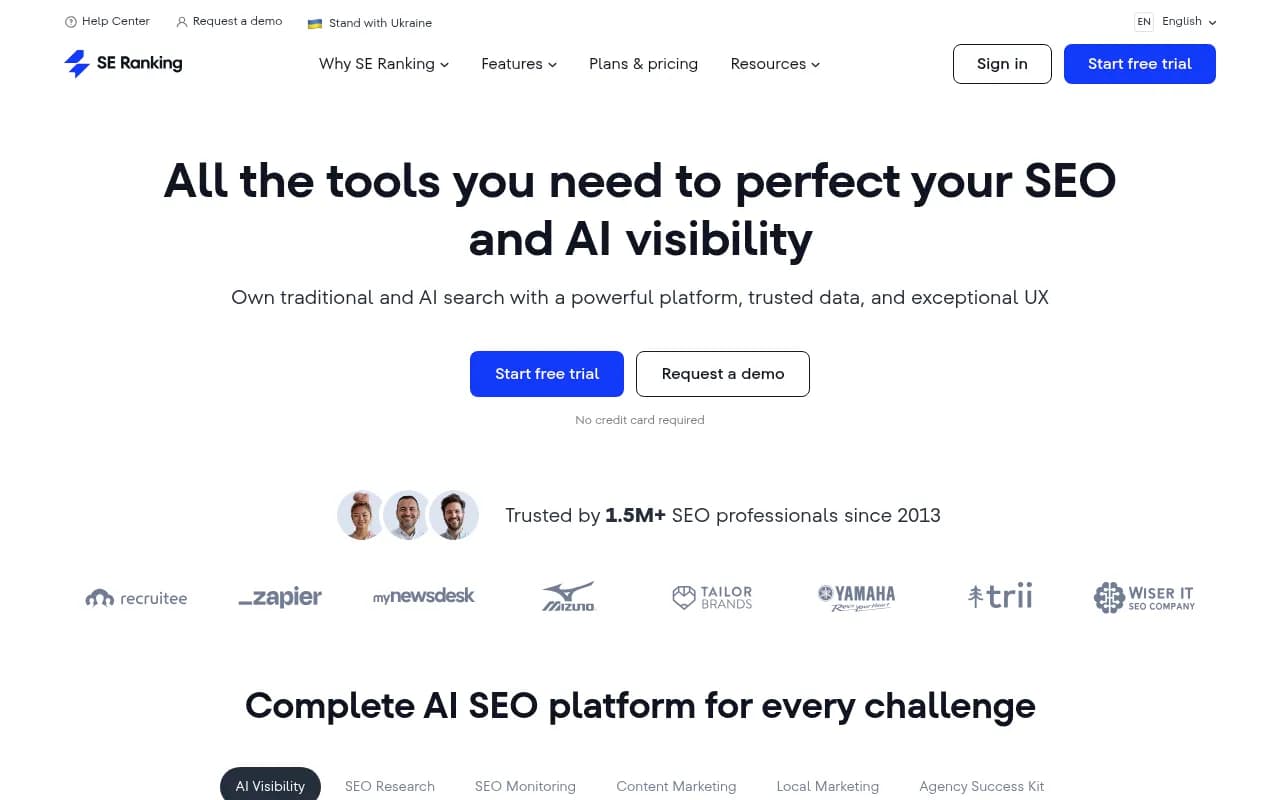
SE Ranking has added AI visibility tracking to its broader SEO suite, which is useful if you want everything in one place.
Step 4: Establish your baseline
Before you do anything to improve your visibility, run your full prompt set across your chosen models and record the results. This is your baseline.
Log:
- Which prompts your brand appears in
- Your position in the response (first mention, second, buried at the end)
- Whether you're cited as a source
- How competitors appear for the same prompts
Do this weekly for at least four weeks before drawing conclusions. AI responses have natural variance -- a single snapshot is misleading.
What actually moves your AI search visibility score
This is the part most guides skip. Tracking is easy. Improving is harder, and it requires understanding why AI models cite some brands and not others.
Publishing content that directly answers the prompts
AI models are retrieval systems. They surface content that answers the question being asked. If your website doesn't have a page that directly addresses "best [your category] tool for [specific use case]," you're not going to appear in responses to that prompt.
The gap analysis step is critical here. Look at the prompts where competitors appear but you don't. Those are the exact topics your content is missing. Write articles, comparison pages, and listicles that directly address those prompts -- not generic SEO content, but content engineered around the specific questions AI models are fielding.
Promptwatch's Answer Gap Analysis does this automatically: it shows you which prompts competitors are visible for that you're not, and its built-in writing agent generates content grounded in actual citation data from 880M+ analyzed citations. That's a very different output from generic AI writing tools.
Earning citations from sources AI models trust
AI models don't just cite brand websites. They cite Reddit threads, YouTube videos, review sites, industry publications, and authoritative comparison pages. If your brand is being discussed positively in those places, you're more likely to appear in AI responses.
This means:
- Monitoring Reddit discussions in your category and participating genuinely
- Getting reviewed on G2, Capterra, and similar platforms
- Earning coverage in industry publications that AI models regularly pull from
- Building backlinks from sites that AI models treat as authoritative sources
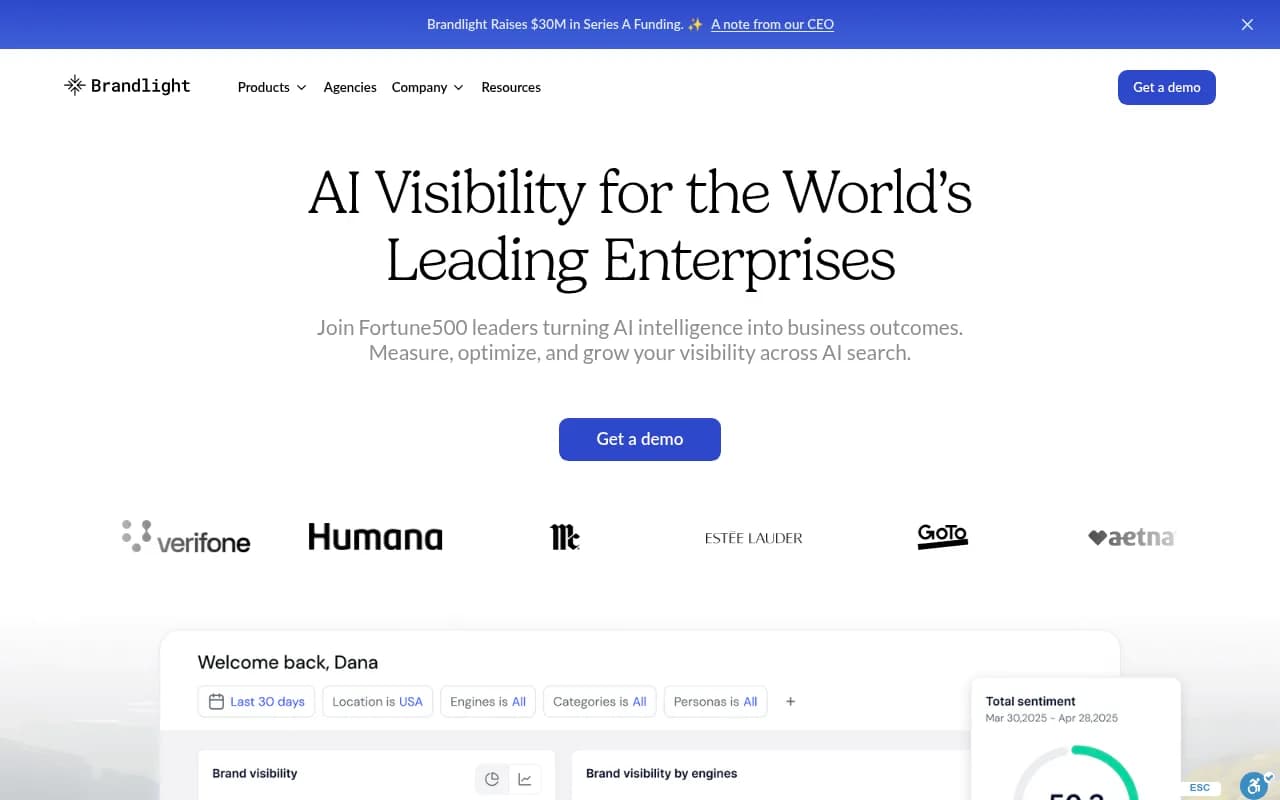
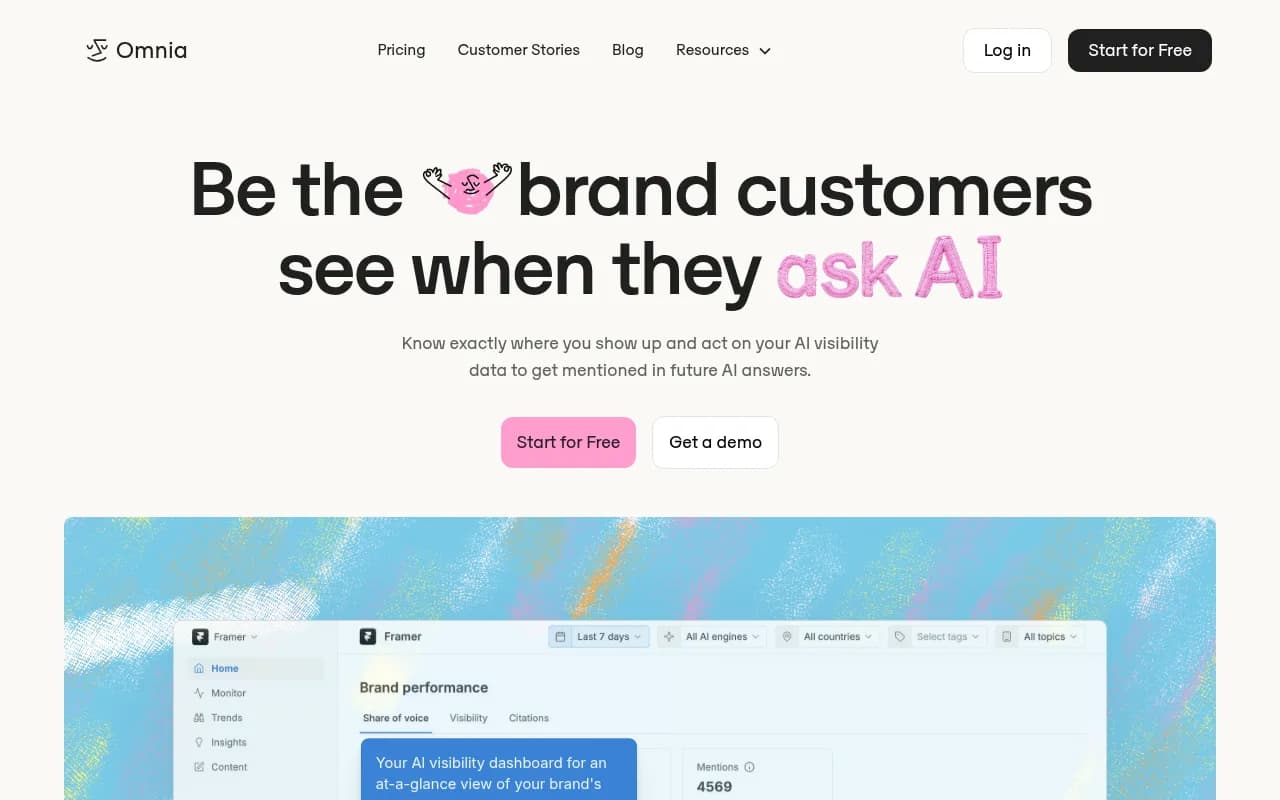
Tools like Brandlight and Omnia can help you track where your brand is being mentioned across these sources.
Fixing AI crawler access issues
This one is underrated. If AI crawlers can't read your pages, you can't be cited. Common problems include:
- Blocking AI bots in your robots.txt (sometimes done accidentally)
- JavaScript-heavy pages that AI crawlers can't parse
- Pages that load slowly or return errors when crawled
- Content buried in PDFs or behind login walls
AI crawler logs -- real-time logs of which AI bots are hitting your site, which pages they're reading, and what errors they encounter -- are one of the most actionable data sources available. Promptwatch includes this; most monitoring-only tools don't.
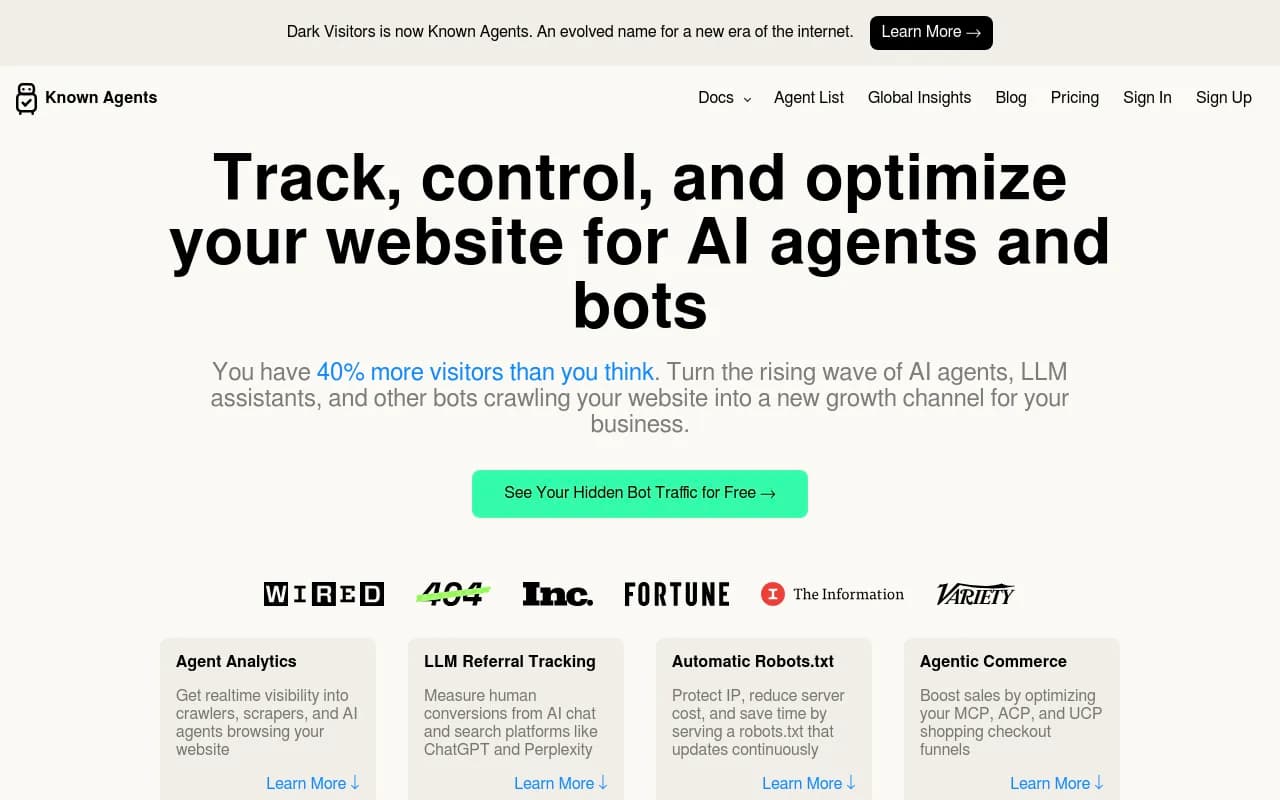
DarkVisitors is also worth checking -- it catalogs known AI agents and their crawl behaviors, which helps you understand what's actually hitting your site.
Improving your content's authority signals
AI models weight sources differently. A page with strong backlinks, clear authorship, structured data, and consistent factual accuracy is more likely to be cited than a thin page with no external validation.
This means the fundamentals of technical SEO still matter -- they're just table stakes now, not differentiators. Make sure your key pages have:
- Clear, structured headings that match natural-language questions
- Schema markup (FAQ, HowTo, Article schemas are particularly useful)
- Author bios and credentials where relevant
- Internal linking that establishes topical depth
Targeting the right prompts (not just the high-volume ones)
Not all prompts are equal. High-volume prompts in competitive categories are hard to break into -- the same handful of established brands dominate those responses. Lower-volume, more specific prompts often have less competition and are much more winnable.
Prompt difficulty scoring (available in Promptwatch) helps you prioritize: focus on prompts where you have a realistic chance of appearing, build visibility there, then use that momentum to tackle harder prompts.
Common mistakes teams make
Tracking too few prompts. Twenty prompts sounds like a lot until you realize your category might have 500 relevant queries. Start with 50 minimum, and expand as you learn which prompt clusters matter most.
Only monitoring one AI model. ChatGPT and Perplexity have meaningfully different citation patterns. A strategy optimized for one might not work for the other. Track at least three models.
Treating every mention as equal. Being mentioned in a list of ten tools at the bottom of a response is not the same as being the first recommendation. Track position and framing, not just presence.
Ignoring the content gap. Most teams look at their visibility score, feel bad about it, and then... keep publishing the same content they were already publishing. The gap analysis step is what tells you specifically what to write. Skip it and you're guessing.
Not connecting visibility to revenue. AI visibility that doesn't eventually show up as traffic or leads is just a vanity metric. Set up traffic attribution -- whether through a code snippet, GSC integration, or server log analysis -- so you can connect citation improvements to actual business outcomes.
Building a reporting cadence
Weekly: Check your prompt coverage and citation rate across your core prompt set. Flag any significant changes (positive or negative).
Monthly: Review your mention share vs competitors. Identify which new content pieces are getting cited. Look at AI crawler logs for any access issues.
Quarterly: Reassess your prompt set. Add new prompts that reflect how your category is evolving. Review your content roadmap against the gap analysis output. Measure whether your visibility improvements are showing up in traffic and leads.
The goal is a closed loop: track, identify gaps, publish content, track again. That cycle -- not any single tactic -- is what compounds over time.
Tools worth knowing about
Beyond the main platforms, a few specialized tools are worth having in your stack depending on your situation:
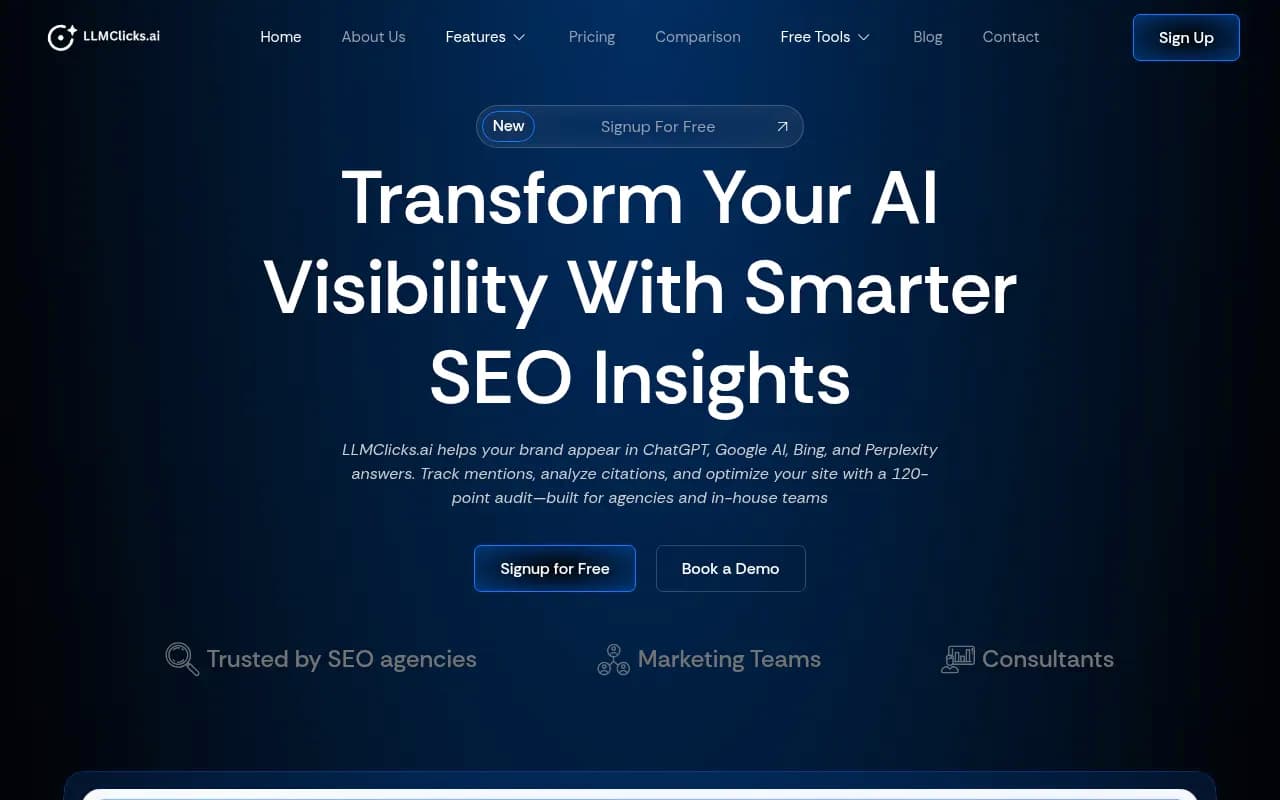
For tracking AI-referred traffic specifically, LLM Clicks focuses on attribution from AI sources.
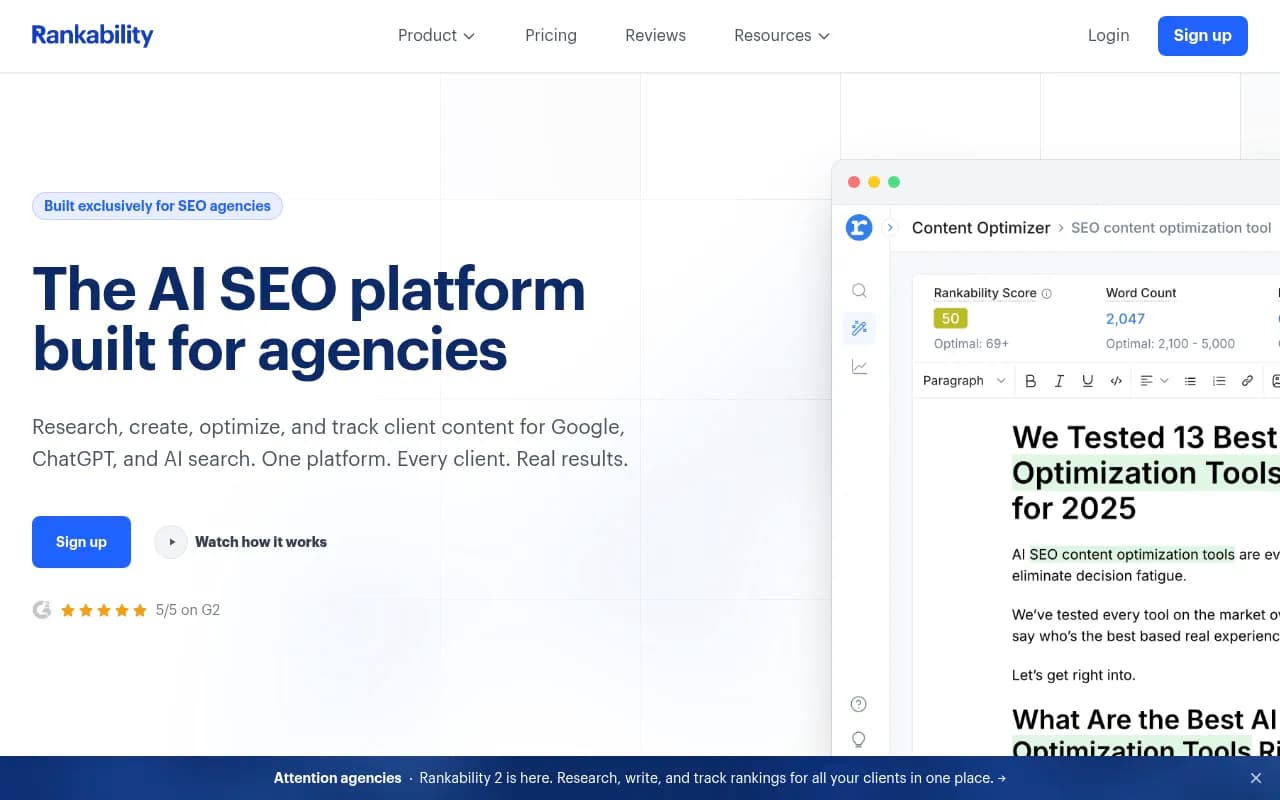
For agencies managing multiple clients, Rankability has reporting features built for that workflow.
For teams that want deep prompt intelligence and competitive analysis, Profound has a strong feature set, though at a higher price point.

For monitoring Reddit and other community sources that heavily influence AI citations, Promptwatch includes Reddit tracking natively -- most other platforms don't touch it.
The honest summary
AI search visibility tracking in 2026 is not complicated in theory. You define prompts, you monitor responses, you find gaps, you create content, you track improvement. The loop is simple.
What makes it hard is that most tools only do the first two steps. They show you where you're invisible but leave you to figure out the rest. The teams that are actually moving their scores are the ones who've connected monitoring to content production -- who treat the gap analysis as a content brief, not just a report.
If your brand isn't showing up when buyers ask AI models for recommendations in your category, that's a content problem as much as it is a visibility problem. Fix the content, and the visibility follows.