Key takeaways
- Treat the rollout as a program with owners, phases and a 90-day first milestone, not a software purchase.
- Lock down governance and security (SSO, roles, audit logs, data residency) before you load a single prompt.
- Build prompt sets per market with local language and local personas. Translating an English list is the most common mistake.
- Check AI crawler access early. A monitoring dashboard cannot fix a site that bots cannot read.
- Measure each AI engine separately and tie reporting to traffic and conversions, not only a visibility score.
Why enterprise rollouts fail
Most global GEO rollouts do not fail on tool selection. They fail because five regional teams each buy something different, load their own prompts, and report numbers that cannot be compared. Six months later the board asks "are we visible in AI search?" and nobody can answer in one slide.
The research backs up the buying-side confusion. One vendor guide from Meikai defines an enterprise GEO platform as software, sometimes paired with a managed service, that works across many brands, markets, languages and AI models at once, with the access controls and integrations a large organization requires. That definition is useful. The ranking in that guide is less so, since Meikai is a vendor and names itself the strongest fit. Read every vendor comparison, including this one, with that in mind.
This guide assumes you have, or are about to have, budget for a platform. It covers what to do in what order.
Phase 0: set up the program before the platform
Name an owner and a steering group
One person needs to own the program globally. Usually that is a head of SEO, digital or brand. Under them sit regional leads who control local prompts and content. Without a single owner, the platform becomes five separate silos with one invoice.
Decide what the business wants from AI search
Pick two or three outcomes before you pick metrics. Typical ones:
- Be named and cited for category queries in priority markets
- Correct inaccurate claims AI makes about the brand or products
- Drive AI-referred traffic and conversions
- Protect the brand in regulated or sensitive topics
These decide which features matter. A pharma company cares about accuracy and hallucination alerts. A retailer cares about shopping surfaces and product pages.
Map your brands, markets and languages
List every brand, sub-brand, country and language you care about. Mark which are tier one (monitor daily, invest in content), tier two (monitor, fix gaps opportunistically) and tier three (baseline only). You will not roll out everywhere at once, and pretending you will is how timelines slip.
Phase 1: choose the platform with an enterprise checklist
Mid-market buying criteria do not carry over. A buying guide from Presenc AI lists the enterprise filters well: SAML SSO (Okta, Azure AD, Ping) and ideally SCIM, granular role-based access, audit logs, data residency options for GDPR and similar rules, negotiated contracts with a DPA and security questionnaire support, integration with BI stacks like Snowflake, Looker or Tableau, and multi-brand support that does not create chaos.
I would add three things the checklists tend to skip.
- Real interface data. Ask whether answers are collected from the actual ChatGPT, Gemini or AI Overviews interfaces in each country, or only from APIs. User-facing answers and citations can differ from API output.
- Whether the tool does anything after the dashboard. Reporting a score is easy. Fixing the gap is the work.
- Crawler visibility. If you cannot see which AI bots hit your site and where they fail, you cannot separate an access problem from a content problem.
Shortlist by job, not by brand name
| Need | Platforms worth a look |
|---|---|
| End-to-end: monitoring, crawler logs, content creation, publishing, traffic attribution | Promptwatch |
| Prompt-volume data and content workflows | Profound |
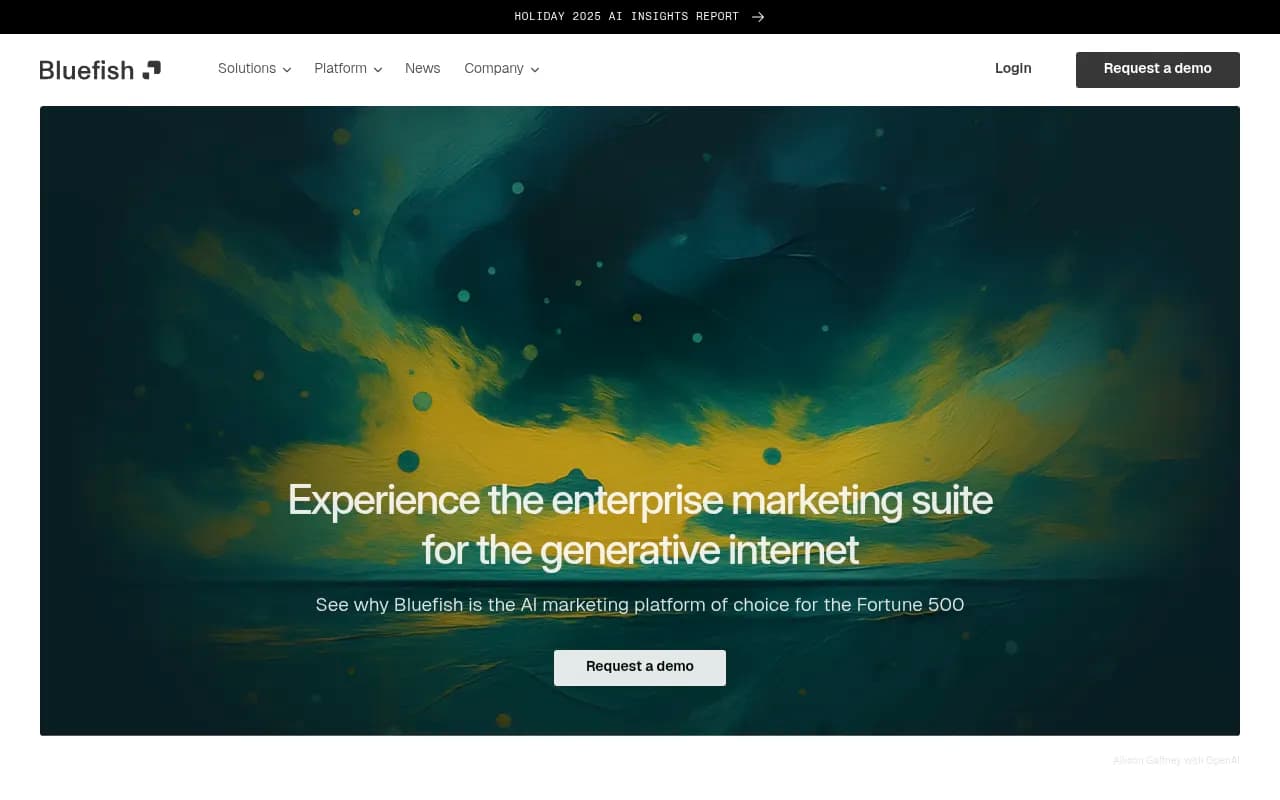
| Broad enterprise marketing suite and AI commerce | Bluefish |
| Monitoring plus content agents | AthenaHQ |
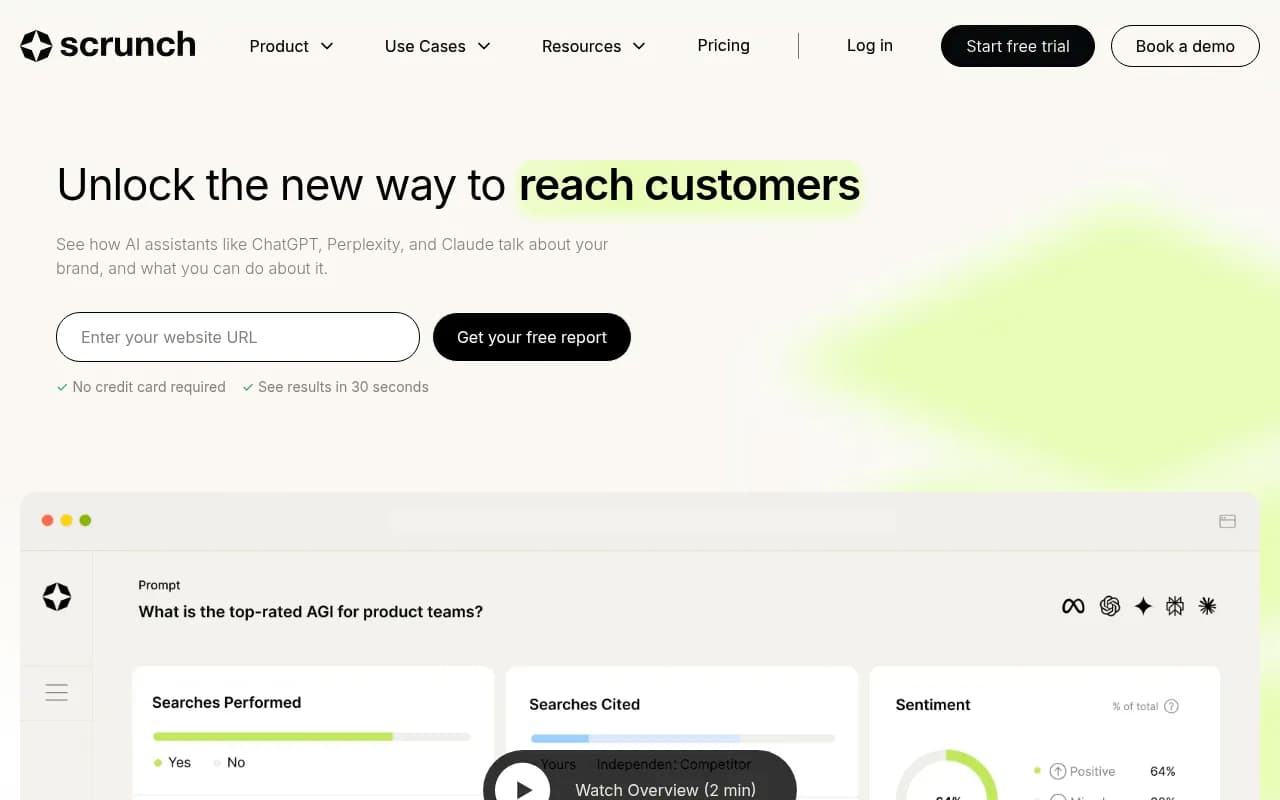
| Citation intelligence and AI-ready content serving | Scrunch |
| Enterprise SEO suites adding AI tracking | BrightEdge, Botify, seoClarity, Conductor |
| Lightweight multi-country monitoring | Otterly.AI, Peec AI |
Promptwatch is the one we would put first for global teams that want the whole loop in one product: it monitors the real interfaces of ChatGPT, Google AI Overviews, AI Mode, Gemini, Perplexity, Copilot and others in every country and language, traces citations, writes and publishes content through WordPress, Webflow or Framer, and then checks whether the page was crawled, cited and clicked. It is ISO/IEC 27001 certified and GDPR compliant, with data handled by an EU-based company, which tends to matter in security reviews. Enterprise adds SSO, white-label dashboards and a dedicated success manager.

Profound and Scrunch are strong monitoring products but sit at higher price points, and neither covers Reddit tracking or ChatGPT Shopping in the same way. If you are on a classic enterprise SEO suite already, these are the AI add-ons to compare:

For a wider scan, the GEO software directory at bestgeosoftware.com lists far more options than a shortlist needs.
Run a paid pilot, not a demo
Give two finalists the same job for four weeks: one tier-one market, one brand, 50 to 100 prompts, and one content gap to close. Judge them on data you can verify yourself, such as spot-checking ten responses in the live ChatGPT interface. A public capability page cannot tell you data quality or implementation fit, and the Meikai guide says as much.
Phase 2: governance and security first
Do this before onboarding regions. Retrofitting access control after 40 people have logins is painful.
- Create a workspace or project hierarchy that mirrors your org: global, region, brand. Each level gets its own access control and prompt sets, with roll-up into cross-brand benchmarks.
- Connect SSO and define roles. A typical split: global admins, regional editors who manage prompts and content, and viewers for executives and agencies.
- Turn on audit logging so security can see who changed what, including changes made through an API or an agent.
- Complete the security review, DPA and data residency questions up front. Procurement will ask.
- Decide which agencies get access and with what scope. Scoped API keys help.
Presenc AI also flags governance features worth testing: hallucination alerting, brand-safety monitoring and compliance-aware prompt sets for regulated topics. Ask vendors to demonstrate each on your data rather than describe it.
Phase 3: build prompt sets per market
This is where global programs quietly go wrong.
Do not translate, rebuild
People in Germany do not ask ChatGPT the same questions as people in Brazil, and the answers, sources and competitors differ. Start from local search data (Search Console queries, People Also Ask, sales team questions), then group prompts by topic and intent: branded, informational, commercial, comparison.
Some structural rules:
- A monitor should have one language and one location. Mixing markets muddies every metric.
- Use personas that reflect real buyers per market, not one generic persona.
- Write prompts like short search queries. Promptwatch Data's ChatGPT query fanout report shows average fanout query length dropping from about 117 characters in December 2025 to the high 80s in February and March 2026, and about 53 characters in April, so content built around concise, entity-first sub-questions maps better to what the engine actually searches.
- Use query fan-out data to find the sub-questions (comparisons, pricing, alternatives, how-tos) that each market needs a page for. See also the ChatGPT query fan-out generator.
Keep a shared core
Keep 20 to 30 percent of prompts identical across markets so you can benchmark. The rest is local. Without a shared core, you cannot say whether Spain is behind France or just measured differently.
Measure each engine separately
Engines behave differently. Promptwatch Data's average sources per response report found ChatGPT citing about 5 sources per web-search answer, Google AI Overviews about 10, and Perplexity almost exactly 10 every day. Copilot swung from under 2 to nearly 17 within weeks before settling low. The practical read: Perplexity is a stable test bench, AI Overviews is the easiest place for mid-authority domains to break in, and Copilot should be judged on monthly trends. Do not average them into one global number.
Phase 4: fix technical access
A GEO platform will faithfully report that you are invisible. It will not make your pages readable. Before regional content work begins:
- Audit robots.txt, CDN and WAF rules for every AI crawler, per market domain or subdirectory. Global sites often have different edge rules per region.
- Check hreflang, canonicals and language signals. Multilingual setups with inconsistent signals confuse crawlers as much as they confuse Google.
- Turn on crawler logs. Promptwatch Data's AI crawler traffic report (June 8 to September 6, 2026) shows OpenAI at 79.8% of IP-verified AI crawler requests in the week of August 31, down from 94.8% in mid-June. Compare your own mix against it. A provider that is large in the chart but near zero in your logs points to a block.
- Watch for new crawlers. Promptwatch Data's Meta-WebIndexer report shows it growing from about 2% to nearly 38% of tracked AI crawler requests between mid-July and August 9, 2026. Rules written last year may not cover it.
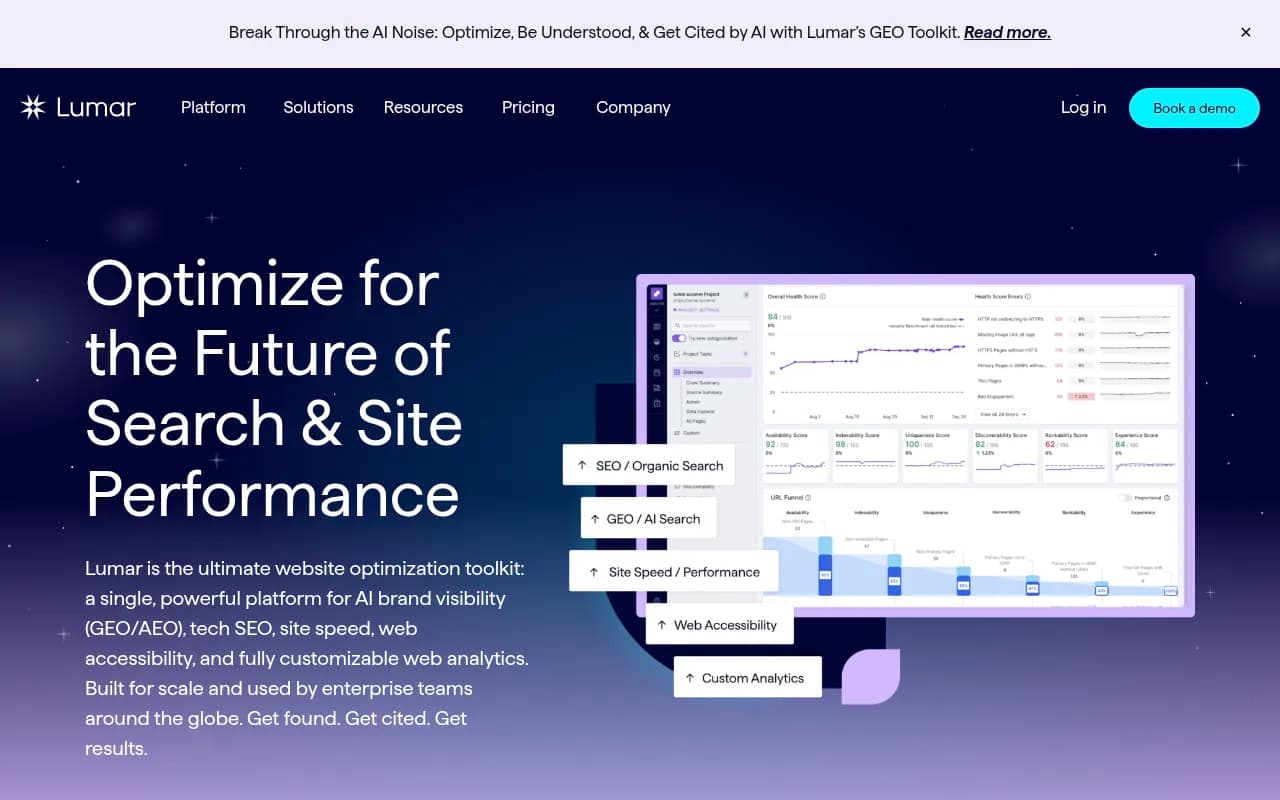
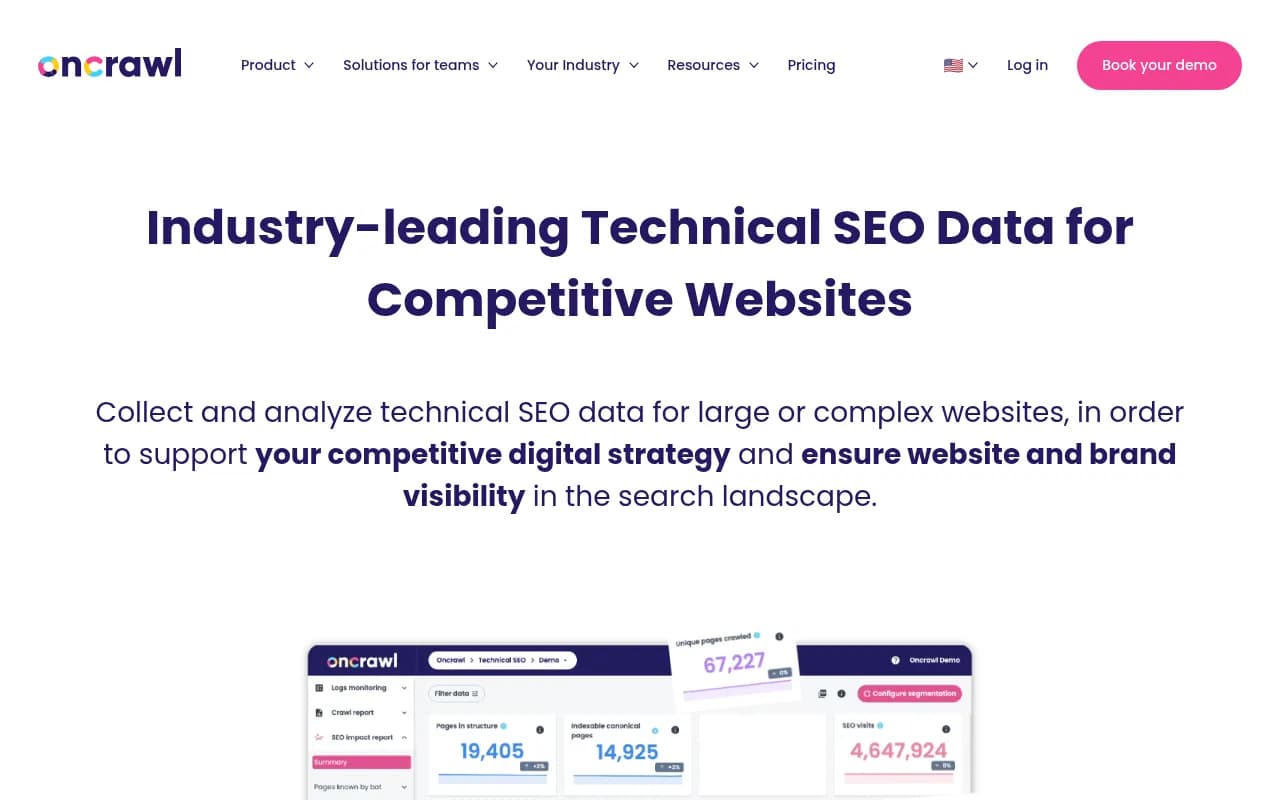
Crawler logs are the feature most monitoring-only tools lack. Promptwatch's AI crawler logs work through Cloudflare, Vercel, Fastly, CloudFront, Akamai, Netlify, the WordPress plugin or a custom endpoint. For site-level technical auditing at enterprise scale, crawlers like Lumar and Oncrawl cover the classic side:
Phase 5: content and execution
Monitoring tells you where you are missing. Now someone has to publish.
Decide who writes what
| Content type | Owner | Notes |
|---|---|---|
| Global product and landing pages | Central team | Landing pages and docs stay cited longest per Promptwatch Data's content half-life report |
| Local comparisons, pricing, FAQs | Regional teams | Fill gaps the fan-out data surfaces |
| News and timely content | Regional PR or content | News lost half its cited pages within 36 days in the same report |
| Third-party presence (reviews, directories, forums) | Regional PR | See below |
Use the data to choose formats
Promptwatch Data's content type report shows product pages as ChatGPT's most cited type at 22.4% (September 28 to October 4, 2026), followed by landing pages and listicles. For tier-one markets, that argues for strong local product pages before blog volume.
Watch the sources outside your site
Channel mix is moving. Promptwatch Data's social citations report found ChatGPT drew just 0.46% of citations from social platforms in the week of September 28, while Google AI Overviews drew 12.2%. Reddit's share of ChatGPT citations fell from about 4% to 0.5% on August 14, per the Reddit citations report. A single global social strategy will not fit every engine, so decide per engine and per market.
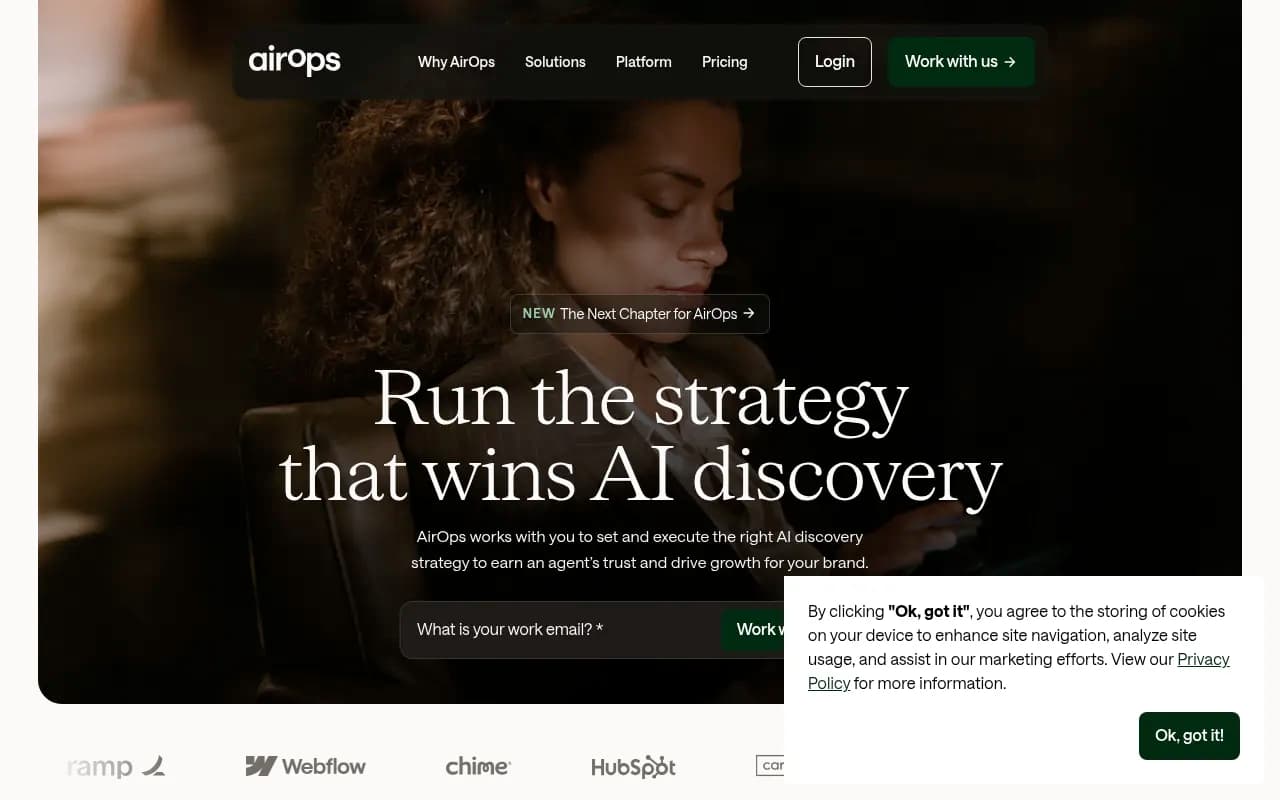
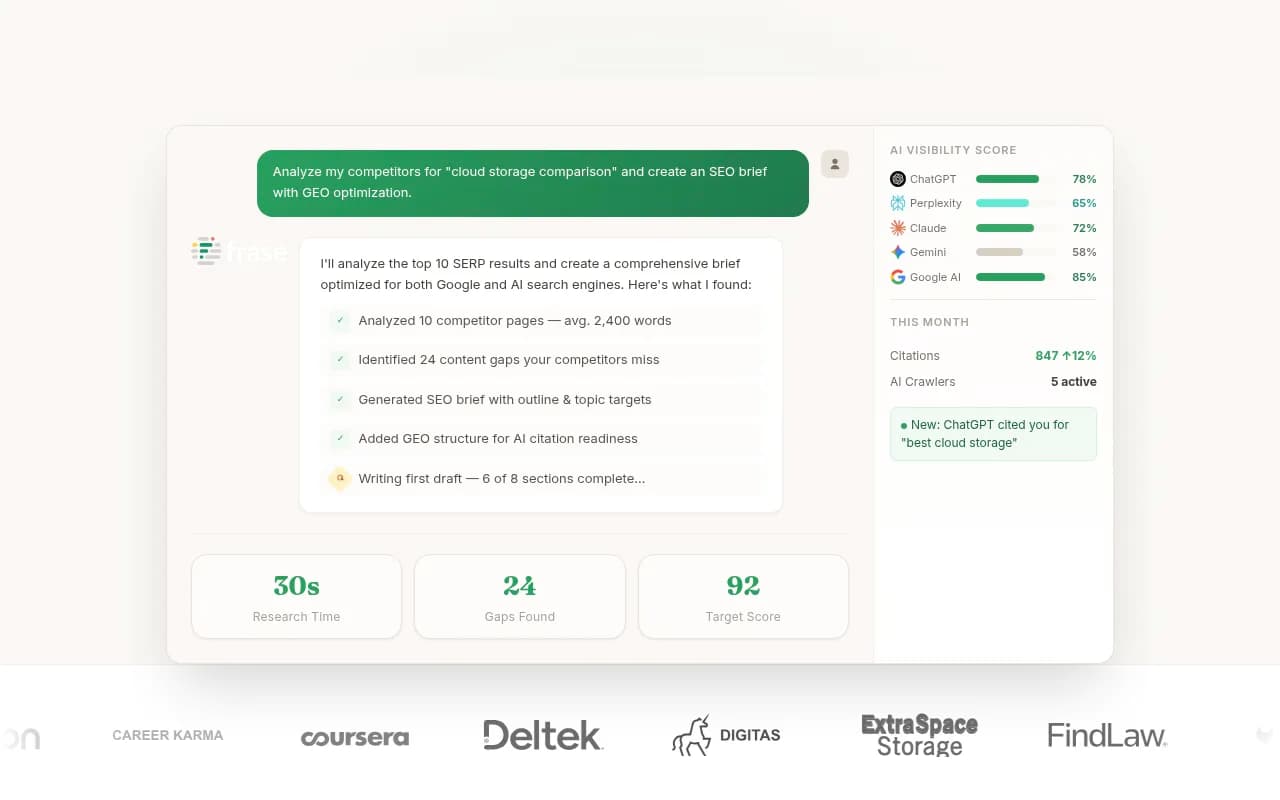
If you want the platform to do some of the writing, the Promptwatch Content Agent plans, writes and publishes against visibility gaps in the prompt's own language, with a review inbox so regional editors approve before anything goes live. That is on the Business plan and Enterprise. Alternatives built around content include AirOps and Frase:
Phase 6: reporting that executives will read
A visibility score alone is the least useful output of any platform. Meikai makes the same point about headline numbers, and it is right. Read metrics together so they point at a cause:
- Low share of voice: a coverage problem
- Late position in the answer: a prominence problem
- Mentions without citations to your domain: a content or crawlability problem
- Weak sentiment: a reputation problem
Build three layers of reporting:
- Board view: one slide, global share of voice vs. named competitors, trend line, top three risks.
- Regional view: per-market visibility, citation share per topic, gaps closed this quarter.
- Operator view: prompts, pages, crawler errors, action list.
Then close the loop to revenue. Install visitor analytics to measure AI-referred sessions and conversions. Note that ChatGPT stopped sending a referrer on October 8, 2026, so tagging links with utm_source=chatgpt.com matters for attribution. The attributing AI traffic guide walks through the setup. Pipe the data into your warehouse or Looker Studio so it sits with the rest of your KPIs.
A 90-day rollout plan
| Weeks | Focus | Output |
|---|---|---|
| 1 to 2 | Owner, goals, market tiers, security review | Signed-off charter and shortlist |
| 3 to 6 | Paid pilot with two vendors, one market | Verified data comparison, vendor choice |
| 7 to 8 | SSO, roles, workspace hierarchy, audit logs | Governed workspace |
| 9 to 10 | Prompt sets for tier-one markets, crawler access fixes | Baseline visibility and crawler report |
| 11 to 12 | First content sprint, executive dashboard | Published pages, first board report |
| 13+ | Add tier-two markets, refresh quarterly | Repeatable regional playbook |
Promptwatch publishes its own 90-day GEO program if you want a more detailed template.
Common mistakes
- Buying on a headline score. Test data quality yourself.
- Translating prompts instead of researching them locally.
- Averaging all AI engines into one number.
- Skipping crawler logs, then blaming content for what is an access problem.
- Giving every agency and region admin rights on day one.
- Treating rollout as finished after launch. Models change: Promptwatch Data's citation drop report showed average citations per ChatGPT response falling around the GPT-5.3 rollout on March 4, 2026, and its site: operator report showed fanout behavior shifting overnight on August 8, 2026. Re-audit after major engine updates.
When to bring in outside help
Some enterprises have the platform but not the people. If your regional teams lack GEO experience, an agency can run the first two quarters while you build capability. 1001 SEO Media is a senior-led SEO and GEO agency that works with Promptwatch for AI visibility, with no long-term contracts. Whichever route you take, keep ownership of the data and the workspace in-house.
Where to go next
Start with the charter and the market tiers this week, shortlist two platforms, and book a pilot in your highest-value market. You can scan how ChatGPT, Gemini and Perplexity describe your brand today with the free AI visibility report, or compare more rank-tracking options in the directory at ai-rank-tools.com. The first quarter's goal is simple: one comparable baseline across your priority markets and one published fix per market that you can show moved a number.