Key takeaways
- AI search engines prioritize content that directly answers specific questions -- your existing pages often just need restructuring, not rewriting
- A content audit focused on AI visibility gaps is the fastest way to find which pages are worth updating first
- Structured data, clear headings, and direct answers near the top of a page dramatically increase citation rates
- Monitoring which pages AI models actually cite (and which they ignore) tells you where to focus your effort
- You don't need to publish new content to improve AI visibility -- but you do need to stop optimizing only for traditional search
Why your existing content is already most of the way there
There's a common misconception floating around marketing circles right now: that AI search requires a completely different content strategy, built from the ground up with some new framework nobody has fully figured out yet.
That's mostly wrong.
The content you've already published -- the blog posts, the product pages, the comparison guides, the FAQs -- contains most of what AI search engines need to cite you. The problem usually isn't that the content is bad. It's that it's structured in a way that made sense for traditional search but creates friction for AI systems trying to extract and synthesize answers.
AI models like ChatGPT, Perplexity, and Google's AI Overviews don't rank pages the way Google's traditional algorithm does. They read your content, extract the most relevant passage that answers a user's question, and synthesize it into a response. If your answer is buried under three paragraphs of background context, or split across multiple sections without clear signposting, the model might skip it entirely -- even if your page technically covers the topic.
The good news: fixing this is mostly an editing problem, not a creation problem.
Step 1: Run an AI visibility audit before touching anything
Before you start editing pages, you need to know which ones are actually being cited by AI engines and which ones are invisible. Editing the wrong pages first is a common mistake that wastes weeks.
There are a few ways to do this audit:
Check your AI traffic in analytics. Look for referrals from ChatGPT, Perplexity, Claude, and similar sources. This tells you which pages are already getting AI-driven traffic, which means they're being cited somewhere. These pages are your baseline -- understand why they're working before you change them.
Run your key topics through AI search engines manually. Ask ChatGPT or Perplexity the questions your customers typically ask. See who gets cited. If competitors are showing up and you're not, note the exact phrasing of the response -- that tells you what kind of content the model is looking for.
Use a dedicated AI visibility tool. Manual checks don't scale. Tools like Promptwatch track which prompts your brand appears in across multiple AI engines, show you where competitors are getting cited but you're not, and surface the specific content gaps your site has. That answer gap analysis is what turns a vague "we need to improve AI visibility" goal into a concrete list of pages to update.

For teams that want additional monitoring options, tools like Otterly.AI and Peec AI offer lighter-weight tracking if you're just getting started.


Step 2: Identify which pages have the highest update potential
Not every page deserves equal attention. Prioritize pages that meet at least two of these criteria:
- They already rank on page one of Google for a relevant keyword (AI models heavily weight pages that traditional search already trusts)
- They cover a topic that users are actively asking AI engines about
- They're close to answering a question directly but bury the answer too deep
- Competitors are getting cited for the same topic, suggesting the prompt has volume
Pages that are thin (under 600 words), outdated (stats from 2021), or written primarily for keyword density rather than genuine usefulness are lower priority unless they're on a high-value topic. In that case, a more substantial rewrite might be warranted -- but that's still different from starting from scratch.
Step 3: Restructure for direct answers
This is the single highest-impact change you can make to existing content. AI engines are essentially looking for the most direct, accurate answer to a question. If your content makes them work to find it, they'll often pull from a competitor who made it easier.
Add a direct answer at the top
For any page targeting a question-based query ("What is X?", "How do I Y?", "Best Z for..."), add a 2-4 sentence direct answer within the first 150 words. This doesn't mean removing your introduction -- it means leading with the answer before you explain the context.
Think of it like a news article's inverted pyramid structure. The most important information comes first. Background and nuance come after.
Use question-based headings
Rewrite your H2 and H3 headings as questions where it makes sense. "Benefits of email marketing" becomes "What are the main benefits of email marketing?" This directly matches the conversational queries users type into AI search engines.
AI models use headings to understand the structure of your content. A heading that matches a user's question makes it much easier for the model to locate and extract the relevant passage.
Break up walls of text
Long paragraphs are a citation killer. AI models prefer content that's easy to parse -- short paragraphs, bullet points for lists, numbered steps for processes. If you have a 400-word paragraph explaining a concept, break it into three shorter paragraphs with a subheading.
This isn't just about AI. It also improves readability for humans, which tends to reduce bounce rate and increase time on page -- signals that traditional search still cares about.
Step 4: Add structured data where it's missing
Structured data (schema markup) is one of the most direct signals you can send to both traditional search engines and AI systems about what your content contains.
For existing content, the highest-priority schema types to add are:
- FAQPage: For any page that answers multiple questions. This is particularly powerful for AI Overviews.
- Article / BlogPosting: For editorial content. Includes author, date published, and date modified -- all signals AI models use to assess freshness.
- HowTo: For step-by-step guides. AI engines love structured process content.
- Product: For product pages, especially if you want to appear in ChatGPT's shopping recommendations.
You don't need to rebuild your pages to add schema. Most CMS platforms (WordPress with Yoast or RankMath, Webflow, etc.) let you add structured data without touching the page's visual design.
Google's own guidance on succeeding in AI search specifically calls out structured data as a key factor -- and notes that the structured data should match what's actually on the page, not just what you want to rank for.
Step 5: Update for freshness and accuracy
AI models are trained on data up to a certain point, but the retrieval systems that power tools like Perplexity and ChatGPT's web browsing mode actively crawl and index current content. Outdated statistics, deprecated tools, and stale recommendations actively hurt your citation rate.
Go through your highest-priority pages and:
- Replace statistics older than 18 months with current data (and cite the source)
- Update any tool or product recommendations that have changed
- Add a "last updated" date to the page (and make sure it's accurate -- AI systems can cross-reference)
- Remove or update any claims that are no longer accurate
A page that was comprehensive in 2022 but hasn't been touched since can actually hurt your credibility with AI systems that weight recency. A quick update pass -- even 30 minutes per page -- can meaningfully improve citation rates.
Step 6: Strengthen your topical authority signals
AI engines don't just evaluate individual pages in isolation. They assess whether your site is a credible, authoritative source on a given topic. This is why a single great page often isn't enough -- you need a cluster of related content that signals genuine expertise.
Look at your existing content inventory and identify:
- Topics where you have one strong page but no supporting content
- Questions your main pages reference but don't fully answer
- Related subtopics that competitors cover but you don't
For each gap, you have two options: create a new supporting page, or expand an existing page to cover the subtopic more thoroughly. The second option is often faster and keeps your content consolidation clean.
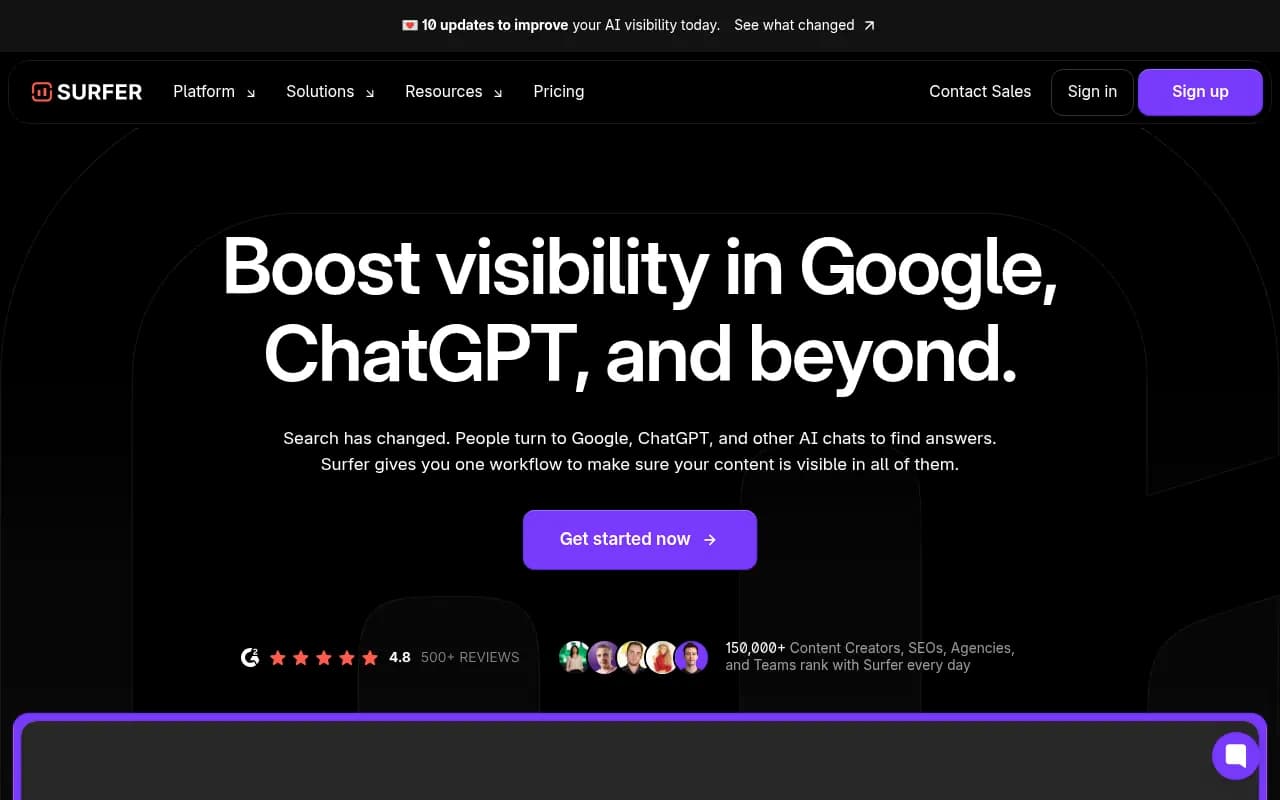
Tools like Clearscope and Surfer SEO can help you identify which related terms and topics your existing pages are missing compared to what's currently ranking.

For AI-specific gap analysis -- meaning which prompts competitors are getting cited for that you're not -- Promptwatch's Answer Gap Analysis does this specifically for AI search rather than traditional SERP rankings.
Step 7: Make sure AI crawlers can actually access your content
This sounds obvious but it's a surprisingly common problem. If AI crawlers are blocked by your robots.txt, or if your content is behind a login, or if it's rendered entirely in JavaScript that crawlers can't execute, none of the other optimizations matter.
Check your robots.txt file and make sure you're not inadvertently blocking known AI crawlers. Common ones include GPTBot (OpenAI), ClaudeBot (Anthropic), PerplexityBot, and Google-Extended.
Some site owners block these crawlers intentionally -- that's a legitimate choice if you don't want your content used for AI training. But if your goal is AI search visibility, you need to allow them.
Also check that your most important content is in HTML text, not locked in PDFs, images, or JavaScript-rendered components that crawlers can't read.
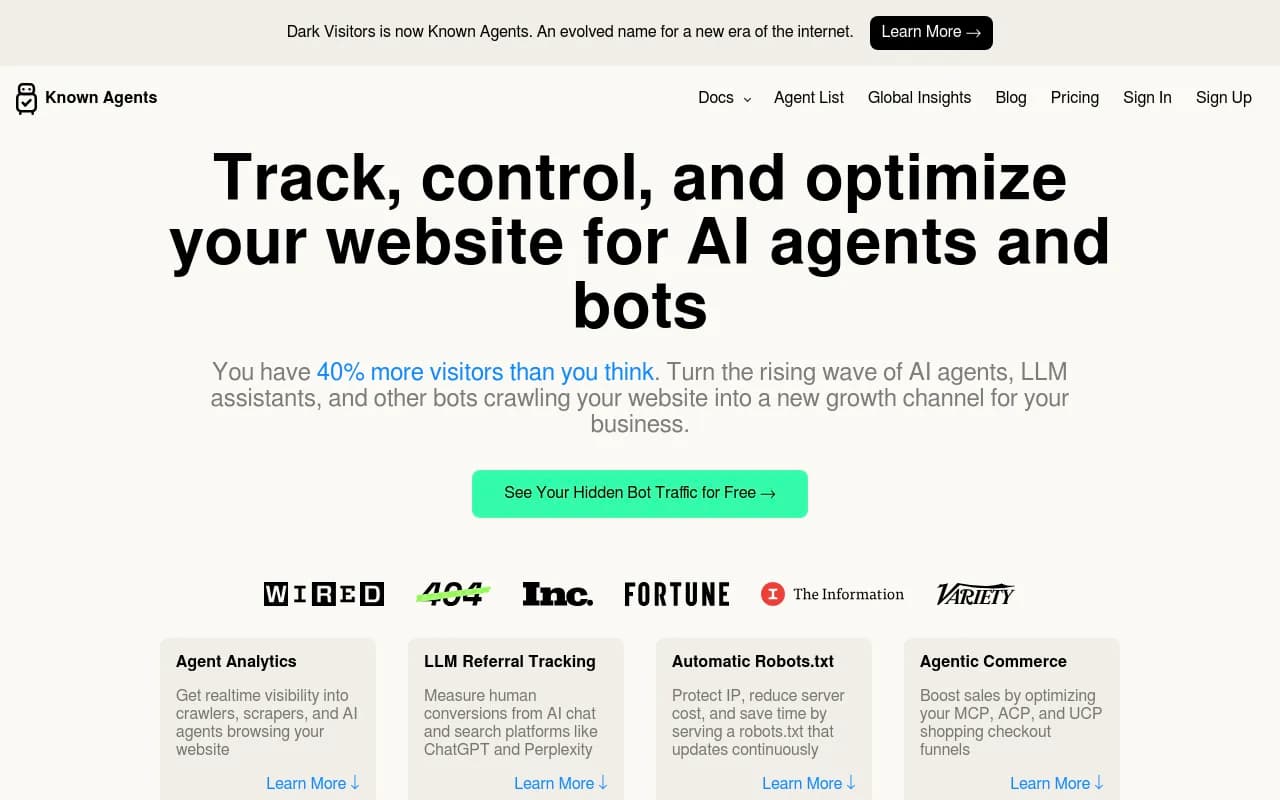
Tools like DarkVisitors can help you see which AI agents are visiting your site and whether any are being blocked.
Step 8: Track what's working
Optimization without measurement is just guessing. Once you've made updates to a set of pages, you need a way to track whether those changes actually improved your AI visibility.
The metrics to watch:
- Are you appearing in AI responses for your target prompts?
- Which specific pages are being cited, and how frequently?
- Is AI-referred traffic increasing in your analytics?
- Are competitors losing ground on prompts where you've improved?
This is where dedicated AI visibility tracking becomes genuinely useful rather than just nice-to-have. Promptwatch tracks page-level citations across 10 AI engines and shows you the timeline from when a page is crawled to when it starts getting cited -- which tells you how long your optimizations take to have effect.
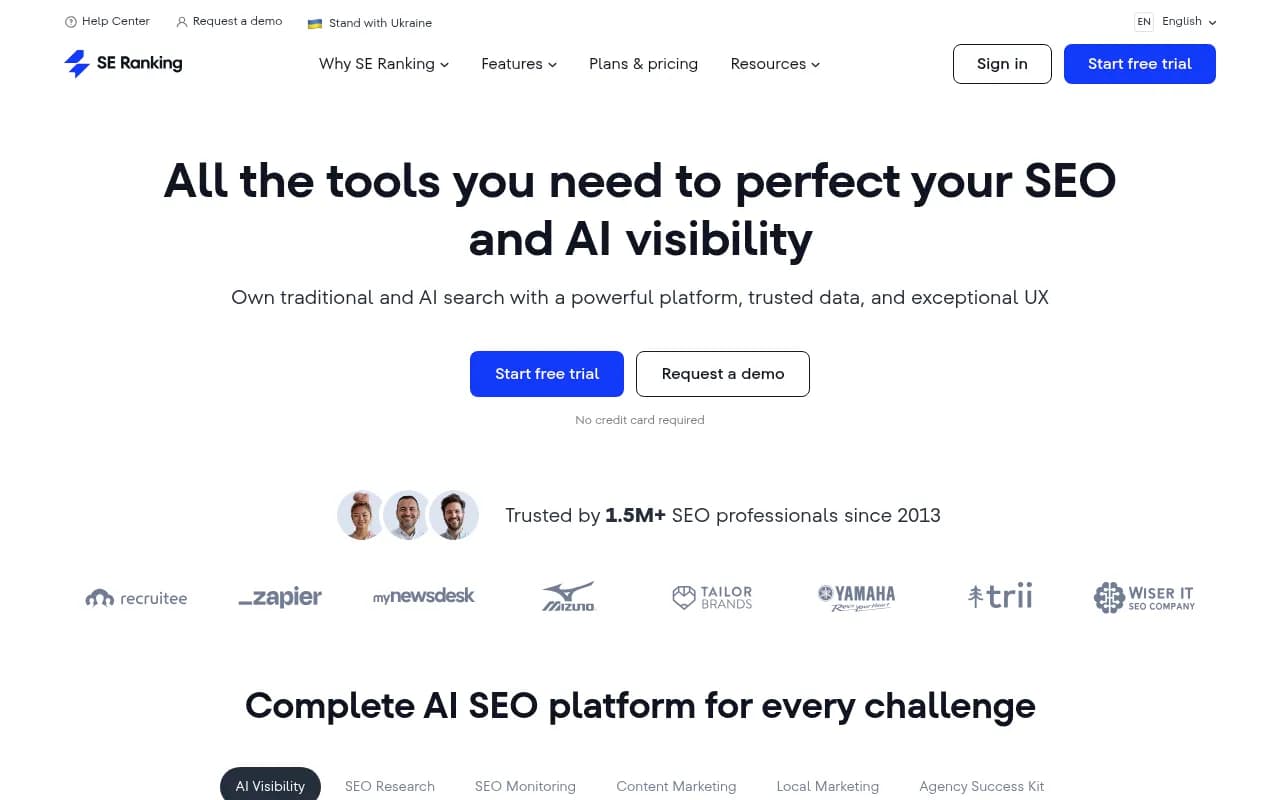
For teams that want to track AI visibility alongside traditional SEO metrics in one place, SE Ranking has an AI visibility toolkit built into its broader SEO platform.
A practical prioritization framework
If you're looking at a content library of 50, 100, or 500 pages and feeling overwhelmed, here's a simple way to prioritize:
| Priority | Criteria | Action |
|---|---|---|
| High | Ranks on page 1, covers AI-searched topic, answer is buried | Restructure: add direct answer, question headings, schema |
| High | Competitor is cited for this topic, you're not | Gap fill: expand existing page or add supporting content |
| Medium | Good content but outdated stats/recommendations | Freshness update: new data, updated recommendations |
| Medium | Covers topic but no schema markup | Technical: add FAQ/HowTo/Article schema |
| Low | Thin content on low-volume topic | Defer or consolidate with related page |
| Low | Already being cited by AI engines | Monitor only -- don't change what's working |
Work through the high-priority items first. You'll likely see measurable improvement in AI visibility within 4-8 weeks of making changes to your top 10-15 pages.
What not to do
A few things that seem logical but tend to backfire:
Don't stuff your content with question-and-answer pairs just for AI. It reads as unnatural and AI models are increasingly good at detecting content that's optimized for them rather than written for humans. Write for humans first; structure it so AI can parse it easily.
Don't delete and redirect pages that are already getting AI citations. Even if a page feels outdated, if it's being cited, update it in place rather than removing it.
Don't optimize everything at once. If you change 50 pages simultaneously, you won't know which changes drove which results. Work in batches of 10-15 pages, track for a few weeks, then move to the next batch.
Don't ignore offsite signals. AI models cite Reddit threads, YouTube videos, and third-party listicles just as often as they cite brand websites. If you're not appearing in those places, your on-site optimization will only get you so far.
The core insight here is that AI search optimization is mostly about removing friction -- friction between what a user asks and what your content answers. Most of that friction can be eliminated by restructuring content you already have, not by building something new. Start with your audit, prioritize ruthlessly, and track the results. The pages that are already close to ranking in AI search are much closer than they look.