Key takeaways
- AI visibility compounds like SEO used to -- each new citation makes the next one easier, but only if you're systematic about it
- The biggest mistake brands make is treating AI search as a monitoring problem rather than a content and distribution problem
- A weekly cadence of gap analysis, content creation, and citation tracking is what separates brands that grow visibility from those that plateau
- Publishing on the right third-party sources (the ones AI already cites) matters as much as what you publish on your own site
- Tools that show you where AI gets its citations are the most underused asset in most marketing teams' stacks
Most brands treating AI search visibility as a dashboard problem are going to lose. They set up a tracker, watch their mention rate, and wonder why the number barely moves. The issue isn't the tracking -- it's that tracking alone doesn't change anything.
The brands gaining ground in 2026 are running a different play. They're treating AI visibility like a compounding asset: every piece of content that earns a citation makes the next citation slightly easier to get. Every source they appear on trains AI models to associate their brand with a topic. Over time, the gap between them and competitors who are only monitoring becomes very hard to close.
This guide is about building that system. Not a one-time content push, but a repeatable weekly loop that grows your AI search visibility score consistently.
Why AI visibility compounds (and why most brands miss it)
Traditional SEO had a compounding effect too -- more backlinks meant more authority meant easier rankings. AI search works similarly, but the mechanism is different.
AI models like ChatGPT, Perplexity, and Claude don't just crawl your website. They synthesize answers from a web of sources: your pages, Reddit threads, YouTube videos, industry publications, review sites, and third-party articles. When your brand appears consistently across multiple trusted sources on a given topic, models start treating you as a reliable answer for that topic.
The compounding part: once you're cited for a topic, you're more likely to be cited again. Models develop a kind of topical memory. A brand that appears in 12 relevant sources on "project management software for remote teams" will get cited far more than one that appears in 3 -- even if those 3 sources are individually strong. Brandi AI's 2026 data suggests 12 pieces of content can drive up to 200x faster AI visibility than 4 pieces, which sounds extreme until you think about how retrieval-augmented generation actually works.
The brands missing this are the ones publishing one or two "AI-optimized" blog posts and waiting. That's not how the compounding works. You need volume, distribution, and consistency.
The weekly compounding loop
The system has three phases that repeat every week. They don't all take the same amount of time -- the analysis phase is maybe 30 minutes, the creation phase is where most of the work lives, and tracking takes 15 minutes. But all three have to happen, every week, or the compounding breaks.
Phase 1: Find the gaps (Monday)
Before you create anything, you need to know what's missing. "Missing" in AI search terms means: prompts where your competitors are being cited but you aren't.
This is called answer gap analysis, and it's the most important thing you can do with an AI visibility tool. You're not looking for prompts where you rank #1 -- you're looking for prompts where a competitor appears and you don't. Those are your highest-leverage opportunities because the AI model already considers that topic citation-worthy. You just need to get on the list.
Practically, this means:
- Pull your top 10-15 competitor brands into your visibility tool
- Filter for prompts where at least one competitor appears but you have zero citations
- Sort by prompt volume or frequency -- go after the ones that get asked most
- Flag the ones where the gap is smallest (one or two competitors cited, not ten)
Promptwatch has an Answer Gap Analysis feature built specifically for this. It shows you the exact prompts competitors are visible for, the content those citations are coming from, and which AI models are doing the citing. That last part matters -- a gap on Perplexity might be easier to close than a gap on ChatGPT, depending on your category.

The output of Monday's session should be a short list: 3-5 prompts you're going to target this week, ranked by opportunity size.
Phase 2: Create content that earns citations (Tuesday-Thursday)
This is where most guides stop at "write good content." That's not wrong, but it's not specific enough to be useful.
Content that earns AI citations in 2026 has a few consistent characteristics:
It answers a specific question completely. AI models retrieve content that resolves a query, not content that introduces a topic. A 3,000-word article that spends 800 words on background before getting to the answer is less likely to be cited than a 600-word piece that leads with the answer and supports it with evidence.
It contains data or claims that can't be fabricated. Original research, proprietary surveys, specific statistics with named sources -- these are citation magnets. AI models can't make up your data, so if you publish it, they have to cite you to use it. This is one of the most reliable citation strategies going.
It matches the language of the prompt, not just the topic. If people ask "what's the best CRM for small law firms," your content should use that exact framing, not "CRM solutions for legal professionals." AI retrieval is sensitive to phrasing.
It lives on sources AI already trusts. This is the part most brands skip. Your own website is one source. But if the AI model's citations for your target prompt are mostly coming from Reddit, G2, a specific industry publication, and YouTube -- you need to be on those platforms too.
How do you know which sources AI trusts for your prompts? Your visibility tool should show you citation sources by prompt. If you see that Perplexity consistently cites G2 reviews, TechCrunch articles, and a specific subreddit when answering questions about your category, those are your distribution targets.
For content creation, the goal is 2-3 pieces per week minimum. One on your own site (a direct answer page, a comparison, a data-driven article). One on a third-party source (a contributed article, a detailed Reddit comment, an updated G2 review). One optional piece of supporting content (a YouTube video, a LinkedIn post that might get indexed).
Tools like Profound can help you track which content is earning citations:

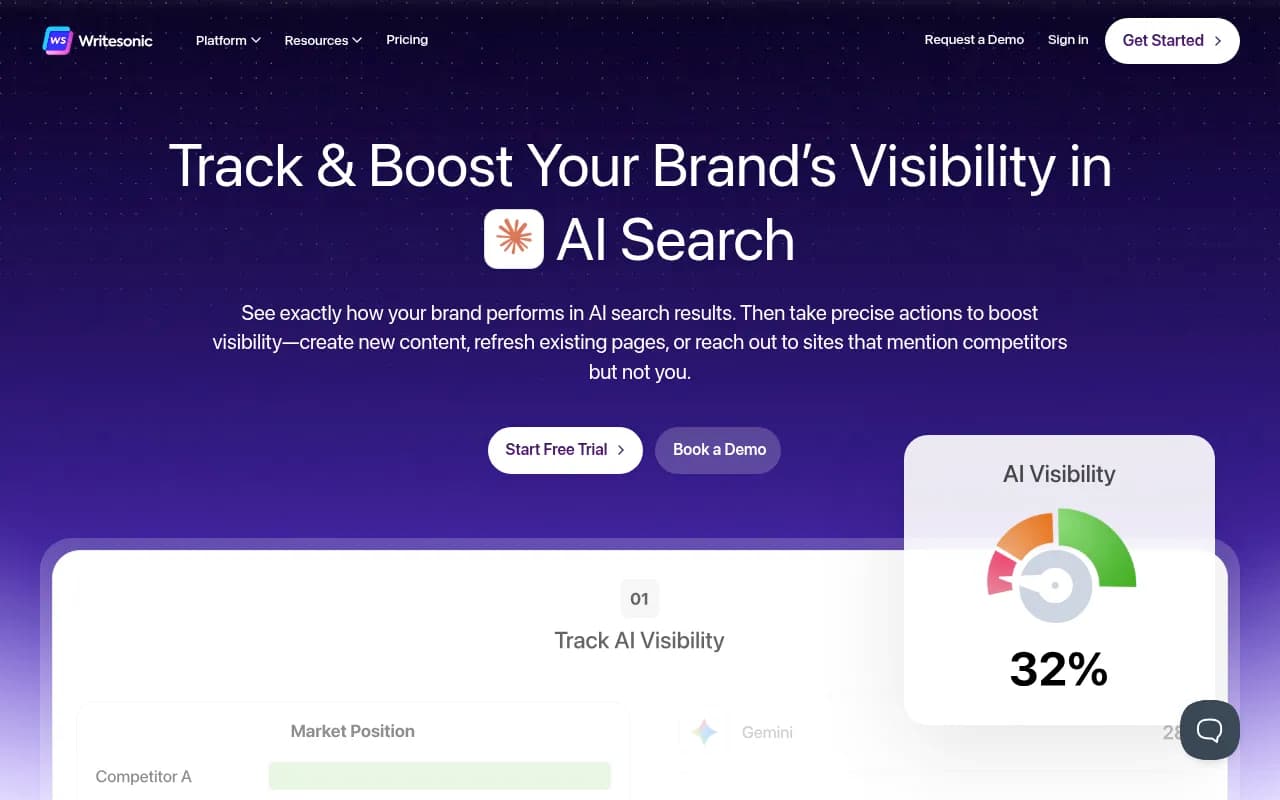
And if you want a content tool that's built around AI visibility rather than traditional SEO, Writesonic has moved in this direction:
Phase 3: Track what moved (Friday)
End the week with a 15-minute visibility check. You're looking for three things:
- Did any new citations appear for the prompts you targeted?
- Which pages earned those citations?
- Did any AI crawlers visit the new content you published?
That third point is more useful than most people realize. AI crawler logs tell you whether models are even aware your content exists. If you published a new article Tuesday and no AI crawler has visited it by Friday, there's a crawlability or indexing issue to fix -- not a content quality issue.
The weekly cadence matters because AI models update their retrieval indexes at different rates. Perplexity tends to be faster than ChatGPT. Google AI Overviews can take weeks. Tracking weekly lets you see which models are picking up your content first and calibrate your expectations accordingly.
The citation source strategy: where you publish matters as much as what you publish
This deserves its own section because it's the most counterintuitive part of AI search optimization.
Your website is not the only place AI models look. In many categories, it's not even the primary place. When you look at citation sources for competitive prompts, you'll often find:
- Reddit threads (especially in communities with high engagement)
- YouTube video descriptions and transcripts
- Review platforms (G2, Capterra, Trustpilot)
- Industry publications and news sites
- Comparison and "best of" listicles on third-party blogs
The implication: you need a distribution strategy, not just a content strategy. Publishing on your own site and hoping AI models find it is slower and less reliable than publishing on the sources AI already trusts.
A practical approach is to build what some teams call a "source target list." You look at the citation sources for your 10 most important prompts, identify the domains that appear most often, and build a plan to get your brand mentioned on each of them. That might mean:
- Contributing a guest article to an industry publication
- Answering questions in relevant subreddits (genuinely, not spammily)
- Updating your G2 profile and encouraging detailed customer reviews
- Creating a YouTube video that directly answers a high-volume prompt
Aleyda Solis's AI Search Optimization Checklist (updated May 2026) includes a step specifically for identifying which owned pages and third-party sources are shaping AI answers -- a useful framework for building your source target list.
Technical foundations that support compounding
You can publish great content on trusted sources and still not compound if the technical foundations are broken. A few things to check:
AI crawler access. Make sure your robots.txt isn't blocking AI crawlers like GPTBot, ClaudeBot, and PerplexityBot. This sounds obvious but it's surprisingly common, especially on sites that added aggressive bot-blocking rules in 2024-2025.
Page-level crawl frequency. AI crawlers don't visit every page equally. Pages with more internal links, fresher content, and higher engagement tend to get crawled more often. If your new content isn't being discovered, check whether it's well-linked from your existing pages.
Structured data and clear entity signals. AI models are better at attributing content to a specific brand or author when that information is structured. Schema markup for articles, author pages with clear credentials, and consistent brand name usage across your content all help.
Page load speed. AI crawlers have timeouts. Slow pages get crawled less. This is a basic one but worth auditing if your visibility isn't moving despite good content.
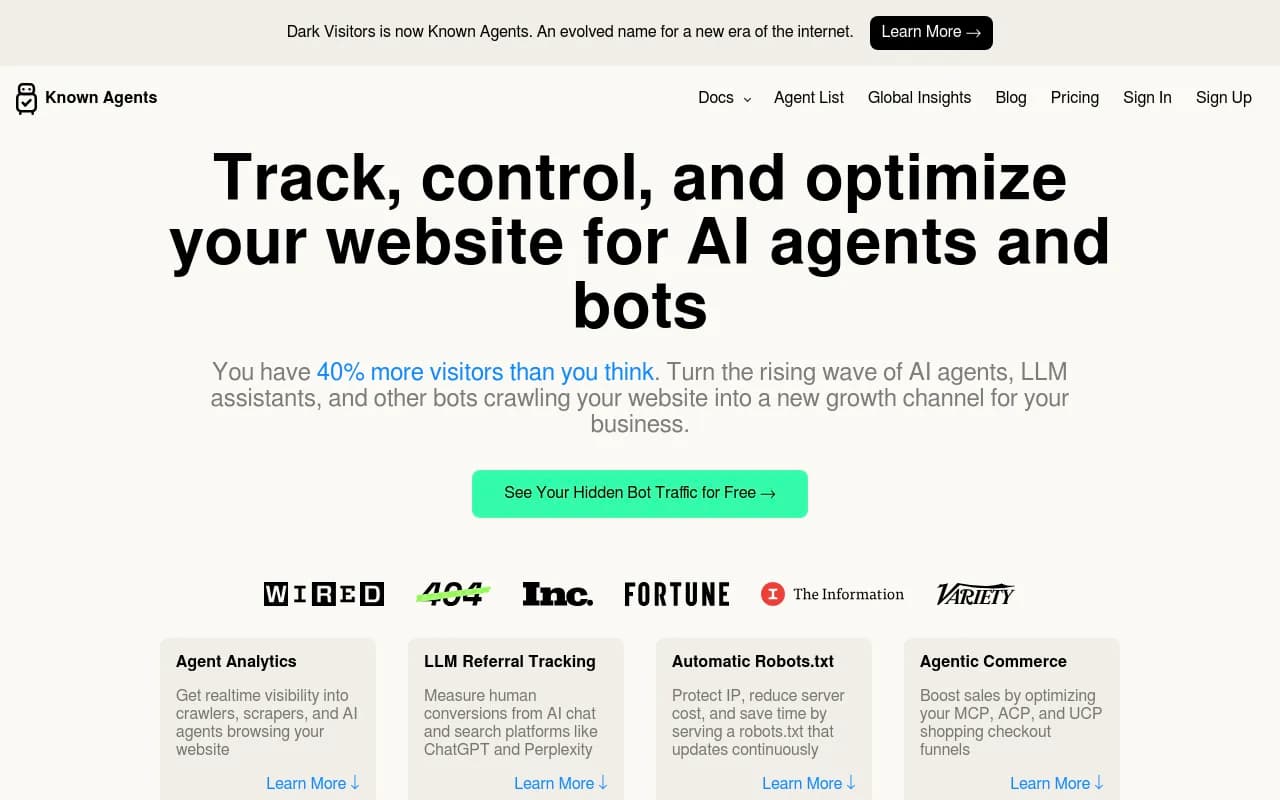
Tools like DarkVisitors let you see which AI bots are visiting your site and how often:
Choosing the right tools for each part of the loop
The market for AI visibility tools has exploded in 2026. Most of them do monitoring. Fewer do optimization. Here's a quick breakdown of what to look for at each stage of the weekly loop:
| Stage | What you need | Tools to consider |
|---|---|---|
| Gap analysis | Competitor citation comparison, prompt-level data | Promptwatch, Profound, AthenaHQ |
| Content creation | AI-assisted writing grounded in citation data | Promptwatch (built-in agent), Writesonic, Frase |
| Distribution targeting | Citation source analysis, source targets | Promptwatch, Promptmonitor |
| Crawler monitoring | AI bot logs, crawl frequency data | Promptwatch, DarkVisitors |
| Citation tracking | Page-level citations, model-by-model breakdown | Promptwatch, Profound, Otterly.AI |
| Traffic attribution | AI referral traffic, revenue connection | Promptwatch (GSC integration), Bear AI |
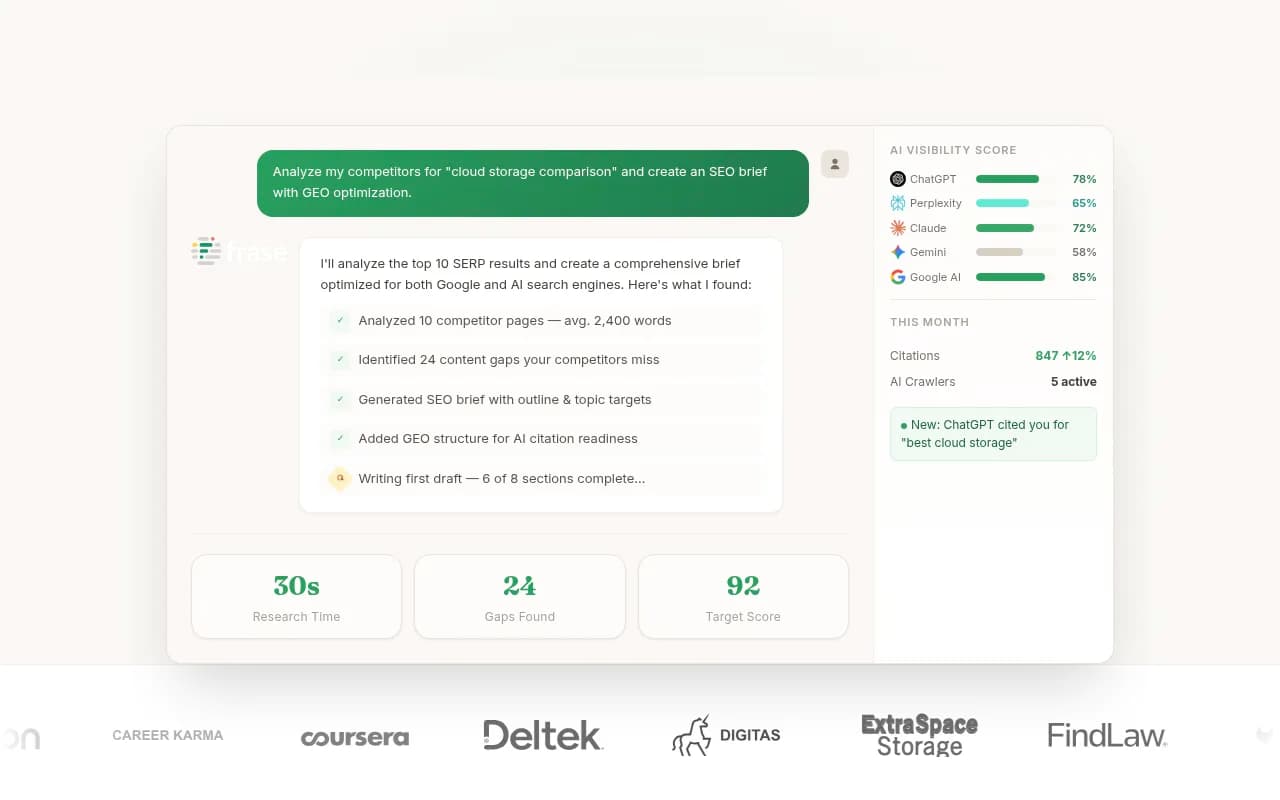
A few tools worth knowing about for specific use cases:


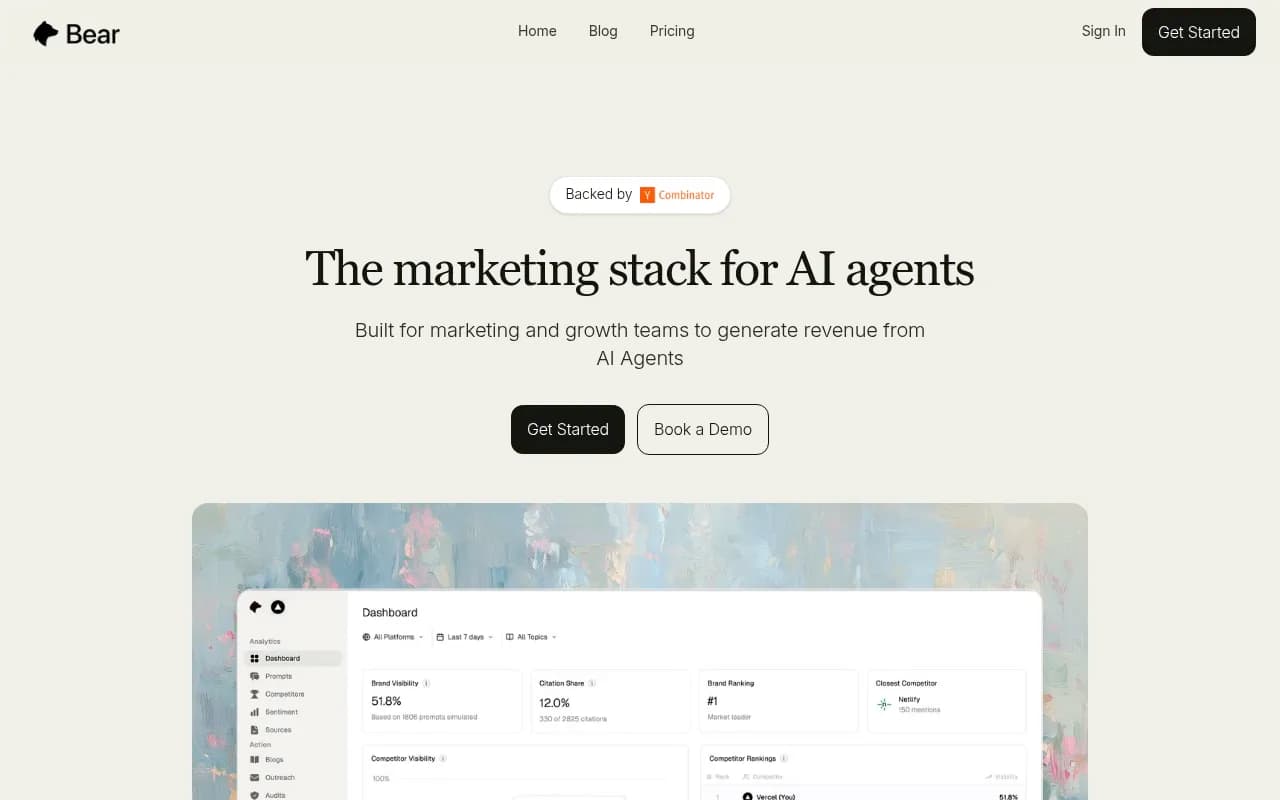
The honest answer is that most teams don't need six tools. They need one tool that covers the full loop, and then maybe one or two specialists for areas where they want more depth. The danger of over-tooling is that you spend more time in dashboards than actually creating content.
What week-over-week growth actually looks like
Realistic expectations matter here. In the first two weeks, you probably won't see much movement. AI models take time to discover and index new content, and the compounding effect hasn't started yet.
By weeks 3-4, you should start seeing new citations appear for the prompts you targeted. Not necessarily dominant visibility -- maybe one or two citations on Perplexity, a mention in a Google AI Overview. But movement.
By weeks 6-8, if you've been consistent, you'll typically see a meaningful jump. The content you published in week 1 is now being cited, which means AI models are associating your brand with those topics, which makes your week 6 content more likely to be cited faster.
The teams that see the biggest gains are the ones that track at the page level -- not just "our visibility score went up" but "this specific article is being cited by Perplexity for this specific prompt." That granularity tells you what's working so you can do more of it.
Kevin Indig's State of AI Search Optimization 2026 report makes a useful point about this: retrieval and trust are separate signals. You can be retrieved (AI models find your content) without being trusted (AI models cite you as a source). The compounding strategy builds both -- more content means more retrieval, and more citations from trusted sources means more trust signals.
The prompts you're ignoring are probably your biggest opportunity
One thing that consistently surprises teams when they do their first gap analysis: the prompts driving competitor citations are often not the obvious head terms. They're mid-funnel, specific questions. "How does [category] work for [specific use case]?" "What's the difference between [product A] and [product B]?" "Is [your category] worth it for [specific company type]?"
These prompts have lower volume than broad category terms, but they're often easier to win and they convert better. Someone asking a specific comparison question is further along in their decision process than someone asking a general category question.
The compounding strategy works especially well here because these specific prompts have fewer competitors fighting for them. Win 20 specific prompts and you've built a meaningful visibility position. Trying to win the top 3 broad prompts in your category is a much longer, harder fight.
Start specific. Compound outward.
Putting it together: your first four weeks
Here's a concrete starting point:
Week 1: Set up your visibility tracking. Run a gap analysis against your top 3 competitors. Identify your first 5 target prompts. Publish one direct-answer page on your site and one piece of content on a third-party source that AI already cites for those prompts.
Week 2: Check crawler logs -- did AI bots visit your new content? If not, fix the technical issue. Identify 5 more target prompts. Publish 2-3 more pieces. Start building your source target list.
Week 3: Check for new citations on week 1 content. Publish 2-3 more pieces. Begin outreach to one industry publication for a contributed article.
Week 4: Review what's moved. Double down on the content formats and sources that earned citations. Adjust your prompt target list based on what's working.
By the end of week 4, you'll have 8-12 pieces of content in the field, a clearer picture of which sources AI trusts in your category, and the beginning of a compounding citation base. That's when the weekly loop starts to feel less like work and more like momentum.
The brands winning AI search in 2026 aren't the ones with the biggest budgets or the most sophisticated tech stacks. They're the ones that show up consistently, target the right prompts, and publish on the sources that matter. The compounding does the rest.