Key takeaways
- A working GEO stack has four jobs: tracking prompts, checking whether AI crawlers can read your site, making content that gets cited, and measuring traffic. Most cheap tools only do the first.
- $100 a month buys you roughly 15 to 50 tracked prompts and a few free diagnostics. That is enough to learn, not enough to run a program.
- Around $500 a month is where a tracker plus a content tool becomes realistic. Around $2,000 is where you can run a full loop of insight, content, publishing and measurement.
- Prompt caps, engine add-ons and unstable pricing are the three things that blow up GEO budgets. Verify every number with the vendor before you commit.
- Start with the free crawler check. It costs nothing and often explains why you are invisible.
What a GEO stack actually needs to do
Most teams buy a prompt tracker, stare at a dashboard, and wonder why nothing changes. A tracker answers one question: was my brand mentioned? That matters, but it is maybe a quarter of the job.
A stack that moves numbers covers four things:
- Tracking. Which prompts, which AI engines, which competitors show up.
- Access. Can GPTBot, ClaudeBot, PerplexityBot and friends actually read your pages, or is a CDN rule blocking them?
- Content. Pages and formats that AI engines tend to cite.
- Measurement. Did any of this bring visits, signups or revenue?
When you price a stack, ask which of these four each tool covers. Gaps are fine at low budgets. Just know where they are.
What AI engines cite, and why it shapes your spend
Before buying content tools, look at what gets cited. In Promptwatch's data on ChatGPT citations by content type (Sep 28 to Oct 4, 2026), product pages were the most cited type at 22.4%, and landing pages followed at 16.8%. So about 39% of citations go to pages describing what a company sells. Listicles took 13.6%, how-to guides 8.7%, and documentation 7.5%.
For commercial prompts like "best CRM for small businesses", product pages, landing pages, listicles and comparisons made up almost 70% of citations. For branded prompts, reviews hit 5.6%, more than three times their overall share.
The practical read: you do not need to publish 50 blog posts. You need strong product and landing pages, a presence in third-party "best of" roundups, reviews on trusted sites, and public docs. That is cheaper than a big content program, and it affects what you buy.
Shelf life matters too. According to Promptwatch's content half-life report, news loses half its cited pages in about five weeks, while landing pages and docs hold for months. Budget for maintaining evergreen pages, not chasing news.
The pricing problem you should know about first
GEO tool pricing is a mess right now. Plans change, engines are sold as add-ons, and published prices conflict between sources. Two examples from recent research:
- Profound's $99 Starter plan appeared on third-party lists, but an October 12, 2026 IndustryLens report says it was removed from public pricing, leaving a free trial and custom enterprise quotes.
- Semrush's AI Visibility Toolkit is listed from $99 a month per domain, though sources disagree on whether a base plan is required.
Treat every number in this guide as a starting point. Check the vendor's pricing page the day you buy.
The bigger trap is the prompt cap. A tool with 15 prompts and one with 350 prompts are not comparable products. Fifteen prompts is a sampler. Also check which engines are included. Otterly, for example, charges extra for Claude, AI Mode and Gemini.
Comparison of entry-level trackers
| Tool | Entry price (approx.) | Prompts | Notes |
|---|---|---|---|
| Otterly.AI Lite | $29/mo | 15 | ChatGPT, AI Overviews, Perplexity, Copilot; daily tracking |
| Semrush AI Visibility Toolkit | From $99/mo per domain | Varies | Confirm whether a base plan is needed |
| Peec AI Starter | $95/mo | 50 | 3 models, unlimited users |
| Otterly.AI Standard | $189/mo | 100 | API, MCP, Looker Studio connector |
| Peec AI Pro | $245/mo | 150 | Higher prompt cap |
| Profound Growth | $399/mo | 100 | ChatGPT, Perplexity, AI Overviews; 3 seats |
| Peec AI Advanced | $495/mo | 350 | Multi-country, Looker Studio |
Prices are from third-party roundups checked in October 2026 or earlier, so verify before buying.
Scenario 1: the $100 a month stack
At this level you are learning, not scaling. The goal is to find out whether AI search is a channel worth more money.
What to buy
Pick one tracker. The two realistic options:
- Otterly.AI Lite at $29 a month gets you 15 prompts across four engines with daily checks.

- Semrush's AI toolkit at about $99 a month gets you more tracking, but it eats your whole budget.
My pick for most people at this tier is Otterly Lite plus free tools, which leaves roughly $70 for something else, like a single content optimization subscription or an hour of freelance editing.
What to do for free
- Run your site through a crawler check. Promptwatch's AI crawler data showed OpenAI at 79.8% of verified AI crawler requests in the week of Aug 31 to Sep 6, 2026, down from 94.8% in mid-June. Other providers are growing. Compare that mix to your own server logs. If a provider is big in the chart but near zero for you, something is blocking it. Check robots.txt, CDN and WAF rules.
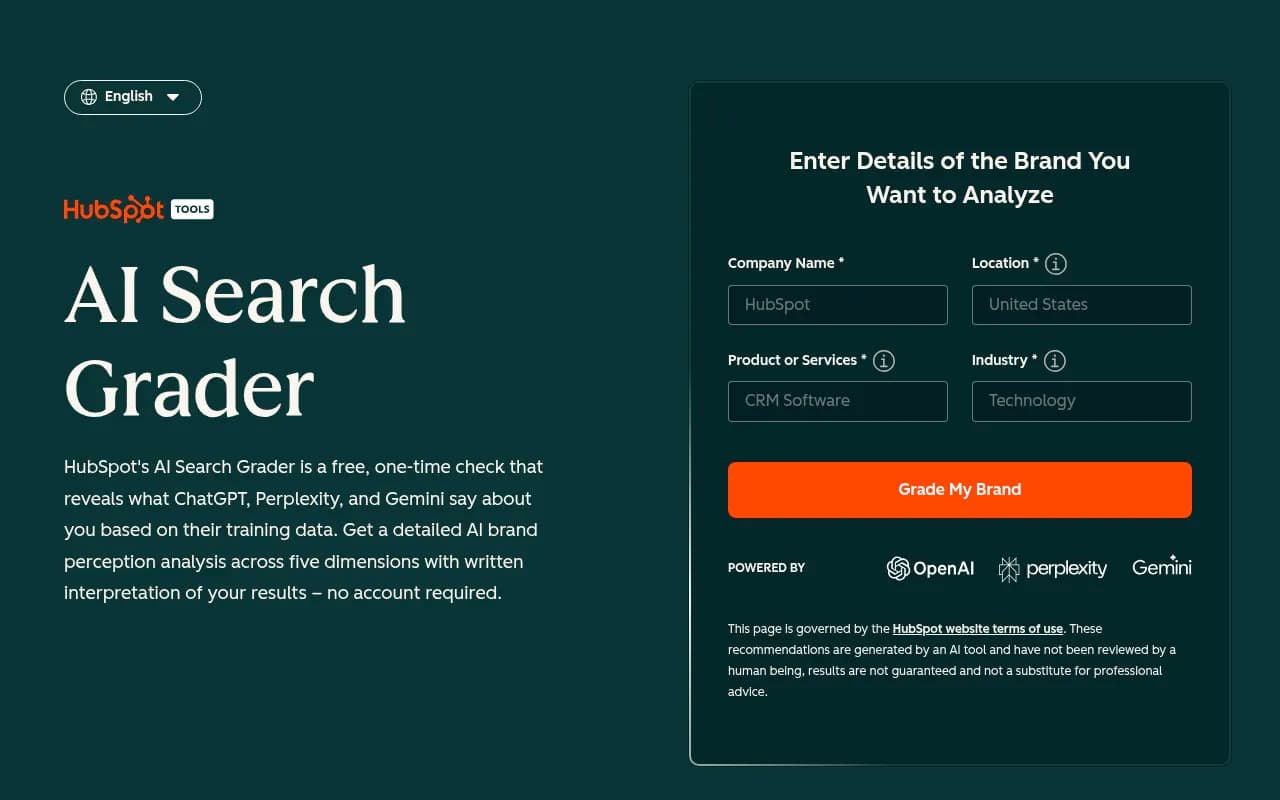
- Use free diagnostics. Promptwatch offers a free AI Visibility Report and an Agentic Readiness Check, and HubSpot has a free AEO grader. Otterly has free GEO audit and query fan-out tools.
- Query ChatGPT, Perplexity and Gemini by hand for your 15 most important prompts and log results in a spreadsheet. Tedious, but it teaches you what your buyers see.
What you give up
No crawler analytics, no content creation, no traffic attribution. You will know where you stand, but fixing it is manual.
Scenario 2: the $500 a month stack
This is where a team can run a real, if small, program. You have room for a proper tracker and a content tool.
A sample allocation
| Item | Monthly cost | Purpose |
|---|---|---|
| Peec AI Pro or Otterly Standard | $189 to $245 | 100 to 150 prompts tracked |
| Content optimization tool | $100 to $130 | Brief and score pages for citation |
| Crawler and audit tooling | $0 to $50 | Access checks |
| Reserve | Remainder | Freelance writing or review-site work |
Peec AI Pro at $245 gives you 150 prompts, which is enough to cover three or four topic clusters with competitors included.

If you prefer a lower tracker cost, Otterly Standard at $189 adds API, MCP and Looker Studio access, which helps if you want to pipe data into your own reports.
The content side
Trackers monitor but do not write. For content, tools like Clearscope (from about $129 a month per Zapier's roundup) or Surfer score drafts against what already ranks.

Be honest about what these do. They were built for Google rankings first. They help with structure and coverage, but they do not know which prompts AI engines answer with your competitors' pages. That is the gap an AI-specific platform fills.
Where I would look at an all-in-one
If you want tracking, crawler logs, content gap analysis and AI traffic attribution in one place, Promptwatch starts at $95 a month for Essential (50 prompts, all AI models, site audit, content gap analysis) and $245 for Professional (150 prompts, 5 articles, crawler logs, custom reports). That is the same price point as Peec's Starter and Pro, but with crawler logs and visitor analytics included, which most trackers at this price lack.

That comparison is worth running side by side during a trial. Check the current numbers at promptwatch.com/pricing.
Scenario 3: the $1,000 a month stack
This is the middle tier for a team with one SEO lead and a content person or two. You can now cover more than one domain, more regions, and a steady publishing cadence.
What changes
- You track 250 to 400 prompts, so you can split by product line, persona and country.
- You add a proper SEO suite, since GEO results depend on traditional signals too. Pages that rank in Google and Bing tend to be the ones AI engines find.
- You budget for content production, because tools alone do not publish anything.
A sample allocation
| Item | Monthly cost | Purpose |
|---|---|---|
| Tracker with 350 prompts (Peec Advanced, or Promptwatch Business) | $495 to $579 | Multi-model, multi-country tracking |
| SEO suite (Semrush, Ahrefs or SE Ranking) | $130 to $200 | Keywords, backlinks, technical audits |
| Content and editing | $200 to $300 | Freelance writing, review outreach |
Ahrefs Brand Radar starts at about $199 a month standalone, according to IndustryLens, with prompt packages from around $50 a month. It is useful if you already live in Ahrefs.
Where the action layer starts to matter
At this tier you should stop buying pure monitoring. The question is who does the work of fixing gaps. Tools in the action-layer category include Profound, AthenaHQ, Scrunch and Evertune, though many cost more than $500 a month.


Promptwatch's Business plan at $579 a month includes the automated Content Agent, which plans, writes and publishes to Webflow, Framer or WordPress and then tracks whether the pages get crawled and cited. It also includes 10 AEO articles, 2,500 Agent Credits, and local GEO targeting. If you want fewer people-hours between insight and published page, that is the feature worth testing on a trial.
Scenario 4: the $2,000 a month stack
Now you can build the full loop: track, diagnose, create, publish, measure. The budget also covers redundancy, meaning you can run a primary platform plus a specialty tool.
A sample allocation
| Item | Monthly cost | Purpose |
|---|---|---|
| Primary GEO platform (Promptwatch Business, Profound Growth, or similar) | $400 to $600 | Tracking, content gaps, action list |
| Crawler and visitor analytics | Often bundled | Prove AI traffic and conversions |
| SEO suite | $200 to $300 | Rankings, backlinks, audits |
| Content production | $700 to $900 | Writers, editors, designers |
| Review and PR outreach | $200 to $300 | Roundup placements, review sites |
| Reporting and automation | $50 to $100 | Zapier or n8n flows, dashboards |
Spend more on people than on software
This is the part most guides skip. At $2,000, software should be under half of the budget. Citations come from pages and third-party mentions, and both need humans. Product pages need real comparisons and pricing. Reviews need real customers. Roundups need outreach.
Promptwatch's own advice from the content-type report is to make product pages easy to compare, get into the best-of roundups ChatGPT cites, collect reviews on trusted sites, add FAQ pages, and keep docs public and crawlable. None of that is a software purchase.
Add attribution
At this size you need to show revenue, not just mentions. That means analytics that separate AI referrals from other traffic. Some platforms bundle this. If yours does not, a lightweight setup in your existing analytics tool, with segments for chat.openai.com, perplexity.ai, gemini and claude referrers, is a start.
For broader budget planning, Improvado's allocation guide is useful. It reports that content marketing and SEO/AEO command 25 to 30% of successful 2026 budgets, and that overlapping tool subscriptions quietly consume part of many budgets.

That overlap point deserves attention. Semrush, Ahrefs and a dedicated tracker all now claim AI visibility features. Pay for one tracker you trust, not three half-used ones.
How the four scenarios compare
| Budget | Tracking depth | Content support | Crawler and traffic data | Best for |
|---|---|---|---|---|
| $100 | 15 to 50 prompts | Manual | Free tools only | Testing whether AI search matters |
| $500 | 100 to 150 prompts | One optimization tool | Free checks, or bundled in some platforms | Small teams starting a program |
| $1,000 | 250 to 400 prompts | Tool plus freelancers | Platform-dependent | Teams with a dedicated SEO lead |
| $2,000 | Full coverage, multi-region | Mixed tool and human production | Full logs and attribution | Teams proving revenue impact |
Mistakes that waste money
Buying on prompt count alone
A bigger prompt cap is useless if you do not know which prompts matter. Pick prompts from Search Console queries, People Also Ask, sales call transcripts and competitor comparisons. Then cut the ones that never produce a mention or a competitor insight.
Ignoring engine coverage
If your buyers use Perplexity or Claude and your tool only tracks ChatGPT, you are blind. Read the plan details. Look for tools that monitor the actual user interface of each engine, since answers can differ from API outputs.
Paying monthly for tools you will keep
Annual billing usually saves roughly a sixth or more. Promptwatch, for example, gives 12 months for the price of 10 on annual plans. But because pricing here changes so fast, start monthly, confirm the tool fits for 60 days, then switch.
Forgetting the crawler basics
One blocked bot can erase months of content effort. Check robots.txt, CDN rules and WAF settings before spending on content. This is the cheapest fix in the entire stack.
Where to find more options
The category is crowded, and new tools appear monthly. For a wider comparison of platforms, browse the GEO software directory, or the AI rank tracking directory if you mainly need a tracker.
A simple way to decide
- Run the free checks this week: crawler access and an AI visibility report.
- Pick your tier by how many hours per week someone can spend on GEO. Under 3 hours, stay at $100 to $500. Over 10, you need the $1,000 or $2,000 tier or the tools will go unused.
- Trial two platforms at the same time with the same 30 prompts for two weeks. Compare coverage, not dashboards.
- Revisit at 90 days. If AI referrals and mentions are moving, step up a tier. If not, find out why before spending more.
The cheapest stack that gets you to a published, crawlable, well-structured page beats the most expensive stack that only measures how invisible you are.