Key takeaways
- The headline price of most AI visibility tools buys a prompt cap, not full coverage. Extra engines, countries, brands and seats are where the bill grows.
- Credit systems make benchmarking harder. One credit can mean one prompt on one model per day (Peec AI), or 0.25 to 2 credits depending on the engine (Rankscale).
- Vendor sources contradict each other. Pricing pages, knowledge bases and third-party roundups disagree, so verify before you budget.
- Price your own list first: prompts x countries x engines x cadence. Then compare vendors at equal coverage.
- Ask what happens when you run out, and whether top-ups are published or "contact us."
Why the sticker price misleads
AI visibility tracking looks cheap on a pricing page. $95 a month. $29 a month. Then you add the second country, the fourth engine, the extra client brand and the teammate who needs a login, and the number stops resembling the one you approved.
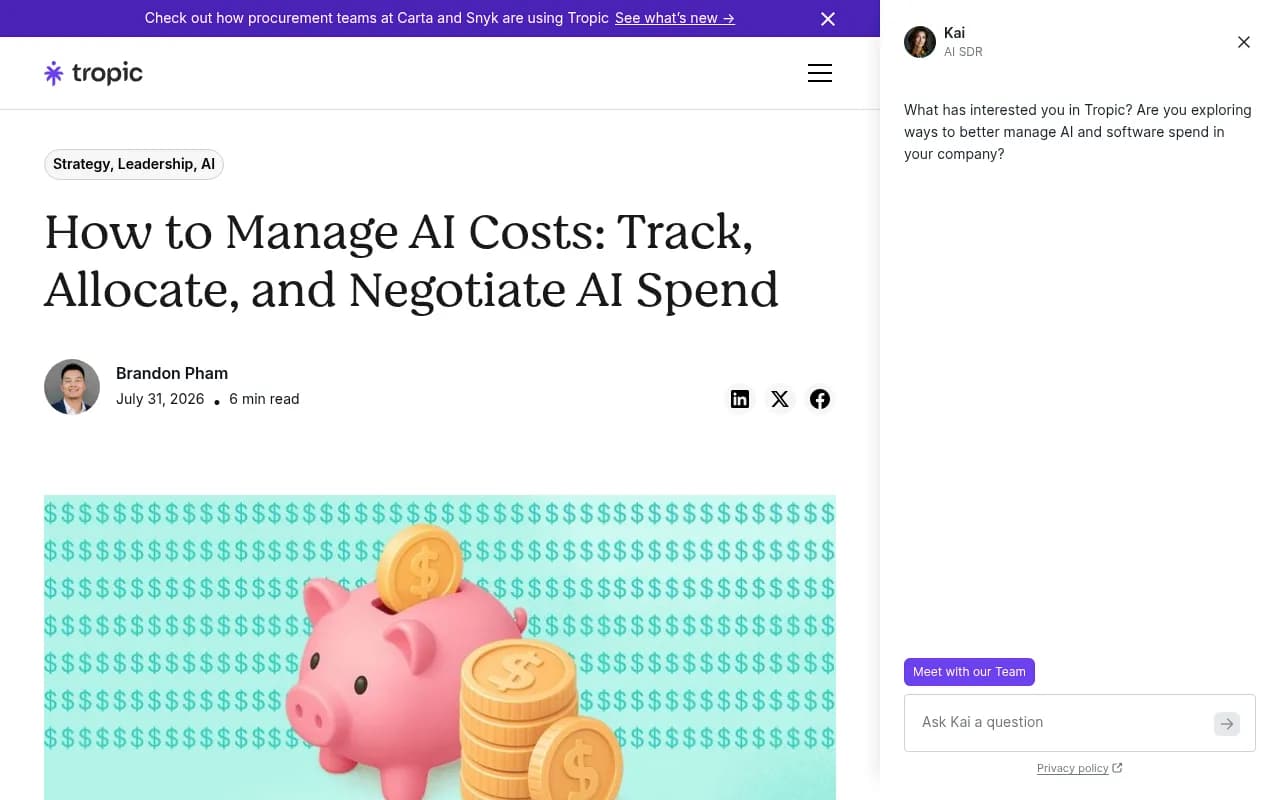
This is part of a wider shift. Tropic describes the move from predictable per-seat pricing to usage-based credit systems that obscure true costs and make benchmarking significantly harder. Zylo lists what now drives spend: seats, premium AI add-ons, usage credits, token consumption, agent execution fees and overage charges. AI visibility tools sit squarely in that pattern, because every tracked prompt is a real query against a real engine, and someone pays for it.
I am not arguing these charges are unfair. Running prompts daily across engines costs money. The problem is that the cost structure differs from vendor to vendor, so two plans that look similar can be far apart once you reach your actual requirements.
A caveat on the numbers below. Much of this comes from third-party roundups (Semrush's blog, Rework, Activepieces, Otterly's blog), and they disagree with each other in places. I flag the conflicts rather than smoothing them over. Always confirm on the vendor's own pricing page.
The five places costs hide
1. The prompt cap
Every plan caps tracked prompts. Activepieces notes the prompt cap tends to run out first, and countries multiply it. Tracking 50 prompts in one country is 50. Tracking them in four countries is effectively 200.
Moving up a tier mostly buys volume, not features. Activepieces computes Otterly's cost per prompt at about $1.93 on Lite, $1.89 on Standard and $1.22 on Premium, so the rate barely moves between the first two tiers.
2. Engine add-ons
The base price often covers a handful of engines. The rest are priced separately.
- Otterly.AI includes ChatGPT, Google AI Overviews, Perplexity and Copilot. Google AI Mode, Gemini and Claude are paid add-ons, with prices varying by model, plan and billing interval (AI Mode is $9 a month on Lite with monthly billing, per Semrush's blog).
- Peec AI, per Rework, charges $35, $85 or $165 a month for a 4th model on Starter, Pro or Advanced, and Claude is Enterprise only. Activepieces describes a different structure, with Claude, AI Mode and Gemini as separate add-ons beyond four included engines. These may be different plan generations, which is itself a warning.
This matters because answers differ a lot by engine. Promptwatch Data's average sources per response report shows ChatGPT citing about 5 sources per web-search answer, Google AI Overviews about 10, and Perplexity almost exactly 10 every day. Paying one credit per prompt per engine buys uneven amounts of insight from each.
3. Credits that are not equal
Credits sound simple until you read the exchange rate.
- Peec AI: one credit covers one tracked prompt per model per day. Semrush's example is that 25,000 monthly credits track 833 daily ChatGPT prompts, or 416 daily prompts split across ChatGPT and AI Mode.
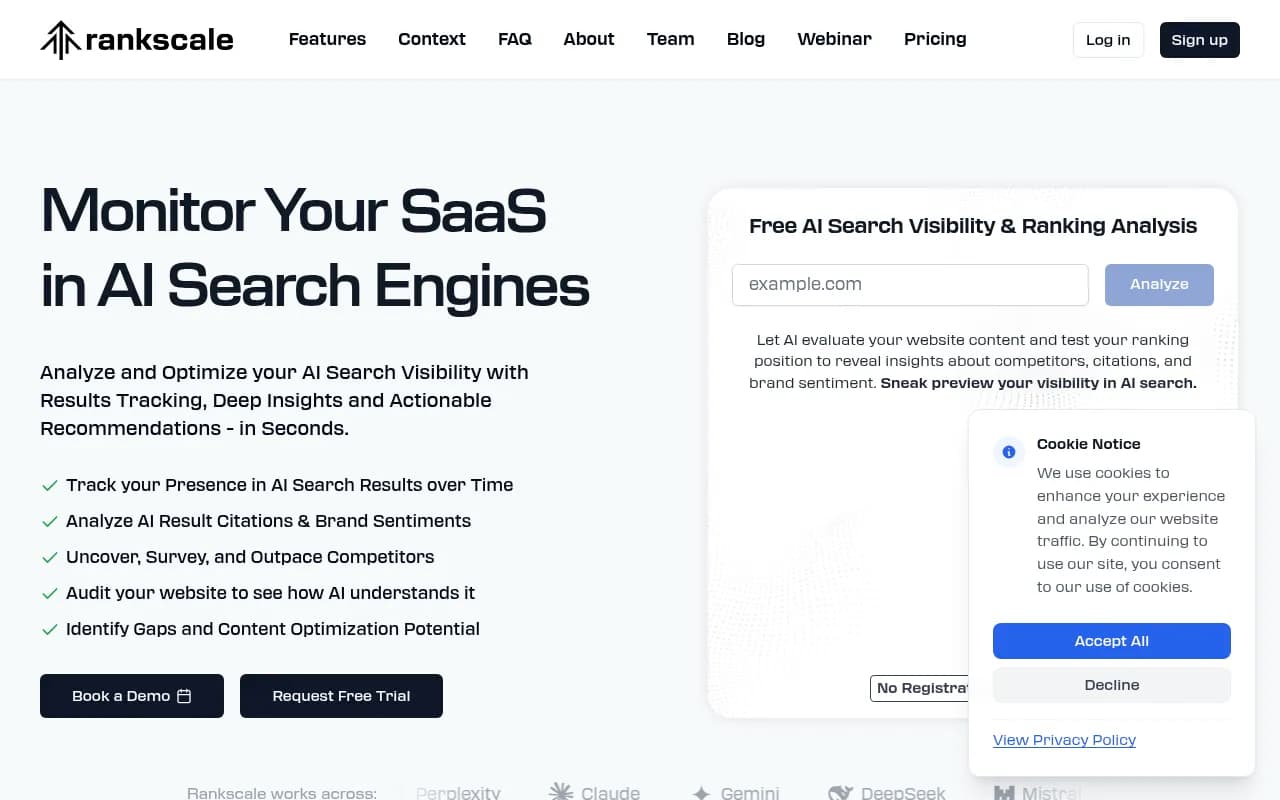
- Rankscale: credits are weighted by engine, per Rework. ChatGPT, Perplexity, Gemini and AI Mode cost 0.25 each, DeepSeek costs 1 and Claude costs 2. The Essentials plan is $20 a month but ships with zero credits, so real use means topping up. Pro is $99 with 1,200 credits.
- AthenaHQ: one credit equals one AI response, about 8 cents per answer on the $295 Starter plan with 3,600 credits. Extra credits are "contact us," so heavy daily use cannot be priced from the page.
The broader credit market gives you a sense of what to watch for. In its analysis of credit billing, Revenue Wizards notes HubSpot credits expire at the end of each month and Salesforce Flex Credits do not roll over, while Clay charges a 30% premium on top-ups. Ask any AI visibility vendor whether unused credits expire and whether top-ups cost more than the included rate.
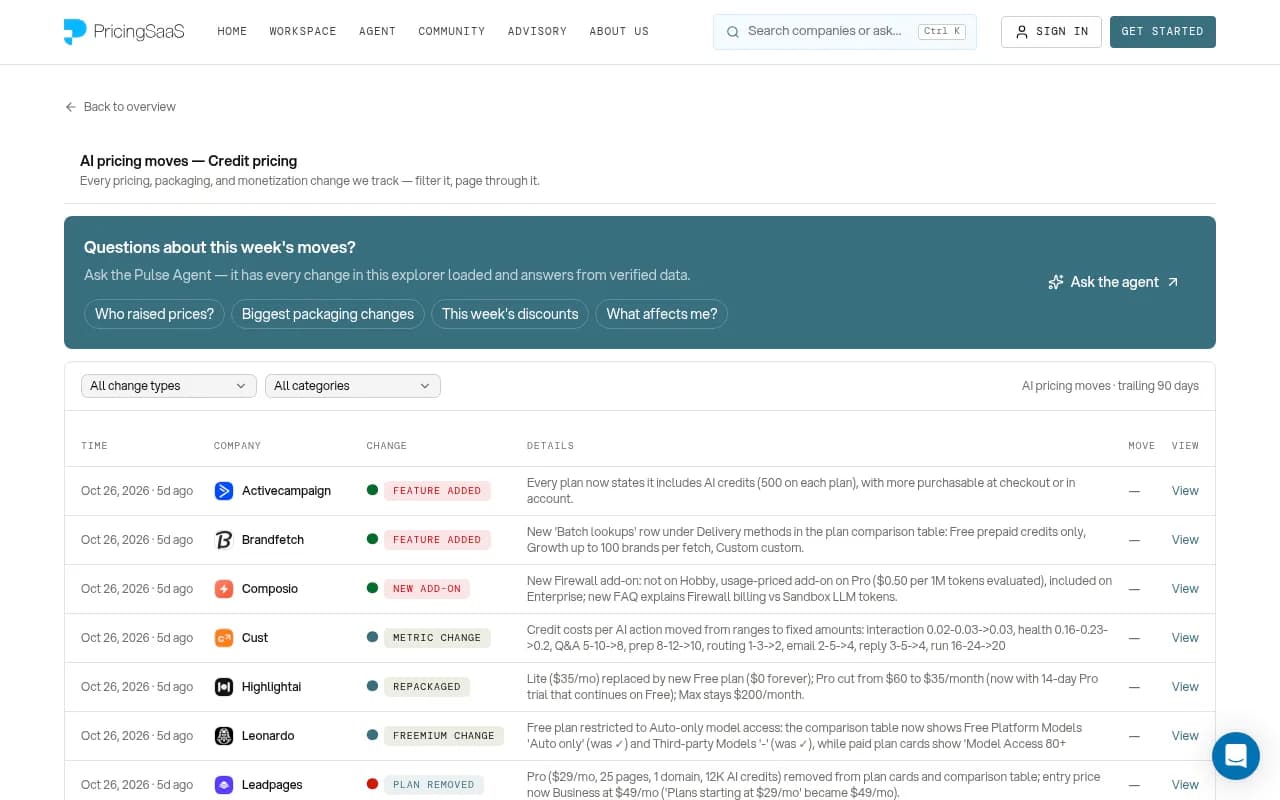
Also watch for vendors changing meters mid-contract. PricingSaaS Pulse logged Betterstack moving its AI SRE add-on in October 2026 from a flat $5 per million tokens to per-model consumption billing, and Braintrust removing exact per-token overage rates from its pricing rows in August. Not visibility tools, but the same direction of travel.
4. Per-domain and per-brand fees
Agencies and multi-brand companies get hit hardest here.
- The Semrush AI Visibility Toolkit is a $99 a month add-on covering 25 prompts on 1 domain and cannot be bought standalone. Per Activepieces, an agency tracking 5 client brands would need 5 toolkits, about $495 a month before the base plan. Extra prompts are +50 for $60 a month, per Rework.
- Trakkr charges $50 a month for each extra brand, and Scale ($500) covers 10 brands at 50 prompts each.
- Profound, per Rework, lists a client workspace at +$399 a month.
- Ahrefs Brand Radar is an add-on to an Ahrefs plan, and the currency shown can vary by region.

5. Seats
Seat policy is the most inconsistent part of the market.
- Otterly, Peec, AthenaHQ and Rankscale Pro offer unlimited seats, per the sources above (Otterly's seat policy conflicts between Rework and Semrush, so check which tier).
- Trakkr Growth caps at 3 seats.
- Semrush charges for extra users, but its own docs disagree: the pricing page says extra users start at $45 a month, while the knowledge base says each teammate needs a $99 license.
Seats look minor until a content writer, an analyst and a client all need access. For a five-person team, a per-seat model can outweigh the prompt cost.




How the main tools compare on hidden costs
Prices are drawn from third-party sources and conflict in places. Treat this as a map of where to look, not a quote.
| Tool | Entry price (per sources) | Where the extra cost appears | Seats |
|---|---|---|---|
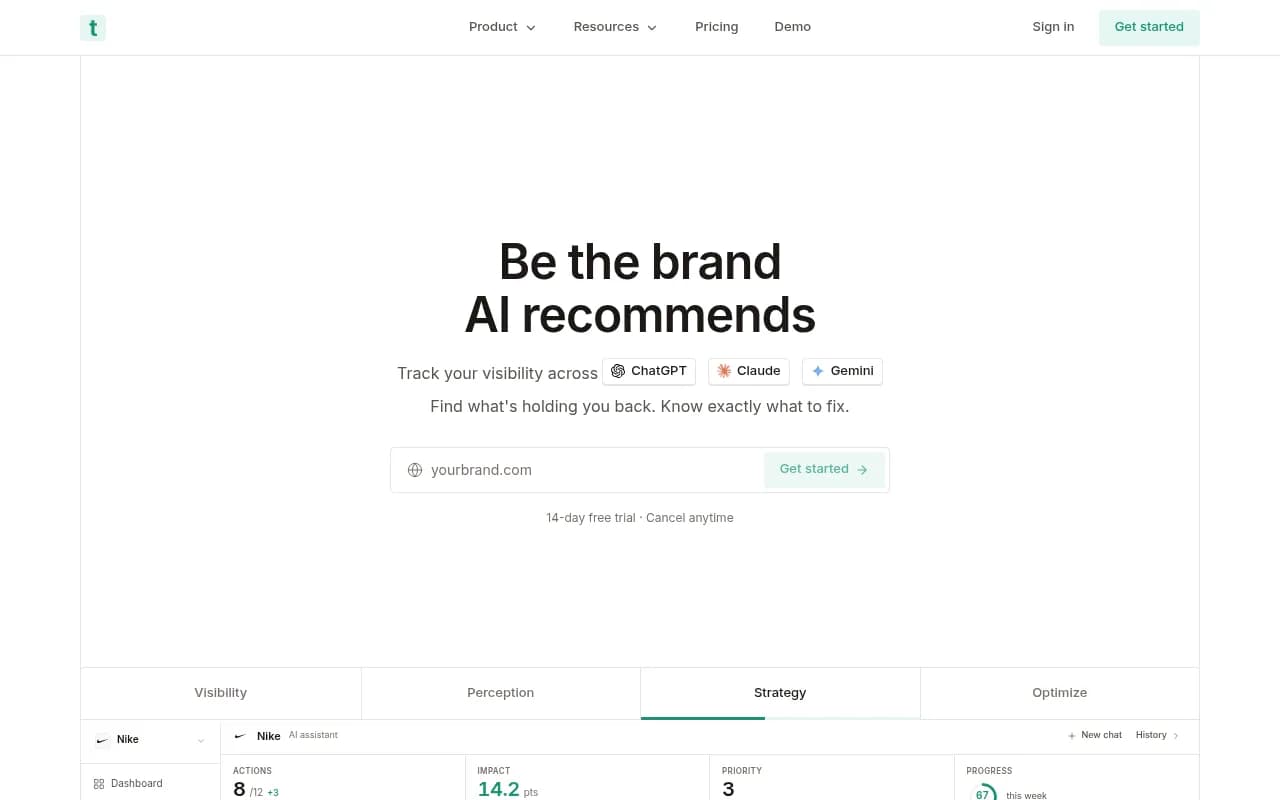
| Otterly.AI | Lite $29 | AI Mode, Gemini and Claude add-ons; prompt caps (15 / 100 / 400 per Activepieces) | Unlimited per Rework, but Semrush says from Standard |
| Peec AI | $95 to $245 depending on source | 4th model add-on; Claude Enterprise only; countries multiply prompts | Unlimited per Semrush |
| Rankscale | Essentials $20, Pro $99 | Engine-weighted credits; Essentials has none; API from $229, white-label $385 | Unlimited on Pro |
| Trakkr | Growth $100 | Prompt packs ($39 for 50); $50 per extra brand | 3 on Growth, unlimited on Scale |
| AthenaHQ | Starter $295 | Extra credits are "contact us" | Unlimited |
| Semrush AI Visibility Toolkit | $99 add-on | Needs a base plan; one domain per toolkit; extra prompts $60 | Extra users cost more |
| Profound | Unpublished | Client workspaces +$399; custom quote | Unclear |
What the cost looks like for a real setup
Take a mid-size brand: 100 prompts, 3 countries, 5 engines, tracked daily. That is 100 x 3 x 5 = 1,500 prompt-engine-country combinations per day. Under a Peec-style one-credit-per-prompt-per-model-per-day rule, that is roughly 45,000 credits a month, more than the 25,000-credit tier Semrush describes. Under a per-prompt cap, you need a plan that counts 300 prompts, then engine add-ons on top.
This is why the headline number says little. A plan that looks 3x cheaper can end up the dearer option once you match coverage.
The successful-adoption trap
Revenue Wizards gives a neat illustration: budget $2,000 a month for subscriptions and $1,000 for credits, double consumption, and the bill jumps from $3,000 to $4,000 without adding a seat. In visibility tracking, the same thing happens when the team gets excited, adds competitor prompts, adds a country and enables a new engine. Usage growth is a good sign and a budget problem at once.
A pre-purchase worksheet
Before you sign, write these numbers down.
- Prompt list: how many prompts matter, including brand, competitor-comparison and category prompts.
- Countries and languages: multiply prompts by each.
- Engines: list the ones your customers use. Do not accept a default set.
- Cadence: daily or weekly. Daily costs about 7x more under per-run credits.
- Brands or domains: your own, plus competitors and any clients.
- People: how many seats, including viewers and clients.
- Add-ons: API access, white-label reports, Looker Studio, SSO.
Then ask each vendor:
- What is the price per additional prompt, engine, country, brand and seat?
- Do unused credits roll over or expire?
- Are top-ups published, and at what premium?
- What happens at the cap: stop, throttle or bill overage?
- Does the knowledge base match the pricing page?
Compare cost per tracked prompt at equal engine coverage. Rework makes this point, and it is the only fair way to line up Otterly's add-ons, Rankscale's weighted credits and Peec's credits.
Why the data behind the credit matters
A cheap credit is not a good deal if the data is thin. Responses move around. Promptwatch Data's ChatGPT query fanouts report measured average web searches per response falling from 2.15 in early December to about 1.84 by early March, with average query length dropping from about 117 to about 53 characters. If the engine's behaviour shifts that much, a single run per prompt tells you less than it appears to. That is one reason to value tools that show prompt volumes, fan-outs and citation data instead of just a mention flag.
Also check whether the tool reads the real user interface or an API. Answers and citations can differ between the two.
Where Promptwatch fits
For teams that want tracking tied to action, Promptwatch bundles things many tools sell separately: all AI models on every paid plan, country tracking, a site audit, crawler logs and MCP and API access. Pricing runs from Essential at $95 a month (50 prompts, 6,000 responses, 500 Agent Credits) to Business at $579 a month, and agencies get unlimited projects and prompts from $199 a month. Add-ons exist, mainly extra Agent Credits and AEO articles, so the same worksheet applies. Confirm current figures at promptwatch.com/pricing.

If you want to compare more options, the GEO software directory at bestgeosoftware.com and the AI rank tracker listings at ai-rank-tools.com cover the field. If you would rather hand the evaluation to specialists, 1001 SEO Media runs AI visibility programs for clients and can build a vendor shortlist with you.
Red flags worth walking away from
- "Contact us" for overage pricing on a self-serve plan.
- A plan with zero included credits (Rankscale Essentials is an example).
- Pricing pages that conflict with the knowledge base.
- Engines you need locked behind enterprise tiers.
- Per-domain pricing when you manage many brands.
- Annual-only billing hidden behind a monthly-looking price.
Bottom line
Price your own prompts x countries x engines x cadence, then make each vendor quote that exact coverage in writing, including seats and top-up rates. The cheapest headline plan is often the most expensive one once you reach your real volume.