Key takeaways
- AI answers differ by country and language, so a GEO tool for multi-market teams must run separate prompt sets per market and report them separately.
- Check four things before buying: country and state/city targeting, language handling, real-UI data versus API-only data, and whether reporting can be split by region.
- Most tools in this category are monitoring dashboards. If you run 5+ markets, you will probably also want crawler logs, traffic attribution and some way to act on gaps.
- Promptwatch covers the most of that stack for multi-country work. Peec AI, Profound, Semrush and AthenaHQ are reasonable picks in specific situations.
- Vendor claims about country and language support change quickly. Confirm each one on the vendor's pricing and docs pages before you sign.
Why multi-country GEO is harder than single-market GEO
If you run campaigns in the UK, Germany, the Netherlands and the US, you already know that Google rankings differ by market. AI answers differ too, and you have fewer instincts about how. ChatGPT, Gemini and Google AI Overviews can answer the same question with different brands, different sources and different wording depending on where it is asked and in what language.
That is the whole problem. One global visibility score hides it. You might be strong in English-language answers and nearly invisible in German ones, and a blended number would call that fine.
There is also the problem of noise. Promptwatch's data on ChatGPT shows that 47.6% of responses cite 10 or more unique domains (Sep 28 to Oct 4, 2026), and organic prompts with no brand named reach 52.5%. For brand-specific prompts the most common count is 5 domains. So a single prompt tells you very little. Multiply that by several countries and prompt types and you need a tool that runs prompt sets per market and per prompt type (organic, brand, comparison) and keeps the results separate.
One more caveat. Promptwatch's older average sources per response report put ChatGPT at about 5 sources per web-search answer, while Google AI Overviews and Perplexity sit near 10. That was measured differently and earlier than the 10-plus-domains finding above, so do not read them as one number. The practical lesson is the same: measure each engine separately rather than assuming one predicts another.
What to look for in a multi-country GEO tool
Country, state and city targeting
The basic requirement is choosing the country an AI answer is generated from. Better tools go to state or city level, which matters for franchises, retail and anything with a local angle. Ask whether location is simulated or tied to the real interface.
Language handling
Tracking prompts in the local language is different from translating your English prompts. People in France do not phrase a question the way a literal translation would. Look for tools that let you write or generate prompts per language, and that report sentiment and citations per language.
Real UI data versus API output
User-facing answers, citations and shopping recommendations can differ from what an API returns. If you are reporting to regional marketing leads, you want the number that matches what a customer in Madrid actually sees. Tools that monitor the real interface are a safer base for regional reporting.
Regional reporting and team structure
Multi-country teams usually have local managers who each own a market. Check seat pricing (per-seat costs escalate quickly), whether you can split dashboards by country, and whether you can export for local stakeholders. One of the research sources notes Peec AI offers unlimited seats, which helps when many stakeholders need access.
Beyond monitoring
A lot of the market is still dashboards. The SotaMedia review puts it bluntly: only a handful of tools pair tracking with real content or structured-data recommendations. For multi-country teams that gap is expensive, because finding a hole in five markets and then fixing it by hand in five languages is where the real work is.
Quick comparison
| Tool | Best for | Multi-country angle | Watch out for |
|---|---|---|---|
| Promptwatch | Teams that want to track, fix and measure across markets | Country tracking on every paid plan, state/city from Business, local targeting at exact coordinates, multi-language monitoring | More platform than you need for a one-off check |
| Peec AI | Mid-market teams who want clean benchmarking and many seats | Described as multi-language and suited to multi-country brands (verify with vendor) | Measurement-focused, less on execution |
| Profound | Enterprise accounts that want white-glove service | Broad engine coverage, enterprise security | Cost and complexity |
| Semrush | Teams already living in Semrush | AI visibility next to existing research | Per-domain and per-user costs add up across markets |
| AthenaHQ | Teams wanting prescriptive recommendations | Wide platform coverage | Priced for scale |
| SE Visible | SE Ranking users | Reported support for the US, UK, Canada, France, Germany, Netherlands and Spain (from an older article, verify) | Limited market list |
| Otterly.AI | Small teams, tight budgets | Basic monitoring | Less depth for complex campaigns |
The tools worth shortlisting
Promptwatch
Promptwatch is where I would start for a team with real multi-country spend, mostly because it goes past tracking. It monitors the real interfaces of ChatGPT, Google AI Overviews, Google AI Mode, Gemini, Perplexity, Copilot and others, in each country and language you choose. Country tracking is on every paid plan, state and city tracking starts at Business, and you can pin a monitor to exact coordinates so ChatGPT and Google answer as if asked from that spot. That helps with local and "near me" queries for multi-location brands.

For a regional team the useful parts are these. Monitors are panels of prompts that run daily by model, country and language, so you can keep a German monitor apart from a Dutch one. Heatmaps compare dimensions like countries against topics on visibility, sentiment, position or share of voice, which is the view a global marketing lead wants. IP-verified crawler logs show whether AI bots are even reading your localized pages, and visitor analytics tie AI-referred traffic to conversions. When it finds gaps, the Content Agent can write in the prompt's language and publish to WordPress, Webflow or Framer, and the Action Board lists what to fix first.
Pricing starts with a free Explore plan (ChatGPT only, 10 prompts). Essential is $95/mo, Professional $245/mo, and Business, the most popular, $579/mo. Agency plans start at $199/mo. Confirm current numbers at promptwatch.com/pricing. Honest downside: if you only need a quick monthly check in two markets, this is more than you need.
Peec AI
Peec AI is the one that keeps coming up for brands across several countries. A ziptie.ai roundup (updated October 22, 2026) recommends it for mid-market B2B teams who need clean competitive benchmarking with unlimited seats, particularly brands operating across multiple countries. Our catalog describes it as multi-language AI visibility tracking.

The 1Point21 Interactive agency comparison calls it more focused on measurement than campaign execution, with accessible dashboards, daily tracking and flexible connections to Looker Studio and an API. That fits a team that already has people to do the fixing and just wants clean numbers.
Profound
Profound is the enterprise option. Nick Lafferty's review pitches it at teams that want white-glove service instead of just a dashboard, with SOC 2 Type II, HIPAA compliance and broad answer engine coverage. If you are a large agency with big enterprise clients, the pitch and client environments are strong. For smaller teams, 1Point21 says the complexity and cost can be excessive.

Semrush
If your regional teams already work inside Semrush, adding its AI visibility toolkit keeps everything in one place. SotaMedia recommends it for teams already running Semrush who want GEO folded into an existing workflow. The catch, per the agency review, is that per-domain and per-user costs get expensive across a large portfolio, which is exactly what a multi-country setup tends to be.
AthenaHQ
AthenaHQ leans on prescriptive recommendations that tell teams what to change, according to Olostep's buyer guide. SotaMedia rates it for teams that want wide platform coverage and are prepared to pay at scale.
SE Visible and SE Ranking
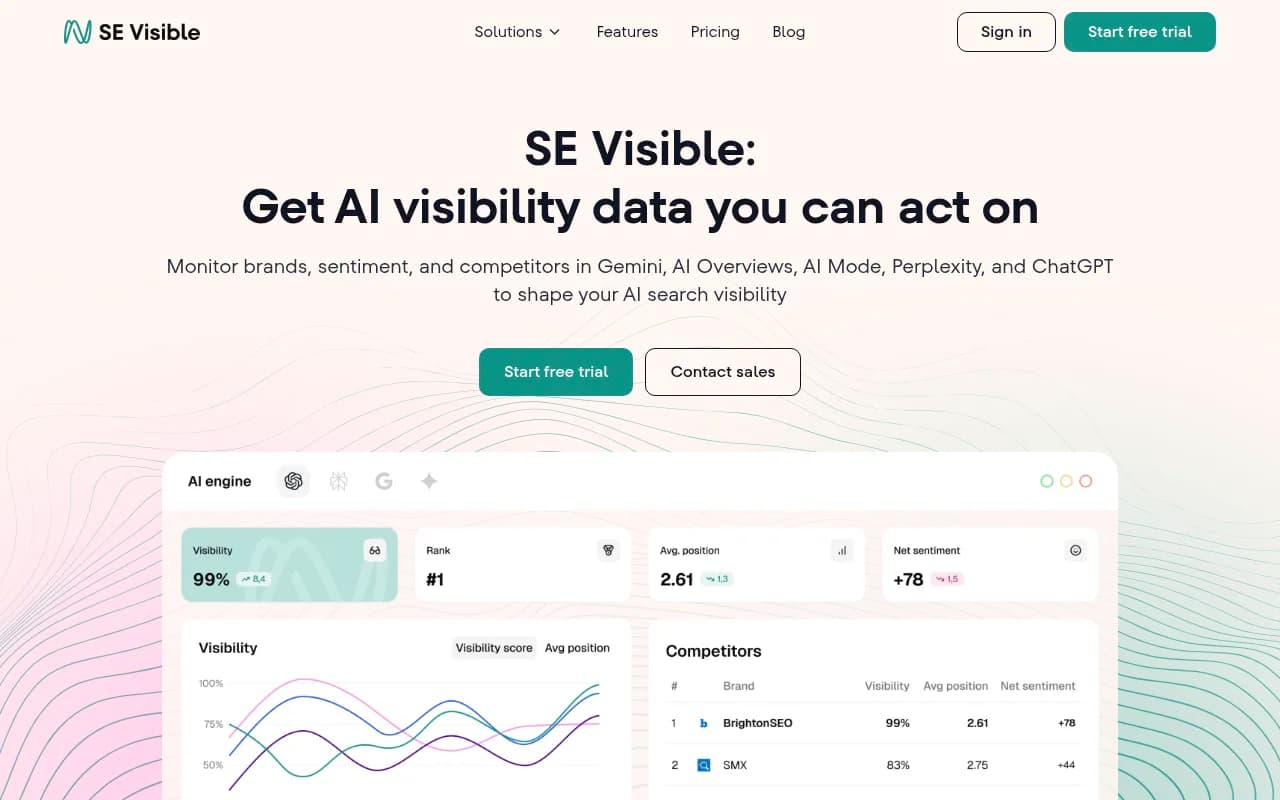
SE Visible is a friendly entry point from SE Ranking. One older review lists support for the US, UK, Canada, France, Germany, Netherlands and Spain. That article looks dated, so check the vendor's current market list before relying on it.
Otterly.AI
Otterly.AI is the low-price option. Fine for small agencies and consultants who need basic monitoring. A team running many accounts across many countries will probably outgrow it and want deeper citation intelligence, task management and execution.

Other tools in the catalog worth a look
The field is crowded. A few more that fit a multi-market brief, based on their catalog descriptions:
- Conductor, if your SEO team already uses it, for AI visibility tracking with persona customization.
- Scrunch AI, for monitoring across modern AI search surfaces.
- Bluefish, aimed at enterprise Fortune 500 brand visibility.
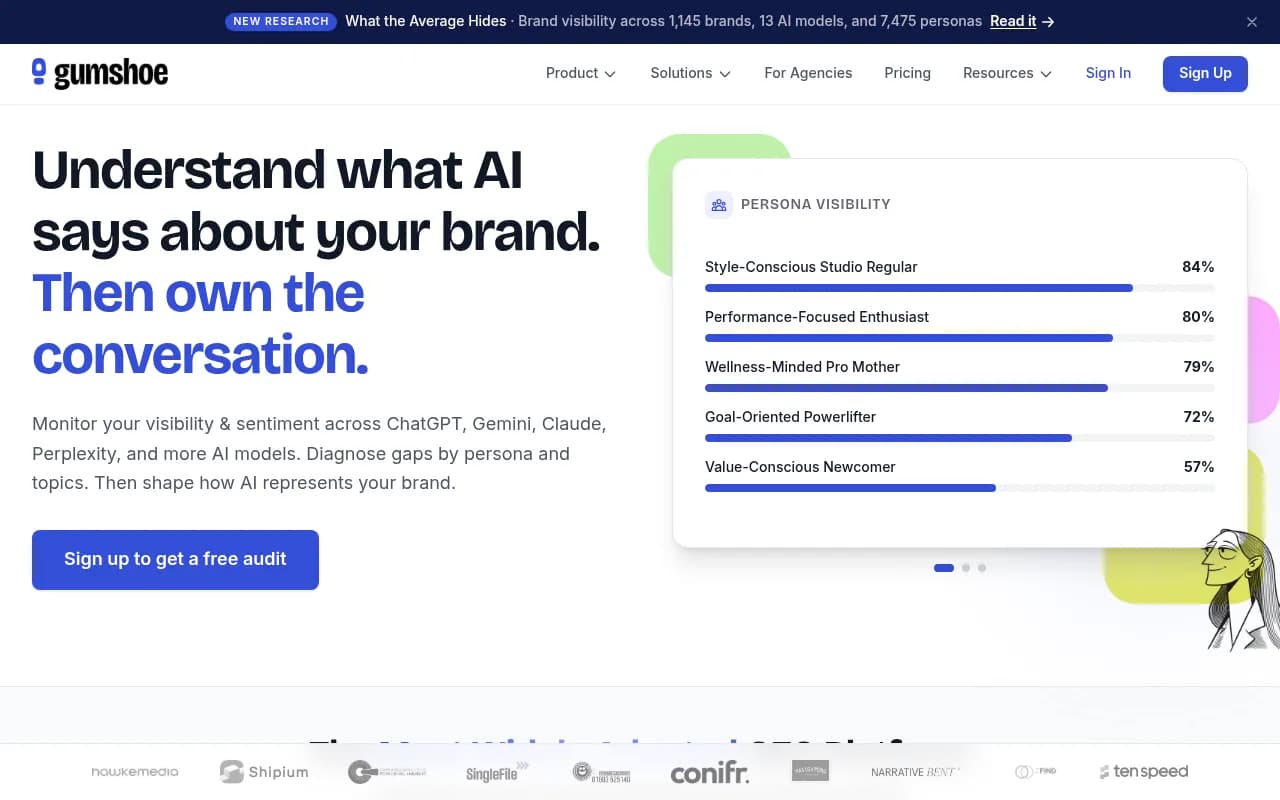
- Gumshoe AI, for persona-driven visibility and GEO scoring (reported as free in public beta).
For a wider scan, the directories at bestgeosoftware.com and ai-rank-tools.com list far more options than any single article can cover.
How to set up multi-country tracking properly
Buying the tool is the easy bit. The setup decides whether the data is useful.
1. Build one prompt set per market, not one translated set
Start with the questions buyers in each country actually ask. Use local search data, sales team input and local competitors. Then keep a small shared core so you can compare markets.
2. Split by prompt type
Track organic, brand-specific and competitor comparison prompts separately. Promptwatch's unique-domains data shows how different they behave: brand prompts most commonly cite 5 domains, organic ones often cite 10 or more. Mixing them blurs the picture.
3. Read several metrics together
A mention is not enough. Look at position in the answer, sentiment and how often your own site is cited. Low share of voice is a coverage problem. Late position is a prominence problem. Mentions without citations of your own pages usually point to a content or crawlability problem.
4. Check that AI crawlers can read each regional site
Hreflang setups, geo-redirects and blocked bots can quietly stop AI systems from seeing local pages. Crawler logs settle this faster than guessing. Promptwatch's AI crawler traffic data shows how the volume of verified bot requests moves by vendor over time, which is a useful benchmark when you read your own logs.
5. Know how fast content decays
Promptwatch's content half-life report found that, among pages ChatGPT cited on July 6, 2026, landing pages and docs stayed cited longest while news lost half its pages within 36 days. So localized evergreen pages deserve priority, and news-style content needs a refresh schedule in every market.
6. Do not assume your social strategy carries over
Promptwatch's social media citation data for Sep 28 to Oct 4, 2026 shows ChatGPT got only 0.46% of its citations from social platforms, while Google AI Overviews got 12.2%. If a market skews toward Google, community and video presence may matter more there than in a ChatGPT-heavy one.
Which one should you pick?
| Your situation | Likely fit |
|---|---|
| 3+ markets, want to find gaps, fix them and measure traffic | Promptwatch |
| Strong analysts, need clean benchmarking and many seats | Peec AI |
| Enterprise client accounts and white-glove service | Profound |
| Already deep in Semrush | Semrush AI visibility toolkit |
| Want prescriptive recommendations and have budget | AthenaHQ |
| Two markets, small budget, basic monitoring | Otterly.AI or SE Visible |
What to verify before you buy
Some honest gaps. Our research did not cover current vendor pricing or exact country and language lists for most of these tools, and the Promptwatch data catalog has no report on country-level citation differences, so any claim you read about regional citation behavior should be treated as third-party until proven. Before signing:
- Ask each vendor which countries and languages they run, and whether prompts run in the real interface or through an API.
- Ask how location is set (country only, or state and city).
- Run a two-week trial with the same 20 prompts in two of your markets and compare the output with what you see by hand.
- Check seat limits and whether you can split reporting by region.
Most vendors offer a trial, and Promptwatch has a 7-day free trial on monthly Essential and Professional plans and a free Explore tier for a first look.
Bottom line
For multi-country work, pick on market and language coverage first, and on features second. If your team needs to find visibility gaps, fix them in several languages and prove the traffic result, a platform with crawler logs, traffic attribution and content execution saves a lot of manual work, and Promptwatch is the one I would test first. If you mainly need clean numbers and many seats, test Peec AI alongside it. Whichever you choose, run the same prompts in two markets for two weeks before committing a full-year budget.