Key takeaways
- Most GEO tools stop at monitoring. For a content team, the useful question is what happens after a gap shows up: who writes the page, where it gets published, and how you know it worked.
- A closed loop has five links: find the gap, brief it, write it, publish it, then measure and refresh. Most tools cover one or two.
- Pages decay. Promptwatch Data shows product pages, reviews and how-tos in ChatGPT reach a 74-77 day half-life, so refresh tracking matters as much as new content.
- Many "best GEO tools" roundups are written by vendors who rank themselves first. Weigh them accordingly.
- Match the tool to the team: a full-loop platform if you publish weekly, a tracker plus a writing tool if you have a small queue, or your existing SEO suite if you just need a baseline.
Why content teams need a different test
GEO here means generative engine optimization, not geographic targeting. The term comes from an arXiv paper, "GEO: Generative Engine Optimization," posted on November 16, 2023 by researchers at Princeton, Georgia Tech, the Allen Institute for AI and IIT Delhi. Vendors now use it interchangeably with AEO.
Most roundups rank tools by dashboard breadth: how many engines, how many prompts, how pretty the share-of-voice chart. That's the wrong lens if you run a content team. You don't need another chart. You need a prioritized list of pages to write, a way to write them on brand, and a path to the CMS.
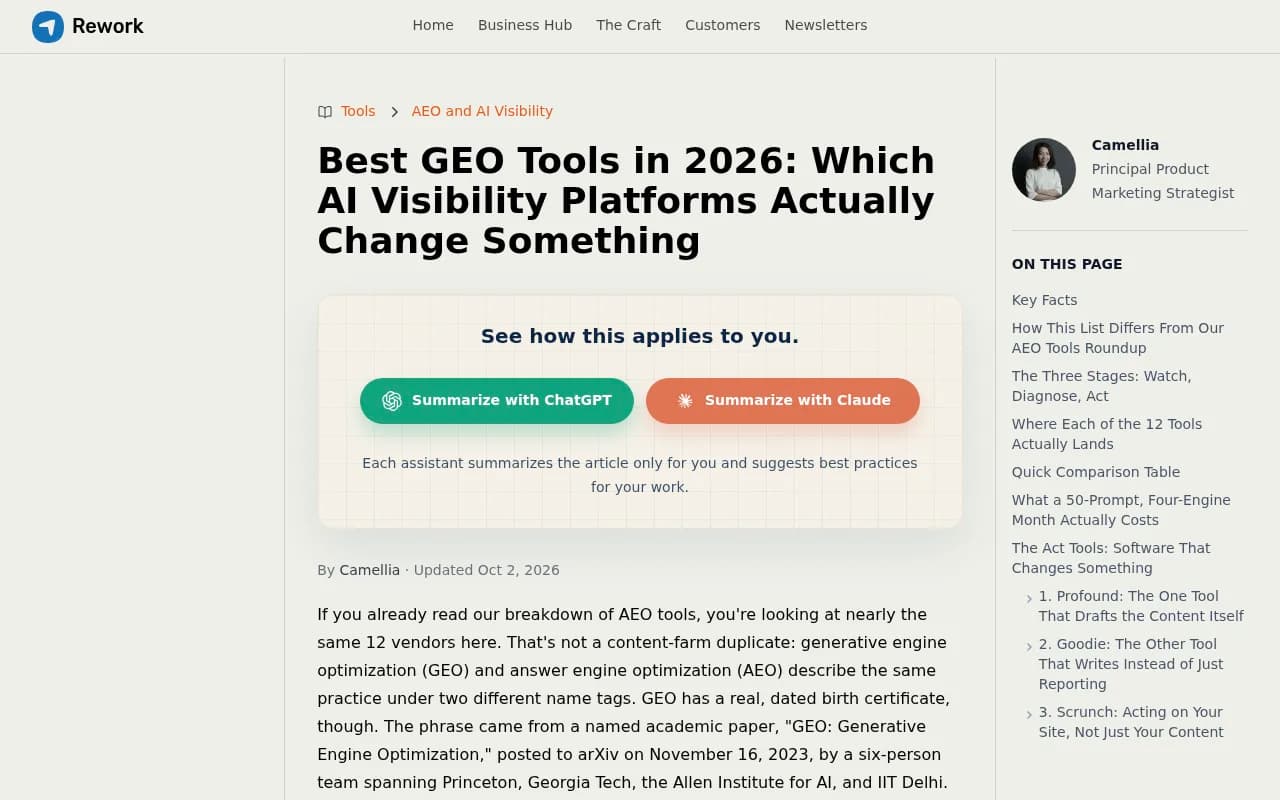
Rework's 2026 roundup makes a useful distinction: across the 12 vendors it covers, tools split into three stages depending on whether they only report your position or actually change something. That framing is the one I'd keep. I'd just sharpen it for content teams into a five-link chain.
The five links of the loop
- Find the gap. Which prompts do you lose, and which competitor gets cited instead?
- Brief it. Turn that gap into a brief with the right intent, sources and internal links.
- Write it. Draft in your voice, with facts you can defend.
- Publish it. Get it into the CMS without a copy-paste relay.
- Measure and refresh. Did the page get crawled, cited and clicked? Does it need an update in 60 days?
A monitoring tool does link one. A writing tool does link three. A closed-loop platform does all five and, importantly, feeds the result of link five back into link one.
What the data says you should be publishing
Before picking a tool, decide what the tool should help you produce. Promptwatch's data on ChatGPT citations by content type (Sep 28 to Oct 4, 2026) is a good reality check. Product pages made up 22.4% of ChatGPT citations, landing pages 16.8%, listicles 13.6%, how-tos 8.7% and comparisons 5.9%. Editorial formats combined are about 43%. See the full ChatGPT citation share by content type report.
Intent changes the mix. For commercial prompts like "best CRM for small businesses", product pages (26.0%), landing pages (20.6%), listicles (15.0%) and comparisons (7.9%) add up to almost 70% of citations. For informational prompts, how-tos climb to 10.7% and docs to 8.5%. For branded prompts, reviews hit 5.6%, more than three times their overall share.
So a tool that only generates blog posts is covering a minority of what gets cited. Your content workflow needs to handle comparison pages, FAQ pages and updates to commercial pages, not just articles.
Pages decay, so refresh is part of the loop
Promptwatch's content half-life report followed every page ChatGPT cited on July 6, 2026 for 90 days. After 30 days, 78% of landing pages, 76% of docs and 72% of comparisons were still cited. Product pages, reviews and how-tos reach their half-life after 74 to 77 days. News hits it at 36 days, and about a quarter of news pages are never cited again.
Practical read: if your team ships how-tos and product pages, plan a refresh at roughly the 60-day mark. A tool that only creates new pages and never flags the ones fading is leaving half the work undone.
Tools that cover the full loop
Promptwatch
Promptwatch is the one I'd start with for a team that publishes regularly, because it's built around the whole chain rather than the monitoring step. Content gap analysis maps your pages against the prompts AI actually answers, with coverage scores. The Content Agent then plans, writes and publishes against those gaps to Webflow, Framer or WordPress, with a review inbox if you want a human approving each piece, or fully hands-off if you don't. A Brand Book and Knowledge Base keep tone and facts consistent.

The part that matters for link five: published pages are tracked through IP-verified AI crawler logs, citations and AI-referred visitor traffic, and underperformers come back on the Action Board as tasks. Content Refresh gives git-diff-style updates for existing pages, which fits the decay problem above. Crisp, for example, reported 2x higher conversion rates from AI traffic than traditional channels and scaled to 5-10 articles a day.
Caveats, honestly: the automated Content Agent sits on the Business plan ($579/mo) and up, and Agency plans don't include it. Cheaper plans (Essential at $95/mo, Professional at $245/mo) give you tracking, gap analysis and a set number of AEO articles. Confirm current pricing at promptwatch.com/pricing.
xSeek
xSeek describes its own workflow as tracking, source analysis, an action plan, article drafts and CMS delivery, which is the right shape. Published pricing runs from Essential at $49/mo to Starter at $149/mo, Growth at $499.99/mo, and custom Enterprise. Note that the claim it is "the strongest fit" comes from its own blog, so treat that as a vendor opinion.
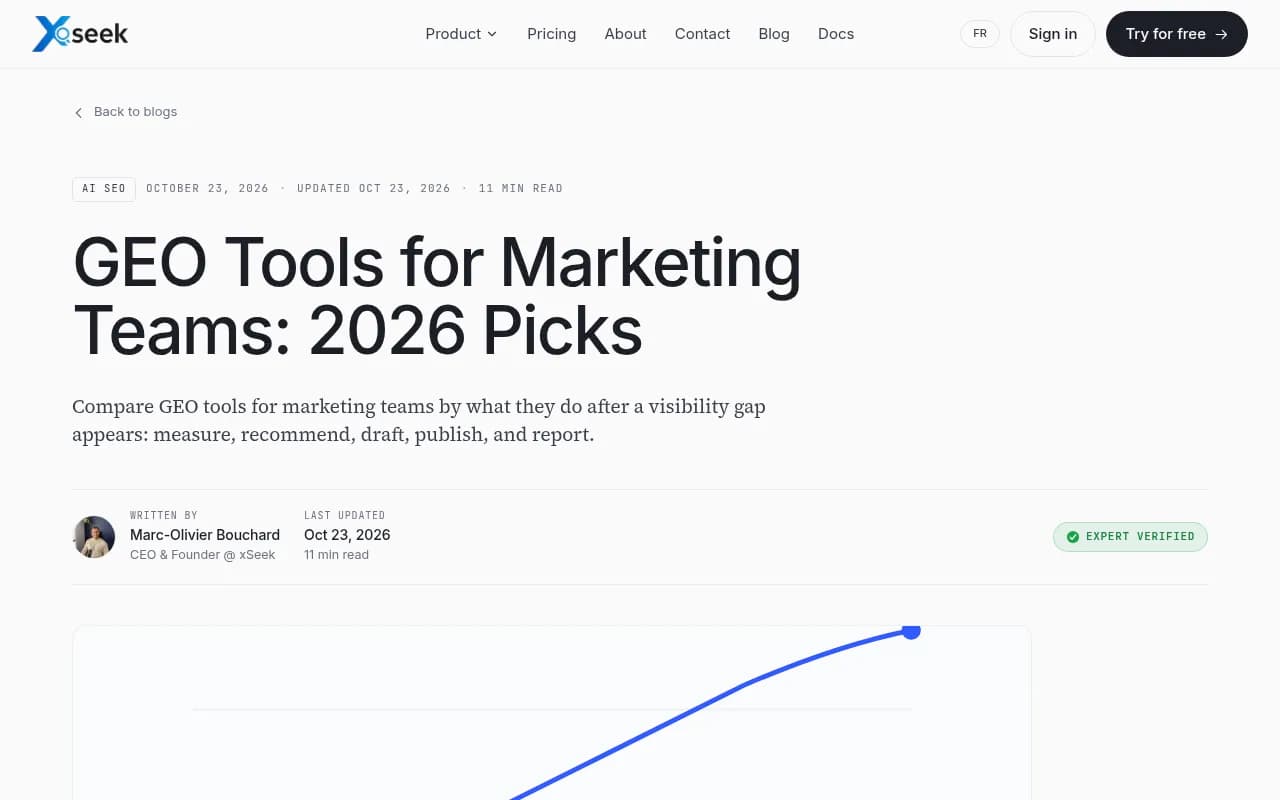
The analytics-first versus action-first framing in that piece is useful even if you discount the ranking.
ReachLLM
ReachLLM pitches monitoring, GEO audits, AI content and a managed execution layer from $399/month. Its own post claims 71.5% of AI citations come from blog and editorial content. That number conflicts with the content-type split above (editorial about 43% in Promptwatch's data), so I'd be careful building a strategy on it.
Other loop-oriented tools in the catalog
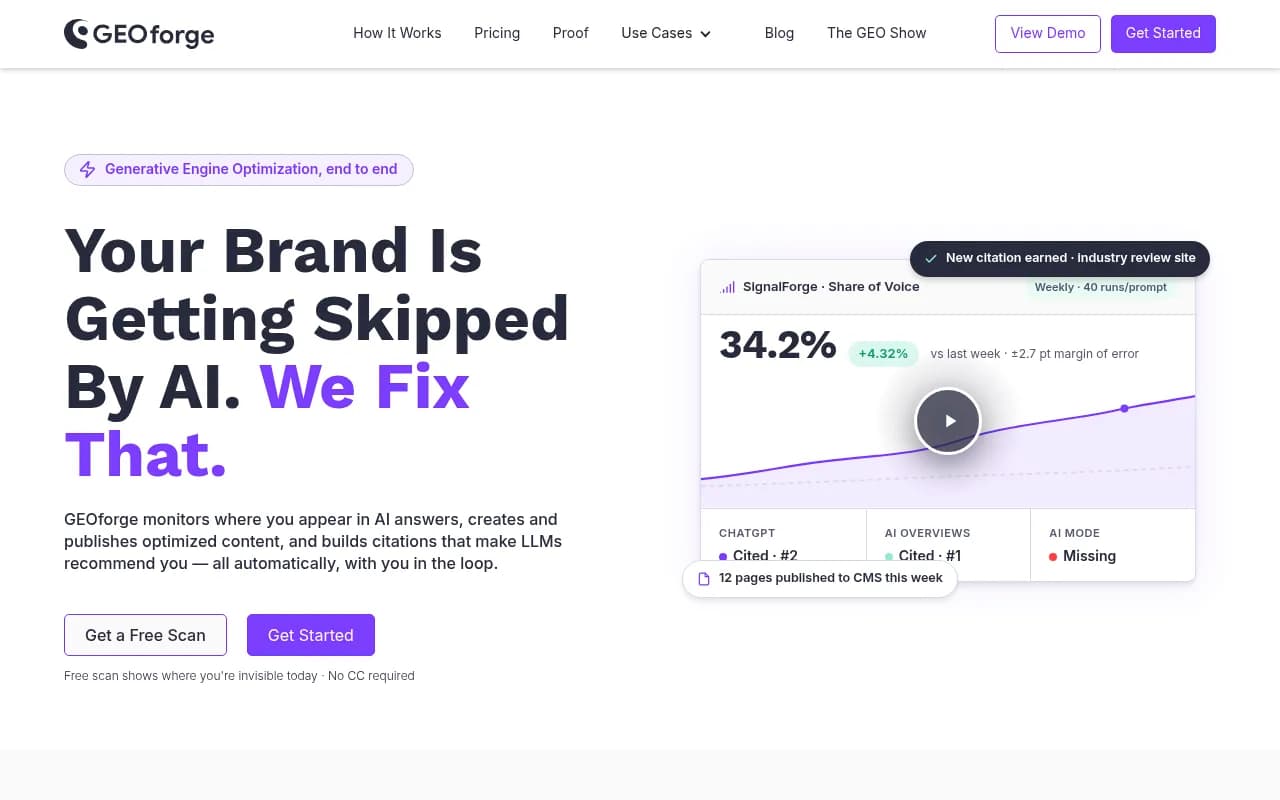
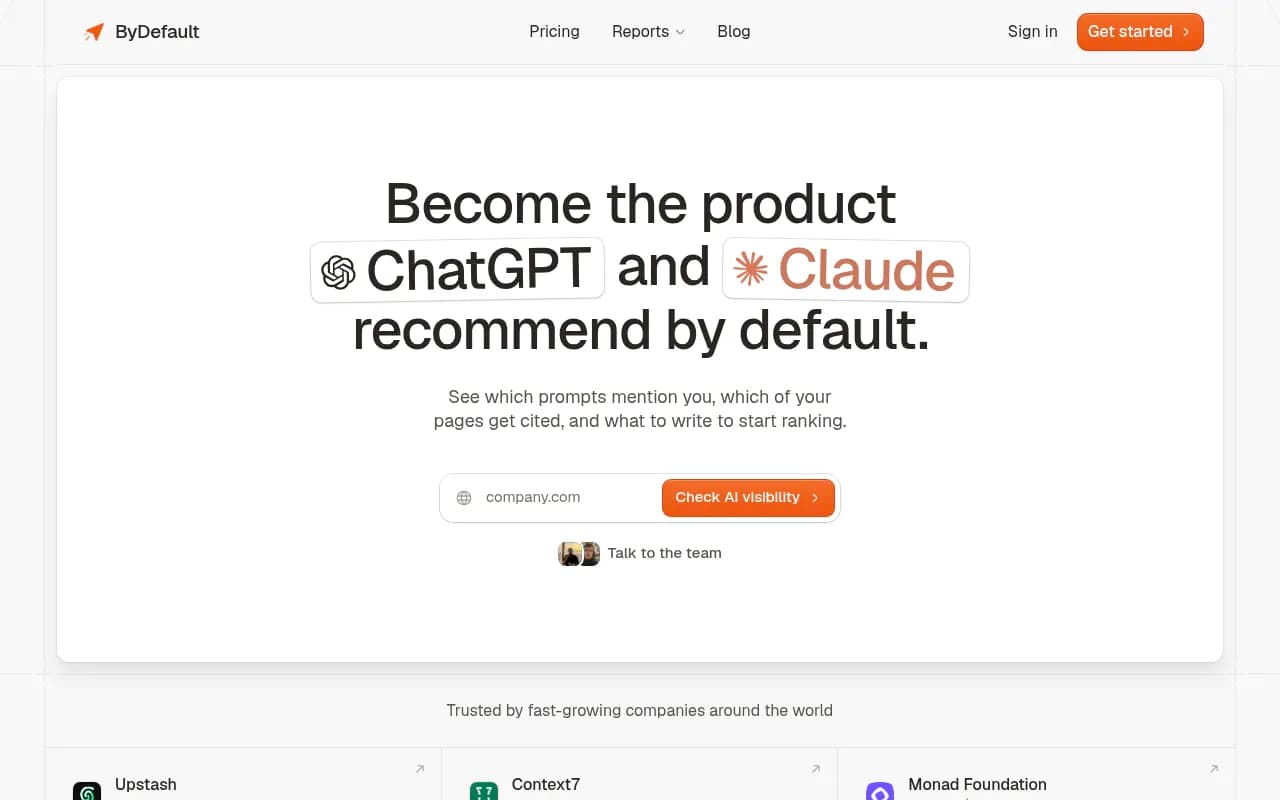
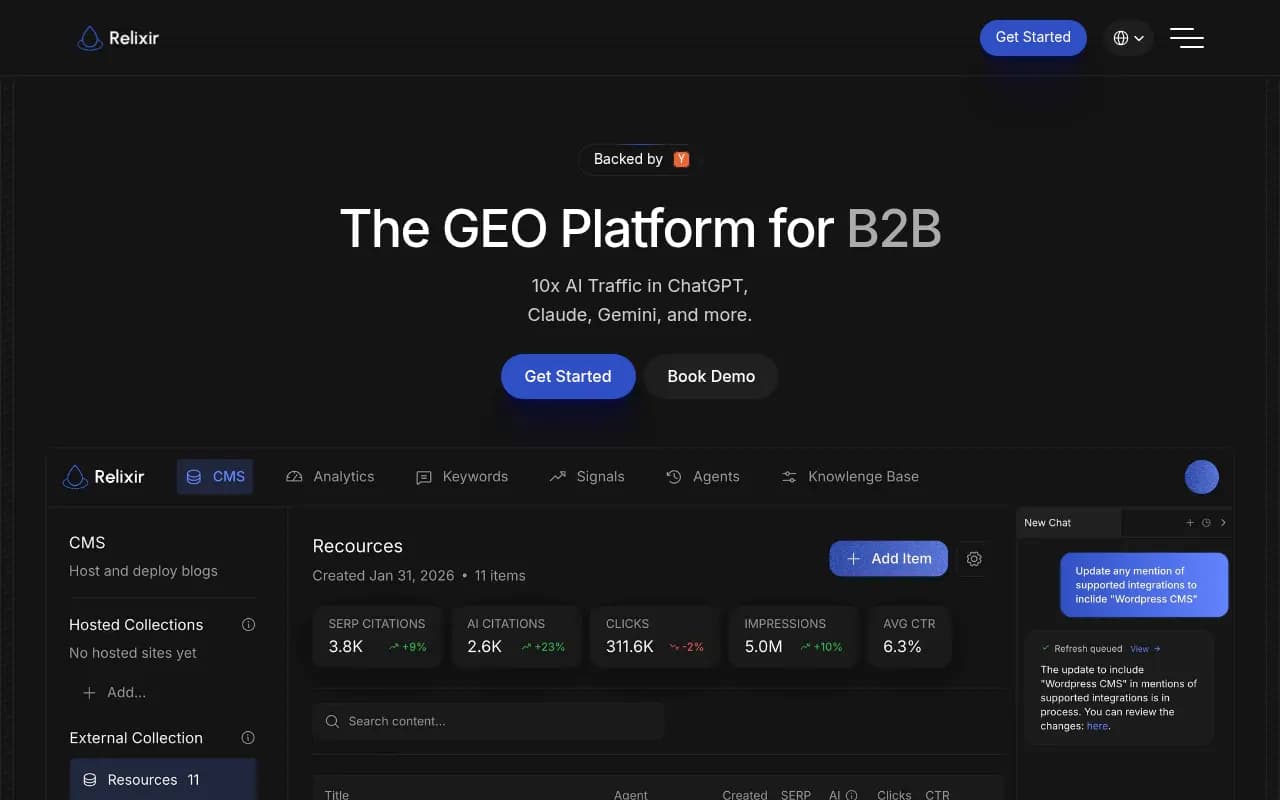
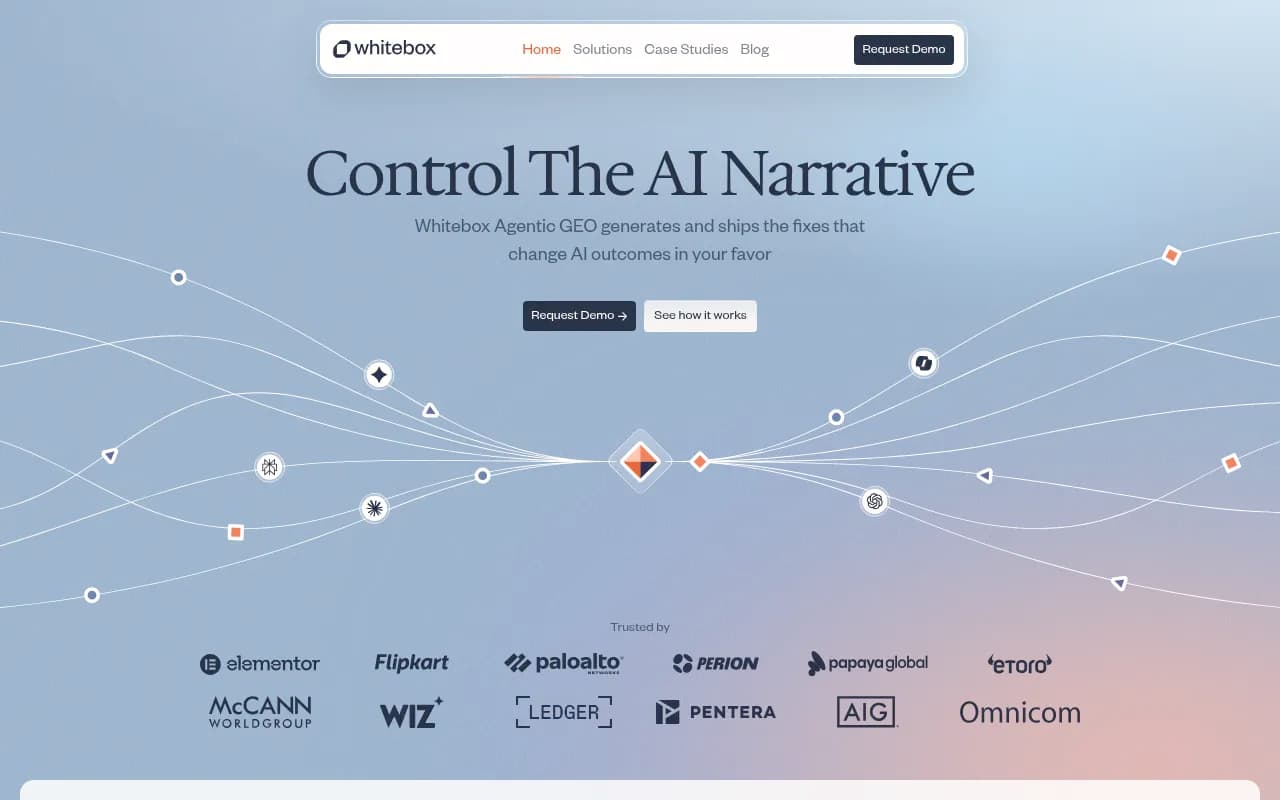
A growing group of newer tools claims to connect citations to publishing. I haven't verified pricing or depth for these, so treat this as a shortlist to demo, not a recommendation:

Tools that cover part of the loop
These are fine, sometimes excellent, at their piece. The catch is you stitch the rest together yourself.
Monitoring-first platforms
Profound, Peec AI, Otterly.AI and Ahrefs Brand Radar are strong on measurement. xSeek's own comparison notes that for Profound, pricing is custom and not public, and for Brand Radar the execution still sits with your team. Peec AI is a practical pick for multi-country prompt organization and reporting.




Otterly.AI is listed from $29/month in ReachLLM's roundup, which makes it a cheap way to get a baseline. Just plan for who writes the pages afterward.
Content optimization tools
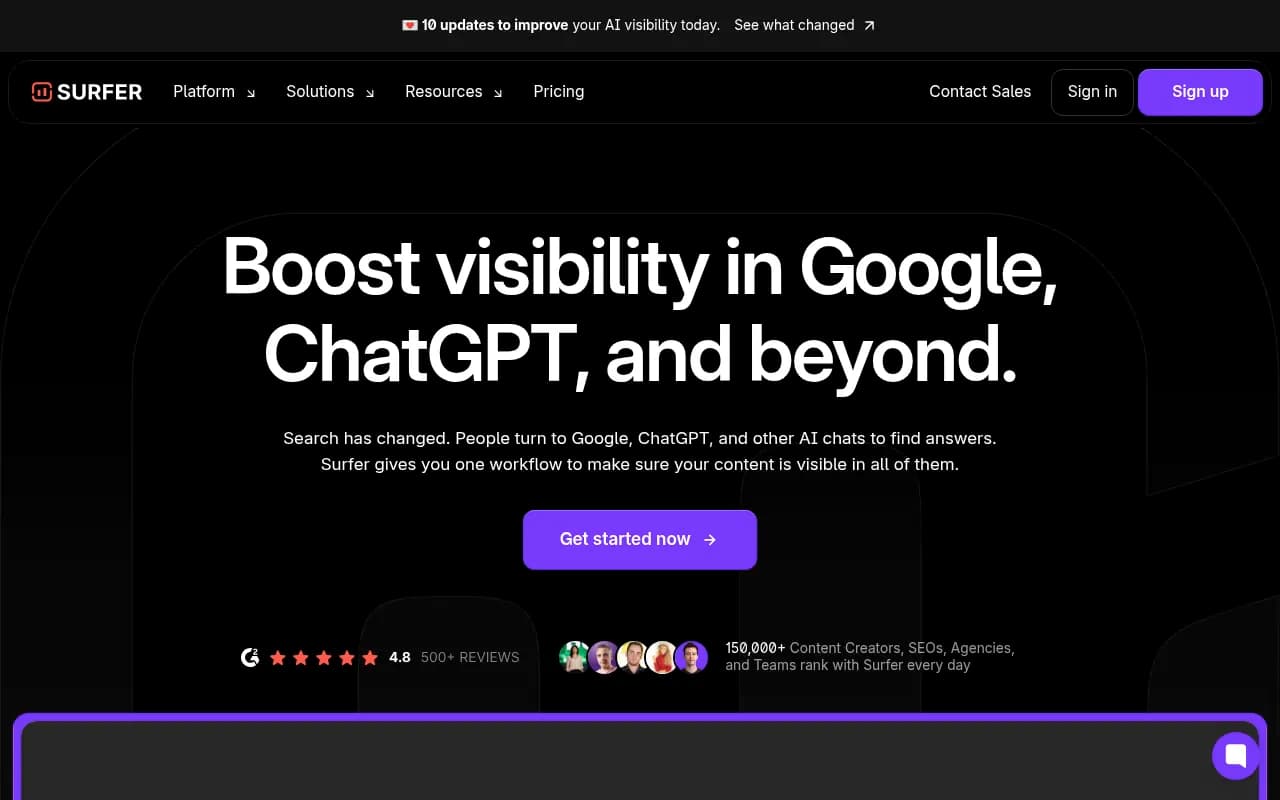
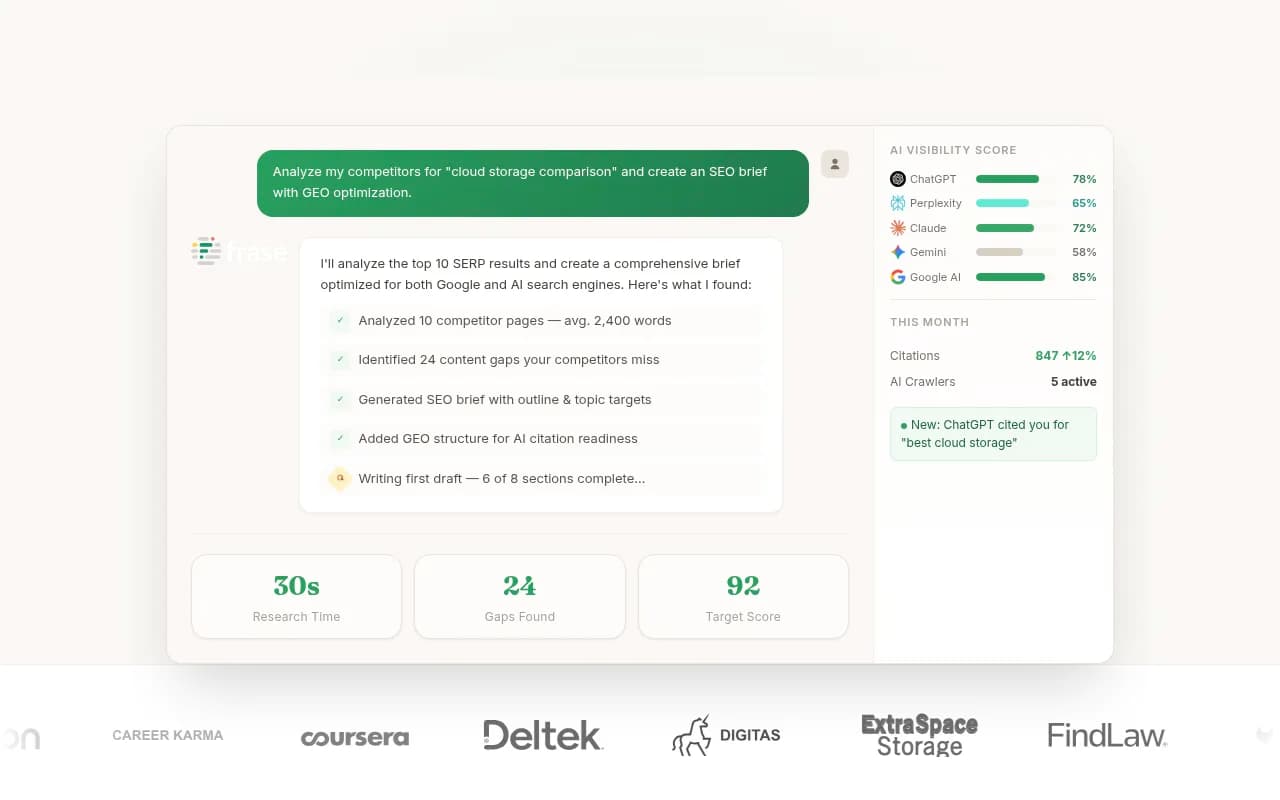
If your bottleneck is drafting and scoring, tools like Surfer SEO, Frase, Clearscope and AirOps handle writing and optimization well, but they don't tell you which prompts AI answers are missing or whether your page got cited.

Your existing SEO suite
Semrush and similar suites add AI visibility to an established workflow. Convenient if you're already paying, though fixed prompt sets and shallower AI-specific data are the usual trade-off.
Comparison table
| Tool | Find gap | Brief and write | Publish to CMS | Measure and refresh |
|---|---|---|---|---|
| Promptwatch | Content gap analysis, prompt volumes | Content Agent, Content Creation, Brand Book | WordPress, Webflow, Framer | Crawler logs, citations, AI traffic, Content Refresh, Action Board |
| xSeek | Source analysis, action plan | Article drafts | CMS connections | Tracking (depth unverified) |
| ReachLLM | Visibility tracking, audits | AI content | Managed execution | Vendor-described |
| Profound / Peec AI / Otterly.AI | Yes | No | No | Visibility trends only |
| Surfer / Frase / Clearscope | Limited | Yes | Varies | Limited AI-specific data |
| Semrush / Ahrefs Brand Radar | Yes, fixed prompt sets | No | No | Mentions and citations |
Vendor capability claims in the xSeek, ReachLLM and similar rows come from the vendors' own pages. Run a trial before committing.
How to choose by team type
Publishing weekly or more
You need the full chain. The cost of a gap between tools is a content queue that stalls at the hand-off. A platform that plans, drafts, publishes and then tracks the result removes the relay. This is the profile where something like Promptwatch's Business plan or xSeek's Growth tier is worth the money.
Small team, a few pages a month
A monitor plus a writing tool is plenty. Pair Otterly.AI or Peec AI with Surfer or Frase, and keep a spreadsheet of prompts you lost. Cheaper, and you control every word.
Agency managing multiple clients
Look for white-label reporting, multiple workspaces and per-client dashboards. Promptwatch's Agency plans (Kick-off $199/mo, Growth $399/mo, Scale $799/mo) cover that, but note they exclude the Content Agent and AEO articles, so execution on those plans runs through your own writers.
Already deep in an SEO suite
Start with the AI module you already own to get a baseline, and only add a dedicated platform once you can name the specific step the suite doesn't do.
A trial checklist
When you demo any of these, ask for proof on each link rather than a feature tour:
- Show me a gap and the brief it generated, in one click.
- Show me the draft against my brand rules. Does it use facts I supplied, or invent them?
- Publish to my staging CMS right now.
- Show me a page published last month and whether it was crawled, cited and clicked.
- Show me how an underperforming or decaying page gets flagged.
- Can I review and edit before anything goes live?
If a vendor can't do the last two, it's a monitoring tool with a writing feature attached.
Don't forget the free checks
Before paying for anything, a free scan of how ChatGPT, Gemini and Perplexity describe your brand and a crawler-access check will tell you whether your problem is content or plumbing. If AI crawlers can't read your site, no amount of publishing fixes it.
For wider shopping, the GEO software directory at bestgeosoftware.com lists the long tail of tools beyond the ones above.
The short version
Pick the tool by the last step it completes. If it ends at a dashboard, you've bought a report. If it ends at a published, tracked page that gets flagged for refresh around day 60, you've bought a workflow. For teams shipping content every week, that difference is the whole decision.