Key takeaways
- Most GEO platforms are monitoring dashboards first -- API access is an afterthought, and many tools either don't offer it at all or lock it behind enterprise pricing
- The platforms with the most useful APIs tend to be the ones with the richest underlying data: citation counts, prompt volumes, share-of-voice scores, and page-level tracking
- Building a custom workflow on top of a monitoring-only platform has a hard ceiling -- you can pull data out, but there's nothing to push back in
- Platforms that combine tracking with content generation and crawler log data (like Promptwatch) give you more to work with programmatically
- If you're an agency or enterprise team, API access isn't optional -- it's how you avoid rebuilding the same reports every month
Why API access matters for GEO in 2026
The GEO space has matured fast. Two years ago, most teams were happy just knowing whether their brand appeared in a ChatGPT response. Now, the questions are more specific: Which pages are being cited? By which model? For which prompts? How does that translate to traffic? And how do I get all of that into my existing BI stack without manually exporting CSVs every week?
That's where APIs come in. A good API turns a GEO platform from a dashboard you check occasionally into a data source that feeds your actual workflows -- custom client reports, Slack alerts when visibility drops, automated content briefs triggered by gap analysis, or attribution dashboards that connect AI citations to revenue.
The problem is that API access in this space is wildly inconsistent. Some platforms have robust, well-documented APIs. Others technically offer "API access" but it's limited to a handful of read-only endpoints with no useful data. And a surprising number of tools -- even well-funded ones -- have no API at all.
This guide breaks down what's actually available, what you can do with each platform's API, and which tools are genuinely built for workflow automation.
What to look for in a GEO platform API
Before comparing tools, it helps to define what "good API access" actually means in this context. There are a few dimensions worth evaluating:
Data richness: Can you pull citation counts, share-of-voice scores, prompt-level data, page-level tracking, and competitor comparisons? Or just a list of mentions?
Write access: Can you push data in -- like submitting new prompts to track, triggering content generation, or updating monitored entities? Read-only APIs are useful; read-write APIs are powerful.
Rate limits and reliability: Enterprise teams running nightly data syncs need predictable rate limits and uptime guarantees. A flaky API is worse than no API.
Documentation quality: This sounds obvious but it's genuinely rare. Well-documented APIs with SDKs, code examples, and sandbox environments save weeks of integration work.
Webhook support: Instead of polling for changes, webhooks push data to your systems when something happens -- a new citation, a visibility drop, a crawl event. Much more efficient for real-time workflows.
Integration ecosystem: Does the platform connect natively to tools like Looker Studio, Google Sheets, or Zapier? These reduce the need for custom API work entirely.
GEO platforms with notable API capabilities
Promptwatch
Promptwatch is one of the few GEO platforms that explicitly offers both an API and a Looker Studio integration as part of its standard plans. The API gives you access to the platform's core data: visibility scores, citation tracking across 10+ AI models, prompt-level performance, page-level citation data, and competitor comparisons.
What makes Promptwatch's API more useful than most is the depth of the underlying data. You're not just pulling "brand mentioned: yes/no" -- you're pulling prompt volumes, difficulty scores, query fan-outs, AI crawler log data, and traffic attribution metrics. That's a lot more to work with when building custom dashboards or automated reporting.
The Looker Studio integration is particularly practical for agencies. Instead of building a custom connector, you can pipe Promptwatch data directly into a client-facing dashboard in a few minutes. The API is available on Business and higher plans, with custom Enterprise options for teams that need higher rate limits or dedicated support.

Profound
Profound has positioned itself as an enterprise-grade AI visibility platform, and its API reflects that. It offers programmatic access to share-of-voice data, citation tracking, and competitive benchmarking. The documentation is reasonably thorough, and it's one of the more established options for teams that need to integrate GEO data into existing analytics infrastructure.
The trade-off is price -- Profound sits at the higher end of the market, and API access is typically part of enterprise packages. For large brands with existing data engineering resources, that's probably fine. For mid-market teams, the cost-to-value ratio is worth scrutinizing.

Semrush
Semrush has a mature, well-documented API that's been around for years. Its AI visibility features (primarily through the AI Toolkit and ContentShake) are newer additions, and the API coverage for those features is less complete than for its traditional SEO data. You can pull some AI Overview tracking data, but the prompt-level granularity and LLM-specific citation data you'd get from a dedicated GEO platform isn't there yet.
That said, if your team is already deeply integrated with the Semrush API for traditional SEO workflows, adding AI visibility data to the same pipeline has obvious appeal.
AthenaHQ
AthenaHQ offers API access for its AI visibility tracking data. It covers a solid range of AI models and provides share-of-voice metrics, but the platform is primarily monitoring-focused -- there's no content generation or optimization layer to expose via API. So what you can build on top of it is limited to reporting and alerting workflows, not end-to-end optimization pipelines.
Evertune
Evertune targets Fortune 500 brands and has enterprise API capabilities to match. It's one of the more sophisticated platforms for large-scale competitive intelligence across AI models. The API is built for teams with dedicated data engineering resources -- it's powerful but not particularly accessible for smaller teams or agencies without technical support.
LLMrefs
LLMrefs offers CSV exports and API access that make it practical for integrating into custom client dashboards. It's particularly strong on share-of-voice and citation metrics, and the API is reasonably well-documented for a relatively newer platform. Good option for agencies that need to white-label or customize their reporting.
Peec AI
Peec AI is a monitoring-focused tool with multi-language support. It has some export capabilities but its API offering is limited compared to the enterprise-tier platforms. Fine for teams that just need to pull visibility data into a spreadsheet, less useful for complex workflow automation.

Otterly.AI
Otterly.AI is one of the more affordable monitoring tools in the space. It doesn't offer a full API -- the platform is primarily dashboard-based with export functionality. If your workflow automation needs are basic (scheduled exports, manual data pulls), it works. If you need programmatic access to build custom integrations, it's not the right tool.

API capability comparison table
| Platform | API available | Data depth | Write access | Looker Studio / BI integration | Webhooks | Best for |
|---|---|---|---|---|---|---|
| Promptwatch | Yes (Business+) | High (citations, prompts, crawler logs, traffic) | Partial (content generation) | Yes (native) | Yes | Agencies, mid-market, enterprise |
| Profound | Yes (Enterprise) | High (SOV, citations, competitive) | Limited | Custom | Unknown | Enterprise brands |
| Semrush | Yes (mature) | Medium (AI features newer) | No | Yes | Limited | Teams already on Semrush |
| AthenaHQ | Yes | Medium (monitoring only) | No | Custom | No | Monitoring-focused teams |
| Evertune | Yes (Enterprise) | High | Limited | Custom | Unknown | Fortune 500 brands |
| LLMrefs | Yes | Medium-High | No | Custom | No | Agencies, reporting-focused |
| Peec AI | Limited | Low-Medium | No | No | No | Small teams, basic monitoring |
| Otterly.AI | No | Low | No | No | No | Budget monitoring |
What you can actually build
API access is only useful if you know what to build with it. Here are the workflows that make the most sense for different team types.
For agencies
The most common use case is automated client reporting. Instead of logging into each platform and exporting data manually, you pull citation counts, visibility scores, and prompt-level data via API and feed it into a Looker Studio template or a custom dashboard. Promptwatch's native Looker Studio integration cuts out most of the plumbing here.
A more sophisticated version: set up webhook alerts that notify account managers when a client's visibility drops below a threshold, or when a competitor gains significant share-of-voice for a tracked prompt cluster. That turns a passive monitoring tool into something closer to an active account management system.
For in-house SEO teams
The most valuable workflow is connecting AI visibility data to content production. The loop looks like this: API pulls prompt gap data (prompts where competitors are cited but you're not), that data feeds into a content brief template, and new content gets created and tracked. Platforms that expose both gap analysis data and content generation via API -- Promptwatch being the clearest example -- make this loop programmable.
A simpler version: pull page-level citation data into your analytics warehouse alongside traffic data. Now you can correlate AI citations with organic traffic and revenue, which is the attribution question most teams are still trying to answer manually.
For enterprise teams
Enterprise use cases tend to involve integrating GEO data into existing BI infrastructure -- Tableau, Power BI, BigQuery, whatever the organization already uses. That requires clean, well-documented APIs with reliable uptime and sensible rate limits. It also often requires custom data models that map AI visibility metrics to existing KPI frameworks.
The other enterprise use case is competitive intelligence at scale. Tracking your own visibility is table stakes; tracking how 10 competitors perform across 5 AI models for 500 prompts, and getting that data into a format your strategy team can actually use, requires serious API depth.
Automation tools that pair well with GEO APIs
Even if you're not a developer, you can build useful workflows by connecting GEO platform APIs to automation tools. A few worth knowing:
Zapier is the most accessible option -- if a GEO platform has a Zapier integration, you can build automations without writing any code. Promptwatch has Zapier support, which means you can trigger actions (Slack messages, spreadsheet updates, email alerts) based on visibility changes.
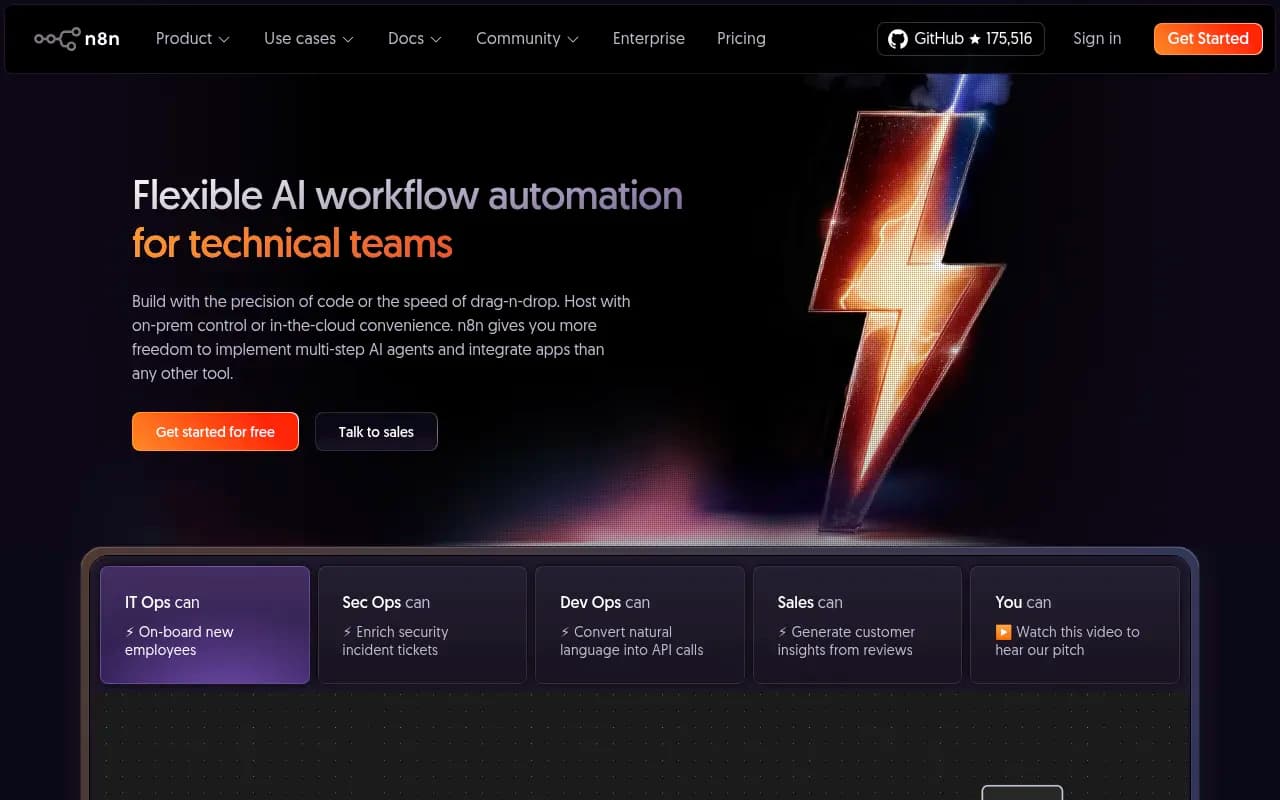
n8n is the open-source alternative for teams that want more control. It's more technical than Zapier but far more flexible, and you can self-host it. Good for agencies that want to build complex multi-step workflows without paying per-task fees.
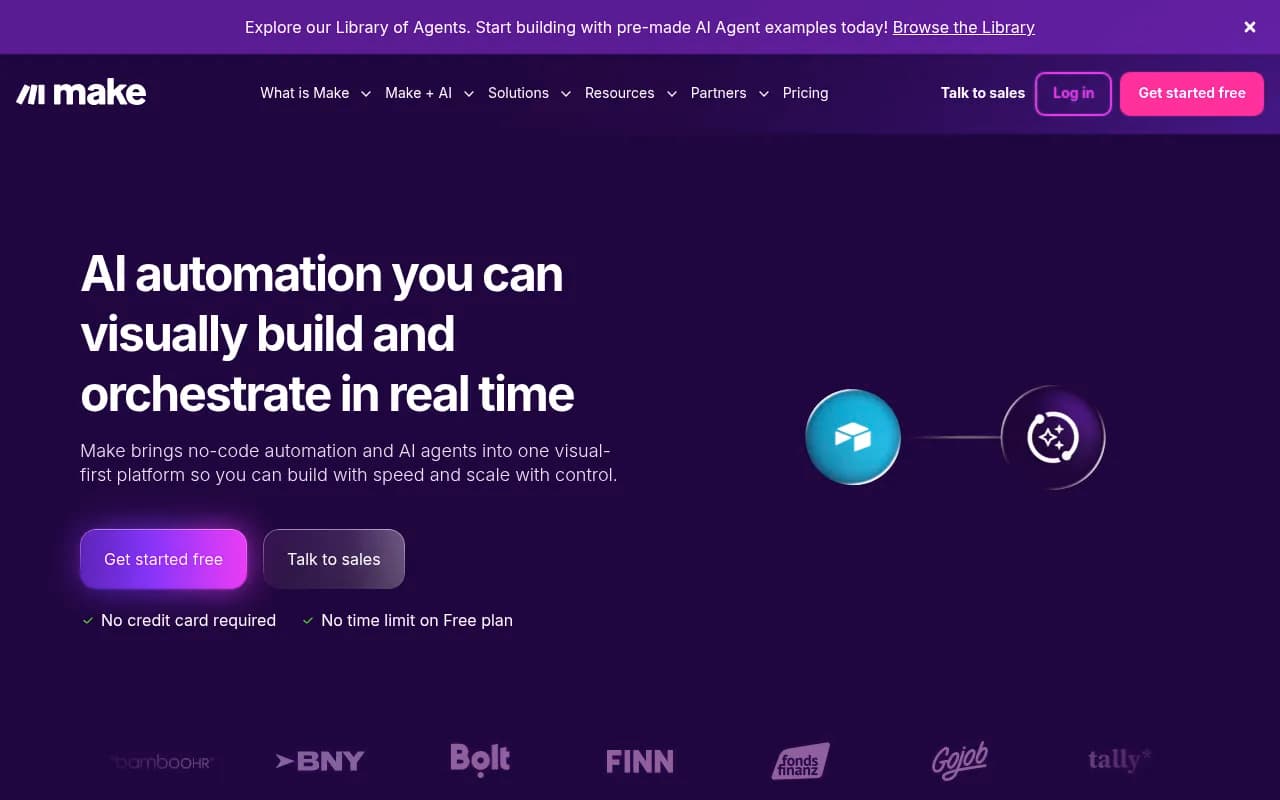
Make (formerly Integromat) sits between Zapier and n8n in terms of complexity and cost. Its visual workflow builder is genuinely good, and it handles more complex data transformations than Zapier without requiring code.
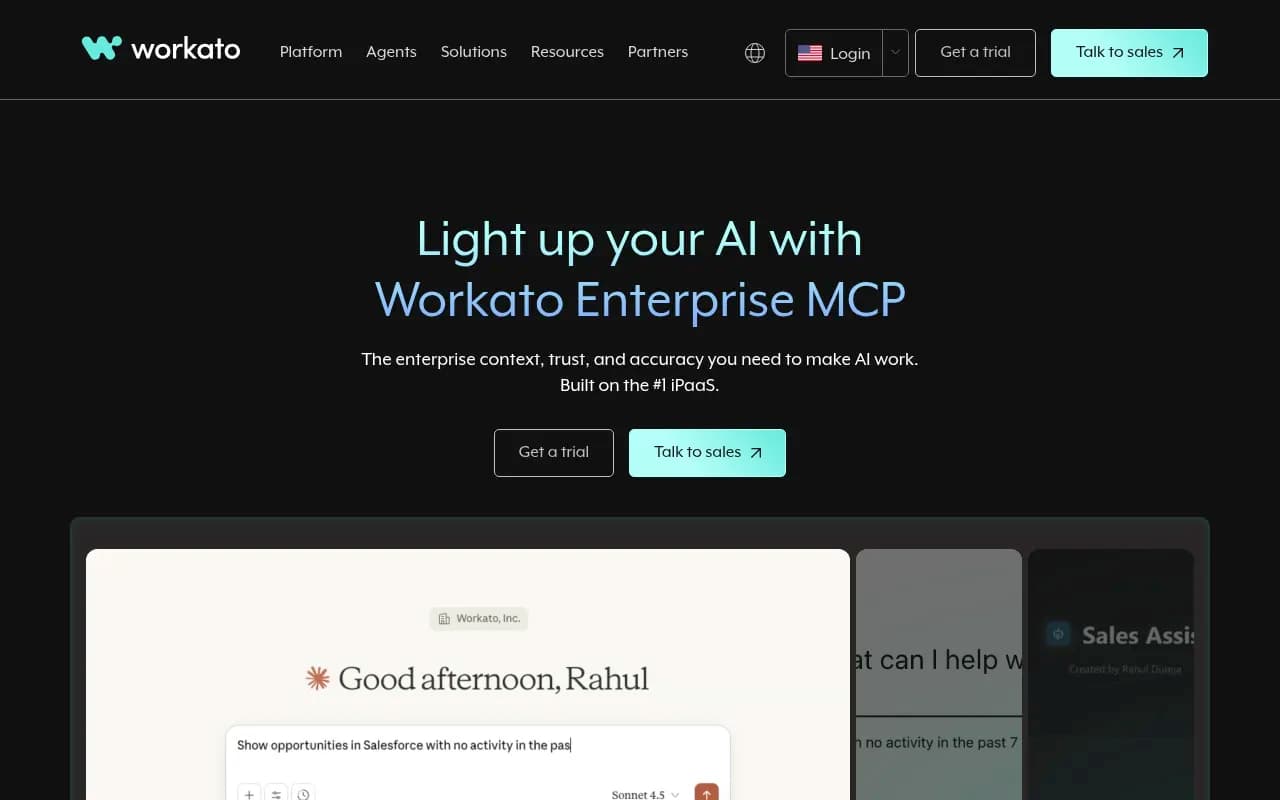
For teams that want to go deeper, Workato is the enterprise iPaaS option -- it connects to 1,400+ business applications and is built for the kind of complex, multi-system workflows that large organizations run.
The ceiling problem with monitoring-only APIs
Here's something worth being direct about: if a platform is monitoring-only, its API has a hard ceiling on usefulness. You can pull data out. You can build dashboards. You can set up alerts. But you can't close the loop.
The most valuable thing you can do with AI visibility data is act on it -- identify content gaps, create content that fills those gaps, and track whether that content gets cited. If a platform's API only exposes monitoring data, you're automating the "find out what's wrong" step but still doing the "fix it" step manually.
Platforms that expose content generation capabilities via API -- or that at least provide the gap analysis data in a structured format that feeds into content workflows -- are the ones worth building on. That's a relatively short list right now, but it's where the space is heading.
Promptwatch's approach of combining gap analysis, AI content generation, crawler log data, and traffic attribution in a single platform means there's more to automate across the full workflow, not just the reporting layer.
Practical advice before you start building
A few things that save headaches later:
Check the rate limits before you design your workflow. Some platforms impose aggressive limits that make nightly data syncs impractical without upgrading to a higher tier.
Test the API in a sandbox before committing to an integration. Documentation can be misleading -- the actual data structure and response times matter more than what the docs promise.
Think about data freshness. AI visibility data that's 24 hours old is fine for weekly reporting; it's not fine for real-time alerting. Make sure the platform's data refresh rate matches your use case.
Consider the total cost of ownership. A cheaper platform with a poorly documented API that requires significant engineering time to integrate can easily cost more than a pricier platform with a clean, well-supported API.
And finally: don't over-engineer it. For most teams, a Looker Studio integration or a weekly CSV export is genuinely sufficient. Custom API integrations make sense when the volume of data or the complexity of the workflow justifies the engineering investment. Start simple and add complexity only when you've hit a real constraint.
The GEO platform API space is still maturing. Most tools were built to be dashboards, and API access was added later -- often incompletely. The platforms that treat their API as a first-class product, not a checkbox feature, are the ones worth building on. That list is short but growing.