Key takeaways
- Over 50% of brands are invisible in AI search despite ranking well on Google -- because AI search works on completely different rules.
- There are three distinct stages to AI search growth: getting discovered (Stage 1), earning citations (Stage 2), and converting visibility into clicks and revenue (Stage 3).
- Most brands are stuck at Stage 0 -- not even on AI's radar -- and need to fix foundational content and structure before anything else works.
- Monitoring tools can show you where you stand, but growth requires closing content gaps and creating material AI models actually want to cite.
- The brands building AI visibility now are creating a compounding advantage that will be very hard to close later.
Why your Google rankings don't protect you anymore
Here's the uncomfortable reality: you can be on page one of Google and completely absent from every AI-generated answer. These are now two separate games.
Traditional SEO optimized for retrieval. You wanted to be findable when someone typed a query. AI search is different -- it optimizes for judgment. When someone asks ChatGPT "what's the best project management tool for remote teams?" or Perplexity "which accounting software do small businesses actually use?", the AI isn't browsing a list of results. It's deciding which brands are credible enough to mention. If it can't form a clear, confident understanding of your brand, it won't guess. It'll just leave you out.
A Pew Research study found that when Google users see an AI-generated summary, only 8% continue scrolling to click on standard search results. The search ends at the answer. That's not a future trend -- that's already happening at scale.
The brands that move now are building a compounding advantage. AI models are still in their learning phase for many industries -- actively identifying which sources demonstrate genuine expertise and deserve to be cited as authorities. The window is open. But it won't stay open.
This guide breaks down the three stages every brand needs to move through: from invisible, to cited, to clicked.
Stage 1: Getting discovered (becoming AI-readable)
Before you can be cited, you need to be understood. This is where most brands fail, and it's not because their content is bad -- it's because their content isn't structured for how AI models consume information.
What "AI-readable" actually means
AI models don't browse your site the way a human does. They process text, extract entities, and build a model of what your brand is, what problems it solves, who it serves, and why it's credible. If your content is vague, jargon-heavy, or buried under layers of navigation, the AI either misunderstands you or ignores you entirely.
To become AI-readable, your content needs to answer five questions clearly:
- Who are you and what do you do?
- What specific problem do you solve?
- Who is your target customer?
- Why should you be trusted (evidence, not claims)?
- When are you the right choice over alternatives?
These aren't marketing questions. They're the exact questions AI models are trying to answer when they decide whether to include you in a response.
Technical foundations that matter
A few technical factors determine whether AI crawlers can even access your content in the first place:
Crawlability: AI crawlers from ChatGPT, Perplexity, Claude, and others visit your site regularly. If your robots.txt blocks them, or your pages return errors, you're invisible by default. Tools that log AI crawler activity can show you exactly which pages are being read and which are being skipped.
Page structure: Clear headings, concise paragraphs, and well-organized content help AI extract meaning. Dense walls of text, heavy JavaScript rendering, and content locked behind login walls are all barriers.
Entity clarity: Your brand name, product names, and core use cases should appear consistently across your site, your About page, your schema markup, and your external mentions. Inconsistency confuses AI models trying to build a coherent picture of who you are.
Schema markup: FAQ schema, HowTo schema, and Article schema give AI models structured signals about your content's purpose. This isn't magic -- it's just making your intent explicit.
Tools that help at Stage 1
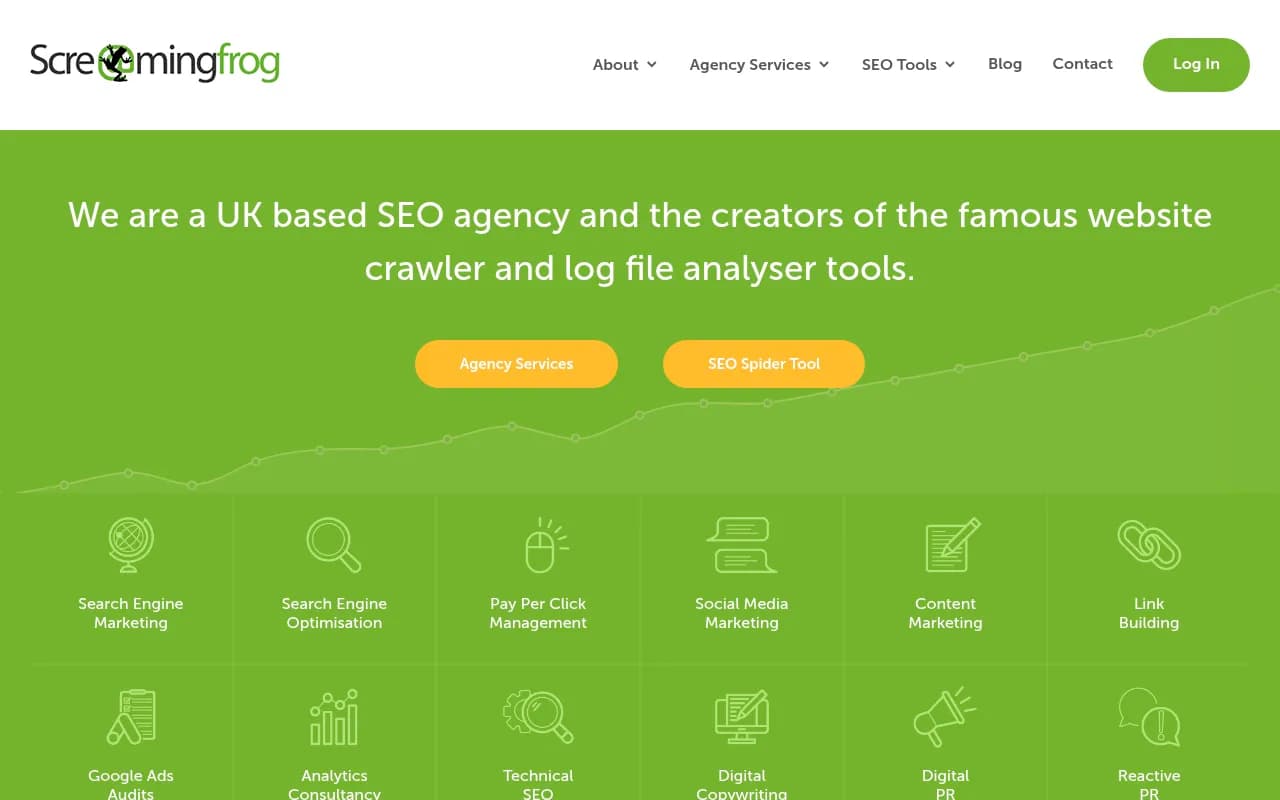
For technical crawl analysis, Screaming Frog remains one of the most reliable options for auditing site structure.
To specifically monitor which AI crawlers are visiting your site and what they're finding, you need something purpose-built for AI visibility. Promptwatch includes real-time AI crawler logs that show you exactly which pages ChatGPT, Claude, Perplexity, and others are reading -- and which pages they're hitting errors on.

Stage 2: Earning citations (becoming the answer)
Getting discovered is table stakes. The real goal is getting cited -- having your brand, content, or URL appear in AI-generated responses when someone asks a relevant question.
How AI models decide who to cite
Citations aren't random. AI models cite sources they've seen repeatedly, across multiple contexts, that consistently provide accurate and specific information. A few factors drive this:
Topical depth: A brand that has written thoroughly about a specific topic -- not just one blog post, but a cluster of interconnected content covering the topic from multiple angles -- signals expertise. AI models recognize topical authority.
Specificity over generality: "Here are some tips for email marketing" gets ignored. "Here's why email open rates drop after list sizes exceed 50,000 and how to segment to fix it" gets cited. Specific, opinionated, data-backed content is what AI models want to reference.
External mentions and third-party validation: AI models don't just read your website. They read Reddit threads, YouTube transcripts, review sites, industry publications, and forums. If your brand is discussed positively and specifically in those places, that reinforces your credibility. If you only exist on your own site, that's a problem.
Answer completeness: When someone asks a question, does your content actually answer it? Not partially, not with a call-to-action in the middle -- fully and directly. AI models cite content that resolves the query.
The content gap problem
Most brands have a citation problem that's really a content gap problem. There are questions your potential customers are asking AI right now -- questions where your competitors are getting cited and you're not -- because you simply don't have content that addresses those questions.
Finding those gaps is the first step. You need to know which prompts are driving AI responses in your category, which competitors are appearing for those prompts, and what content they have that you don't.
This is where the difference between monitoring tools and optimization tools becomes clear. A monitoring tool tells you your visibility score. An optimization tool shows you the specific gaps and helps you close them.
Promptwatch's Answer Gap Analysis does exactly this -- it surfaces the prompts where competitors are visible and you're not, then shows you the specific content topics your site is missing.
Creating content that earns citations
Once you know the gaps, you need to fill them with content that AI models actually want to cite. That means:
- Writing for the question, not the keyword. AI search is conversational. Your content should directly address the question a person would ask, not just include the keyword.
- Including real data, specific examples, and named sources. Vague content doesn't get cited. Specific claims with evidence do.
- Covering comparison angles. "X vs Y", "best X for [use case]", "alternatives to X" -- these are high-citation formats because they match how people actually prompt AI.
- Publishing on platforms AI models trust. Your own site matters, but so does being discussed on Reddit, mentioned in industry publications, and referenced in YouTube content. AI models aggregate from all of these.
Tools that help at Stage 2
For understanding what content to create and how to structure it for AI citation, a few tools are worth knowing:
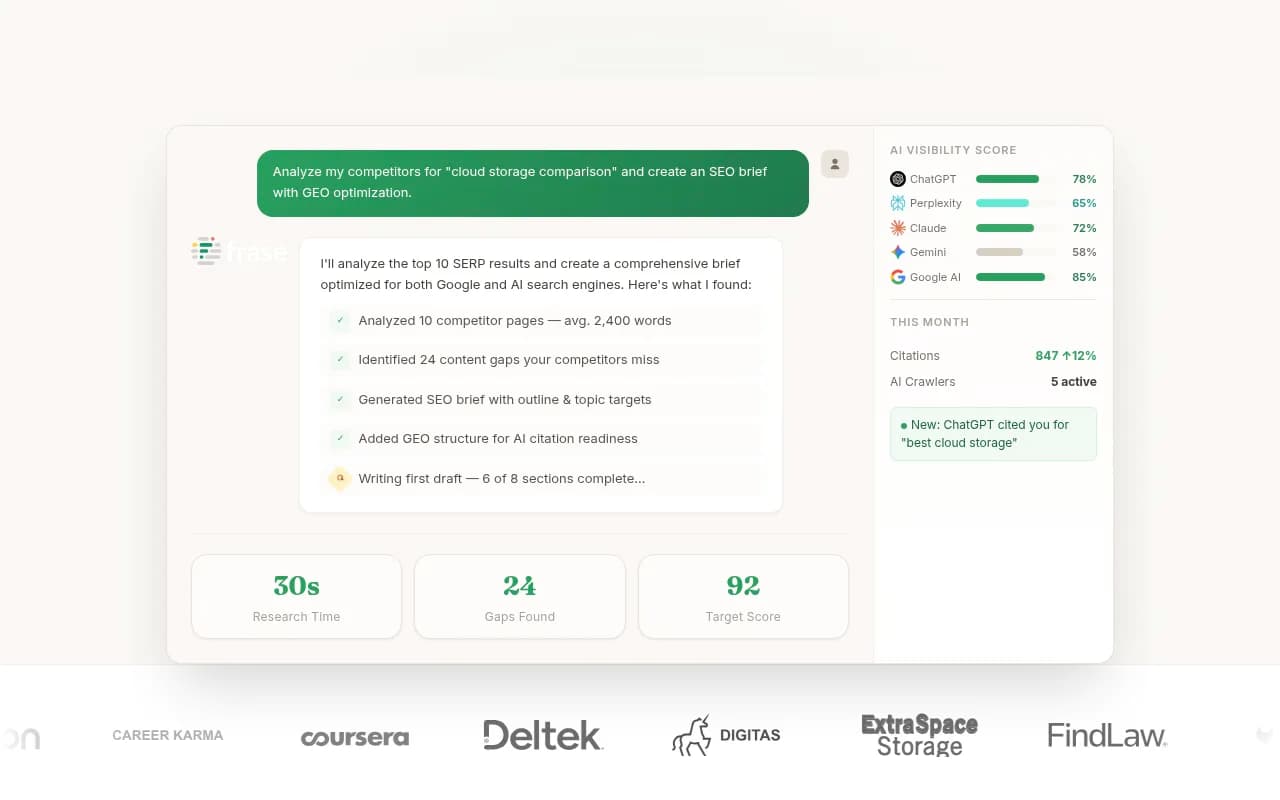
Frase helps research and structure content around the questions people actually ask.
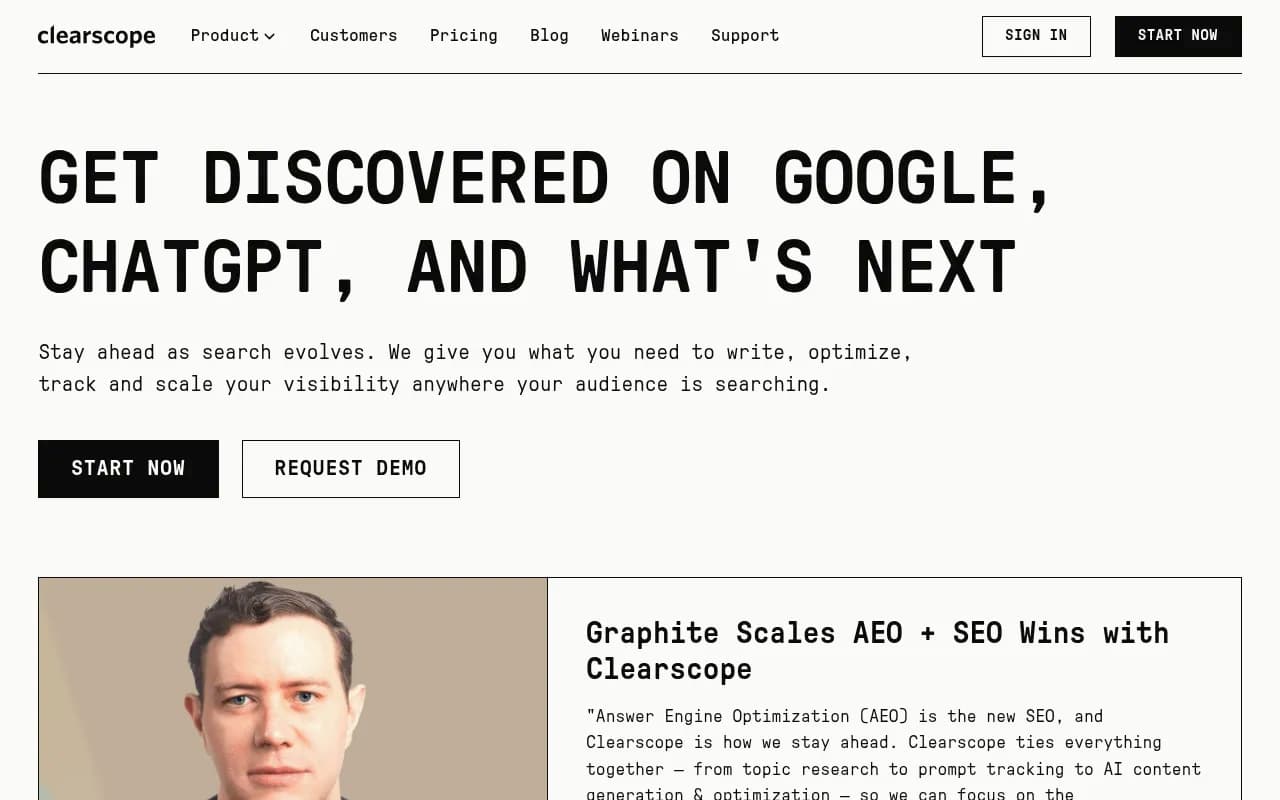
Clearscope optimizes content for both traditional SEO and AI search signals.
AthenaHQ tracks your visibility across multiple AI engines and shows where competitors are appearing.

For the full loop -- finding gaps, generating content grounded in citation data, and tracking results -- Promptwatch's built-in AI writing agent generates articles and comparisons based on 880M+ citations analyzed, prompt volumes, and competitor analysis. It's content built specifically to get cited, not generic SEO filler.
Stage 3: Converting visibility into clicks and revenue
Getting cited is great. But a citation that doesn't drive traffic or revenue is just vanity. Stage 3 is about closing the loop between AI visibility and business outcomes.
The zero-click reality
Here's the tension: AI search is inherently zero-click by design. The AI answers the question, and many users stop there. This is real, and it's not going away.
But "zero-click" doesn't mean "zero value." There are two ways AI citations drive real business impact even without a direct click:
Brand recall: When someone sees your brand cited in an AI response -- even if they don't click -- they remember it. The next time they're ready to buy, they search for you directly. This is brand building at scale, and it's measurable through direct traffic trends and branded search volume.
Click-through from citations: Not all AI responses are zero-click. Perplexity, Google AI Overviews, and other platforms regularly include source links. When your content is cited with a link, that's direct referral traffic. Tracking which AI platforms are actually sending clicks -- and which pages they're linking to -- is essential for understanding your real return.
Tracking AI-driven traffic
This is where most brands have a blind spot. They might know their overall traffic numbers, but they can't attribute what's coming from AI search versus traditional organic versus direct.
A few methods for closing this gap:
UTM parameters and referral analysis: Some AI platforms pass referral data. Setting up proper tracking lets you see traffic from Perplexity, ChatGPT, and others in your analytics.
Server log analysis: AI crawler visits and referral traffic both show up in server logs. Analyzing these gives you a ground-truth view of AI-driven activity that no third-party tool can fully replicate.
GSC integration: Google Search Console data, combined with AI visibility tracking, helps you separate AI Overview traffic from traditional organic traffic.
Page-level citation tracking: Knowing which specific pages are being cited by which AI models -- and how often -- lets you double down on what's working and fix what isn't.
The compounding effect
The brands that are winning at Stage 3 aren't just tracking clicks. They're using citation data to inform their content strategy, which generates more citations, which drives more traffic. It's a loop.
Publish content that fills a gap. Track whether AI models start citing it. See traffic attribution improve. Use that data to find the next gap. Repeat.
This is why the distinction between monitoring and optimization matters so much. Monitoring tells you your score. Optimization tells you what to do next.
Tools that help at Stage 3
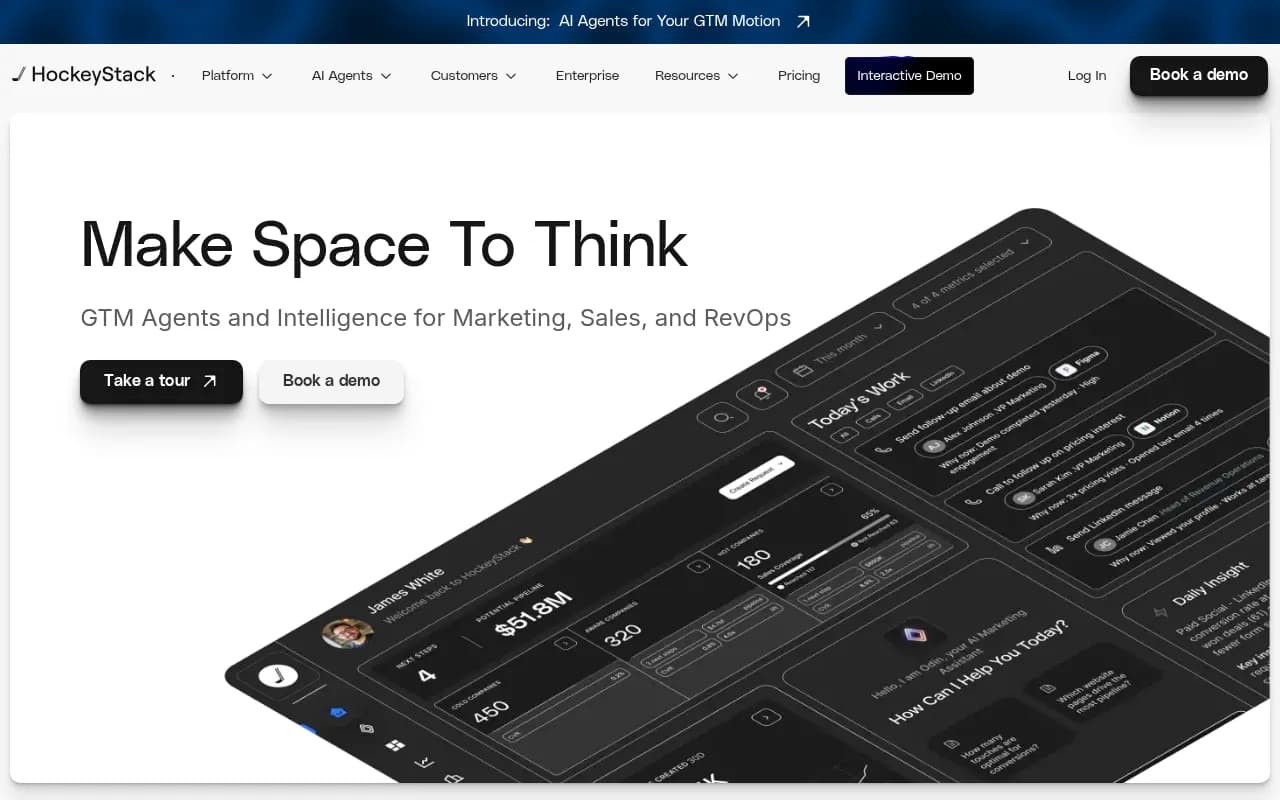
For attribution and traffic analysis, HockeyStack is strong for B2B teams connecting marketing activity to revenue.
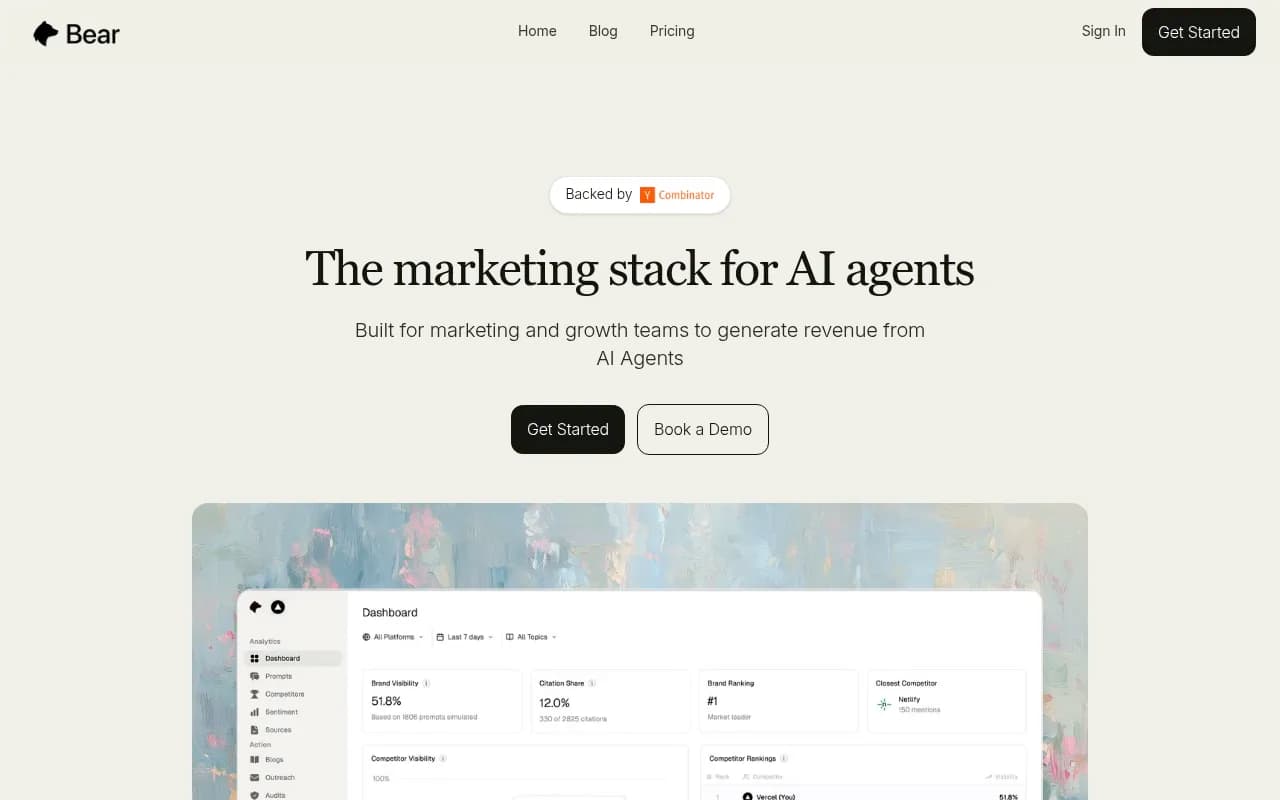
Bear AI specifically tracks and converts AI search traffic into revenue attribution.
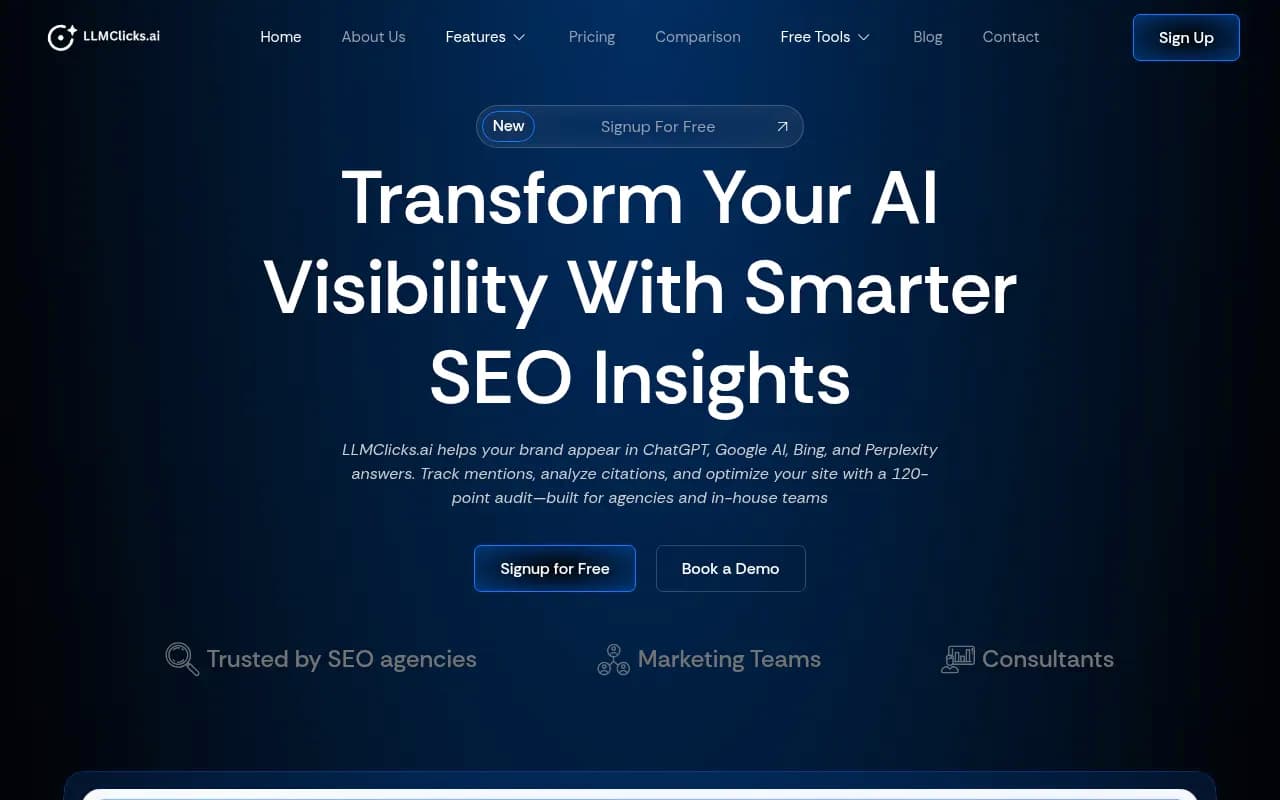
LLM Clicks focuses on citation tracking for AI-powered search, showing you which citations are actually driving traffic.
For the full picture -- page-level citation tracking, traffic attribution via code snippet or GSC integration, and visibility scores across 10 AI models -- Promptwatch's Business tier covers all of this in one place.
Putting the framework together
Here's how the three stages map to a practical workflow:
| Stage | Goal | Key activity | Signs you're there |
|---|---|---|---|
| Stage 1: Discovered | AI can read and understand you | Fix crawlability, clarify entity signals, structure content | AI crawlers visiting regularly, no major errors |
| Stage 2: Cited | AI includes you in answers | Close content gaps, build topical depth, earn external mentions | Brand appears in AI responses for target prompts |
| Stage 3: Clicked | Visibility drives real traffic | Track attribution, optimize cited pages, build the loop | Measurable referral traffic from AI platforms |
Most brands are at Stage 0 -- not even on the radar. The move from Stage 0 to Stage 1 is mostly technical and structural. Stage 1 to Stage 2 is a content problem. Stage 2 to Stage 3 is a measurement and optimization problem.
The good news is that none of these stages require a complete overhaul. A focused audit of your current content, a clear picture of where competitors are getting cited, and a systematic approach to filling gaps will move you forward faster than most brands expect.
Where to start
If you're not sure where you currently stand, the most useful first step is running a prompt audit: pick 10-15 questions your target customers are likely asking AI right now, and check whether your brand appears in the responses. Do this across ChatGPT, Perplexity, and Google AI Overviews at minimum.
What you'll almost certainly find is that competitors are appearing for prompts where you're absent -- and that the content driving those citations is specific, question-focused, and topically deep in ways your current content isn't.
That gap is your roadmap.
Tools like Promptwatch automate this audit at scale, tracking hundreds of prompts across 10 AI models and surfacing the specific gaps you need to close. But even a manual audit of 15 prompts will show you more than most brands currently know about their AI visibility.
The brands that start this process now -- building topical authority, earning citations, and tracking the results -- are creating an advantage that compounds over time. The ones that wait are going to find the gap much harder to close in 2027.