Key takeaways
- Ceyo AI is a solid entry-level AI visibility tracker starting at $49/mo, covering ChatGPT, Perplexity, Claude, and Gemini
- It's built around actionable recommendations and workflow integrations, which sets it apart from pure monitoring tools
- The main weaknesses: limited data depth compared to enterprise platforms, less proven citation database, and no AI content generation
- It works well for SMBs, small agencies, and marketing teams that want AI visibility without enterprise pricing or complexity
- If you need deeper analytics, content generation, or multi-model coverage beyond the big four, you'll likely outgrow it
What Ceyo AI actually is
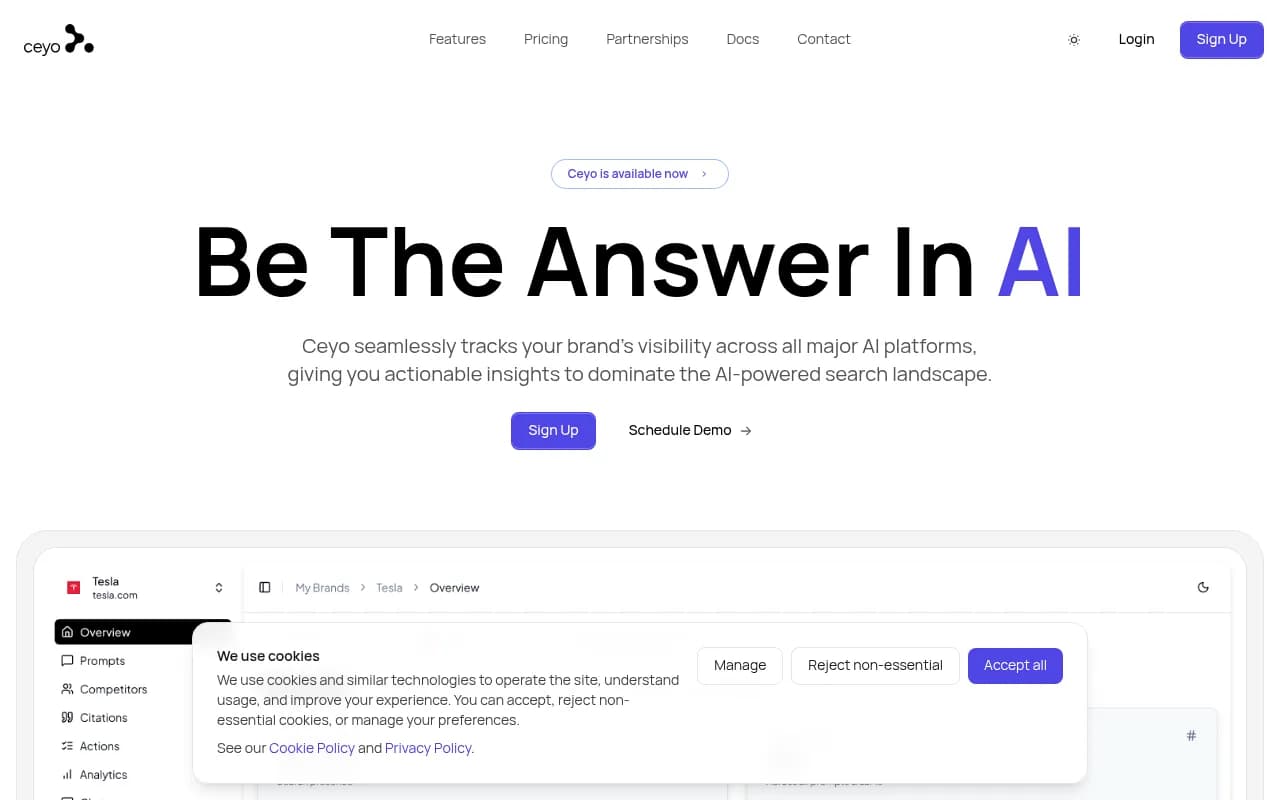
Ceyo launched in 2024 as a brand visibility tracker for AI search engines. The core idea is straightforward: as more people use ChatGPT, Perplexity, Claude, and Gemini to find products and services, brands need to know whether they're showing up in those answers -- and what those answers actually say.
Ceyo monitors how your brand appears in AI-generated responses, tracks sentiment, measures competitive share of voice, and sends alerts when your visibility changes. The pitch is that it's built for marketing teams and agencies that want this data without needing an enterprise contract.
Starting at $49/mo, it's one of the more affordable options in a category where pricing can quickly climb into four figures per month.
What Ceyo does well
Accessible pricing for smaller teams
This is probably Ceyo's biggest advantage. Most serious AI visibility platforms either have opaque pricing that starts at $1,000+/month (Profound, for example) or are enterprise-only products that require a sales call just to see a demo. Ceyo's transparent $49/mo entry point means a small marketing team or independent agency can actually try it without a procurement process.
That accessibility matters because AI visibility monitoring is still a relatively new practice. Teams are still figuring out whether they need it, how to use the data, and what to do with the insights. A lower-cost tool lets you experiment before committing.
Action-oriented design
A lot of AI visibility tools are essentially dashboards: they show you numbers and leave you to figure out what to do next. Ceyo's stated design philosophy is different -- it's built around recommendations and workflow integrations, not just data display.
This means when your visibility drops for a particular prompt cluster, Ceyo is supposed to surface what's happening and suggest what to do about it, rather than just showing you a red number. Whether the recommendations are consistently useful in practice depends on your specific use case, but the orientation toward action is the right instinct.
Modern UX and fast shipping
Being a newer platform has one real advantage: Ceyo isn't carrying years of legacy interface decisions. Users generally report a cleaner, more modern experience compared to older tools that have accumulated features over time. The team also ships updates quickly, which matters in a category where the underlying AI models (and how they cite sources) are changing constantly.
Core model coverage
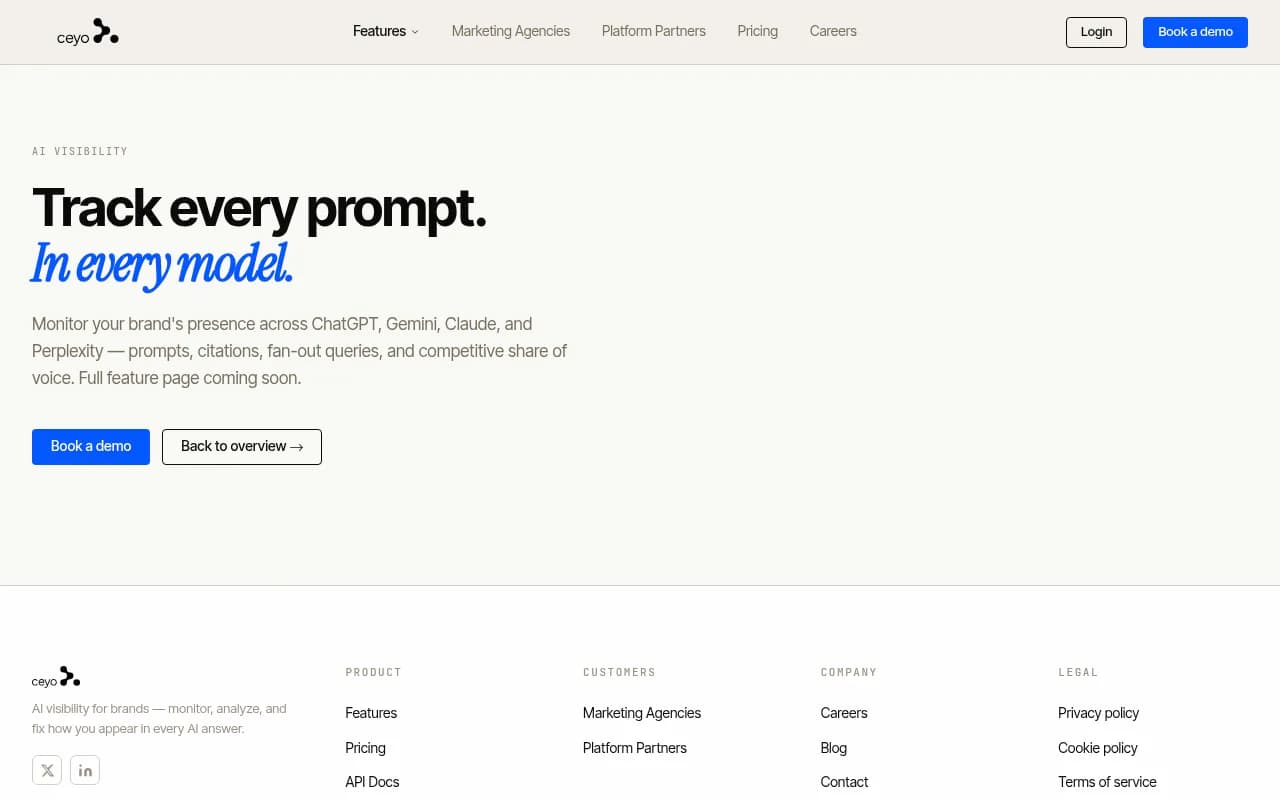
Ceyo covers the four models that account for the vast majority of AI search traffic: ChatGPT, Perplexity, Claude, and Gemini. For most brands, this is where your audience actually is. You're not missing meaningful volume by not tracking DeepSeek or Mistral at this stage -- though that calculus may shift.
Where Ceyo falls short
Data depth is less proven
Ceyo is a 2024 platform. That means its citation database, prompt volume estimates, and historical data are all relatively shallow compared to platforms that have been indexing AI responses for longer. When you're trying to understand which prompts matter most, or how your visibility has trended over the past year, that history gap shows.
Platforms like Promptwatch have processed over 1.1 billion citations and prompts, which gives meaningfully different signal quality when you're trying to prioritize which content gaps to close first.

No built-in content generation
Ceyo can tell you where you're not showing up. It can't help you fix that. There's no built-in content writing capability, no AI-assisted article generation, and no content gap analysis that connects "you're invisible for this prompt cluster" to "here's the article you need to write."
For teams that want a full workflow -- find the gap, create the content, track the result -- Ceyo covers only the first step. You'd need to layer in separate content tools, which adds friction and cost.
Limited model coverage compared to full-stack platforms
Four models is a reasonable starting point, but the AI search landscape now includes Google AI Overviews, Google AI Mode, Grok, DeepSeek, Copilot, Meta AI, and Mistral. Some of these are niche today; some (Google AI Mode in particular) are becoming significant traffic sources. Platforms with broader coverage give you a more complete picture.
No crawler log monitoring
One of the more underrated capabilities in this category is seeing which AI crawlers are actually visiting your site, which pages they're reading, and how often they return. This tells you whether AI models can even find your content -- a prerequisite for being cited. Ceyo doesn't offer this. It's a gap that matters more as you get serious about optimization.
Enterprise teams will hit a ceiling
Ceyo is clearly built for SMBs and agencies. If you're managing multiple brands, need SOC 2 compliance, want advanced API access, or need to run visibility analysis across dozens of markets and languages, you'll run into limits. This isn't a criticism -- it's just an honest description of who the product is for.
How Ceyo compares to the main alternatives
Here's a quick comparison of Ceyo against the tools you're most likely to be evaluating alongside it:
| Tool | Starting price | Content generation | Crawler logs | Models covered | Best for |
|---|---|---|---|---|---|
| Ceyo AI | $49/mo | No | No | 4 | SMBs, small agencies |
| Promptwatch | $99/mo | Yes | Yes (Professional+) | 10+ | Marketing teams, agencies, brands |
| Profound | ~$1,000+/mo | No | No | 5+ | Enterprise |
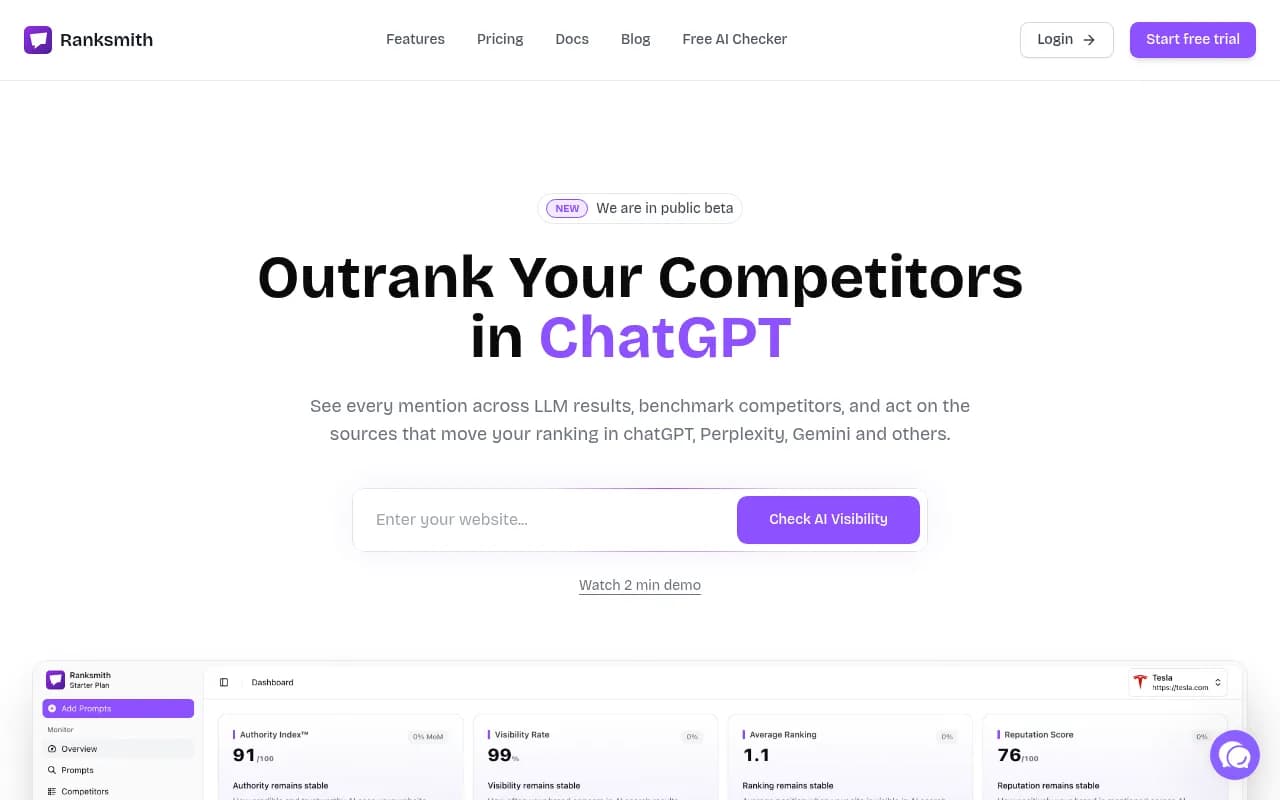
| Otterly.AI | ~$29/mo | No | No | 4-5 | Budget monitoring |
| Peec AI | ~$49/mo | No | No | 4-5 | Multi-language monitoring |
| AthenaHQ | Custom | No | No | 8+ | Mid-market monitoring |




The pattern is clear: Ceyo sits in a middle tier. It's more action-oriented than pure monitoring tools like Otterly or Peec, but it doesn't close the loop the way platforms with content generation do. And it's dramatically cheaper than enterprise options like Profound, which makes it a sensible starting point for teams that aren't ready to commit to a larger budget.
When Ceyo makes sense
Ceyo is a reasonable choice if:
- You're new to AI visibility monitoring and want to understand the space before committing to a larger platform
- Your budget is under $100/mo and you need something functional, not just a toy
- You're an agency managing a handful of clients who want basic AI visibility reporting
- Your brand primarily cares about ChatGPT and Perplexity, where most AI search traffic currently concentrates
- You have a separate content team that can act on the gaps Ceyo surfaces -- you don't need the platform to do that work for you
When to switch (or skip it entirely)
Ceyo starts to feel limiting when:
- You need to understand why you're not being cited, not just that you're not being cited. Prompt difficulty scores, query fan-outs, and citation source analysis matter here.
- You want to close the loop between visibility data and content production. If your team is spending hours manually translating "we're invisible for this prompt" into a content brief, that's a workflow problem a more integrated platform solves.
- You're tracking more than a handful of brands or need multi-language, multi-region monitoring at scale.
- You need to show ROI. Without traffic attribution -- connecting AI citations to actual site visits and conversions -- it's hard to justify the monitoring spend to leadership.
- You want to see AI crawler activity on your own site. Knowing that Perplexity crawled your homepage three times last week but never touched your product pages is genuinely useful information.
For teams that have hit these walls, the next logical step is a platform that covers the full cycle. Promptwatch is worth evaluating here -- it covers 10+ models, includes built-in content generation grounded in citation data, and has crawler log monitoring that most competitors lack. The jump from $49 to $99/mo is modest given the additional capability.
Alternatives worth considering
Depending on what specifically frustrates you about Ceyo (or what you're looking for before you even try it), a few other tools are worth a look:
If you want something similarly priced but with different strengths:
If you want deeper analytics without going full enterprise:
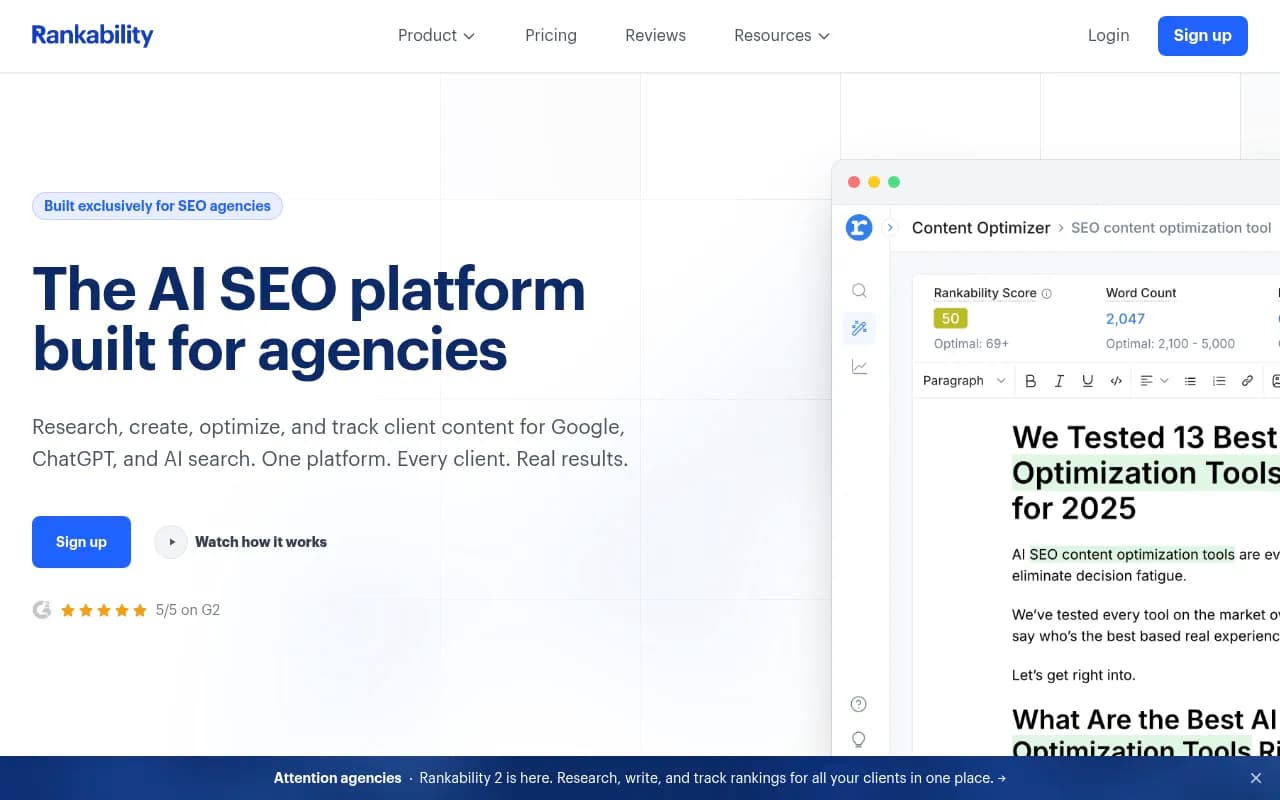
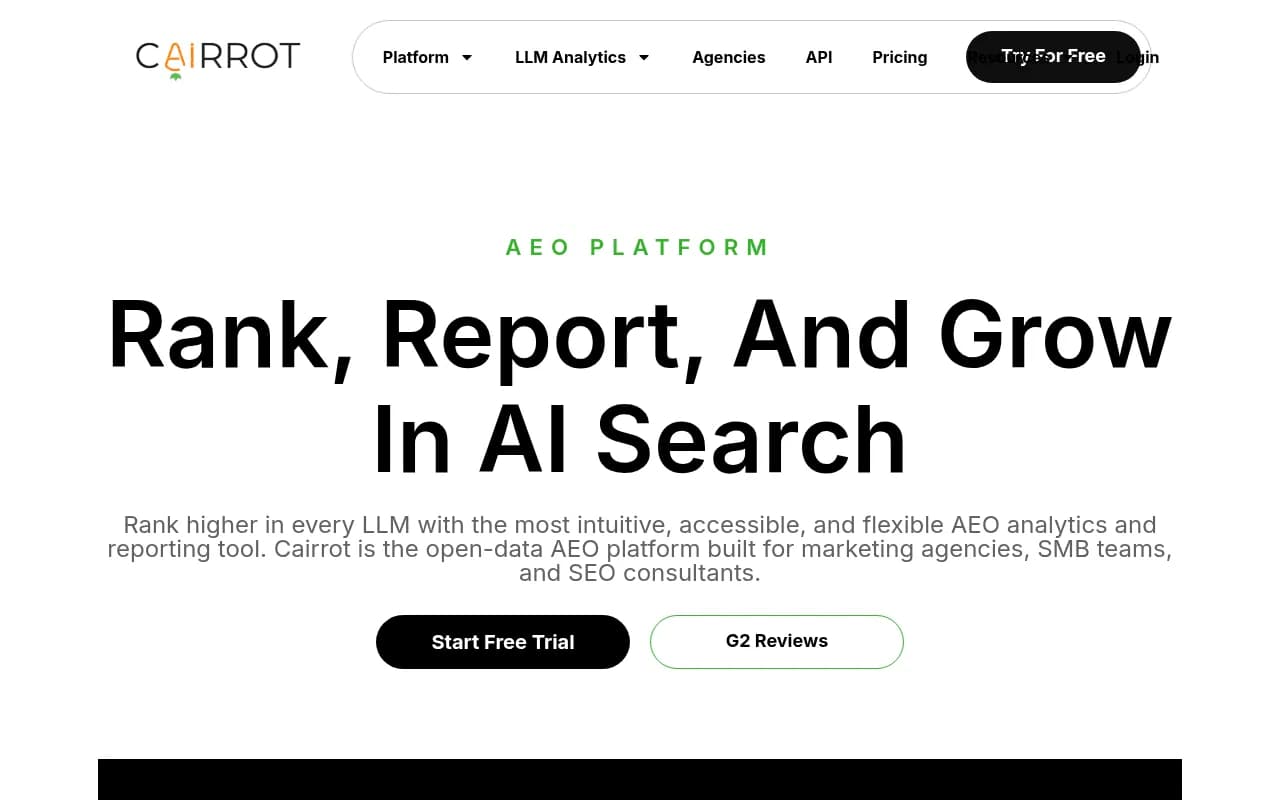
If you're an agency managing multiple clients:
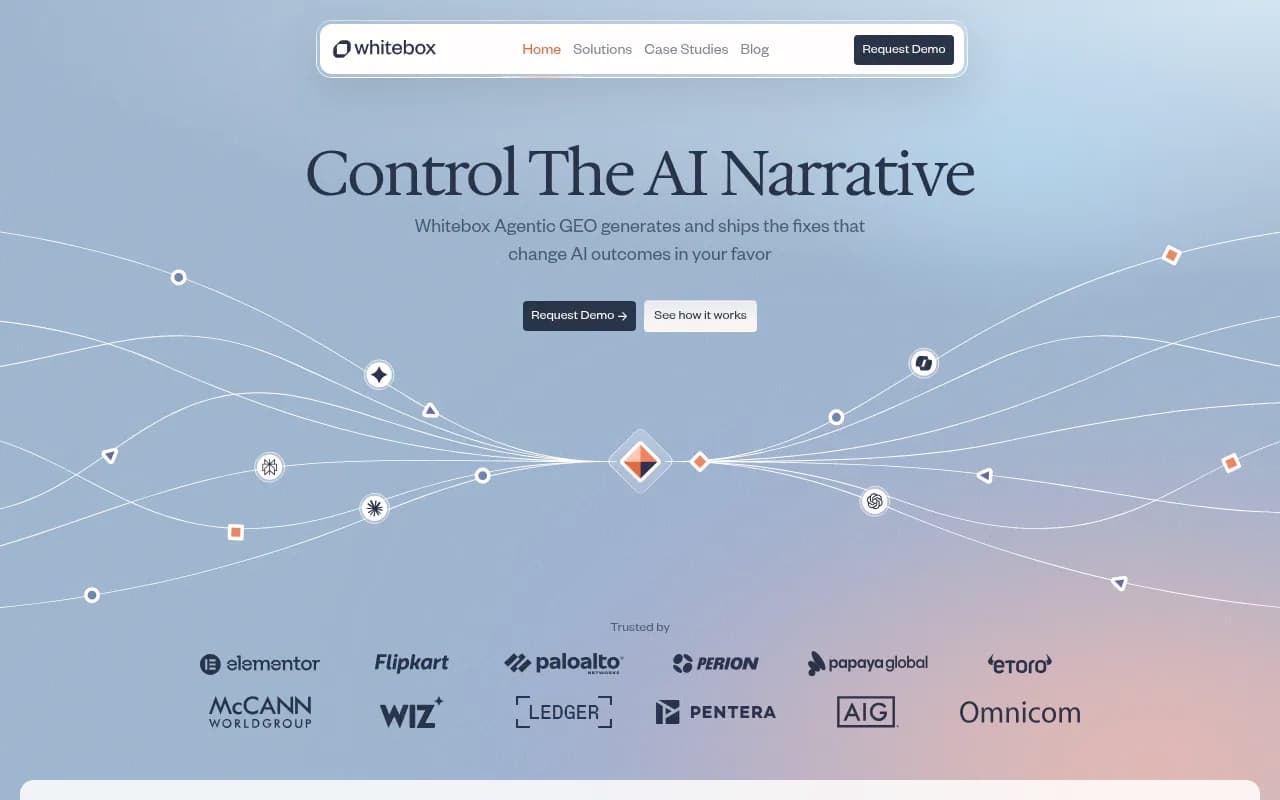
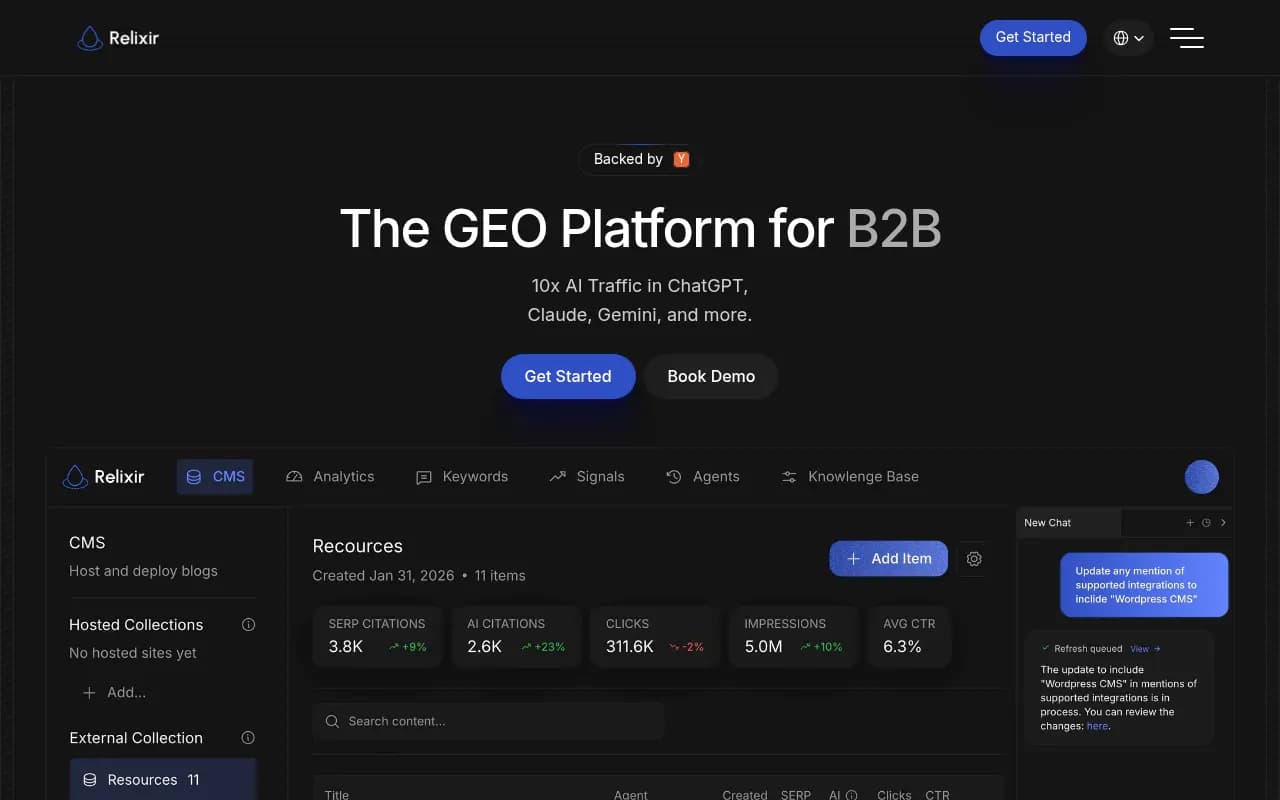
If you want the full optimization loop (monitor + create + track):
The broader context: why this category matters in 2026
AI search isn't a future trend anymore. ChatGPT, Perplexity, and Google AI Mode are already changing how people find products, services, and information. The brands that show up in AI-generated answers are getting traffic and consideration that brands invisible to those systems simply aren't.
The challenge is that traditional SEO metrics don't capture this. You can rank #1 on Google and still be completely absent from ChatGPT's recommendations for the same query. Monitoring tools like Ceyo exist precisely because that gap is real and growing.
What's less settled is what to do about it. Most teams are still in the "measure it" phase. The more mature approach -- and where the category is heading -- is treating AI visibility like any other marketing channel: measure it, find the gaps, create content to fill them, and track whether it worked. Ceyo covers the first step. Whether that's enough depends on where your team is in that journey.
Final verdict
Ceyo AI is a legitimate product at a fair price. It does what it says: monitors your brand's presence in the major AI models, surfaces competitive data, and gives you a starting point for understanding your AI visibility. For a team that's just getting started with this, $49/mo is a reasonable way to learn.
The ceiling is real, though. If you need to act on what you find -- and eventually you will -- you'll need either a more capable platform or a collection of separate tools to fill the gaps. That's not a knock on Ceyo specifically; it's just an honest description of where the product sits in the market right now.
Start there if the price fits. Move on when the gaps start to cost you more than the upgrade would.