Key takeaways
- Searchable covers basic AI visibility monitoring but lacks content generation, crawler logs, and actionable optimization -- the things solo marketers actually need.
- The best alternatives in 2026 don't just show you where you're invisible; they help you do something about it.
- Budget matters when you're a team of one. Several strong options start under $100/month.
- If you want a single platform that monitors, finds content gaps, generates articles, and tracks results, Promptwatch is the most complete option at a price point solo marketers can justify.
- For pure monitoring on a shoestring, Otterly.AI and Peec AI are solid starting points -- just know their ceilings.
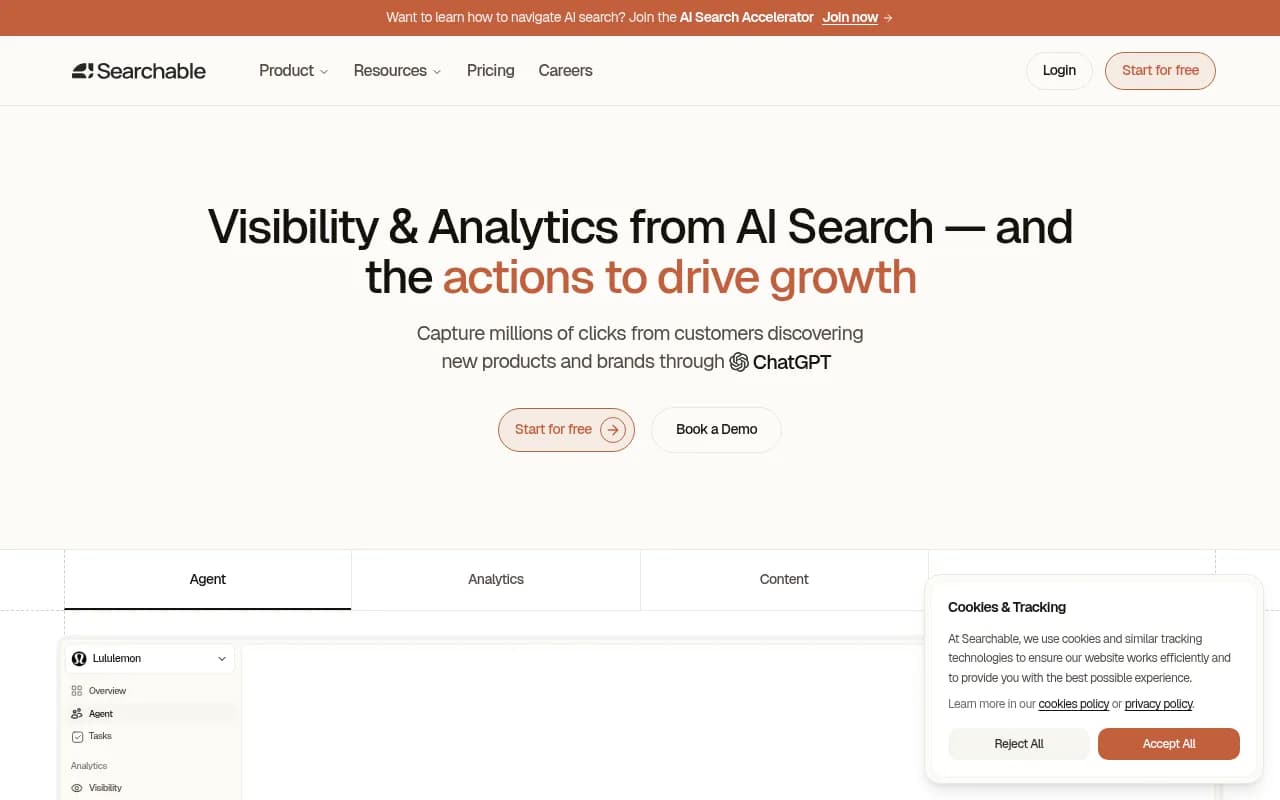
If you've been using Searchable and started wondering whether you're getting enough for your money, you're not alone. The platform does what it says: it monitors how your brand appears in AI search engines. But for a solo marketer wearing five hats, "monitoring" is only half the job. You need to know what to do with that data.
This guide walks through the best Searchable alternatives in 2026, with a focus on tools that are actually affordable and actually help you take action -- not just stare at charts.
Why solo marketers need more than monitoring
The AI search landscape shifted fast. ChatGPT, Perplexity, Claude, and Google's AI Overviews now answer questions that used to send users to your website. If your brand isn't being cited in those answers, you're losing traffic you never knew you had.
Monitoring tools tell you the score. But solo marketers don't have a team to translate data into content briefs, write articles, fix technical issues, and track whether any of it worked. You need a tool that closes that loop -- or at least gets you most of the way there.
The gap between "monitoring-only" and "full optimization" is where most Searchable alternatives fall. A few of them actually bridge it.
What to look for in a Searchable alternative
Before diving into specific tools, here's what actually matters for a solo marketer evaluating AI visibility platforms:
- Content gap analysis: Can the tool tell you which prompts your competitors rank for that you don't? This is the most actionable insight you can get.
- Built-in content generation: Writing new articles to close those gaps takes time. A tool that generates drafts from real citation data saves hours.
- Crawler logs: Knowing which AI bots are visiting your site (and which pages they're ignoring) helps you fix indexing problems before they become visibility problems.
- Prompt volume and difficulty: Not all prompts are worth chasing. Tools that score prompts by volume and winability help you prioritize.
- Price: Solo marketers don't have enterprise budgets. Anything over $300/month needs to deliver serious ROI to justify it.
- Coverage: Does it monitor ChatGPT, Perplexity, Claude, Gemini, and Google AI Overviews at minimum?
The best Searchable alternatives in 2026
1. Promptwatch -- best overall for solo marketers who want to actually optimize
Most AI visibility tools show you a dashboard and leave you to figure out the rest. Promptwatch is built around a different idea: find the gap, fix the gap, track the result.
The Answer Gap Analysis feature shows you exactly which prompts your competitors appear in that you don't -- not just a vague "you're missing coverage here" message, but the specific questions AI models are answering without citing you. From there, the built-in AI writing agent generates articles grounded in real citation data from over 880 million citations analyzed. These aren't generic SEO posts; they're written to get cited by ChatGPT, Claude, and Perplexity specifically.
For a solo marketer, that workflow -- identify gap, generate content, publish, track results -- is genuinely useful. You don't need a content team to execute it.
The Essential plan at $99/month covers one site, 50 prompts, and 5 articles per month. That's enough to run a real optimization program without breaking the bank. The Professional plan at $249/month adds crawler logs, which show you exactly which AI bots are hitting your pages and which errors they're encountering -- a feature most competitors don't offer at all.
Promptwatch also monitors 10 AI models: ChatGPT, Perplexity, Claude, Gemini, Google AI Overviews, Google AI Mode, Grok, DeepSeek, Copilot, and Meta AI. That's broader coverage than most tools in this price range.

2. Otterly.AI -- best for pure monitoring on a tight budget
If your main need is tracking brand mentions across AI models and you don't need content generation, Otterly.AI is one of the most affordable options available. It covers the major platforms, gives you share-of-voice data, and doesn't require a significant monthly commitment.
The honest limitation: it stops at monitoring. There's no content gap analysis, no writing tools, no crawler logs. For a solo marketer who already has a content workflow and just needs visibility data to inform it, that's fine. For someone who needs the full loop, it'll leave you doing a lot of manual work.

3. Peec AI -- best for multi-language monitoring
Peec AI is a solid monitoring tool with one standout feature: multi-language support. If you're marketing in more than one language or targeting audiences in different countries, Peec AI handles that better than most tools at its price point.
Like Otterly.AI, it's primarily a monitoring platform. You'll get brand mention tracking, competitor comparisons, and prompt-level visibility data. What you won't get is content generation, crawler logs, or deep prompt intelligence. It's a good fit for solo marketers with international audiences who need visibility data without a big budget.

4. SE Visible -- best for marketers already using SE Ranking
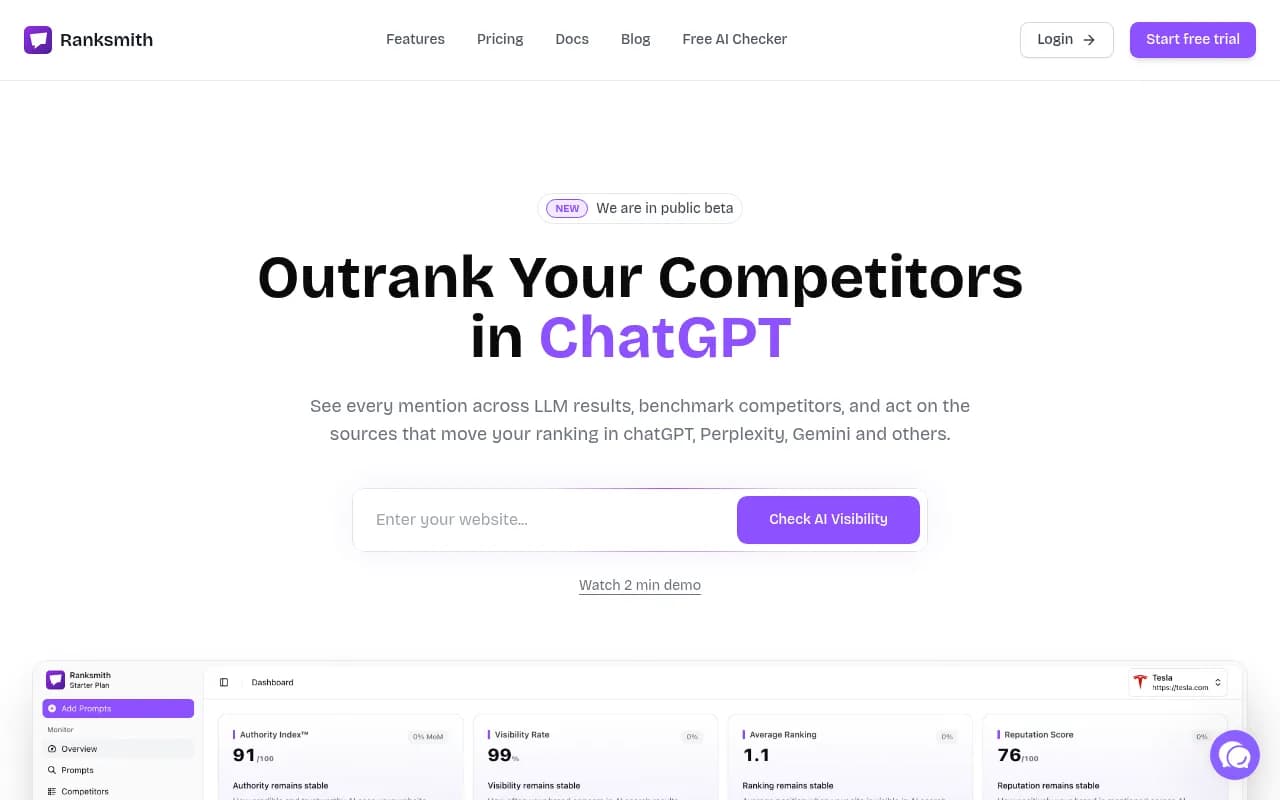
SE Visible is SE Ranking's dedicated AI visibility tracker. If you're already paying for SE Ranking's broader SEO platform, adding AI visibility tracking through SE Visible makes a lot of sense -- you get a unified view of traditional and AI search performance without adding another tool to your stack.
The interface is clean and approachable, which matters when you're working alone and don't have time to learn a complex new system. Coverage includes the major AI models, and the data integrates naturally with SE Ranking's keyword and ranking data.
The limitation is that it's still primarily a monitoring and reporting tool. It won't generate content for you or tell you which specific articles to write.
5. Ranksmith -- best for actionable insights without the enterprise price tag
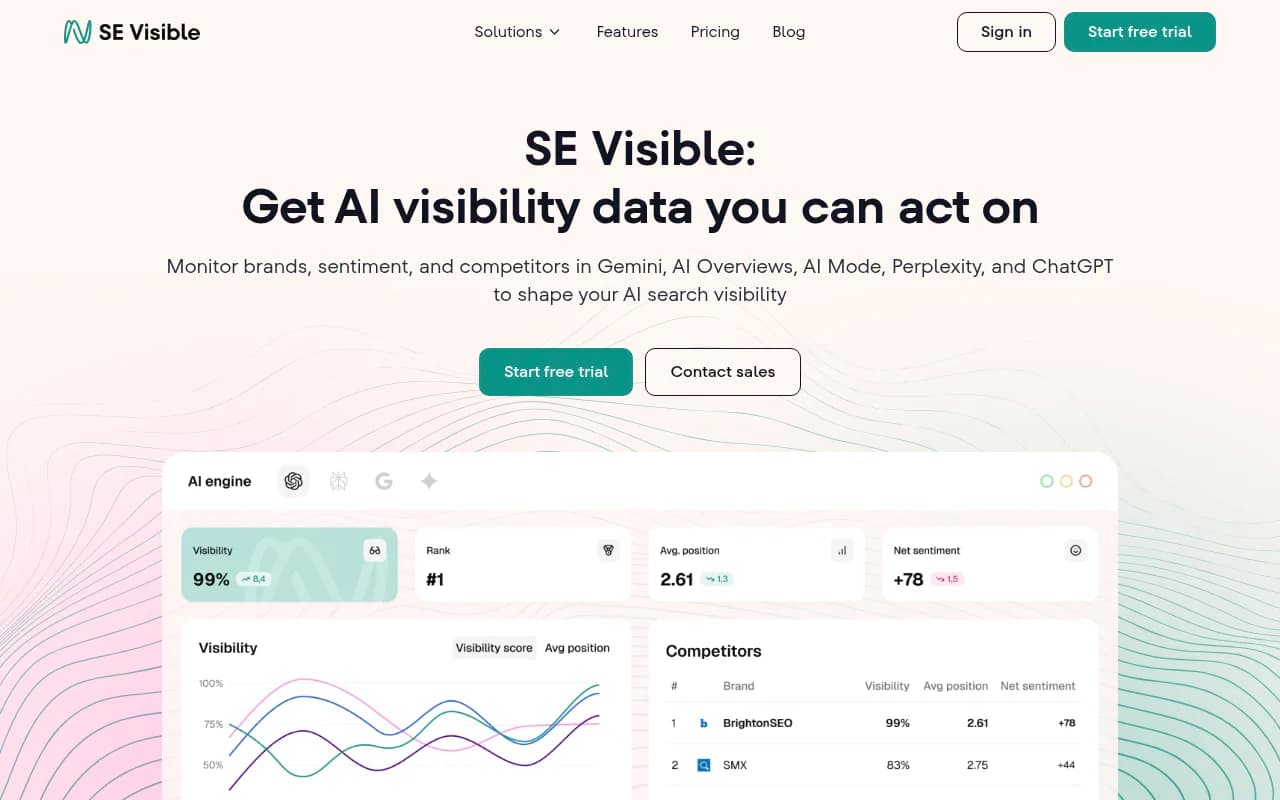
Ranksmith positions itself around actionability rather than raw data volume. The interface is built to surface specific recommendations rather than overwhelming you with metrics. For a solo marketer who doesn't want to spend an hour interpreting dashboards, that's a real advantage.
It tracks brand visibility across major AI models, surfaces competitor gaps, and provides prioritized recommendations. It's not as full-featured as Promptwatch in terms of content generation, but it's a step above pure monitoring tools.
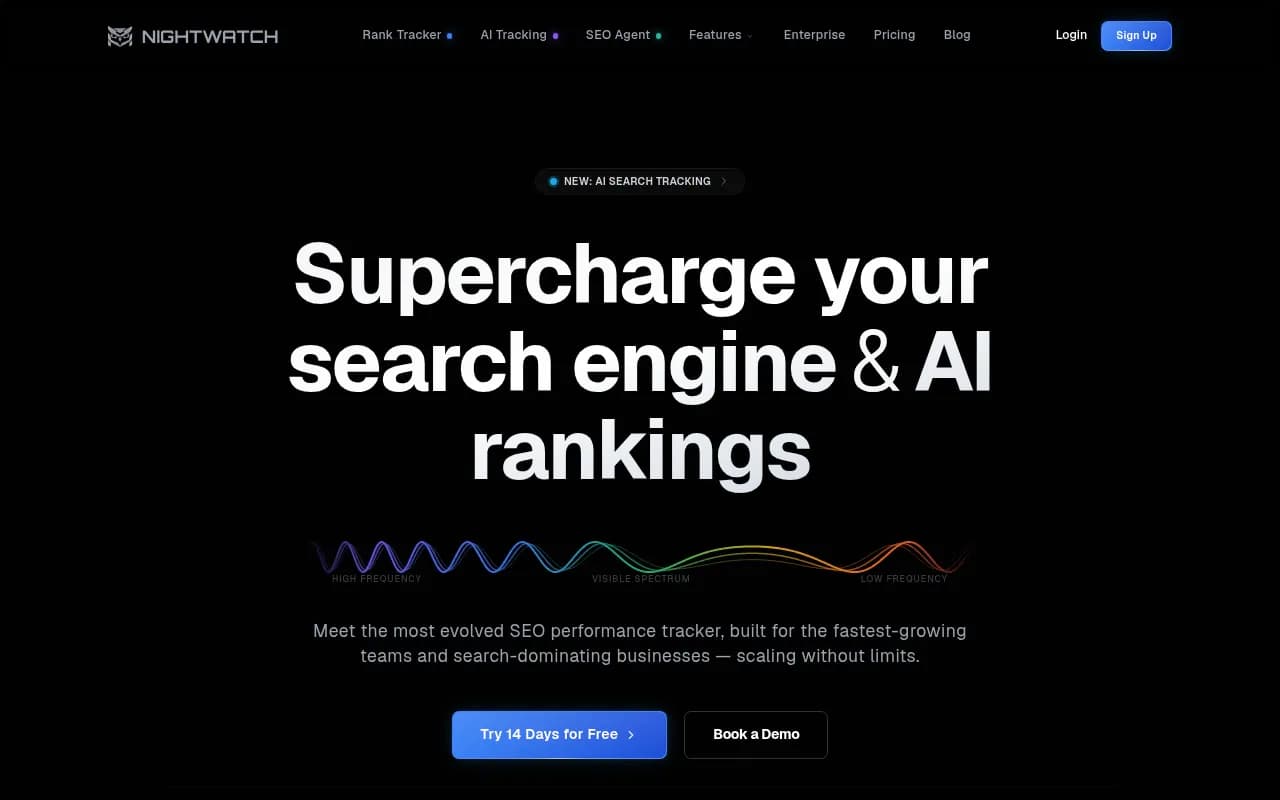
6. Nightwatch -- best for marketers who want AI and traditional SEO in one place
Nightwatch has been a reliable rank tracker for years, and it's added AI search monitoring to its feature set. For solo marketers who are still running traditional SEO alongside AI visibility work, having both in one tool reduces the number of dashboards you're juggling.
The AI monitoring covers the main platforms and gives you brand mention tracking and share-of-voice data. It's not the deepest AI visibility tool on this list, but the combination with traditional rank tracking makes it practical for marketers who haven't fully shifted to AI-first strategies yet.
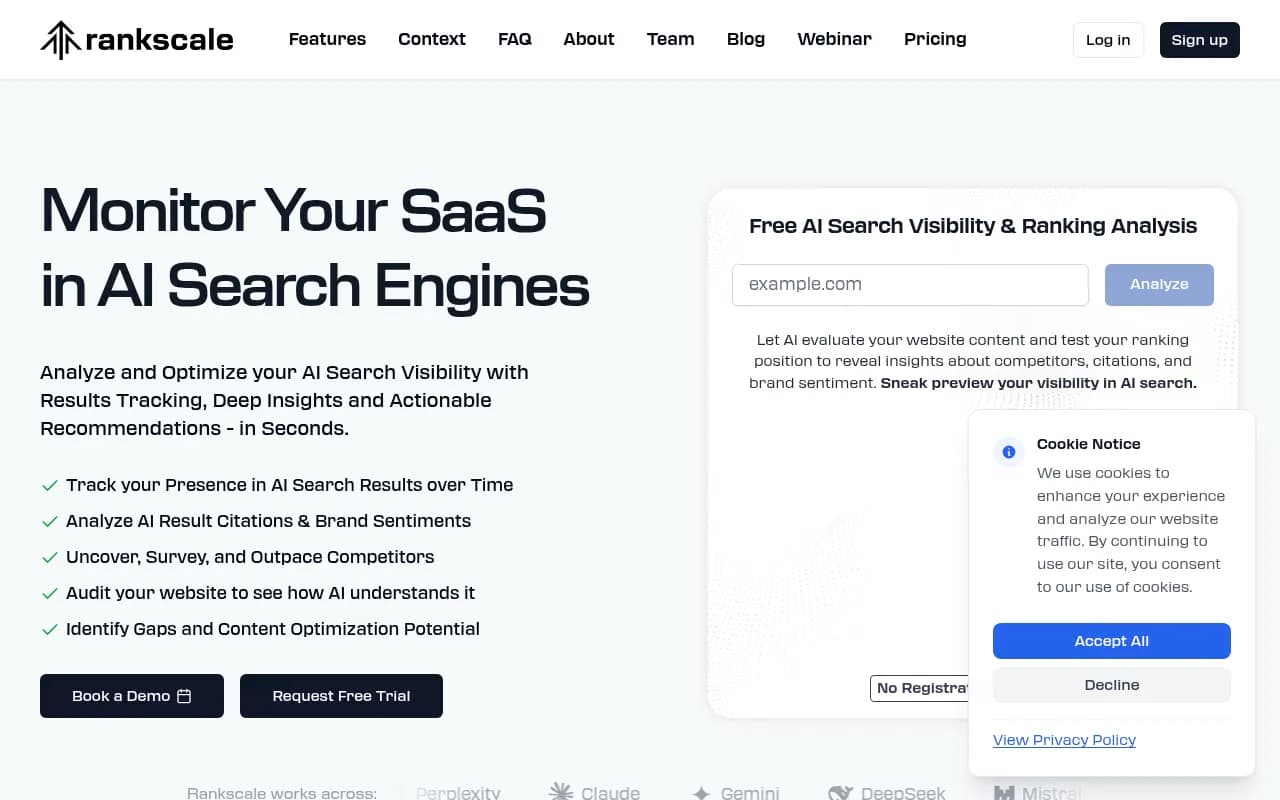
7. Rankscale -- best for tracking AI search rankings specifically
Rankscale focuses specifically on how brands rank in AI search results, with a clean interface and straightforward pricing. It's a good fit for solo marketers who want to understand their AI search position without dealing with feature bloat.
The platform tracks prompt-level visibility, shows competitor comparisons, and surfaces trends over time. It's more focused than some of the broader platforms, which can be a feature rather than a limitation if you know exactly what you need.
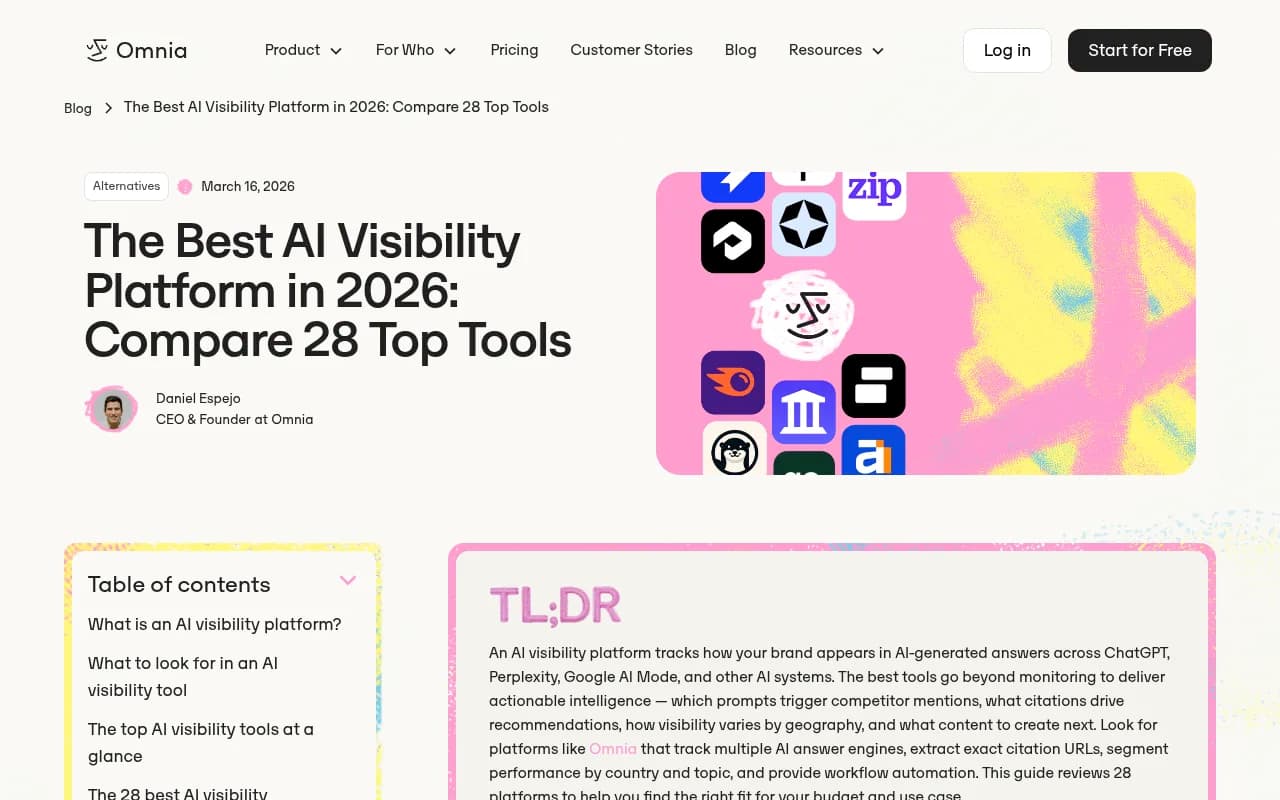
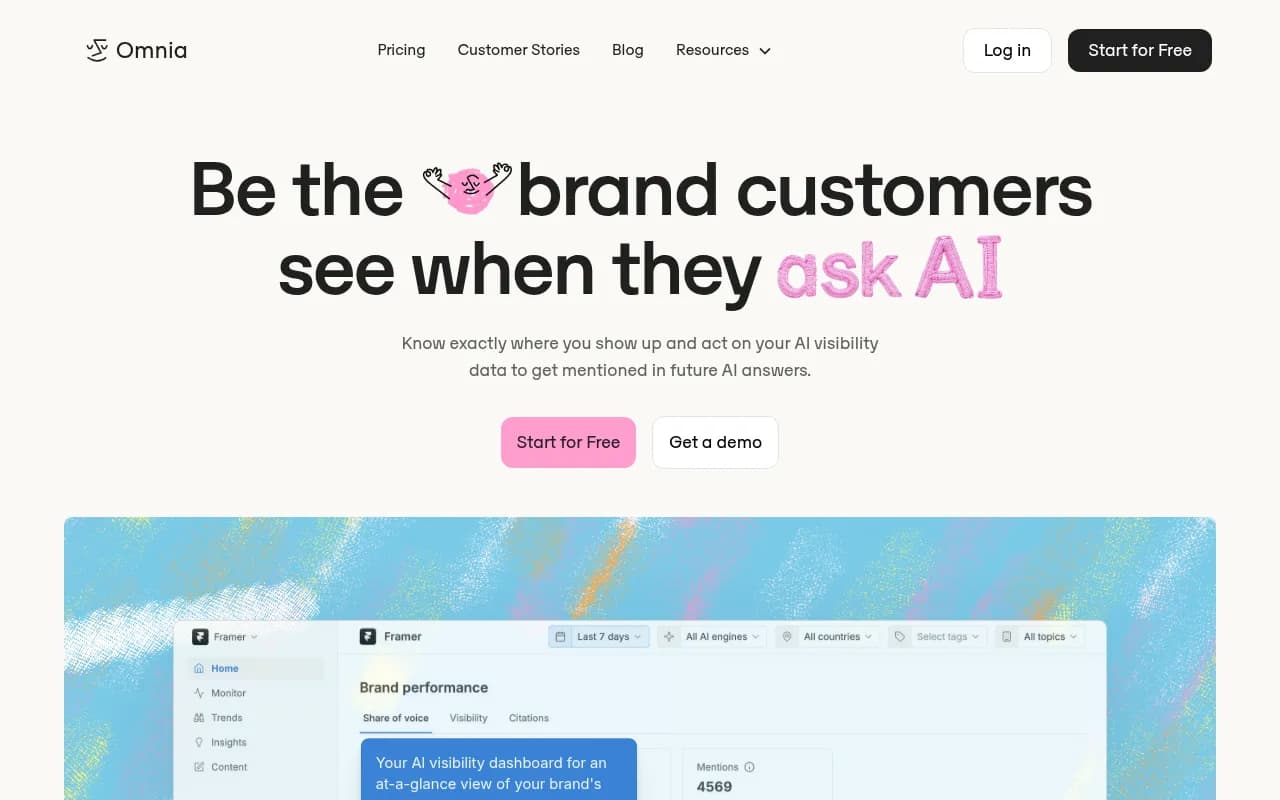
8. Omnia -- best for share-of-voice analytics
Omnia is built around share-of-voice measurement -- understanding what percentage of AI responses in your category mention your brand versus competitors. If competitive benchmarking is your primary concern, Omnia's analytics are among the clearest in this space.
It covers prompt monitoring, brand mentions, citation extraction, and aggregation across models. The focus is on measurement and reporting rather than optimization, so it pairs well with a separate content workflow.
Side-by-side comparison
| Tool | Starting price | Content generation | Crawler logs | Prompt gap analysis | AI models covered | Best for |
|---|---|---|---|---|---|---|
| Promptwatch | $99/mo | Yes | Yes (Pro+) | Yes | 10 | Full optimization loop |
| Otterly.AI | Low | No | No | No | 5+ | Budget monitoring |
| Peec AI | Low | No | No | Limited | 5+ | Multi-language monitoring |
| SE Visible | Bundled | No | No | No | 5+ | SE Ranking users |
| Ranksmith | Mid | No | No | Yes | 5+ | Actionable insights |
| Nightwatch | Mid | No | No | No | 5+ | Traditional + AI SEO |
| Rankscale | Mid | No | No | Limited | 5+ | AI rank tracking |
| Omnia | Mid | No | No | No | 5+ | Share-of-voice analytics |
| Searchable | Mid | Limited | No | Limited | 5+ | Basic monitoring |
How to choose the right tool for your situation
The right answer depends on where you are in your AI visibility journey.
If you're just starting out and want to understand your current position before committing to a bigger tool, Otterly.AI or Peec AI let you get visibility data without a significant investment. Use them to establish a baseline.
If you're ready to actually improve your AI visibility -- not just measure it -- you need a tool that can tell you what content to create and help you create it. That's where Promptwatch separates itself from the field. The combination of Answer Gap Analysis and the built-in content agent means you can go from "I'm invisible for this prompt" to "I have a published article targeting it" in a single workflow.
If you're already using SE Ranking for traditional SEO, SE Visible is the path of least resistance for adding AI visibility tracking without adding another subscription.
If you're managing multiple languages or international markets, Peec AI handles that better than most tools at a comparable price.
The monitoring trap
One thing worth saying plainly: a lot of solo marketers buy a monitoring tool, check their visibility score once a week, and never actually do anything with the data. That's not a knock on the tools -- it's a workflow problem.
The reason Promptwatch's structure is worth paying attention to is that it's designed to prevent exactly that. When the tool shows you a gap, it also shows you how to close it. When you close it, the tracking shows you whether it worked. That cycle -- find gaps, generate content, track results -- is what makes AI visibility work a real marketing activity rather than a vanity metric exercise.
Most of the tools on this list are good at the first step. Fewer are good at the second. Only a handful close the loop on the third.
Final thoughts
Searchable isn't a bad tool -- it does what it says. But for a solo marketer in 2026, "monitoring your AI visibility" is table stakes. The real question is what you do after you see the data.
If you want a tool that helps you answer that question, Promptwatch is the strongest option at a price point that makes sense for a one-person operation. If you're not ready to commit to a full optimization platform yet, Otterly.AI or Nightwatch will give you the visibility data you need to understand the landscape before you invest further.
Either way, the time to start tracking is now. AI search is already influencing purchase decisions, and the brands building visibility today will be much harder to displace in 12 months.