Key takeaways
- Otterly.AI is a monitoring-only tool: it shows you where your brand appears in AI search but gives no guidance on how to improve visibility.
- Most small businesses need tools that go beyond dashboards -- the real value is in finding content gaps and acting on them.
- Several affordable alternatives exist in 2026, ranging from $0 to $99/month, with varying levels of monitoring depth and optimization capability.
- The best choice depends on your goal: pure tracking, content optimization, or a full GEO workflow.
- Tools like Promptwatch close the loop between monitoring and action -- showing you what's missing and helping you create content to fix it.
Why small businesses are looking past Otterly.AI
Otterly.AI has been a popular entry point into AI search visibility monitoring. It's affordable, reasonably easy to use, and covers the major AI engines. For a lot of teams, it was the first tool they reached for when they started asking "are we showing up in ChatGPT?"
But there's a recurring frustration that shows up in almost every discussion about it. You get the data. You see that competitors are appearing in responses where you aren't. And then... nothing. The tool has no answer for what to do next.
One Reddit user in r/DigitalMarketing put it plainly: "It tracks the source, but gives zero actionable strategy on how to restructure content to get cited."
That's the core problem. Monitoring tells you the score. It doesn't tell you how to play better.
For small businesses especially, this matters more than it does for enterprise teams. A large company can afford to have one tool for monitoring, another for content strategy, another for SEO, and a dedicated person to stitch it all together. A small marketing team -- often one or two people -- needs tools that do more with less.
There's also the pricing question. Otterly.AI's entry plan is around $29/month, which sounds reasonable until you realize you need more prompts, more frequent updates, or competitor benchmarking -- and the cost climbs quickly for what remains a monitoring-only product.
This guide covers the best alternatives in 2026, with a focus on what each tool actually does beyond showing you a visibility score.
The monitoring-only trap: what to look for instead
Before getting into specific tools, it's worth being clear about what "doing more than monitoring" actually means in practice.
A monitoring-only tool answers: "Where does my brand appear in AI responses?"
A tool with optimization capability answers: "Why am I not appearing in these responses, and what do I need to change?"
The gap between those two questions is where most small businesses get stuck. They know their AI visibility score is low. They don't know which pages are being cited by AI models, which content gaps are costing them mentions, or what kind of content would actually get picked up.
When evaluating alternatives, look for:
- Content gap analysis (which prompts are competitors winning that you're not?)
- Page-level citation tracking (which of your pages are actually being cited?)
- Content generation or brief creation grounded in real prompt data
- Prompt volume and difficulty scoring so you can prioritize
- Crawler logs or AI agent analytics to understand how AI models are finding your site
Not every tool needs all of these. But if a tool only has the first item on that list and nothing else, you're still in monitoring-only territory.
The best Otterly.AI alternatives for small businesses in 2026
Promptwatch -- best for closing the gap between data and action
Promptwatch is the most complete option on this list for small businesses that want to move from "we know we have a visibility problem" to "we're fixing it."

The core workflow is built around three steps: find the gaps (Answer Gap Analysis shows which prompts competitors rank for that you don't), create content that addresses those gaps (Content Agents generate articles and briefs grounded in real prompt data), and track whether the new content gets cited. That cycle -- find, fix, track -- is what separates it from monitoring-only tools.
For small businesses, the Essential plan at $99/month covers one site, 50 prompts, and 5 articles per month. That's enough to run a real GEO workflow without needing a dedicated team. The Professional plan at $249/month adds crawler logs, which show you exactly which pages AI models are visiting and whether those visits are turning into citations.
It monitors 10 AI models including ChatGPT, Perplexity, Google AI Overviews, Claude, Gemini, and Grok -- and it tracks real user-facing responses, not just API outputs, which matters because the two can differ significantly.
One feature worth calling out for small businesses: the AI Crawler Logs. Most tools have no visibility into whether AI agents are even crawling your site. Promptwatch shows you which pages they're reading, how often they return, and whether those pages are being cited. If an AI crawler is hitting your site and not citing it, that's a fixable problem -- but only if you know it's happening.
Peec AI -- good for multi-language tracking on a budget

Peec AI focuses on AI visibility monitoring with solid multi-language support, which makes it a reasonable choice for small businesses operating in non-English markets. It covers the major AI engines and provides brand mention tracking across different regions.
It's a monitoring tool, so it won't help you create content or identify specific gaps to fix. But if your primary need is tracking visibility across languages and you have a separate content workflow, it's worth considering. Pricing is more accessible than some enterprise options.
SE Ranking -- best if you want traditional SEO plus AI monitoring in one place
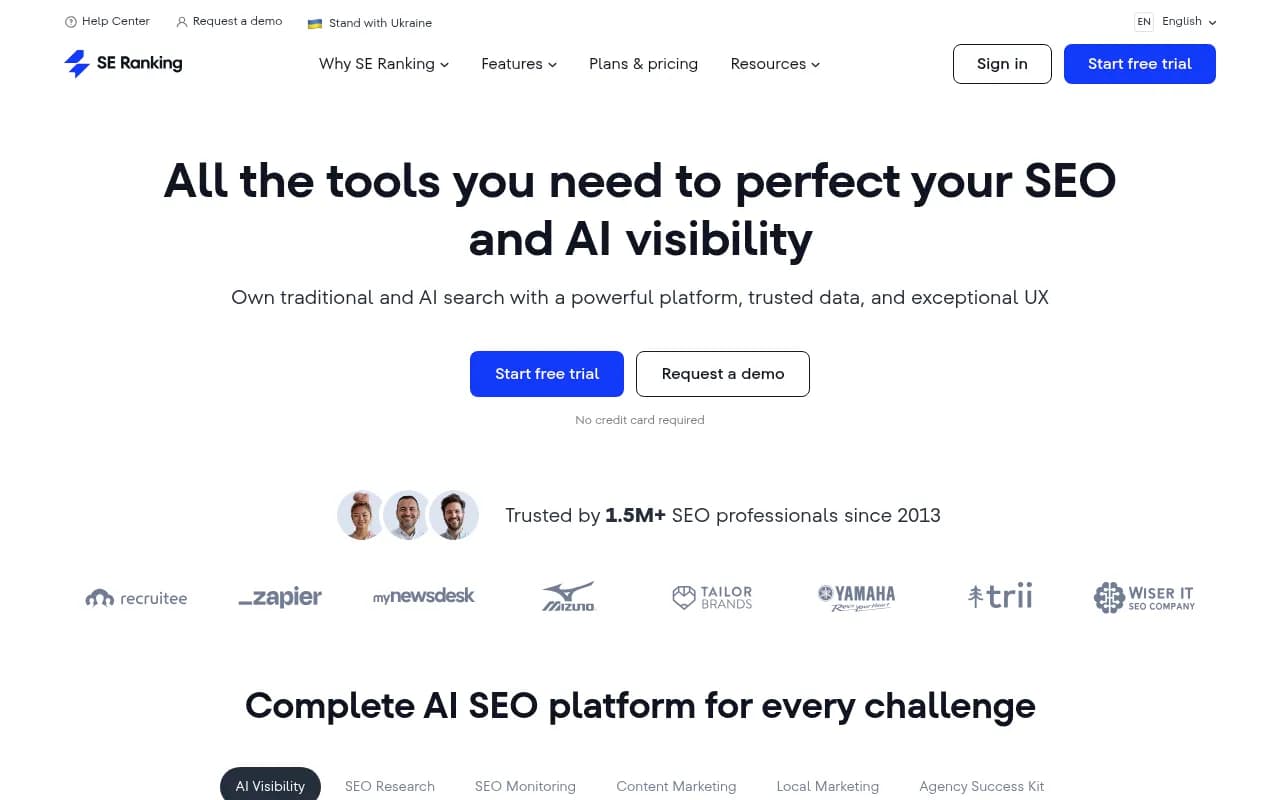
SE Ranking is an all-in-one SEO platform that added AI visibility tracking to its existing suite. For small businesses already paying for keyword research, rank tracking, and site audits, consolidating into SE Ranking can make financial sense.
The AI visibility features aren't as deep as dedicated GEO tools -- you won't get content gap analysis or AI crawler logs -- but you get solid monitoring alongside a full SEO toolkit. If your budget is tight and you need both traditional SEO and some AI visibility coverage, this is a practical option.
AIClicks -- keyword-based tracking as an alternative to prompt-based systems
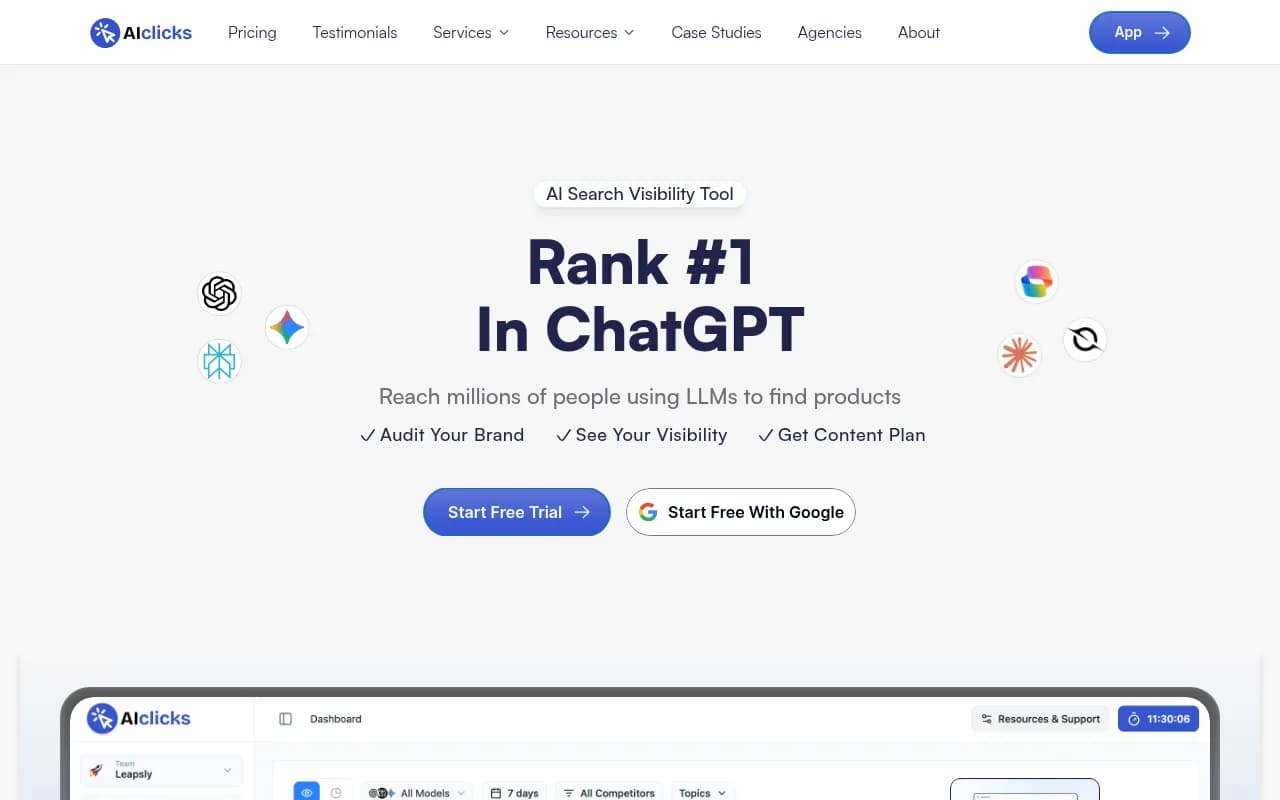
AIClicks takes a different approach to tracking: instead of prompt-based monitoring, it uses keyword-based tracking. For teams that find Otterly's prompt setup limiting or confusing, this can feel more intuitive -- especially if you're already thinking in terms of keywords from traditional SEO.
It covers AI visibility monitoring and provides some optimization guidance, though it's not as comprehensive as a full GEO platform. Worth testing if the prompt-based model hasn't clicked for your team.
Rankshift -- lightweight LLM tracking for lean teams
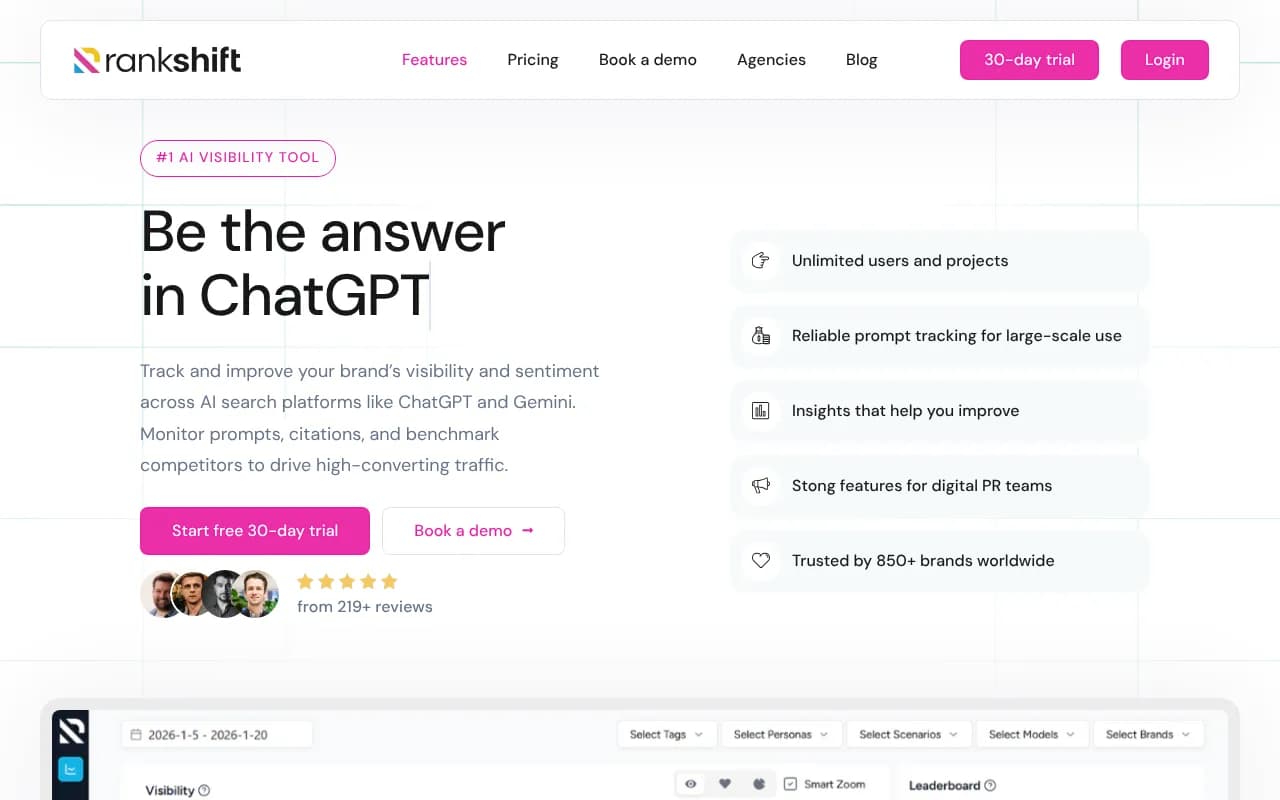
Rankshift is a focused LLM tracking tool that keeps things simple. It monitors how your brand appears across AI models and provides visibility data without a lot of complexity. For very small teams or solo operators who just want a clear view of their AI presence without a steep learning curve, it's a reasonable starting point.
It won't replace a full GEO workflow, but it's easier to get up and running than some of the more feature-heavy platforms.
Profound -- strong monitoring with deeper analytics

Profound sits at the more capable end of the monitoring spectrum. It provides detailed AI search visibility tracking, competitive benchmarking, and analytics that go deeper than Otterly's basic dashboard.
The trade-off is price -- Profound is positioned at a higher price point than most small business budgets allow for a monitoring-only tool. If you're a growing business with a real budget and need serious monitoring depth before you're ready to invest in optimization, it's worth a look. But for most small businesses, the cost is hard to justify when tools like Promptwatch offer monitoring plus optimization for a comparable or lower price.
Writesonic -- content creation with AI visibility features built in
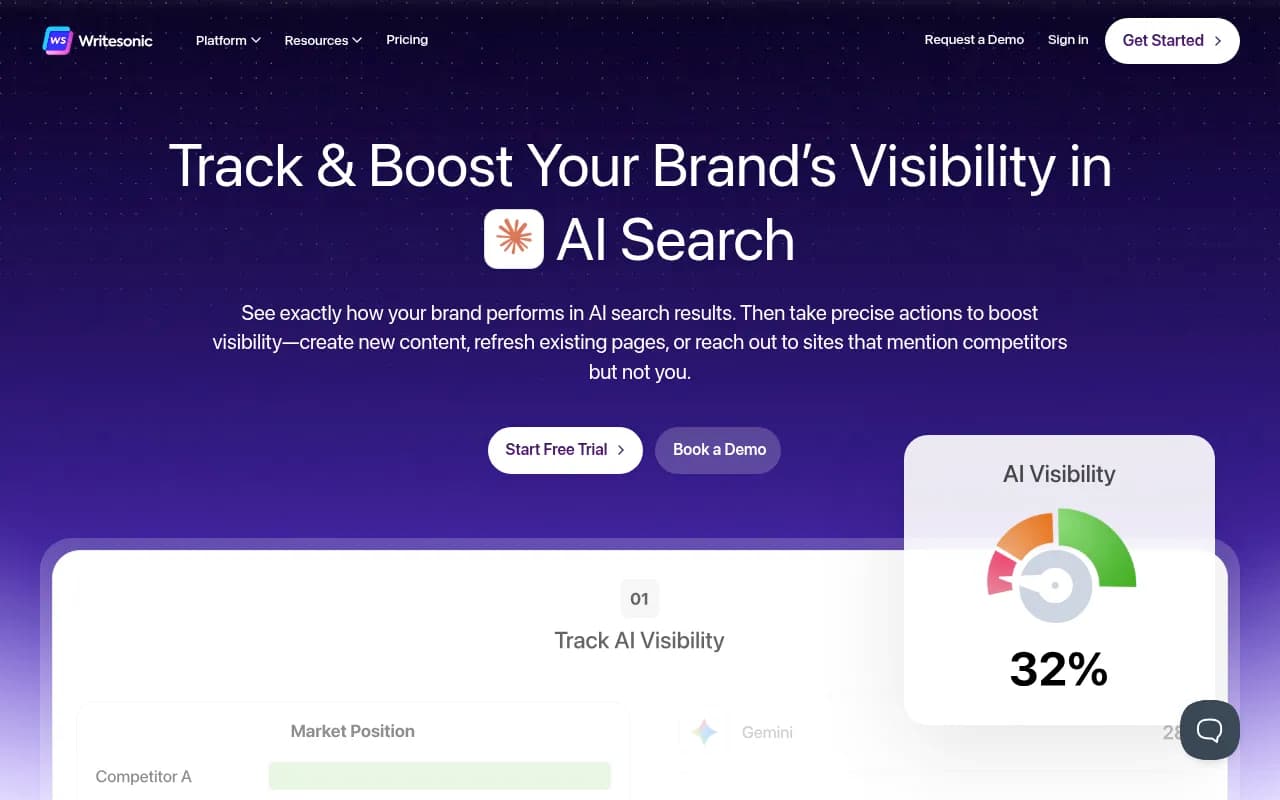
Writesonic started as an AI writing tool and has added AI search visibility tracking and optimization features. It's an interesting option for small businesses that need content creation capability alongside some visibility tracking.
The visibility features are newer and less mature than dedicated GEO platforms, but if content creation is your primary bottleneck and you want some AI search context built into the same tool, it's worth evaluating.
AthenaHQ -- monitoring across 8+ AI engines
AthenaHQ covers a wide range of AI models and provides solid monitoring with competitive benchmarking. It's more monitoring-focused than optimization-focused, but it does offer some strategic guidance on where to improve.
For small businesses that want broad AI engine coverage and clear competitive data, it's a solid monitoring choice. Just be aware that you'll still need a separate workflow for actually creating content to improve your scores.
Peasy -- real AI performance tracking, simple interface
Peasy focuses on real AI performance tracking with a clean, accessible interface. It's designed to be approachable for teams that don't have dedicated SEO specialists, which makes it relevant for small businesses.
It's primarily a monitoring tool, but the simplicity of the interface means less time spent figuring out the platform and more time acting on what you find -- assuming you have a content workflow to plug the insights into.
Side-by-side comparison
| Tool | Starting price | Monitoring | Content gap analysis | Content generation | Crawler logs | Best for |
|---|---|---|---|---|---|---|
| Promptwatch | $99/mo | Yes (10 models) | Yes | Yes | Yes (Pro+) | Full GEO workflow, small to mid teams |
| Peec AI | Low | Yes | No | No | No | Multi-language monitoring |
| SE Ranking | ~$44/mo | Basic AI | No | No | No | Combined SEO + basic AI tracking |
| AIClicks | Varies | Yes | Limited | No | No | Keyword-based AI tracking |
| Rankshift | Low | Yes | No | No | No | Lean teams, simple tracking |
| Profound | Higher | Yes (deep) | Limited | No | No | Serious monitoring, larger budgets |
| Writesonic | Varies | Yes | Limited | Yes | No | Content creation + some visibility |
| AthenaHQ | Mid | Yes (8+ models) | Limited | No | No | Broad model coverage |
| Peasy | Low | Yes | No | No | No | Simple, accessible monitoring |
| Otterly.AI | $29/mo | Yes | No | No | No | Basic entry-level monitoring |
What actually matters for small business GEO in 2026
The honest reality is that most small businesses don't have a monitoring problem. They have a visibility problem. And monitoring tools, however well-designed, don't solve visibility problems -- they just measure them.
The shift that matters in 2026 is moving from "we track our AI visibility" to "we improve our AI visibility." That means understanding which prompts matter for your business, identifying the content gaps that are keeping you out of AI responses, creating content that actually answers those prompts, and then tracking whether it works.
A few practical things small businesses should prioritize:
Prompt selection matters more than prompt volume. It's better to track 30 prompts that your actual customers are asking than 300 generic ones. Look for tools that help you identify high-value, winnable prompts rather than just giving you a big list.
Page-level tracking is underrated. Knowing your brand appears in 40% of AI responses is useful. Knowing which specific pages on your site are being cited -- and which ones are being ignored despite being crawled -- is actionable.
Content gaps are the most direct path to improvement. If you can see exactly which prompts competitors are winning that you're not, and understand what content they have that you don't, you have a clear to-do list. That's more valuable than a visibility score.
AI crawler behavior is different from Google crawler behavior. AI models crawl sites differently, return at different frequencies, and cite pages based on different signals than Google. Tools that give you visibility into this behavior -- like crawler logs -- help you understand and optimize for a channel that most small businesses are still treating as a black box.
How to choose
If you're just starting out and want to understand your current AI visibility before investing in optimization, Peasy or Rankshift give you a low-cost entry point without much complexity.
If you're already doing traditional SEO and want to add AI visibility tracking without adding another tool to your stack, SE Ranking is the most practical consolidation option.
If you're ready to actually improve your AI visibility -- not just track it -- Promptwatch is the most complete option at a price point that works for small businesses. The Essential plan at $99/month gives you monitoring, gap analysis, and content generation in one place. That's the combination that moves the needle.
The question to ask yourself is simple: do you want to know your score, or do you want to improve it? If it's the latter, make sure the tool you pick has an answer for "now what?" -- because most of them don't.