Key takeaways
- Pharma brands are mostly invisible in AI answers. Gradial's study of 25 manufacturers (4,000 searches) found an average 7.8% mention rate and a 3.2% first-party citation rate.
- ChatGPT leans on government and research sources for health prompts. Promptwatch Data shows NIH, the FDA, and the NHS at the top, so your content strategy has to account for those sources.
- Enterprise buyers should weight compliance (SOC 2, ISO 27001, audit logs, SSO), engine coverage, and whether the tool helps you fix gaps, not only report them.
- Treat vendor claims on HIPAA, pricing, and certifications as things to verify in procurement. They change often.
- Pick a tool by team shape: multi-brand SEO suites for portfolio teams, end-to-end GEO platforms for teams that want to act on the data.
Why healthcare and pharma need different GEO tooling
Most GEO advice is written for SaaS and ecommerce. Healthcare is a different animal. Content sits in YMYL territory (your money or your life), so AI engines lean on authoritative medical sources, and your own marketing pages compete against regulators, journals, and hospital systems for the same citation slots.
Then there is the internal side. Claims need medical, legal, and regulatory review. A tool that auto-publishes content with no approval step is a non-starter for most pharma teams. A tool that cannot show you which claims AI is making about your drug or device is almost as bad.
So the evaluation criteria shift. Raw prompt counts matter less than three things: can you see what AI says about your brand, can you trace it to a source, and can you control the workflow around fixing it.
What the data says about AI visibility in healthcare
Pharma brands are present but not cited
Gradial's research, published August 14, 2026, ran GEO reports for 25 manufacturers from the Fierce Pharma Week 2025 attendee list. Each report used 20 neutral, discovery-oriented prompts, which produced 4,000 searches in total.
The results are sobering. Average brand mention rate was 7.8%. Average first-party citation rate was 3.2%. The median company was cited in only 2% of searches. Four companies (Sanofi, Endo, Exelixis, and Zambon Group) earned no citations to their corporate domain at all.
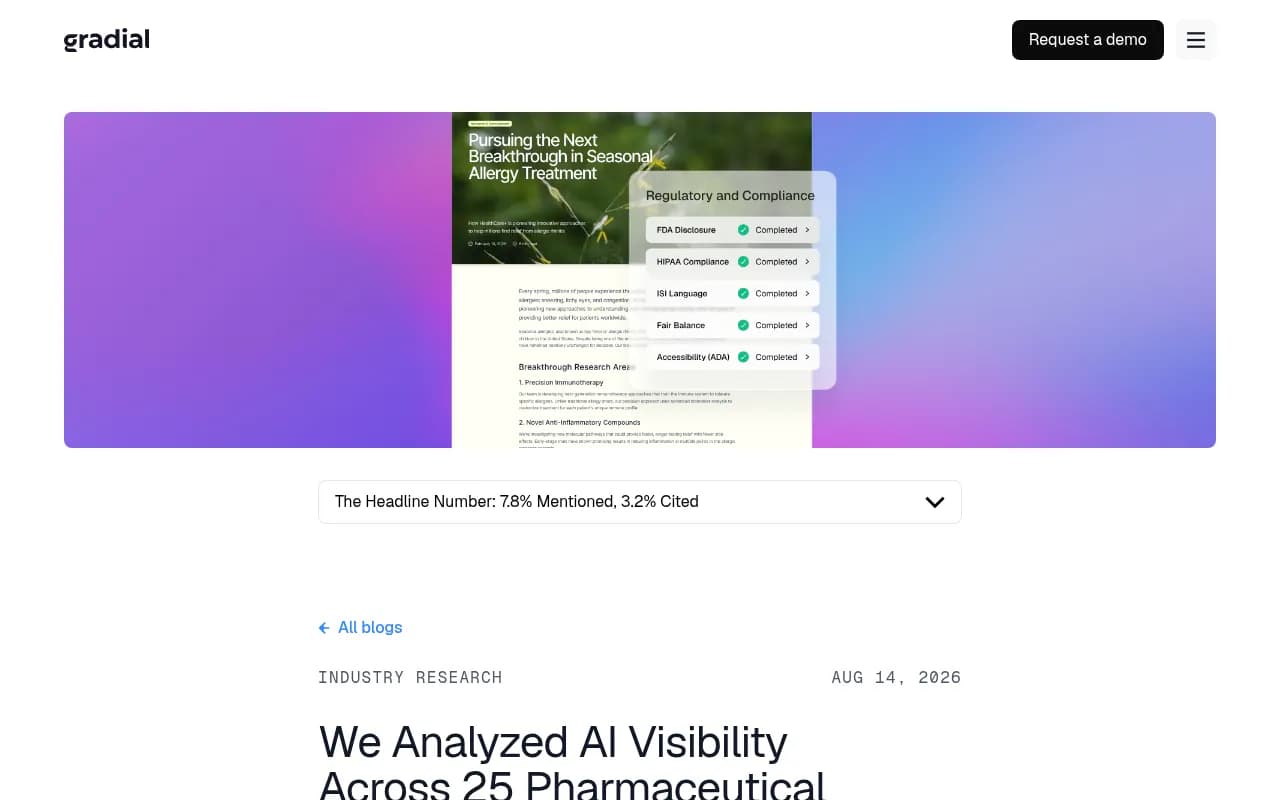
The useful framing from that study is evidence ownership. AI may name your therapy while citing a regulator, journal, or advocacy group instead of you. The brand is present and the first-party source is absent. That is a measurable problem, and it is the one an enterprise GEO tool should help you track.
What ChatGPT cites for health prompts
Promptwatch Data's October 2026 healthcare report covers organic healthcare prompts in ChatGPT from September 9 to October 8, 2026. A few findings that should shape your plans:
- NIH is the top source at 5.46% of healthcare citations, spread across six nih.gov subdomains. PubMed Central (2.38%) and PubMed (2.33%) account for most of that.
- The FDA is second at 1.76% and the NHS third at 1.1%.
- Government and public health sites account for 7.06% of citations in the report's top 20 domains.
- The American Society of Plastic Surgeons (0.64%) and the American Academy of Dermatology (0.54%) are the top non-government sites. Together they out-earn Mayo Clinic and Cleveland Clinic combined.
- The top 20 domains hold only about 15.5% of all healthcare citations, so the tail is long and nobody dominates.
The practical read: back medical claims with peer-reviewed studies you link to on PubMed, keep pages consistent with FDA, CDC, NHS, and NICE guidance, and build relationships with the medical associations in your specialty. A GEO tool that only counts mentions will not tell you any of this. One that shows citation sources by type will.
Also worth knowing: engines differ. Promptwatch's average sources per response data shows ChatGPT citing about 5 sources per web-search answer, while Google AI Overviews and Perplexity cite about 10. Measure each engine separately.
How to evaluate an enterprise GEO tool for healthcare
I would score every vendor on these six questions before looking at a demo.
- Engine coverage. ChatGPT, Google AI Overviews, AI Mode, Gemini, Perplexity, Copilot, and Claude at minimum. Ask whether data comes from real user interfaces or only APIs, because answers and citations can differ.
- Security and compliance. SOC 2 Type II, ISO/IEC 27001, GDPR, SSO, audit logs, role-based access. If you need HIPAA language in a contract, ask for it in writing. Do not rely on a comparison table.
- Source tracing. Can you see which pages, journals, and third-party sites get cited, and whether your own pages are among them?
- Claim monitoring. Can you see what AI says about efficacy, side effects, pricing, or safety, and flag inaccurate statements?
- Execution and workflow. Does the tool help create or refresh content, with an approval inbox, or does it stop at a dashboard?
- Multi-market support. Pharma runs country-specific sites with different regulatory rules. Monitors need fixed language and location so markets do not mix.
I would add one more: the tool should not make you choose between governance and speed. Review gates are good. Needing a ticket to change a dashboard filter is not.
Best enterprise GEO tools for healthcare and pharma in 2026
Promptwatch
Promptwatch is an end-to-end AI visibility platform, and it fits healthcare teams that want to go beyond reporting. It tracks ChatGPT, Gemini, Claude, Perplexity, Google AI Overviews, AI Mode, Copilot, and others from the real interfaces, by country and language.

Three things matter for this sector. First, Brand Narrative pulls the individual claims AI makes about you and competitors out of every response and scores them by theme such as Features, Reputation, or Pricing. Fact Check (Business and above) lets you mark a claim inaccurate and finds the pages on your site that state it or its opposite. For a pharma team worried about wrong dosing or efficacy statements, that is the most relevant feature in this category.
Second, the citation tracing. Citation Trends classifies every citation into content and source types, so you can see whether AI leans on journals, regulators, or hospital pages for your prompts. AI crawler logs are IP-verified, which tells you whether a bot even reads your clinical pages, separating access problems from content problems.
Third, governance. Promptwatch is ISO/IEC 27001 certified and GDPR compliant, with an EU-based data handler, an organization audit log on Business and above, role-based access, and SSO on Enterprise. The Content Agent writes and publishes to WordPress, Webflow, or Framer, but you can run it through a review inbox to approve, edit, or decline each piece, which is how a regulated team would use it. Local GEO targeting at exact coordinates helps multi-location clinics and hospital groups.
Pricing starts at $95/month (Essential), with Business at $579/month as the first plan with the Content Agent, Fact Check, and faster tracking. Enterprise is custom. Confirm on promptwatch.com/pricing. There is a 7-day free trial and a free AI visibility report. On the compliance side, I did not verify a HIPAA attestation, so ask for one if your use case needs it. Compare it head to head with Promptwatch vs Profound if you are shortlisting.
Profound
Profound is one of the best-known enterprise monitoring platforms, and the NoGood roundup positions it for HIPAA-compliant enterprise analytics with SOC 2 Type II. It has deep analytics, prompt volumes, and crawler data. Its strength is monitoring depth. Compared with end-to-end platforms, it is lighter on executing the fix. Treat the "from $99/month" figure in secondary sources with caution, since enterprise deals rarely look like that. Get a quote and the compliance documents directly.

Conductor
Conductor suits large pharma and healthcare enterprises with multi-brand portfolios that need AI visibility inside existing enterprise SEO workflows. NoGood lists coverage of ChatGPT, Perplexity, Gemini, Google AI Overviews, and AI Mode, with persona segmentation and enterprise controls such as SSO and audit logs. Conductor also publishes 2026 AEO/GEO benchmarks for health care, which are useful for sizing your visibility against market leaders. Verify the benchmark details on their site before quoting them.
Goodie
Goodie is pitched by NoGood as a full-stack option for healthcare and pharma, with the broadest engine coverage (11+), a content writer, an optimization hub, and attribution, plus SOC 2 Type II and SSO. NoGood lists pricing from $295/month. Note that NoGood ranks it first in its own roundup, and Goodie appears connected to that content, so weigh that accordingly and run your own trial.
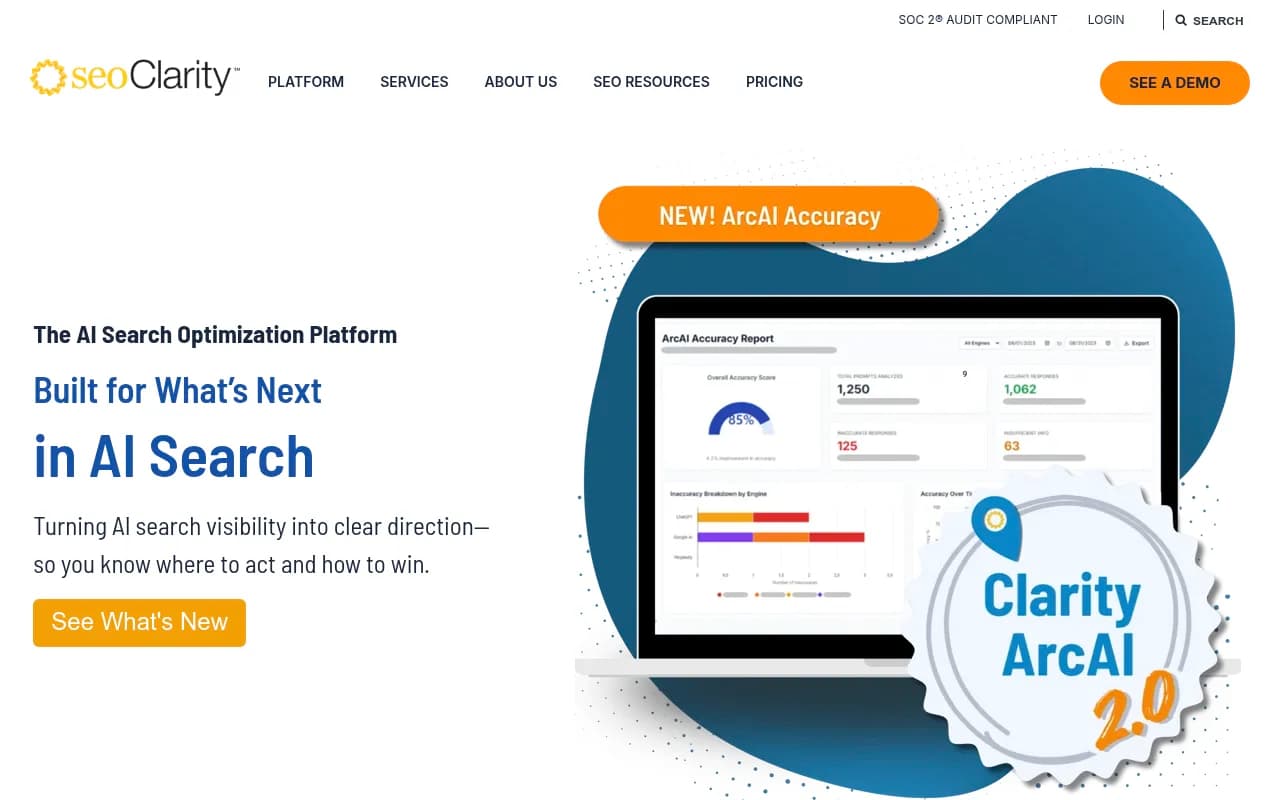
BrightEdge and seoClarity
If your team already lives in an enterprise SEO suite, the AI add-ons from BrightEdge and seoClarity are the lowest-friction route. They fit organizations where procurement, SSO, and reporting are already settled. The tradeoff is that AI tracking in suites often has fixed prompt sets and shallower AI-specific data than purpose-built platforms.
Other platforms worth a look
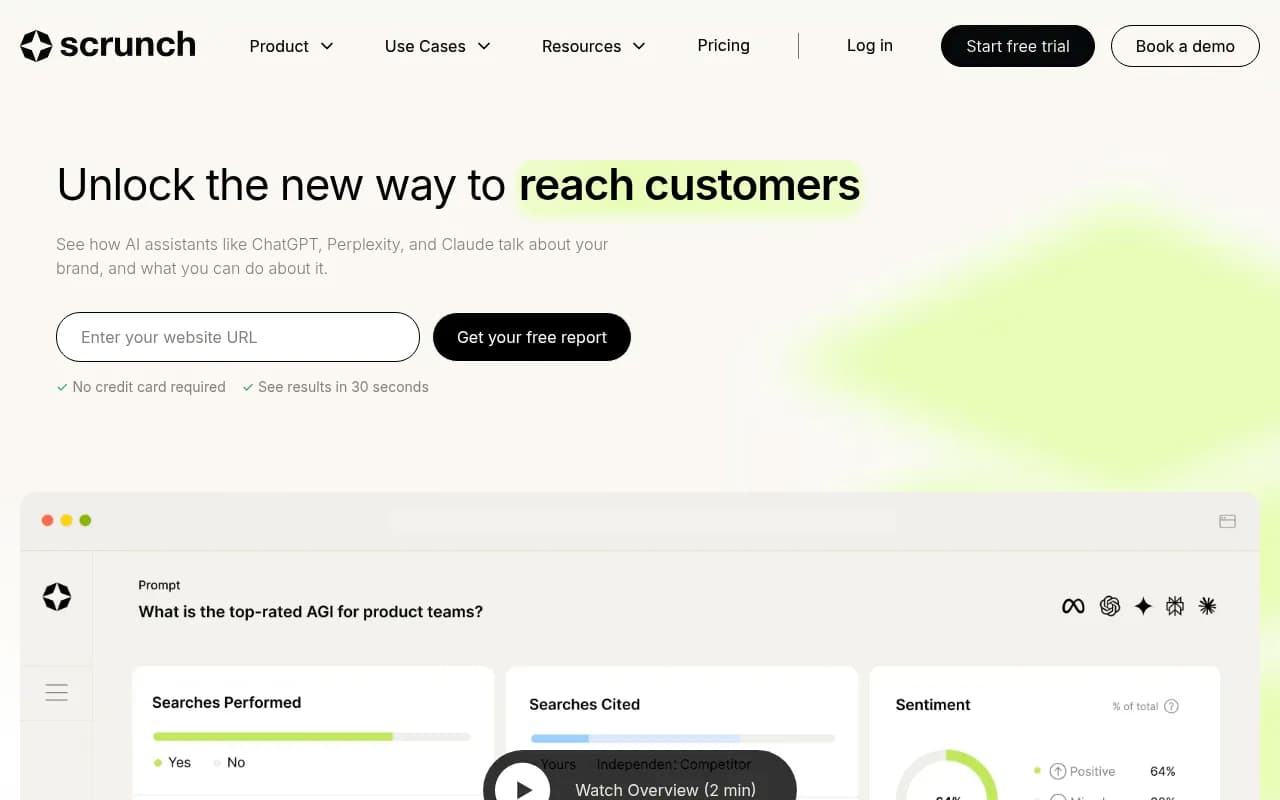
Bluefish and Evertune target Fortune 500 brand visibility, which can suit global pharma. Scrunch and AthenaHQ are monitoring-focused options. Lighter tools like Otterly.AI and Peec AI are fine for a single product team testing the waters, though they lack crawler logs and the governance features regulated teams ask about.
Comparison table
| Platform | Best for | Compliance notes (verify with vendor) | Strength | Limitation |
|---|---|---|---|---|
| Promptwatch | Teams that want monitoring plus execution | ISO/IEC 27001, GDPR, audit log, SSO on Enterprise | Brand Narrative, Fact Check, crawler logs, Content Agent with review inbox | HIPAA attestation not verified |
| Profound | Deep enterprise analytics | SOC 2 Type II, HIPAA (per NoGood) | Analytics depth, prompt volumes | Less focused on executing fixes |
| Conductor | Multi-brand portfolios | SSO, audit logs | Fits existing SEO workflows, health care benchmarks | Fewer engines per NoGood |
| Goodie | Full-stack GEO | SOC 2 Type II, SSO (per NoGood) | Broad engine coverage, content and attribution | Source of ranking is not independent |
| BrightEdge / seoClarity | Teams already on an SEO suite | Enterprise-grade | Single vendor, familiar reporting | AI data often shallower |
| Bluefish / Evertune | Fortune 500 brand teams | Ask vendor | Enterprise positioning | Less public detail |
Tools that complement a GEO platform
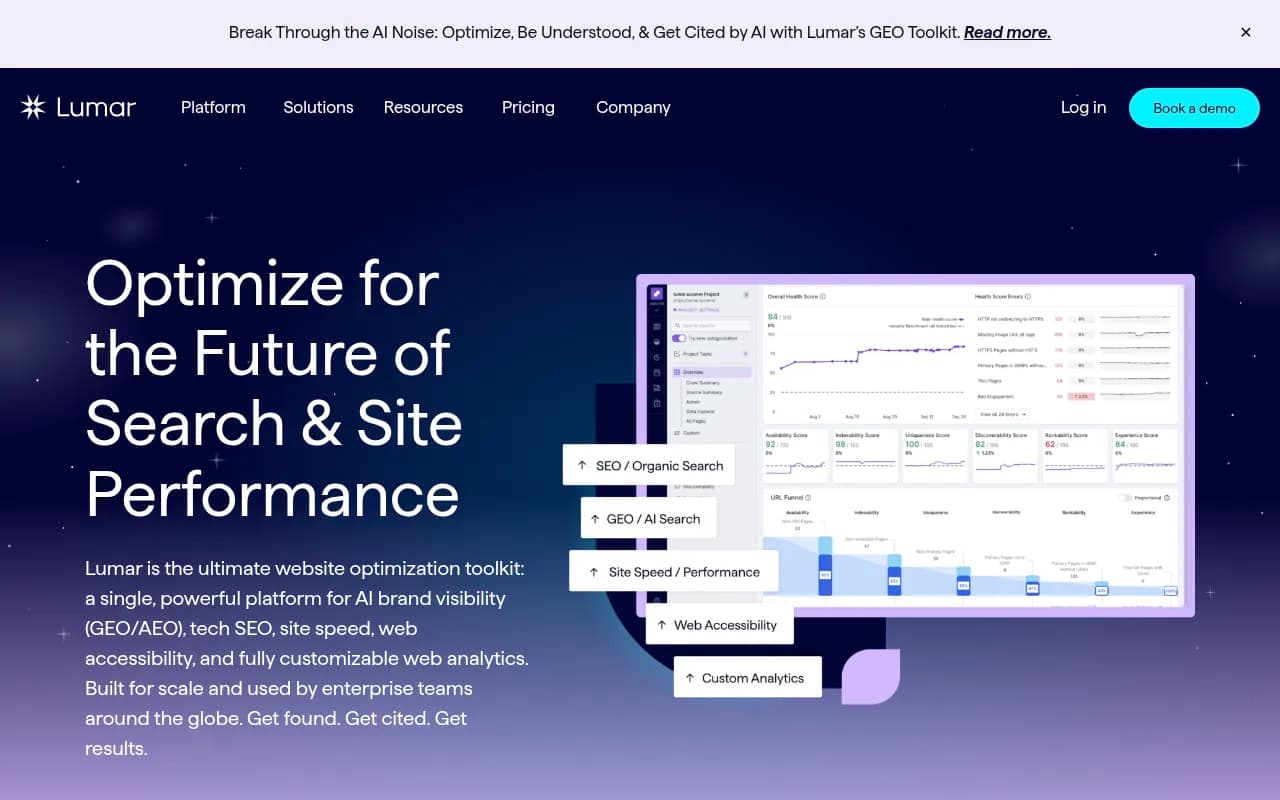
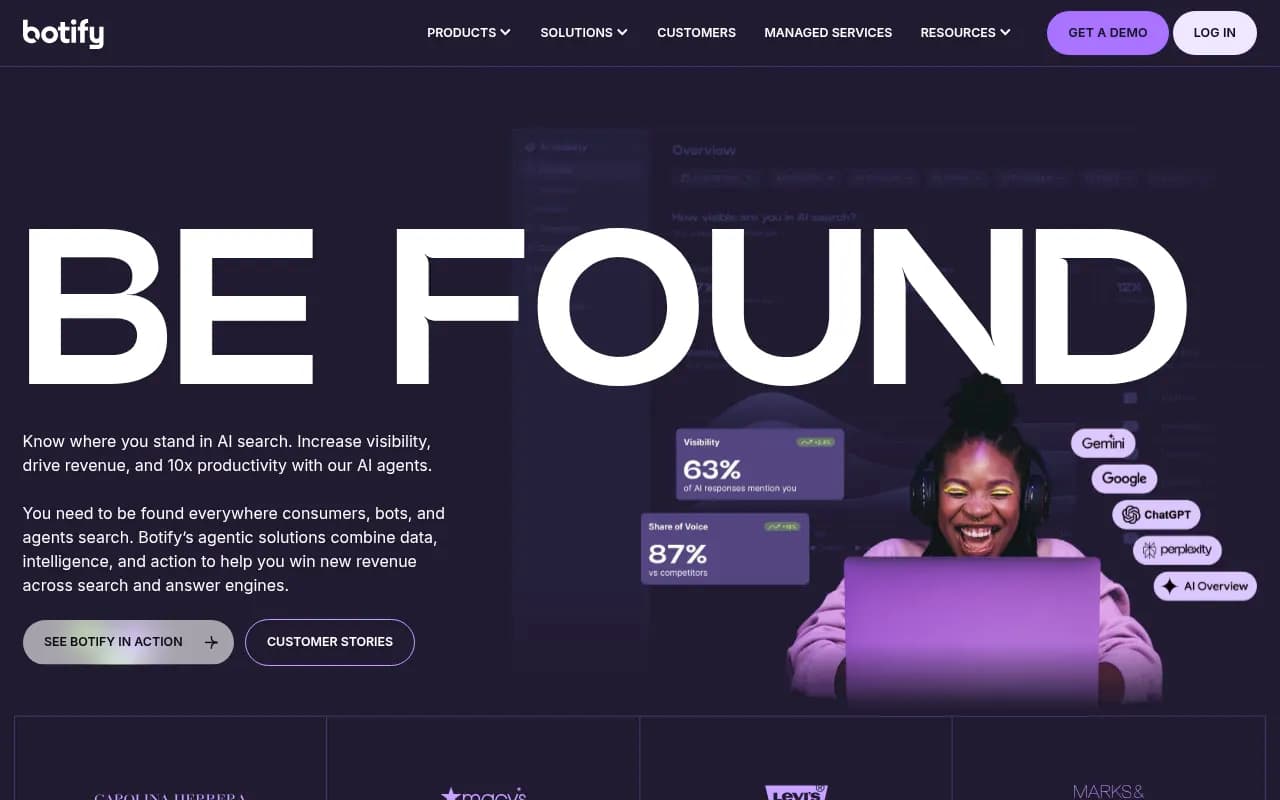
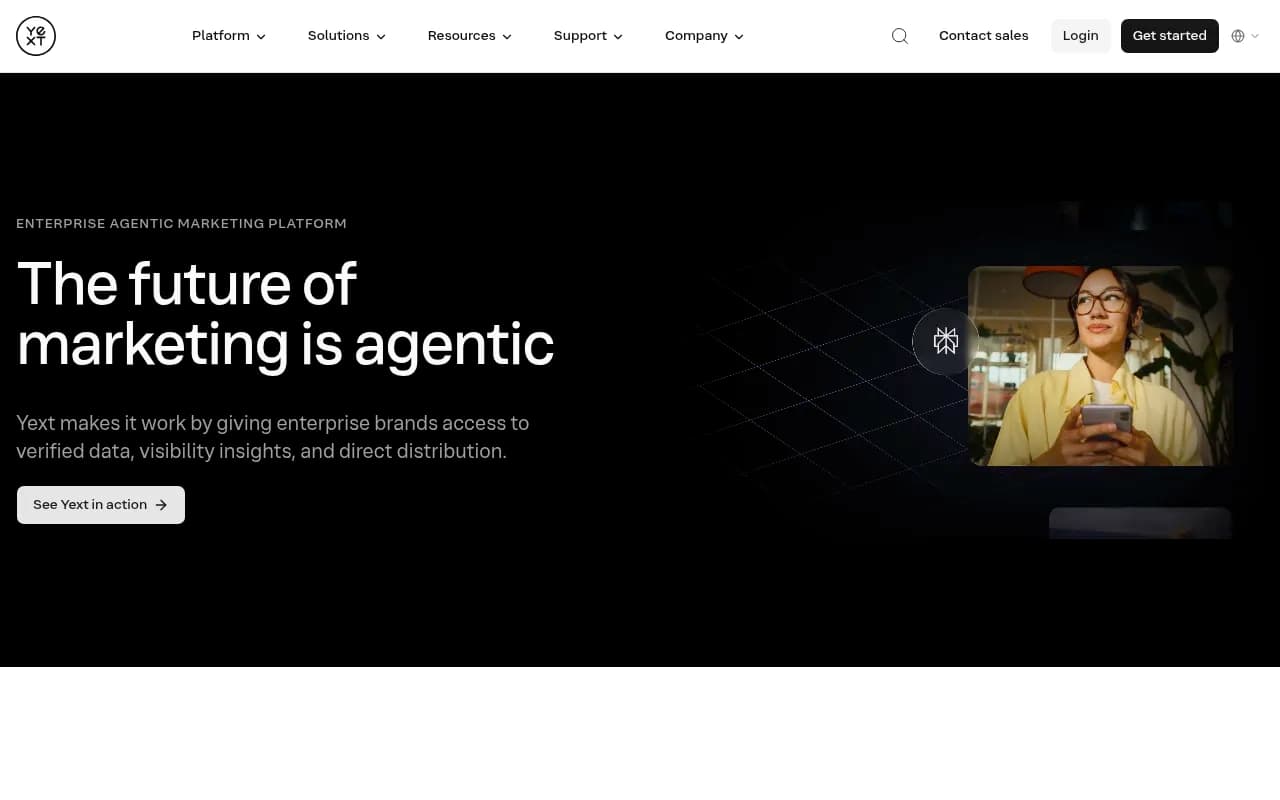
A GEO platform will not cover everything. Healthcare teams commonly add a crawler such as Lumar or Botify for large-site technical health, and a listening tool such as Meltwater or Brandwatch Consumer Intelligence for media and patient conversation. For listings and reviews, which matter for provider prompts, Yext and Birdeye are common.
For wider browsing, the GEO software directory at bestgeosoftware.com lists many more options.
An implementation plan that survives medical-legal review
Weeks 1 to 2: baseline
Build monitors by market and language: unbranded condition prompts, branded product prompts, competitor comparisons, and HCP-style prompts. Use personas for patient, caregiver, and physician. Record mention rate, first-party citation rate, and sentiment. This mirrors the Gradial approach, so you can compare your numbers against the 7.8% and 3.2% industry averages.
Weeks 3 to 6: find the evidence gap
For each prompt where AI names you but cites someone else, look at what it cites. If it is a journal, your fix is publishing and linking to the underlying studies. If it is a regulator, align your page wording with their guidance. Check crawler logs to confirm AI bots can actually read your clinical and safety pages. A page blocked by a bot rule or buried behind a script is a cheap fix with a large payoff.
Weeks 7 to 12: publish and measure
Refresh priority pages first, then publish new content where there is no page at all. Run everything through your existing MLR or compliance review. Then measure again: were pages crawled, did citations show up, did AI-referred visits arrive. Content that never gets cited should come back as a task, not sit in a report.
The Promptwatch Academy's 90-day GEO program is a reasonable template if you want a structure to adapt.
Do you need an agency as well?
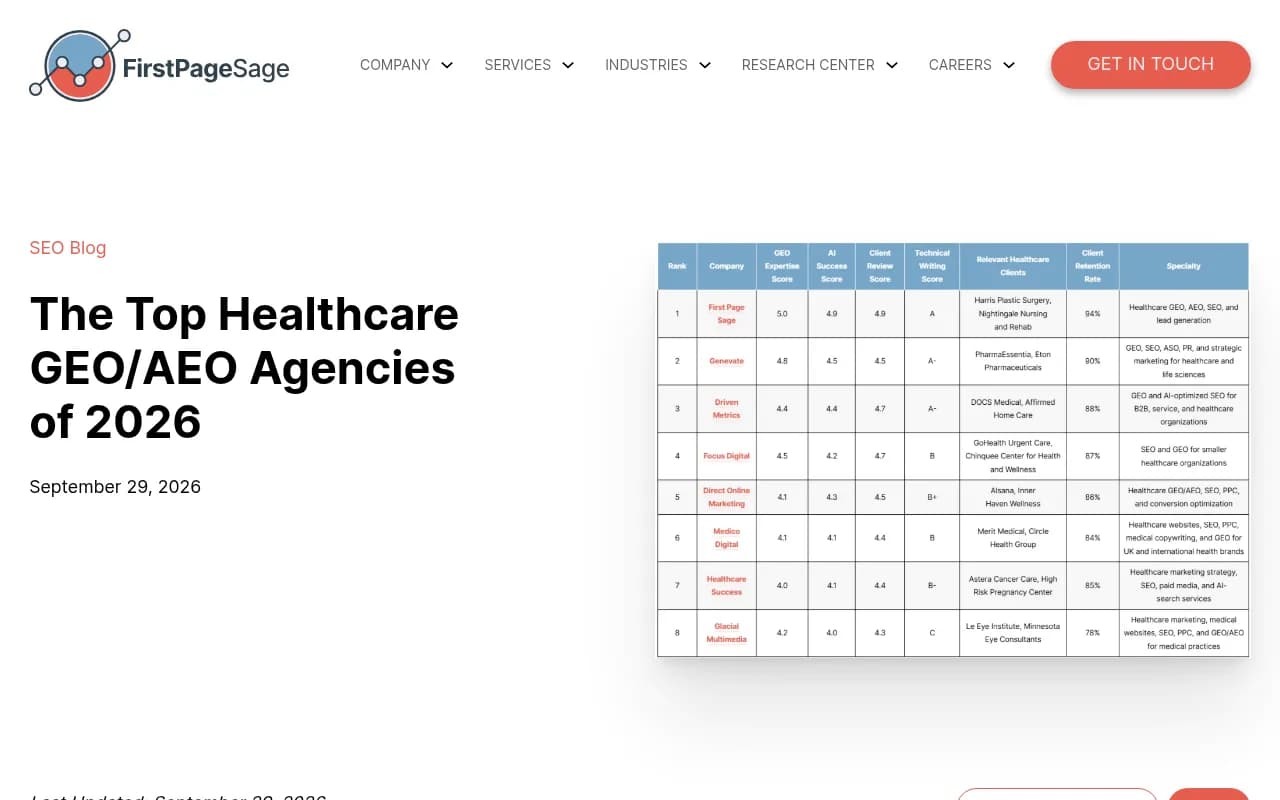
Often, yes, at least at the start. Healthcare GEO needs medical accuracy and regulatory awareness alongside AI-search skill. First Page Sage's 2026 ranking of healthcare GEO/AEO agencies lists First Page Sage, Genevate, Driven Metrics, Focus Digital, and others, but it is a ranking published by one of the agencies on the list, so read it as a directory, not a verdict.
If you want an agency partner that works with a dedicated GEO platform, 1001 SEO Media runs technical SEO, content, and AI search programs and uses Promptwatch for AI visibility measurement. Ask any agency how they handle medical review, and who signs off on claims.
Common mistakes
- Buying on engine count alone. Ten engines of shallow data is worse than six with source tracing.
- Ignoring the third-party sources. In the healthcare data, NIH, the FDA, and associations take the citations. Your own site is only part of the answer.
- Treating a vendor comparison article as due diligence. The NoGood piece is useful context, but its ranking and some pricing are vendor-adjacent. Verify HIPAA, SOC 2, and ISO claims with documents.
- Auto-publishing without review. Use approval inboxes and keep a human medical reviewer in the loop.
- Measuring one engine. Citation behavior differs between ChatGPT and Google, so track them separately.
Bottom line
Pharma and healthcare are the sectors where being named but not cited is most common, and where inaccurate AI claims carry the highest cost. For teams that want to monitor, trace sources, fix pages, and measure the result in one place, Promptwatch is the one I would shortlist first, with Profound and Conductor as the main alternatives for pure analytics and portfolio workflows. Whichever you pick, start with the free trial or a scoped pilot, run the Gradial-style baseline on your own brands, and get compliance documents in writing before you sign.