Key takeaways
- Most AI visibility tools only monitor. A smaller group closes the loop by planning, writing, and publishing content to your CMS, then tracking whether it got cited.
- The questions that separate them: which CMSs can it publish to, can you review before anything goes live, and does it measure results after publishing?
- Promptwatch is the strongest all-round pick here because its Content Agent publishes to Webflow, Framer, and WordPress and then tracks crawls, citations, and AI traffic per page.
- Frase, AirOps, Profound, Sight AI, Relixir, and Writesonic cover parts of the same ground with different tradeoffs.
- Most listicles on this topic are written by vendors who rank themselves first. Verify pricing and CMS integrations on each vendor's own page before you buy.
Why this category exists
A visibility dashboard tells you that ChatGPT recommends three competitors and not you. Fine. Now what? Someone has to find the gap, write the page, get it live, and later check whether it helped. For a small team that is a weekly grind, and it is where most GEO programs quietly stall.
That gap created a category: platforms that combine tracking with a content agent and a path into your CMS. The pitch is simple. The tool spots a missing topic, drafts the article, pushes it to your site, and measures the result.
I am skeptical of the label, though. "Content agent" can mean a thin wrapper around a text generator. Whether the content is grounded in real citation data matters more than whether a button says "publish."
What the data says content should look like
Before picking a tool, it helps to know what you want the agent to produce. Promptwatch Data's analysis of ChatGPT citations by content type (Sep 28 to Oct 4, 2026) found product pages were the most cited type at 22.4%, landing pages at 16.8%, listicles at 13.6%, and how-tos at 8.7%. For commercial prompts, product pages, landing pages, listicles, and comparisons made up almost 70% of citations.
So a content agent that only churns out generic blog posts is aiming at the wrong target. You want one that can produce comparisons, how-tos, and listicles, and keep product facts accurate.
Decay matters too. In Promptwatch's content half-life study (pages cited Jul 6, 2026, tracked to Oct 4, 2026), about 78% of landing pages were still cited after 30 days, but news lost half its pages within 36 days. Product pages, reviews, and how-tos had half-lives of roughly 74 to 77 days. Publishing is not a one-time event. The tool you choose should support refreshes, not just new articles.
What to check before you buy
- CMS coverage. Does it publish directly to your CMS, or does it export markdown you paste in? Webflow, Framer, and WordPress are common targets. Headless setups often need an API or webhook.
- Approval controls. A review inbox is worth a lot. Fully hands-off publishing sounds great until an agent states the wrong price on a product page.
- Grounding. Is the content built from your actual prompt gaps, citation data, and brand facts, or from a generic keyword?
- Measurement after publishing. Can it tell you whether the new page got crawled, cited, and clicked?
- Refresh workflows. Because pages decay, updating existing content matters as much as new output.
- Cost per response and per article. Check limits on prompts, articles, and credits on the vendor's pricing page.
The platforms compared
| Platform | Tracking | Content agent | CMS publishing | Post-publish measurement | Best for |
|---|---|---|---|---|---|
| Promptwatch | Real UI tracking across major AI engines | Yes, with scheduling and review inbox | Webflow, Framer, WordPress | Crawls, citations, AI traffic per page | Teams that want the full loop |
| Frase | Yes | Yes | Hosted FraseCMS | Research kept with pages | Writers who want one workflow |
| AirOps | Yes | Yes, content engineering | CMS and data connections | Citation feedback | Content engineering teams |
| Profound | Yes, deep | Agents on higher tiers | Check vendor docs | Yes | Enterprise and agencies |
| Sight AI | Yes | 13+ writing agents | Auto-publishing, IndexNow | Brand mention tracking | Agencies with high volume |
| Relixir | Yes | Autonomous | AI-native CMS | Yes | Teams happy to move content hosting |
| Writesonic | Yes | Yes | Check vendor docs | Basic | Writers who want an all-in-one |
Treat the table as a starting map. I could not verify current pricing or integration depth for every vendor, so confirm on their pages.
Promptwatch
Promptwatch is the one I would shortlist first, mainly because the content work is tied to the data. It tracks the real interfaces of ChatGPT, Google AI Overviews, AI Mode, Gemini, Perplexity, and Copilot, shows query fan-outs and prompt volumes, and runs a content gap analysis. The Content Agent then plans, writes, and publishes against those gaps to Webflow, Framer, or WordPress on a schedule you control. You can use a review inbox or go fully hands-off.

The loop closes after publishing. IP-verified AI crawler logs show whether bots read the new page, citation tracking shows whether it gets cited, and visitor analytics show whether AI traffic converts. Underperformers come back as items on the Action Board. Content Refresh gives git-diff-style updates for older pages, which fits the decay pattern above. A Knowledge Base and Brand Book keep tone and facts consistent.
Crisp reported 2x higher conversion from AI traffic than traditional channels and scaled to 5-10 articles per day. Pricing starts with a free Explore tier. Essential is $95/mo, and the automated Content Agent arrives with Business at $579/mo, with the Professional tier at $245/mo including 5 AEO articles. Confirm current numbers at promptwatch.com/pricing.
Downsides: it is a deep product, so smaller teams may not use all of it, and the automated agent sits on the higher plan.
Frase
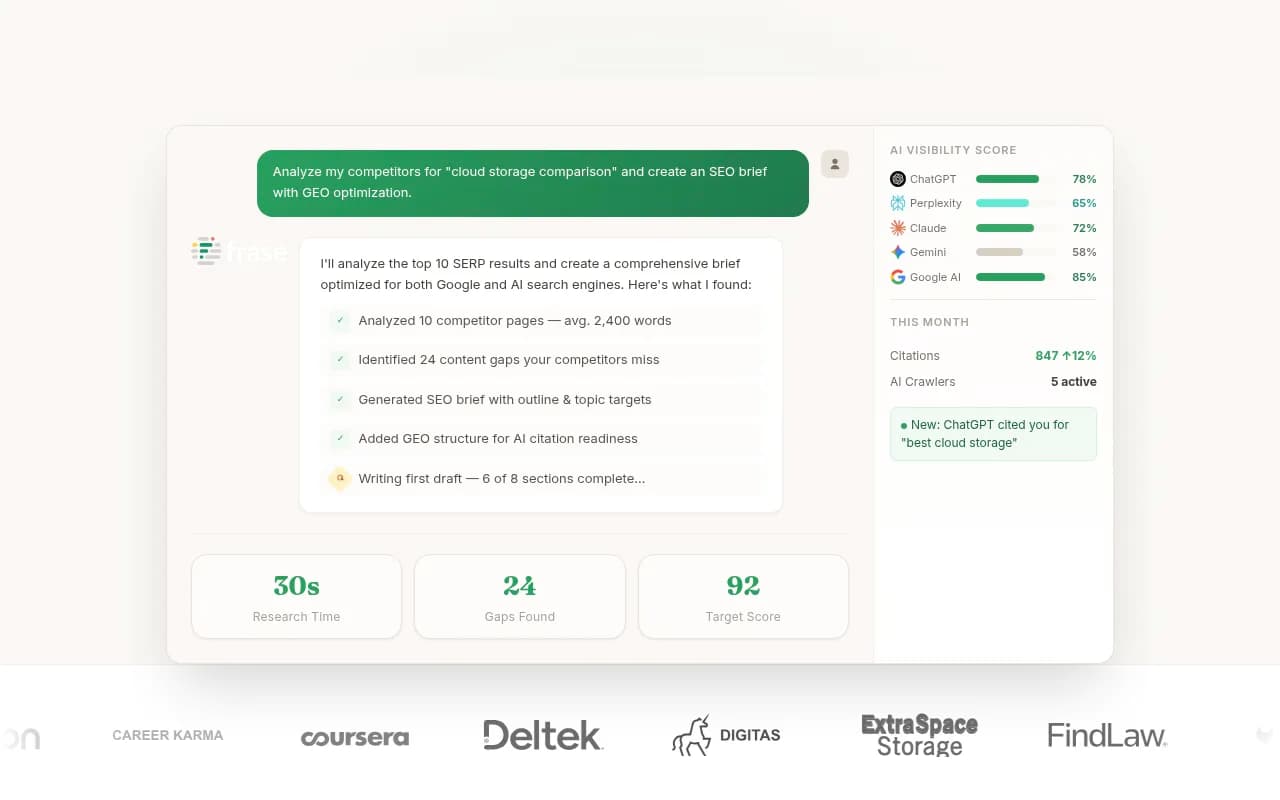
Frase started as a content optimization tool and has moved into GEO. Its own roundup describes a monitor-and-fix workflow, an MCP server, a CLI, and a hosted FraseCMS that keeps research attached to published pages. That is appealing if you want to write and publish in one place, though it means adopting its CMS rather than publishing into an existing one.
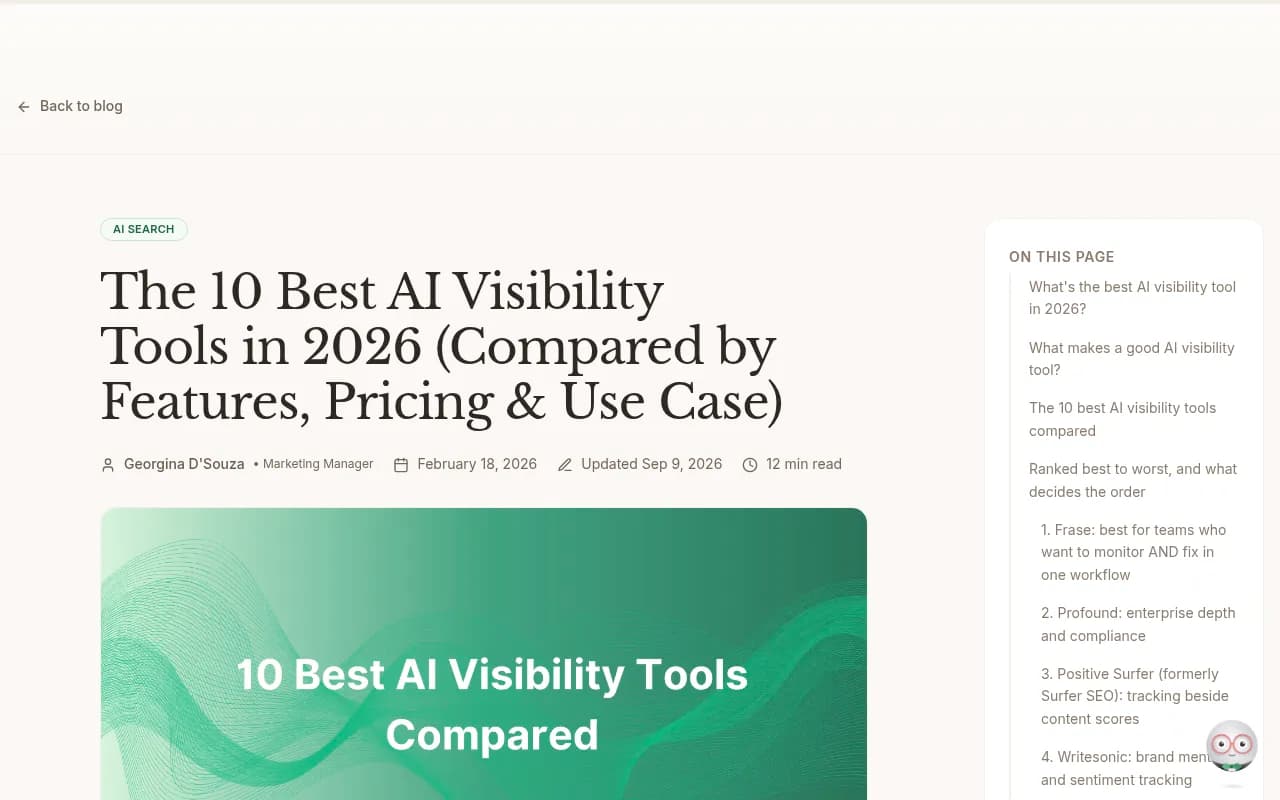
Note the source: the Frase roundup that ranks Frase first is vendor-authored. Its dates are also inconsistent (published Feb 2026, updated Sep 2026, but "updated August 2026" in the text). Useful for the feature list, less so as a neutral ranking.
AirOps
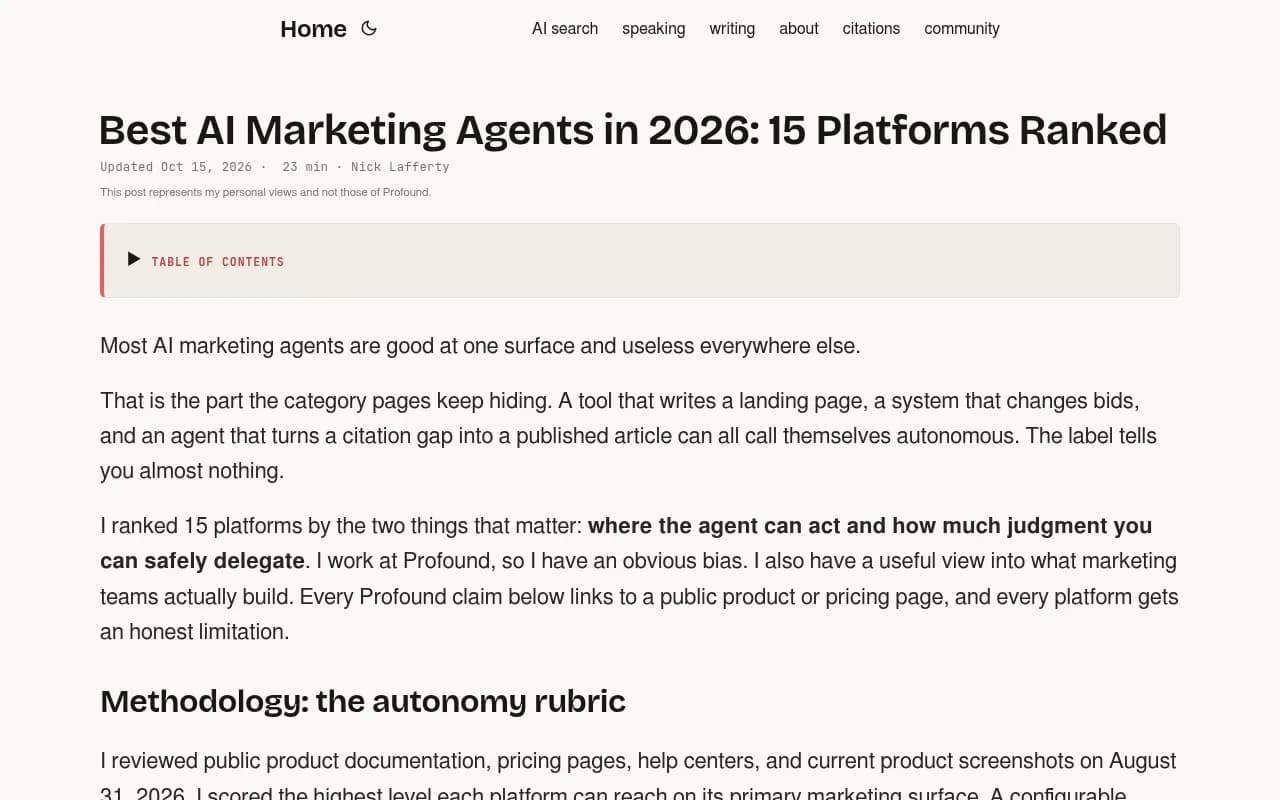
AirOps positions itself as a content engineering platform for AI search discovery. Nick Lafferty's ranking calls it the best AEO agent for content engineering teams, noting it connects CMS, SEO, AEO, social, and project data, which gives its agents more context than a standalone writer. It suits teams that want to build custom workflows rather than use a preset one.

Profound

Profound is a strong monitoring platform and its agency mode (brand configurations, pitch environments) is built for agency work. Per the Lafferty ranking, enterprise plans connect up to 9 answer engines with agents, CMS publishing, and citation feedback. Pricing runs higher than most, and I would verify exactly which agent features sit on which tier. Note that the Lafferty article is written by a Profound employee, who discloses it.
Sight AI
Sight AI combines 13+ specialized writing agents with AI visibility tracking, IndexNow-powered indexing, and CMS auto-publishing, plus an Autopilot Mode for high-volume work. Agencies producing lots of listicles, how-tos, and comparisons are the target. As with the others, its description comes from its own blog, so test the output quality yourself.
Relixir, Writesonic, and others worth a look
Relixir markets an all-in-one GEO platform with an AI-native CMS and autonomous content, which works if you are willing to host content there.

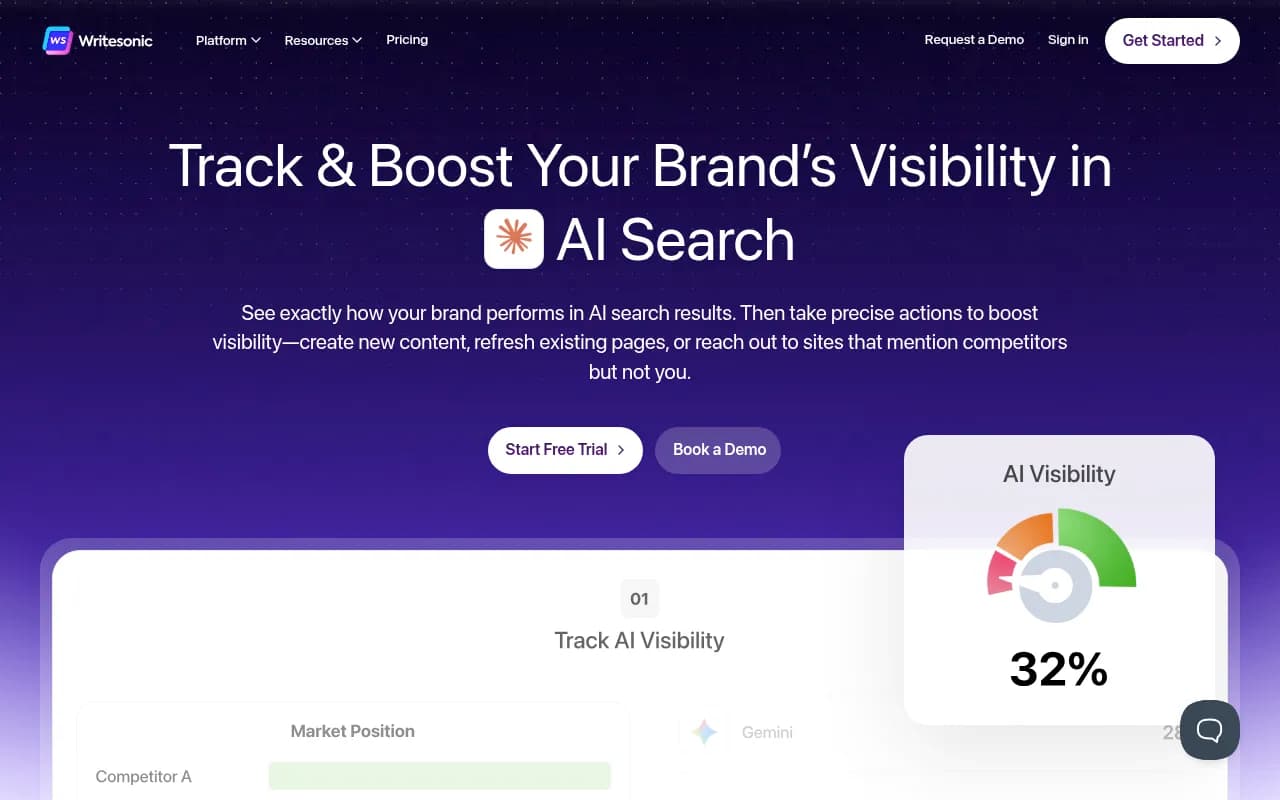
Writesonic adds AI visibility tracking to an established writing product, convenient if you already use it.
Smaller names promise tracking plus publishing in one workflow, including bydefault, GEOforge, OGTool, Slate, and Frizerly (with auto-publishing). I have not tested these and their claims come from their own listings, so run a trial before committing.
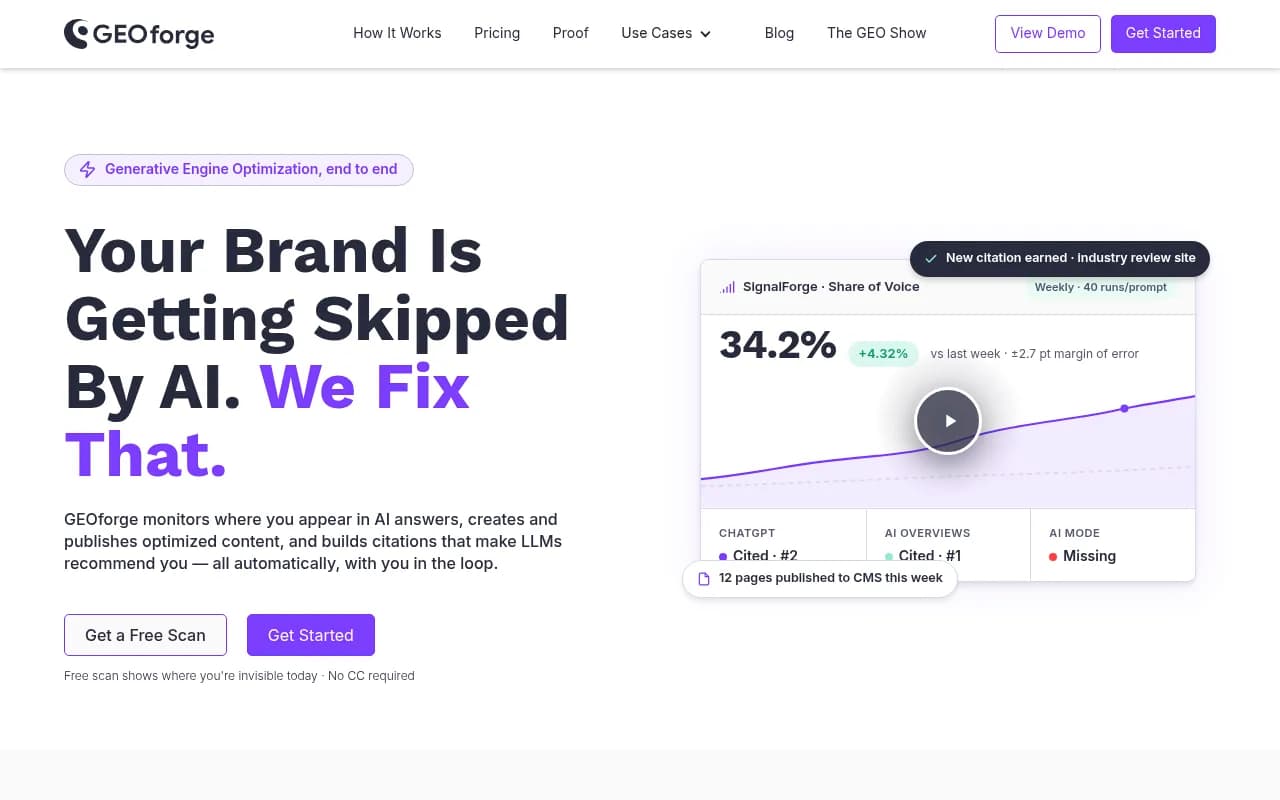

For wider browsing, the GEO software directory at bestgeosoftware.com lists many more options.
Monitoring-only tools you can pair with a separate writer
If you already have a content process, a tracker may be enough. Peec AI, Otterly.AI, and ZipTie cover monitoring without a native content agent.


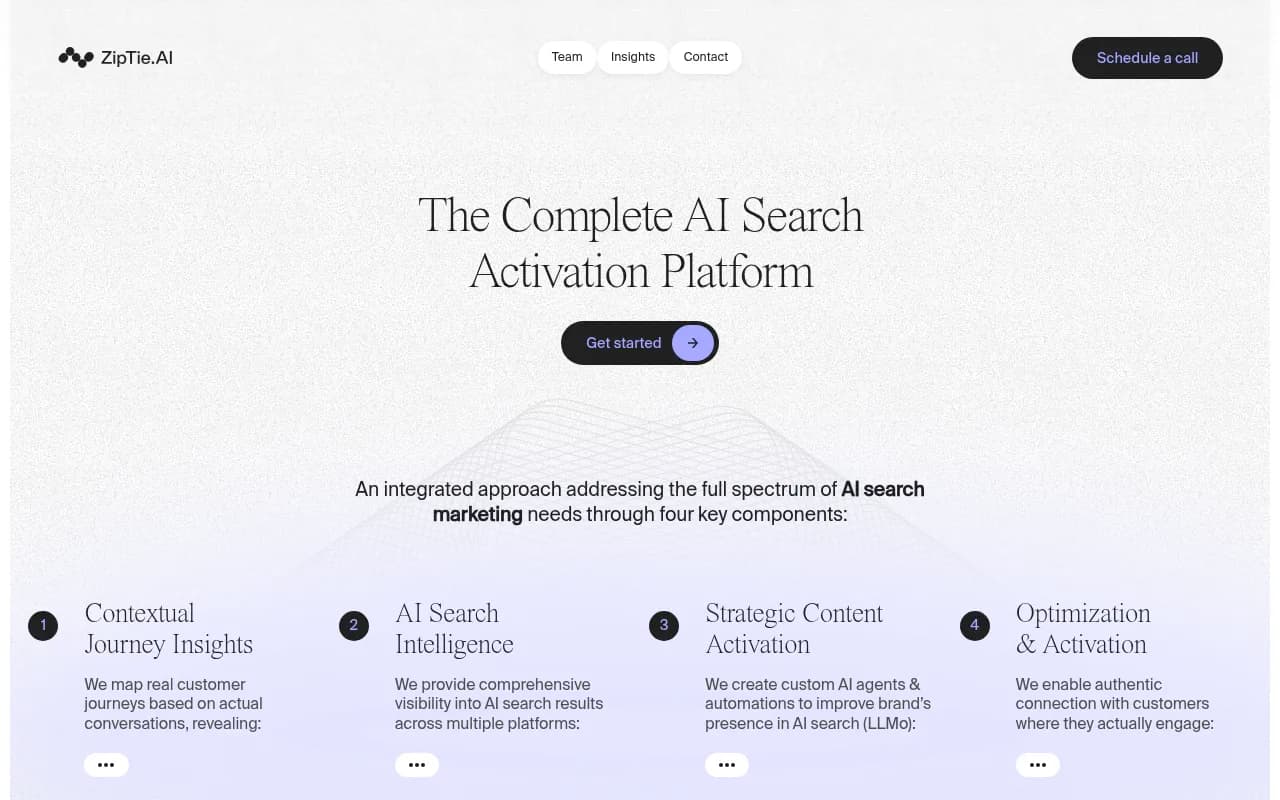
The tradeoff is manual handoff: you find the gap in one tool and brief a writer or another AI tool. That works at low volume and gets tedious past a few articles a week.
How to choose
- You want the full loop on your existing CMS: Promptwatch.
- You want writing and hosting in one place: Frase or Relixir.
- You build custom content workflows: AirOps.
- You run an agency or enterprise program: Profound, or Promptwatch's agency plans (Kick-off $199/mo, Growth $399/mo, Scale $799/mo).
- You publish high volumes of standard formats: Sight AI.
- You already have writers and only need data: a monitor like Peec AI or Otterly.AI.
A safe rollout plan
- Start in review mode. Have a human approve every article for the first month.
- Load your facts first. Put pricing, specs, positioning, and tone into the tool's knowledge base before generating anything.
- Target prompt gaps with commercial intent. Comparisons, product pages, and listicles earn the most citations.
- Check crawl access. If AI bots cannot read your pages, great content will not get cited. Crawler logs make this visible.
- Review at 30 and 60 days. See what got cited, refresh what decayed, and only then turn on more automation.
Final take
The category is real but uneven. Pick the tool by how well it connects insight to published, measured pages, not by the length of its agent list. For most teams publishing into Webflow, Framer, or WordPress, Promptwatch is the tool I would trial first, and I would run any second candidate through the same one-month, review-mode test. Verify pricing on each vendor's site, since plans change often.
If you would rather hand the program to specialists, 1001 SEO Media runs GEO programs for brands and uses Promptwatch internally.