Key takeaways
- AI search platforms split into two camps: monitoring-only dashboards and full optimization platforms. Knowing which you need saves a lot of money and frustration.
- Most tools track brand mentions across ChatGPT, Perplexity, Claude, and Gemini -- but few help you do anything about gaps in your visibility.
- The tools that drive real ranking improvements combine prompt tracking, content gap analysis, and content generation in one workflow.
- Enterprise tools like BrightEdge and seoClarity are built for large teams with big budgets; leaner tools like Otterly.AI and Peec AI work for smaller brands just getting started.
- If you want to close the loop between visibility data and actual traffic, you need a platform that connects AI citations to revenue -- not just counts them.
Search has changed more in the past two years than in the previous decade. When someone asks ChatGPT "what's the best project management tool for remote teams?" or "which CRM is easiest to set up?", they get a direct answer -- with sources. Your brand either appears in that answer or it doesn't. There's no page two.
That's the problem these platforms are built to solve. But "AI search platform" now covers a wide range of tools, from simple rank checkers to full GEO (Generative Engine Optimization) suites. Some track mentions. Some analyze gaps. Some generate content designed to get cited. And some do all three.
This guide cuts through the noise. Here are 15 platforms ranked by what they actually do for your visibility -- not just what they promise.
How we categorized these tools
Before the rankings, it helps to understand the three things an AI search platform can do:
- Track: Monitor where your brand appears (or doesn't) in AI-generated responses across ChatGPT, Perplexity, Claude, Gemini, and others.
- Analyze: Identify why competitors are getting cited and you're not -- which prompts, which content gaps, which sources AI models prefer.
- Optimize: Help you create or improve content so AI models start citing you more often.
Most tools do step one. Fewer do step two well. Very few do all three. Keep that in mind as you read.
The 15 best AI search platforms in 2026
1. Promptwatch -- best for the full optimization loop
Promptwatch is the most complete platform on this list. Where most tools stop at tracking, Promptwatch runs the full cycle: find gaps, create content, track results.
The Answer Gap Analysis shows you exactly which prompts competitors rank for that you don't -- not as a vague heatmap, but as specific questions and topics your site isn't answering. Then the built-in AI writing agent generates articles, listicles, and comparisons grounded in 880M+ real citations. The content isn't generic -- it's engineered around what AI models actually cite.
On top of that: real-time AI crawler logs (so you can see when ChatGPT or Claude visits your site and what they read), prompt volume and difficulty scoring, query fan-outs, Reddit and YouTube citation tracking, ChatGPT Shopping monitoring, and page-level attribution that connects AI visibility to actual revenue. It covers 10 AI models including Google AI Overviews, Google AI Mode, Grok, DeepSeek, and Mistral.
Used by 6,700+ brands and agencies including Booking.com and Center Parcs. Pricing starts at $99/month.

2. Profound -- strong enterprise tracking with optimization features
Profound is a solid choice for enterprise teams that need deep visibility data across AI platforms. It covers brand tracking, share of voice analysis, and competitive benchmarking. The interface is clean and the data is reliable.
Where it falls slightly short compared to Promptwatch: no Reddit or YouTube tracking, no ChatGPT Shopping monitoring, and content generation capabilities are more limited. It's a strong monitoring platform with some optimization features, but the price point is higher than most mid-market teams need.

3. Scrunch AI -- good for brand monitoring at scale
Scrunch AI focuses on AI search visibility monitoring with a clean dashboard and solid multi-model coverage. It's a good fit for brands that want a clear picture of where they stand across ChatGPT, Perplexity, and Gemini without a steep learning curve.
The gap between Scrunch and the top tier is content optimization -- it tells you where you're missing, but the path from insight to action requires other tools.
4. AthenaHQ -- monitoring-focused with good UX
AthenaHQ tracks brand visibility across 8+ AI search engines and presents the data in a way that's genuinely easy to interpret. The competitive comparison views are well-designed.
It's monitoring-focused, which is fine if that's what you need. But if you're looking for content gap analysis or any kind of optimization workflow, you'll need to pair it with something else.

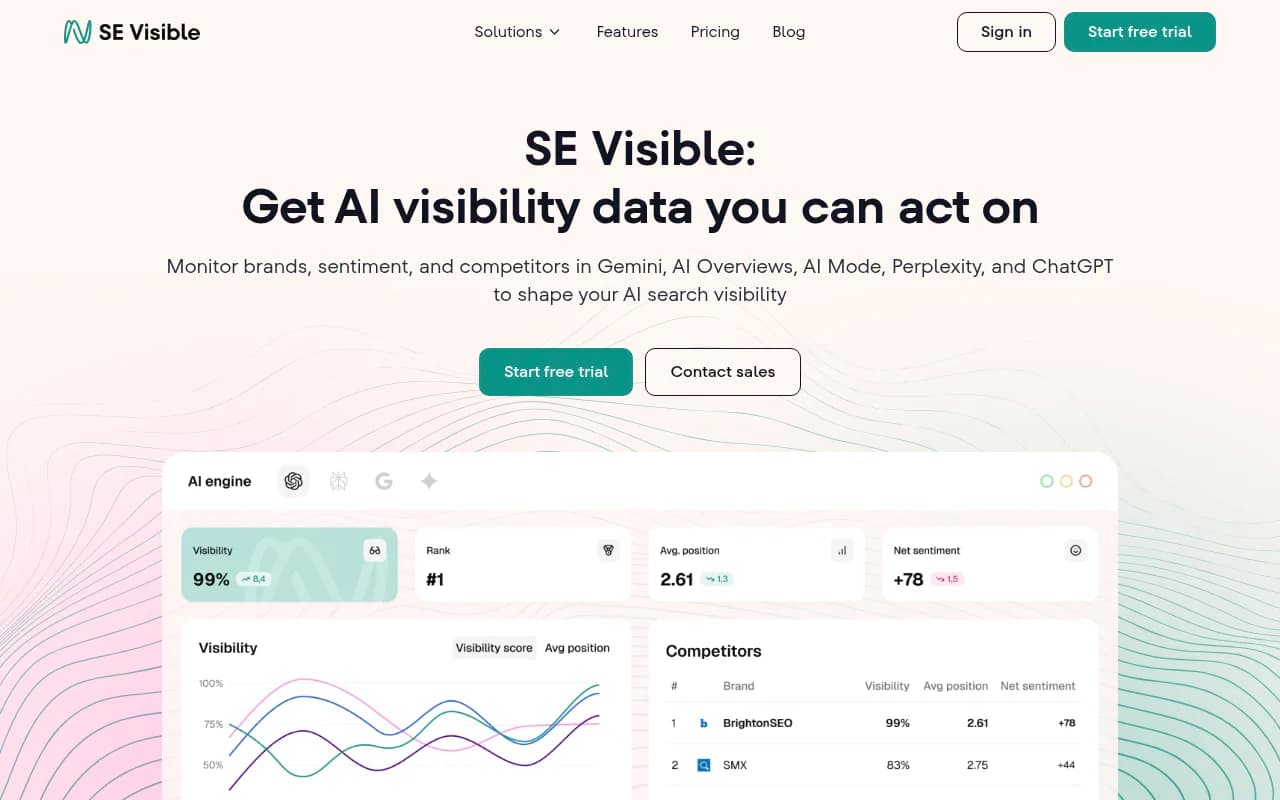
5. SE Visible -- best for teams already using SE Ranking
SE Visible is SE Ranking's dedicated AI visibility product. If your team already lives in SE Ranking for traditional SEO, this is a natural extension. It tracks brand mentions across major LLMs, shows sentiment, and integrates with SE Ranking's broader keyword and content tools.
The limitation is that it's most useful as part of the SE Ranking ecosystem. As a standalone AI visibility platform, it lacks some of the depth that purpose-built GEO tools offer.
6. Otterly.AI -- best budget option for small teams
Otterly.AI is one of the most affordable ways to start tracking AI visibility. It covers the major models, gives you mention counts and sentiment, and doesn't require a long onboarding process.
It's a monitoring tool -- full stop. No content generation, no crawler logs, no gap analysis. But for a small brand or solo marketer who just wants to know if they're showing up in AI answers, it does the job without the enterprise price tag.

7. Peec AI -- best for multi-language tracking
Peec AI stands out for its multi-language and multi-region support, which most competitors handle poorly. If you're running campaigns across European or LATAM markets and need to track AI visibility in local languages, Peec AI is worth a close look.
Like Otterly.AI, it's primarily a monitoring platform. The data is solid; the optimization side is thin.

8. BrightEdge AI Catalyst -- best for large enterprise SEO teams
BrightEdge has been an enterprise SEO staple for years, and AI Catalyst extends that into AI search. It integrates AI visibility tracking with traditional SEO data, which is genuinely useful for large teams that don't want to manage separate platforms.
The catch: BrightEdge is built for enterprises with dedicated SEO teams and matching budgets. It's overkill for most mid-market companies, and the AI-specific features aren't as deep as purpose-built GEO platforms.
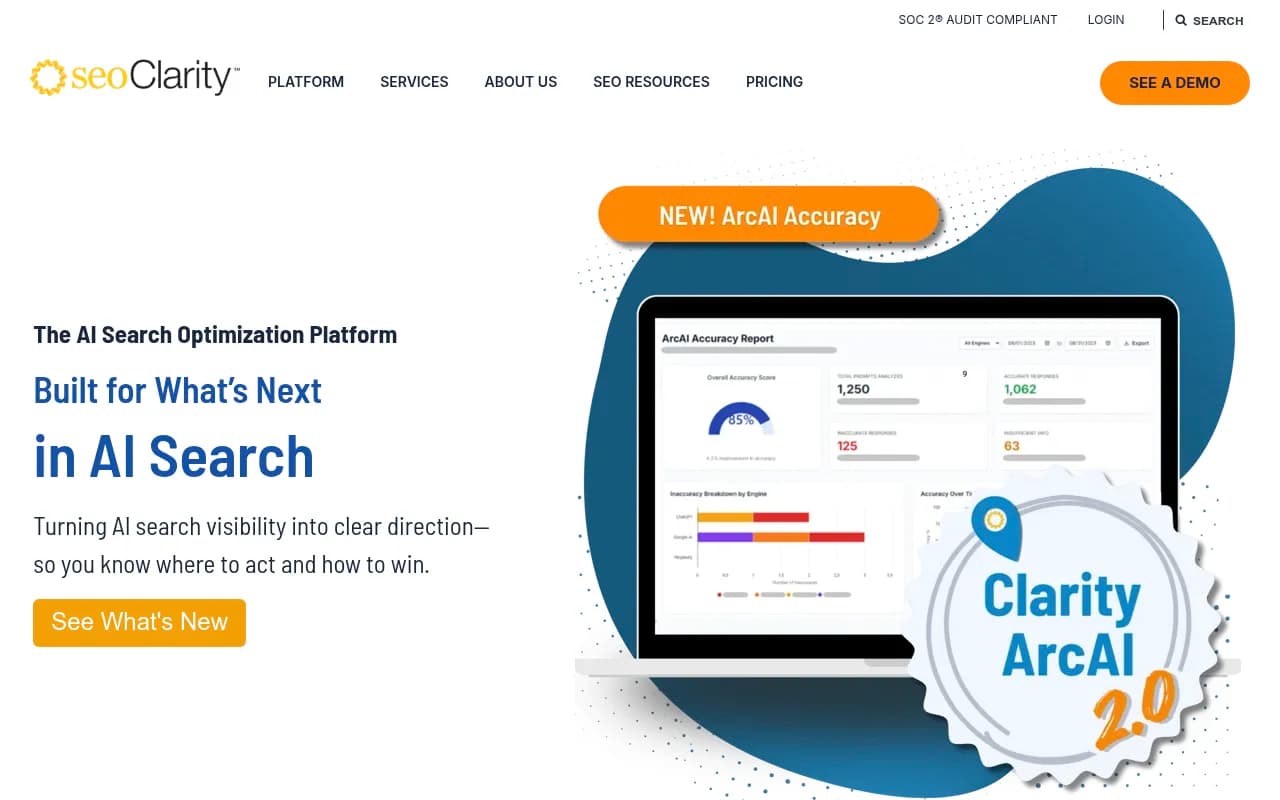
9. seoClarity -- enterprise platform with AI search tracking
seoClarity takes a similar position to BrightEdge -- a mature enterprise SEO platform that has added AI search visibility tracking. The data breadth is impressive, and the integration with existing SEO workflows is a real advantage for large teams.
Again, the AI-specific depth (crawler logs, content gap analysis, citation-level tracking) doesn't match what dedicated GEO platforms offer. It's a good addition to an enterprise stack, not a replacement for a focused GEO tool.
10. Semrush -- traditional SEO giant adding AI features
Semrush is the most widely used SEO platform in the world, and it has been adding AI search features steadily. The AI Overview tracking and some LLM mention monitoring are useful additions.
The limitation is structural: Semrush uses fixed prompts for AI tracking, which means you're monitoring a preset list rather than the actual questions your customers ask. It's a starting point, not a complete AI visibility solution.
11. Ahrefs Brand Radar -- familiar interface, limited AI depth
Ahrefs Brand Radar brings AI brand monitoring into the Ahrefs ecosystem. If your team already uses Ahrefs daily, the familiarity is a real advantage.
The fixed prompt structure is the same limitation as Semrush -- you're tracking a predetermined set of queries rather than building a custom prompt library. And there's no AI traffic attribution, so you can't connect visibility to actual site visits or revenue.
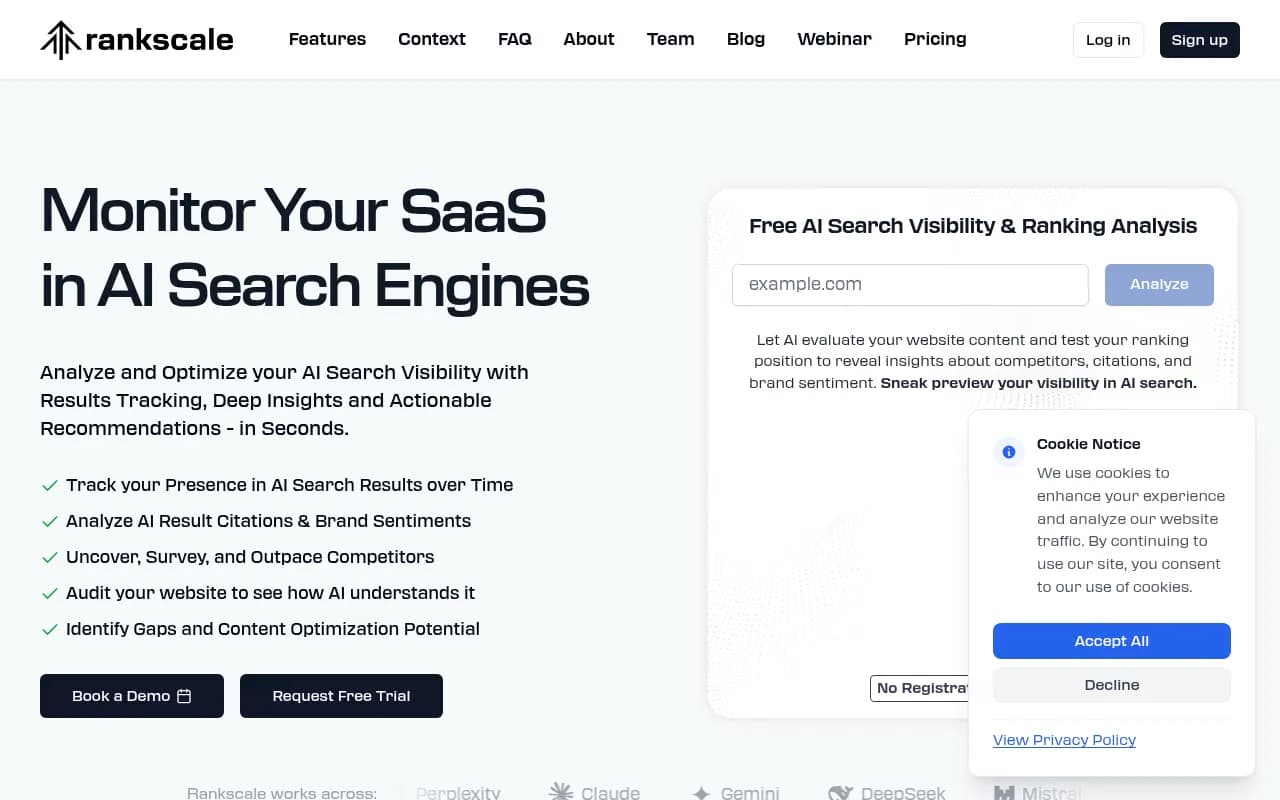
12. Rankscale -- solid mid-market AI rank tracker
Rankscale focuses on AI search ranking and visibility with a clean interface and reasonable pricing. It covers the main AI models and gives you trend data over time.
It sits in the monitoring camp without strong optimization features, but the data quality is good and it's priced accessibly for mid-market teams.
13. Brandlight -- brand-focused AI visibility tracking
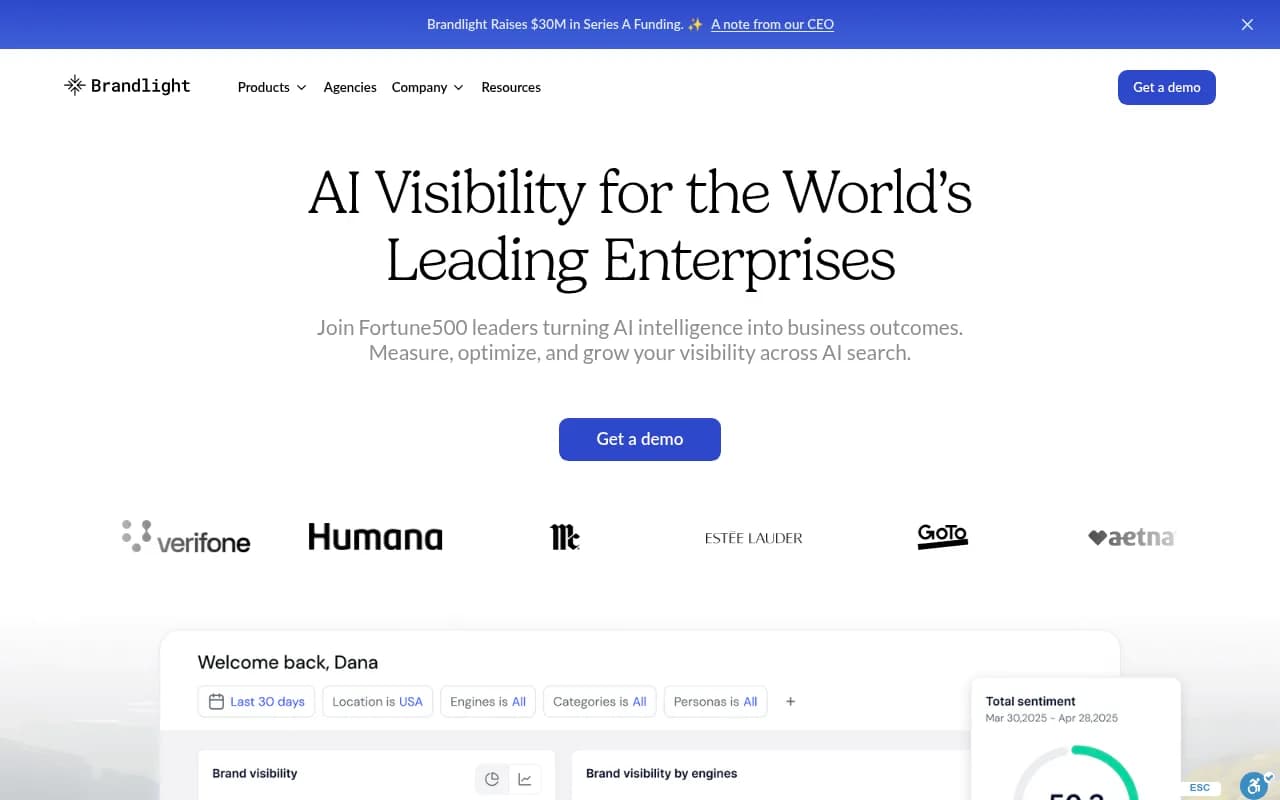
Brandlight tracks how your brand appears across AI search engines with a focus on brand sentiment and share of voice. It's a reasonable choice for brand teams that care more about how they're described than about prompt-level ranking data.
14. Search Party -- agency-oriented with limited self-serve depth
Search Party is built for agencies managing AI visibility for multiple clients. The multi-client dashboard is well-designed, and the reporting features are solid.
The gap: limited prompt metrics and no content gap analysis. For agencies that want to show clients data, it works. For agencies that want to actually improve client rankings, it needs to be paired with other tools.
15. Writesonic -- content creation with AI visibility features
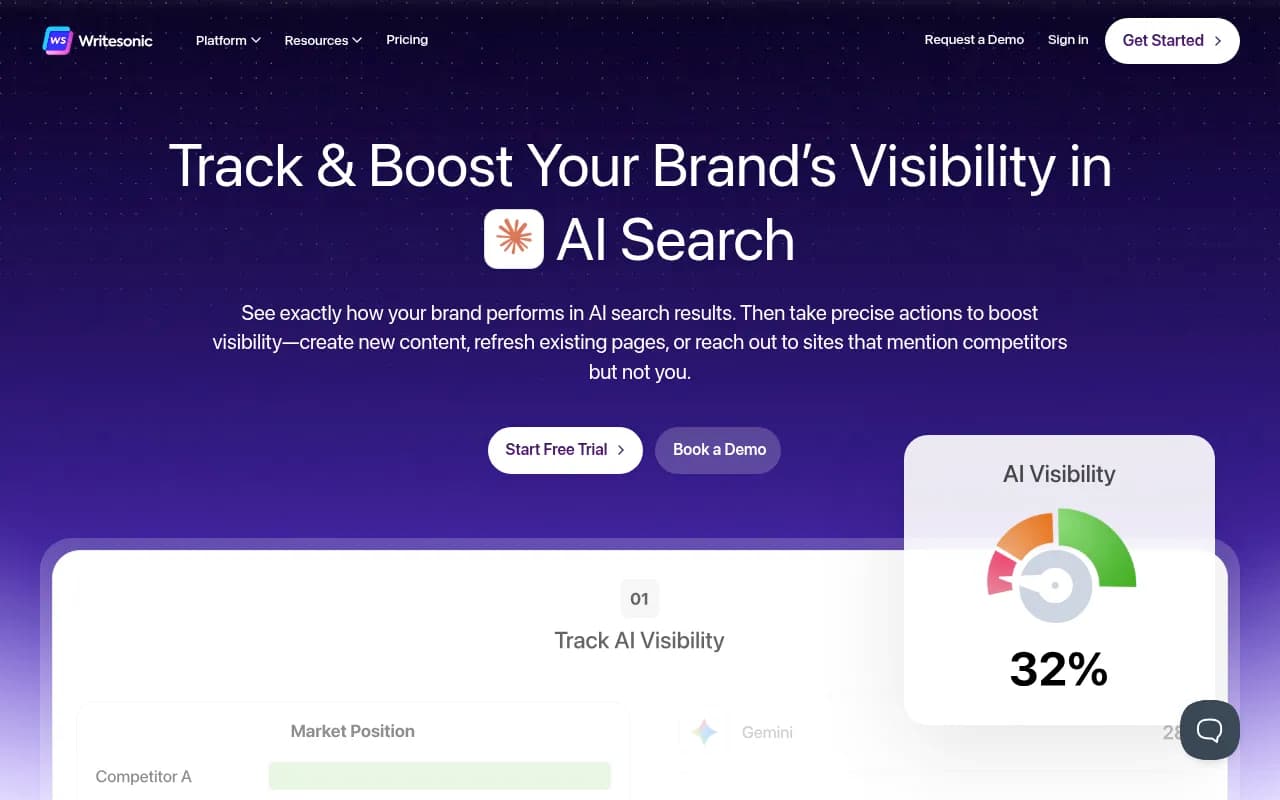
Writesonic has evolved from a pure content generation tool into something that also tracks AI search visibility. The content creation side is strong; the visibility tracking is newer and less mature.
It's worth considering if content generation is your primary need and you want basic AI visibility data alongside it. If tracking and optimization are the priority, purpose-built platforms will serve you better.
Feature comparison table
| Platform | AI models covered | Content gap analysis | Content generation | Crawler logs | Reddit/YouTube tracking | ChatGPT Shopping | Starting price |
|---|---|---|---|---|---|---|---|
| Promptwatch | 10 | Yes | Yes (AI agent) | Yes | Yes | Yes | $99/mo |
| Profound | 6+ | Partial | No | No | No | No | Higher |
| Scrunch AI | 5+ | No | No | No | No | No | Mid-range |
| AthenaHQ | 8+ | No | No | No | No | No | Mid-range |
| SE Visible | 5+ | No | Via SE Ranking | No | No | No | Bundled |
| Otterly.AI | 4+ | No | No | No | No | No | Low |
| Peec AI | 4+ | No | No | No | No | No | Low |
| BrightEdge AI Catalyst | 5+ | Partial | No | No | No | No | Enterprise |
| seoClarity | 5+ | Partial | No | No | No | No | Enterprise |
| Semrush | 3+ | No | Via ContentShake | No | No | No | $139/mo |
| Ahrefs Brand Radar | 3+ | No | No | No | No | No | Bundled |
| Rankscale | 4+ | No | No | No | No | No | Mid-range |
| Brandlight | 4+ | No | No | No | No | No | Mid-range |
| Search Party | 4+ | No | No | No | No | No | Agency |
| Writesonic | 4+ | No | Yes | No | No | No | $16/mo |
How to choose the right platform
The right tool depends on where you are in the AI search journey.
If you're just starting out and want to know whether your brand appears in AI answers at all, Otterly.AI or Peec AI give you that data without a significant investment. They're monitoring tools, but monitoring is a reasonable first step.
If you're a mid-market brand that has confirmed you have an AI visibility problem and wants to fix it, you need more than a dashboard. The gap between knowing you're invisible and actually improving your rankings requires content gap analysis and some form of content optimization. That's where Promptwatch pulls ahead -- it's the only platform on this list that takes you from "here's what's missing" to "here's the content that will fix it" without switching tools.
If you're an enterprise SEO team already invested in BrightEdge or seoClarity, the AI features in those platforms are worth using as a starting point. But be honest about their limitations: fixed prompts, no crawler logs, no citation-level content guidance. Most enterprise teams end up running a dedicated GEO platform alongside their traditional SEO stack.
If you're an agency managing AI visibility for multiple clients, the reporting and multi-client features in Search Party are genuinely useful. Just plan for how you'll actually improve client rankings, not just report on them.
The monitoring trap
One pattern worth naming directly: most teams buy a monitoring tool, look at the data for a few weeks, feel vaguely informed, and then don't know what to do next. The dashboard shows them they're invisible for 40 prompts. Great. Now what?
This is the core problem with monitoring-only platforms. They're good at showing you the problem. They're not built to solve it.
The platforms that drive real results are the ones with an action loop: you see the gap, you create content to fill it, you track whether that content gets cited. That loop is what separates optimization platforms from trackers.
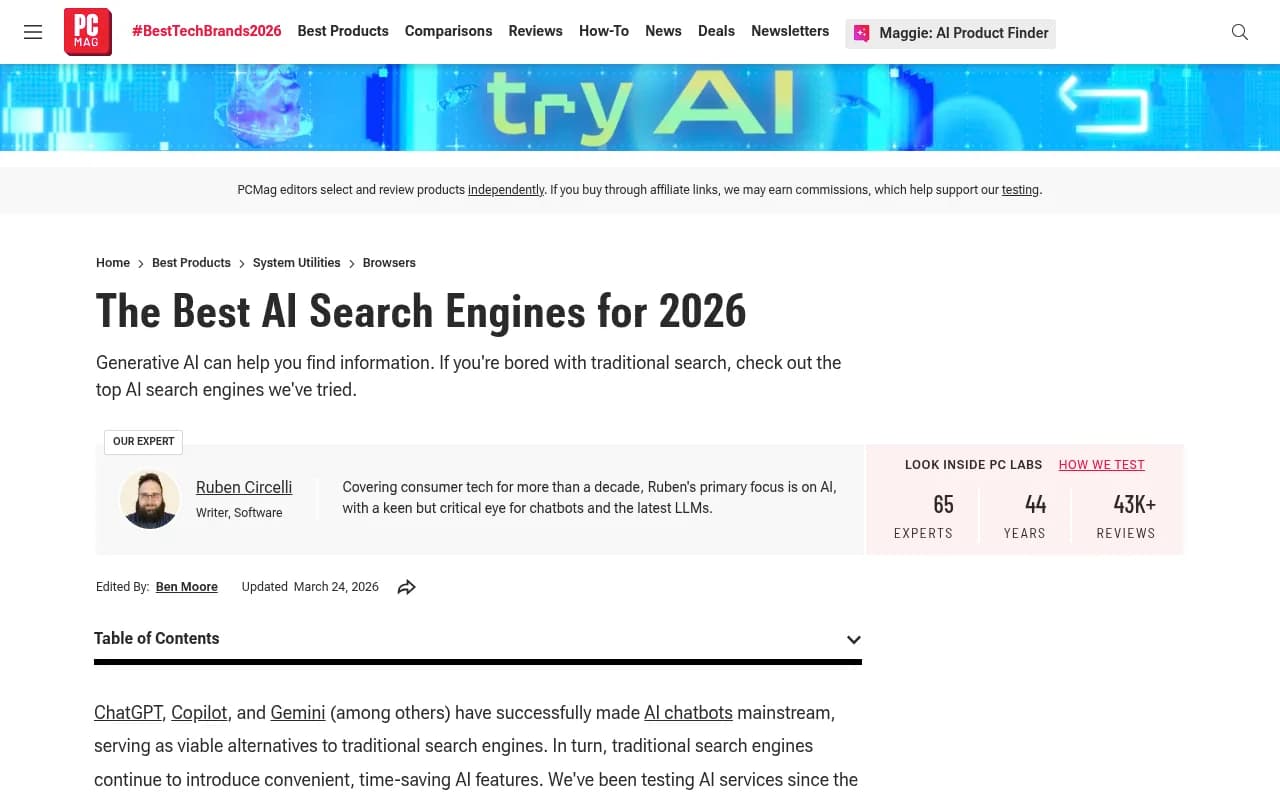
The shift in how people search -- toward AI-generated answers and away from blue links -- is already well underway. PCMag's 2026 roundup of AI search engines shows Google AI Mode and Perplexity at the top, with users increasingly expecting direct answers rather than a list of links to click through.
That shift is why AI visibility matters. If your brand isn't cited in those direct answers, you're not just ranking lower -- you're not in the conversation at all.
What to look for beyond the feature list
A few things that don't always show up in feature comparisons but matter in practice:
Prompt customization. Platforms that let you define your own prompt library (rather than using fixed presets) give you far more relevant data. Your customers don't ask the same questions as everyone else's customers.
Page-level attribution. Knowing your brand is mentioned is useful. Knowing which specific pages are being cited, and whether those citations are driving traffic, is actionable.
Crawler log access. Understanding when and how AI crawlers visit your site -- what they read, what errors they hit, how often they return -- is something most platforms don't offer. It's the difference between guessing why you're not being cited and actually knowing.
Traffic attribution. The ultimate question is whether AI visibility translates to revenue. Platforms that connect citation data to actual site visits (via code snippet, GSC integration, or server log analysis) let you answer that question.
Final thought
The AI search platforms that matter in 2026 are the ones that help you do something, not just see something. Monitoring your visibility is table stakes. The competitive advantage goes to brands that can identify gaps faster, create the right content to fill them, and track whether it's working.
Most of the 15 tools on this list are useful. A few are genuinely excellent. The one that covers the full cycle from gap to content to attribution is Promptwatch -- and for most teams, that's the one worth building around.