Key takeaways
- Answer Engine Optimization (AEO) is no longer optional — ChatGPT e-commerce traffic converts at a 31% higher rate than traditional organic search, and paid CTR on queries with AI Overviews has dropped 68%.
- Most AEO tools only monitor where you appear. The best ones help you close the gap by generating content that actually gets cited.
- The market splits cleanly into two camps: monitoring-only dashboards and full optimization platforms. Know which one you're buying.
- For teams that want to go beyond tracking, Promptwatch is the only platform rated as a "Leader" across all categories in a 2026 comparison of 12 GEO platforms.
- Tool selection should depend on your team size, budget, and whether you need content generation, crawler insights, or multi-model tracking.
What AEO tools actually do (and why most fall short)
If you've been in SEO for any length of time, you know the pattern: a new channel emerges, a wave of monitoring tools appears, and most of them stop there. AEO tools in 2026 are no different.
The basic pitch is straightforward. AI search engines like ChatGPT, Perplexity, Google AI Overviews, and Claude now answer questions directly without sending users to websites. If your brand isn't cited in those answers, you're invisible to a growing chunk of your potential audience. AEO tools help you track whether you're being cited, where competitors are showing up instead, and ideally, what to do about it.
The "ideally" is where things get complicated. A lot of tools in this space are essentially dashboards. They show you a visibility score, maybe a list of prompts where you're missing, and then leave you to figure out the rest. That's useful data, but it's not optimization.
The tools worth paying for in 2026 do three things: find the gaps, help you create content to fill them, and then track whether that content is actually getting cited. That full loop is rarer than you'd expect.
How to evaluate AEO tools
Before diving into specific platforms, here's what actually matters when comparing them:
- AI model coverage: Does it track ChatGPT, Perplexity, Claude, Gemini, Google AI Overviews, Grok, and others? Or just one or two?
- Prompt intelligence: Can you see which prompts drive traffic, how competitive they are, and which ones are winnable?
- Content gap analysis: Does it show you specifically what content is missing, not just that you're missing?
- Content generation: Can it help you write articles, comparisons, or FAQs grounded in citation data?
- Crawler logs: Does it show you which AI crawlers are visiting your site, which pages they're reading, and what errors they're hitting?
- Traffic attribution: Can you connect AI citations to actual visits and revenue?
- Competitor benchmarking: Can you see how your visibility compares to specific competitors across models?
| Feature | Monitoring-only tools | Full optimization platforms |
|---|---|---|
| AI citation tracking | Yes | Yes |
| Competitor benchmarking | Basic | Advanced |
| Prompt volume/difficulty | Rarely | Yes |
| Content gap analysis | No | Yes |
| AI content generation | No | Yes |
| Crawler log access | No | Yes (some) |
| Traffic attribution | No | Yes (some) |
| Reddit/YouTube tracking | No | Yes (some) |
| Price range | $49-$199/mo | $99-$579+/mo |
The best AEO tools in 2026
Promptwatch — best overall for optimization
Promptwatch is the platform that comes up most when teams move from "we need to track this" to "we need to actually improve this." It monitors 10 AI models (ChatGPT, Perplexity, Claude, Gemini, Google AI Overviews, Grok, DeepSeek, Meta AI, Copilot, Mistral), which is more comprehensive coverage than most competitors.
What separates it from the monitoring-only crowd is the action loop. The Answer Gap Analysis shows you exactly which prompts competitors rank for that you don't, with the specific content topics your site is missing. From there, the built-in AI writing agent generates articles and comparisons grounded in 880M+ citations analyzed — not generic SEO filler, but content structured to get cited by AI models. Then page-level tracking shows whether the new content is actually working.
The crawler log feature is genuinely useful and rare. You can see which AI crawlers (ChatGPT, Claude, Perplexity, etc.) are hitting your site, which pages they're reading, and what errors they're encountering. Most competitors don't offer this at all.
Pricing starts at $99/month for the Essential plan (1 site, 50 prompts, 5 articles), $249/month for Professional (2 sites, 150 prompts, crawler logs), and $579/month for Business (5 sites, 350 prompts). Free trial available.

Profound — best for enterprise monitoring
Profound has built a solid reputation for enterprise-grade AI visibility tracking. It covers the major AI models and gives marketing teams a clear picture of brand presence across AI search. The platform is well-regarded for data quality and reporting depth.
Where it falls short compared to Promptwatch is on the optimization side. There's no built-in content generation, no crawler logs, and no Reddit or YouTube tracking. It's a strong monitoring tool, but teams that want to act on the data will need to bring their own content workflow.

Otterly.AI — best for teams on a budget
Otterly.AI is one of the more accessible entry points into AI visibility tracking. It covers the main AI models, gives you brand mention tracking, and is priced for smaller teams or agencies that are just getting started with AEO.
The trade-off is capability. There are no crawler logs, no content generation, no visitor analytics, and no prompt volume data. It's a monitoring dashboard, and a decent one, but it won't tell you what to do with what it finds.

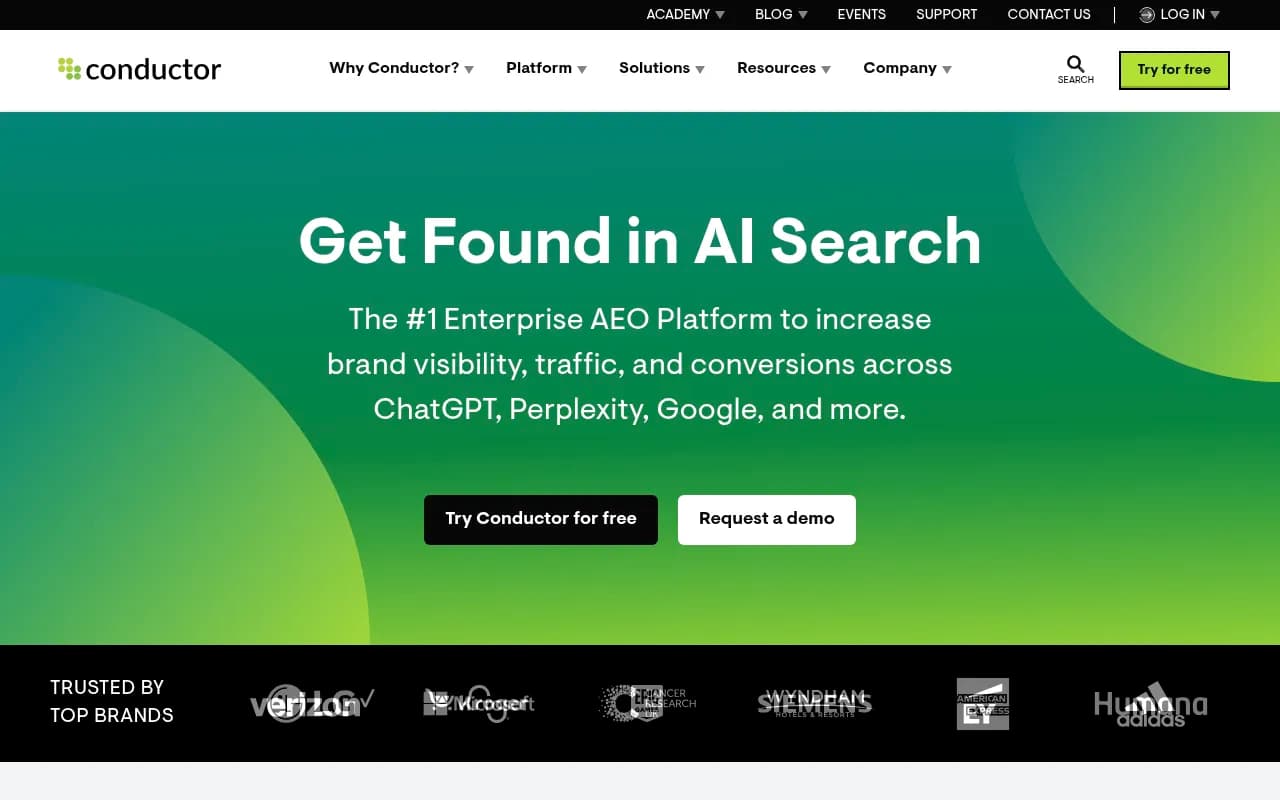
Conductor — best for enterprise SEO teams already using the platform
Conductor is an established enterprise SEO platform that has added AEO capabilities. If your team is already running SEO workflows through Conductor, the AI visibility features are a natural extension. It covers citation tracking, content optimization guidance, and integrates with broader SEO data.
The AEO features are solid but secondary to the core SEO product. Teams looking specifically for AI visibility optimization will find more depth in dedicated platforms.
Semrush — best for teams wanting AEO alongside traditional SEO
Semrush has added AI visibility tracking to its already extensive SEO toolkit. The advantage is consolidation: if you're already paying for Semrush's keyword research, backlink analysis, and content tools, having AI monitoring in the same platform is convenient.
The limitation is that Semrush uses fixed prompt sets rather than letting you define your own. That means you're tracking AI visibility for prompts Semrush has decided matter, not necessarily the ones that matter for your specific brand or category.
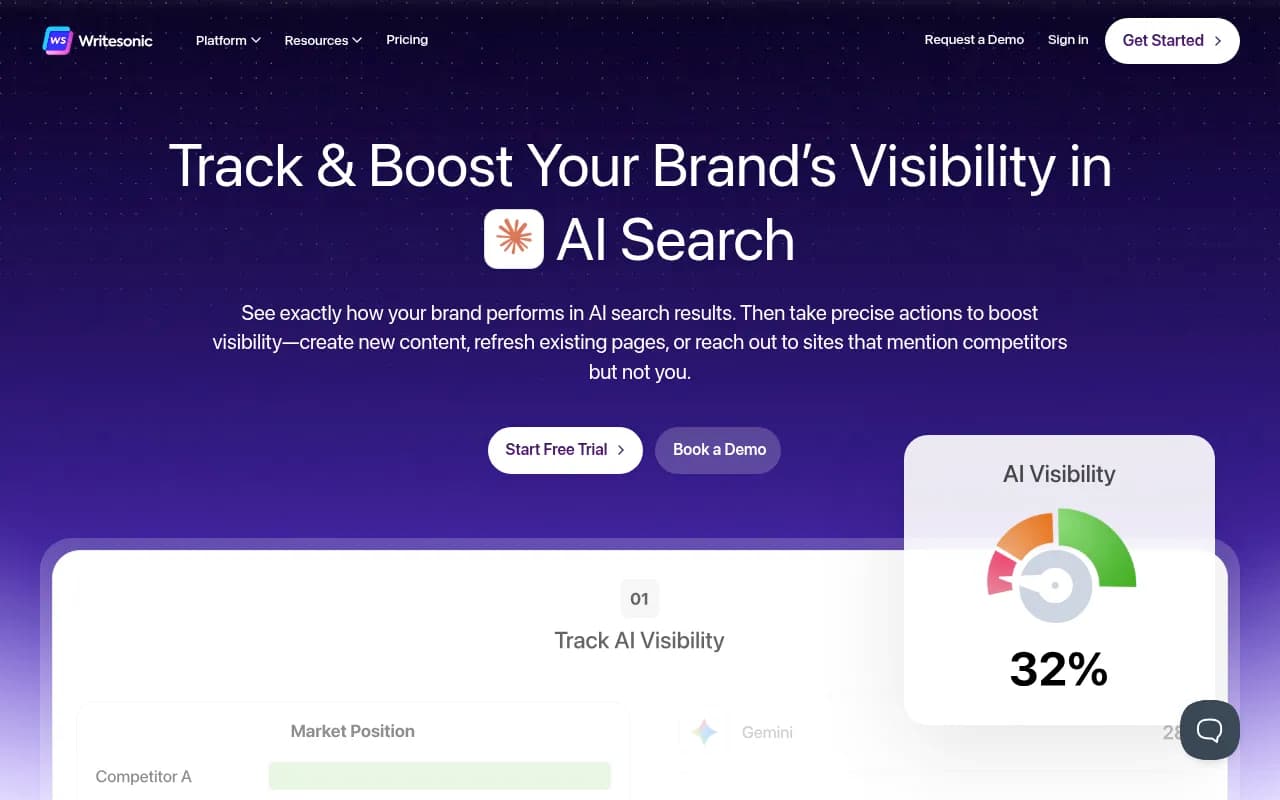
Writesonic — best for content-first teams
Writesonic has evolved from an AI writing tool into something closer to an AEO platform. It tracks AI search visibility and also helps you create content optimized for AI citations. The content generation quality is strong, and the platform is more accessible than enterprise options.
It's a good fit for content teams that want to produce AI-optimized articles without a heavy analytics workflow. The visibility tracking is less deep than dedicated monitoring platforms, but the content creation side is genuinely useful.
Athena HQ — best for brand monitoring focus
Athena HQ focuses on tracking how brands appear across AI search engines with an emphasis on sentiment and brand narrative. It's monitoring-oriented, with good coverage of major AI models and clean reporting.
Like most monitoring-focused tools, it doesn't offer content generation or crawler logs. Teams that need to understand their brand's AI presence before investing in optimization will find it useful as a starting point.
Peec AI — best for simple, clean monitoring
Peec AI is a straightforward AI search monitoring tool. It tracks brand mentions across AI models, shows competitor comparisons, and presents data in a clean interface. The focus is entirely on monitoring rather than optimization.
For teams that just want to know where they stand without a lot of complexity, Peec AI delivers that clearly. Don't expect content gap analysis or generation features.

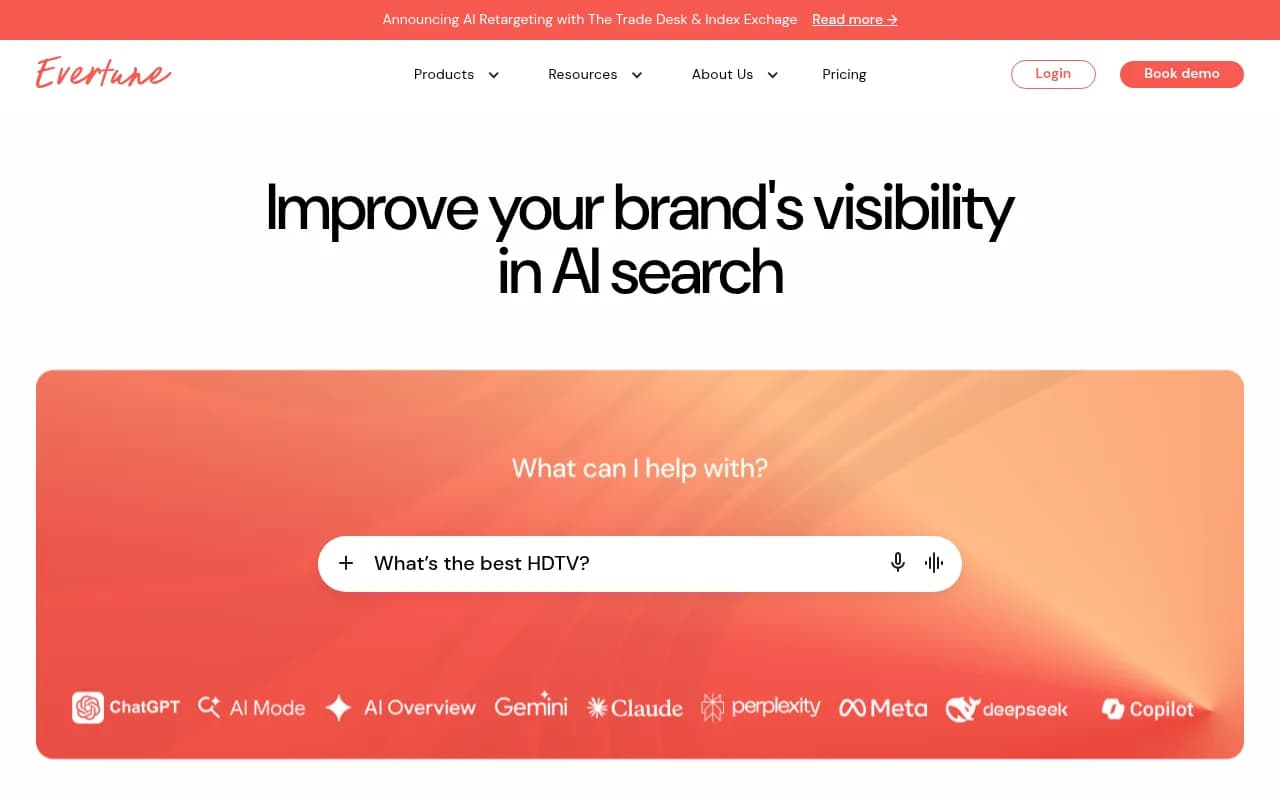
Evertune — best for Fortune 500 brand teams
Evertune targets enterprise brands with a focus on AI visibility at scale. It's built for large organizations that need to track brand presence across many product lines, markets, and AI models simultaneously.
The platform is powerful but priced accordingly. Smaller teams or agencies will likely find it overkill. For Fortune 500 marketing teams managing complex brand portfolios, it's worth evaluating.
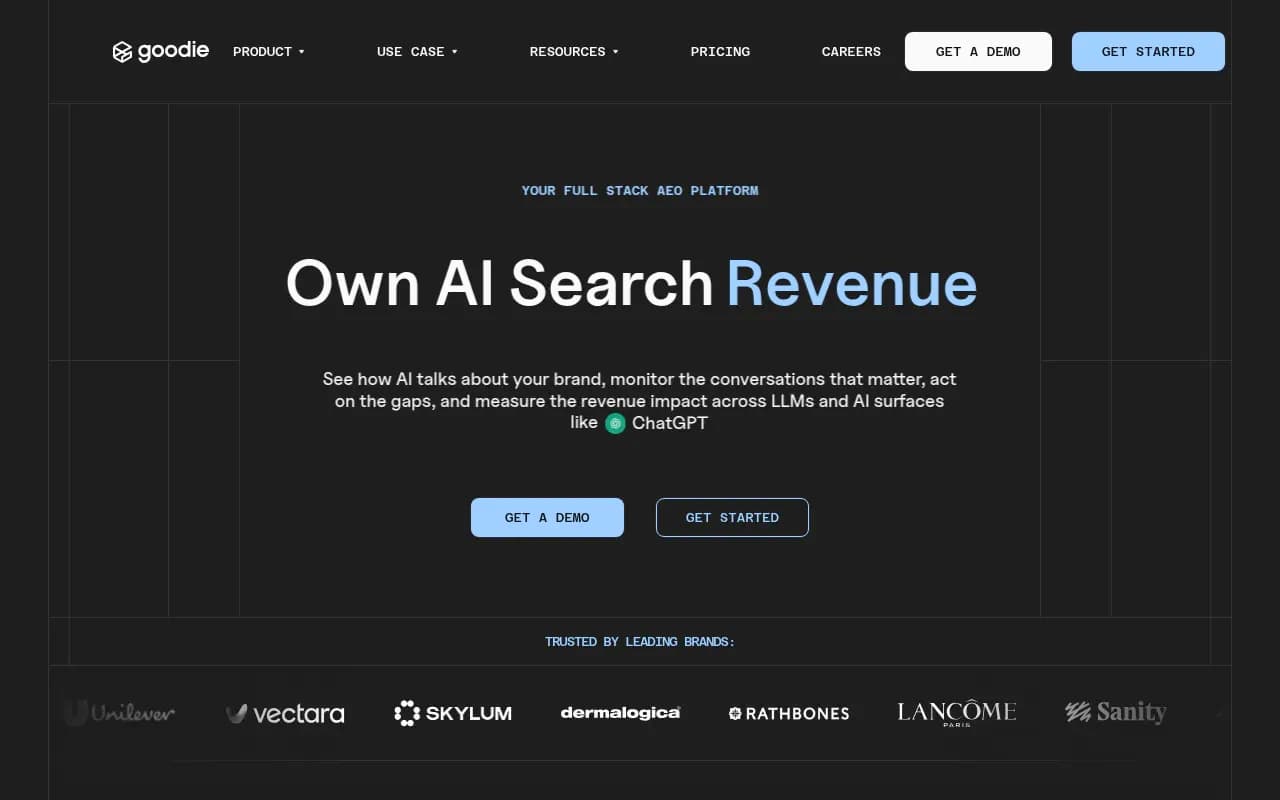
Goodie AI — best for enterprise GEO
Goodie AI positions itself as a gold standard for enterprise GEO, with strong reporting and multi-model tracking. It's designed for teams that need rigorous data and executive-level reporting on AI visibility.
Like Evertune, it's enterprise-oriented in both capability and pricing. The optimization features are less developed than Promptwatch's, but the monitoring depth is strong.
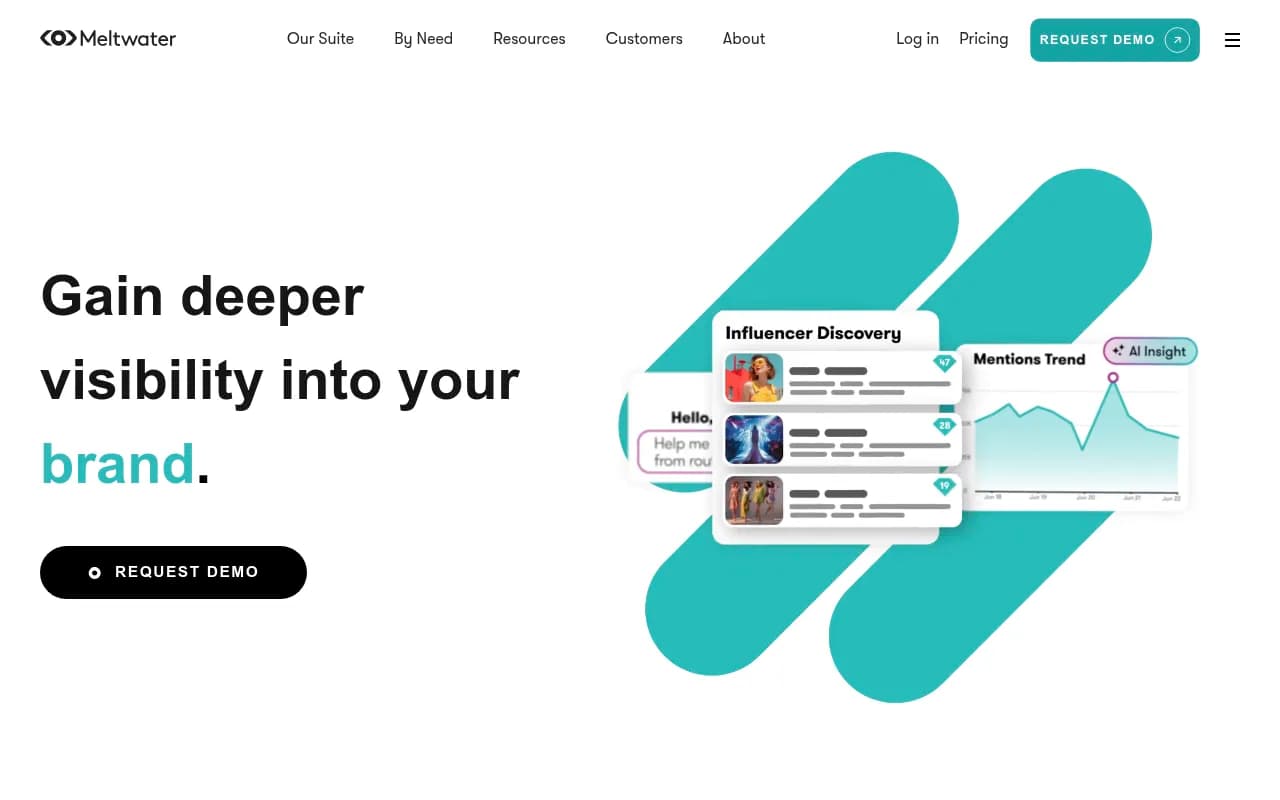
Meltwater — best for teams combining AI visibility with media monitoring
Meltwater is primarily a media intelligence platform that has added AI search visibility features. If your team already uses Meltwater for PR monitoring, social listening, or competitive intelligence, the AEO features are a useful addition.
For teams whose primary need is AI visibility optimization, Meltwater isn't the right fit. But for communications and PR teams that want to understand how AI search fits into their broader brand monitoring picture, it makes sense.
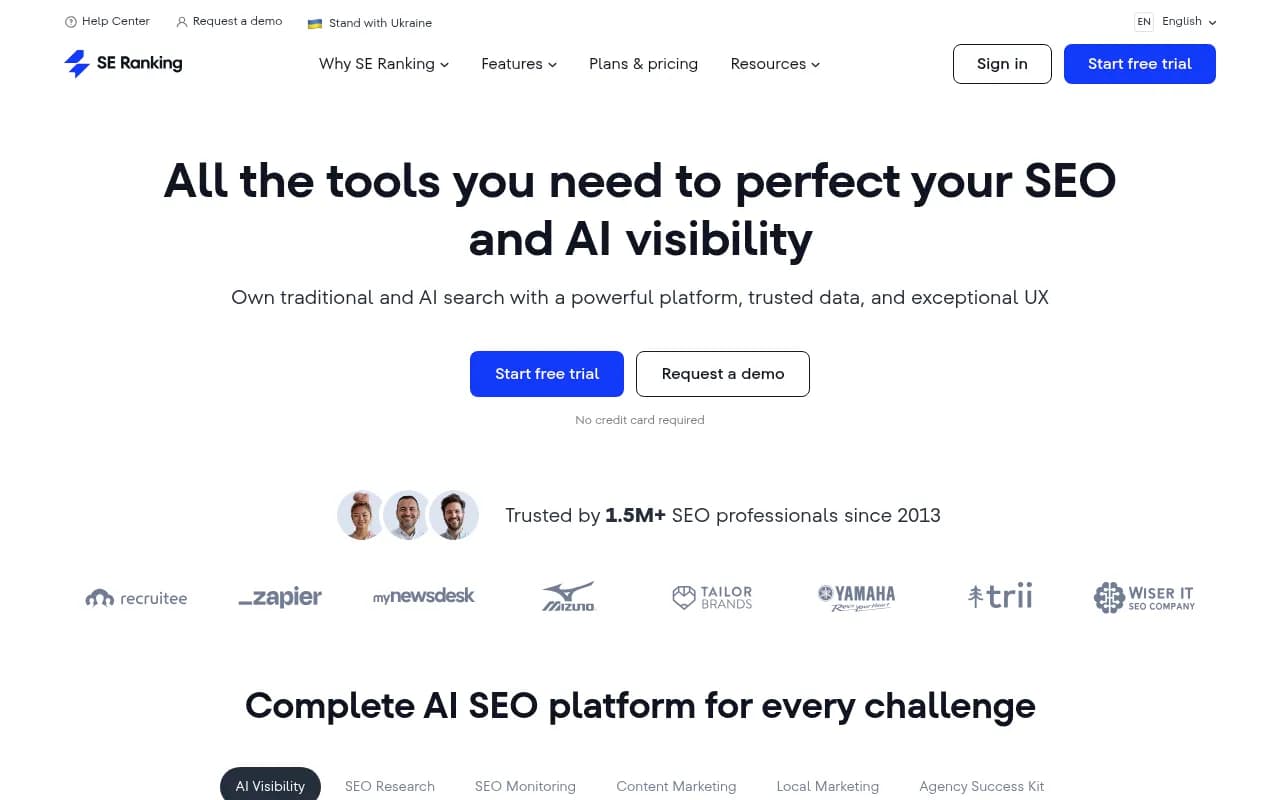
SE Ranking — best for mid-market teams wanting SEO + AEO
SE Ranking has built AI visibility tracking into its broader SEO platform. It's a solid mid-market option for teams that want keyword tracking, site audits, and AI visibility in one place without enterprise pricing.
The AI visibility features cover the main models and give you a strategic view of where you stand. Content optimization guidance is present but not as deep as dedicated AEO platforms.
How to choose the right AEO tool for your team
The honest answer is that it depends on where you are in your AEO journey and what you actually need to do.
If you're starting from zero and just want to understand whether your brand is showing up in AI search, a monitoring-only tool like Otterly.AI or Peec AI will get you oriented without a big investment. Run it for 30-60 days, understand your baseline, and then decide whether you need more.
If you're past the "what's happening" stage and into the "what do we do about it" stage, you need a platform with content gap analysis and generation. That's where Promptwatch pulls ahead. The combination of Answer Gap Analysis, AI content generation grounded in citation data, and crawler logs gives you an actual workflow rather than just a dashboard to stare at.
For enterprise teams with complex brand portfolios, Evertune, Goodie AI, or Profound are worth evaluating alongside Promptwatch, depending on whether optimization or monitoring depth is the priority.
For teams already embedded in traditional SEO platforms, Semrush or Conductor might be the path of least resistance, with the caveat that you'll be getting AEO as a secondary feature rather than a primary one.
What the data says about AEO in 2026
A few numbers worth keeping in mind as you evaluate tools:
- ChatGPT e-commerce traffic converts at a 31% higher rate than traditional organic search (Yotpo, 2026). That's not a marginal difference.
- Paid CTR on queries with AI Overviews has dropped 68%. If you're relying on paid search to capture AI-influenced queries, that's a significant problem.
- Google AI Overviews now appear on a substantial share of informational queries. Being cited there is increasingly as important as ranking on page one.
These numbers explain why the AEO tool market has grown so fast. The underlying shift is real, and teams that ignore it are handing visibility to competitors who aren't.
The monitoring vs. optimization gap
One thing worth being direct about: the majority of AEO tools on the market right now are monitoring tools wearing optimization clothing. They'll show you a visibility score, maybe a list of prompts where competitors beat you, and call it "gap analysis." That's not the same as telling you what content to create and then helping you create it.
The distinction matters because monitoring without action is just expensive anxiety. You can watch your AI visibility score tick down every week and know exactly which competitors are beating you, but if the tool doesn't help you do anything about it, you're paying for a very detailed problem statement.
The tools that close the loop — find gaps, generate content, track results — are fewer than the market suggests. When evaluating any platform, ask specifically: "After I see where I'm missing, what does this tool actually help me do next?" The answer will tell you a lot.
Final recommendations by use case
| Use case | Recommended tool |
|---|---|
| Full optimization workflow (find gaps + create content + track results) | Promptwatch |
| Enterprise monitoring with deep reporting | Profound or Evertune |
| Budget-friendly monitoring for small teams | Otterly.AI or Peec AI |
| AEO + traditional SEO in one platform | SE Ranking or Semrush |
| Content-first teams wanting AI-optimized writing | Writesonic |
| PR/comms teams combining AI visibility with media monitoring | Meltwater |
| Enterprise brand portfolios at scale | Goodie AI or Evertune |
| Teams already on Conductor for SEO | Conductor |
The AEO tool market is maturing fast. Platforms that were monitoring-only 12 months ago are adding content features; platforms that started with content are adding tracking. The gap between the best and the rest is narrowing, but it hasn't closed. For now, the clearest differentiator is whether a platform helps you act on what it finds — or just shows you the problem and walks away.