Key takeaways
- Jasper is built for marketing teams that need brand-consistent campaign content fast -- it excels at tone control, templates, and collaboration across large teams.
- AirOps is built for SEO and programmatic workflows -- it connects keyword research, content briefing, and bulk generation into structured pipelines.
- Neither tool natively tracks how your content performs in AI search engines like ChatGPT, Perplexity, or Google AI Overviews -- that's a separate problem requiring a separate tool.
- The right choice depends on your primary bottleneck: brand content production (Jasper) vs. SEO workflow automation (AirOps).
- For teams that need to close the loop between content creation and AI search visibility, you'll want to layer in a GEO platform alongside either tool.
If you've been shopping for an AI content tool in 2026, you've almost certainly run into both AirOps and Jasper. They're often mentioned in the same breath, but they're solving genuinely different problems. Picking the wrong one doesn't just waste budget -- it creates workflow friction that compounds over time.
This guide breaks down how they actually compare: what each tool does well, where each one falls short, and which team types are better served by one versus the other.
What each tool is actually trying to do
Before getting into features, it's worth being honest about the core philosophy behind each product.
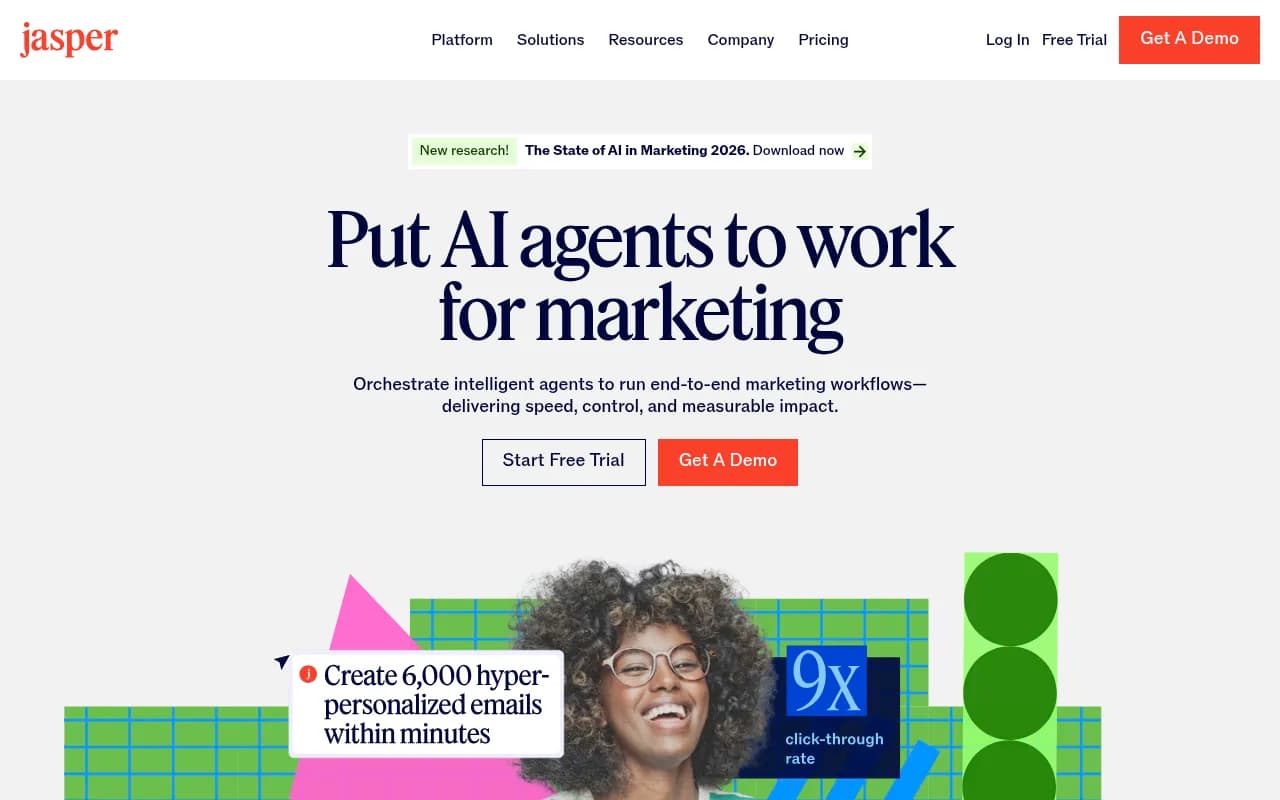
Jasper started as an AI writing assistant for marketers. Its DNA is brand voice, campaign content, and getting polished copy out the door quickly. Over time it's added templates, workflows, and team collaboration features -- but the center of gravity is still the marketing team that needs to produce a lot of content that sounds like them.
AirOps started from a different angle: SEO workflows and programmatic content at scale. Its core value proposition is connecting research inputs (keyword data, SERP analysis, competitor content) to structured content outputs through repeatable pipelines. It's less about "write this blog post" and more about "build a system that writes 500 product pages."
That distinction matters more than any individual feature comparison.
Core features compared
Content generation
Both tools use large language models to generate content, but the experience is quite different.
Jasper's editor feels like a writing environment. You get a document interface, brand voice settings, and a library of templates covering everything from blog posts to LinkedIn ads to email sequences. The output tends to be polished and on-brand when you've configured your voice settings properly. Teams that have invested time in Jasper's brand training get noticeably better results than those who haven't.
AirOps is more workflow-oriented. Content generation happens inside "workflows" -- structured sequences that pull in data from external sources, apply prompts, and produce outputs. This is powerful for programmatic use cases but has a steeper learning curve for teams that just want to write content. You're essentially building a content production system, not opening a document.
SEO capabilities
This is where the gap between the two tools is most pronounced.
AirOps has native SEO tooling: keyword research, clustering, SERP analysis, and content briefs grounded in search data. You can build workflows that pull keyword data and automatically generate optimized drafts. For teams doing programmatic SEO at scale -- location pages, product descriptions, data-driven articles -- this integration is genuinely useful.
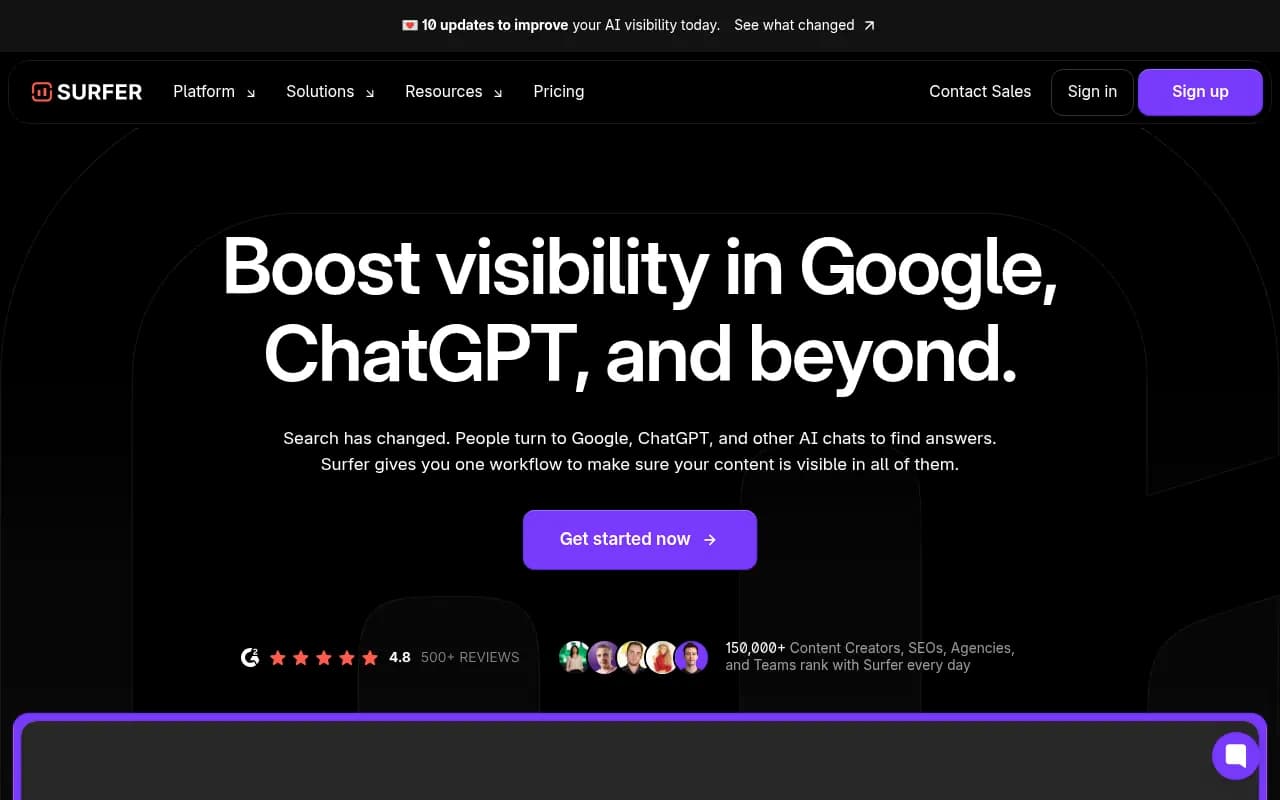
Jasper has SEO features, but they're more surface-level. It integrates with Surfer SEO for on-page optimization scoring, which helps, but the keyword research and SERP intelligence aren't native. You're still relying on external tools for the research layer, then bringing that data into Jasper manually.
Brand governance and consistency
Jasper wins here, and it's not particularly close. Its brand voice training, style guides, and team permissions are built for organizations where consistent tone across dozens of writers and campaigns actually matters. Enterprise teams with strict brand guidelines tend to find Jasper's controls more mature.
AirOps has brand controls, but they're more limited. The governance features are improving, but if your primary concern is "does every piece of content sound like us," Jasper is the better fit.
Workflow automation and integrations
AirOps is the stronger tool for workflow automation. Its pipeline model lets you connect data sources, apply multi-step prompts, and route outputs to different destinations -- CMS, spreadsheets, APIs. Teams that want to automate repetitive content tasks at scale (think: generating meta descriptions for 10,000 product pages) will find AirOps more capable.
Jasper has integrations too -- Google Docs, HubSpot, Chrome extension -- but they're more about making the writing experience convenient than building automated production pipelines.
Pricing
Both tools price by seat/usage, and both can get expensive at scale.
Jasper's pricing starts around $39/month for individuals and scales into custom enterprise pricing for larger teams. The per-seat model can add up quickly for agencies or large marketing departments.
AirOps pricing is less transparent publicly, with plans that vary based on workflow runs and output volume. It's generally positioned as a mid-to-enterprise tool, and the cost reflects that.
Neither tool is cheap once you're running them seriously. This is worth factoring in if you're also paying for SEO platforms, CMS tools, and the GEO monitoring stack that neither of them covers.
Feature comparison table
| Feature | AirOps | Jasper |
|---|---|---|
| Primary use case | SEO workflows, programmatic content | Brand marketing, campaign content |
| Content editor | Workflow-based | Document-based |
| Native SEO/keyword research | Yes | Limited (via integrations) |
| Brand voice controls | Basic | Advanced |
| Workflow automation | Strong | Limited |
| Programmatic content at scale | Strong | Moderate |
| Team collaboration | Moderate | Strong |
| AI search visibility tracking | No | No |
| Integrations | APIs, data sources, CMS | Google Docs, HubSpot, Surfer |
| Learning curve | Steeper | Moderate |
| Best for | SEO/content ops teams | Marketing teams, brand campaigns |
Where both tools fall short in 2026
Here's something neither vendor will tell you: generating content is the easy part now. The harder problem is knowing whether that content is actually getting picked up by AI search engines.
When someone asks ChatGPT, Perplexity, or Google's AI Mode a question in your category, are you being cited? Are competitors getting mentioned instead of you? Which pages on your site are AI crawlers actually reading, and which ones are being ignored?
Neither AirOps nor Jasper answers any of these questions. They're content creation tools, not AI visibility platforms. That's not a criticism -- it's just a scope issue. But for SEO and GEO teams in 2026, this gap is increasingly hard to ignore.
Teams that are serious about AI search visibility typically layer a dedicated GEO platform on top of their content creation stack. Promptwatch is one option worth looking at here -- it tracks how your brand appears across ChatGPT, Perplexity, Google AI Overviews, Claude, and other models, and it includes content gap analysis that shows exactly which topics competitors are getting cited for that you're not.

The workflow that's emerging for sophisticated teams: use AirOps or Jasper to create content, use a GEO platform to identify what to create and verify it's working.
Who should use AirOps
AirOps makes the most sense for:
- SEO teams running programmatic content operations (location pages, product descriptions, data-driven articles at scale)
- Content ops teams that want to automate repetitive production tasks
- Teams comfortable with a more technical, workflow-based setup
- Organizations that need to pull external data (keyword rankings, competitor data, structured databases) into their content production process
If your primary bottleneck is "we need to produce a lot of SEO-optimized content efficiently and we have the technical capacity to build workflows," AirOps is worth serious consideration.
The honest caveat: AirOps has a real learning curve. Teams without someone willing to invest time in building and maintaining workflows often find it underused. It's not a tool you open and immediately get value from -- it's a tool you build systems with.
Who should use Jasper
Jasper makes more sense for:
- Marketing teams that produce a high volume of campaign content (ads, emails, social, landing pages)
- Organizations with strong brand guidelines that need consistent voice across many writers
- Teams that want a polished writing environment rather than a workflow builder
- Companies already invested in the HubSpot or Google Docs ecosystem
The honest caveat: Jasper's SEO capabilities are real but not deep. If keyword research, SERP analysis, and content briefs grounded in search data are central to your workflow, you'll still need external tools. Jasper is best when you already know what to write and need help writing it well.
Alternatives worth considering
If neither AirOps nor Jasper quite fits, a few other tools are worth knowing about:
Surfer SEO is a strong option for teams whose primary need is on-page content optimization. It's more focused than either AirOps or Jasper on the "optimize this page to rank" use case.
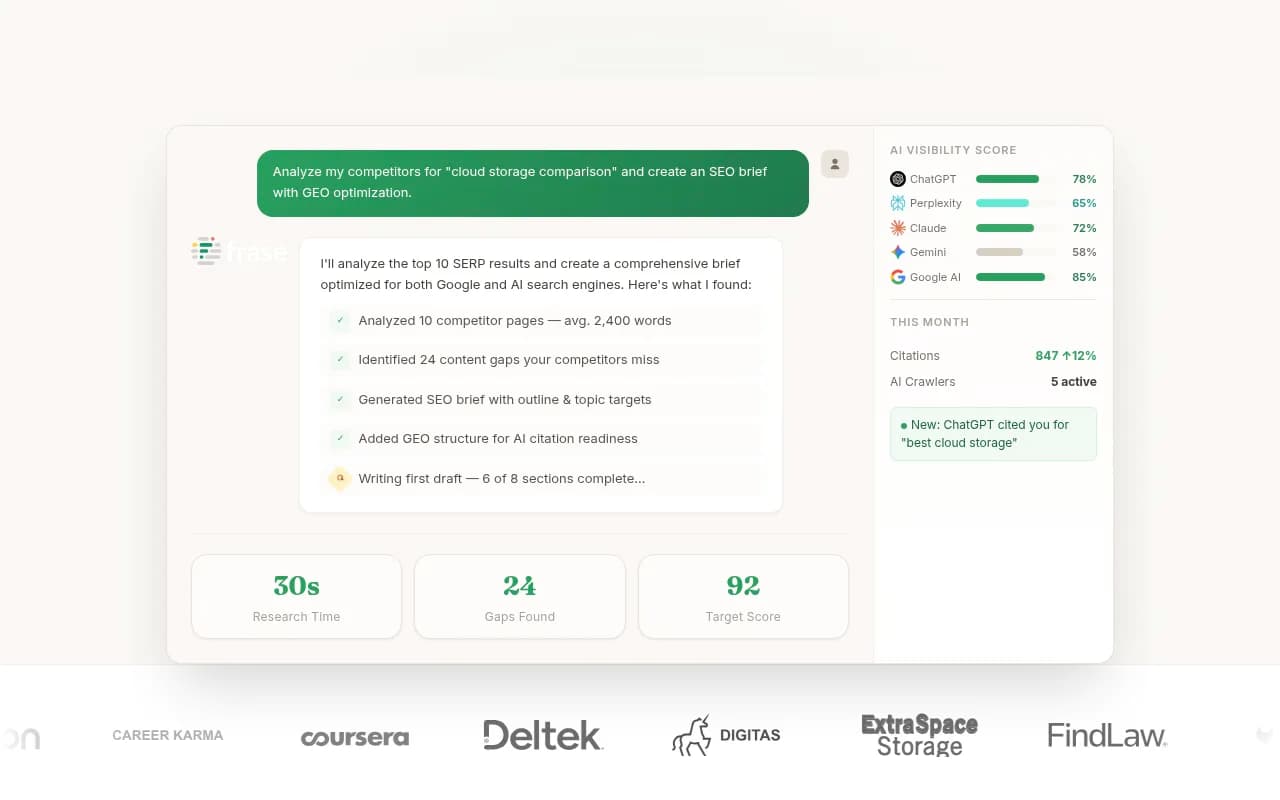
Frase sits in a similar space -- research-to-draft workflows with SEO scoring built in. It's generally more accessible than AirOps for teams without technical resources.
Clearscope is worth a look if content optimization and topical coverage are your main concerns. It's less about generation and more about making sure your content covers what it needs to cover.

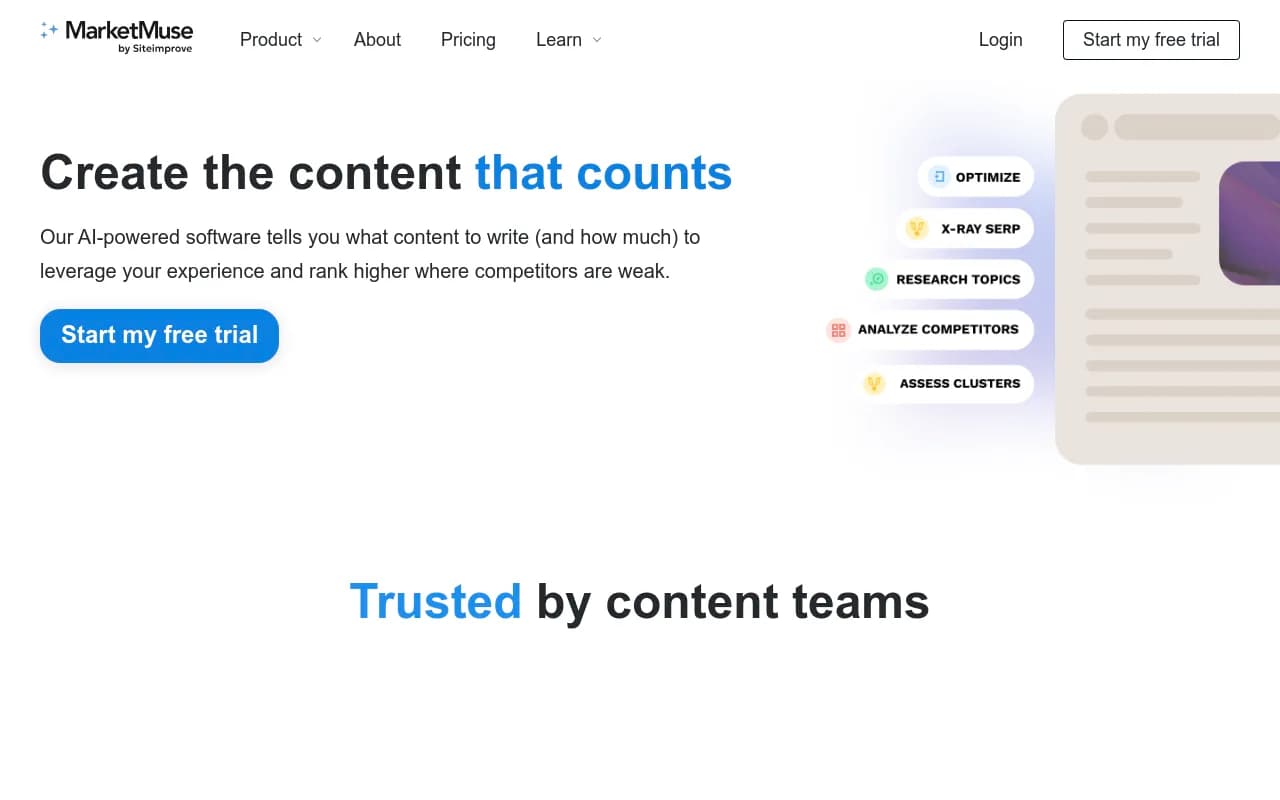
MarketMuse takes a content planning approach -- it helps you figure out what to write before you write it, with topical authority modeling that's genuinely useful for larger sites.
For teams specifically focused on AI search visibility (as opposed to content creation), the tool landscape is different. Platforms like Promptwatch, AthenaHQ, and Profound are built for monitoring and optimizing your presence in AI-generated answers rather than generating content itself.


The honest verdict
AirOps and Jasper aren't really competing for the same customer. The overlap exists, but the core use cases are different enough that most teams will find one clearly more relevant than the other.
If you're an SEO or content ops team building programmatic workflows and need keyword intelligence baked into your production process, AirOps is the stronger tool. If you're a marketing team focused on brand-consistent campaign content and need a polished writing environment with good collaboration features, Jasper is the better fit.
What neither tool does is tell you whether your content is actually showing up in AI search results -- and in 2026, that's a question that matters. The teams getting ahead are the ones who've figured out that content creation and AI visibility tracking are two separate problems that require two separate solutions, and they've built a stack that handles both.