Key takeaways
- AirOps is a content operations platform built around template-based AI workflows -- it's strong for programmatic SEO at volume but less flexible for complex editorial processes
- Its biggest strength is breaking content production into atomic, repeatable steps (SERP analysis, gap finding, briefing, drafting, optimization) rather than treating content as one big AI task
- Brand governance and workflow flexibility are the most common complaints from teams that outgrow it
- AirOps has added AI search visibility tracking, which is genuinely useful, but it's not a dedicated GEO platform
- Best fit: teams that need high-volume, template-driven content and already have a clear content process to automate
AirOps has been around long enough to have a real reputation -- and a real set of limitations. It started as a tool for teams who wanted to run AI-assisted content at scale without rebuilding everything from scratch. In 2026, it's matured into something closer to a content engineering platform, with workflow automation, AI search visibility features, and a growing library of pre-built templates.
But "matured" doesn't mean "right for everyone." After digging through user reviews, Reddit threads, and third-party assessments, here's an honest picture of what AirOps actually delivers and where it leaves teams wanting more.
What AirOps actually is
AirOps is not an AI writing tool in the traditional sense. It's closer to a workflow orchestration layer for content teams -- you define the steps, connect the data sources, and let the system carry context from one stage to the next without copy-pasting between tools.
The core idea is that content production is a series of atomic tasks: keyword research, SERP analysis, gap identification, brief creation, drafting, optimization, and publishing. AirOps lets you chain those tasks together so the output of one step feeds automatically into the next.

That's genuinely useful. One Reddit user who tested it for SEO and AEO workflows noted that "AirOps forces you to break SEO and AEO into atomic tasks... that alone changed how I think about the process." The discipline of decomposing content work into discrete steps -- rather than asking an AI to "write me an article about X" -- tends to produce better results.
The platform also supports what it calls "brand knowledge" inputs: guidelines, tone documents, and reference material that get baked into every workflow step. This matters more than it sounds. Without brand context, AI-generated content drifts toward generic. With it, revision cycles shrink.
What AirOps does well
Programmatic content at scale
If your team needs to produce large volumes of structured content -- product pages, location landing pages, data-driven articles, comparison pages -- AirOps is genuinely good at this. The template-based approach means you define the pattern once and run it across hundreds of inputs. Teams doing programmatic SEO at scale will find this useful.
Workflow decomposition
The forced structure is a feature, not a bug. By breaking content production into stages, AirOps makes it easier to spot where quality breaks down, where human review is needed, and where the AI can run unsupervised. That's a more honest approach than tools that promise one-click content.
AI search visibility tracking
AirOps added visibility tracking that monitors how content performs in AI search engines, not just Google. This is a newer capability and reviewers at Octave HQ called it "genuinely differentiated" for a content workflow tool. It's not as deep as dedicated GEO platforms, but having it in the same tool where you're creating content is convenient.
Pre-built workflow templates
For teams that don't want to build from scratch, AirOps offers a library of templates covering common SEO tasks. This reduces setup time significantly for standard use cases.
Where AirOps falls short
Template rigidity
The same structure that makes AirOps powerful for standard workflows becomes a constraint when your content needs are more complex. Custom editorial workflows, multi-stage review processes with different stakeholders, nuanced brand guidelines that change by content type -- these don't fit neatly into the template model. Teams that have outgrown basic content operations tend to hit this ceiling.
Brand governance is limited
As Slate's alternatives guide notes, the question in 2026 isn't just "can it generate content?" but "can it generate content that consistently sounds like us and meets our compliance requirements?" AirOps' controls here are limited compared to platforms built specifically around brand governance. For regulated industries or brands with strict voice guidelines, this is a real problem.
The AI-generated content still needs human review
Profound's review put it plainly: "The AI generated content is decent, but requires human review." That's true of every AI content tool, but it's worth stating clearly. AirOps is not a set-it-and-forget-it solution. You still need editors who can catch tone drift, factual errors, and structural problems.
Workflow fragmentation at the edges
AirOps handles generation well, but connecting it to the full content pipeline -- planning, briefing, review, publishing, optimization, and performance tracking -- still requires stitching together other tools. Teams end up with AirOps in the middle and a patchwork of integrations around it.
Pricing can escalate quickly
Indexly's review notes that AirOps is "best understood as content operations infrastructure rather than a simple SEO tool." That framing comes with a price tag to match. Teams that only need basic AI writing assistance will find cheaper options. The value proposition is for teams running content at real scale.
AirOps vs. the alternatives: a comparison
There are several tools that overlap with AirOps depending on what you need. Here's how the main options stack up:
| Tool | Best for | AI search visibility | Content generation | Workflow automation | Brand governance |
|---|---|---|---|---|---|
| AirOps | Programmatic SEO at scale | Basic | Strong (template-based) | Strong | Limited |
| Jasper | Marketing teams, brand voice | No | Strong | Moderate | Strong |
| Surfer SEO | Content optimization | No | Moderate | Limited | Limited |
| Frase | Research + brief creation | No | Moderate | Limited | Limited |
| MarketMuse | Content planning + authority | Limited | Moderate | Limited | Limited |
| Clearscope | Content optimization | No | Limited | No | Limited |
| Promptwatch | AI search visibility + GEO | Comprehensive | Strong (AI-grounded) | Moderate | Moderate |
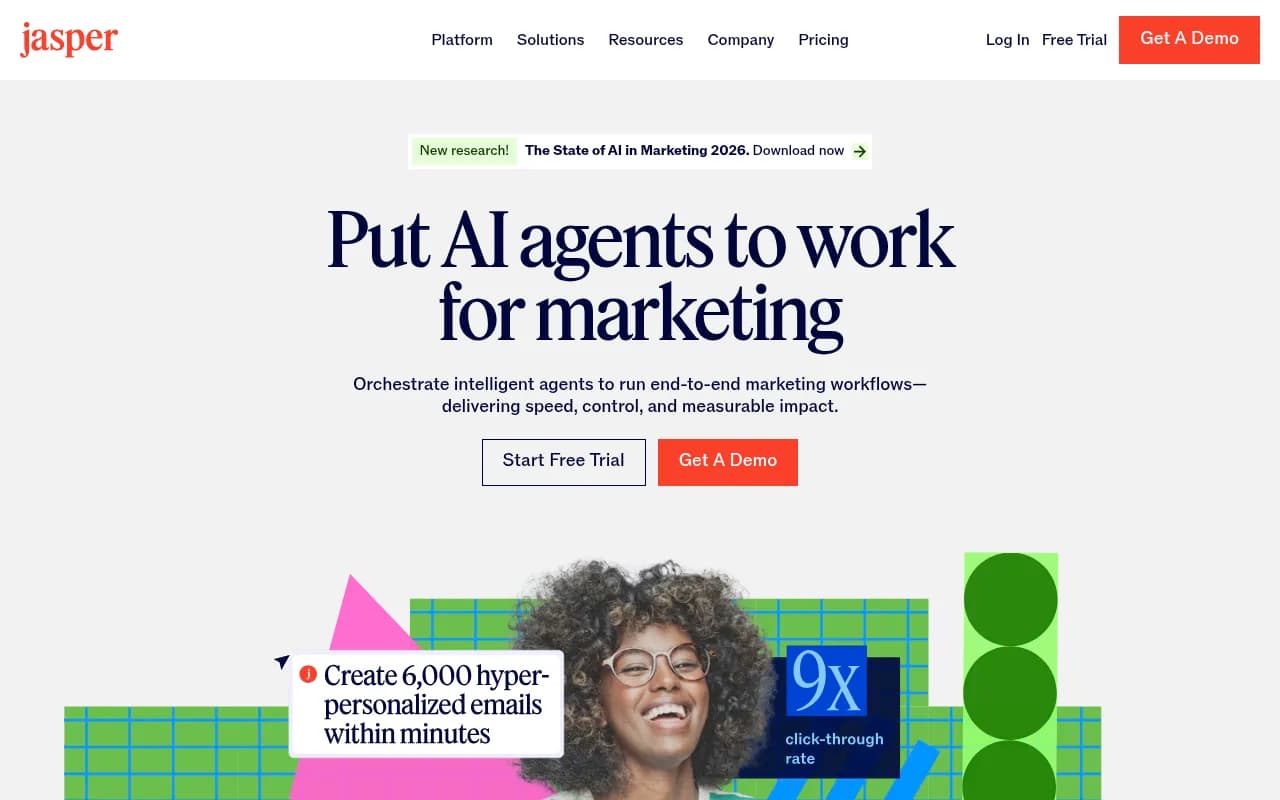
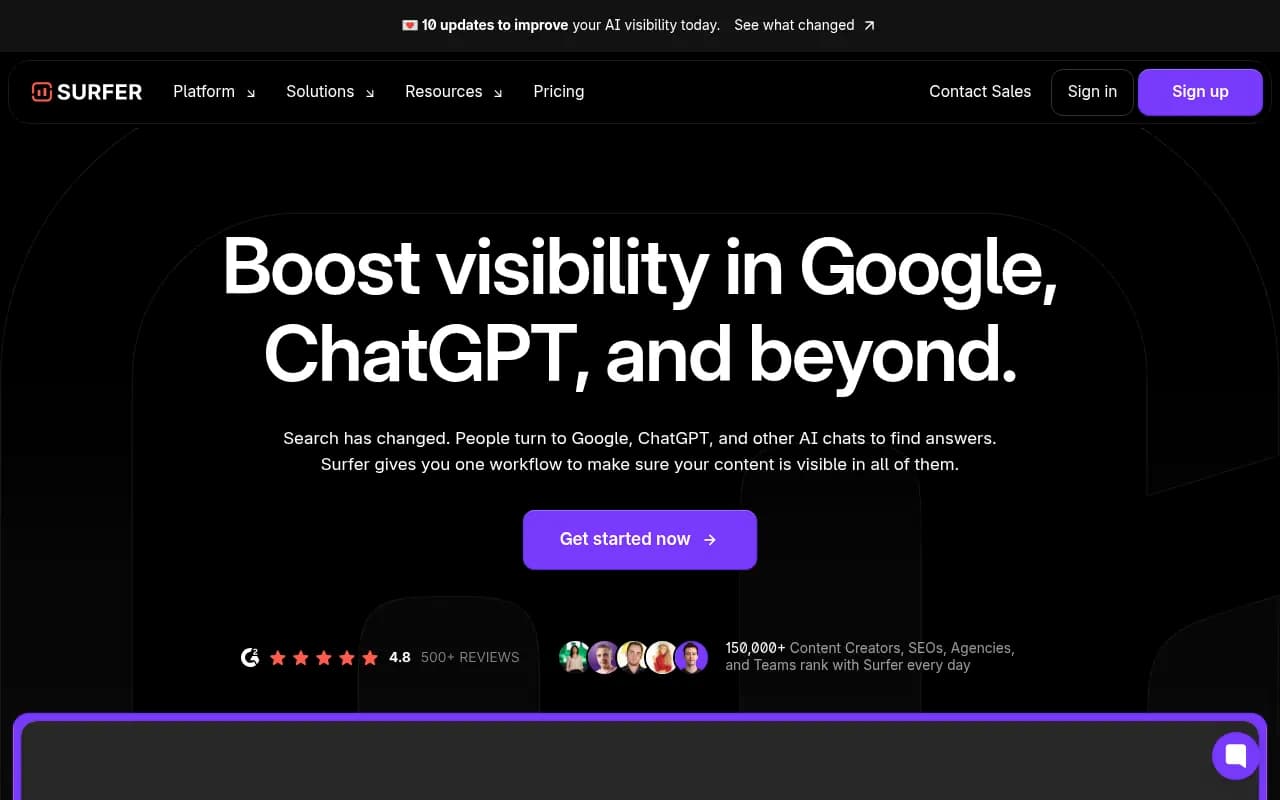
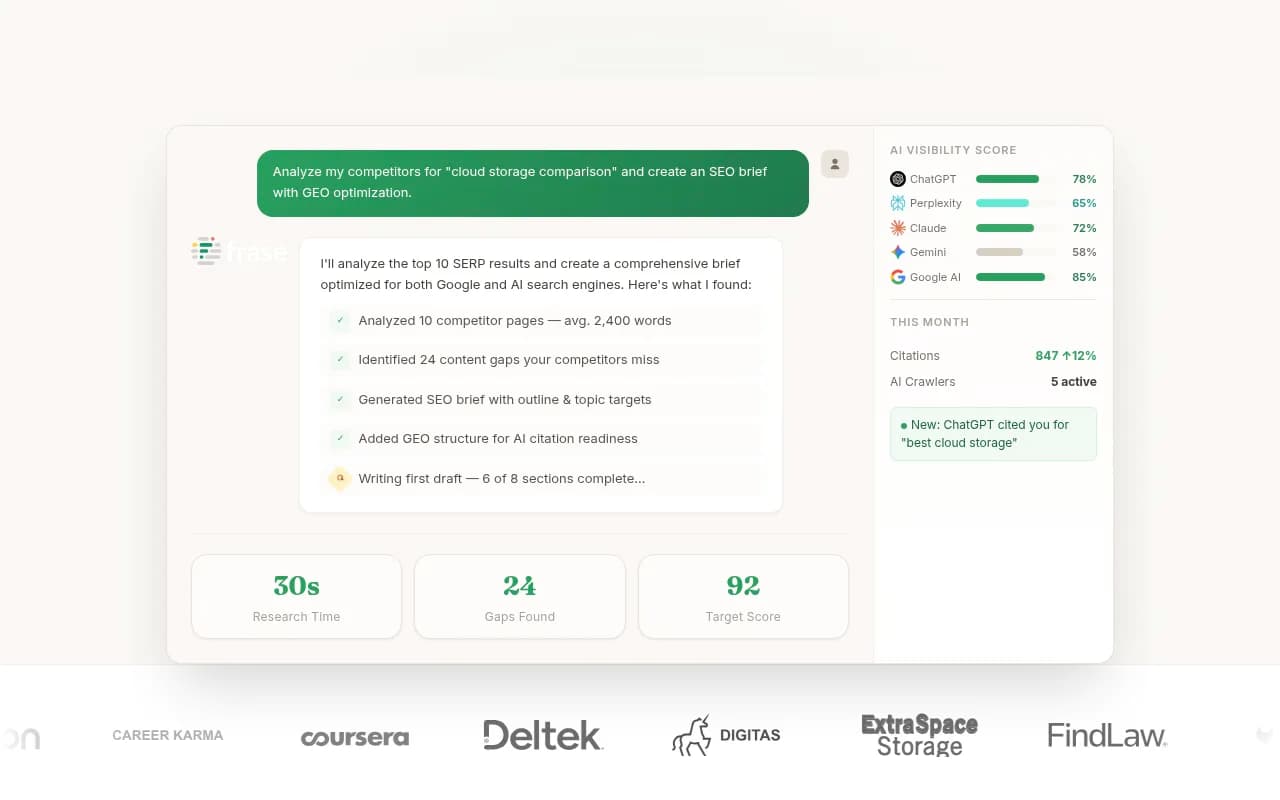
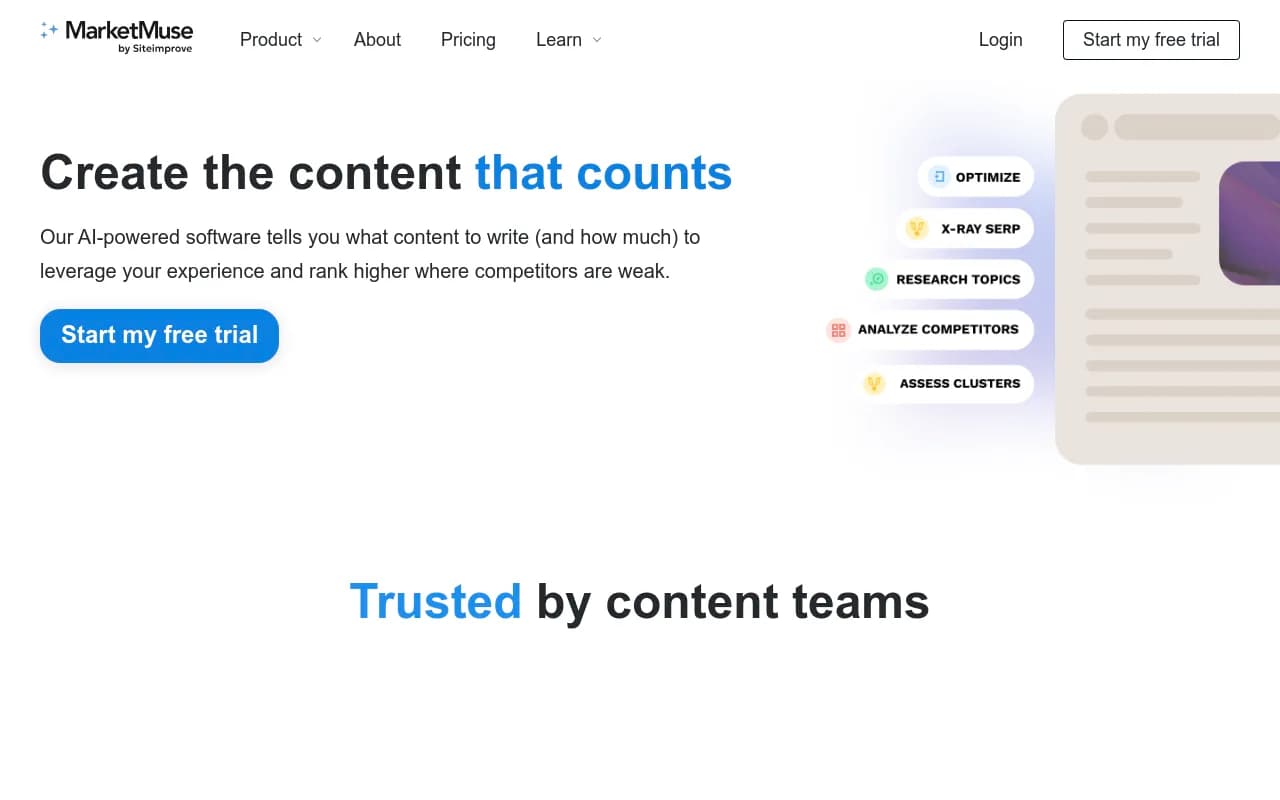

The comparison above reveals something important: most tools either do content generation well or do AI visibility tracking well, but not both. AirOps is one of the few trying to bridge that gap, which is why it's worth taking seriously even with its limitations.
The AI search visibility question
This is where things get interesting in 2026. SEO teams are no longer just optimizing for Google rankings -- they're trying to appear in ChatGPT responses, Perplexity citations, Google AI Overviews, and a dozen other AI surfaces. AirOps has started addressing this, but it's still a secondary capability rather than a core one.
If AI search visibility is your primary concern -- tracking which prompts your competitors rank for, understanding why AI models cite certain pages, and creating content specifically engineered to close those gaps -- you'll want a dedicated platform for that. Promptwatch is built specifically around this problem: it tracks how brands appear across 10+ AI models, identifies the exact content gaps that are costing you citations, and generates content grounded in real prompt data to close those gaps.

AirOps and a platform like Promptwatch aren't necessarily competing -- they solve different parts of the problem. AirOps is the production engine; a GEO platform is the intelligence layer that tells you what to produce and whether it's working.
Who should use AirOps
AirOps makes the most sense for a specific type of team. If you recognize yourself in this description, it's probably worth a trial:
- You're producing content at volume (50+ pieces per month) and manual processes are the bottleneck
- Your content formats are relatively standardized -- you're not doing highly bespoke editorial work
- You already have a clear content process and want to automate it, not figure it out
- You have editors who can review AI output and catch problems before publishing
- Programmatic SEO (location pages, product descriptions, data-driven articles) is a significant part of your strategy
If you're a small team doing primarily thought leadership content, or a brand with strict compliance requirements, or a team that needs deep AI search visibility analytics, AirOps is probably not the right primary tool.
Who should look elsewhere
The Slate alternatives guide identified three scenarios where teams are moving away from AirOps:
Growing editorial complexity. When content needs get more sophisticated -- custom review workflows, multi-stakeholder approvals, nuanced brand guidelines -- AirOps starts fighting you. Tools like Jasper or Contently handle brand governance more robustly.
AI search visibility as a strategic priority. AirOps' visibility features are a bonus, not a foundation. Teams that need to systematically track and improve their presence in AI search results need a platform built specifically for that.
Full pipeline orchestration. If you need one tool that handles planning, briefing, generation, review, publishing, and performance tracking without significant stitching, AirOps leaves gaps. Platforms like Copy.ai's GTM suite or more integrated content platforms may fit better.
Practical tips if you do use AirOps
A few things that come up consistently in user reviews:
Invest time in your brand knowledge inputs. The quality of AirOps output is directly proportional to the quality of the context you give it. Detailed tone guides, example content, and clear positioning documents make a measurable difference in how much revision the output needs.
Build human checkpoints into every workflow. Don't automate past the point where a human can catch problems. The teams that get the most value from AirOps treat it as a drafting accelerator, not a publishing machine.
Use it for structure, not voice. AirOps is good at generating well-structured, comprehensive content. It's less reliable at capturing a distinctive brand voice. Let it handle the skeleton; let your editors handle the personality.
Pair it with a visibility tool. AirOps tells you how to produce content efficiently. It doesn't tell you which content to produce based on what AI models are actually citing. Combining it with prompt intelligence data from a GEO platform gives you a much stronger signal on where to focus.
The honest verdict
AirOps is a legitimate tool for content teams that need to operate at scale. Its workflow decomposition approach is genuinely smart, and the template library reduces setup time for common SEO tasks. The AI search visibility features are a useful addition, even if they're not deep enough to replace a dedicated tracking platform.
The limitations are real too. Template rigidity, limited brand governance, and workflow fragmentation at the edges mean it's not a universal solution. Teams with complex editorial needs or strict brand requirements will hit the ceiling.
The right question isn't "is AirOps good?" -- it's "does AirOps fit the specific problem my team has?" For high-volume, template-driven programmatic SEO with a clear process to automate, it's a strong choice. For everything else, there are better fits.