Key takeaways
- Most AI visibility tools track only 3-5 LLMs, leaving significant blind spots across Grok, DeepSeek, Mistral, Meta AI, and Copilot
- LLM coverage alone isn't enough -- the real differentiator in 2026 is whether a platform helps you act on what it finds, not just report it
- Monitoring-only tools (Otterly.AI, Peec.ai, AthenaHQ) show you where you're invisible but stop there
- Full-stack platforms like Promptwatch combine gap analysis, content generation, and traffic attribution into a single loop
- Pricing ranges from ~$49/mo for basic trackers to $500+/mo for enterprise platforms -- but price doesn't always correlate with LLM coverage
There are now 10 AI search engines that meaningfully influence buying decisions: ChatGPT, Perplexity, Google AI Overviews, Google AI Mode, Claude, Gemini, Meta AI, DeepSeek, Grok, Mistral, and Copilot. Your customers are using all of them. The question is whether your brand shows up in any of them -- and whether you'd even know if it didn't.
That's the problem with most AI visibility tools in 2026. They were built when the market was simpler. When "AI search" basically meant ChatGPT and maybe Perplexity. Now there are 10 platforms worth tracking, and most tools have quietly not kept up.
This guide cuts through the noise. We looked at which platforms actually cover all 10 major LLMs, what they do with that data, and whether they're worth the price.
Why LLM coverage gaps are a real problem
Before getting into the tools, it's worth understanding why incomplete coverage matters.
Each LLM has different training data, different retrieval mechanisms, and different citation behavior. A brand that ranks well in ChatGPT responses might be completely absent from Perplexity. A competitor might dominate Gemini while you lead in Claude. If your tracking tool only covers three of the ten, you're making optimization decisions based on a fraction of the picture.
There's also a more practical issue: your customers don't all use the same AI. B2B buyers tend to use Perplexity and Claude for research. Younger consumers lean on ChatGPT and Gemini. Enterprise users are increasingly on Copilot. If you're only tracking one or two of these, you're flying blind for large segments of your audience.
The other thing most tools miss: being mentioned isn't the same as being mentioned accurately. One founder who built an AI visibility tool described finding 18 brand mentions across ChatGPT and Perplexity -- and when he checked them manually, four had wrong pricing, three confused his features with a competitor's, and one hallucinated an integration that didn't exist. Every tool counted those as "positive mentions."
Coverage and accuracy both matter. Let's look at how the major platforms handle both.
The platforms: what they actually cover
Promptwatch

Promptwatch monitors 10 AI models: ChatGPT, Perplexity, Google AI Overviews, Google AI Mode, Claude, Gemini, Meta/Llama, DeepSeek, Grok, Mistral, and Copilot. That's the fullest coverage of any platform we reviewed.
But the more interesting story is what it does with that coverage. Most tools stop at "here's where you appear." Promptwatch is built around a three-step loop: find the gaps, create content to fill them, then track whether that content actually improved your visibility.
The Answer Gap Analysis is particularly useful -- it shows you the specific prompts where competitors are getting cited but you're not. Not vague categories, but the actual questions AI models are answering about your market where your brand is absent. From there, a built-in AI writing agent generates content grounded in citation data from 880M+ analyzed citations, targeting those specific gaps.
It also has AI crawler logs (real-time data on which AI bots are hitting your pages and what errors they encounter), ChatGPT Shopping tracking, Reddit and YouTube citation monitoring, and prompt volume/difficulty scoring. The multi-language and multi-region support is more complete than most competitors.
Pricing: $99/mo (Essential, 1 site, 50 prompts), $249/mo (Professional, 2 sites, 150 prompts, crawler logs), $579/mo (Business, 5 sites, 350 prompts). Free trial available.
Profound

Profound is one of the more established names in this space and covers the major LLMs reasonably well -- ChatGPT, Perplexity, Claude, Gemini, and Google AI Overviews at minimum. It's positioned as an enterprise tool with a strong feature set around prompt ideation, share of voice tracking, and competitive analysis.
Where Profound falls short relative to Promptwatch: no Reddit tracking, no ChatGPT Shopping monitoring, and the pricing is meaningfully higher for comparable feature sets. It's a solid choice for enterprise teams that want a polished dashboard and don't need the full action loop.
Otterly.AI

Otterly.AI is one of the more affordable options in the market and has built a following among smaller teams and solo marketers. It covers the main LLMs (ChatGPT, Perplexity, Claude, Gemini) but doesn't extend to Grok, DeepSeek, Mistral, or Meta AI.
The bigger limitation is that it's monitoring-only. You get data on where you appear and where you don't, but there's no content gap analysis, no content generation, and no traffic attribution. If you're just starting out and want to understand your baseline AI visibility without a big investment, Otterly.AI makes sense. If you want to actually improve that visibility, you'll hit its ceiling quickly.
Peec AI

Peec AI has good multi-language support, which makes it genuinely useful for international brands. Its LLM coverage is similar to Otterly.AI -- the main four or five models, but not the full ten. It has smart suggestions for improving visibility, which puts it a step above pure monitoring tools, but it doesn't have the depth of content generation or citation analysis that Promptwatch offers.
AthenaHQ

AthenaHQ covers 8+ AI search engines, which is better than most. The tracking is solid and the competitive benchmarking is useful. But like Peec AI and Otterly.AI, it's fundamentally a monitoring platform. It shows you the data; it doesn't help you act on it. No content generation, no crawler logs, no traffic attribution.
Semrush
Semrush added AI visibility tracking to its existing SEO suite, which makes it appealing if you're already a customer. The integration with traditional SEO data is genuinely useful -- you can see your organic rankings and your AI visibility in one place.
The limitations are real, though. Semrush uses fixed prompts rather than letting you define your own, which means you're tracking the questions Semrush decided are relevant, not necessarily the ones your actual customers are asking. LLM coverage is narrower than dedicated AI visibility tools. It's a reasonable starting point for existing Semrush users but not a replacement for a purpose-built platform.
Ahrefs Brand Radar
Similar story to Semrush. Ahrefs Brand Radar is useful if you're already in the Ahrefs ecosystem, but it has fixed prompts and no AI traffic attribution. Coverage is limited to a handful of LLMs. Good for a quick pulse check; not built for serious AI visibility optimization.
SE Ranking
SE Ranking has been building out its AI visibility toolkit and offers a more affordable entry point than some enterprise-focused tools. Coverage is growing but still doesn't reach all 10 major LLMs. Worth watching as the product matures.
Rankscale
Rankscale focuses on AI search ranking and has decent coverage of the main models. It's positioned more as a tracking and ranking tool than an optimization platform. Useful for teams that want clean rank data without a lot of complexity.
Scrunch
Scrunch has a strong feature set and covers more LLMs than the basic monitoring tools. Pricing is on the higher end, and it lacks Reddit tracking and ChatGPT Shopping monitoring. A reasonable choice for mid-market teams that want more than basic monitoring but aren't ready for enterprise pricing.
LLM coverage comparison
Here's how the major platforms stack up on the metrics that matter most:
| Platform | LLMs covered | Content generation | Crawler logs | Reddit/YouTube tracking | ChatGPT Shopping | Traffic attribution | Starting price |
|---|---|---|---|---|---|---|---|
| Promptwatch | 10 (all major) | Yes | Yes | Yes | Yes | Yes | $99/mo |
| Profound | 5-6 | No | No | No | No | Limited | $200+/mo |
| AthenaHQ | 8+ | No | No | No | No | No | ~$150/mo |
| Otterly.AI | 4-5 | No | No | No | No | No | ~$49/mo |
| Peec AI | 4-5 | Limited | No | No | No | No | ~$79/mo |
| Semrush | 3-4 | No | No | No | No | No | Addon to existing plan |
| Ahrefs Brand Radar | 3-4 | No | No | No | No | No | Addon to existing plan |
| SE Ranking | 4-5 | No | No | No | No | No | ~$65/mo |
| Scrunch | 6-7 | No | No | No | No | No | $200+/mo |
| Rankscale | 4-5 | No | No | No | No | No | ~$99/mo |
The coverage gap is stark. Most tools cluster around 4-5 LLMs. Only a handful reach 7+, and only Promptwatch consistently covers all 10 in a single platform.
The monitoring-only problem
It's worth being direct about something: most of the tools in this market are dashboards. They're good dashboards, in some cases. But they show you data and leave you to figure out what to do with it.
That's fine if you have a team of SEO strategists who can translate "you're not appearing for these 40 prompts" into a content plan, execute it, and then track whether it worked. Most teams don't have that capacity.
The tools that go beyond monitoring -- Promptwatch being the clearest example -- close that loop internally. You see the gap, generate content targeting that gap, publish it, and watch your visibility scores change. The citation data driving the content recommendations comes from real AI responses, not generic SEO heuristics. That's a meaningfully different product from a monitoring dashboard.
Niche tools worth knowing about
Beyond the main platforms, there are several more focused tools that serve specific needs well.
ZipTie
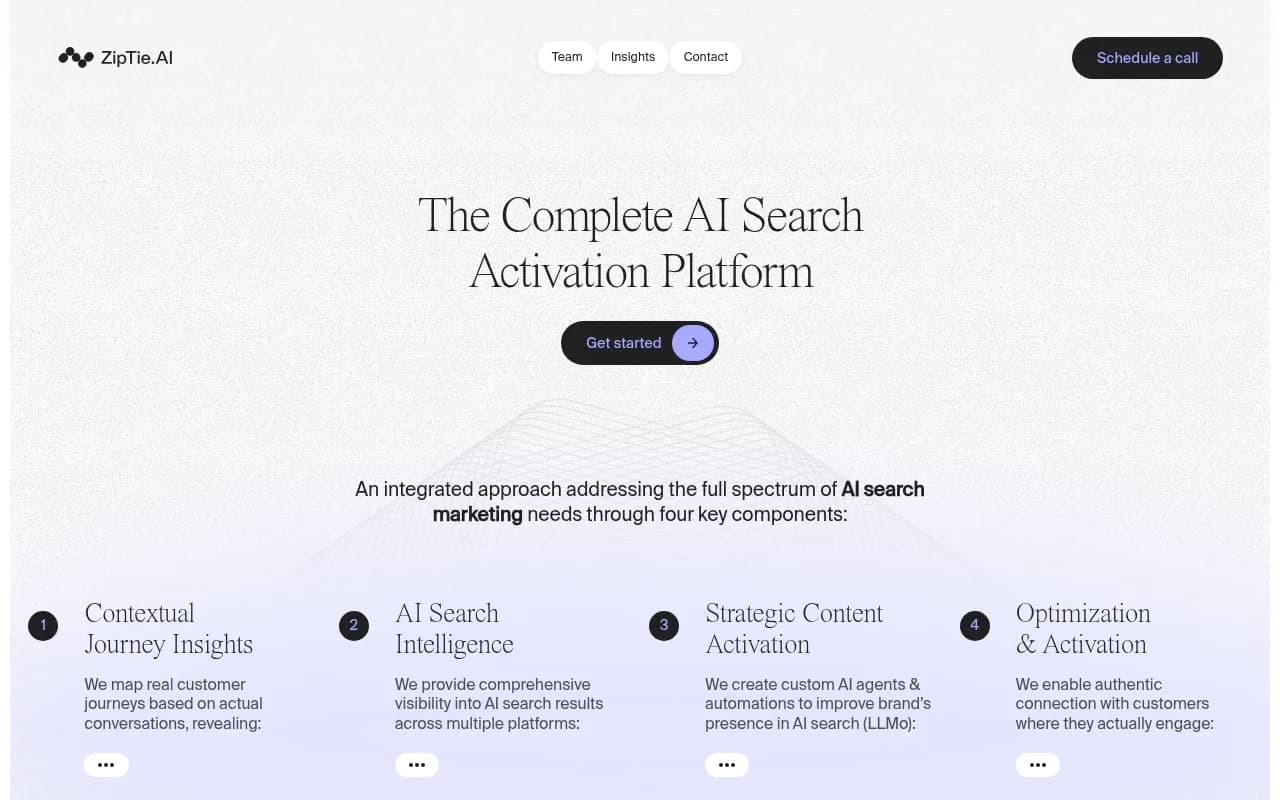
ZipTie is built for deep analysis and reporting. If you need granular data on how AI models are constructing responses about your brand and want to dig into the mechanics, it's worth evaluating. Less suited for teams that want quick, actionable recommendations.
Hall AI
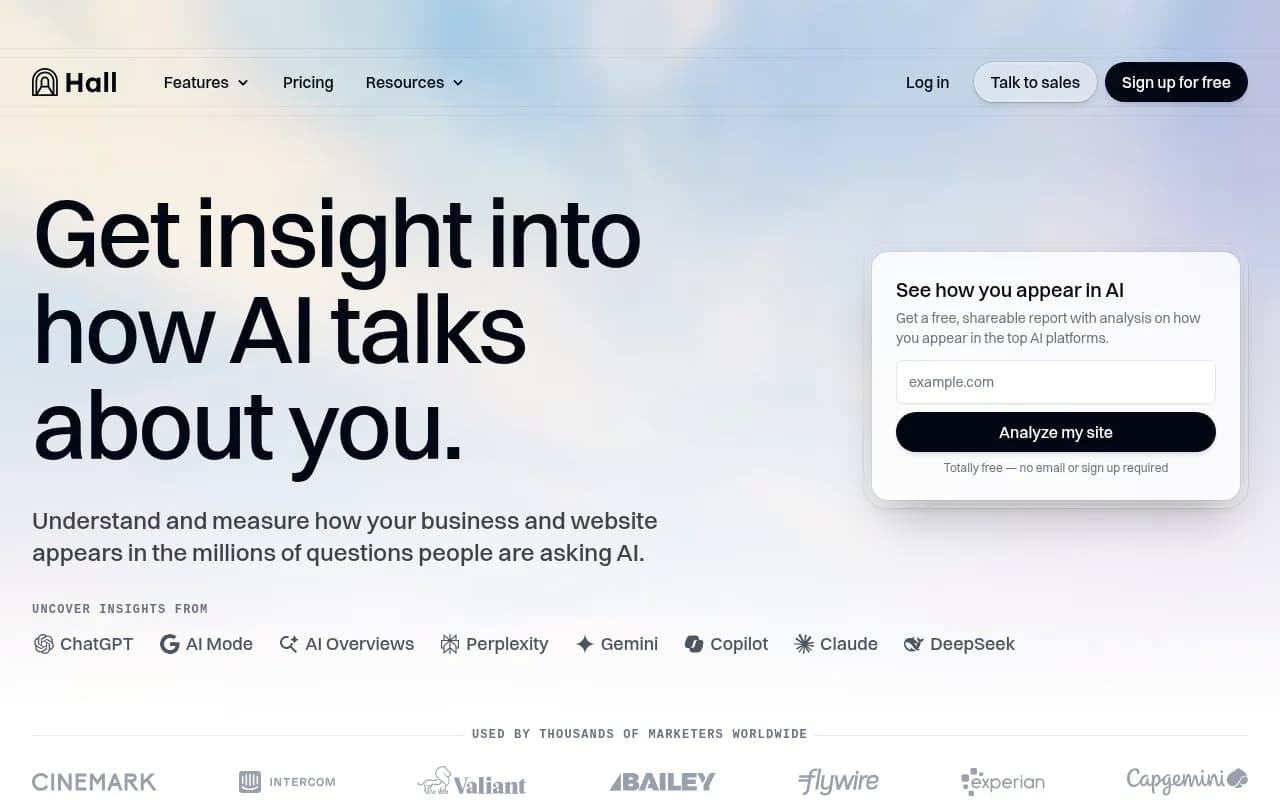
Hall AI focuses specifically on citation tracking -- understanding exactly which sources AI models are pulling from when they mention your brand or competitors. Useful as a complement to a broader platform.
Rankshift
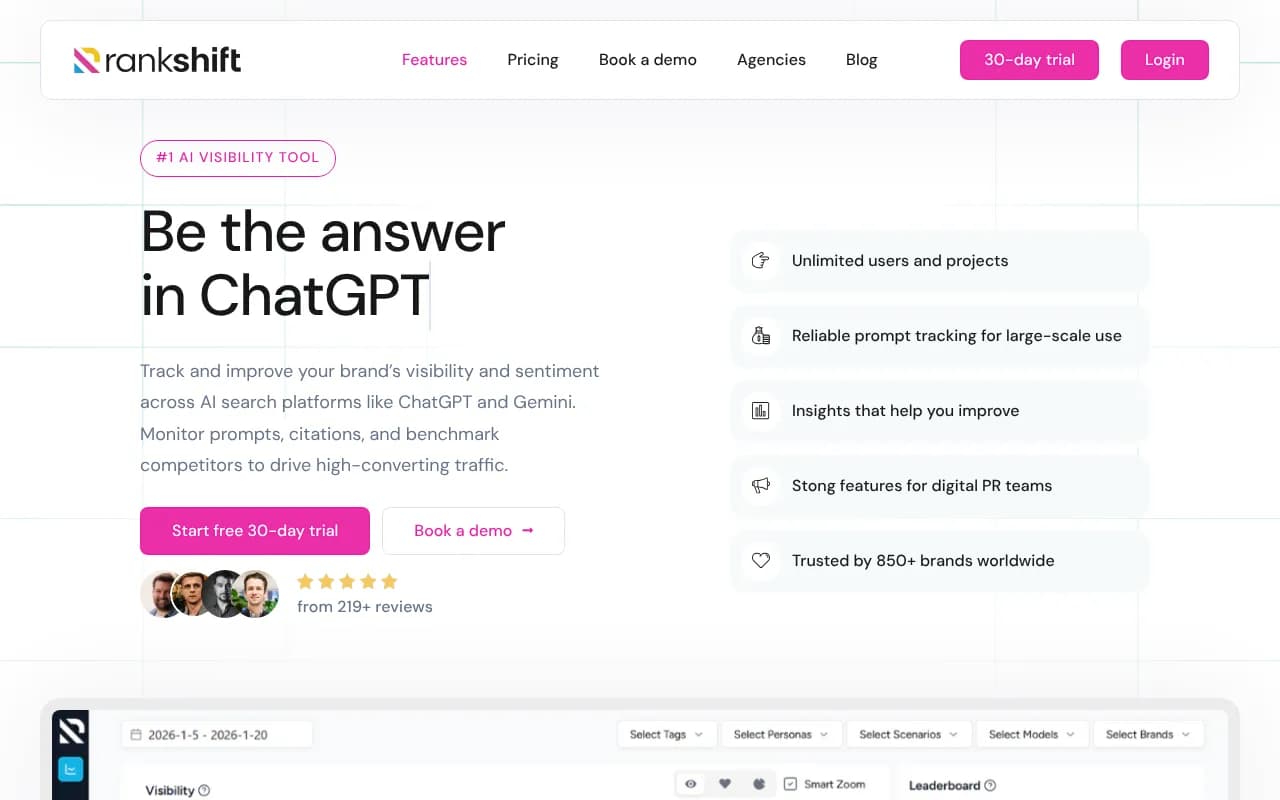
Rankshift is a solid LLM tracking tool for teams focused on GEO. Coverage is decent for the price point, and the interface is clean. Doesn't have the full action loop but is a step above basic monitoring.
Nightwatch
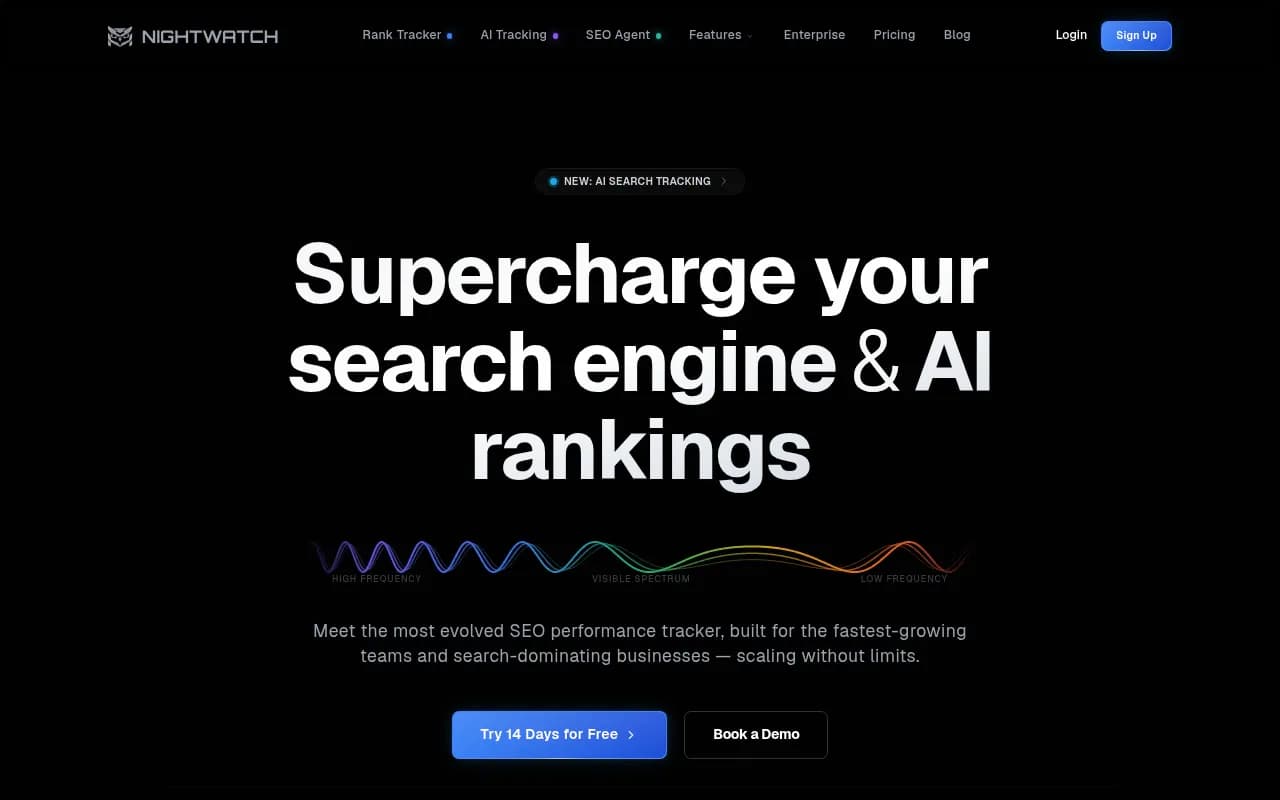
Nightwatch has been expanding from traditional rank tracking into AI search monitoring. Good option for teams that already use it for SEO and want to add AI visibility without switching platforms.
SE Visible
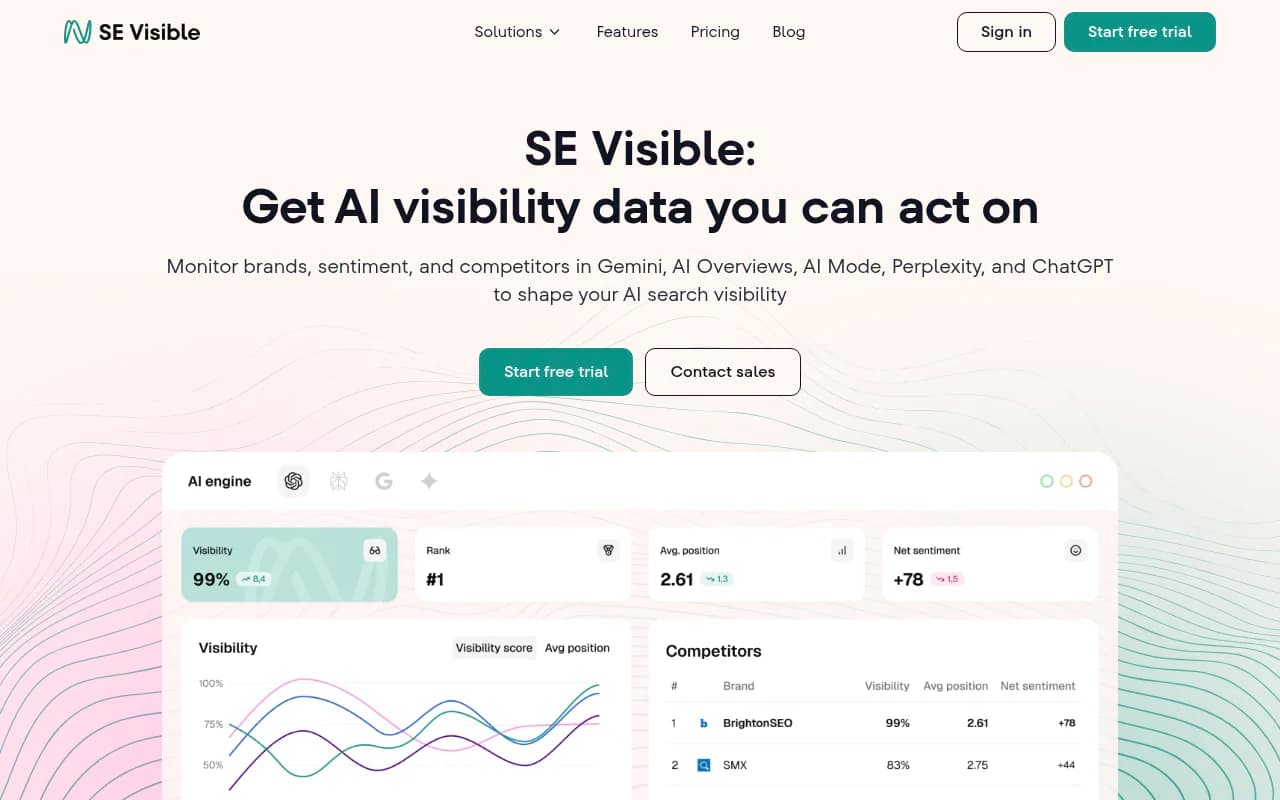
SE Visible from SE Ranking is a user-friendly entry point for teams new to AI visibility tracking. Limited LLM coverage but accessible for smaller teams getting started.
GetCito
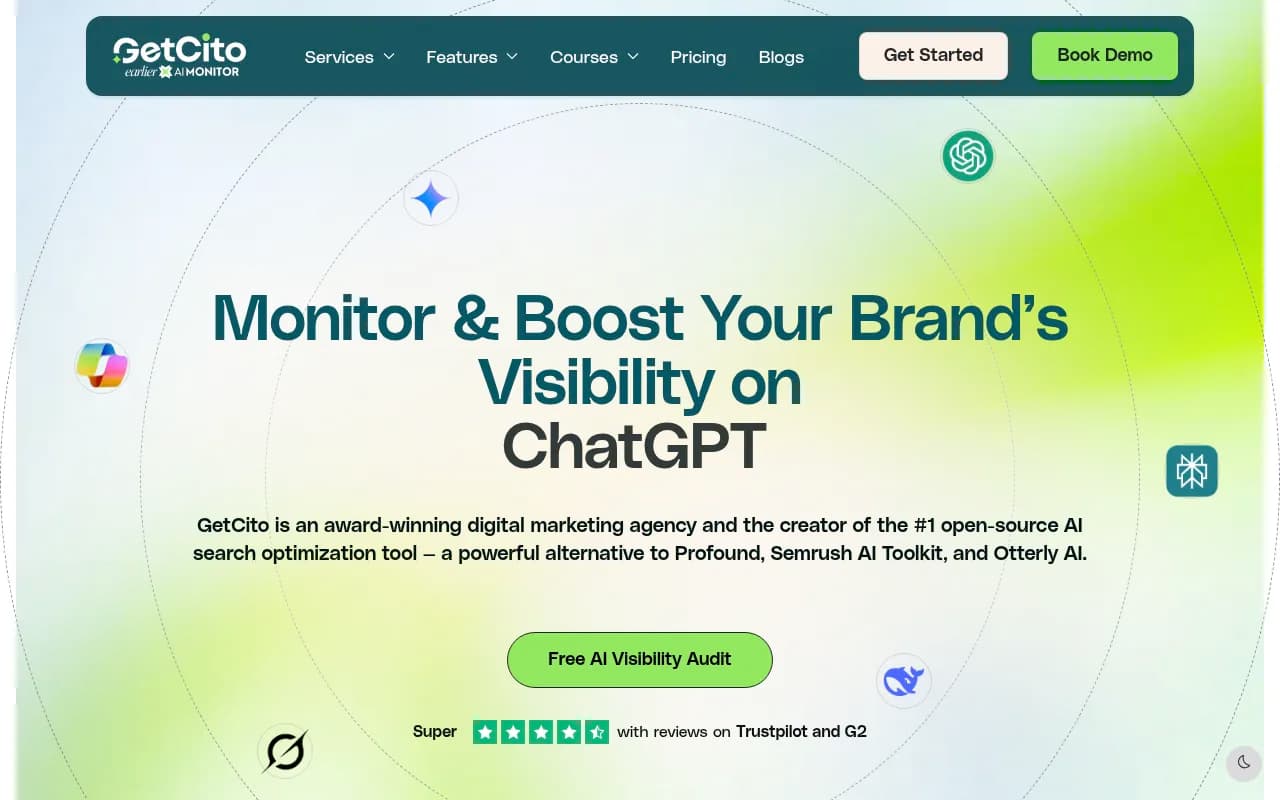
GetCito focuses on AI visibility tracking and optimization with a clean interface. Worth considering for teams that want something simpler than the enterprise platforms.
Omnia
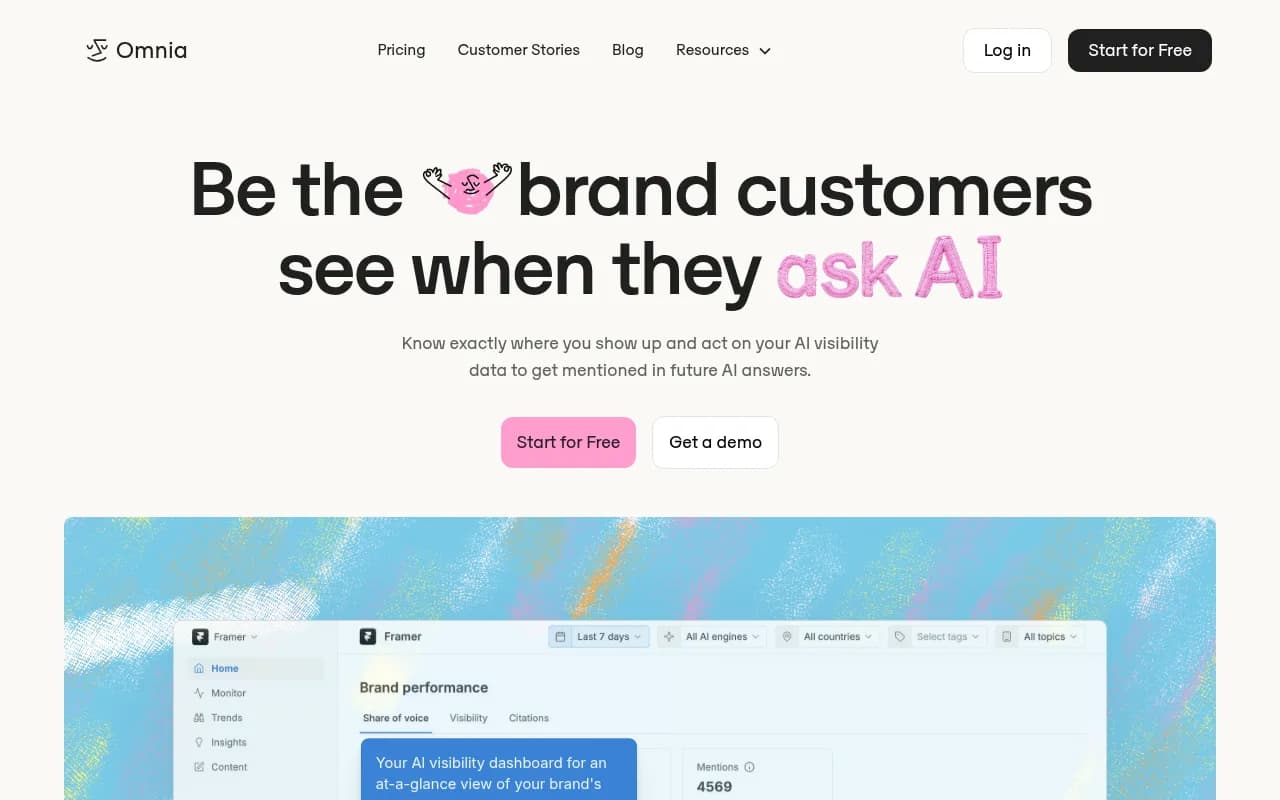
Omnia offers AI-powered visibility and share of voice analytics with a broad platform approach. Good for teams that want competitive intelligence alongside their own brand tracking.
How to choose the right tool
The right tool depends on what you actually need, not what sounds most impressive in a demo.
If you're just starting out and want to understand your baseline AI visibility without committing to a big budget, Otterly.AI or SE Ranking are reasonable starting points. You'll get data on the main LLMs and a sense of where you stand.
If you're a mid-market brand that takes AI search seriously and wants to actually improve your visibility -- not just measure it -- you need a platform with content gap analysis and some form of optimization capability. Promptwatch is the clearest option here, with the added benefit of covering all 10 LLMs so you're not missing half the picture.
If you're an enterprise with existing Semrush or Ahrefs contracts, the brand monitoring add-ons are worth activating as a baseline, but they shouldn't be your only AI visibility investment given the coverage and capability gaps.
If you're an agency managing multiple clients, look for platforms with multi-site support, white-label options, and API access. Promptwatch's agency and enterprise tiers are built for this, and the Looker Studio integration makes client reporting significantly easier.
One thing to check regardless of which tool you choose: does it support custom prompts? Fixed-prompt tools like Semrush and Ahrefs Brand Radar are tracking the questions the vendor decided matter. Custom prompt support means you're tracking the actual questions your customers ask -- which is almost always different.
What the next 12 months look like
The AI search landscape is still moving fast. Google AI Mode is expanding. Grok is growing its user base. DeepSeek's international adoption is accelerating. Any tool that doesn't have a clear roadmap for keeping up with new LLMs as they emerge is going to have a coverage problem within months.
The other shift worth watching: AI search is starting to generate measurable traffic. The tools that can connect AI visibility to actual revenue -- through traffic attribution, conversion tracking, and page-level citation data -- are going to become significantly more valuable as that traffic grows. Monitoring-only tools will struggle to justify their price tags when the question shifts from "are we visible?" to "is our AI visibility driving business results?"
The platforms that have already built that attribution layer (Promptwatch being the main example) are better positioned for where the market is heading. The ones that haven't will need to build it or risk becoming obsolete.
For now, the most important thing is to start tracking. If you're not monitoring any of the 10 major LLMs today, you have no baseline -- and no way to know whether the AI search traffic you're (or aren't) getting is a problem or an opportunity.
Pick a tool, set up your prompts, and run it for 30 days. The data will tell you what to do next.