Key takeaways
- AI referral traffic is growing roughly 1% month over month but still accounts for only about 1.08% of all website traffic -- so the absolute numbers are small even when growth is fast.
- 93% of Google AI Mode impressions produce zero outbound clicks. Citations matter more than clicks right now, and brands cited in AI Overviews earn 35% higher organic CTR compared to uncited brands.
- Citation slots are unstable: only 30% of brands stay visible from one AI answer to the next, and about 45.5% of citations get replaced when a new answer is generated.
- Small, focused sites can grow AI visibility faster than large generalist sites -- AI models reward topical authority, not domain size.
- Most brands (86%) still don't track AI visibility at all, which means the window to build an early lead is still open.
The honest picture: AI search in mid-2026
There's a version of this story where AI search has already taken over the internet. There's another version where it's a rounding error. Both are technically supported by the data, which is part of why so many marketing teams are confused about what to actually do.
Here's the clearest framing I can offer: AI search is not yet a major traffic channel, but it is already a major visibility channel. Those two things are not the same, and conflating them is the root of most bad decisions in this space.
Cloudflare Radar's data from April 2026 showed every AI chatbot combined -- ChatGPT, Gemini, Claude, Perplexity -- sent 0.27% of search referral traffic to websites. Google sent 87.52%. If you're a CMO looking at referral reports, AI barely registers.
But Seer Interactive analyzed 25.1 million Google AI Mode impressions in the same period and found 93% of them produced zero outbound clicks. A separate field experiment confirmed that when AI Overviews appear, organic clicks drop 38% and zero-click rates jump from 54% to 72%.
So the chatbots aren't sending traffic, and Google's AI layer is eating the traffic that used to come from traditional organic results. That's the actual situation. The question isn't "is AI search real?" -- it's "what does winning look like when clicks aren't the primary output?"
The answer, increasingly, is citations. And citations are where the growth benchmarks get interesting.
Citation growth benchmarks: what the data shows
Overall AI referral traffic growth
According to Conductor's 2026 AEO/GEO Benchmarks, AI referral traffic now accounts for 1.08% of all website traffic and is growing at roughly 1% month over month. That sounds modest, but compounding 1% monthly growth over 12 months gets you to about 12.7% growth -- and the baseline is still small enough that early movers can capture disproportionate share.
The more useful frame: AI referral traffic is growing faster than any other channel right now. The absolute numbers are small; the trajectory is steep.
Citation volatility: the number most brands ignore
Here's the benchmark that should change how you think about this: only 30% of brands maintain consistent visibility from one AI answer to the next. About 45.5% of citations get replaced when a new answer is generated for the same query.
That's not a bug -- it's how these systems work. AI models pull from different sources depending on how a query is phrased, what's been recently indexed, and which content best answers the specific angle of the question. Visibility isn't a rank you hold; it's a probability you influence.
What this means practically: if you appear in 10 AI responses today, expect to appear in roughly 5-6 of those same responses next week if you do nothing. The brands that grow citation share are the ones continuously publishing content that answers new angles of the same core questions.
The CTR premium for cited brands
Even in a zero-click world, citations have measurable value. The Digital Bloom's 2026 AI Citation Position & Revenue Report found that brands cited in AI Overviews earn 35% higher organic CTR and 91% higher paid CTR compared to uncited brands appearing on the same results page.
That's a significant signal. Being named in an AI response -- even when the user doesn't click through -- appears to build enough familiarity that users are more likely to click your organic or paid listing when they do see it. Brand recall from AI citations is doing real work.
How fast can you realistically grow?
This varies significantly by starting point and niche. Based on available data:
- Brands starting from zero visibility in a focused niche can expect to appear in AI responses within 4-8 weeks of publishing targeted content, assuming the content is genuinely useful and properly structured.
- Brands in competitive categories (finance, health, software) typically see meaningful citation growth over 3-6 months of consistent content production.
- Small sites with tight topical focus tend to grow AI visibility faster than large generalist sites. AI models reward depth on a specific topic over broad coverage of many topics.
The ClickRank data on AI SEO metrics makes this point directly: small websites should expect lower initial AI Visibility Scores but faster growth potential in focused niches because AI systems reward topical authority.
What actually drives citation growth
Most of what's sold as "AEO best practice" -- FAQ sections, schema markup, answer boxes -- doesn't survive contact with the actual citation data. The brands that are growing AI visibility in 2026 are doing it through a smaller set of things that actually work.
Earned mentions and brand authority
AI models don't just index your website. They're trained on and retrieve from a much wider corpus: Reddit discussions, YouTube transcripts, news articles, industry publications, review sites. Brands that appear across multiple authoritative sources get cited more consistently than brands that only optimize their own site.
This is why earned PR and third-party mentions matter more for AI visibility than they do for traditional SEO. A mention in a well-trafficked Reddit thread or an industry publication can drive AI citations for months.
Comparison and "best of" content
Queries like "best CRM for small teams" or "ChatGPT vs Claude for coding" are high-volume in AI search and heavily cited. Brands that publish genuine comparison content -- including honest assessments of competitors -- tend to appear in these responses because the content directly matches what the AI is trying to answer.
This is counterintuitive for brands that want to control their narrative, but it works. An honest comparison article that names your competitors and explains the tradeoffs is more likely to get cited than a pure product page.
Primary data and original research
AI models consistently prefer to cite sources that contain information they can't synthesize from other sources. Original surveys, proprietary data, case studies with specific numbers -- these get cited at higher rates than content that summarizes existing information.
If you have internal data that's genuinely interesting, publishing it as a standalone piece is one of the highest-leverage things you can do for AI visibility.
Topical depth over breadth
The pattern across multiple studies is consistent: AI models prefer sources that go deep on a specific topic over sources that cover many topics superficially. A site that has 20 detailed articles on email marketing will typically outperform a site that has 200 articles on 50 different marketing topics, at least for email marketing queries.
This has real implications for content strategy. Spreading content thin across many topics to maximize keyword coverage is a traditional SEO approach that actively hurts AI visibility.
The visibility metrics that actually matter in 2026
Most teams are still measuring AI search performance with the wrong metrics. Here's what to track instead.
| Metric | Why it matters | How to measure |
|---|---|---|
| Citation rate | % of tracked prompts where your brand appears | AI visibility platforms |
| Citation consistency | Whether you appear across repeated queries | Track same prompts weekly |
| Share of voice vs competitors | Your citations vs competitors for same prompts | Competitive monitoring |
| AI-referred sessions | Traffic from ChatGPT, Perplexity, etc. | GA4 + server logs |
| Organic CTR lift | Whether AI citations improve click rates | GSC + citation data |
| Prompt coverage | How many relevant prompts you appear for | Prompt tracking tools |
The most important shift: stop treating AI search as a traffic channel and start treating it as a brand presence channel. The question isn't "how many clicks did I get from Perplexity?" -- it's "when someone asks a question my brand should answer, do I appear?"
Only 14% of brands currently track AI visibility at all, according to GoodFirms' 2026 AI SEO statistics. That's a wide-open competitive window.
Tools for tracking and growing AI visibility
Tracking AI visibility requires different tools than traditional SEO. Here are the main categories and options worth knowing.
End-to-end AI visibility platforms
For teams that want to track citations, understand gaps, and actually do something about them, Promptwatch is the platform with the most complete feature set. It tracks 10 AI models (ChatGPT, Perplexity, Claude, Gemini, Grok, DeepSeek, Copilot, Meta AI, Google AI Overviews, and Google AI Mode), shows you which prompts competitors appear for that you don't, and has a built-in content generation tool that creates articles grounded in real citation data. The crawler logs feature -- showing which AI bots are hitting your site, which pages they read, and how often they return -- is something most competitors don't offer at all.

For monitoring-focused teams that want simpler dashboards, Otterly.AI and Peec AI cover the basics at lower price points, though neither offers content generation or crawler log analysis.


Profound and AthenaHQ have strong monitoring features and are worth evaluating for enterprise teams, though both are primarily tracking tools rather than optimization platforms.


Tracking AI referral traffic
If you want to see which AI platforms are actually sending traffic to your site, a few tools are worth knowing:
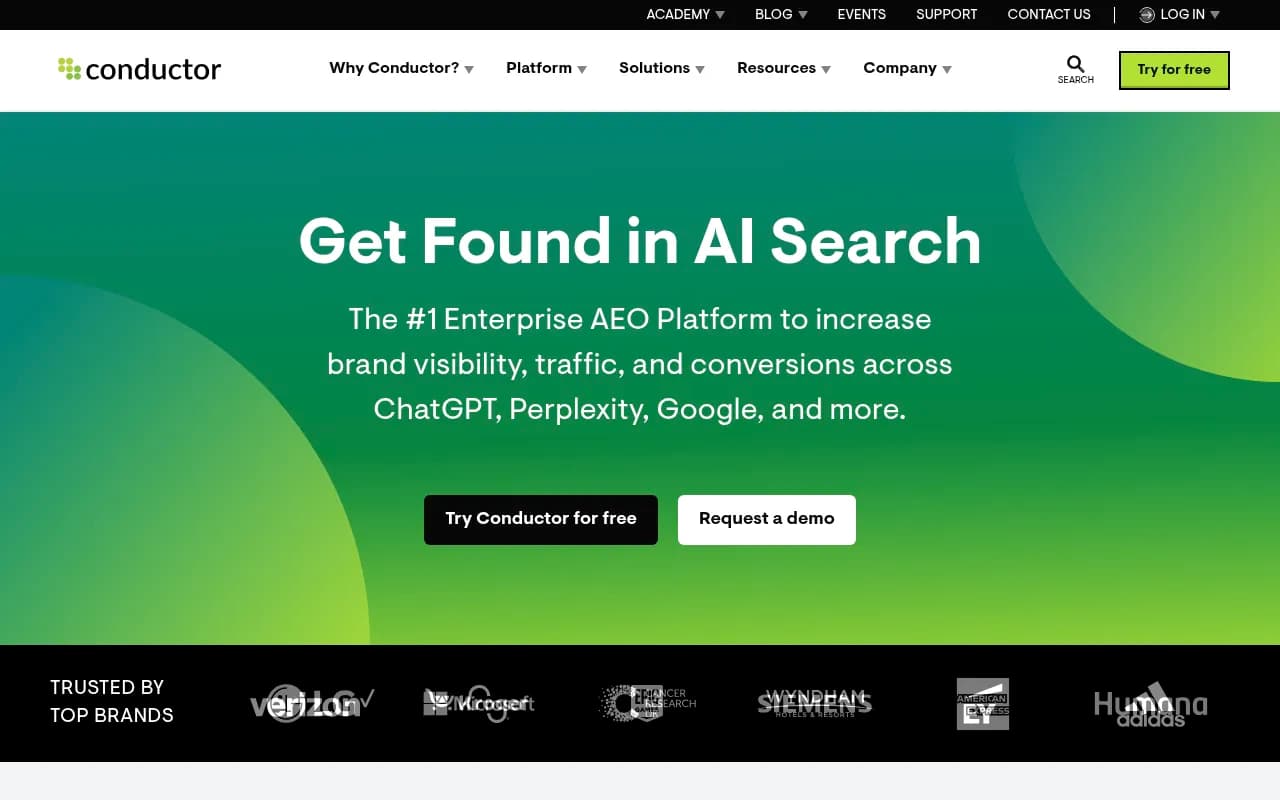
Conductor tracks AI visibility with persona customization -- useful for understanding how different types of users prompt about your category.
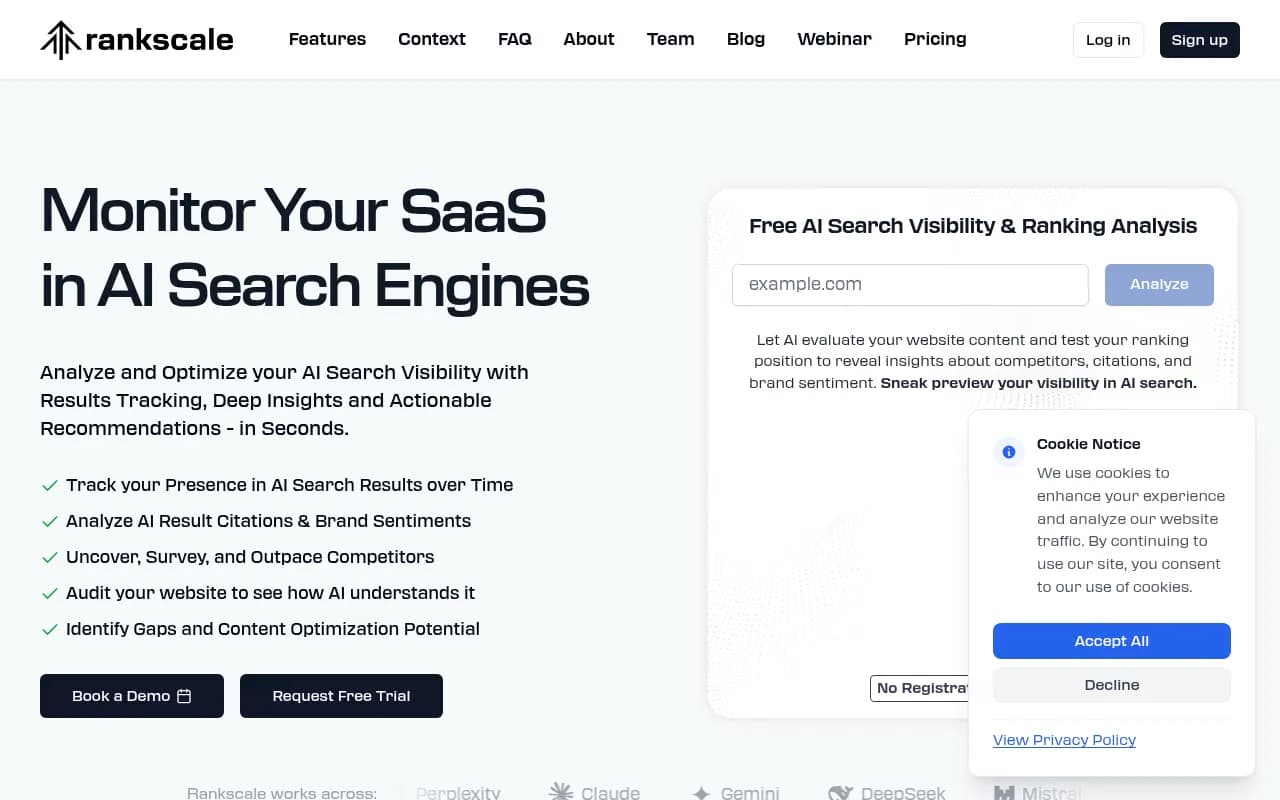
Rankscale focuses specifically on AI search ranking and visibility tracking across models.
LLM Clicks is built specifically for citation tracking in AI-powered search, useful if you want to see which citations are actually driving referral sessions.
Content optimization for AI citations
Getting cited consistently requires content that AI models actually want to reference. A few tools help with this:
Surfer SEO has added AI content optimization features that help structure content for AI citation, not just traditional rankings.
MarketMuse helps with content planning and identifying topical gaps -- useful for the "depth over breadth" strategy that drives AI visibility.
Clearscope's content optimization platform has been updated to account for AI search patterns alongside traditional Google rankings.
Realistic growth expectations by scenario
Here's a practical breakdown of what to expect based on your starting point.
New site, focused niche
Timeline to first citations: 4-8 weeks with consistent publishing. Growth rate: fast, because you're building topical authority from scratch in a defined area. Risk: citation volatility is high early on -- you'll appear and disappear as the AI models calibrate your authority. What to do: publish 2-3 deeply researched articles per week on your core topic, prioritize original data or perspectives, and build external mentions through PR and community participation.
Established site, low AI visibility
Timeline to meaningful citation growth: 2-4 months. Growth rate: moderate, but you have existing domain authority working in your favor. Risk: existing content may be structured for traditional SEO in ways that don't serve AI citation (too broad, not enough specific answers). What to do: audit your existing content for topical depth, identify the prompts your competitors appear for that you don't, and create content specifically targeting those gaps.
Established site, some AI visibility
Timeline to measurable share-of-voice improvement: 1-3 months. Growth rate: depends heavily on how competitive your category is. Risk: citation volatility means gains can reverse quickly if you stop publishing. What to do: focus on consistency rather than volume, track citation rates weekly, and prioritize the prompts where you're close to appearing but not quite there.
Competitive category (finance, health, software)
Timeline: 3-6 months minimum before you see consistent citation presence. Growth rate: slow initially, then accelerating once topical authority is established. Risk: high -- these categories have well-funded competitors who are already optimizing. What to do: find the sub-niches and specific angles where you have genuine expertise or data that competitors don't have, and go deep there rather than competing on broad terms.
The zero-click reality and what to do with it
The 93% zero-click rate on Google AI Mode is the number that makes most marketing teams uncomfortable. If almost no one clicks through from an AI response, what's the point of appearing in one?
A few things worth keeping in mind:
Brand recall is real. Being named in an AI response -- even without a click -- builds familiarity. The 35% organic CTR lift for cited brands suggests this familiarity translates into behavior when users do encounter your brand in a traditional search result.
Not all queries are zero-click. Transactional queries ("buy X", "book Y", "sign up for Z") still drive clicks. The zero-click problem is concentrated in informational queries. If your business depends on informational traffic, this is a genuine challenge. If you sell something, the click rates from AI search are actually comparable to what you'd expect from traditional search.
AI search is still early. The 0.27% referral share from AI chatbots will not stay at 0.27%. The 1% monthly growth rate compounds. The brands building AI visibility now are building an asset that will matter more in 12 months than it does today.
The practical takeaway: don't optimize for AI search instead of traditional SEO. Optimize for both, with the understanding that AI visibility is a brand presence metric now and will become a traffic metric over the next 12-24 months.
What to do this month
If you're starting from scratch on AI visibility, here's a concrete sequence:
-
Set up tracking. You can't improve what you don't measure. Pick a platform that monitors at least ChatGPT, Perplexity, and Google AI Overviews for your core prompts. Even a basic setup gives you a baseline.
-
Identify your 10-20 most important prompts. These are the questions your ideal customers are asking that your brand should appear in. Don't guess -- look at your existing search query data and think about what the AI version of those queries looks like.
-
Audit competitor visibility. For each of your target prompts, check which competitors appear and why. What content are they being cited for? What angles are they covering that you're not?
-
Create one piece of genuinely deep content per week. Not a summary of existing information -- something with original data, a specific perspective, or a level of detail that doesn't exist elsewhere. This is the content that gets cited.
-
Build external mentions. Reach out to publications in your space, participate in relevant Reddit communities, create content that journalists and bloggers will want to reference. AI models cite the broader web, not just your site.
-
Track weekly, adjust monthly. Citation rates fluctuate. Don't panic at week-to-week changes. Look for month-over-month trends in your share of voice across target prompts.
The brands that will have strong AI visibility in 2027 are the ones building it now, when most competitors still haven't started.