Key takeaways
- Most AI visibility platforms are monitoring dashboards -- they show you where you're invisible but don't help you fix it.
- The tools worth paying for close the loop: gap analysis, content generation, and result tracking in one workflow.
- 60% of searches now end without a click, and websites appear in only about 25% of AI responses, even when they rank well on Google.
- AI-driven traffic converts roughly 5x better than standard organic search, so the stakes for getting cited are high.
- When evaluating tools, ask three questions: Does it track the AI models my customers actually use? Does it show me what content to create? Can it prove the impact on traffic and revenue?
Why "monitoring" isn't enough anymore
A year ago, just knowing whether ChatGPT mentioned your brand felt like a win. That era is over. There are now dozens of platforms that will happily charge you $200/month to show you a dashboard of how often you appear in AI responses. The problem is that a dashboard doesn't move the needle.
The real question in 2026 isn't "Am I visible in AI search?" It's "What do I do about it?"
That distinction separates the tools worth buying from the ones you'll cancel in 90 days. This guide focuses on platforms that help you take action -- not just observe.
The AI search landscape in 2026: what's changed
Search behavior has shifted faster than most marketing teams expected. According to data compiled across multiple 2026 tool reviews, about 60% of searches now end without a click because AI engines deliver answers directly. Websites appear in only around 25% of AI-generated responses, even for brands that rank well in traditional Google results.
The good news: when AI does cite your brand, the traffic quality is significantly higher. Conversion rates from AI-referred traffic run roughly 5x better than standard organic search. That's not a small difference -- it means a single well-placed citation in a ChatGPT or Perplexity response can be worth more than hundreds of traditional clicks.
The AI models that matter most right now are ChatGPT (OpenAI), Perplexity, Google AI Overviews, Google AI Mode, Claude (Anthropic), Gemini, Meta AI, Grok, DeepSeek, Copilot, and Mistral. Any platform you evaluate should cover at least the top five of those.
How to evaluate an AI visibility platform
Before looking at specific tools, here's a practical framework. Ask these questions during any trial or demo:
Does it track the right models? Some platforms only monitor ChatGPT and Perplexity. If your customers use Gemini or Claude heavily, that's a blind spot.
Does it show prompt-level data? You need to know which specific questions your brand appears in -- not just an aggregate score. Prompt volume estimates and difficulty scores help you prioritize.
Does it identify content gaps? The most valuable feature in any platform is showing you which prompts competitors rank for that you don't. That's your to-do list.
Does it help you create content? Knowing you have a gap is useless without a path to closing it. Look for built-in content generation that's grounded in citation data, not generic AI writing.
Can it connect visibility to revenue? Traffic attribution -- whether via a code snippet, Google Search Console integration, or server log analysis -- is what separates a marketing expense from a proven investment.
The platforms worth considering
Full-stack optimization platforms
These tools go beyond monitoring. They help you find gaps, create content, and track results.
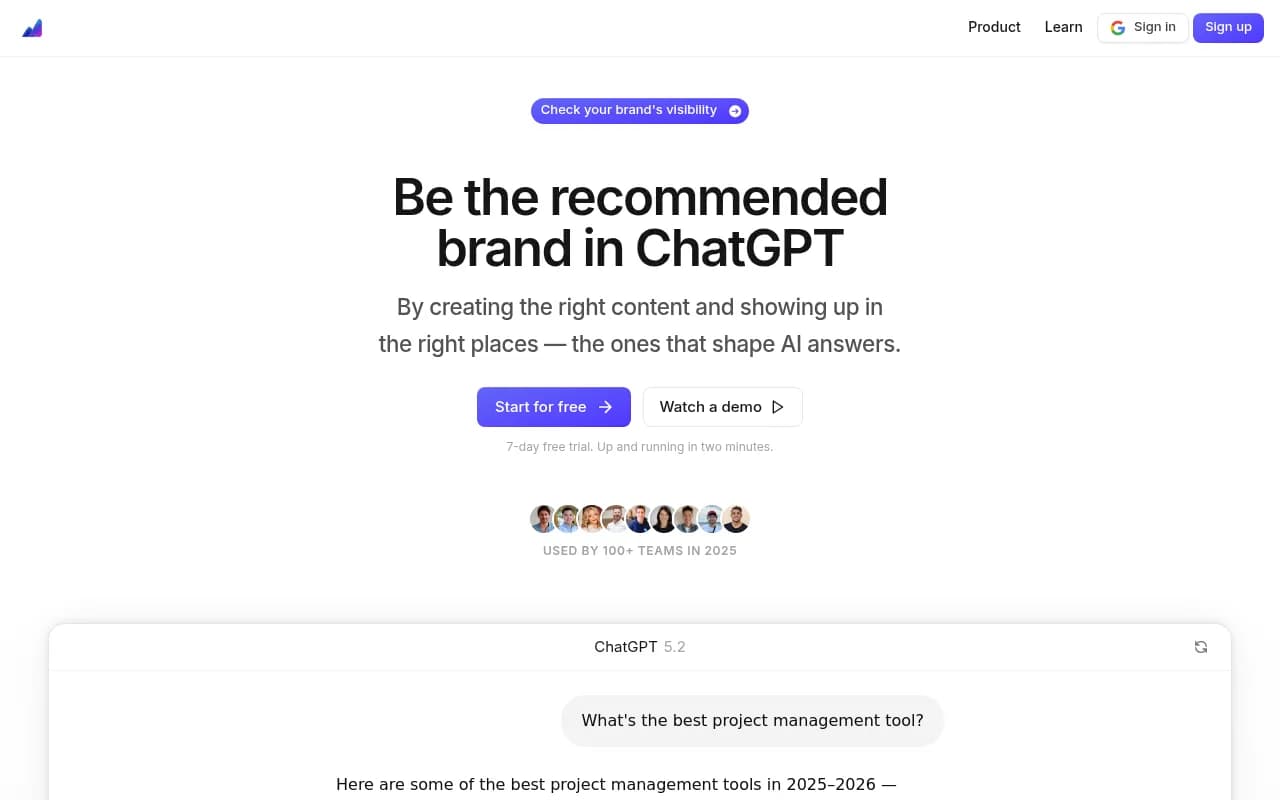
Promptwatch is the platform most consistently rated as a "Leader" across independent comparisons in 2026. What makes it different from most competitors is the action loop it's built around: find the prompts you're missing (Answer Gap Analysis), generate content engineered to get cited (AI writing agent grounded in 880M+ citations), and track whether it worked (page-level citation tracking with traffic attribution). It also logs actual AI crawler visits to your site -- which pages ChatGPT, Claude, and Perplexity are reading, how often, and what errors they hit. That's a capability most monitoring-only tools lack entirely.

Pricing runs from $99/month (Essential: 1 site, 50 prompts) to $579/month (Business: 5 sites, 350 prompts, 30 articles/month), with agency and enterprise plans available. A free trial is available.
Profound is the other serious enterprise option. It scores well on citation tracking and has GA4 attribution built in, plus SOC 2 Type II compliance for regulated industries. One independent ranking gave it an AEO score of 92/100. It's strong on monitoring and attribution but doesn't have the content generation capabilities Promptwatch offers.

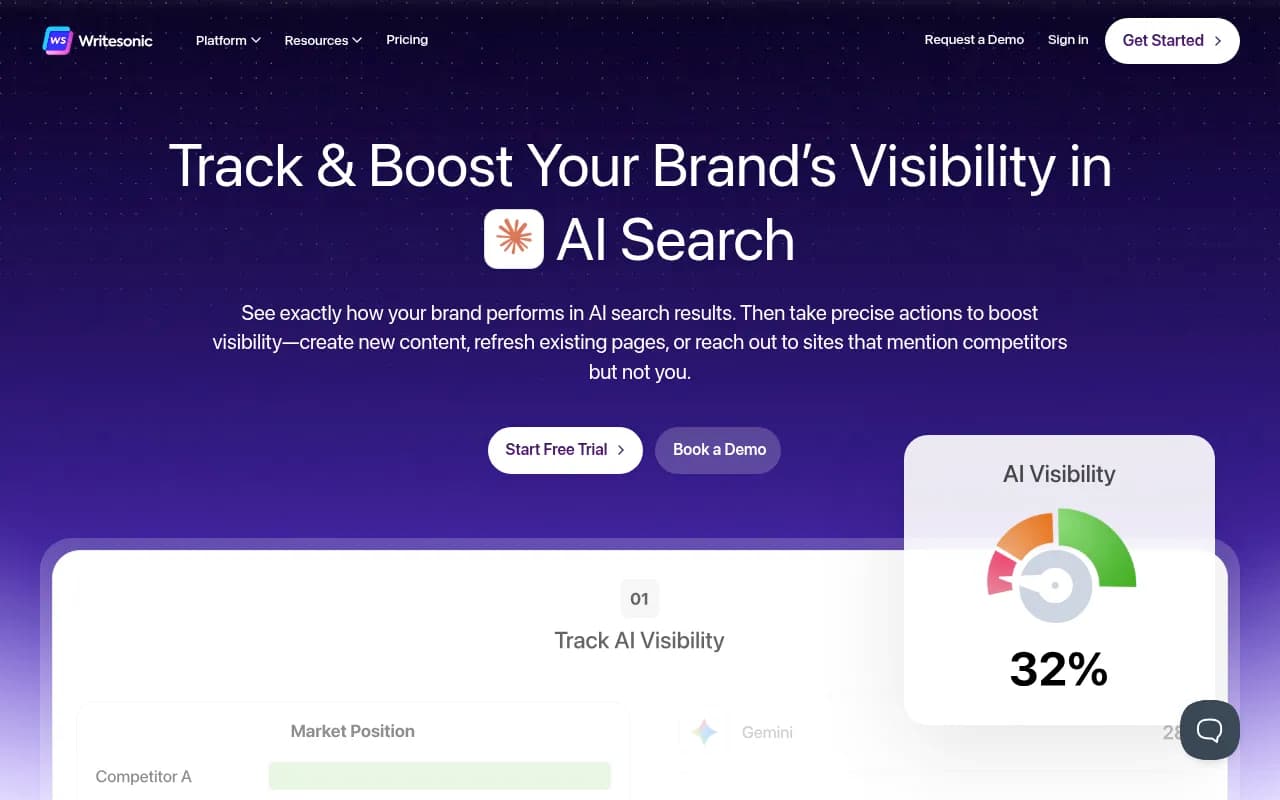
Writesonic has expanded beyond content writing into AI search visibility. It tracks brand mentions across AI engines and offers optimization recommendations alongside its content tools. Worth considering if you're already using it for content and want to consolidate.
Scrunch AI focuses on AI search visibility monitoring with some optimization guidance. It's a cleaner product than many in this space but sits more on the monitoring side than the action side.
Monitoring-focused tools (good for tracking, limited on action)
These platforms do what they say -- they track your brand across AI models. If you already have a content team and just need the data, they're worth evaluating. Just go in knowing they won't tell you what to do with the information.
Otterly.AI is one of the more affordable options in this category. It covers the main AI models and gives you share-of-voice data. No content generation, no crawler logs, no traffic attribution -- but the price reflects that.

Peec AI handles multi-language tracking well, which matters if you're operating across European or APAC markets. Solid monitoring, limited optimization.

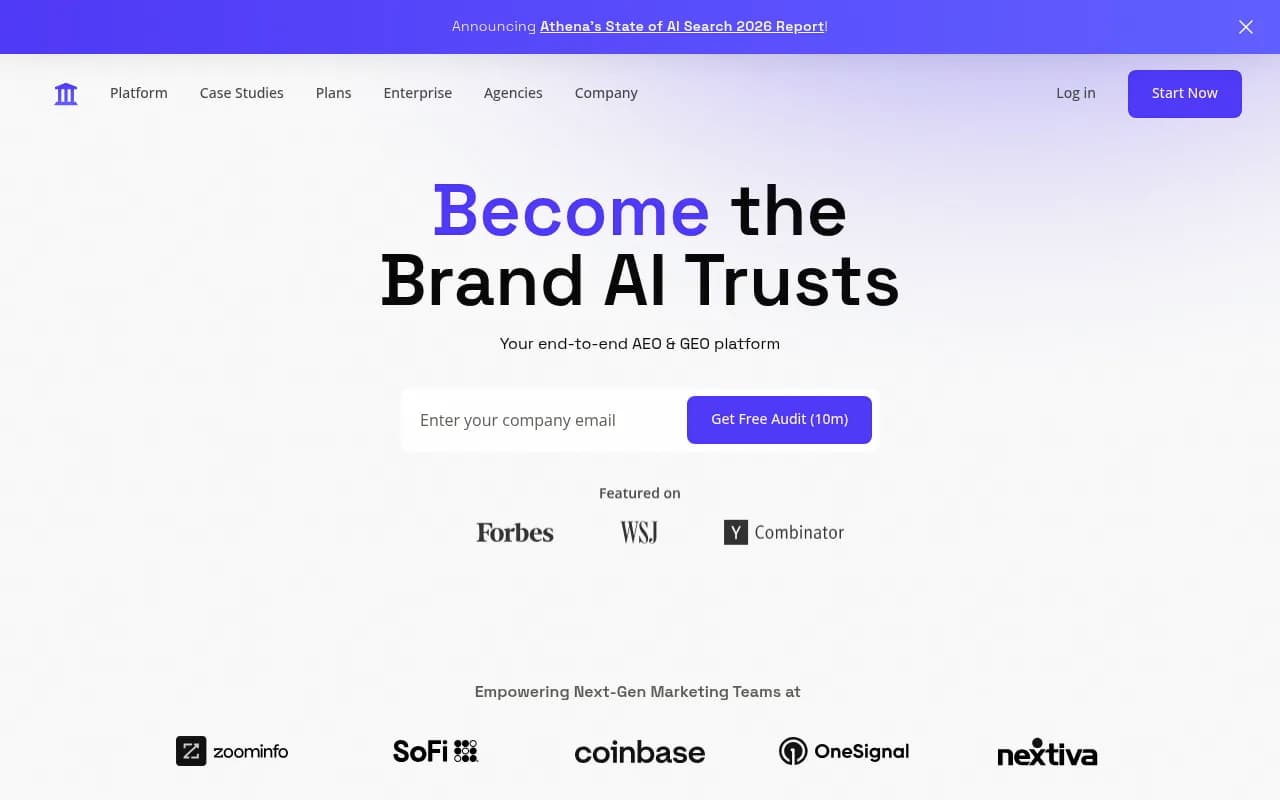
AthenaHQ tracks across 8+ AI search engines and has a clean interface. Like most monitoring tools, it stops at showing you the data.
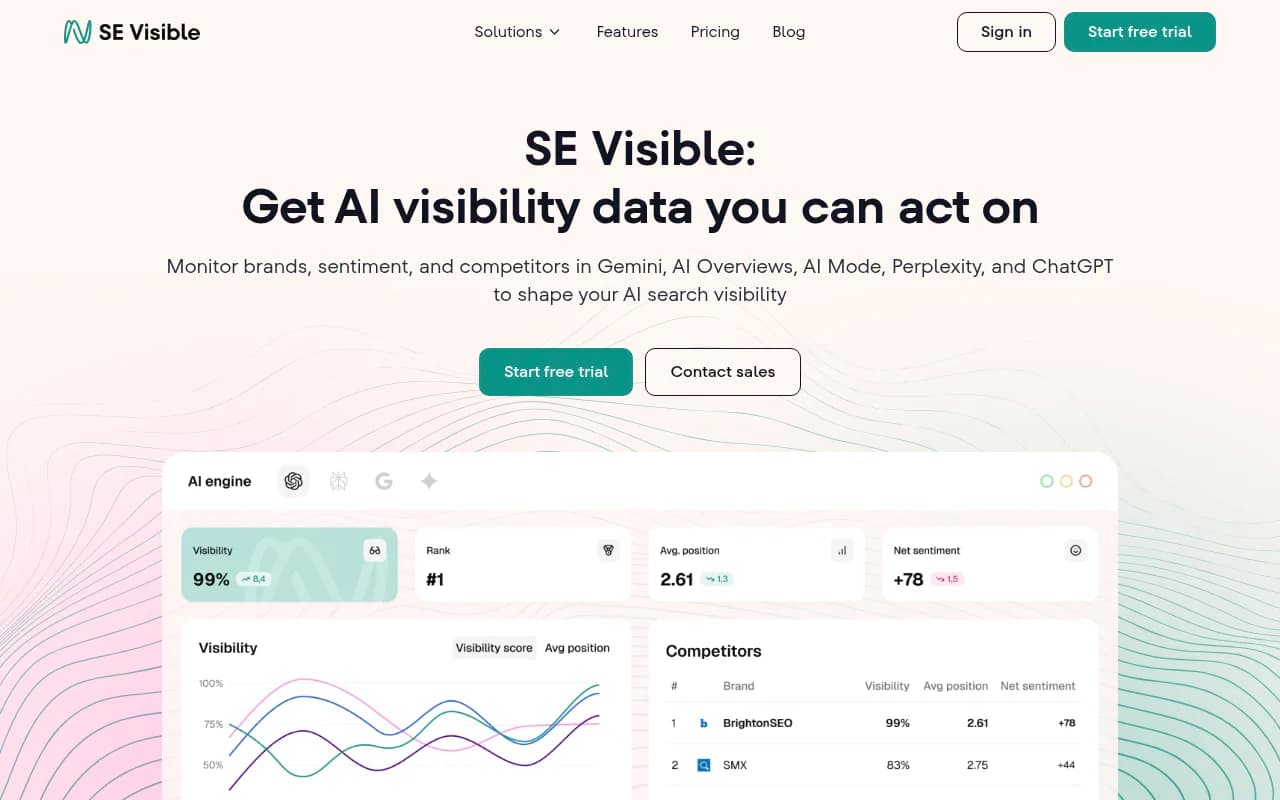
SE Visible (from SE Ranking) is worth a look if you're already an SE Ranking customer. It integrates with the broader SEO platform and gives you AI visibility data alongside traditional rank tracking.
Airefs is one of the more affordable tracking options with decent coverage. Good starting point for smaller teams.
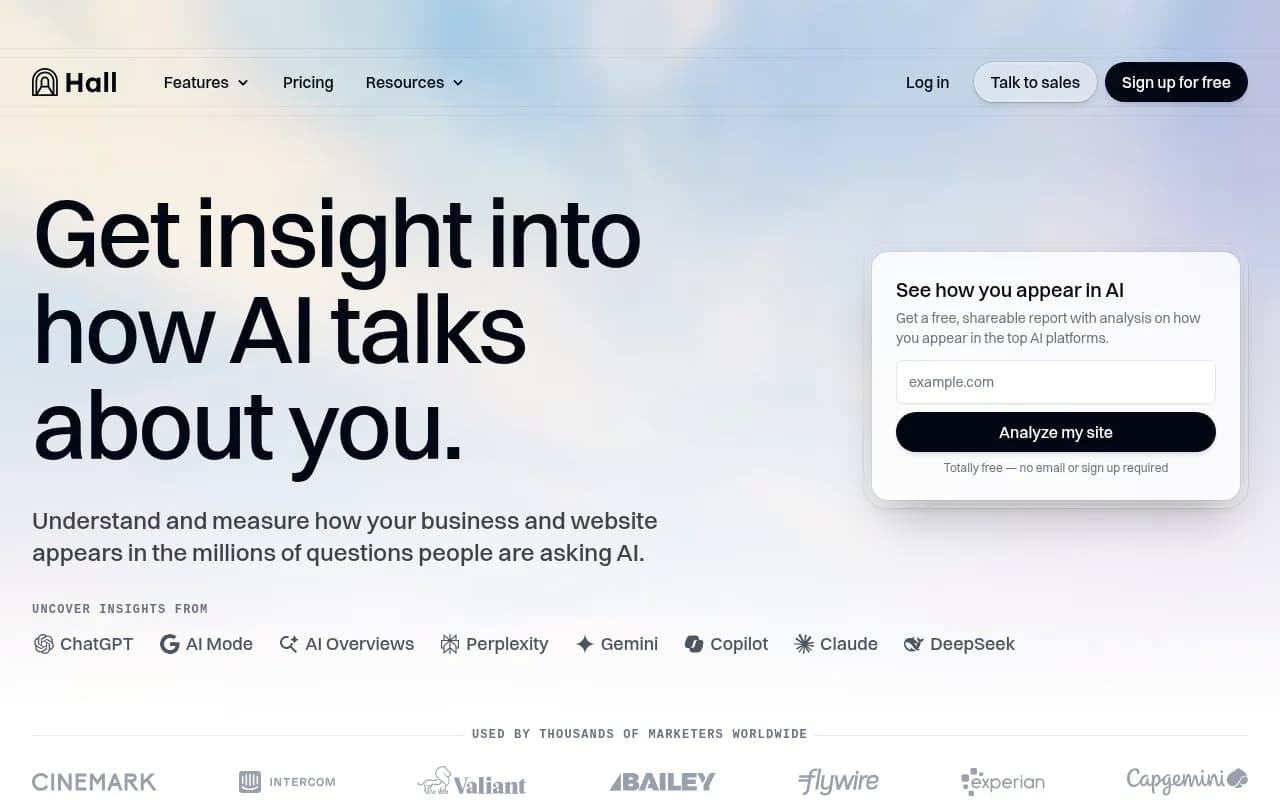
Hall AI tracks how AI platforms cite your brand and sends Slack notifications when something changes. The heatmap view is useful for spotting patterns quickly.
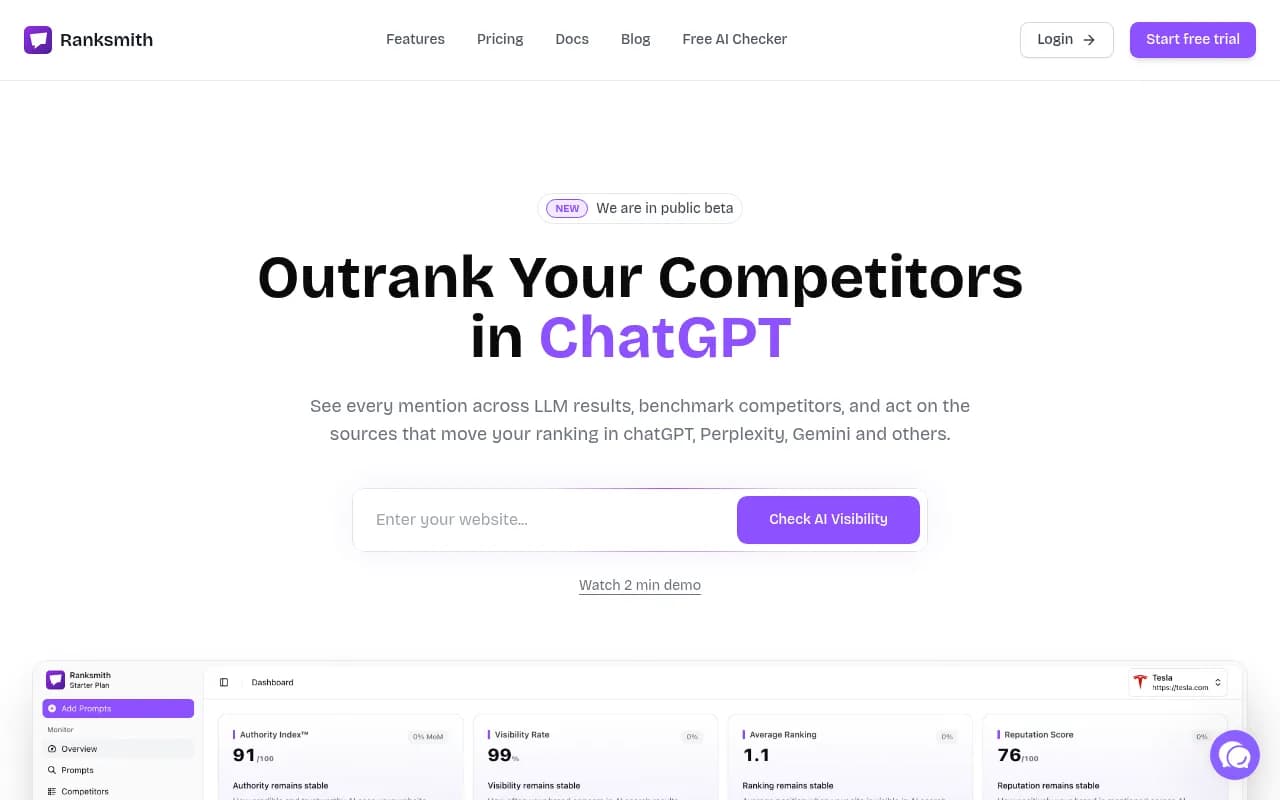
Ranksmith focuses on actionable insights rather than raw data dumps. It's positioned as a lighter-weight alternative to the enterprise platforms.
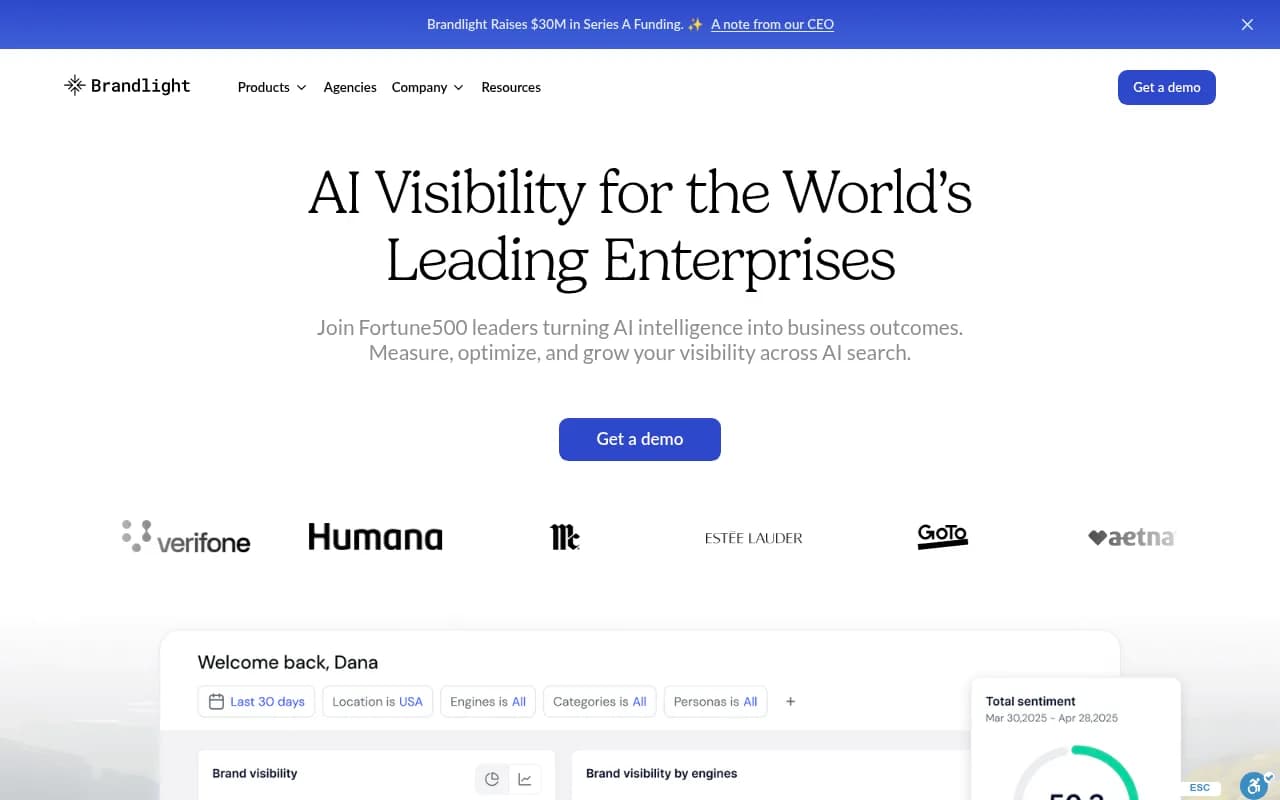
Brandlight covers AI-powered brand visibility tracking with a clean reporting interface.
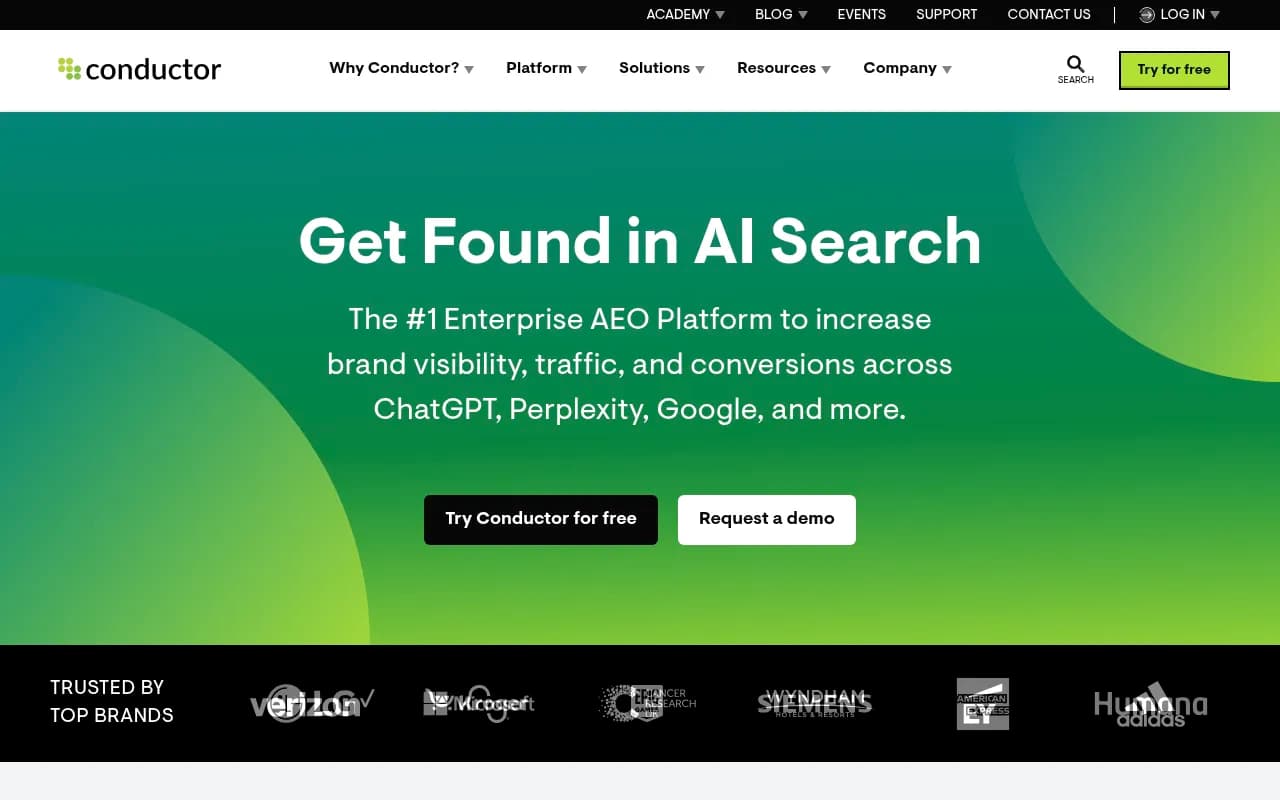
Conductor adds persona customization to its tracking, which helps if you want to simulate how different customer types are searching.
Traditional SEO tools with AI visibility add-ons
Semrush has added AI visibility features to its existing platform. The advantage is consolidation -- you're already paying for it. The limitation is that the AI tracking uses fixed prompts, which means you're not seeing the full picture of how customers actually query AI engines.
Ahrefs Brand Radar is similar: solid brand monitoring bolted onto a traditional SEO tool. Fixed prompts and no AI traffic attribution are the main gaps.
Both are fine if you need a starting point and don't want to add another vendor. Neither is purpose-built for the AI search era.
Platform comparison
| Platform | AI models tracked | Content generation | Crawler logs | Traffic attribution | Starting price |
|---|---|---|---|---|---|
| Promptwatch | 10+ | Yes (AI writing agent) | Yes | Yes | $99/mo |
| Profound | 5+ | No | No | Yes (GA4) | Enterprise |
| Otterly.AI | 5+ | No | No | No | ~$49/mo |
| Peec AI | 5+ | No | No | No | ~$79/mo |
| AthenaHQ | 8+ | No | No | No | Custom |
| SE Visible | 5+ | No | No | No | Included w/ SE Ranking |
| Scrunch AI | 5+ | Limited | No | No | Custom |
| Semrush | 3-4 | No | No | No | $139/mo |
| Ahrefs Brand Radar | 3-4 | No | No | No | Included w/ Ahrefs |
| Hall AI | 5+ | No | No | No | Custom |
| Writesonic | 5+ | Yes | No | No | $99/mo |
What the research actually shows about AI citations
A few data points from 2026 research that should shape how you think about this:
Content type matters significantly. Not all pages get cited equally -- structured, authoritative content (comparison articles, listicles, how-to guides) tends to get cited more often than generic product pages. This is why content gap analysis isn't just about finding missing topics; it's about understanding what format AI models prefer.
Semantic URL structure has a measurable impact on citation rates. Pages with clean, descriptive URLs that match the query intent get cited more frequently. This is a quick technical win most brands haven't addressed yet.
Reddit and YouTube are cited more often than most brands realize. Perplexity in particular pulls heavily from Reddit discussions. If your brand isn't appearing in relevant subreddit conversations, you're missing a citation channel that's harder to control but worth monitoring.
Source diversity matters. AI models don't just cite your website -- they cite the broader web conversation about your brand. Brands with mentions across multiple authoritative sources (industry publications, review sites, forums) appear more consistently in AI responses.
How to actually use these tools
Buying a platform is the easy part. Here's how to run a workflow that produces results:
Week 1: Baseline audit. Run your core prompts across the AI models your customers use. Document where you appear, where competitors appear, and where nobody appears (those last ones are opportunities).
Week 2: Gap analysis. Identify the specific prompts where competitors are cited but you're not. These are your highest-priority content targets. Tools with built-in gap analysis (like Promptwatch's Answer Gap Analysis) surface these automatically.
Week 3: Content creation. Write content that directly addresses the gaps. This isn't about stuffing keywords -- it's about creating the most useful, specific answer to the question the AI is trying to answer. Use citation data to understand what sources AI models trust in your space.
Week 4+: Track and iterate. Monitor whether your new content starts getting cited. Page-level tracking shows you exactly which pages are being picked up and by which models. Adjust based on what's working.
The brands seeing the biggest gains in AI visibility right now are running this cycle continuously -- not as a one-time project.
Which tool should you buy?
It depends on what you actually need:
If you want a complete system that finds gaps, generates content, and tracks results, Promptwatch is the most capable option in 2026. It's the only platform that covers the full workflow without requiring you to stitch together multiple tools.
If you're at an enterprise with compliance requirements and already have a content team, Profound is worth evaluating for its attribution and security credentials.
If you're on a tight budget and just need basic monitoring to start, Otterly.AI or Airefs will get you data without a big commitment. Just know you'll hit their limits quickly.
If you're already paying for Semrush or Ahrefs, use their AI visibility features as a starting point -- but don't mistake them for a complete solution.
The worst outcome is spending months on a monitoring-only tool, watching your visibility score stay flat, and wondering why nothing is changing. The data is only useful if it drives action. Pick a platform that helps you take the next step, not just measure the current one.
A note on what these tools can't do
No platform can guarantee you'll appear in AI responses. AI models make their own decisions about what to cite, and those decisions aren't fully transparent. What these tools can do is help you understand the patterns -- what content gets cited, which sources AI models trust, which prompts you're missing -- and give you a systematic way to improve your odds.
The brands winning in AI search right now aren't doing anything magical. They're publishing more specific, authoritative content, faster, and tracking what works. That's a process problem as much as a technology problem. The right platform makes the process manageable.