Key takeaways
- Most brands are invisible in ChatGPT and don't know it -- because they've never actually checked
- AI invisibility isn't random: it follows predictable patterns around entity signals, citation gaps, content structure, and third-party mentions
- Each sign in this guide comes with a concrete way to confirm it, not just a vague warning
- Fixing AI invisibility requires a different approach than traditional SEO -- the signals ChatGPT uses are different from what Google rewards
- Tracking your AI visibility over time is the only way to know if your fixes are working
In 2026, people don't just search -- they ask. They type "what's the best project management tool for remote teams" into ChatGPT and take the answer at face value. They ask Perplexity which accounting software is worth paying for. They ask Claude to recommend a B2B email platform.
If your brand isn't in those answers, you don't exist for that user. Not "you rank lower." Not "you're on page two." You simply don't exist.
The uncomfortable truth is that most brands are invisible in AI search and have no idea. They're still measuring impressions, clicks, and keyword rankings while an entirely different discovery channel has quietly taken over a chunk of their potential customers' decision-making.
This guide covers seven specific signs that ChatGPT is ignoring your brand -- and more importantly, how to actually confirm each one rather than just worrying about it.
Sign 1: You've never directly tested what ChatGPT says about your category
This sounds almost too obvious, but it's the most common situation. Most marketing teams have never opened ChatGPT and typed the questions their customers actually ask.
Not "tell me about [Brand Name]" -- that's a vanity check. The real test is category-level prompts: "What are the best tools for [your use case]?" or "Which [your product type] should I use for [specific scenario]?" These are the prompts where buying decisions get made.
How to confirm it
Open ChatGPT (use GPT-4o, not an older model) and run 10-15 prompts that mirror how your customers would ask about your category. Write them down first, before you search, so you're not unconsciously writing prompts designed to surface your brand.
Some examples of the right format:
- "What's the best [product category] for [specific use case]?"
- "Compare [your category] options for [customer type]"
- "Which [product type] do [industry professionals] recommend?"
Track whether your brand appears, how often, and what competitors show up instead. If you're not appearing in 80%+ of relevant prompts, you have a visibility problem.
Tools like Promptwatch automate this at scale -- running hundreds of prompts across multiple AI models and tracking your mention rate over time -- but even a manual test of 10-15 prompts will tell you a lot.

Sign 2: Your brand has weak entity signals
ChatGPT and other large language models build their understanding of the world from training data. If your brand doesn't have a clear, consistent "entity" in that data -- a recognizable identity with consistent attributes across multiple sources -- the model either doesn't know you exist or doesn't have enough confidence to recommend you.
Entity signals include things like: a Wikipedia or Wikidata entry, consistent NAP data (name, address, phone) across directories, mentions in authoritative publications, structured data markup on your website, and a clear description of what you do and who you serve.
Brands with weak entity signals often get mentioned inconsistently -- sometimes with the wrong description, sometimes confused with a similarly named competitor, sometimes not at all.
How to confirm it
Search for your brand name in ChatGPT and ask it to describe what your company does. Then ask it follow-up questions: "What industry are they in?" "Who are their main customers?" "What makes them different from [competitor]?"
If the answers are vague, wrong, or ChatGPT says it doesn't have reliable information, your entity signals are weak. Cross-reference this by checking whether you have a Wikipedia entry, whether your Google Knowledge Panel is populated, and whether your brand description is consistent across Crunchbase, LinkedIn, G2, Capterra, and industry directories.
Sign 3: Your competitors appear in AI answers but you don't
This is the most commercially painful sign. You search a relevant prompt and ChatGPT confidently recommends three of your direct competitors -- with specific reasons why each one is good -- and your brand isn't mentioned at all.
This isn't random. AI models cite sources they've seen frequently, in authoritative contexts, with consistent and specific claims. If your competitors are getting cited and you're not, they're doing something structurally different: more third-party coverage, better-structured content, more citations in the sources AI models trust.
How to confirm it
Run the same category prompts from Sign 1, but this time specifically note which competitors appear. Then look at what those competitors have that you don't:
- Are they mentioned in major industry publications, review sites, or comparison articles?
- Do they have more G2 or Capterra reviews?
- Are they discussed in Reddit threads that AI models frequently cite?
- Do they have detailed comparison pages ("X vs Y") that AI models can pull from?
Platforms like Promptwatch have competitor heatmaps that show you exactly which prompts your competitors are winning and you're not -- what the platform calls Answer Gap Analysis. That's useful because it turns a vague feeling ("they seem to be doing better") into a specific list of prompts you need to target.
You can also check tools like Otterly.AI or Peec AI for basic monitoring of competitor mentions.


Sign 4: AI models cite your website but get your information wrong
This one is subtle and often missed. Your brand does appear in ChatGPT responses -- but the description is outdated, inaccurate, or missing key details. Maybe it describes a product you discontinued two years ago. Maybe it lists the wrong pricing tier. Maybe it describes you as a "startup" when you have 500 employees.
This happens because AI models train on data snapshots, and if the most authoritative sources describing your brand contain old or incorrect information, that's what gets cited. It's arguably worse than being invisible -- you're present but creating the wrong impression.
How to confirm it
Ask ChatGPT to describe your brand in detail. Ask it about your pricing, your key features, your target customer, your founding story. Compare those answers against what's actually true today.
Then audit the sources that are likely feeding that information: your own website (is it clearly written and up to date?), your Wikipedia page if you have one, your Crunchbase profile, your LinkedIn company page, major review sites, and any press coverage from the past two years.
Pay particular attention to your website's structured data. If you have schema markup that describes your organization, products, or services, make sure it's accurate. AI crawlers read this data and it directly influences how models represent you.
Sign 5: You have no presence in the third-party sources AI models trust
Here's something that surprises a lot of SEOs: ChatGPT doesn't primarily cite brand websites. It cites third-party sources -- review platforms, comparison sites, industry publications, Reddit threads, YouTube videos, and expert roundups. Your own website content matters, but it's often not enough on its own.
If your brand only exists on your own website and your own social channels, you're essentially invisible to AI. The model needs to see other people talking about you, recommending you, comparing you, and explaining why you're good.
How to confirm it
Ask ChatGPT a relevant category question and look at which sources it cites in its response (if using a model with citations like Perplexity or Claude). Are those sources in your industry? Are you mentioned in them?
Then do a manual audit: search "[your brand] review" on Reddit. Search "[your brand] vs [competitor]" to see if comparison content exists. Check G2, Capterra, Trustpilot, and any industry-specific review platforms. Search for your brand in YouTube.
If you find almost nothing beyond your own website and a few press releases, that's the problem. AI models need corroboration from multiple independent sources before they'll confidently recommend you.
Reddit is worth particular attention. Research from Promptwatch's citation database shows Reddit threads are heavily cited by AI models -- it's one of the most influential channels that most brands completely ignore.
Sign 6: Your content doesn't answer the specific questions AI models are looking for
Traditional SEO content is often written to rank for keywords. AI-optimized content needs to answer specific questions completely and authoritatively. These are different goals that produce different content.
If your website is full of keyword-stuffed landing pages, vague "solutions" copy, and blog posts that bury the answer under three paragraphs of preamble, AI models will skip you. They're looking for content that directly and clearly answers the question a user might ask.
This is especially true for comparison questions ("X vs Y"), "best for" questions ("best tool for [specific use case]"), and how-to questions. If you don't have content that directly addresses these formats, you're missing the prompts where AI recommendations get made.
How to confirm it
Go through your website and ask: "If someone asked ChatGPT [specific question], does my website have a page that answers it clearly and completely?" Do this for 20 questions your customers actually ask.
Then check your competitors' content. Do they have dedicated comparison pages? FAQ sections that answer specific questions? Case studies that explain exactly who they help and how? If yes, and you don't, that's a content gap that's directly costing you AI visibility.
Tools like Promptwatch have a built-in content gap analysis that identifies exactly which prompts competitors rank for that you don't -- and a writing agent that generates content designed to fill those gaps. That's a faster path than manually auditing everything.
Sign 7: You have no way of knowing if AI is sending you traffic
This last sign is different from the others -- it's not about what ChatGPT says, it's about what you can measure. If you have no visibility into whether AI search engines are sending traffic to your website, you're flying blind. You can't improve what you can't measure.
Most analytics setups in 2026 still don't properly attribute AI referral traffic. ChatGPT, Claude, and Perplexity send traffic with referrer data that many GA4 setups lump into "direct" or misclassify. If you're not specifically tracking AI referrals, you're probably underestimating (or completely missing) the traffic you're already getting from AI sources.
This also means you can't close the loop: you don't know which content is getting cited, which AI models are sending visitors, or whether your optimization efforts are actually moving the needle.
How to confirm it
Check your GA4 referral traffic for sources like perplexity.ai, chat.openai.com, claude.ai, and gemini.google.com. If you see traffic from these sources, AI is already sending you visitors. If you see nothing, either AI isn't citing you or your tracking isn't capturing it.
For more sophisticated tracking, look at your server logs directly -- AI crawlers (GPTBot, ClaudeBot, PerplexityBot) leave traces in your server logs before they ever send you traffic. If those crawlers aren't visiting your site regularly, you're not being indexed by the models that matter.
Promptwatch has an AI Crawler Logs feature that shows you in real time which AI crawlers are hitting your site, which pages they're reading, and how often they return. That's the foundation for understanding whether your content is even being considered.
How these signs connect
These seven signs aren't independent problems -- they're usually symptoms of the same underlying issue: your brand hasn't been optimized for how AI models discover, evaluate, and recommend sources.
Traditional SEO built your visibility in Google's index. AI visibility requires a different kind of presence: clear entity signals, third-party corroboration, question-answering content, and consistent mentions across the sources AI models trust.
Here's a quick summary of what to check for each sign:
| Sign | What to check | Severity if confirmed |
|---|---|---|
| Never tested category prompts | Run 10-15 prompts manually in ChatGPT | High -- you don't know your baseline |
| Weak entity signals | ChatGPT describes you vaguely or incorrectly | High -- models won't recommend what they don't understand |
| Competitors appear, you don't | Compare prompt results side-by-side | High -- you're losing customers right now |
| AI gets your info wrong | Ask ChatGPT to describe you in detail | Medium-High -- you're present but misleading |
| No third-party source presence | Audit Reddit, G2, review sites, YouTube | High -- AI needs corroboration |
| Content doesn't answer AI questions | Audit pages against real customer questions | Medium-High -- gaps in content = gaps in citations |
| No AI traffic tracking | Check GA4 referrals and server logs | Medium -- you can't improve what you can't measure |
What to do next
If you confirmed two or more of these signs, you have an AI visibility problem worth addressing. The good news is that the fixes are concrete: build entity signals, earn third-party mentions, create question-answering content, and track what's working.
The bad news is that doing this manually is slow. Running prompts by hand, auditing competitor content, and monitoring your citation rate across 10 AI models is a lot of work.
That's where dedicated platforms help. Promptwatch is built specifically around this cycle -- find the gaps, create content that fills them, track whether it's working. It's one of the few platforms that goes beyond monitoring to actually help you fix the problem.
Other tools worth knowing about for specific parts of this workflow:
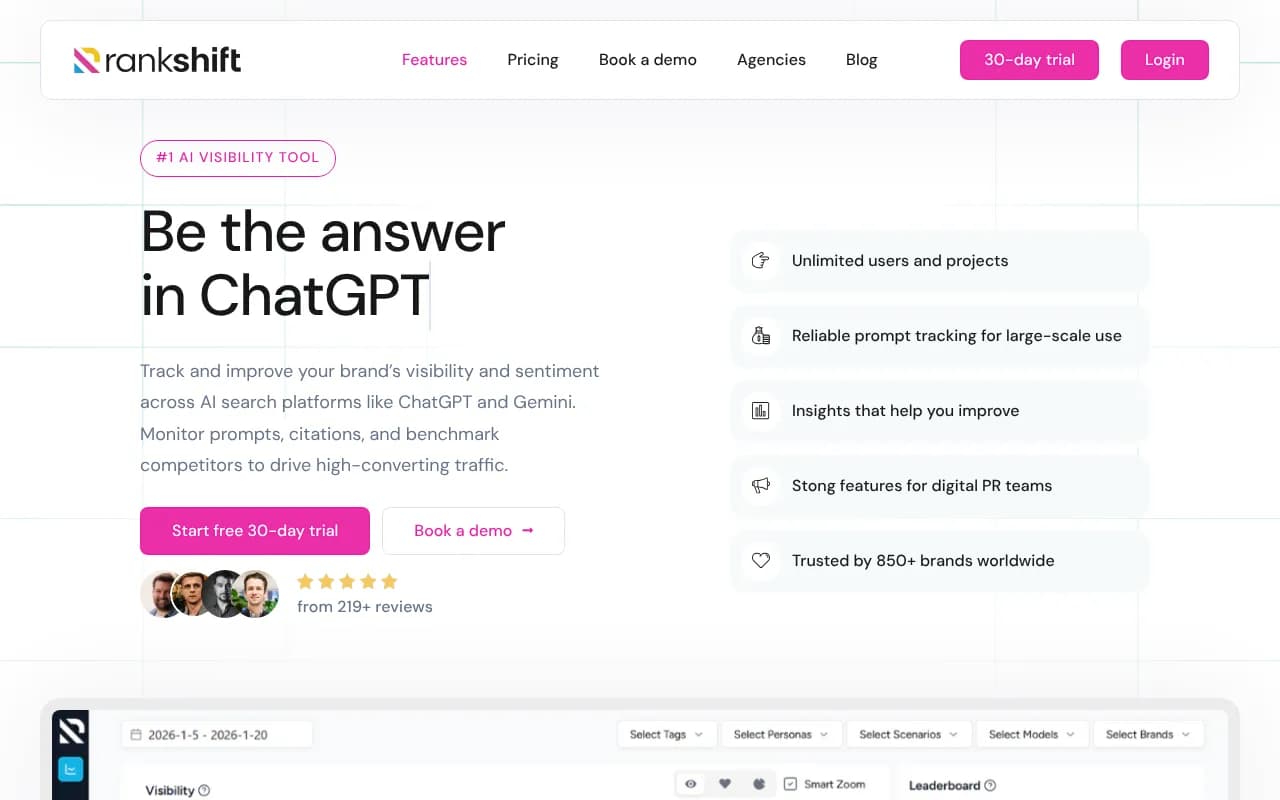
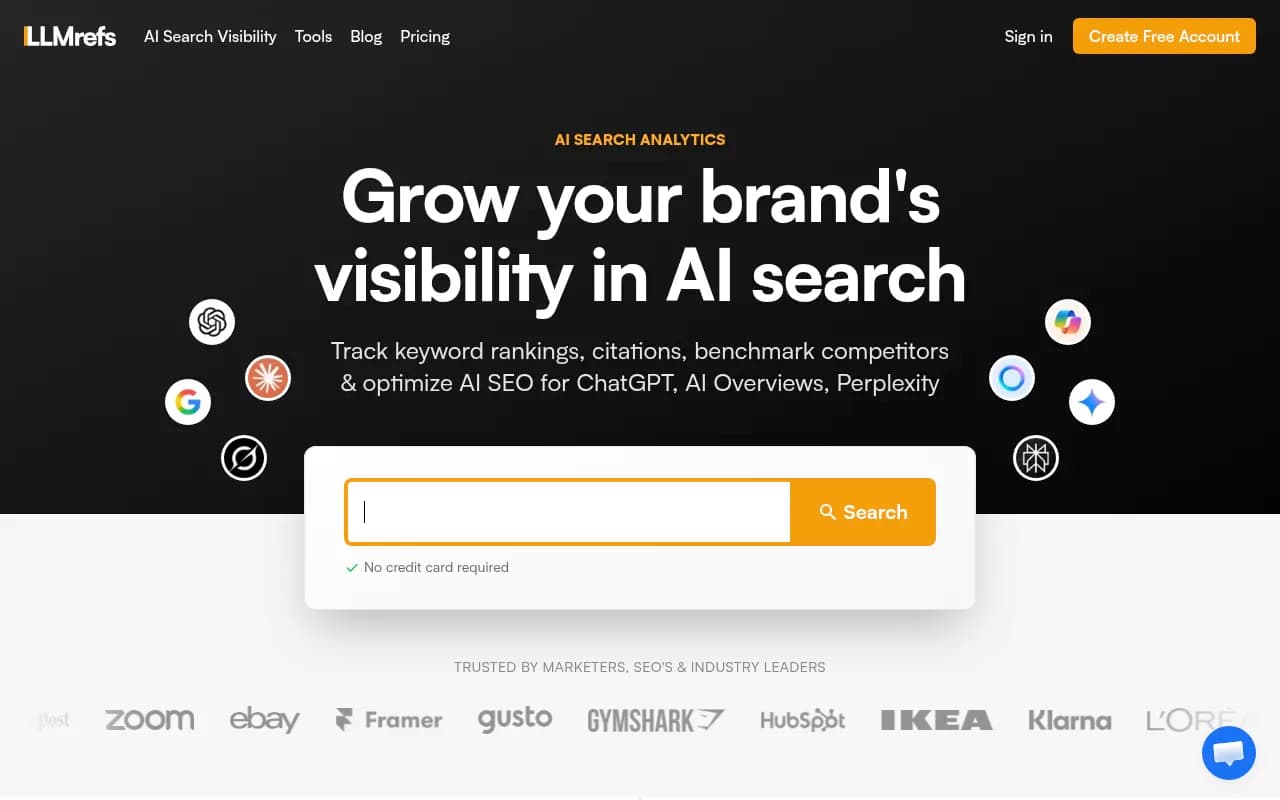
For basic monitoring of your brand mentions across AI models:
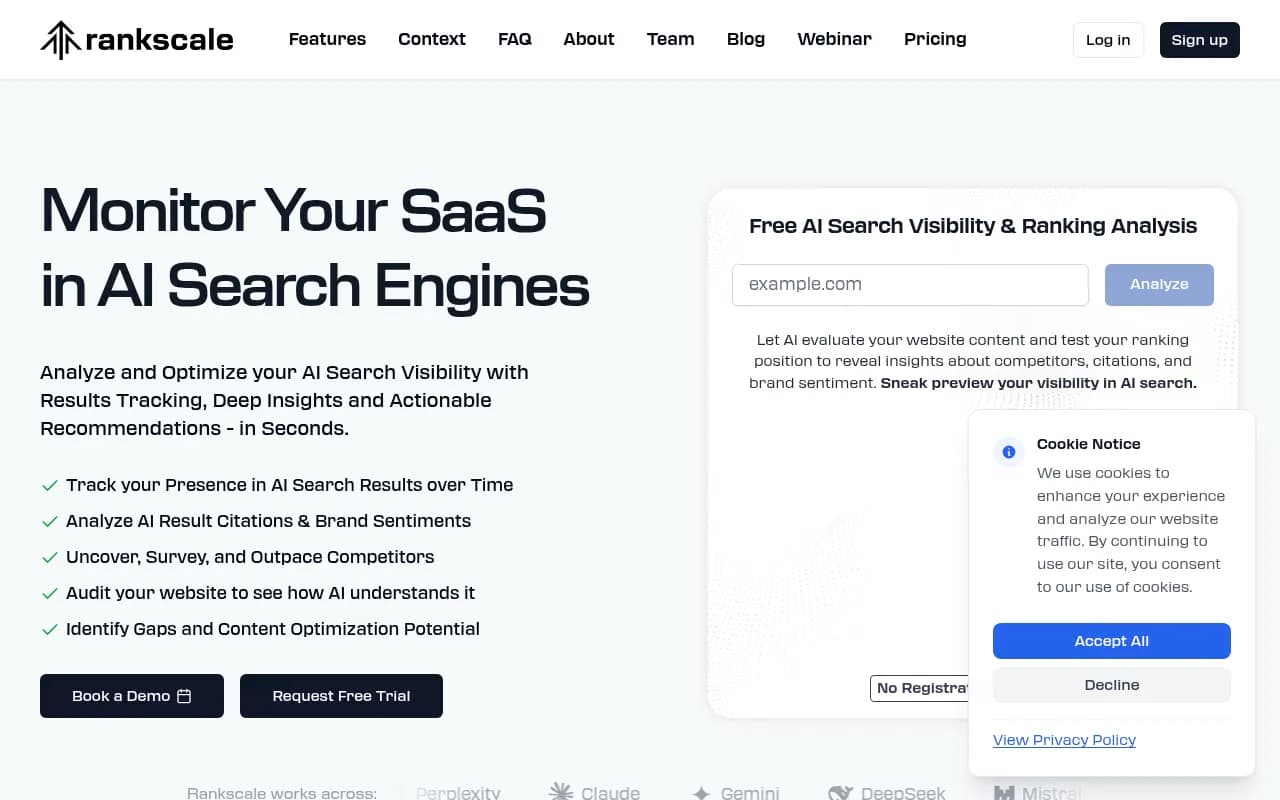
For tracking AI search visibility with competitive context:


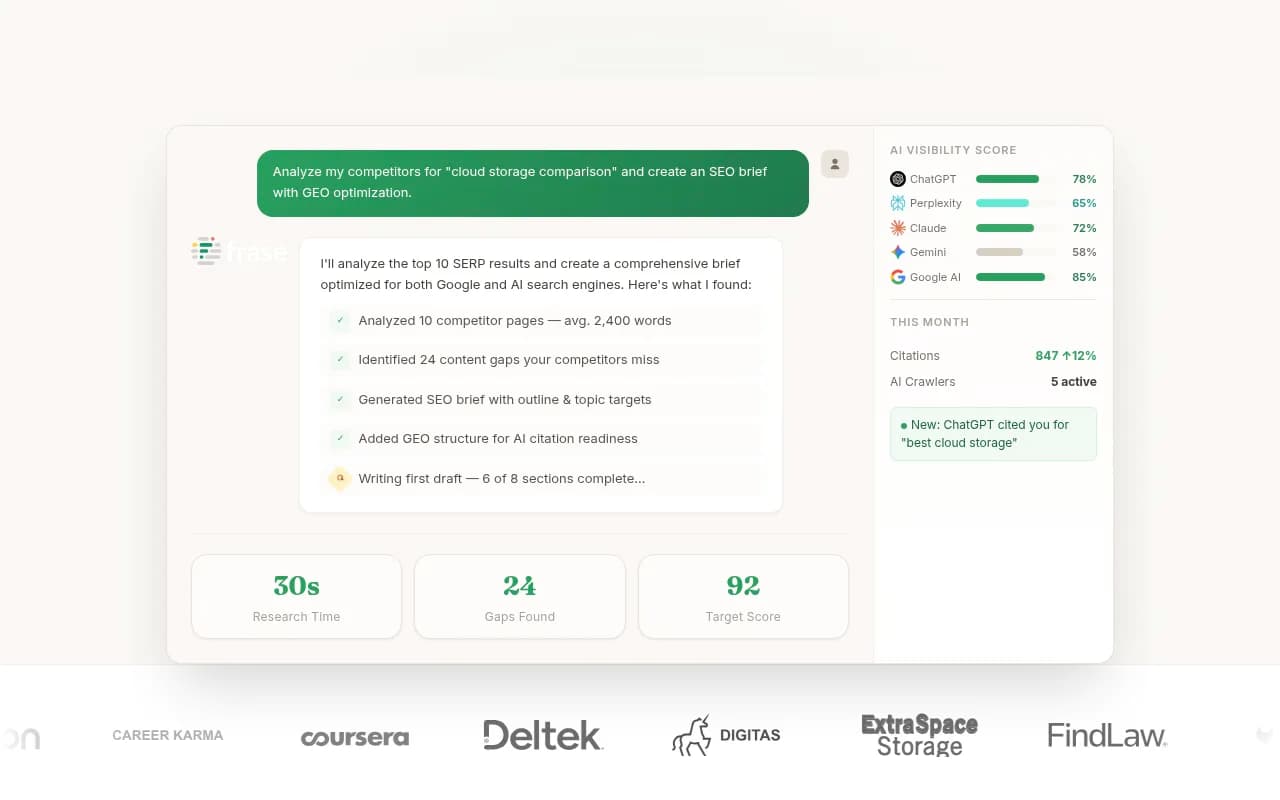
For understanding which content to create:
The brands that figure this out now will have a significant head start. AI search isn't coming -- it's already here, and it's already influencing your customers' decisions. The question is whether your brand is part of those conversations or not.