Key Takeaways
- Best for AI search visibility: Promptwatch tracks how your brand appears in ChatGPT, Claude, Perplexity, and other AI models -- a channel Meltwater doesn't monitor at all
- Best budget alternative: Brand24 starts at $149/mo with real-time monitoring across 25M+ sources, versus Meltwater's $15K-$20K/year minimum
- Best for enterprise scale: Sprinklr offers unified CXM across 30+ channels with AI-native workflows, though pricing is comparable to Meltwater
- Best for social-first teams: Agorapulse combines publishing, engagement, and listening starting at $49/mo with transparent pricing and no annual lock-in
- Best Meltwater clone: Brandwatch Consumer Intelligence offers similar enterprise features and pricing but with better social analytics
Meltwater is one of the most established names in media intelligence and social listening. Global brands like Microsoft and Pernod Ricard use it to monitor news coverage, track competitors, and analyze sentiment across digital channels. But there's a reason you're looking for alternatives: Meltwater is expensive (typically $15,000-$20,000/year minimum, often much more), requires annual contracts, has a steep learning curve, and focuses heavily on traditional media monitoring while missing newer channels like AI search engines.
The good news? The market has caught up. You can now get comparable (or better) capabilities at a fraction of the cost, with more flexible pricing, simpler interfaces, and coverage of channels Meltwater ignores entirely.
Promptwatch

Promptwatch solves a problem Meltwater doesn't even acknowledge: your brand's visibility in AI search engines. When someone asks ChatGPT, Claude, Perplexity, or Gemini about products in your category, does your brand get mentioned? If not, you're invisible to a rapidly growing segment of search traffic.
This isn't traditional media monitoring -- it's a fundamentally different channel. AI models don't crawl your site like Google does. They synthesize answers from their training data and real-time sources, and if your content isn't structured the way they expect, you won't get cited. Promptwatch tracks your AI visibility across 10 models, shows you exactly which prompts competitors are winning for, and helps you fix the gaps with AI-powered content generation grounded in 880M+ citations analyzed.
The action loop is what sets it apart: find content gaps with Answer Gap Analysis, generate articles that AI models actually cite, then track the results with page-level visibility scores and traffic attribution. Most monitoring tools (including Meltwater) stop at showing you data. Promptwatch helps you act on it.
Additional capabilities include AI crawler logs (see which AI bots are reading your site and what errors they encounter), prompt intelligence (volume estimates and difficulty scores), Reddit and YouTube tracking (channels that heavily influence AI recommendations), and ChatGPT Shopping monitoring.
Pricing: Essential $99/mo (1 site, 50 prompts, 5 articles), Professional $249/mo (2 sites, 150 prompts, 15 articles, crawler logs), Business $579/mo (5 sites, 350 prompts, 30 articles). Annual billing saves 25%. 7-day free trial.
Best for: Marketing teams and agencies that want to be visible in AI search results, not just traditional media. If your audience is starting to use ChatGPT or Perplexity instead of Google, this is the only tool that tracks and optimizes for that shift.
Trade-offs: Promptwatch is laser-focused on AI search visibility. It doesn't monitor traditional news outlets, TV, or print media the way Meltwater does. If you need comprehensive media intelligence across all channels, you'd pair this with another tool.
Brandwatch Consumer Intelligence
Brandwatch Consumer Intelligence
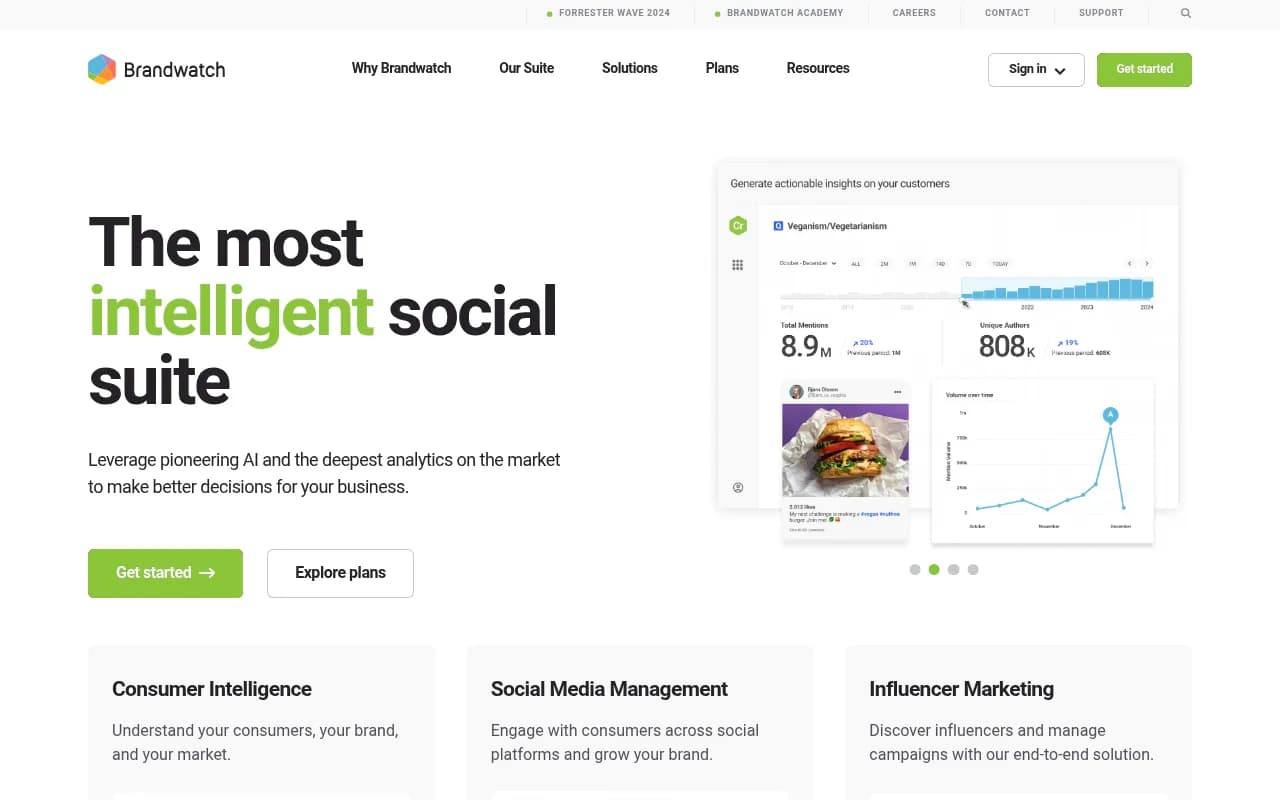
Brandwatch is the closest thing to a direct Meltwater replacement. It monitors over 100 million sources (social media, news, blogs, forums, reviews), offers deep sentiment analysis, tracks competitors, and provides enterprise-grade analytics. Brands like BBC, Virgin Holidays, and OnePlus use it for the same use cases Meltwater serves: understanding consumer sentiment, tracking brand health, and identifying emerging trends.
The main differences? Brandwatch has stronger social media analytics and a more modern interface. Meltwater has deeper traditional media coverage (TV, radio, print) and more established relationships with news outlets. For most digital-first brands, Brandwatch's social focus is actually an advantage.
Brandwatch also offers integrated social media management and influencer marketing modules, so you can act on insights without switching tools. Meltwater has similar capabilities but they feel more bolted-on.
Pricing: From $1,750/mo ($21,000/year minimum, annual contract required). Mid-tier plans run $3,000-$5,000/mo. Enterprise custom pricing can hit $50K-$200K+/year depending on scale. No free trial or monthly billing.
Best for: Enterprise marketing teams that need Meltwater-level capabilities but want better social analytics and a more intuitive interface. If you're already spending $20K+/year on Meltwater, Brandwatch is worth evaluating.
Trade-offs: Pricing is in the same ballpark as Meltwater, so you're not saving money. And like Meltwater, it requires annual contracts and has a complex setup process. Not a good fit for small teams or tight budgets.
Brand24
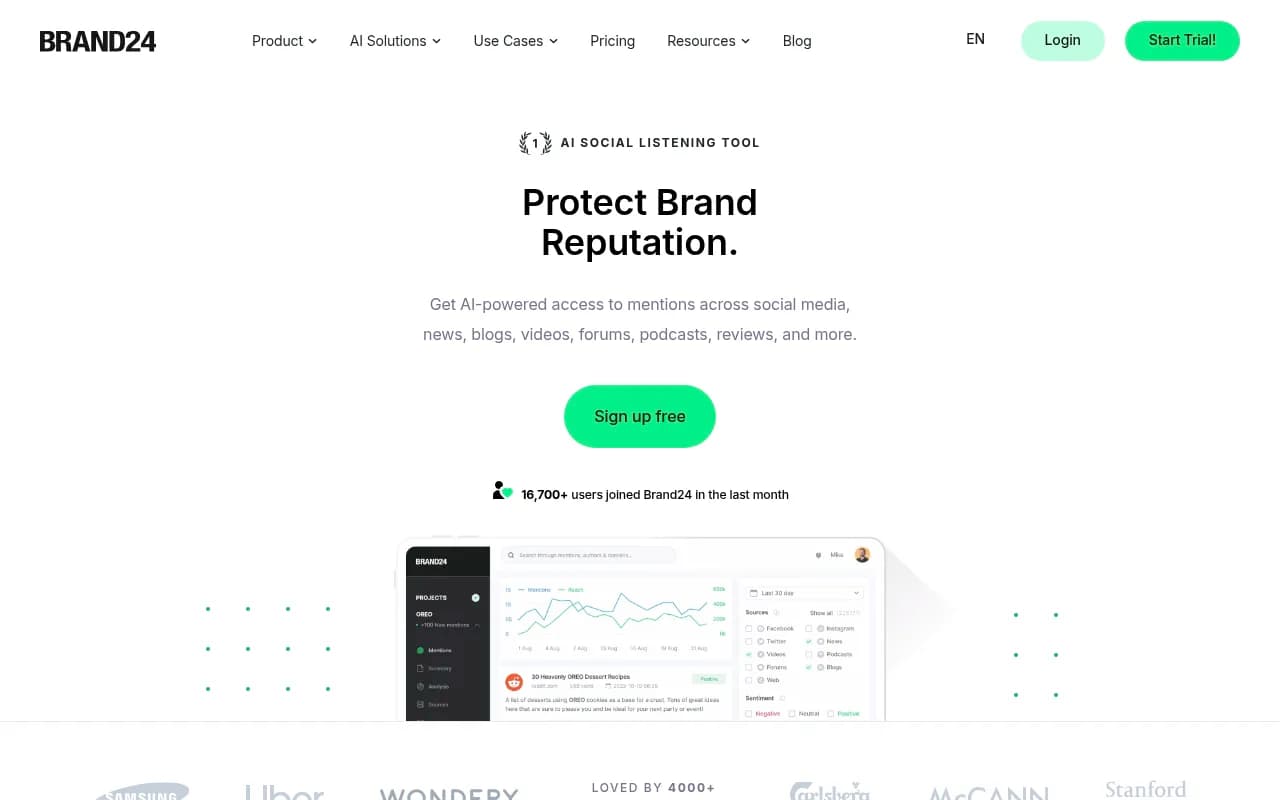
Brand24 is the budget-friendly alternative that still delivers real-time monitoring across 25 million sources. It tracks social media, news, blogs, forums, podcasts, reviews, and video platforms, with AI-powered sentiment analysis and reputation scoring. Brands like Samsung and Uber use it, but it's priced for teams that can't justify Meltwater's $15K+ annual commitment.
The interface is clean and intuitive -- you can set up monitoring in minutes, not weeks. You get instant alerts when your brand is mentioned, sentiment breakdowns, influencer identification, and competitive benchmarking. The analytics aren't as deep as Meltwater's, but for most teams, they're more than sufficient.
Brand24 also includes hashtag tracking, reach and engagement metrics, and automated reporting. You can share insights across your organization without needing a data analyst to interpret them.
Pricing: From $149/mo (Individual: 3 keywords, 2K mentions) to $499/mo+ (Enterprise: unlimited keywords, 100K+ mentions). 14-day free trial. Annual billing discounts available.
Best for: Small to mid-sized marketing teams that need comprehensive brand monitoring without enterprise complexity or pricing. If Meltwater feels like overkill (and overpriced), Brand24 is the smart alternative.
Trade-offs: Less robust traditional media coverage than Meltwater. The analytics are solid but not as granular. If you need deep competitive intelligence or custom data science, you'll hit limits.
Mention
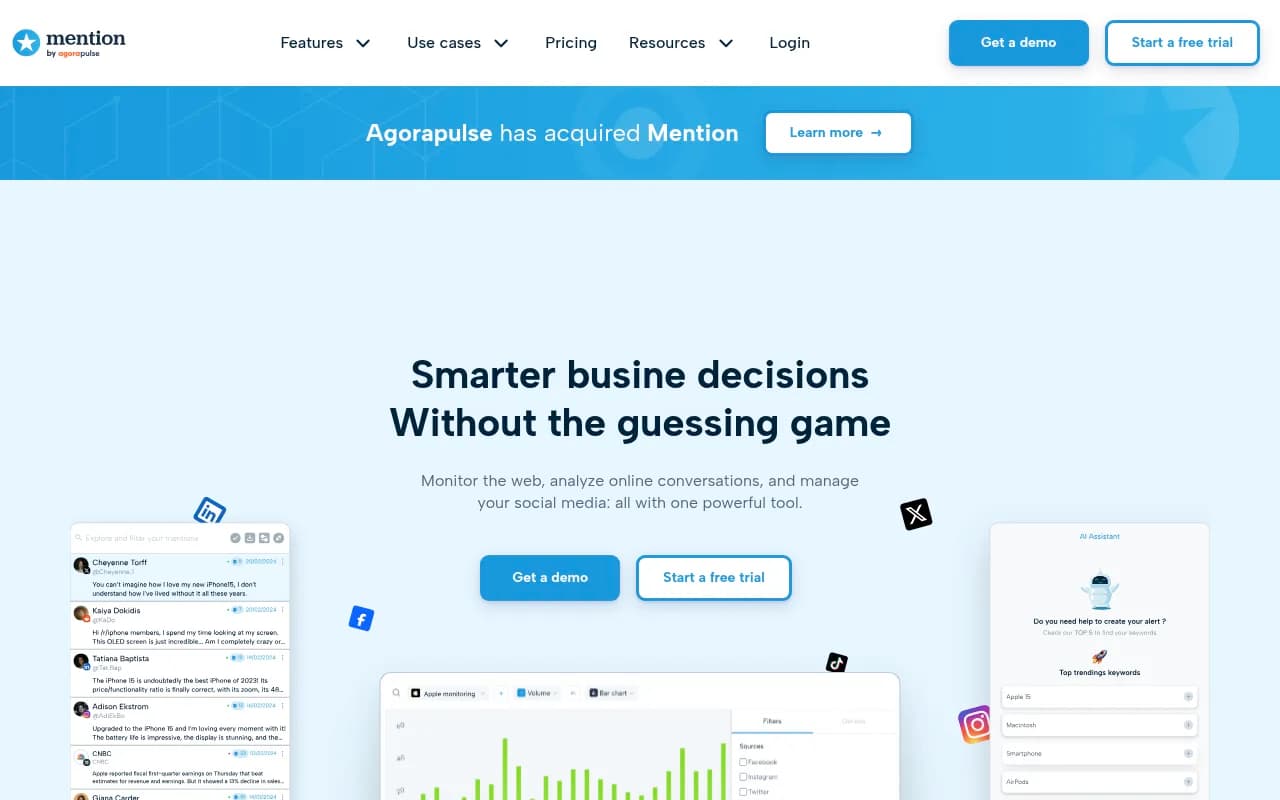
Mention (now owned by Agorapulse) combines media monitoring with social media management in one platform. It tracks mentions across web, social media, and -- uniquely -- AI chatbots. That last part is interesting: Mention monitors when your brand appears in AI-generated responses, though not with the depth or optimization focus of Promptwatch.
The core monitoring capabilities are solid: real-time alerts, sentiment analysis, competitor tracking, and influencer identification. You also get publishing and scheduling tools, so you can respond to mentions and manage your social presence without switching platforms.
Mention's strength is simplicity. The interface is straightforward, setup is fast, and the learning curve is gentle. It's not as feature-rich as Meltwater, but that's often a benefit -- you spend less time configuring and more time acting on insights.
Pricing: From $599/month on annual contract. Free trial available. Custom pricing for higher tiers.
Best for: Marketing teams that want combined monitoring and publishing in one tool, with basic AI chatbot tracking as a bonus. Good for brands that prioritize speed and simplicity over exhaustive analytics.
Trade-offs: The AI monitoring is surface-level compared to dedicated tools. Traditional media coverage is lighter than Meltwater. If you need deep analytics or enterprise-scale data processing, this won't cut it.
Talkwalker
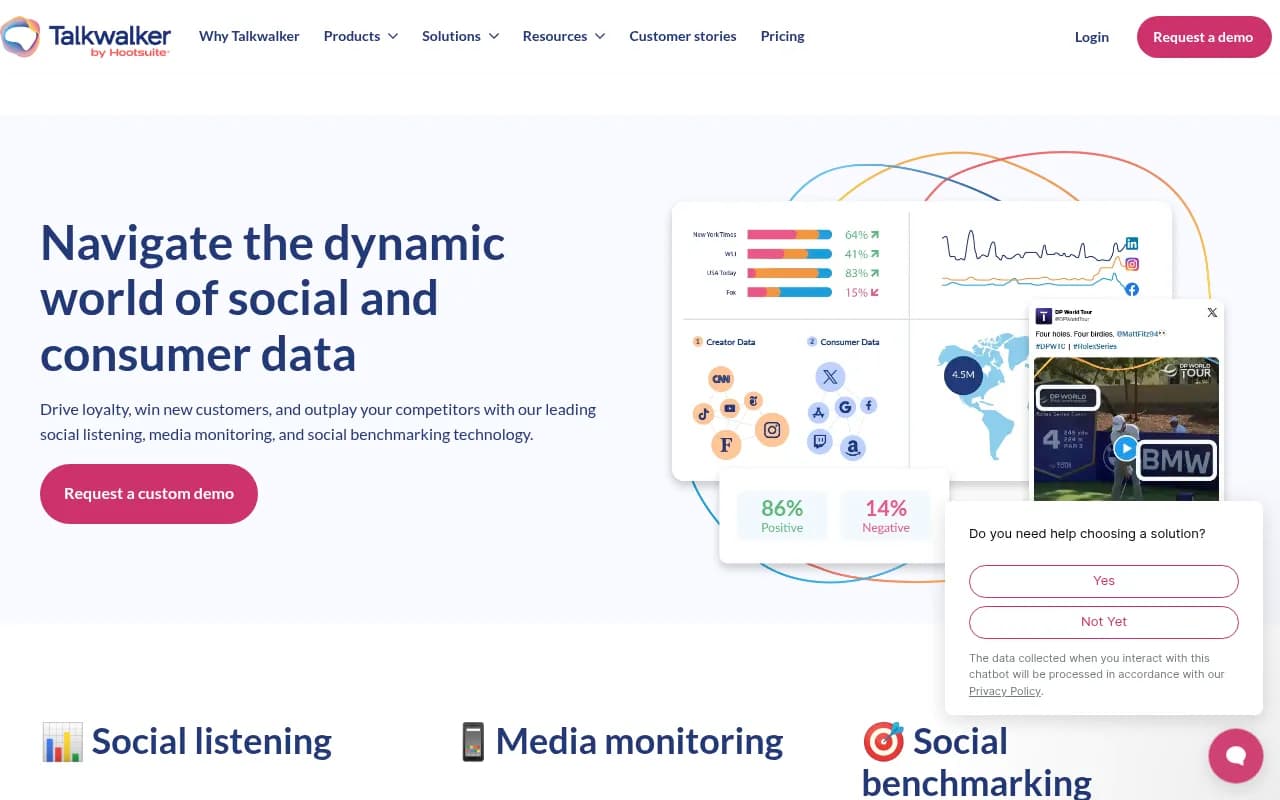
Talkwalker is another enterprise-grade alternative that combines social listening, media monitoring, and consumer intelligence. It's used by major brands for the same strategic use cases as Meltwater: tracking brand health, understanding consumer sentiment, monitoring competitors, and identifying market trends.
Talkwalker's differentiator is its AI-powered image and video recognition. It can detect your logo or products in visual content across social media, even when there's no text mention. This is huge for brands with strong visual identities or products that get shared in photos and videos.
The platform also offers competitive benchmarking, crisis detection, and influencer identification. Like Meltwater, it's built for teams that need comprehensive insights across multiple channels and geographies.
Pricing: Custom pricing -- estimated $1,200 to $9,600+ per year depending on features and scale. Request demo for quote.
Best for: Enterprise brands that need visual recognition capabilities alongside traditional monitoring. If your products show up in Instagram posts, TikTok videos, or YouTube content without text mentions, Talkwalker catches what others miss.
Trade-offs: Still enterprise-priced, though potentially cheaper than Meltwater. Setup and onboarding require significant time investment. Not ideal for small teams or simple use cases.
Sprout Social
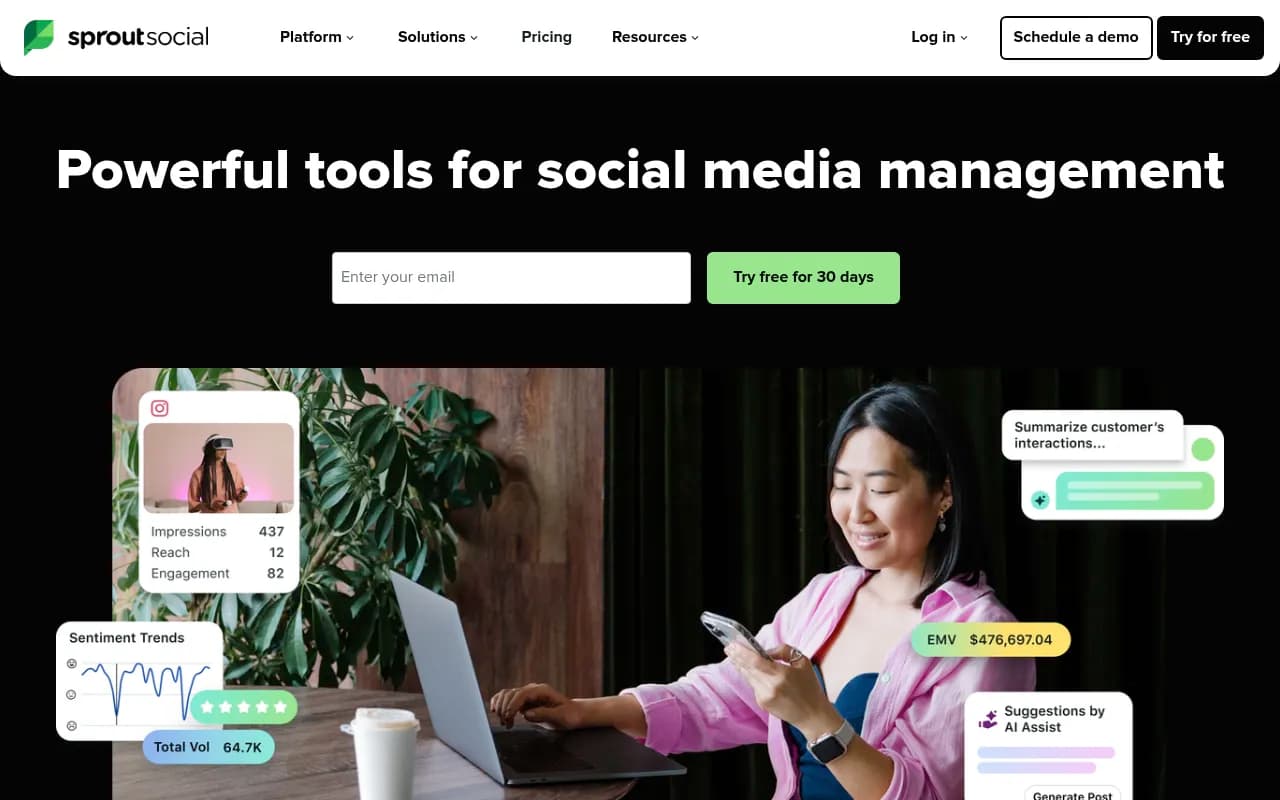
Sprout Social is primarily a social media management platform, but its listening and analytics capabilities make it a viable Meltwater alternative for social-focused teams. Used by 30,000+ brands including HP, Canva, and Atlassian, it combines publishing, engagement, analytics, and social listening in one unified workspace.
The listening features include sentiment analysis, trend identification, competitive benchmarking, and audience insights. You can track keywords, hashtags, and brand mentions across major social platforms. The analytics are strong -- you can measure campaign performance, track ROI, and generate executive-ready reports.
What sets Sprout apart is the integration between listening and action. When you spot a trend or customer concern, you can immediately create content, schedule posts, or respond to customers without leaving the platform. Meltwater shows you insights but leaves you to act on them elsewhere.
Pricing: From $199/seat/month. Standard $199, Professional $299, Advanced $399. Enterprise custom pricing. 30-day free trial.
Best for: Marketing teams that want combined social listening and management in one platform. If most of your monitoring needs are social (not traditional media), Sprout delivers better value than Meltwater.
Trade-offs: Limited coverage of traditional news outlets, blogs, and forums compared to Meltwater. The listening features are strong but not as deep as dedicated monitoring platforms. Per-seat pricing can get expensive for larger teams.
Hootsuite
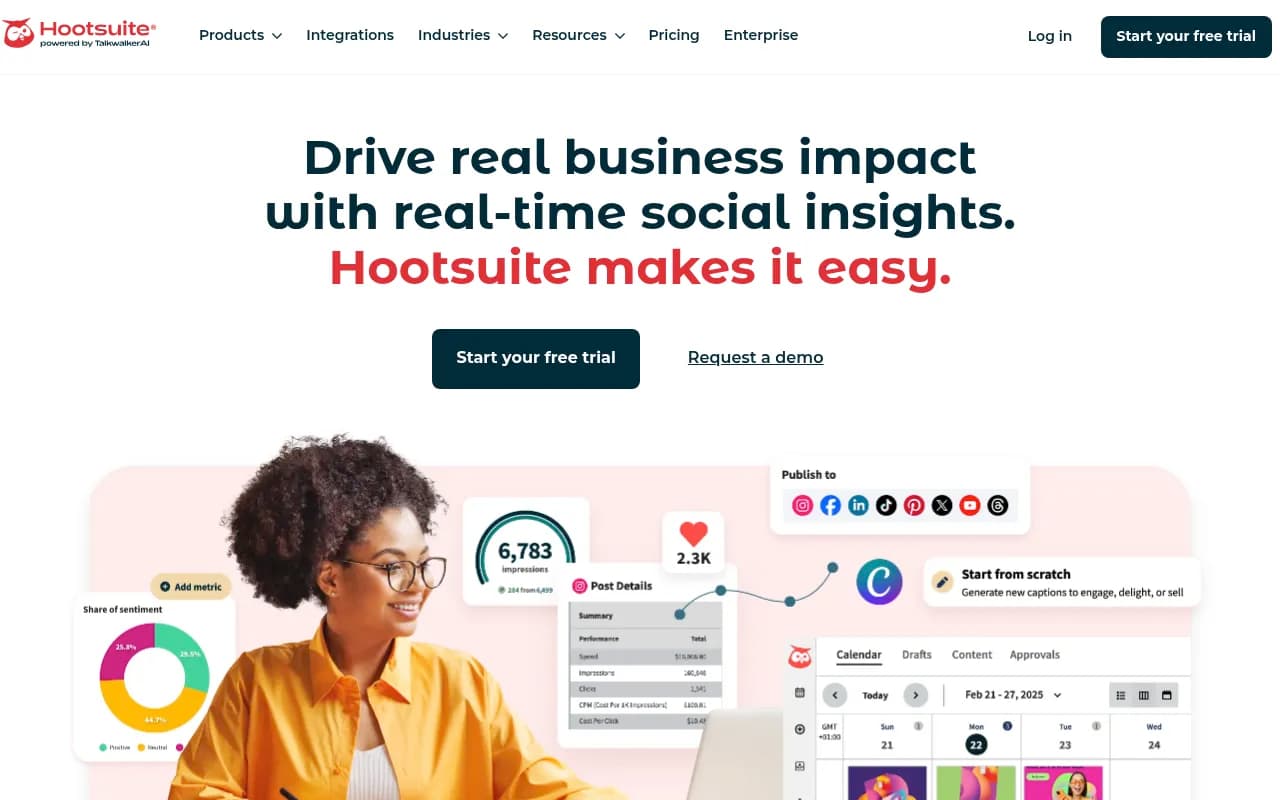
Hootsuite is another social-first platform that includes listening capabilities alongside publishing, scheduling, and analytics. Used by 25M+ marketers, it's one of the most established names in social media management.
The listening features (available in higher-tier plans) include keyword tracking, sentiment analysis, and trend identification. You can monitor brand mentions, track competitors, and identify influencers. The analytics show reach, engagement, and audience demographics across networks.
Hootsuite's strength is its ecosystem. It integrates with 150+ apps and services, so you can connect your monitoring data to CRM systems, marketing automation platforms, and analytics tools. The unified dashboard brings all your social channels into one view.
Pricing: Free 30-day trial, then from $99/mo (Professional), $249/mo (Team), custom pricing for Enterprise.
Best for: Teams that need basic social listening alongside robust publishing and scheduling. If you're primarily managing social media and want monitoring as a secondary feature, Hootsuite is cost-effective.
Trade-offs: The listening features are less sophisticated than dedicated monitoring tools. No coverage of traditional media. The interface can feel cluttered with so many features packed in.
Sprinklr
Sprinklr is the enterprise heavyweight -- a unified customer experience platform that includes media monitoring, social listening, social media management, customer service, and consumer insights. Brands like Microsoft, Uber, and Prada use it to manage customer interactions across 30+ digital channels.
The monitoring capabilities are comprehensive: news, social media, reviews, forums, blogs, and more. Sprinklr's AI analyzes sentiment, identifies trends, detects crises, and surfaces actionable insights. The platform connects monitoring data to customer service workflows, so you can route complaints to support teams or escalate issues automatically.
Sprinklr is built for global enterprises with complex needs. If you're managing customer experience across multiple brands, regions, and channels, it's one of the few platforms that can handle that scale.
Pricing: Custom enterprise pricing (annual contracts, typically six to seven figures depending on scale and features).
Best for: Global enterprises that need unified customer experience management across all channels. If you're already spending heavily on Meltwater and want to consolidate monitoring, social management, and customer service into one platform, Sprinklr is worth evaluating.
Trade-offs: This is the most expensive option on the list. Implementation takes months, not weeks. The complexity is overwhelming for small teams. Only makes sense at enterprise scale.
Agorapulse
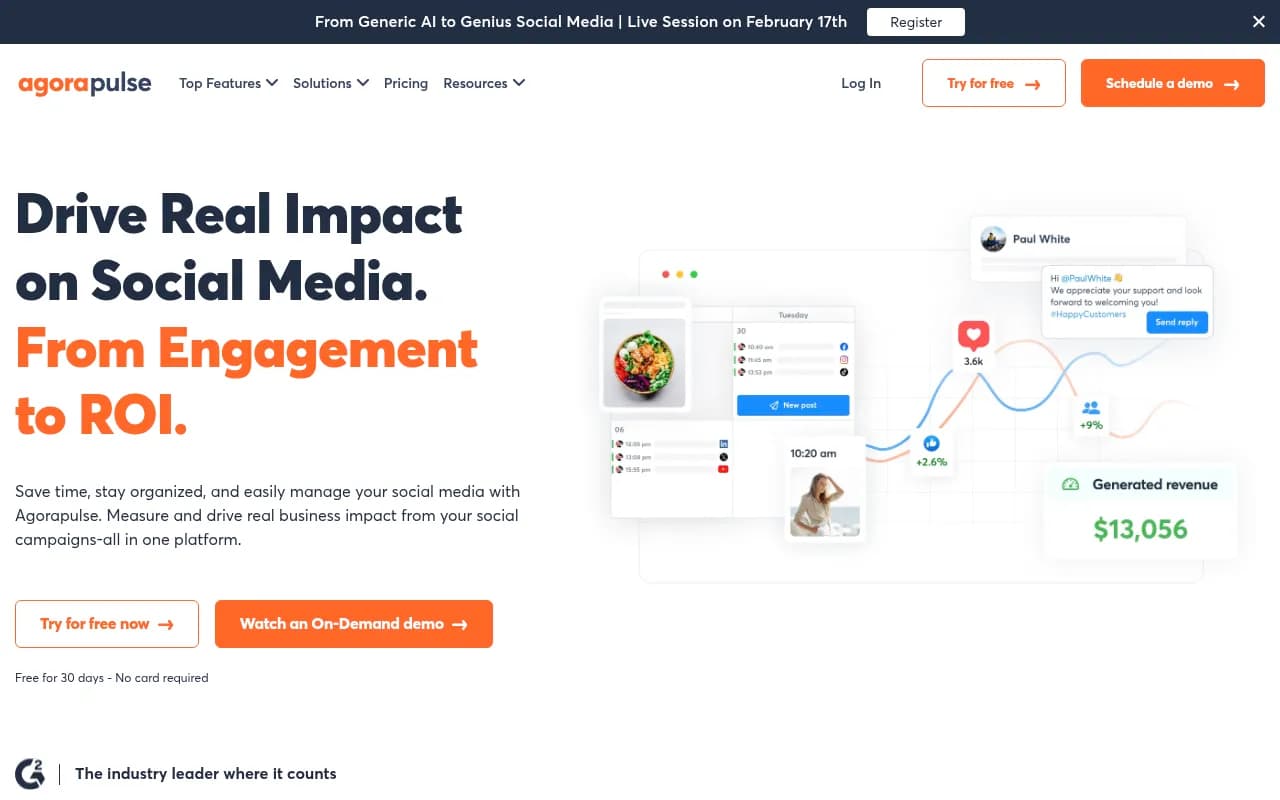
Agorapulse is the transparent, affordable alternative for teams that want social listening without enterprise complexity. Used by 31,000+ teams, it combines publishing, engagement, monitoring, and analytics in one platform with straightforward pricing and no annual lock-in.
The listening features include keyword tracking, sentiment analysis, and competitive monitoring across major social platforms. You can track brand mentions, identify influencers, and measure campaign performance. The ROI tracking is built-in, so you can connect social activity to business outcomes.
Agorapulse is known for industry-leading customer support and a gentle learning curve. You can be up and running in hours, not weeks. The interface is clean and intuitive -- no data science degree required.
Pricing: Free plan available; paid plans from $49/month (Standard), $79/month (Professional), $119/month (Advanced) when billed annually. 30-day free trial, no credit card required.
Best for: Small to mid-sized teams that want social listening and management in one affordable package. If Meltwater's pricing and complexity are deal-breakers, Agorapulse delivers solid capabilities at a fraction of the cost.
Trade-offs: Limited coverage of traditional media and non-social sources. The listening features are good but not as deep as dedicated monitoring platforms. If you need comprehensive media intelligence across all channels, this won't replace Meltwater entirely.
How to choose the right Meltwater alternative
Start by asking what you actually need. If you're monitoring traditional media (TV, radio, print) alongside digital channels, you need an enterprise platform like Brandwatch or Talkwalker. If you're primarily focused on social media, tools like Sprout Social, Hootsuite, or Agorapulse deliver better value.
If you want to track your brand's visibility in AI search engines (ChatGPT, Claude, Perplexity), Promptwatch is the only tool built specifically for that. Traditional monitoring platforms don't cover this channel at all, and it's growing fast.
Budget matters. If you're spending $15K-$20K/year on Meltwater and not using half the features, you can probably get what you need for $2K-$5K/year with Brand24 or Agorapulse. If you're at enterprise scale with complex needs, Sprinklr or Brandwatch might justify the investment.
Finally, consider the learning curve. Meltwater takes weeks to set up and months to master. Simpler tools like Brand24 and Agorapulse get you value in days. If speed matters more than exhaustive features, go simple.