SEOptimer Review 2026
SEO audit platform that analyzes websites for technical issues, on-page factors, and performance, then generates white-label reports for agencies and freelancers.
Key takeaways
- SEOptimer is a well-rounded, budget-friendly SEO audit tool aimed at freelancers, small agencies, and web designers who need fast, client-ready reports without paying Ahrefs or Semrush prices.
- Its standout feature is the white-label PDF report engine -- branded, customizable, and generated in about 20 seconds -- which is genuinely useful for agency prospecting.
- The embeddable audit widget is a clever lead-gen play that few competitors at this price point offer.
- The broader SEO toolset (keyword tracking, backlink monitoring, crawler, keyword research) is solid for the price but not as deep as dedicated tools in each category.
- Not a fit for enterprise SEO teams or anyone needing advanced technical crawling, log file analysis, or AI search visibility tracking.
SEOptimer has been around long enough to build a real reputation in the small-agency and freelancer SEO space. The core pitch is simple: run a fast, comprehensive audit on any website, get a prioritized list of issues, and turn that into a beautiful branded PDF report you can hand to a client or prospect. It's not trying to compete with Semrush on data depth -- it's competing on speed, affordability, and presentation quality.
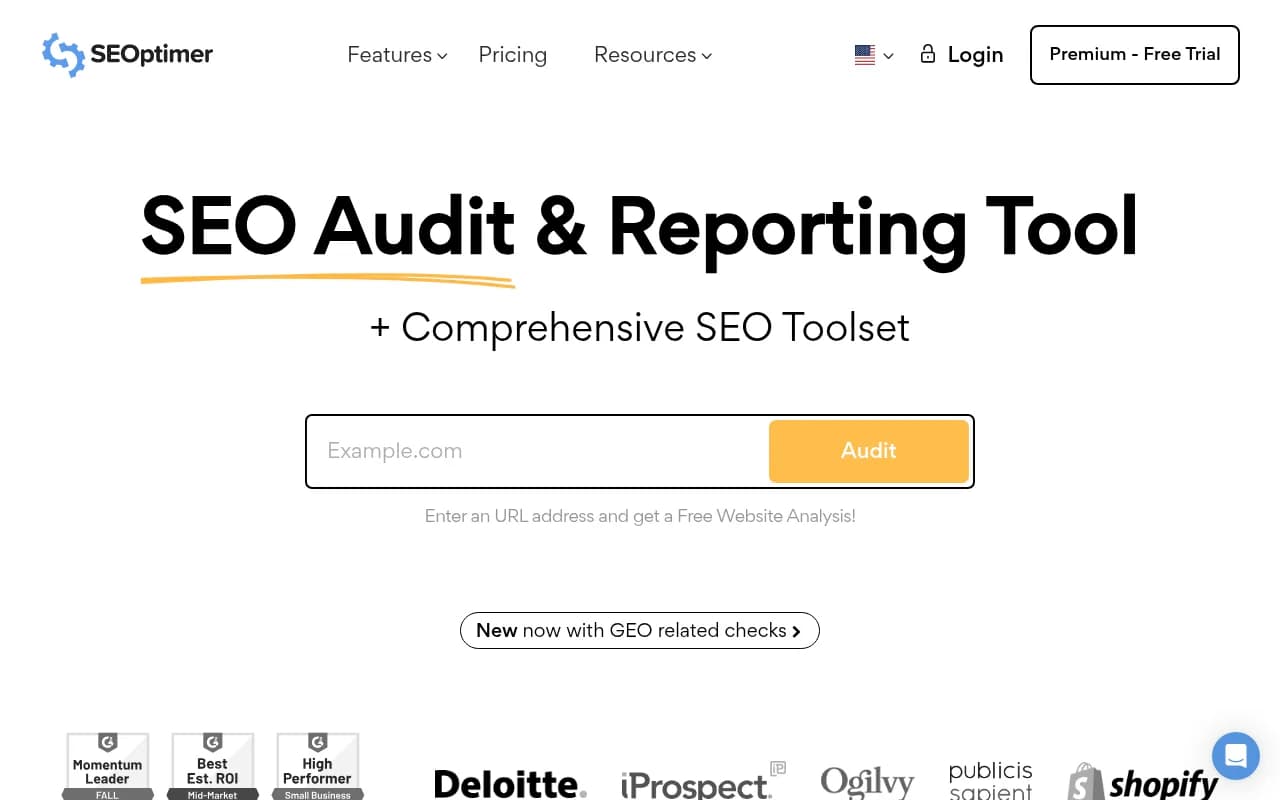
The tool is used by agencies ranging from solo consultants to mid-sized digital shops. Names like Deloitte, Ogilvy, and Publicis Sapient appear on the homepage, though realistically the sweet spot is smaller teams that need to produce a lot of client-facing reports without a lot of manual work. G2 has recognized it as a Fall 2024 Leader in its category, which tracks with the consistent positive reviews from agency owners and freelancers who use it for prospecting.
The platform has expanded well beyond its audit roots. Today it includes keyword tracking, keyword research, backlink checking, backlink monitoring, a site crawler, bulk reporting, and an API -- plus integrations with a separate local SEO tool (LocalRanking) and an AI writing assistant (GrowthBar). It's grown into a genuine all-in-one SEO suite for the budget-conscious segment, even if individual modules don't match the depth of specialized tools.
Key features
Comprehensive SEO audit engine
The audit covers 100+ data points across on-page factors, technical SEO, performance, social signals, and usability. It checks things like title tags, meta descriptions, heading structure, canonical tags, robots.txt, sitemap presence, page speed, mobile-friendliness, HTTPS status, and more. Results are graded and prioritized, so you're not staring at a flat list of 80 issues with no sense of what matters. The audit runs fast -- JavaScript rendering is supported, which matters for SPAs and modern frameworks that other lightweight tools miss.
A notable recent addition: GEO-related checks. SEOptimer now flags some basic generative engine optimization factors, though this is early-stage compared to dedicated AI visibility platforms.
White-label PDF reports
This is the feature most agency users actually pay for. You upload your logo, set brand colors and fonts, choose which audit sections to include, and add custom content (like a cover letter or recommendations section). Reports generate in roughly 20 seconds and look genuinely polished -- not like a raw data dump. They're available in multiple languages including French, Spanish, and German, which is useful for agencies serving non-English markets. The ability to toggle specific checks on or off means you can tailor the report to what a particular client cares about, rather than overwhelming them with every data point.
Embeddable audit tool
This is one of SEOptimer's more creative features. You embed a small audit form directly on your agency website -- visitors enter their URL, get a branded audit, and their contact details land in your inbox (or get pushed to a CRM). It integrates with Mailchimp, ActiveCampaign, and Salesforce for lead routing. For agencies that rely on inbound prospecting, this can genuinely replace a dedicated lead-gen tool. One customer testimonial on the site claims they doubled inbound SEO leads using it, which is plausible given how well it fits the "show don't tell" prospecting approach.
Site crawler
The SEO crawler scans every page of a site and surfaces issues at scale -- broken links, missing meta tags, duplicate content signals, redirect chains, and so on. It's useful for larger sites where a single-page audit won't cut it. The crawler isn't as configurable as Screaming Frog (no custom extraction, no JavaScript crawl settings to speak of), but for most agency use cases it covers the bases without requiring a technical setup.
Keyword tracking
Track keyword rankings over time by country, language, search engine, and device type. The interface is clean and the data updates regularly. It's not going to replace a dedicated rank tracker for agencies managing hundreds of keywords across dozens of clients, but for smaller portfolios it works well. You can track Google, Bing, and Yahoo rankings depending on your market.
Keyword research
The keyword research module pulls search volume, competition scores, and CPC data. It's useful for quick opportunity analysis and competitor research. The data comes from third-party sources (as it does for most tools at this price point) so treat it as directional rather than gospel. For agencies doing initial client discovery or content planning, it's more than adequate.
Backlink checker and monitoring
Two separate modules: a backlink research tool for analyzing any site's link profile and finding link-building opportunities, and a backlink monitoring tool that alerts you to new and lost links. The monitoring piece is particularly useful for protecting clients from negative SEO and keeping tabs on link-building campaigns. The backlink database isn't as large as Ahrefs or Majestic, but it's functional for the use cases SEOptimer targets.
Bulk reporting
Generate thousands of branded SEO audits at once. This is aimed at agencies running prospecting campaigns at scale -- think cold outreach where you want to send a personalized audit to every prospect. Combined with the white-label engine, it's a genuine time-saver compared to manual audit production.
API access
The SEOptimer API lets you run audits programmatically and integrate results into your own workflows or tools. It's available on higher-tier plans. Documentation exists, though it's not as extensive as enterprise-grade APIs. Useful for agencies that want to build audit delivery into their own client portals or reporting dashboards.
Free SEO toolbox
A collection of free utilities: Meta Tag Generator, Keyword Generator, Robots.txt Generator, .htaccess File Generator, and XML Sitemap Generator. These are simple but genuinely useful for web designers and developers who need to produce these files without deep technical knowledge.
Who is it for
SEOptimer's primary audience is small-to-mid-sized digital agencies and freelance SEO consultants who need to produce client-facing reports efficiently. Think a one-to-five person agency managing 10-30 client websites, where the owner is also doing the SEO work and doesn't have time to manually compile audit findings into a Word doc. The white-label reports and embeddable widget are built specifically for this persona -- someone who needs to look professional and win new business without a large team behind them.
Web designers are another strong fit. Many designers get asked about SEO by their clients but don't have deep SEO expertise. SEOptimer gives them a tool to run a credible audit, produce a report that looks like it came from an SEO specialist, and either handle basic recommendations themselves or refer the client to an SEO partner. The free tier and low entry price make it easy to justify.
Small business owners who want to understand their own site's SEO health without hiring an agency can use the free audit tool effectively. The prioritized recommendations are written in plain language, which matters when the reader isn't an SEO professional.
Who should look elsewhere: Enterprise SEO teams managing hundreds of thousands of pages will find the crawler and audit engine too lightweight. Technical SEOs who need log file analysis, custom crawl configurations, or JavaScript rendering control will hit limits quickly. And anyone focused on AI search visibility -- tracking how their brand appears in ChatGPT, Perplexity, or Google AI Overviews -- won't find meaningful support here. The GEO checks are a start, but they're surface-level compared to what dedicated platforms offer.
Integrations and ecosystem
SEOptimer's integration story is modest but practical for its target audience. The embeddable audit tool connects to Mailchimp, ActiveCampaign, and Salesforce for lead capture and routing. This covers the most common CRM and email marketing stacks used by small agencies.
The API allows custom integrations for teams that want to build audit data into their own dashboards or client portals. It's REST-based and returns structured JSON, which is workable for developers.
The platform connects to two companion products: LocalRanking (a separate tool for Google Business Profile management, review monitoring, post scheduling, and GeoGrid rank tracking) and GrowthBar (an AI writing assistant for SEO content). These aren't deeply integrated -- they're separate products with separate subscriptions -- but they extend the ecosystem for agencies that need local SEO or content capabilities.
There's no native Google Search Console or Google Analytics integration mentioned, which is a gap compared to tools like Ahrefs or Semrush that pull GSC data directly. No Slack notifications or project management tool connections either. For a tool at this price point, that's understandable, but worth knowing.
No mobile app. The platform is web-based only.
Pricing and value
SEOptimer runs three main tiers:
- DIY SEO -- $29/month: Aimed at website owners doing their own SEO. Includes the audit tool, keyword tracking, backlink monitoring, and the free toolbox. No white-label reports.
- Freelancer/Agency -- $44/month: Adds white-label PDF reports, the embeddable audit tool, and multi-user access. This is the tier most agency users will land on.
- Agency Plus -- $59/month: Adds bulk reporting and API access. For agencies running prospecting campaigns at scale.
Annual billing cuts 25% off each tier, bringing Agency Plus down to roughly $44/month billed annually.
A free trial is available, and the free public audit tool (no account required) lets anyone run a basic audit on any URL. The free version doesn't include white-label reports or the embeddable widget.
Compared to Semrush ($139/month+) or Ahrefs ($129/month+), SEOptimer is dramatically cheaper. The trade-off is data depth and database size. For agencies that primarily need audit and reporting capabilities rather than deep keyword or backlink research, SEOptimer's pricing is hard to argue with. For teams that need both, the math gets more complicated -- you might end up paying for SEOptimer plus a separate keyword research tool, which narrows the gap.
Strengths and limitations
What it does well:
- The white-label report engine is genuinely fast and produces professional output. For agency prospecting, it's one of the better implementations at any price point.
- The embeddable audit widget is a smart lead-gen feature that most competitors at this price don't offer at all.
- Pricing is accessible. At $44/month for the agency tier, it's one of the most affordable full-featured audit tools available.
- The audit covers a solid breadth of checks -- 100+ data points -- and the prioritized recommendations are written clearly enough for non-technical clients to understand.
- The recent addition of GEO checks shows the team is paying attention to where search is heading.
Honest limitations:
- The backlink database and keyword data are not in the same league as Ahrefs, Semrush, or even Moz. For serious link analysis or keyword research, you'll likely need a supplementary tool.
- The site crawler lacks the configurability of Screaming Frog or Sitebulb. No custom extraction, limited JavaScript crawl controls, and no log file analysis.
- AI search visibility is essentially absent. The GEO checks are surface-level -- there's no tracking of brand mentions in ChatGPT, Perplexity, Claude, or Google AI Overviews, no citation analysis, no content gap analysis for AI search. Teams that care about AI visibility will need a dedicated platform like Promptwatch for that.
- No Google Search Console integration, which means you can't pull real impressions and click data alongside audit findings.
Bottom line
SEOptimer is a well-priced, practical tool for freelance SEO consultants and small digital agencies that need to produce client-ready audit reports quickly and win new business through professional presentation. The white-label PDF engine and embeddable audit widget are its strongest differentiators, and at $44/month for the agency tier, it's hard to find a comparable package for less.
Best use case: A five-person digital agency using SEOptimer to run automated audits during prospect discovery calls, generate branded PDF reports in under a minute, and capture inbound leads through an embedded audit form on their website.
Frequently asked questions
What is SEOptimer?
How much does SEOptimer cost?
Is there a free version of SEOptimer?
Who is SEOptimer best suited for?
Does SEOptimer track AI search visibility?
How does SEOptimer compare to Semrush or Ahrefs?
Similar and alternative tools to SEOptimer