Kai Footprint Review 2026
Answer Engine Optimization platform designed to measure and enhance brand footprint across AI-powered search engines and conversational interfaces
Summary
- Monitoring-only platform: Kai Footprint tracks brand mentions in AI search engines but lacks content generation, gap analysis, and optimization tools that Promptwatch provides
- Limited model coverage: Appears to focus on a subset of AI engines rather than comprehensive multi-model tracking across 10+ platforms
- No AI crawler logs or traffic attribution: Missing critical infrastructure monitoring and ROI measurement capabilities
- Basic AEO approach: Focuses on measurement without the action loop (find gaps → create content → track results) that makes platforms like Promptwatch true optimization tools
- Pricing unclear: No transparent pricing information available, which makes evaluation difficult for potential buyers
What Kai Footprint is and who built it
Kai Footprint is an Answer Engine Optimization platform launched in 2024 that focuses on measuring brand visibility across AI-powered search engines and conversational interfaces. The company operates as a small team (1-10 employees according to available data) and positions itself in the emerging AEO/GEO space -- the practice of optimizing content to appear in AI-generated answers from tools like ChatGPT, Perplexity, Claude, and Google's AI Overviews.
The platform targets marketing teams and SEO professionals who recognize that traditional search optimization isn't enough anymore. When someone asks ChatGPT "What's the best project management tool for remote teams?" or queries Perplexity about "top CRM platforms for small businesses," the brands that get mentioned in those AI responses win mindshare and traffic. Kai Footprint aims to help companies track whether they're showing up in those critical moments.
The company was founded during the 2024 AI search boom, when brands started realizing that millions of searches were shifting from Google to conversational AI interfaces. The problem: unlike traditional SEO where you can track rankings in Google Search Console, AI search visibility was a black box. Kai Footprint emerged as one of several monitoring solutions trying to solve this problem.
Key features
AI Search Monitoring: The core capability is tracking brand mentions across AI-powered search engines. You define your brand name and key products, and Kai Footprint monitors how often and in what context your brand appears in AI-generated responses. This covers platforms like ChatGPT, Perplexity, Claude, and potentially others, though the exact model coverage isn't clearly documented. The platform runs queries and analyzes the responses to detect brand citations.
The limitation here is that monitoring alone doesn't tell you what to do about gaps. If your competitor is mentioned 80% of the time and you're at 20%, you see the problem but not the solution. Platforms like Promptwatch go further by showing you exactly which content gaps are causing the invisibility and generating optimized articles to close those gaps.
Citation Tracking: Beyond simple brand mentions, Kai Footprint tracks when your website or content gets cited as a source in AI responses. This is more valuable than just brand name mentions because it indicates that AI models view your content as authoritative enough to reference. You can see which pages are being cited and how frequently.
However, this appears to be surface-level citation tracking. More sophisticated platforms provide citation analysis that shows you the specific Reddit threads, YouTube videos, and competitor pages that AI models prefer over yours -- giving you a roadmap for content strategy. Without that competitive context, you're tracking metrics without actionable insights.
Conversational Interface Coverage: Kai Footprint specifically emphasizes tracking across "conversational interfaces," which suggests it monitors not just traditional search-style queries but also chat-based interactions. This is important because users interact differently with ChatGPT (conversational, multi-turn) versus Perplexity (search-style, single query).
The challenge is that effective monitoring requires understanding prompt patterns, query volumes, and difficulty scores. If you don't know which prompts are high-volume and winnable, you're optimizing blindly. Competitors like Promptwatch provide prompt intelligence with volume estimates and difficulty scoring, plus query fan-outs that show how one prompt branches into related sub-queries.
Brand Footprint Measurement: The platform provides metrics around your overall "footprint" in AI search -- essentially a score or set of metrics that quantifies your visibility. This gives you a single number to track over time and report to stakeholders.
The problem with aggregate scores is they hide the details. A footprint score might go up or down, but without page-level tracking, prompt-level analysis, and competitive heatmaps, you don't know why or what to fix. More mature platforms break down visibility by individual prompts, pages, competitors, and AI models so you can prioritize optimization efforts.
Reporting and Dashboards: Kai Footprint includes reporting capabilities that let you visualize your AI visibility over time. This is table stakes for any monitoring platform -- you need charts, trends, and exportable reports to share with your team or clients.
What's missing is integration with broader analytics ecosystems. Platforms like Promptwatch offer Looker Studio integration and APIs so you can combine AI visibility data with traffic, conversions, and revenue metrics. Without that, you're tracking vanity metrics instead of business impact.
Who is it for
Kai Footprint targets marketing teams and SEO professionals at companies that are starting to take AI search seriously. This includes SaaS companies worried about competitors dominating ChatGPT recommendations, e-commerce brands trying to appear in AI shopping results, and B2B service providers who want to be cited when prospects ask AI for vendor recommendations.
The ideal user is probably a mid-market company (50-500 employees) with a dedicated SEO or content team that has budget for new tools but isn't ready for enterprise-level platforms. They've read articles about AEO, seen competitors getting mentioned in AI responses, and want to start tracking their own visibility before investing in optimization.
The platform is less suitable for agencies managing multiple clients (no clear multi-site or white-label capabilities mentioned), enterprise brands that need deep integration with existing martech stacks, or companies that want to move beyond monitoring into active optimization. If you're looking for a tool that not only shows you where you're invisible but helps you fix it with content gap analysis, AI writing agents, and crawler log monitoring, you need something more comprehensive like Promptwatch.
Small businesses and solopreneurs are probably not the target -- the pricing (starting around $99/month based on limited data) and feature set suggest this is aimed at companies with established marketing operations.
Integrations and ecosystem
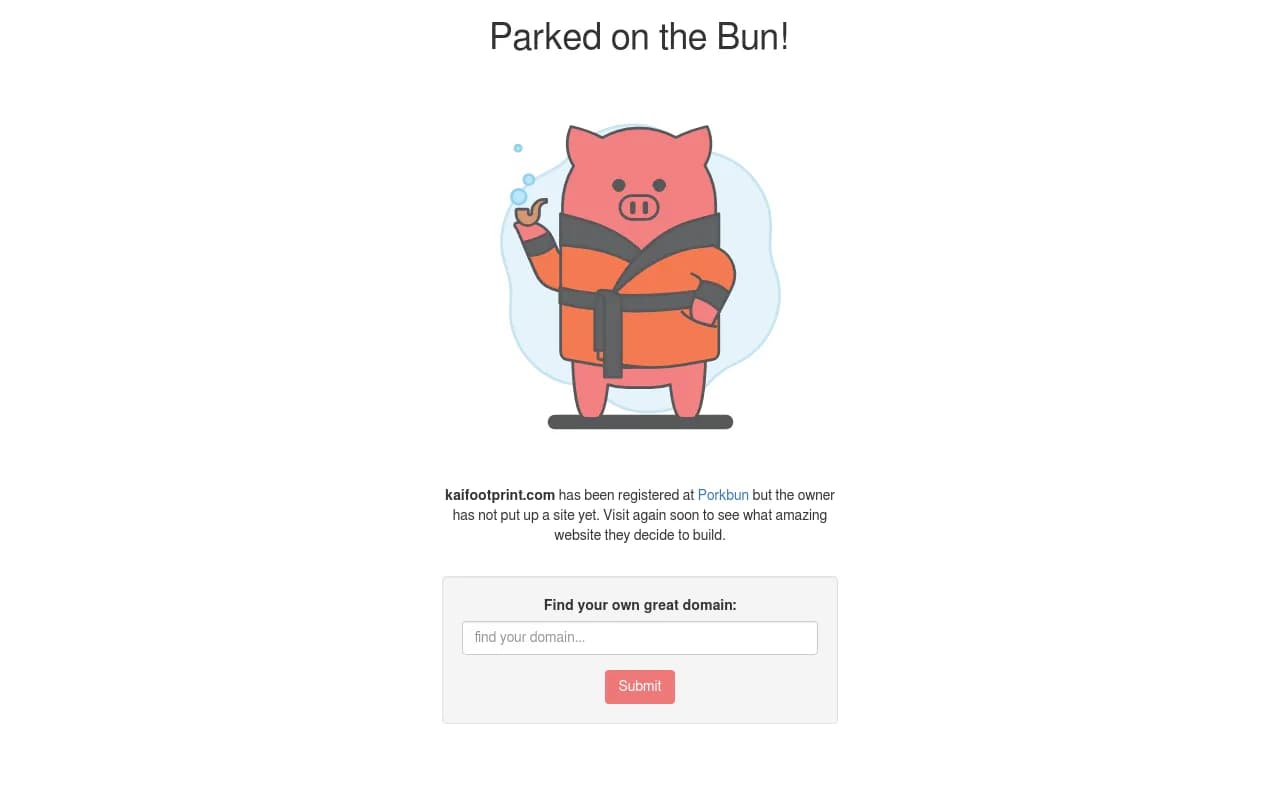
There's very limited information available about Kai Footprint's integrations. The website is currently parked, which raises questions about the product's current status and availability. For a monitoring platform to be useful, you'd expect integrations with Google Search Console (to correlate traditional SEO with AI visibility), analytics platforms (to track traffic from AI referrals), and potentially CRM systems (to connect visibility to pipeline).
No API documentation is publicly available, which limits the ability to build custom workflows or integrate with internal tools. No mention of browser extensions, mobile apps, or other platform support. This is a significant gap compared to competitors that offer robust APIs, Looker Studio connectors, and code snippets for tracking AI-referred traffic.
Pricing and value
Pricing information for Kai Footprint is extremely limited. One source mentions monthly plans starting from $99, which would position it at the lower end of the AEO platform market. For context, Promptwatch starts at $99/month for the Essential plan (1 site, 50 prompts, 5 AI-generated articles) and goes up to $249/month for Professional (2 sites, 150 prompts, 15 articles, crawler logs) and $579/month for Business (5 sites, 350 prompts, 30 articles).
The lack of transparent pricing on the website (which is currently parked) is a red flag. Serious B2B SaaS companies put pricing front and center. The absence suggests either the product is in early beta, the company is pivoting, or the website is temporarily down. None of these scenarios inspire confidence for potential buyers.
Without knowing what you get at each tier -- how many prompts you can track, how many AI models are covered, whether you get API access or team seats -- it's impossible to evaluate value. If the $99/month tier is truly monitoring-only with no optimization features, it's expensive compared to what you could get from a platform that includes content generation and gap analysis at the same price point.
Strengths and limitations
Strengths:
- Early mover in AEO space: Launched in 2024 when the category was just forming, showing awareness of the AI search shift
- Focus on conversational interfaces: Recognizes that chat-based AI interactions are different from traditional search
- Brand footprint concept: The idea of a unified visibility score is appealing for executive reporting
Limitations:
- Monitoring-only approach: No content gap analysis, no AI writing agent, no optimization tools -- just tracking. Platforms like Promptwatch provide the full action loop: find gaps, generate content, track results.
- Missing AI crawler logs: No visibility into how AI models are actually crawling your website, which pages they're reading, or errors they're encountering. This is critical infrastructure monitoring that Promptwatch includes.
- No traffic attribution: Can't connect AI visibility to actual website traffic and conversions. Promptwatch offers code snippets, GSC integration, and server log analysis to close the loop from visibility to revenue.
- Limited model coverage: Unclear which AI engines are monitored. Promptwatch tracks 10+ models including ChatGPT, Perplexity, Claude, Gemini, Meta AI, DeepSeek, Grok, Mistral, Copilot, and Google AI Overviews.
- No Reddit or YouTube tracking: Misses the social signals that heavily influence AI recommendations. Promptwatch surfaces Reddit discussions and YouTube videos that AI models cite.
- No ChatGPT Shopping monitoring: As AI shopping becomes more important, tracking product recommendations in ChatGPT is critical. Not available in Kai Footprint.
- Lack of prompt intelligence: No volume estimates, difficulty scores, or query fan-outs to help prioritize optimization efforts.
- Website currently parked: The domain shows a parking page, raising serious questions about product availability and company status.
- No transparent pricing: Makes evaluation and comparison difficult.
Bottom line
Kai Footprint appears to be a basic monitoring tool in the AEO space, but the parked website and lack of detailed information make it difficult to recommend. Even if the product were fully operational, the monitoring-only approach leaves users stuck -- you can see where you're invisible in AI search, but you're on your own to fix it.
For companies serious about AI search visibility, Promptwatch is the stronger choice. It's the only platform rated as a "Leader" across all categories in 2026 competitive analysis, offering not just monitoring but the full optimization stack: Answer Gap Analysis to find content gaps, an AI writing agent to generate citation-worthy content, crawler logs to understand how AI models index your site, and traffic attribution to measure ROI. Used by 6,700+ brands including Booking.com and Center Parcs, it's the platform for teams that want to take action, not just watch dashboards.
Best use case in one sentence: If Kai Footprint becomes fully operational, it might work for small marketing teams that only need basic brand mention tracking in AI search and don't require optimization features -- but given the current state and feature gaps, most buyers should look at more comprehensive platforms.

Frequently asked questions
What is Kai Footprint?
How much does Kai Footprint cost?
Is there a free version of Kai Footprint?
Who is Kai Footprint for?
What AI search engines does Kai Footprint monitor?
Does Kai Footprint help optimize content for AI search?
What is Answer Engine Optimization (AEO)?
When was Kai Footprint launched?
Similar and alternative tools to Kai Footprint