Key takeaways
- Google poisoning, usually called SEO poisoning, is an attack where criminals get malicious pages to rank (or pay to appear) in search results so victims come to them.
- The ranking trick is only the delivery method. The damage comes after the click: malware, stolen credentials, fake support scams.
- 2026 campaigns like Storm-2561 (fake VPN clients) and fake AI tool installers show attackers favor software downloads, admin tools and AI products.
- Do not confuse it with Nozzle's "poisoned SERPs" research, where Google appears to feed wrong results to scrapers and rank trackers. Different problem, similar name.
- Defense is mostly habits and controls: bookmark official download pages, restrict installers, monitor your brand's search results, and run EDR.
What Google poisoning actually means
The phrase "Google poisoning" gets used for two unrelated things in 2026, which is confusing. The classic meaning, and the one most security teams care about, is SEO poisoning: attackers manipulate search rankings (or buy ads) so that a harmful site appears when someone searches for something they need.
The second meaning showed up in October 2026, when SERP-data company Nozzle published research on Google returning wrong results to automated collectors. I cover that later so you can tell the two apart.
Bitdefender describes SEO poisoning as criminals manipulating rankings to push harmful websites to the top of results, sites that often look trustworthy but are built to steal logins, spread malware or run financial scams. It works because people assume the top result is the safe one. Many never check the URL.
Vectra AI puts the real point well: ranking manipulation is the delivery method, and the actual risk is what happens after the click.
Why it works so well
Most phishing arrives uninvited. SEO poisoning waits. The victim is already searching, already motivated, and already trusting the engine. Vectra AI notes it combines user intent with perceived trust, and the queries attackers target tend to share a pattern:
- Software and "official download" searches
- Admin tools and remote access utilities (PuTTY and WinSCP are the classic examples)
- SaaS login and password-reset flows
- Niche technical fixes where people are in a hurry
The goals are usually credential theft, monetization scams such as fake support or subscription fraud, and getting a foothold on legitimate servers to reuse as hosting or redirect infrastructure.
The main techniques attackers use
Keyword stuffing and trending topics
Attackers pack pages with popular or trending terms: a major software update, a movie release, a breaking news event. The aim is to piggyback on search demand. NJCCIC lists keyword stuffing as a core tactic on malicious sites. It is old, crude and still works in the right niche.
Cloaking
The site shows search engine crawlers something harmless and keyword-rich, and shows real visitors a phishing page or drive-by download. Huntress describes this as the sneaky part: the engine thinks the site is legitimate while you get served the trap.
Hijacking trusted websites
Bitdefender points out that criminals compromise reputable sites, such as government, university or business pages, and insert malicious links or redirects. Users trust these domains, so they rarely notice the redirect. Vectra AI cites a campaign with roughly 15,000 compromised sites, and describes attackers pairing compromised legitimate sites with AI-generated content to get past traditional defenses.
Typosquatting and lookalike domains
CrowdStrike's example: someone types "team viewer" into a search bar, clicks the first result without checking the URL, and lands on a fake site offering a malware-laden download. Attackers register domains close to real brands and rank them.
Private link networks
CrowdStrike also describes building groups of unrelated sites that link to a main target to artificially boost rankings, imitating legitimate link building.
Malvertising
Instead of relying only on organic rankings, attackers pay for ads that sit alongside or above real results. Technically this is malvertising, not SEO poisoning, but many campaigns use both. SentinelOne watched malicious Google Ads for "Blender 3D" rotate quickly, which suggested the ads and the lookalike domains were being generated and swapped by automation at scale.
| Technique | How the victim meets it | Core trick | Typical goal |
|---|---|---|---|
| SEO poisoning | Organic search result | Ranking manipulation, cloaking, compromised sites | Malware, credential theft, scams |
| Malvertising | Paid ad in search | Buying placement with fake advertiser accounts | Fake downloads, phishing |
| Typosquatting | Mistyped or lookalike URL | Near-identical domain names | Credential harvesting, malware |
| Phishing | Email or message | Unsolicited lure | Credentials, payment fraud |
Real campaigns from 2025 and 2026
The CrowdStrike explainer is dated 2023 and its examples (OBS Studio, Notepad++, TeamViewer) are old. The pattern has not changed, but the targets have.
Storm-2561 and fake VPN clients (March 2026)
Microsoft reported that in mid-January 2026, Defender Experts identified a credential-theft campaign using SEO poisoning to push fake VPN clients. A trojanized MSI posed as the Pulse Secure installer, dropping malicious DLLs into a path mimicking the real Pulse Secure directory. The ZIP files were hosted on GitHub repositories, since taken down. A suspect initial-access domain was cisco-secure-client[.]es, and Microsoft also referenced a trojanized SonicWall NetExtender. Hosting on GitHub matters: reputation-based blocking is weaker when the payload sits on a trusted platform.
Fake AI tool installers
Cisco Talos documented CyberLock ransomware served from a lookalike of an AI lead-generation product, boosted with SEO manipulation. Lucky_Gh0$t ransomware shipped as "ChatGPT 4.0 full version - Premium.exe", and a destructive malware called Numero posed as an AI video tool installer. Zscaler ThreatLabz saw black-hat SEO poisoning rankings for AI-related queries to deliver Vidar, Lumma and Legion Loader. Pillar Security has gone further and mapped malvertising and SEO poisoning aimed at AI and vibe-coding tools, citing Microsoft reporting on fake AI-assistant browser extensions with 900,000 installs across more than 20,000 enterprise tenants that harvested chat histories.
IT admins as targets
Vectra AI reports that by October 2025 over 8,500 systems had been compromised in a single campaign aimed at IT administrators searching for PuTTY and WinSCP, part of what ReliaQuest called a 60% surge in SEO poisoning attacks over six months. Other tactics from the same reporting: oversized installers (often over 500MB) to dodge sandbox scanning, and campaigns tuned for mobile browsers, where URL checking is harder.
I could not find hard 2026 prevalence numbers I would trust, so treat the surge figures as directional rather than current.
A different thing: Nozzle's poisoned SERPs
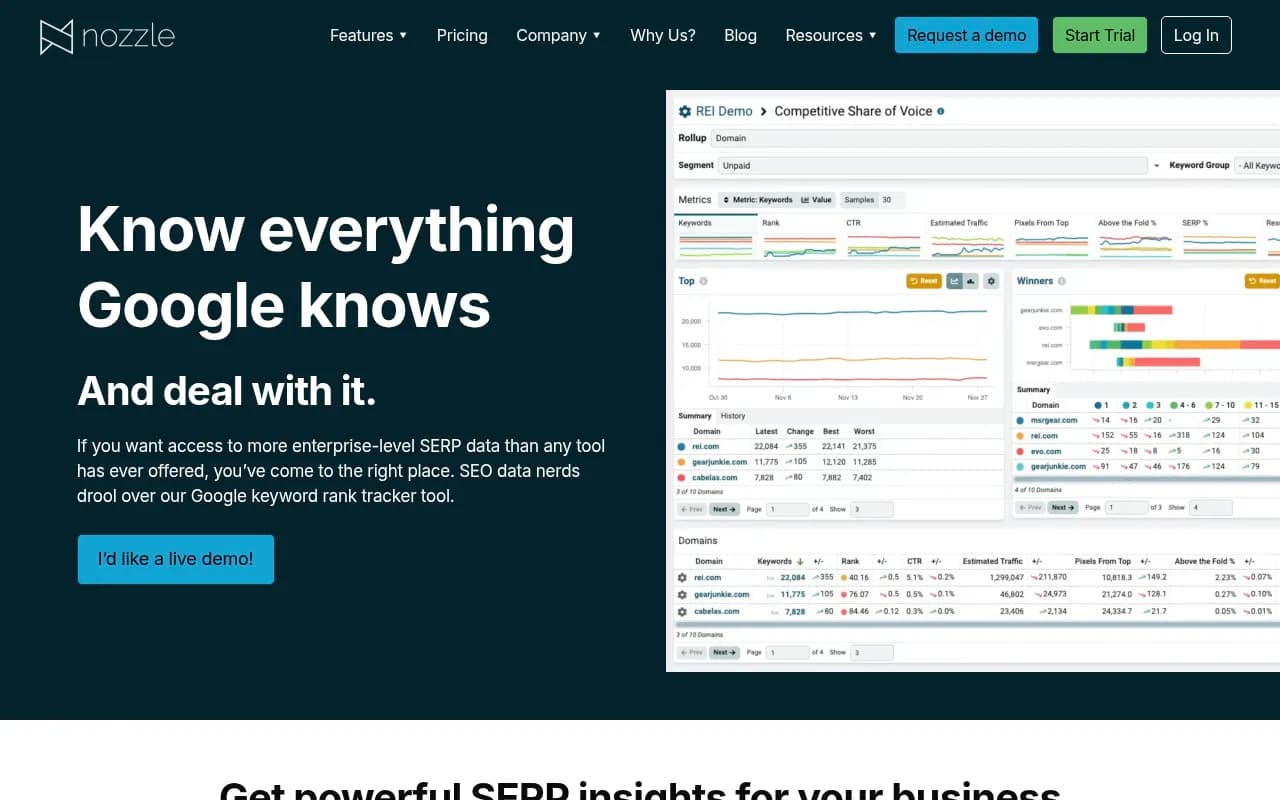
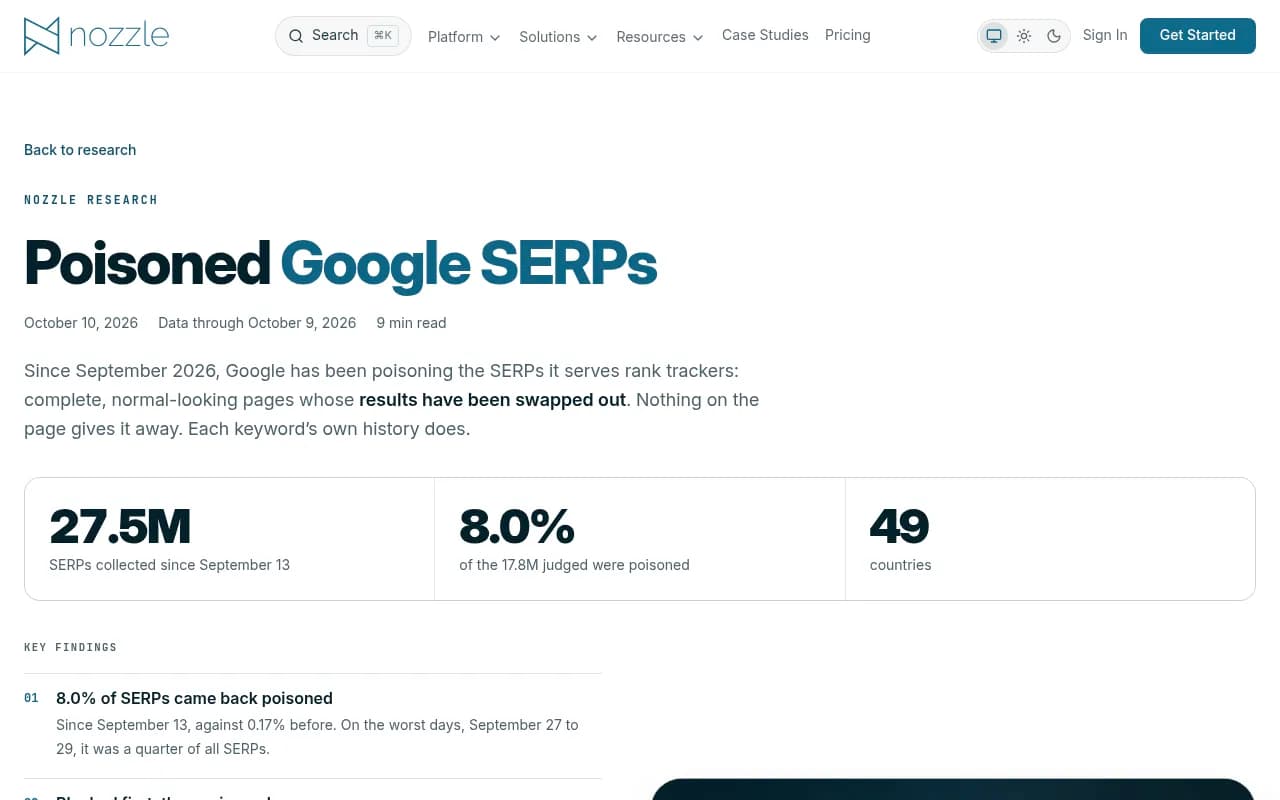
In October 2026, Nozzle published research on what it calls poisoned Google SERPs. This is not an attacker technique. Nozzle's finding is that Google appears to answer some automated requests with a complete, normal-looking results page whose results are wrong.
The key numbers from its sample (August 20 to October 9, 2026, 63.1 million SERPs, 49 countries):
- 8.0% of SERPs collected since September 13 came back poisoned, against 0.17% before.
- On the worst days, September 27 to 29, roughly a quarter of all SERPs were affected.
- Requests started failing on September 13, and poisoned SERPs first appeared on September 20.
- On poisoned pages, organic results kept only 20.7% of the previous SERP's sites, against 88.5% normally.
- Reddit, Facebook, LinkedIn, Instagram and Quora appeared more often; YouTube, Yelp and MapQuest less.
- 77.9% of poisoned SERPs had their usual sites back within three days.
- Legal SERPs were hit hardest (51.3% on September 27), and Austria and South Africa had the highest country shares.
Nozzle reads this as Google's response to AI scraping and grounding, with rank trackers caught in the crossfire. That is Nozzle's interpretation, and Google has not confirmed it in anything I have seen.
Why this matters for SEOs: a one-day ranking crash in late September may be a poisoned SERP in your rank tracker, not a real loss. Nozzle's data says a tracked site missed the top 10 on 58.6% of poisoned SERPs versus 2.7% normally. Before you panic, check whether the rest of the keyword's usual sites also vanished, and recheck after a few days.
| SEO poisoning (attack) | Poisoned SERPs (Nozzle) | |
|---|---|---|
| Who does it | Criminals | Google, per Nozzle's analysis |
| Target | Searchers, your customers | Scrapers, rank trackers |
| Goal | Malware, theft, fraud | Deter bulk collection |
| What you see | Malicious result ranking or advertising | Normal-looking page with wrong results |
| Fix | Security controls, takedowns | Recheck data, use multiple sources |
How to defend your organization
Change how people get software
The single best control is cultural. Nobody should install tools from a search result. Keep an internal list of official download pages and package sources, and give admins a managed software portal. The PuTTY and WinSCP campaign worked because admins did exactly what is natural: googled it.
Technical controls
- Use endpoint detection and response. CrowdStrike notes EDR helps spot indicators of compromise and supports forensic analysis of how a malicious file entered.
- Restrict who can run installers, and block or flag unsigned or unusually large installers.
- Do not rely only on reputation filtering. Payloads on GitHub and Dropbox, as in the Storm-2561 and Blender cases, slip past it.
- Protect logins with phishing-resistant MFA, since lookalike login pages harvest tokens and session cookies.
- Consider enterprise browser or DNS filtering to flag newly registered lookalike domains.
Train for the right moment
Generic awareness training aims at email. Add the search scenario: check the URL before clicking, distrust "Ad" labels on download queries, and slow down on mobile, where UAT-8099 specifically targets the reduced screen space.
How to protect your brand and customers
Bitdefender's point for small businesses holds: attackers who hijack your brand name or product keywords can send your customers to fake sites, and if your own site is compromised and hosts malicious content, search engines may penalize or blacklist you. A few practical steps:
- Search your brand, product names and "[brand] download", "[brand] login" and "[brand] support" regularly, from different locations and devices.
- Buy your own brand terms if lookalike ads keep appearing, and report fraudulent ads to Google.
- Keep your CMS, plugins and credentials patched. Compromised legitimate sites are the raw material for these campaigns.
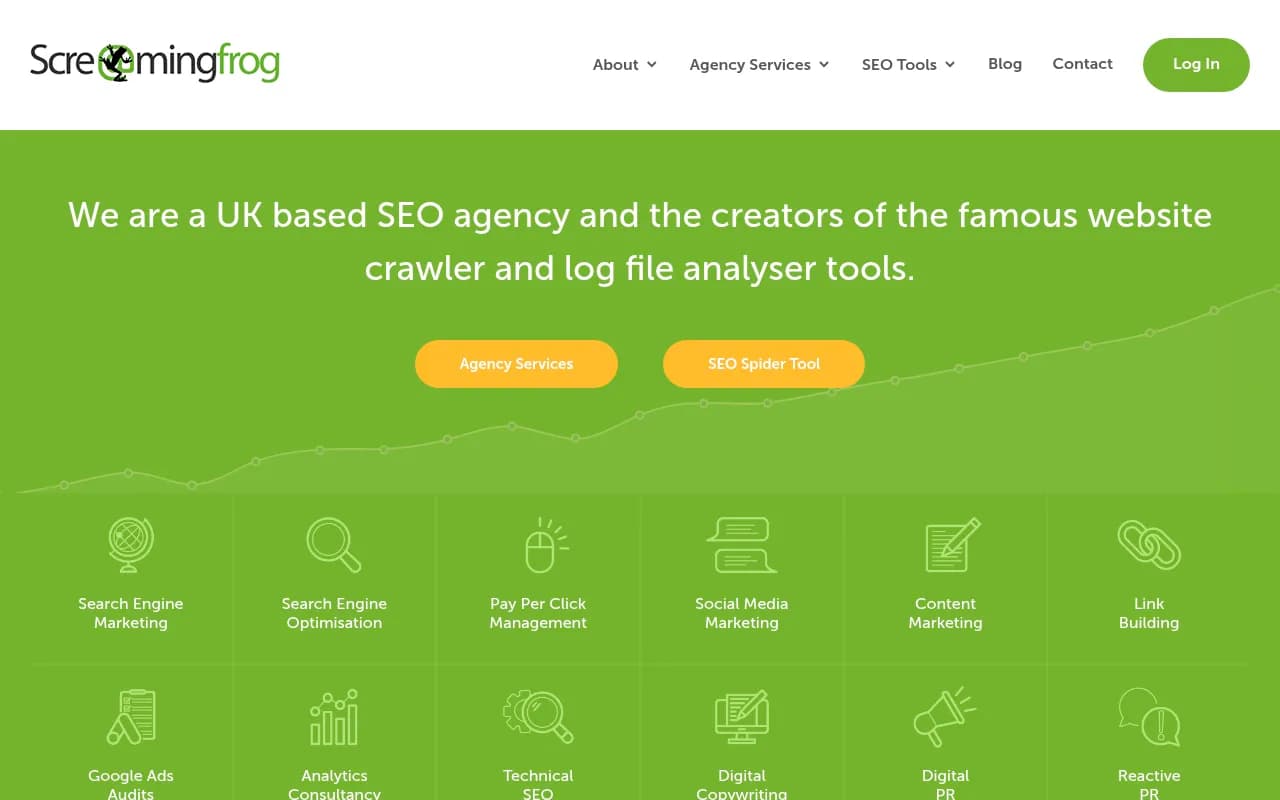
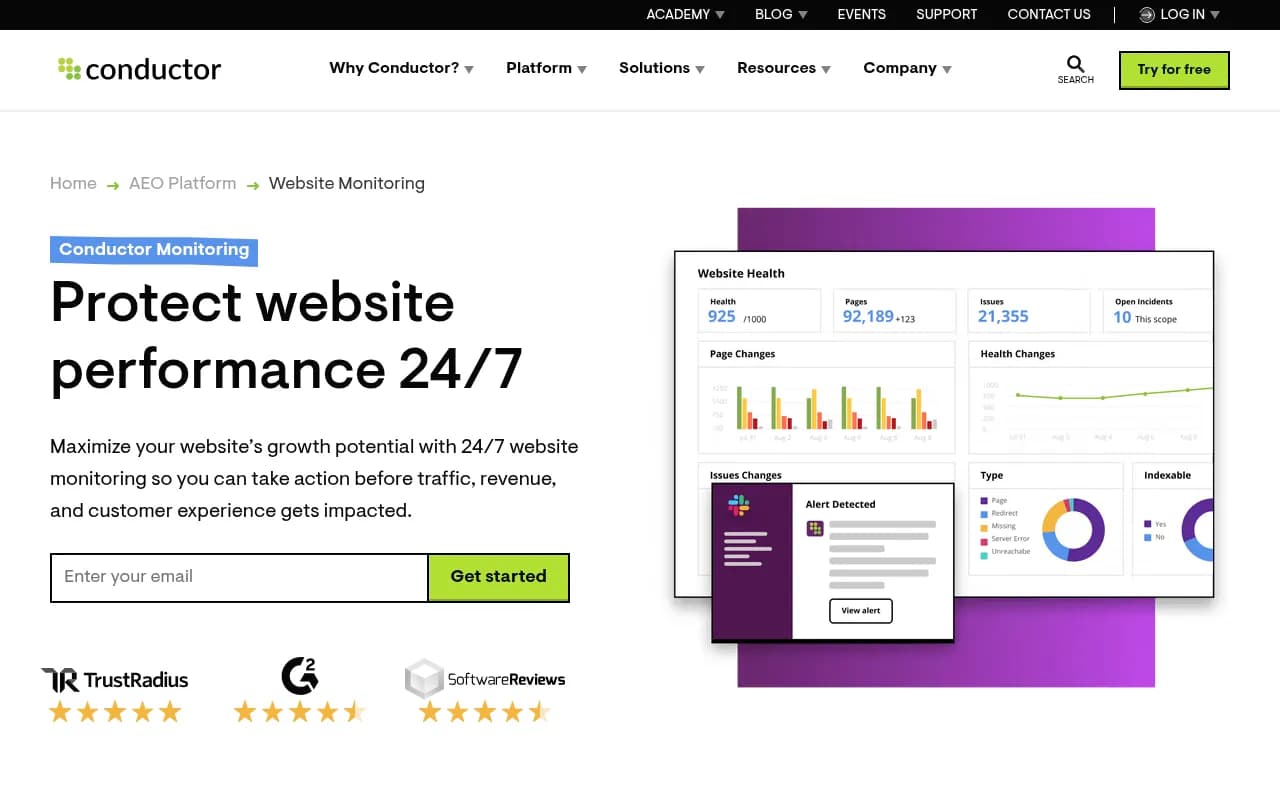
- Crawl your own site for injected links and unexpected redirects. Crawlers like Screaming Frog and monitoring tools such as ContentKing can surface changes you did not make.
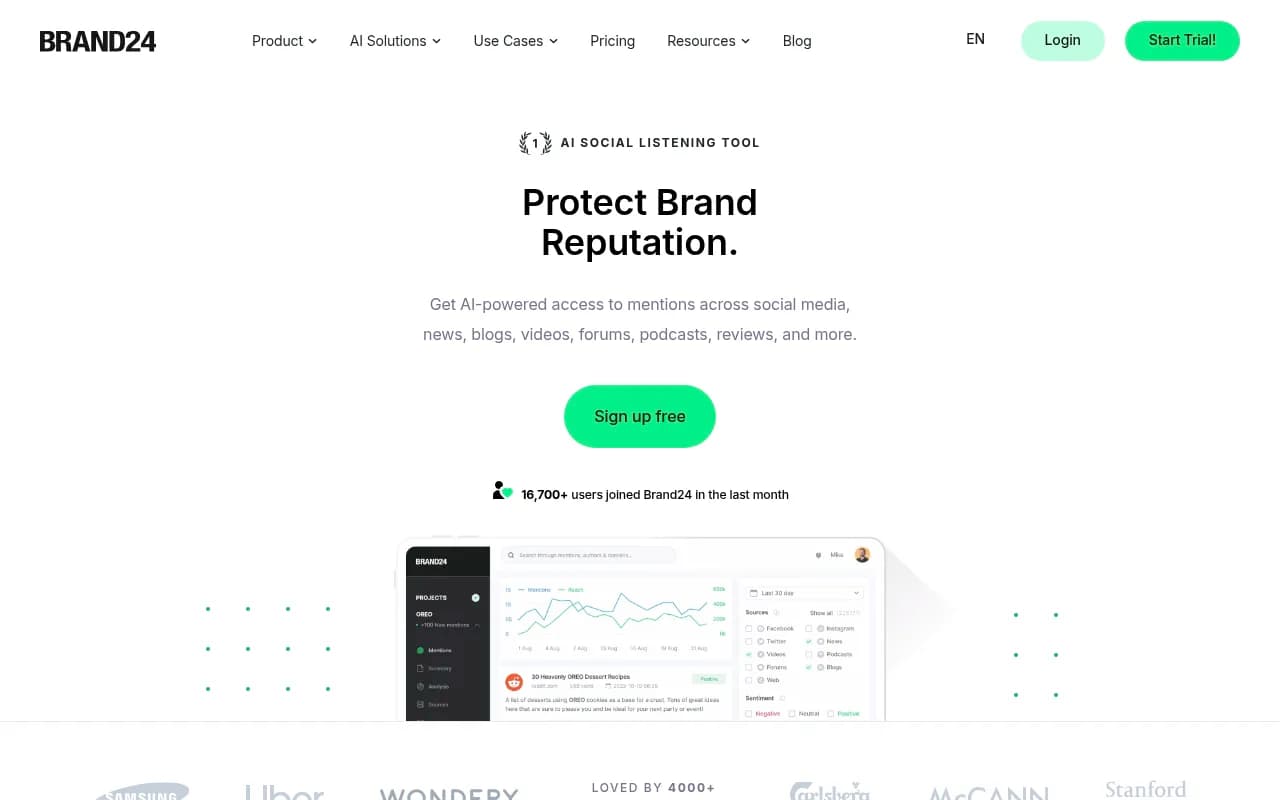
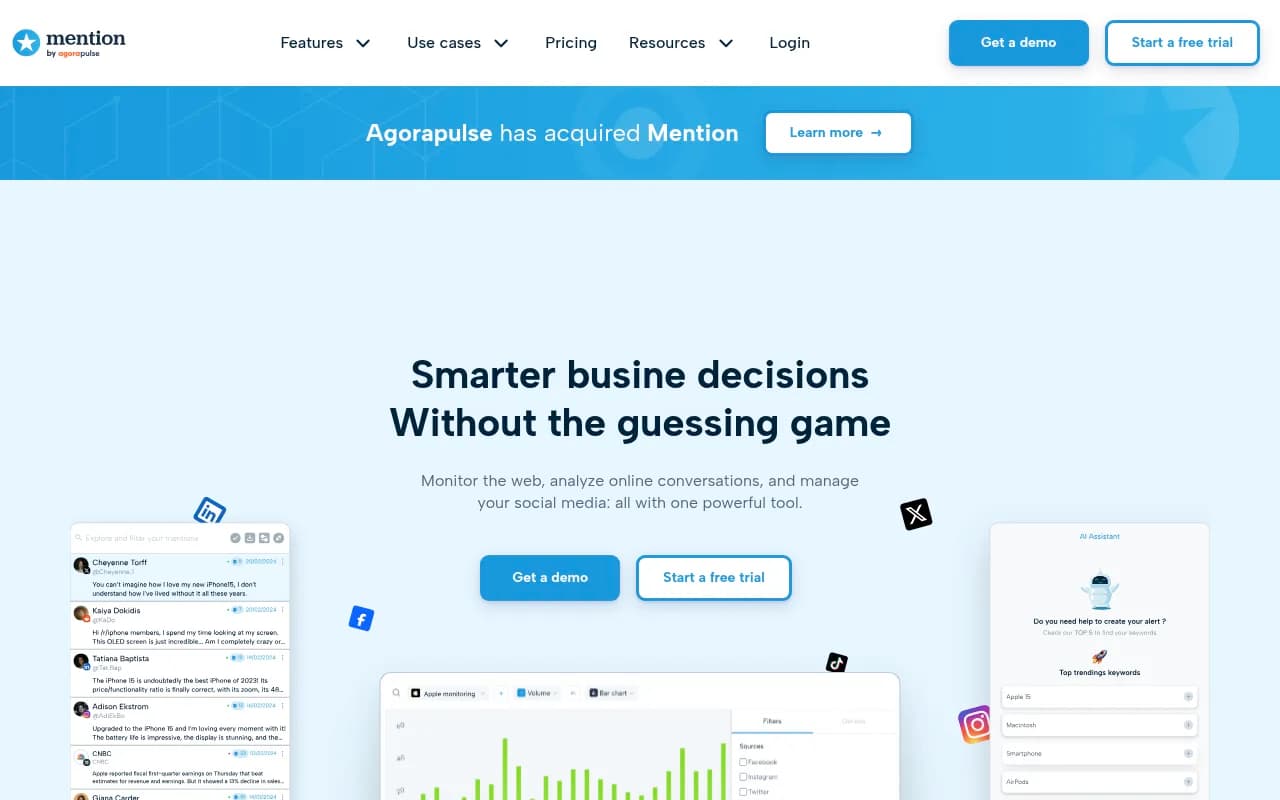
- Watch for brand mentions on spam or lookalike pages. Brand monitoring tools help here.
Do AI answers have the same problem?
Possibly, in a different form. If assistants pull from the open web, a poisoned or lookalike page can get cited. If your team cares how AI systems describe and cite your brand, tools like Promptwatch can show which sources AI engines pull from when your brand comes up, so you can spot wrong or fake sources early.

For wider options, the GEO software directory at bestgeosoftware.com lists alternatives.
What to do if you were hit
- Isolate the affected machine and revoke credentials entered on the fake page.
- Hunt for the installer path, DLLs and C2 indicators using your EDR, and search other endpoints for the same files.
- Report the malicious domain and ads to the search engine, the registrar and the hosting platform (GitHub removed the Storm-2561 repositories).
- Reset sessions and tokens, not just passwords, if a login page was involved.
- Add the domain to your block lists and write up the query that led there, because the same search will mislead others.
Why search engines do not just fix it
Huntress calls it a cat-and-mouse game: engines de-rank malicious sites, attackers find new ways around the algorithms, and the scale is huge. SentinelOne's Blender observations show why. When ads and domains rotate by automation, takedown is always a step behind. Assume some bad results will get through and design your processes around that.
Quick checklist
- Never install software from a search result; use bookmarked or managed sources.
- Treat sponsored results on download queries as suspect.
- Deploy EDR and restrict installer execution.
- Monitor your brand's search results and your own site for injected content.
- Before reacting to a sudden one-day rank drop, rule out a Nozzle-style poisoned SERP.
The attack itself is old. What changes each year is the bait, and in 2026 the bait is VPN clients, admin tools and AI apps.