Key takeaways
- AI search visibility is no longer optional for enterprise marketing teams -- ChatGPT, Perplexity, and Google AI Mode are actively reshaping how buyers discover brands.
- Most platforms stop at monitoring. The ones worth paying for help you find content gaps, generate optimized content, and track whether it's working.
- Promptwatch is the only platform rated "Leader" across all evaluation categories in a 2026 comparison of 12 GEO platforms, largely because it closes the full loop from gap analysis to content creation to traffic attribution.
- Profound is a strong alternative for teams that want deep prompt intelligence and an established enterprise client base.
- Budget matters: entry-level plans start around $99/month, but enterprise-grade features (crawler logs, multi-site, content generation) typically require $249--$579/month or custom pricing.
If you asked your CMO two years ago whether ChatGPT was a search channel worth tracking, you'd probably have gotten a polite smile and a redirect to the quarterly SEO report. That conversation looks very different now.
AI search engines -- ChatGPT, Perplexity, Google AI Mode, Claude, Gemini -- are handling a growing share of the queries that used to flow through Google. And unlike traditional search, they don't just rank pages. They synthesize answers, cite sources, and recommend brands. If your company isn't in those citations, you're invisible to a segment of buyers who never scroll to a results page.
Enterprise marketing teams are scrambling to get a handle on this. The problem is the tooling landscape is genuinely confusing. There are dozens of platforms calling themselves "AI visibility" tools, and most of them do very different things. Some track mentions. Some generate content. Some just show you a dashboard and leave you to figure out what to do next.
This guide cuts through that. Here are the seven platforms that actually matter for enterprise teams in 2026, what each one does well, and where the gaps are.
What enterprise teams actually need from an AI visibility platform
Before getting into the tools, it's worth being specific about what "enterprise" requirements actually look like, because they're meaningfully different from what a solo SEO or small agency needs.
Enterprise teams typically need:
- Multi-site and multi-brand tracking (not just one domain)
- Monitoring across all major AI models, not just ChatGPT
- Content gap analysis that shows what's missing, not just what's working
- Some path to actually fixing those gaps (content generation, briefs, optimization)
- Traffic attribution that connects AI visibility to revenue
- Crawler log data to understand how AI bots are indexing your site
- Multi-region and multi-language support
- API access or integrations for custom reporting
- SOC 2 compliance or equivalent security standards
Most platforms check two or three of these boxes. Very few check all of them. Keep that list in mind as you read through each tool.
The 7 best AI search visibility platforms for enterprise teams
1. Promptwatch
Promptwatch is the most complete end-to-end platform in this category. Where most competitors are essentially monitoring dashboards, Promptwatch is built around a three-stage loop: find the gaps, create content that fills them, and track whether that content is getting cited.

The gap analysis is genuinely useful. It shows you which prompts competitors are appearing in that you're not -- not as a vague heatmap, but as a specific list of questions and topics your site isn't answering. From there, the built-in AI writing agent generates content grounded in real citation data (880M+ citations analyzed), prompt volumes, and competitor context. This isn't generic AI content -- it's engineered around what AI models actually cite.
On the tracking side, Promptwatch monitors 10 AI models: ChatGPT, Perplexity, Google AI Overviews, Google AI Mode, Claude, Gemini, Meta/Llama, DeepSeek, Grok, and Mistral. Page-level tracking shows exactly which pages are getting cited, by which models, and how often. Traffic attribution connects that visibility data to actual site visits and revenue via a code snippet, GSC integration, or server log analysis.
The AI Crawler Logs feature is one of the more distinctive capabilities here -- real-time logs of AI crawlers hitting your site, which pages they read, errors they encounter, and how frequently they return. Most competitors don't have this at all.
Pricing runs from $99/month (Essential, 1 site, 50 prompts) to $579/month (Business, 5 sites, 350 prompts, 30 articles). Agency and enterprise plans are available on custom pricing. Used by 6,700+ brands including Booking.com and Center Parcs.
In a 2026 comparison of 12 GEO platforms, Promptwatch was the only one rated "Leader" across all evaluation categories -- the core reason being that it's an optimization platform, not just a tracker.
2. Profound
Profound has built a strong position in the enterprise and agency market. It tracks 10+ AI engines, has processed 400M+ prompt insights, and holds SOC 2 Type II certification -- which matters a lot for enterprise procurement teams.
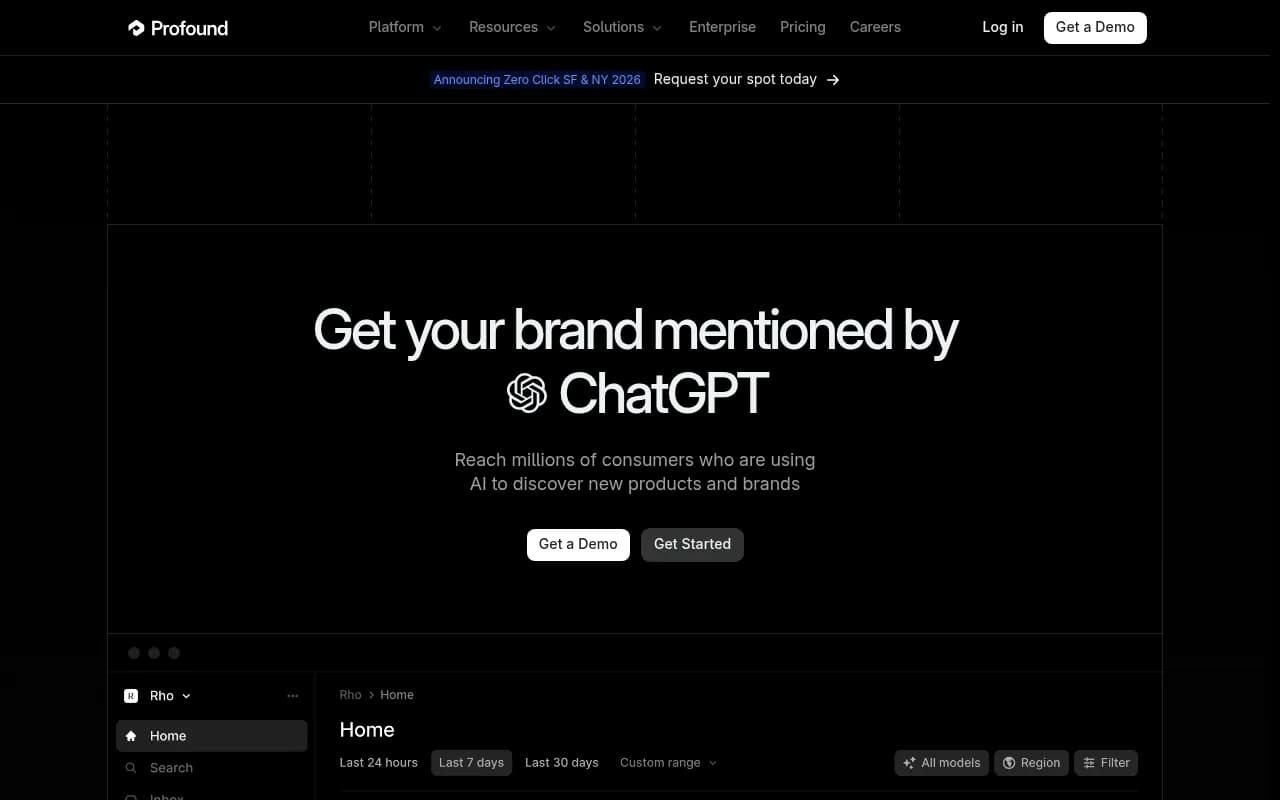
The platform's strength is in prompt intelligence. It gives you volume estimates and difficulty scores for individual prompts, which helps teams prioritize where to focus. The Agency mode includes client management tools, pitch environments, and brand configurations -- useful if you're running AI visibility as a service for multiple clients.
Where Profound falls short relative to Promptwatch is on the action side. It's primarily a monitoring and intelligence platform. There's no built-in content generation, no crawler logs, and no Reddit or YouTube tracking. You get excellent data about what's happening -- you just have to figure out what to do with it yourself.
Still, for enterprise teams with strong internal content capabilities who want deep prompt analytics, Profound is a serious option.
3. AthenaHQ
AthenaHQ tracks brand visibility across 8+ AI search engines and has carved out a niche with enterprise clients who want clean, structured monitoring data.
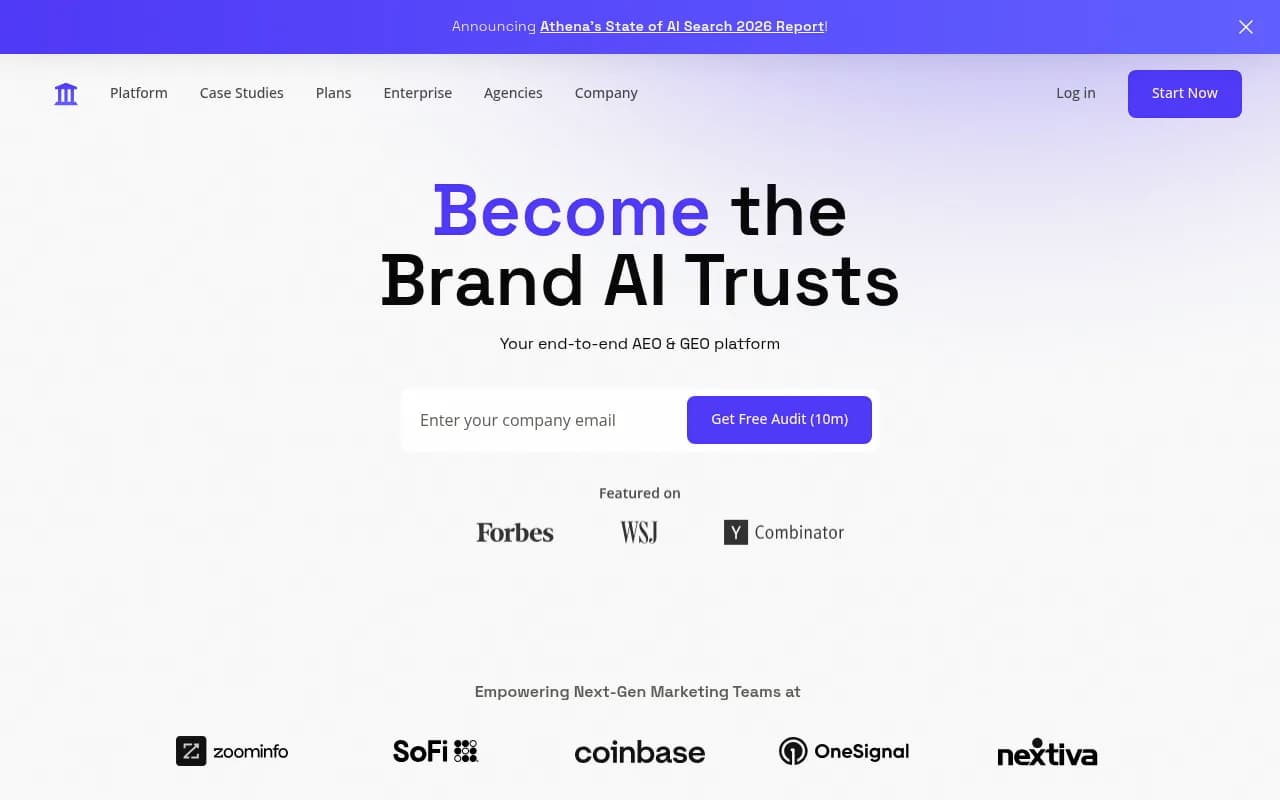
The platform's reporting is well-designed for stakeholder presentations -- visibility scores, share of voice comparisons, and model-by-model breakdowns are all easy to export. It also supports persona customization, so you can simulate how different types of buyers are prompting AI models.
The limitation is the same one that affects most monitoring-focused tools: AthenaHQ shows you where you stand but doesn't help you move. There's no content gap analysis, no content generation, and no crawler log data. For teams that want to act on what they learn, AthenaHQ requires pairing with other tools.
4. Semrush
Semrush is the incumbent SEO platform that's been adding AI search features to its existing suite. If your team already lives in Semrush for keyword research, rank tracking, and content optimization, the AI visibility layer is a natural extension.
The advantage here is consolidation. You're not adding another vendor -- you're expanding what an existing tool does. Semrush's AI tracking covers the major models and integrates with its broader content and competitive intelligence features.
The downside is that Semrush's AI visibility features use fixed prompt sets rather than custom prompt libraries. That means you're tracking what Semrush decides to track, not necessarily the prompts most relevant to your specific market. There's also no AI traffic attribution in the way that purpose-built GEO platforms offer it.
For teams that want a single platform and can live with those constraints, Semrush is a reasonable choice. For teams that need deep AI visibility as a core capability, it's probably not enough on its own.
5. Scrunch AI
Scrunch AI focuses on AI search visibility monitoring with a clean interface and reasonable coverage across the major models.
It's a solid monitoring tool, particularly for teams that are earlier in their AI visibility journey and want to understand the basics before investing in a more complex platform. The reporting is accessible and the setup is relatively fast.
Like AthenaHQ, Scrunch AI is primarily a monitoring platform. It doesn't offer content generation, crawler logs, or Reddit/YouTube tracking. The pricing is generally lower than enterprise-tier platforms, which reflects the narrower scope.
6. BrightEdge
BrightEdge has been an enterprise SEO staple for years, and its AI Catalyst product extends that into AI search visibility.
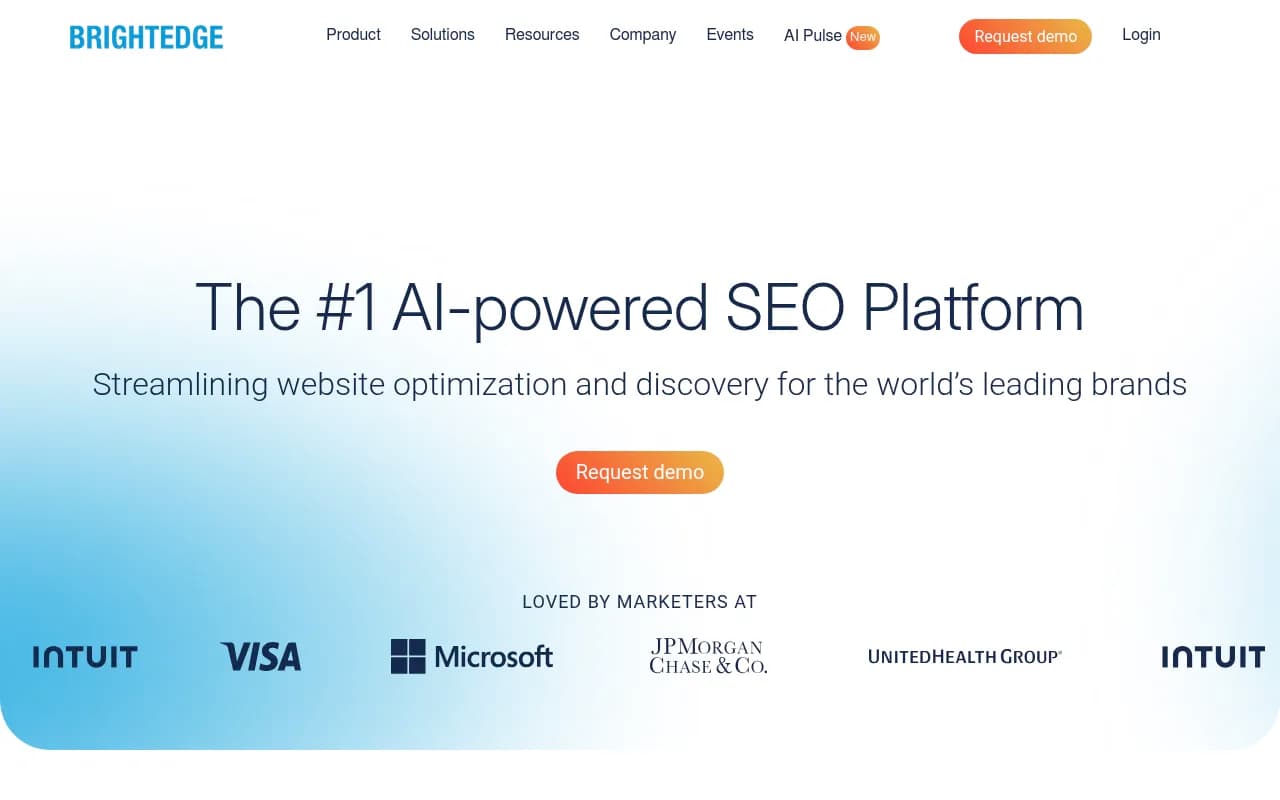
The platform's strength is its integration with traditional SEO workflows. Enterprise teams that have built reporting and governance processes around BrightEdge can extend those to AI search without rebuilding their stack. It also has strong data infrastructure and the security certifications that large organizations require.
The AI visibility features are less mature than purpose-built GEO platforms. Coverage of AI models is narrower, and the optimization capabilities are more limited. BrightEdge is a good choice if you're already a customer and want to add AI monitoring incrementally. It's a harder sell as a standalone AI visibility solution.
7. Evertune
Evertune positions itself as an enterprise GEO platform built specifically for Fortune 500 brands. It's one of the more ambitious platforms in the space, with a focus on end-to-end AI visibility management at scale.
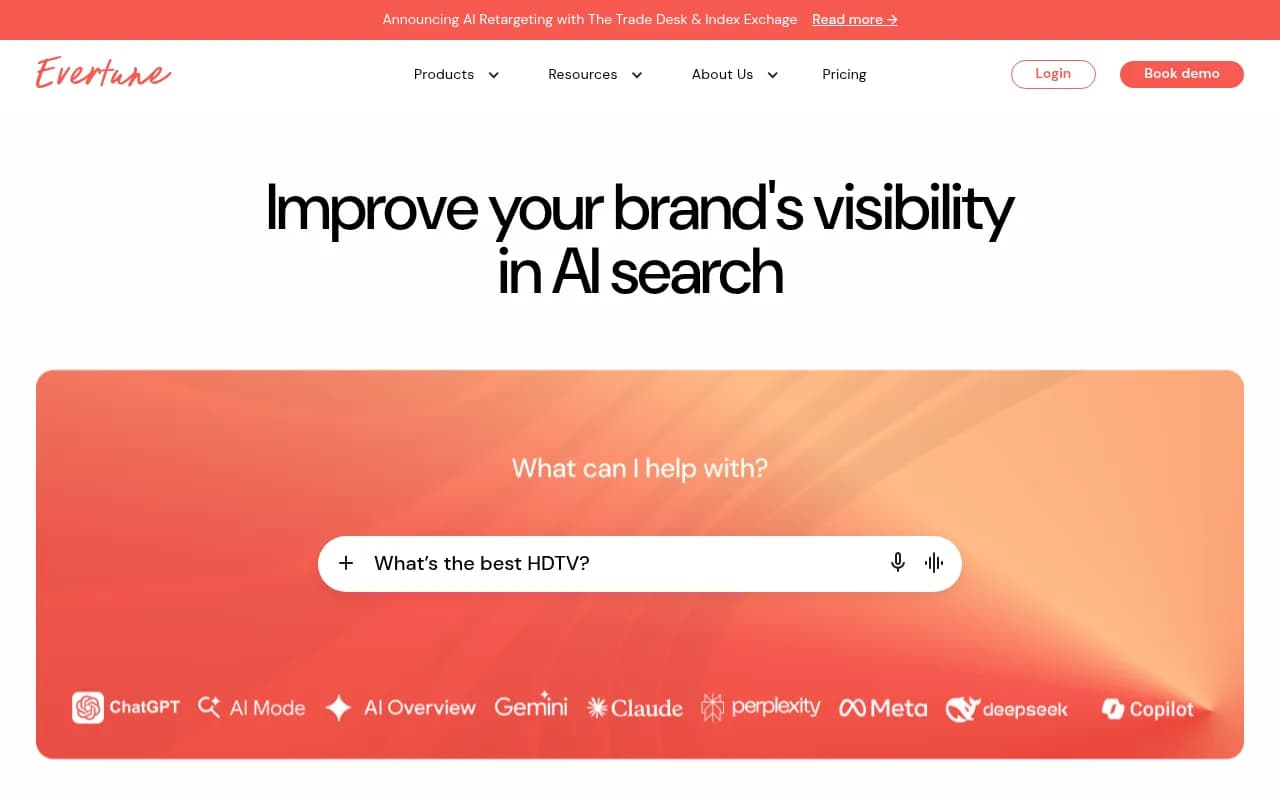
The platform covers monitoring, competitive analysis, and some optimization capabilities. It's designed for large teams with complex brand portfolios and has the pricing to match -- this isn't a self-serve tool.
Evertune is worth evaluating if you're at a large enterprise with multiple brands and need a platform that can handle that complexity. For mid-market teams or those who want faster time-to-value, the implementation overhead may not be worth it.
Platform comparison
| Platform | AI models tracked | Content generation | Crawler logs | Reddit/YouTube tracking | Traffic attribution | Starting price |
|---|---|---|---|---|---|---|
| Promptwatch | 10 | Yes (built-in) | Yes | Yes | Yes | $99/mo |
| Profound | 10+ | No | No | No | Limited | Custom |
| AthenaHQ | 8+ | No | No | No | No | Custom |
| Semrush | Major models | Via ContentShake | No | No | No | Bundled |
| Scrunch AI | Major models | No | No | No | No | Lower tier |
| BrightEdge | Select models | Limited | No | No | No | Enterprise |
| Evertune | Major models | Limited | No | No | No | Enterprise |
How to choose the right platform for your team
The honest answer is that the right tool depends on where your team is in its AI visibility journey and what you're trying to accomplish.
If you're starting from zero and want to understand your current AI visibility before doing anything else, almost any monitoring tool will get you there. Scrunch AI or AthenaHQ are reasonable starting points.
If you're past the "understand the problem" phase and want to actually improve your AI search presence, you need a platform that helps you act -- not just observe. That's where the gap between monitoring-only tools and optimization platforms becomes real. Promptwatch's content gap analysis and built-in writing agent are specifically designed for this phase.
If you're an enterprise team with existing SEO infrastructure and want to add AI visibility without changing your stack, Semrush or BrightEdge are the path of least resistance -- with the understanding that you're getting a narrower feature set.
If you're running AI visibility as a service for multiple clients, Profound's agency mode and Promptwatch's multi-site plans are both worth evaluating. The difference is that Profound gives you better prompt intelligence, while Promptwatch gives you the tools to actually deliver results (content generation, gap analysis, traffic attribution).
One thing worth saying plainly: the category is moving fast. Platforms that were monitoring-only six months ago are adding optimization features. Platforms that launched last year have already iterated significantly. Whatever you choose, plan to reassess in 12 months.
What "good" looks like in practice
A few things to look for when evaluating any platform in this category:
Prompt customization. Fixed prompt sets (like Semrush uses) mean you're tracking generic queries, not the specific questions your buyers are actually asking. Custom prompt libraries are worth the extra setup time.
Model coverage. ChatGPT and Google AI Overviews get the most attention, but Perplexity drives a disproportionate share of research-intent traffic. Claude and Gemini are growing. A platform that only tracks one or two models is giving you an incomplete picture.
Attribution. Knowing your brand appears in AI responses is useful. Knowing that AI visibility drove 12% of your organic traffic last quarter is actionable. The gap between those two things is attribution, and most platforms don't do it well.
Crawler logs. If AI bots can't access your content, your visibility will be limited regardless of how good your content is. Real-time crawler logs let you catch indexing issues before they become visibility problems. This feature is rare -- Promptwatch has it, most others don't.
Content output. The platforms that help you create content (not just identify gaps) compress the time between insight and impact. For enterprise teams under pressure to show results, that matters.
The bottom line
AI search visibility has moved from "interesting experiment" to "budget line item" for most enterprise marketing teams. The question now isn't whether to invest in it -- it's which platform gives you the best return on that investment.
The honest answer is that most platforms in this space are still primarily monitoring tools. They'll show you where you stand. They won't help you move. The platforms that close the full loop -- gap analysis, content creation, tracking, attribution -- are still a minority, and Promptwatch is the most complete example of that approach at a price point that doesn't require an enterprise contract to access.
That said, the right choice depends on your team's specific situation. Use the comparison table above as a starting point, then run trials on your top two or three candidates with real prompts from your market before committing.