Summary
- The AI search landscape has fundamentally changed -- traditional SEO metrics no longer capture how brands appear in ChatGPT, Perplexity, Claude, and Google AI Overviews. You need specialized tools to track citations, mentions, and share-of-voice across these platforms.
- Three tools offer the best value in 2026: Promptwatch, Peec AI, and LLMrefs combine comprehensive monitoring with actionable optimization features at prices below the $337/month industry average.
- Most competitors are monitoring-only dashboards -- they show you data but leave you stuck. The real differentiator is whether a tool helps you fix visibility gaps through content analysis, generation, and optimization workflows.
- Pricing ranges from $79 to $579/month for mid-market tools, with enterprise platforms like Profound and Scrunch commanding $300-500+/month. Agency-focused tools often include multi-client management and white-label reporting.
- Key capabilities to evaluate: AI crawler log tracking, citation source analysis, prompt volume data, content gap identification, Reddit/YouTube monitoring, and traffic attribution to connect visibility to revenue.
The shift from traditional search to AI-powered answers has created a new category of visibility tracking tools. When ChatGPT recommends a product or Perplexity cites your competitor instead of you, traditional rank tracking won't tell you why. This guide breaks down the 12 most capable platforms for monitoring and optimizing your brand's presence across AI search engines.
Why AI brand visibility tracking matters in 2026
Search behavior has fundamentally changed. Users ask ChatGPT for product recommendations, query Perplexity for research summaries, and rely on Google AI Overviews for quick answers. Your brand either appears in these AI-generated responses or it doesn't -- there's no page two.
Traditional SEO tools track keyword rankings and backlinks. AI visibility tools track something different: whether AI models cite your brand, which sources they reference, how often you appear compared to competitors, and what content gaps prevent you from being mentioned. It's a different game with different metrics.
The stakes are real. A study of 1.1 billion AI citations found that brands invisible to AI models lose traffic to competitors who've optimized for this channel. When Claude recommends three project management tools and yours isn't one of them, you've lost that customer before they ever visit your website.
How we evaluated these tools
We analyzed over 30 platforms and narrowed the list to 12 based on five criteria:
- Platform coverage breadth -- Does it monitor ChatGPT, Claude, Perplexity, Gemini, Google AI Overviews, and other major AI search engines?
- Data collection methodology -- How does it gather responses? Real-time API calls, UI scraping, or cached data? Does it sample multiple responses per prompt to account for variability?
- Actionability -- Can you diagnose why you're invisible and fix it, or does the tool just show you mentions?
- Scalability and collaboration -- Does it support agency workflows, multi-client management, and team access?
- Market adoption and funding -- Is this a durable platform or a side project that might disappear?
We prioritized tools that help you take action, not just observe. A dashboard that shows you're losing to competitors is useless unless it tells you what content to create or which sources to target.
Top 12 AI brand visibility tracking tools compared
1. Promptwatch
Promptwatch is the only platform rated as a "Leader" across all categories in a 2026 comparison of 12 GEO tools. It's built around an action loop most competitors lack: find visibility gaps, generate content to fill them, then track the results.

The core workflow starts with Answer Gap Analysis -- it shows you which prompts competitors rank for but you don't, then surfaces the specific content your site is missing. The built-in AI writing agent generates articles grounded in 880M+ citations analyzed, prompt volumes, and competitor data. This isn't generic SEO filler; it's content engineered to get cited by ChatGPT, Claude, and Perplexity.
What sets Promptwatch apart from monitoring-only tools like Otterly.AI or Peec.ai: it helps you fix problems. Most competitors stop at showing you data. Promptwatch shows you the data, tells you what's missing, helps you create it, then tracks whether it worked.
Additional capabilities include AI crawler logs (see which pages ChatGPT, Claude, and Perplexity crawl, when, and what errors they hit), Reddit and YouTube insights (surface discussions that influence AI recommendations), ChatGPT Shopping tracking (monitor product recommendation carousels), and multi-language/multi-region monitoring with customizable personas.
Monitors 10 AI models: ChatGPT, Perplexity, Google AI Overviews, Google AI Mode, Claude, Gemini, Meta/Llama, DeepSeek, Grok, Mistral, Copilot.
Pricing: Essential $99/month (1 site, 50 prompts, 5 articles), Professional $249/month (2 sites, 150 prompts, 15 articles, crawler logs, state/city tracking), Business $579/month (5 sites, 350 prompts, 30 articles). Free trial available.
Best for: Marketing teams and agencies that want to optimize AI visibility, not just monitor it. If you need content gap analysis and AI-generated articles to close those gaps, this is the platform.
Limitations: Higher price point than basic monitoring tools. If you only need visibility dashboards without optimization workflows, cheaper alternatives exist.
2. Peec AI

Peec AI focuses on multi-language tracking across ChatGPT, Perplexity, Claude, and Gemini. It's one of the most affordable comprehensive monitoring platforms at $99/month, making it accessible for small teams testing AI visibility for the first time.
The interface is clean and focused on share-of-voice metrics. You define prompts, Peec samples responses, and you see how often your brand appears versus competitors. It handles prompt variability well -- AI models don't give identical answers every time, so Peec runs multiple samples and aggregates the results.
What it lacks: content optimization features. Peec tells you where you're invisible but doesn't help you fix it. No content gap analysis, no AI writing tools, no crawler log tracking. It's pure monitoring.
Pricing: $99/month. $1.9 million in funding suggests it's here to stay.
Best for: Teams that need affordable, reliable monitoring across multiple AI platforms and languages. Good entry point if you're just starting to track AI visibility.
Limitations: Monitoring-only. You'll need separate tools for content creation and optimization.
3. LLMrefs
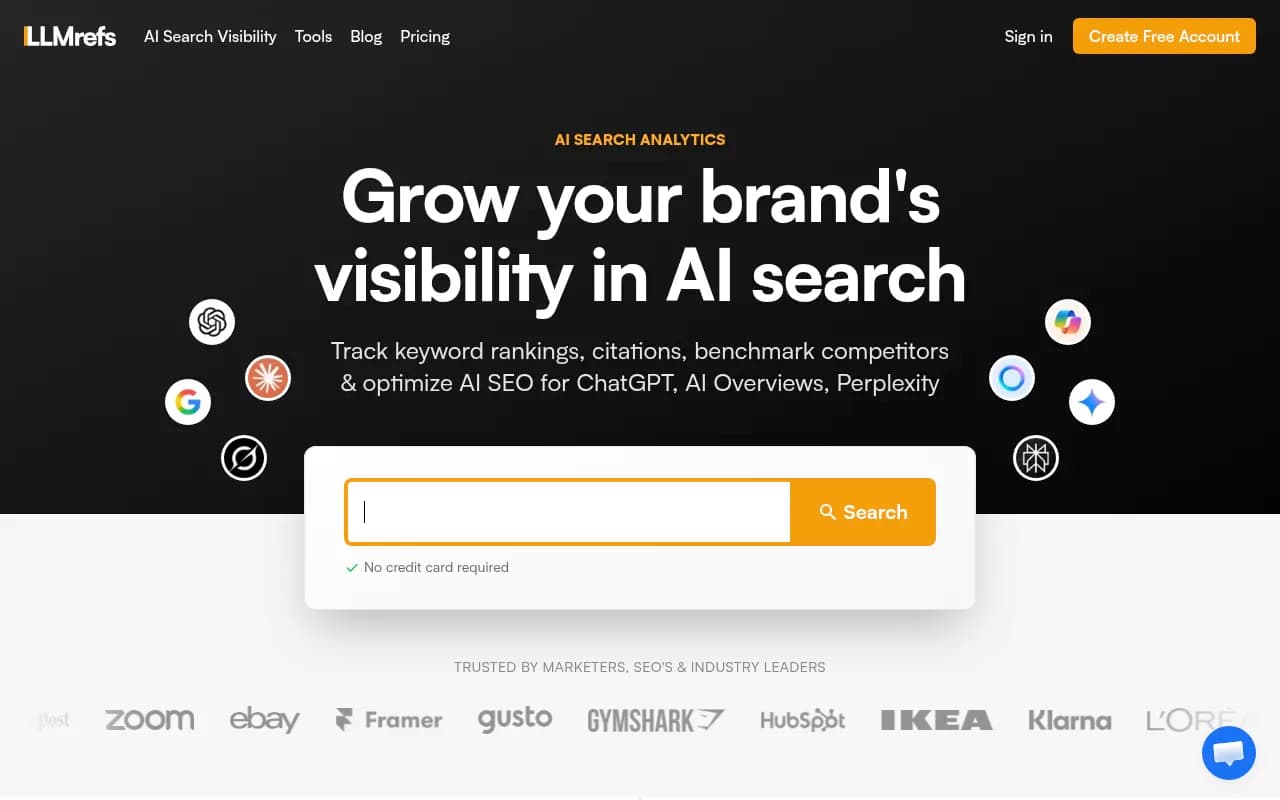
LLMrefs converts traditional keyword strategies into AI visibility metrics. Instead of manually chasing prompts, you feed it the keywords you already track. It generates conversational prompts around those keywords, collects responses, and aggregates them into share-of-voice and citation metrics.
The platform excels at citation source analysis -- it shows you which pages, Reddit threads, YouTube videos, and domains AI models cite most often. This tells you where to publish and what to optimize. If Perplexity keeps citing a specific Reddit thread about your product category, you know where to engage.
Pricing: $79/month, making it one of the most affordable comprehensive platforms.
Best for: SEO teams transitioning from traditional keyword tracking to AI visibility. The keyword-to-prompt workflow feels familiar.
Limitations: Less robust than Promptwatch for content optimization. Strong on monitoring and analysis, weaker on taking action.
4. Profound

Profound is an enterprise-grade platform with a $499/month starting price and $58.5 million in funding. It monitors 8+ AI search engines and offers advanced features like persona customization (track how different user types see your brand) and detailed citation analysis.
The platform's strength is depth. You can drill into individual responses, see exactly which sources were cited, and export data for custom analysis. The UI is polished and built for large teams with complex reporting needs.
What justifies the price: white-label reporting for agencies, multi-client management, API access, and priority support. If you're managing AI visibility for 10+ clients, the workflow efficiencies matter.
Pricing: $499/month and up. Enterprise plans available.
Best for: Agencies and enterprise teams with budget for premium tools and complex reporting requirements.
Limitations: Expensive for small teams. Monitoring-focused; lacks the content generation and optimization workflows that Promptwatch offers.
5. Scrunch
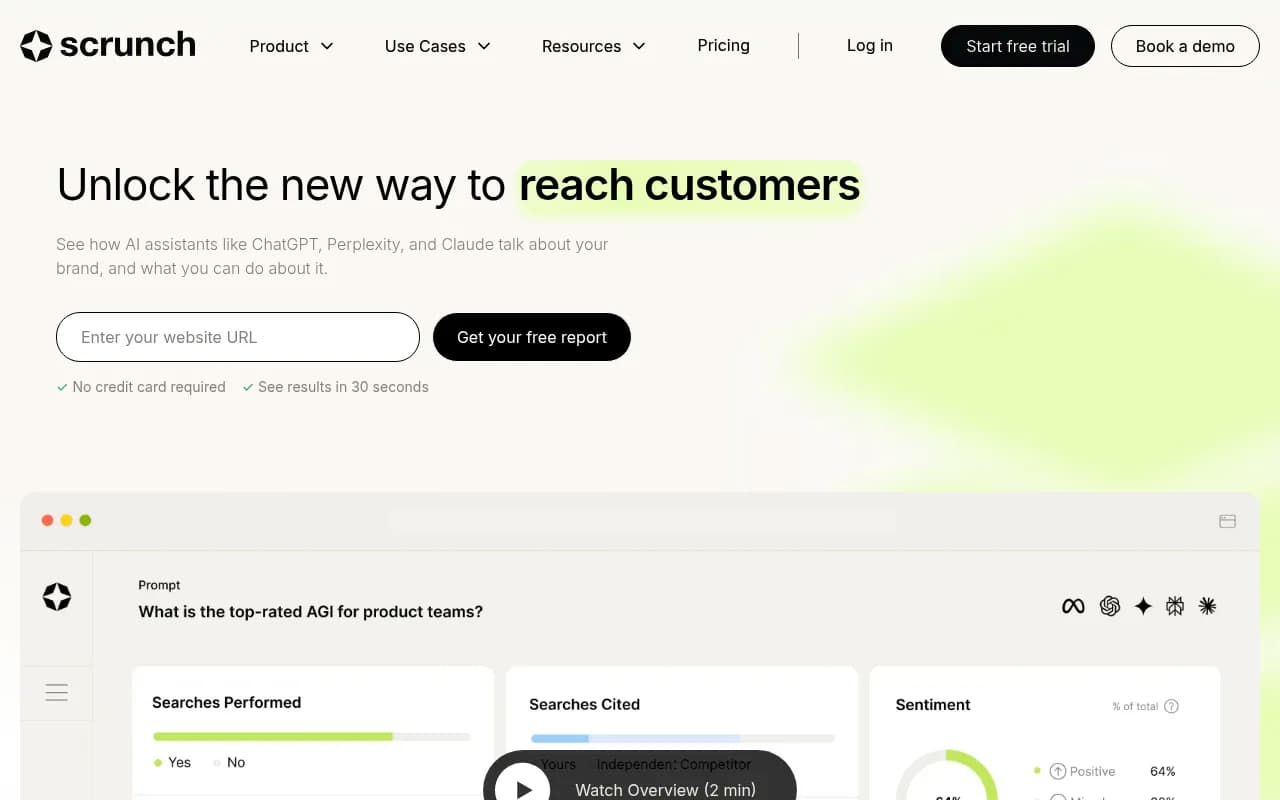
Scrunch started as an influencer marketing platform and added AI visibility tracking in 2025. It's unique in combining social listening, influencer discovery, and AI search monitoring in one platform. If your brand strategy involves both influencer partnerships and AI visibility, Scrunch consolidates workflows.
The AI visibility features are solid but not as deep as dedicated platforms. You can track mentions across ChatGPT, Perplexity, and Claude, see share-of-voice metrics, and monitor competitor visibility. The real value is the integration with influencer data -- see which influencers AI models cite when discussing your category, then reach out to them.
Pricing: $300/month. $19 million in funding.
Best for: Brands running influencer marketing campaigns who want to track both social and AI visibility in one platform.
Limitations: AI features are less comprehensive than dedicated tools. If you only need AI visibility tracking, you're paying for influencer features you might not use.
6. Otterly.AI

Otterly.AI is a straightforward monitoring dashboard focused on affordability. It tracks ChatGPT, Perplexity, and Google AI Overviews with a simple interface that shows mention frequency and share-of-voice.
The platform's appeal is simplicity. No complex workflows, no content optimization features, just clean visibility dashboards. You define prompts, Otterly samples responses, and you see the results. Good for teams that want to monitor AI visibility without investing in optimization workflows.
Pricing: One of the most affordable options in the category.
Best for: Small teams or solo marketers who need basic monitoring without advanced features.
Limitations: Monitoring-only. No crawler logs, no content gap analysis, no optimization tools. You'll see where you're invisible but won't get help fixing it.
7. AthenaHQ

AthenaHQ monitors 8+ AI search engines with a focus on brand mention tracking. The platform samples responses across ChatGPT, Claude, Perplexity, Gemini, and others, then aggregates mention frequency into share-of-voice metrics.
The interface is clean and the data is reliable. AthenaHQ handles prompt variability well and provides historical tracking so you can see visibility trends over time. It's a solid monitoring platform without the optimization features that separate leaders from followers.
Best for: Teams that need reliable monitoring across many AI platforms.
Limitations: Monitoring-focused. No content creation, no crawler logs, no gap analysis.
8. Rankability AI Analyzer
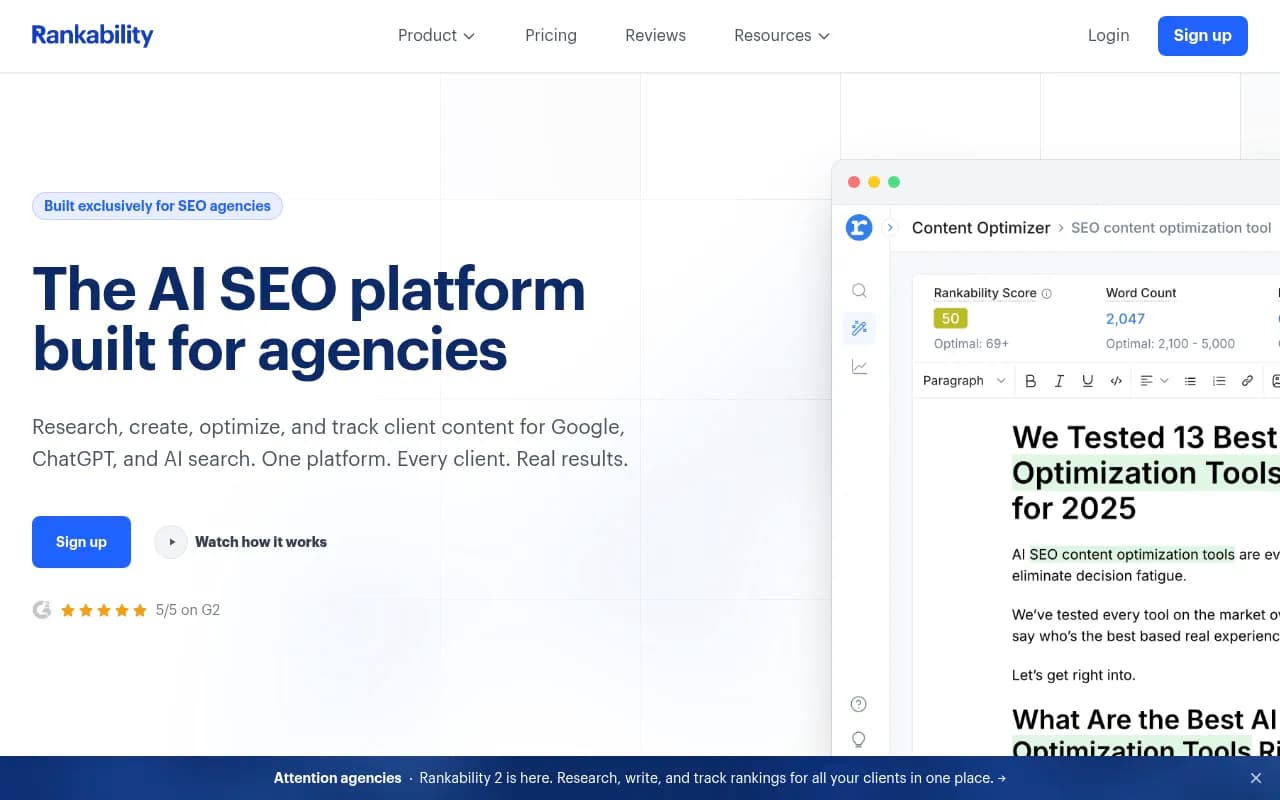
Rankability is agency-focused with multi-client management and white-label reporting. The AI Analyzer tracks visibility across ChatGPT, Perplexity, Claude, and Google AI Overviews, with a workflow built for managing multiple brands.
The platform includes content research tools that help identify topics AI models care about, though it lacks the automated content generation that Promptwatch offers. The agency features (client portals, branded reports, team collaboration) are well-executed.
Pricing: $149/month.
Best for: Digital agencies managing AI visibility for multiple clients.
Limitations: Less comprehensive than Promptwatch for content optimization. Strong on monitoring and reporting, weaker on taking action.
9. ZipTie
ZipTie offers deep analysis for AI search visibility with a focus on diagnostic insights. The platform excels at showing you why you're invisible -- which content is missing, which sources competitors have that you don't, which prompts you should target.
The diagnostic depth is impressive, but the platform lacks automated solutions. It tells you what's wrong without helping you fix it. You'll need separate tools for content creation and optimization.
Best for: SEO strategists who want deep analysis and are comfortable building their own solutions based on the insights.
Limitations: Analysis-heavy, action-light. No content generation, no optimization workflows.
10. Brandlight
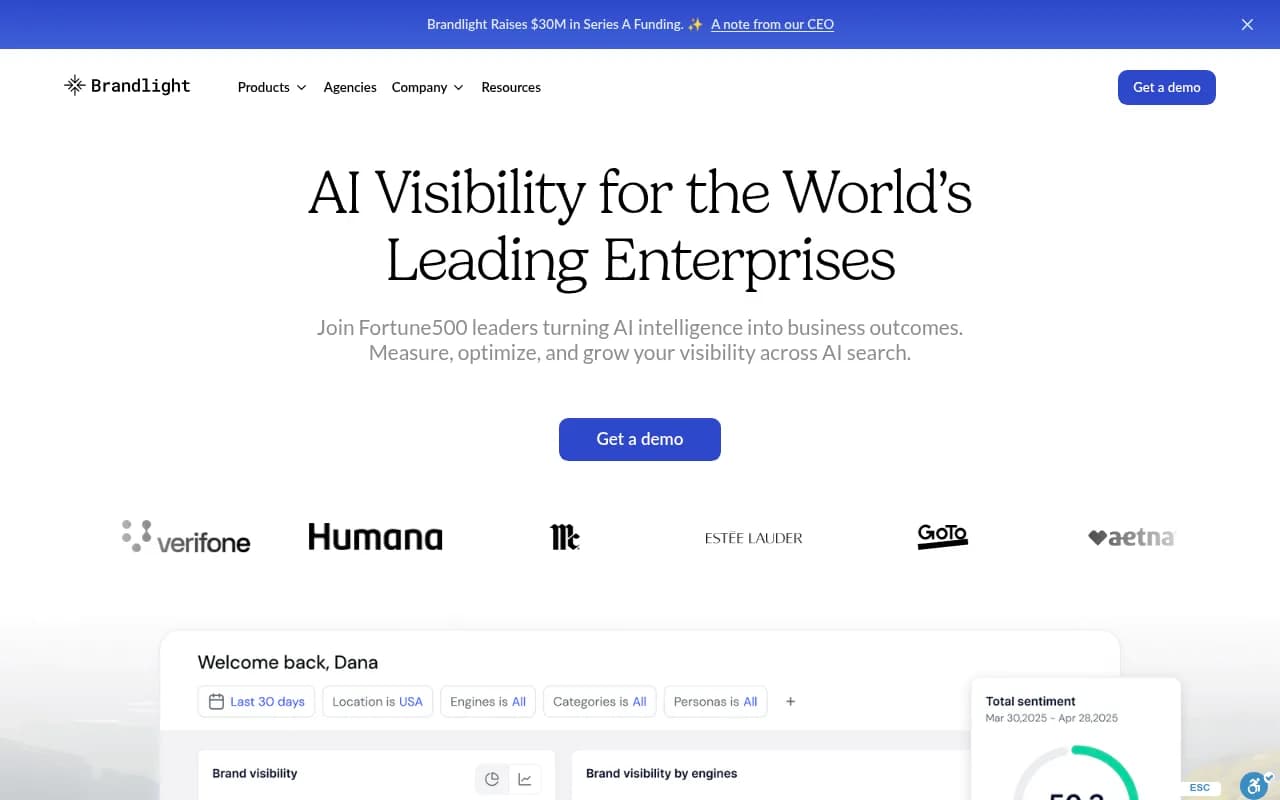
Brandlight focuses on brand mention tracking across AI platforms with sentiment analysis. It monitors ChatGPT, Claude, Perplexity, and Gemini, then categorizes mentions as positive, neutral, or negative.
The sentiment analysis is useful for reputation management. If AI models start citing negative sources about your brand, Brandlight flags it. The platform also tracks competitor mentions so you can see how your brand sentiment compares.
Best for: Brand managers focused on reputation monitoring in AI search.
Limitations: Monitoring and sentiment analysis only. No optimization features.
11. SE Ranking Visible
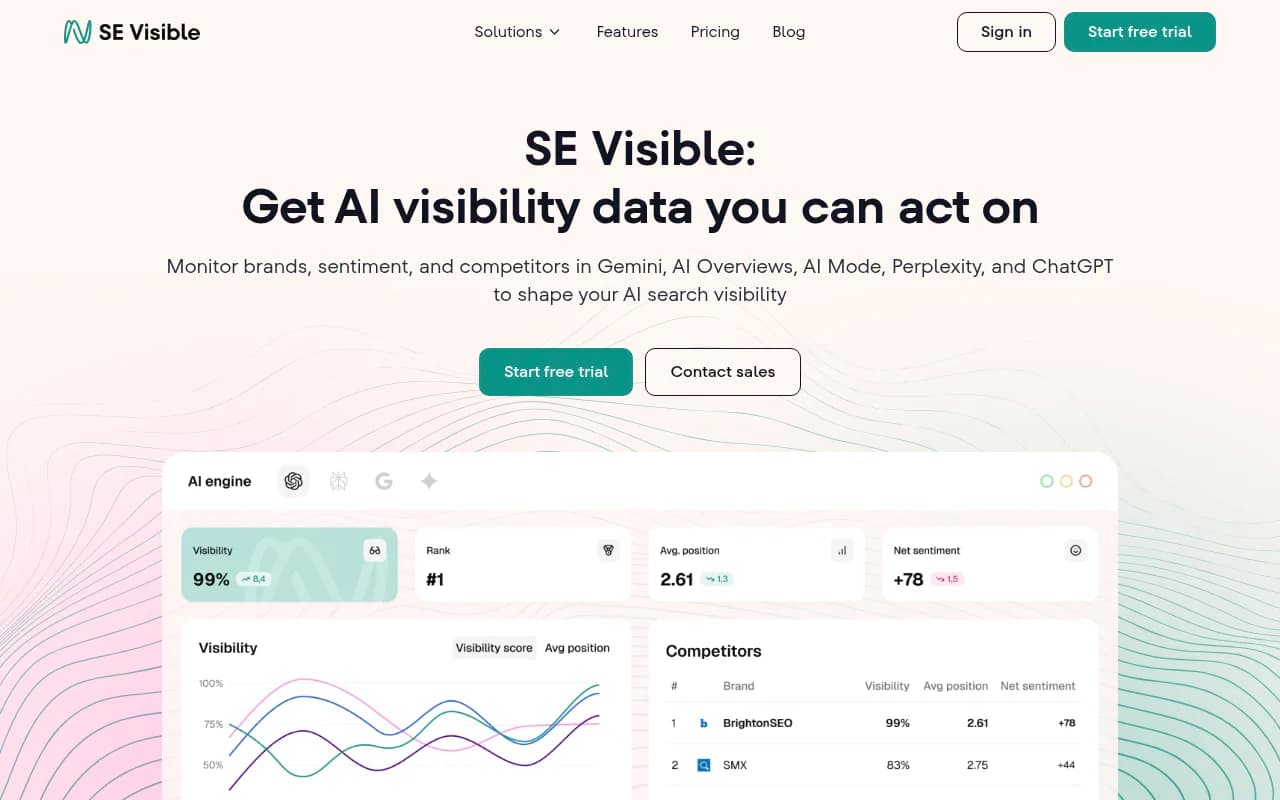
SE Ranking added AI visibility tracking to its existing SEO platform. If you already use SE Ranking for traditional SEO, the AI features integrate into your existing workflow. You can track keyword rankings and AI visibility in one dashboard.
The AI features are less comprehensive than dedicated platforms, but the integration is convenient. You see how traditional search rankings correlate with AI visibility, which helps prioritize optimization efforts.
Pricing: Included with SE Ranking subscriptions.
Best for: Existing SE Ranking users who want basic AI visibility tracking without adding another tool.
Limitations: AI features are less robust than dedicated platforms. If AI visibility is a priority, you'll outgrow this quickly.
12. Ahrefs Brand Radar
Ahrefs added Brand Radar to monitor brand mentions in AI search results. It tracks ChatGPT and Google AI Overviews with the reliability you'd expect from Ahrefs.
The limitation: fixed prompts. You can't customize the queries Ahrefs monitors, so you're stuck with their predefined list. This makes it less flexible than platforms where you define your own prompts. Also lacks traffic attribution -- you can't connect AI visibility to actual revenue.
Pricing: Starts at $129/month ($108/month annually) for search demand and web visibility. Additional AI indexes are $199/month each.
Best for: Existing Ahrefs users who want basic AI visibility monitoring without switching platforms.
Limitations: Fixed prompts, no traffic attribution, less comprehensive than dedicated AI visibility tools.
Feature comparison table
| Tool | Starting Price | AI Models Tracked | Content Optimization | Crawler Logs | Traffic Attribution |
|---|---|---|---|---|---|
| Promptwatch | $99/mo | 10 | Yes (AI writing agent) | Yes | Yes |
| Peec AI | $99/mo | 4+ | No | No | No |
| LLMrefs | $79/mo | 4+ | Limited | No | No |
| Profound | $499/mo | 8+ | No | No | No |
| Scrunch | $300/mo | 3+ | No | No | No |
| Otterly.AI | Low | 3+ | No | No | No |
| AthenaHQ | Mid | 8+ | No | No | No |
| Rankability | $149/mo | 4+ | Limited | No | No |
| ZipTie | Mid | 4+ | No | No | No |
| Brandlight | Mid | 4+ | No | No | No |
| SE Visible | Included | 2+ | No | No | No |
| Ahrefs Brand Radar | $129/mo | 2 | No | No | No |
What to look for in an AI visibility tool
Monitoring vs optimization platforms
Most tools in this category are monitoring dashboards. They show you where you appear in AI responses, how often, and compared to whom. That's useful, but it leaves you stuck. You see the problem but have no path to fix it.
Optimization platforms like Promptwatch go further. They show you what content is missing, generate articles to fill those gaps, and track whether the new content improves your visibility. The difference: monitoring tools tell you you're invisible; optimization platforms help you become visible.
If your goal is just awareness -- understanding how AI models currently see your brand -- a monitoring tool works. If your goal is improvement, you need optimization features.
AI crawler log tracking
AI models crawl your website to gather information for their responses. Crawler logs show you which pages they read, how often, and what errors they encounter. This is critical for diagnosing visibility problems.
If ChatGPT never cites your product pages, crawler logs might reveal it's hitting 404 errors or being blocked by robots.txt. Without this data, you're guessing. With it, you can fix technical issues preventing AI models from indexing your content.
Most competitors lack crawler log tracking entirely. Promptwatch includes it in Professional and Business plans. This is a significant differentiator for technical SEO teams.
Citation source analysis
When AI models cite sources in their responses, those sources matter. If Perplexity keeps referencing a specific Reddit thread or YouTube video about your product category, you should know about it.
Citation source analysis shows you which pages, domains, and platforms AI models trust most. This tells you where to publish, which sources to target for backlinks, and which content formats work best.
LLMrefs and Promptwatch both offer strong citation analysis. Most other tools show you mentions without revealing the underlying sources.
Prompt volume and difficulty data
Not all prompts are equal. Some are asked thousands of times per month; others are one-off queries. Some are easy to rank for; others are dominated by established brands.
Prompt volume and difficulty scoring helps you prioritize. Focus on high-volume, winnable prompts instead of chasing low-value queries or fighting unwinnable battles against Wikipedia and major publishers.
Promptwatch includes prompt intelligence with volume estimates and difficulty scores. Most competitors don't surface this data, leaving you to guess which prompts matter.
Traffic attribution
The ultimate question: does AI visibility drive revenue? Traffic attribution connects visibility metrics to actual website traffic and conversions.
Promptwatch offers three attribution methods: JavaScript snippet (tracks visitors from AI platforms), Google Search Console integration (see AI-driven organic traffic), and server log analysis (identify AI referrals in your logs). This closes the loop from visibility to revenue.
Most competitors lack attribution entirely. You see visibility metrics but can't prove ROI. For teams that need to justify AI visibility investments, attribution is non-negotiable.
Pricing analysis: What you should expect to pay
The average AI visibility tracking tool costs $337/month based on analysis of 30+ platforms. Entry-level monitoring tools start around $79-99/month. Mid-tier platforms with more features run $149-249/month. Enterprise tools with agency features and advanced capabilities cost $300-579/month.
Three tools offer the best value: Promptwatch ($99-579/month depending on plan), Peec AI ($99/month), and LLMrefs ($79/month). All three deliver comprehensive monitoring at prices below the industry average.
The price difference reflects feature depth. Monitoring-only tools are cheaper because they do less. Optimization platforms cost more because they include content analysis, generation, and tracking workflows that monitoring tools lack.
For agencies managing multiple clients, look for platforms with multi-client management and white-label reporting. Rankability and Profound both offer agency-specific features, though Profound's $499/month starting price is steep.
Real user insights and adoption trends
Funding and market adoption signal which platforms are durable. Profound ($58.5 million), Scrunch ($19 million), and Peec AI ($1.9 million) have significant backing. Promptwatch and LLMrefs are bootstrapped but serve 6,700+ brands and agencies combined.
User feedback from Reddit and industry forums highlights common frustrations:
- Fixed prompts are limiting: Tools like Ahrefs Brand Radar that don't let you customize prompts feel restrictive. Users want to track the specific queries their customers ask.
- Monitoring without action is frustrating: Seeing you're invisible to AI models without guidance on fixing it leaves teams stuck. The most praised tools (Promptwatch, LLMrefs) offer actionable insights.
- Data reliability varies: Some platforms sample responses inconsistently or use cached data instead of real-time queries. Users value platforms that transparently explain their methodology.
- Integration matters: Teams already using SEO platforms (SE Ranking, Ahrefs, Semrush) prefer tools that integrate with their existing workflows over standalone dashboards.
The trend is clear: the market is moving from monitoring-only tools toward optimization platforms that help you take action. Early adopters focused on awareness; now they want results.
How to choose the right tool for your needs
If you're just starting: Peec AI ($99/month) or LLMrefs ($79/month) offer affordable monitoring to understand how AI models currently see your brand. Both are reliable and easy to use.
If you need optimization, not just monitoring: Promptwatch is the clear leader. Answer Gap Analysis, AI content generation, crawler logs, and traffic attribution make it the only platform that helps you improve visibility, not just track it.
If you're an agency managing multiple clients: Rankability ($149/month) or Profound ($499/month) offer multi-client management and white-label reporting. Promptwatch also supports agency workflows at lower price points.
If you already use Ahrefs or SE Ranking: Their built-in AI visibility features are convenient but limited. If AI visibility is a priority, you'll need a dedicated platform.
If budget is tight: LLMrefs at $79/month is the most affordable comprehensive option. Otterly.AI is cheaper but offers less.
If you need deep technical insights: Promptwatch's crawler logs and citation source analysis provide the diagnostic depth technical SEO teams need.
The future of AI visibility tracking
AI search is still evolving. ChatGPT added shopping features in 2025. Perplexity launched Pro Search with deeper citations. Google AI Overviews expanded to more countries. The platforms you monitor today might work differently tomorrow.
The tools that will win long-term are those that adapt quickly and help you take action. Monitoring dashboards that just show data will become commoditized. Optimization platforms that help you create content, fix technical issues, and track ROI will command premium prices.
Promptwatch's action loop -- find gaps, generate content, track results -- represents where the category is headed. Most competitors are still stuck at step one.
For brands serious about AI visibility, the choice is clear: invest in a platform that helps you improve, not just observe. The cost of being invisible to AI search engines is higher than any tool subscription.