Key takeaways
- Most GEO tools launched or matured in 2025 were monitoring-only -- they showed you where you were invisible but offered no path to fixing it.
- The tools that stood out combined AI visibility tracking with content creation or optimization features in a single workflow.
- The gap between "tracker" and "optimizer" became the defining distinction of the 2025 GEO tool landscape.
- A handful of platforms -- covered below -- managed to close that loop between finding gaps and filling them.
- Heading into 2026, the market is consolidating around action-oriented platforms rather than pure dashboards.
2025 was the year that Generative Engine Optimization stopped being a niche concept and became a genuine marketing priority. ChatGPT crossed 500 million weekly users. Google's AI Overviews appeared on the majority of commercial queries. Perplexity grew fast enough that brands started tracking it alongside Google. And suddenly, every SEO team was asking the same question: "Are we showing up in AI answers?"
That question spawned a wave of new tools. Some were genuinely useful. Many were dashboards dressed up as strategy platforms. A few -- the ones worth your attention -- actually helped you do something about the visibility problem, not just measure it.
This is a look back at the 10 GEO tools from 2025 that stood out specifically because they combined monitoring with content creation or optimization. Not just trackers. Not just writers. Tools that tried to close the loop.
What "combining monitoring and content creation" actually means
Before getting into the list, it's worth being precise about what this means -- because a lot of tools claimed to do both in 2025 without really delivering.
A tool that monitors AI visibility shows you: which prompts your brand appears in, how often you're cited, which AI models mention you, and how you compare to competitors. That's the tracking layer.
A tool that supports content creation goes further: it tells you which topics you're missing, helps you write content designed to get cited, and then tracks whether that content actually improved your visibility.
The best tools in 2025 did both in sequence. You'd find a gap, generate content to fill it, and watch your citation rate move. That feedback loop -- gap, content, result -- is what separated the real platforms from the dashboards.
The 10 GEO tools that got it right in 2025
1. Promptwatch
Promptwatch was the clearest example of a platform built around the full optimization loop rather than just monitoring. Where most competitors stopped at showing you data, Promptwatch connected the dots between visibility gaps and content fixes.
Its Answer Gap Analysis showed exactly which prompts competitors ranked for that you didn't -- not just as a list, but with enough context to understand why. The built-in AI writing agent then generated articles, listicles, and comparisons grounded in citation data from over 880 million analyzed citations. The content wasn't generic; it was engineered around the specific prompts and angles that AI models were already citing.
The tracking layer closed the loop: page-level visibility scores updated as AI models started citing new content, and traffic attribution (via code snippet, GSC integration, or server log analysis) connected citations to actual revenue.
Other notable features that mattered in 2025: AI crawler logs showing which pages ChatGPT, Claude, and Perplexity actually read, Reddit and YouTube citation tracking, ChatGPT Shopping monitoring, and prompt volume and difficulty scores that helped teams prioritize which gaps to fill first.
Used by 6,700+ brands and agencies including Booking.com and Center Parcs, and covering 10 AI models, it was the most complete end-to-end platform of the year.

2. Conductor
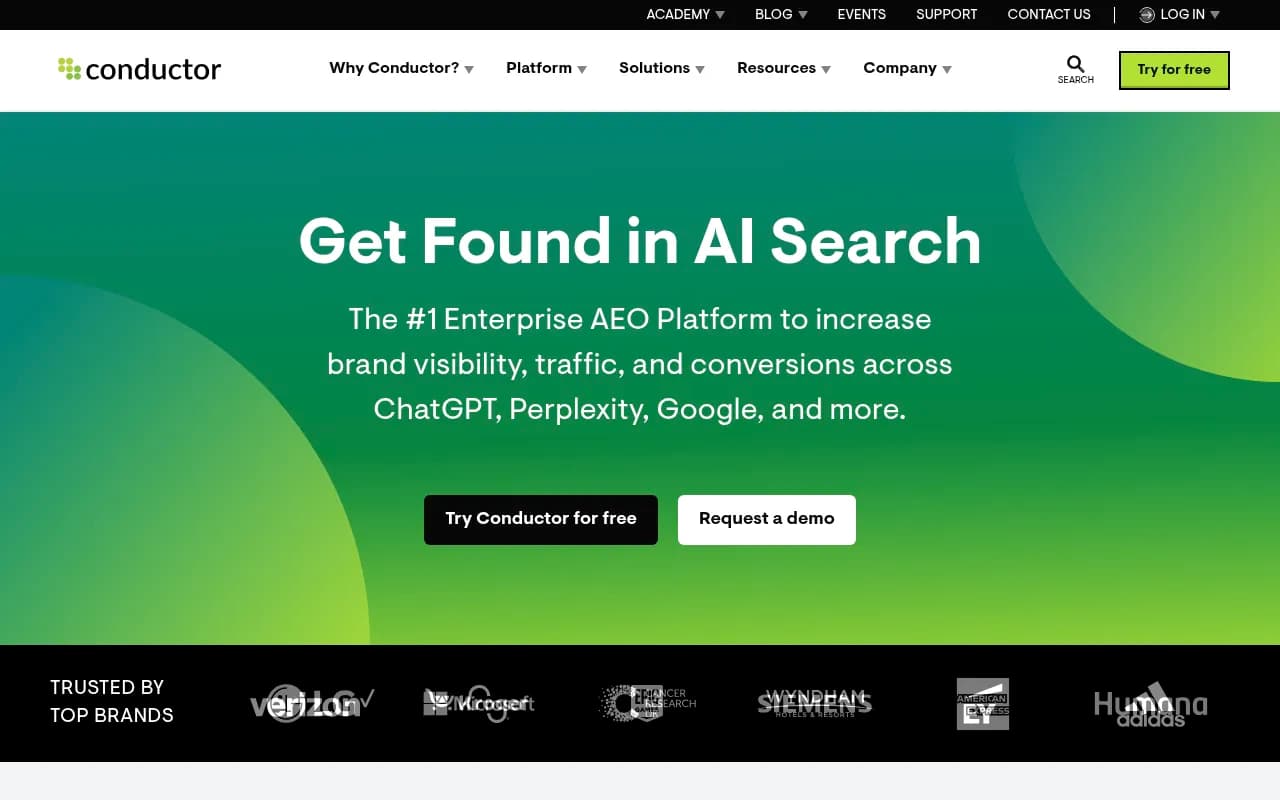
Conductor came into 2025 with an established SEO reputation and used that foundation to build one of the more credible AI visibility layers among traditional platforms. Its strength was connecting existing content workflows to AI search monitoring -- teams that already used Conductor for SEO didn't need to switch tools, they just got new AI visibility data layered on top.
The content creation side leaned on its existing content guidance features, now updated to factor in AI citation patterns. It wasn't as purpose-built for GEO as some newer entrants, but the integration with existing SEO workflows made it practical for large teams.
3. Writesonic
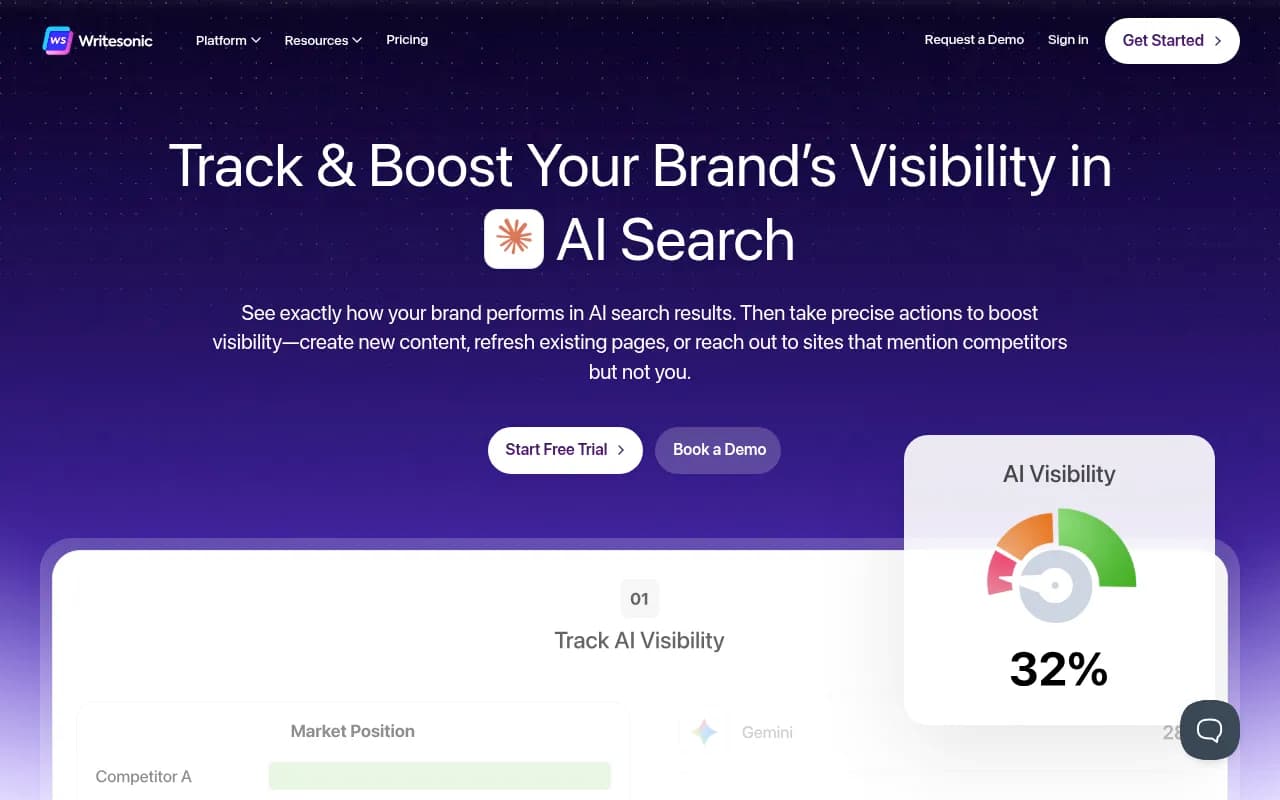
Writesonic made a notable pivot in 2025, positioning itself explicitly as an AI search visibility platform rather than just an AI writing tool. The combination of content generation and visibility tracking in one product was a genuine differentiator.
The monitoring side tracked brand mentions across AI models and surfaced which topics competitors were getting cited for. The writing side then helped produce content targeting those gaps. The integration between the two wasn't always seamless, but the ambition was right -- and for teams that needed both functions without a large budget, it was a practical option.
4. Profound
Profound built a strong reputation in 2025 for its depth of AI visibility data. Its tracking across multiple AI models was detailed, and its competitive benchmarking was among the more useful in the market.
Where it was slightly less complete was on the content creation side -- Profound was primarily a monitoring and analytics platform, with content optimization guidance rather than a built-in writing agent. That said, the quality of its visibility data made it a strong foundation for teams that had separate content workflows. It earned its place on this list because the gap analysis it surfaced was genuinely actionable.

5. Scrunch AI
Scrunch AI focused on enterprise use cases and built out solid monitoring capabilities across the major AI models. Its content optimization guidance helped teams understand what structural and topical changes would improve citation rates.
The platform was stronger on the monitoring side than the creation side, but it included enough content guidance to qualify as more than a pure tracker. For enterprise teams with dedicated content resources, Scrunch's data layer was a useful input into content strategy.
6. AthenaHQ
AthenaHQ tracked brand visibility across eight or more AI search engines and built its reputation on the breadth of its monitoring. In 2025, it added content optimization recommendations that helped teams understand which topics and formats were most likely to earn citations.
It remained primarily a monitoring platform -- the content creation features were guidance-oriented rather than generative -- but the combination of wide model coverage and actionable recommendations put it ahead of pure trackers.

7. Relixir
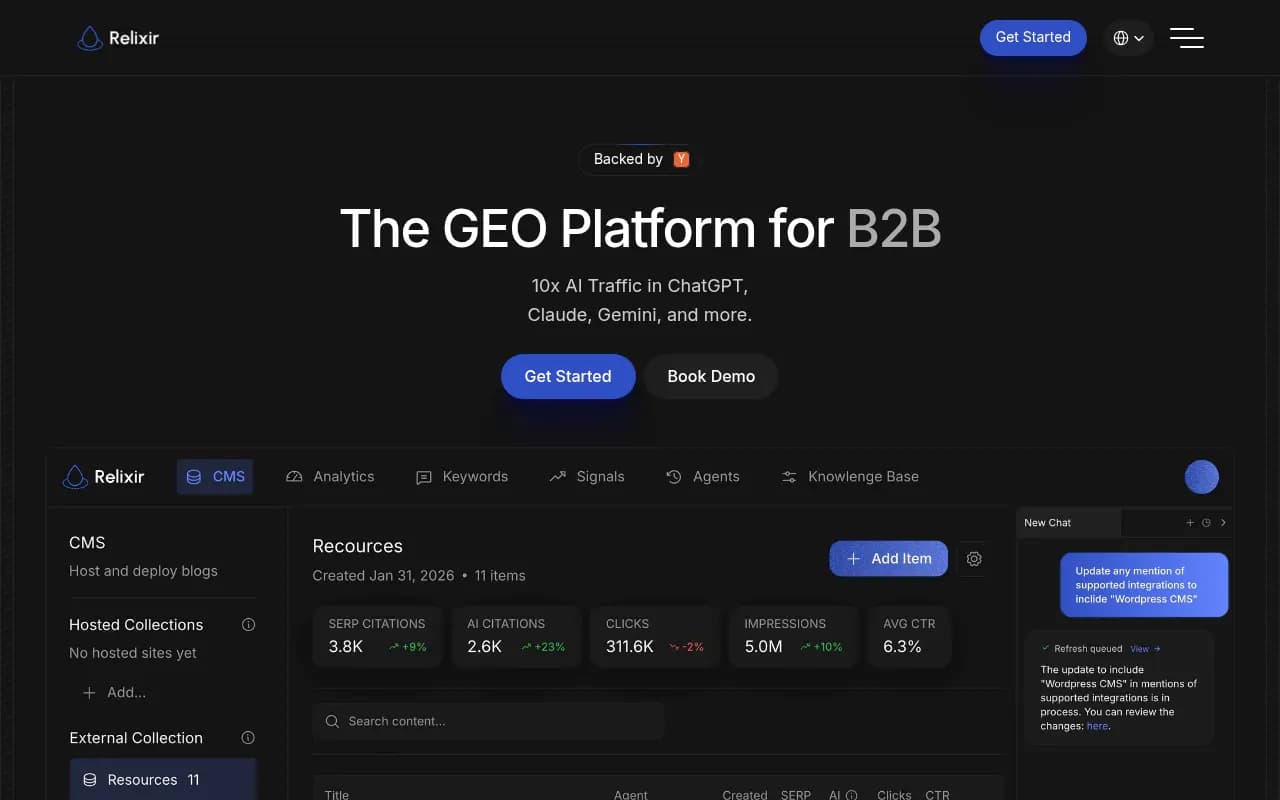
Relixir was one of the more interesting newer entrants of 2025. It positioned itself as an "AI-native CMS" for GEO, meaning content creation was built into the platform from the start rather than bolted on. The monitoring layer tracked how content performed across AI models, and the CMS side helped teams produce and iterate on content designed for AI citation.
The platform was earlier-stage than some others on this list, but the architecture -- monitoring and creation as a unified system rather than two separate tools -- was the right approach.
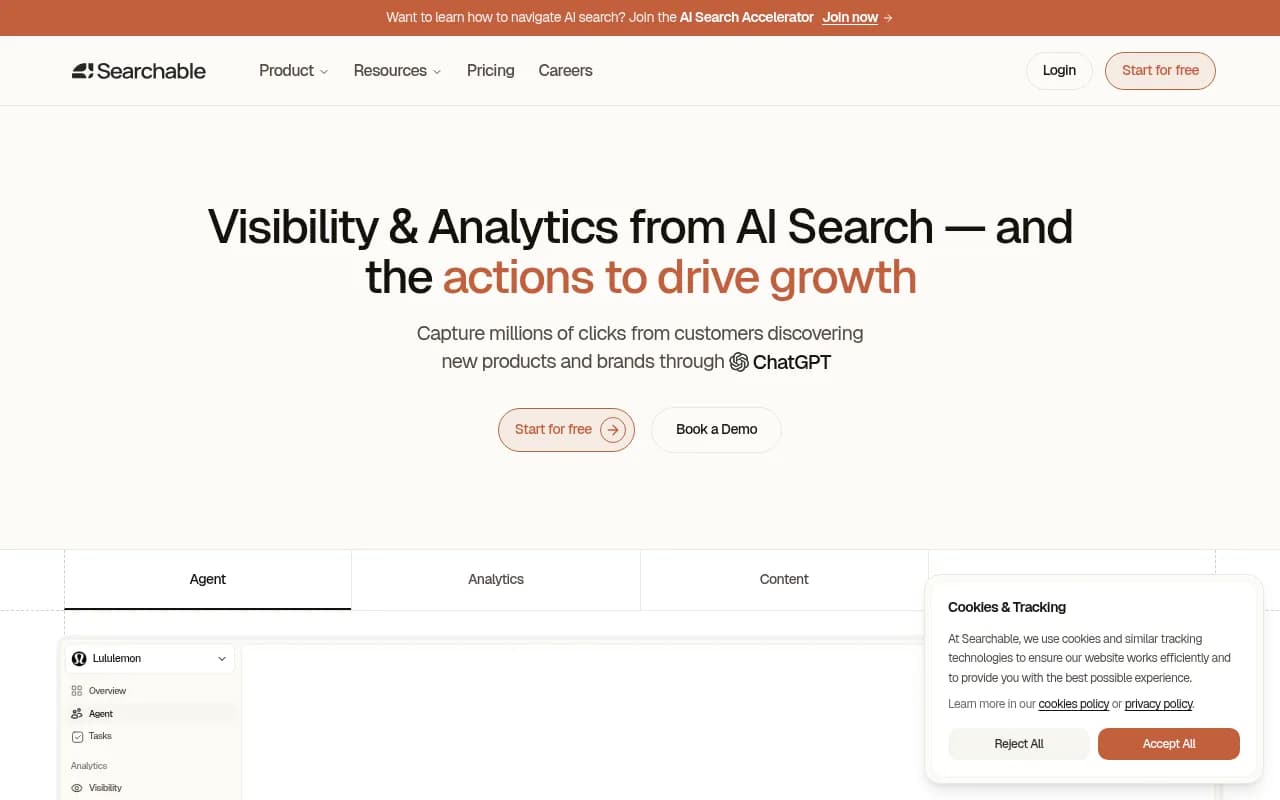
8. Searchable
Searchable combined AI search visibility monitoring with content tools aimed at helping teams improve their citation rates. It covered the major AI models and surfaced competitive gaps in a format that was relatively accessible for mid-market teams.
The content side was more optimization-focused than generative, helping teams improve existing pages rather than create net-new content from scratch. For teams with existing content libraries that needed to be updated for AI search, that was a practical fit.
9. SE Ranking
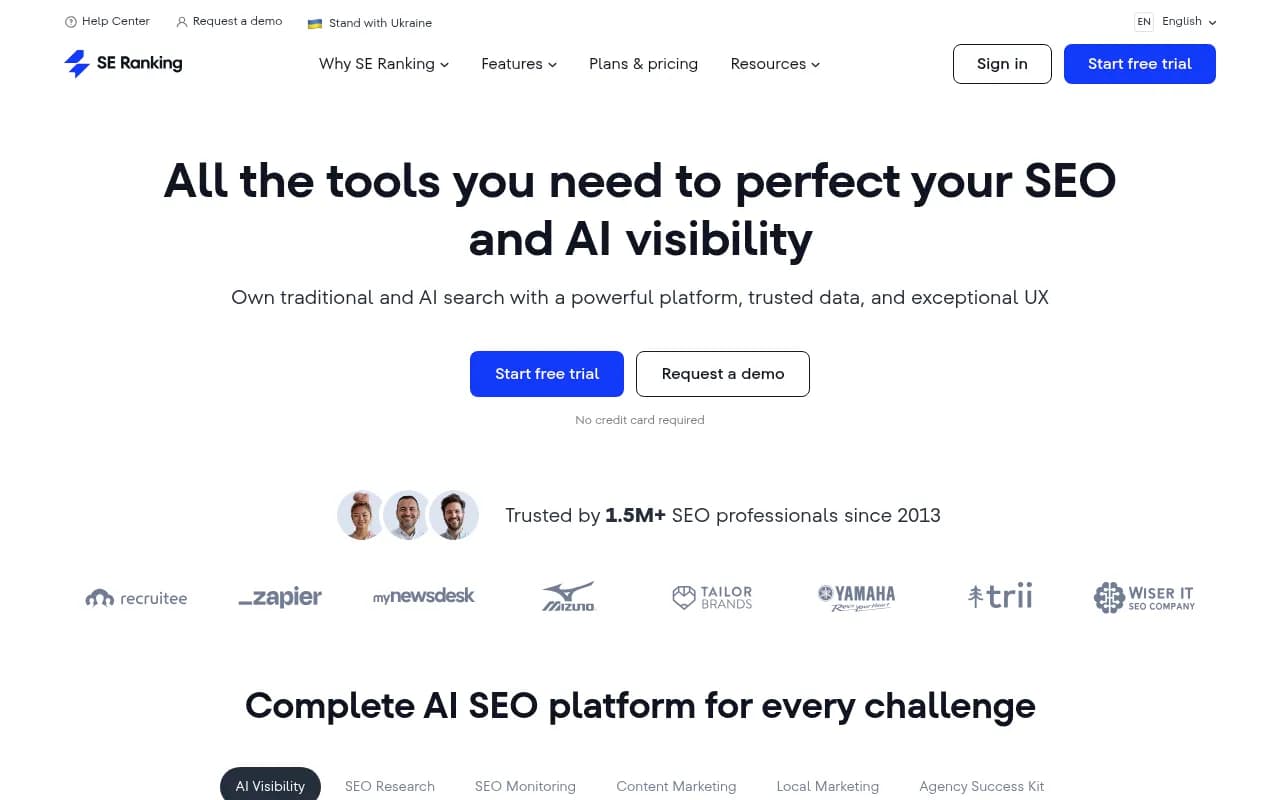
SE Ranking's AI visibility toolkit was one of the more complete additions to an existing SEO platform in 2025. The platform added AI Overview tracking and brand mention monitoring across AI models, layered on top of its established keyword research and content optimization features.
The content optimization side -- including its AI writing tools -- made it one of the few all-in-one platforms where a team could do keyword research, write content, optimize it for traditional SEO, and then track how it performed in AI search. The integration wasn't always tight, but the breadth was real.
10. Whitebox
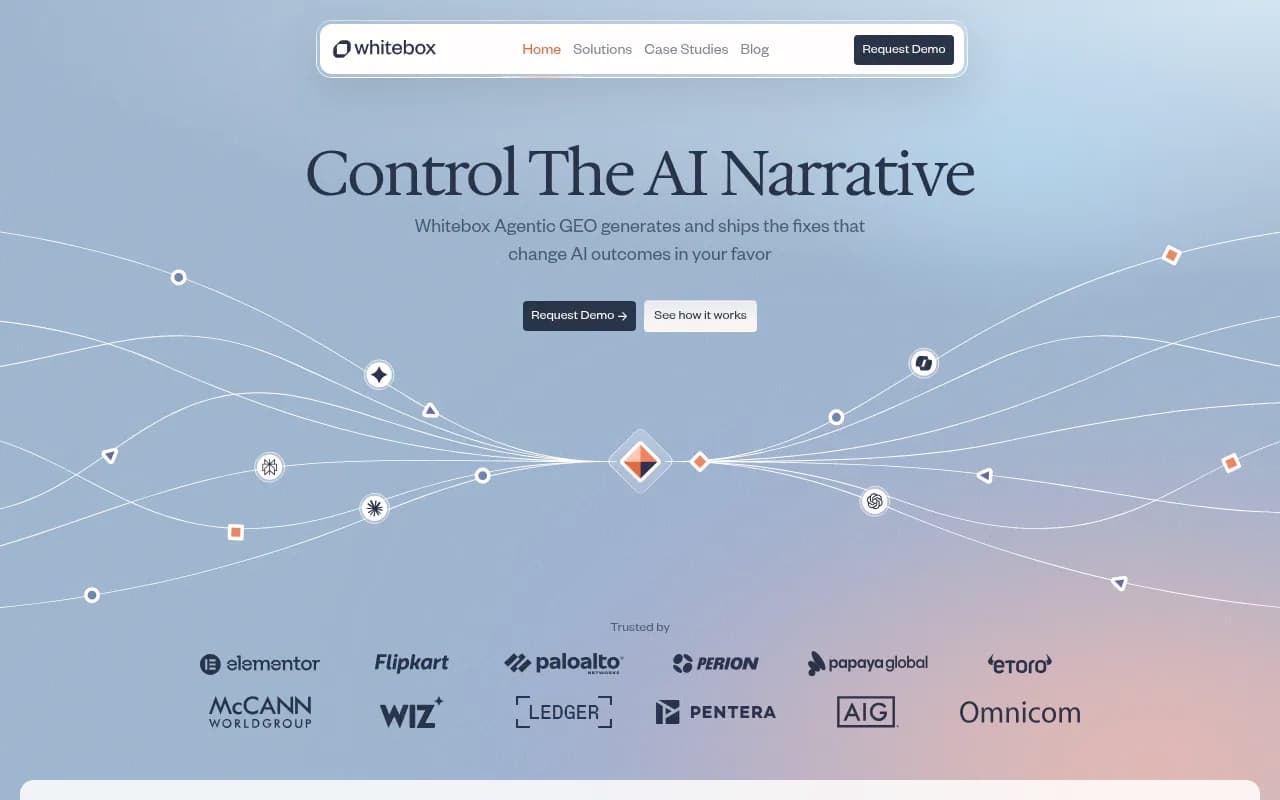
Whitebox took an agentic approach that was genuinely different from the rest of the 2025 field. Rather than showing you gaps and leaving you to fix them, it generated and shipped AI narrative fixes automatically. The monitoring layer identified where brand narratives were weak or missing in AI responses, and the agentic system produced and deployed content to address those gaps.
It was more opinionated than most platforms -- you had less manual control over the content output -- but for teams that wanted automation over configuration, it was a compelling option.
How the 2025 GEO tool landscape broke down
Looking at the year as a whole, the market sorted itself into three rough categories:
| Category | What they do | Examples | Limitation |
|---|---|---|---|
| Full-loop platforms | Monitor gaps + generate content + track results | Promptwatch, Relixir, Whitebox | Higher price point, more complex |
| Monitoring + guidance | Track visibility + recommend content changes | Profound, AthenaHQ, Scrunch AI | Content creation is manual |
| SEO platforms with AI add-ons | Traditional SEO tools with AI visibility features added | SE Ranking, Conductor, Semrush | AI features are secondary, not core |
| Pure trackers | Monitor AI visibility only | Otterly.AI, Peec AI, many others | No path from data to action |
The pure trackers weren't useless -- knowing where you're invisible is the first step. But in 2025, teams that only had a tracker found themselves with data and no clear workflow for acting on it. The platforms that combined monitoring with content creation removed that bottleneck.
What the best tools had in common
A few patterns showed up consistently in the platforms that worked well:
They tracked citations, not just mentions. There's a difference between your brand being mentioned in an AI response and being cited as a source. The better tools distinguished between these and helped teams understand which pages were actually being pulled into AI answers.
They surfaced competitor gaps specifically. Generic "you could write more about X" recommendations weren't useful. The tools that helped most showed you the exact prompts where a competitor was cited and you weren't -- with enough detail to understand why.
They connected content to results. The feedback loop mattered. Teams needed to know whether the content they created actually moved their visibility scores. Platforms that closed this loop -- showing which new pages started getting cited and by which models -- made it possible to iterate and improve.
They didn't ignore Reddit and YouTube. AI models frequently cite Reddit threads and YouTube videos in their responses. The platforms that tracked these sources gave teams a more complete picture of where to publish and what to optimize.
What to look for heading into 2026
The monitoring-only tools are going to face pressure. As the GEO market matures, "we show you where you're invisible" is no longer a sufficient value proposition -- teams want to know what to do about it.
The platforms that will matter in 2026 are the ones that can answer three questions in sequence: Where are we missing? What should we create? Did it work?
That's the loop. Tools that support all three steps will pull ahead of those that only handle one.
If you're evaluating GEO platforms now, the practical test is simple: pick a prompt where a competitor is visible and you're not, and ask the platform what you should do about it. If the answer is a dashboard, keep looking. If the answer is a specific content recommendation with a way to track the result, you've found a tool worth using.