Key takeaways
- AI search tools fall into two camps: monitoring-only dashboards and full optimization platforms. Knowing which you need saves a lot of wasted budget.
- Tracking citations across ChatGPT, Perplexity, Gemini, and Google AI Overviews requires purpose-built tools -- traditional SEO platforms only cover part of the picture.
- The most valuable tools don't just show you where you're invisible. They help you fix it with content gap analysis, AI-native writing, and crawler diagnostics.
- Pricing ranges from free tiers to enterprise contracts. Most serious teams land in the $99-$579/month range.
- The best single metric to watch is Share of Voice across AI models -- it's the new "page one ranking."
Something shifted in 2024 and accelerated through 2025: people stopped clicking. According to data from multiple sources, around 60% of searches now end without a click because AI delivers the answer directly. Websites only appear in roughly 25% of AI-generated responses, even for brands that rank well on Google.
That's a structural problem. And it's why a whole category of tools has emerged to help brands understand, track, and improve how they appear in AI-generated answers.
This guide covers the 10 tools worth your attention in 2026, what each one actually does well, where the gaps are, and how to think about choosing between them.
Why "AI search ranking" is different from traditional SEO
In traditional SEO, ranking is relatively deterministic. You optimize a page, build links, and a crawler indexes it. The result shows up in a list.
AI search doesn't work that way. When someone asks ChatGPT "what's the best project management tool for remote teams," the model synthesizes information from its training data, retrieval sources, and real-time web access (where available). It doesn't return a ranked list of URLs -- it writes a response and sometimes cites sources.
Getting cited in that response depends on:
- Whether AI crawlers have read your content
- Whether your content directly answers the question being asked
- Whether your brand has enough presence across third-party sources (Reddit, review sites, YouTube, industry publications) that the model treats you as credible
- Whether your content structure makes it easy for models to extract and attribute information
None of these factors show up in a traditional rank tracker. That's why you need a different toolkit.
The 10 best AI search ranking tools in 2026
1. Promptwatch
Promptwatch is the most complete platform in this category right now. It monitors 10 AI models (ChatGPT, Perplexity, Claude, Gemini, Google AI Overviews, Google AI Mode, Grok, DeepSeek, Copilot, and Meta AI), but what separates it from most competitors is what happens after the monitoring.
The core workflow is built around three steps: find the gaps, create content, track results. The Answer Gap Analysis shows you exactly which prompts competitors rank for in AI responses but you don't. The built-in AI writing agent then generates articles, listicles, and comparisons grounded in citation data from 880M+ analyzed citations. Then page-level tracking shows whether the new content actually gets picked up.
A few capabilities that most competitors simply don't have: real-time AI crawler logs (you can see when ChatGPT or Perplexity crawled your site, which pages they read, and any errors they hit), Reddit and YouTube source tracking (because AI models heavily cite community content), and ChatGPT Shopping carousel monitoring.
Pricing starts at $99/month for a single site. The Professional tier at $249/month adds crawler logs, multi-location tracking, and 15 AI-generated articles per month. Used by 6,700+ brands and agencies including Booking.com and Center Parcs.

2. Profound
Profound is a solid monitoring platform with a clean interface and good coverage of major AI models. It tracks brand citations, share of voice, and sentiment across AI-generated responses. The reporting is well-structured and easy to share with stakeholders.
Where it falls short is on the action side. Profound shows you the data but doesn't help you do much with it. There's no content generation, no crawler log access, and no Reddit/YouTube source analysis. For teams that already have content production workflows and just need reliable visibility data, it works well. For teams that want a single platform to track and fix their AI visibility, it's only half the solution.

3. SE Ranking
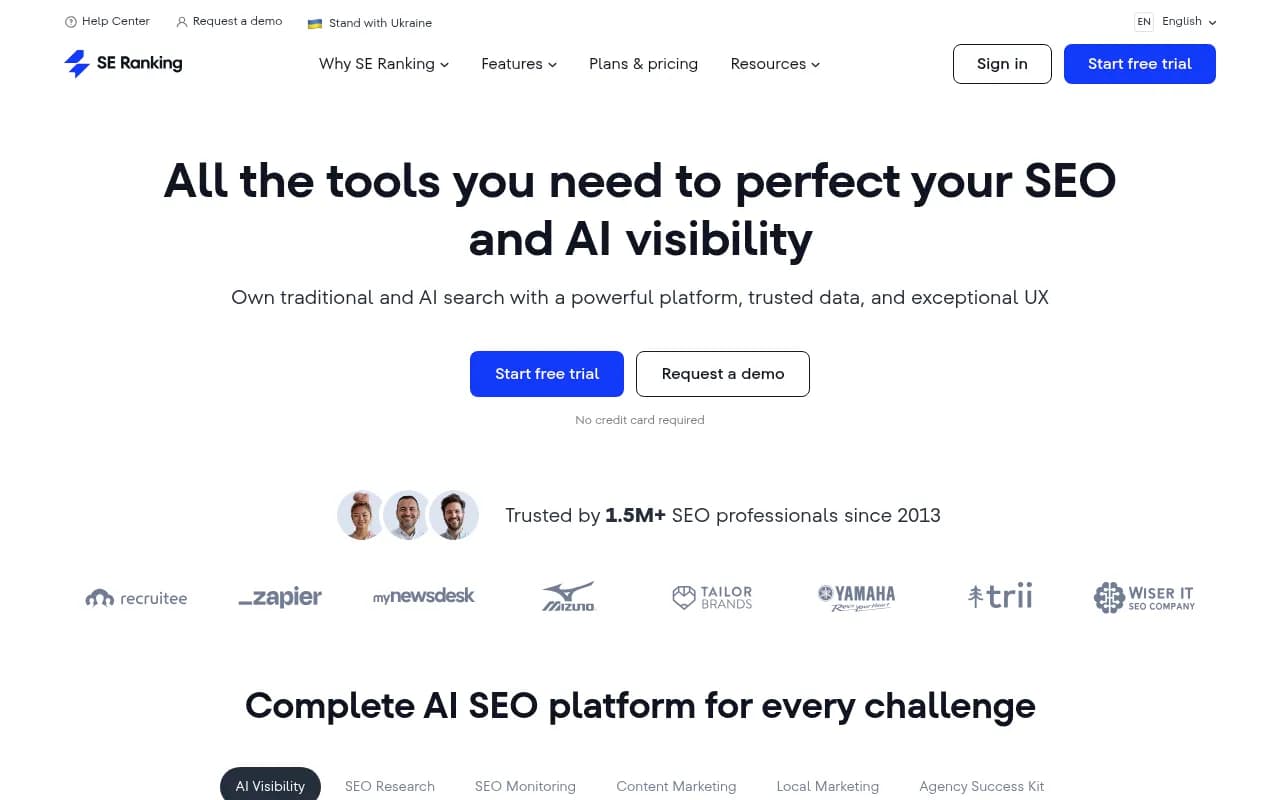
SE Ranking has been a reliable all-in-one SEO platform for years, and in 2026 it's added meaningful AI visibility features through its AI Overview tracking and brand mention monitoring. If you're already using SE Ranking for traditional SEO, the AI features are a natural extension.
The AI visibility toolkit lets you track how often your brand appears in AI-generated answers, monitor competitor mentions, and identify content gaps. It's not as deep as purpose-built GEO platforms, but the integration with keyword research, site auditing, and rank tracking makes it genuinely useful for teams that don't want to manage multiple subscriptions.
4. AthenaHQ
AthenaHQ covers 8+ AI search engines and provides solid share-of-voice data and competitor benchmarking. The interface is clean and the prompt management is flexible -- you can set up custom prompts that match how your actual customers search.
Like Profound, it's primarily a monitoring tool. The gap analysis is useful for identifying where you're missing, but there's no built-in path to fix those gaps. Teams using AthenaHQ typically pair it with a separate content production tool, which adds friction and cost.

5. Otterly.AI
Otterly.AI is one of the more accessible entry points into AI visibility monitoring. It tracks brand mentions and URL citations across ChatGPT, Google AI Overviews, and Perplexity, with a simple dashboard that's easy to get started with.
The pricing is competitive, which makes it a reasonable choice for smaller teams or individuals who want basic visibility data without a large commitment. The trade-off is depth -- there's no crawler log access, no content generation, and limited prompt intelligence. It's a good starting point, not a long-term solution for serious GEO work.

6. Scrunch AI
Scrunch AI focuses on AI search visibility monitoring with dashboards that show how your brand appears across major AI platforms. It's particularly useful for understanding sentiment alongside citation frequency -- not just whether you're mentioned, but how you're described.
The platform has improved its competitor benchmarking features significantly in 2025-2026. You can now run side-by-side comparisons of how your brand and competitors appear in response to the same prompts, which is useful for identifying specific content angles where you're losing ground.
7. LLMrefs
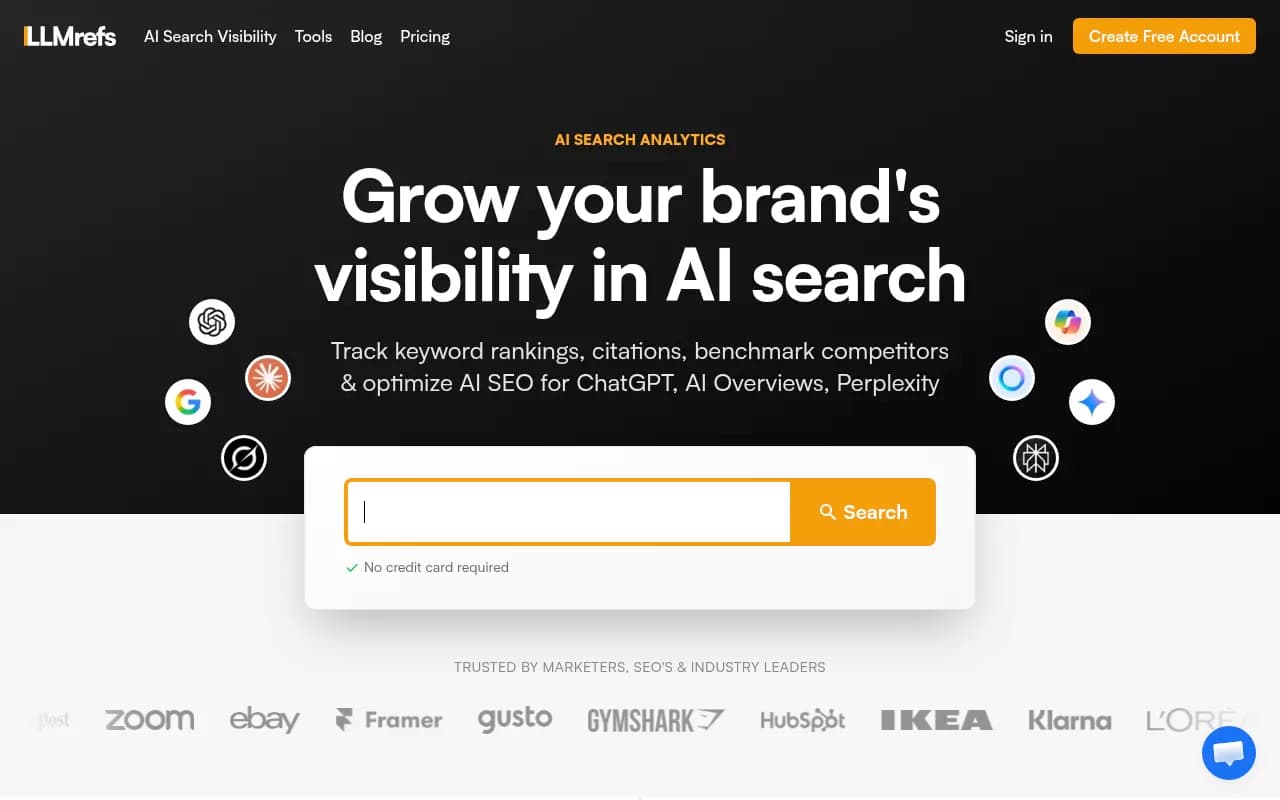
LLMrefs takes an interesting approach: instead of requiring you to manually define prompts, it builds conversational queries around the keywords you already track. This makes onboarding faster and keeps the prompt set grounded in real search behavior rather than guesswork.
The share-of-voice and citation count metrics are well-implemented, and the platform covers ChatGPT, Google AI Overviews, Perplexity, and Gemini. It's a good fit for SEO teams that want to extend their existing keyword workflows into AI search without starting from scratch.
8. Peec AI
Peec AI is worth mentioning specifically for multi-language and multi-region use cases. If you're running campaigns in markets where English isn't the primary language, Peec AI's localization capabilities are genuinely useful -- it can monitor AI responses in multiple languages and regions, which most competitors handle poorly.
The core monitoring features are solid. The limitations are similar to other monitoring-focused tools: no content generation, no crawler logs, and limited prompt intelligence. But for international teams, the language coverage alone can justify the subscription.

9. BrightEdge
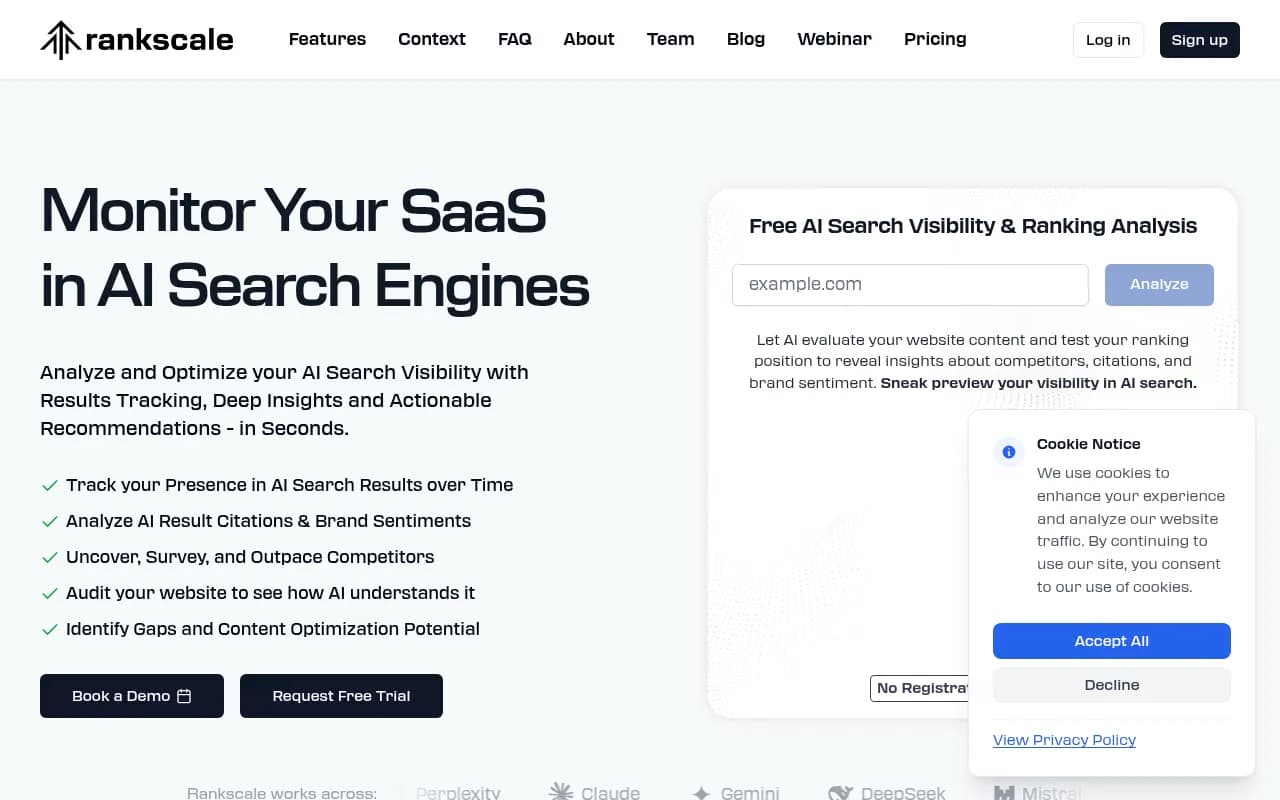
BrightEdge is the enterprise option in this list. It's been an SEO platform for large organizations for over a decade, and its AI Catalyst product extends that into AI search visibility tracking with deep integration into existing enterprise workflows.
The strength here is scale and integration -- BrightEdge connects to existing content management systems, analytics platforms, and reporting tools in ways that smaller GEO-specific tools don't. The trade-off is cost and complexity. It's not the right choice for a startup or mid-market team, but for enterprise marketing departments that need AI visibility data to flow into existing BI infrastructure, it's a serious option.
10. Rankscale
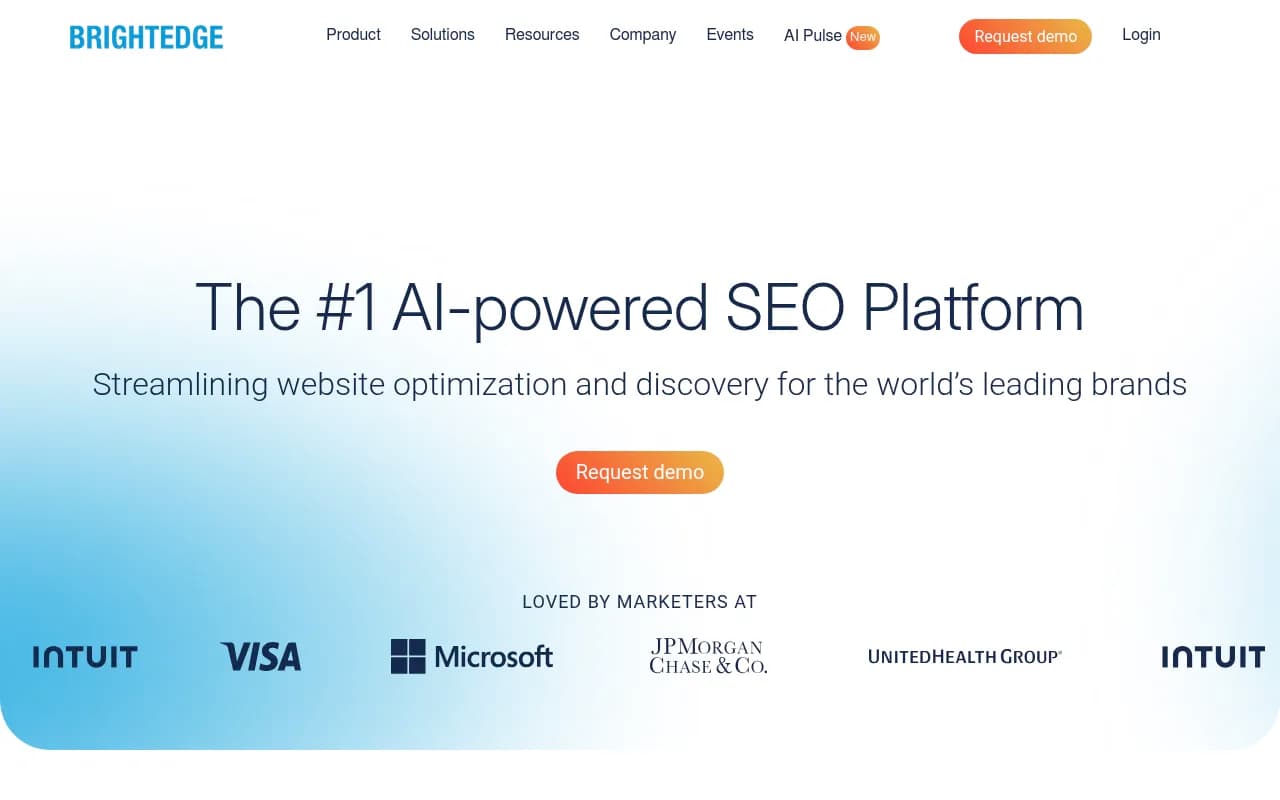
Rankscale is a focused AI search ranking and visibility platform that tracks how brands appear across major LLMs. It's particularly strong on the ranking and position data side -- if you want to understand not just whether you're cited but where in the response you appear (first mention vs. buried in a list), Rankscale gives you that granularity.
It's a newer platform that's been iterating quickly. The feature set is still maturing compared to more established players, but for teams that care specifically about position and prominence within AI responses, it's worth evaluating.
How these tools compare
Here's a side-by-side view of the key capabilities across the 10 tools:
| Tool | AI models tracked | Content generation | Crawler logs | Reddit/YouTube tracking | Prompt intelligence | Starting price |
|---|---|---|---|---|---|---|
| Promptwatch | 10 | Yes (AI writing agent) | Yes | Yes | Yes (volume + difficulty) | $99/mo |
| Profound | 5+ | No | No | No | Limited | Custom |
| SE Ranking | 3-4 | No | No | No | Basic | ~$65/mo |
| AthenaHQ | 8+ | No | No | No | Basic | Custom |
| Otterly.AI | 3-4 | No | No | No | No | ~$49/mo |
| Scrunch AI | 5+ | No | No | No | Basic | Custom |
| LLMrefs | 4 | No | No | No | Basic | Freemium |
| Peec AI | 4-5 | No | No | No | No | ~$79/mo |
| BrightEdge | 4+ | Limited | No | No | Basic | Enterprise |
| Rankscale | 4-5 | No | No | No | Basic | ~$99/mo |
The pattern is clear: most tools stop at monitoring. Promptwatch is the only platform in this list that covers the full loop from gap identification through content creation to traffic attribution.
How to choose the right tool for your situation
The right answer depends on what problem you're actually trying to solve.
If you just want to know where you stand: Any of the monitoring tools will give you a baseline. Otterly.AI or LLMrefs are the lowest-friction starting points. Run a 30-day trial, see how often you're cited, and compare yourself to two or three competitors.
If you want to actually improve your AI visibility: You need a platform that goes beyond monitoring. The gap between knowing you're invisible and knowing what to do about it is where most teams get stuck. Promptwatch's Answer Gap Analysis and built-in content generation are specifically designed to close that gap.
If you're an enterprise with existing SEO infrastructure: BrightEdge or SE Ranking are worth evaluating because they integrate with workflows you already have. The AI visibility features may be less deep, but the integration value is real.
If you operate in multiple languages: Peec AI's multi-language support is genuinely differentiated. Most platforms treat non-English markets as an afterthought.
If you're an agency managing multiple clients: Look at platforms with multi-site support and white-label reporting. Promptwatch's agency and enterprise tiers are built for this. SE Ranking also has strong agency features.
What to actually measure
One mistake teams make when starting with AI visibility tools is tracking too many metrics at once. Here's what actually matters:
Share of Voice (SoV) is the primary metric. It tells you what percentage of AI responses in your category mention your brand vs. competitors. This is the new "page one ranking."
Citation count and citation rate tell you how often specific pages on your site are being referenced. A high SoV with low citation rate means you're mentioned but not sourced -- which is fine for brand awareness but less useful for driving traffic.
Prompt coverage tells you how many of the relevant questions in your category you're appearing in. A brand might have high SoV for a narrow set of prompts but be completely absent from adjacent questions where customers are also making decisions.
AI crawler activity tells you whether AI models are actually reading your content. If Perplexity hasn't crawled your key pages in 60 days, your visibility data is stale and your content changes won't be reflected in responses yet.
Traffic attribution closes the loop. AI visibility that doesn't connect to actual sessions and revenue is just a vanity metric. Tools that integrate with Google Search Console or offer server log analysis let you tie AI citations to real business outcomes.
The content side of the equation
Tracking is only useful if you act on what you find. Most teams discover they have significant prompt coverage gaps -- prompts where competitors are cited but they're not -- and then face the question of what to do about it.
The answer is almost always content. AI models cite sources that directly answer the question being asked. If a competitor is cited for "best CRM for small nonprofits" and you're not, it's usually because they have a page that specifically addresses that question and you don't.
Creating that content isn't just about writing an article. It needs to be structured so AI models can extract and attribute the relevant information, grounded in the specific angle the prompt is asking about, and published somewhere AI crawlers will find it.
This is where platforms with built-in content generation -- like Promptwatch's AI writing agent -- have a real advantage. The agent generates articles based on actual citation data and prompt volumes, not generic SEO templates. The difference in output quality is significant.
For teams that prefer to write content themselves, the gap analysis data from any of the monitoring tools in this list can still guide your editorial calendar. The key is treating AI prompt coverage the same way you'd treat keyword coverage in traditional SEO: systematically, with prioritization based on volume and competition.
A note on the pace of change
This category is moving fast. Several tools on this list didn't exist 18 months ago. Capabilities that were "enterprise only" in early 2025 are now available at $99/month. New AI models keep launching, and each one is a new channel to monitor and optimize for.
The practical implication: don't over-invest in a platform before you understand your baseline. Start with a monitoring tool, run it for 60-90 days, understand where your gaps are, then decide whether you need a more complete optimization platform. The data you collect in that initial period will make the upgrade decision obvious.
The brands that are winning in AI search right now aren't necessarily the ones with the biggest budgets. They're the ones that started tracking early, understood what the data was telling them, and created content that directly answered the questions their customers were asking AI models. That's a repeatable process, and the tools in this guide make it accessible.