Key takeaways
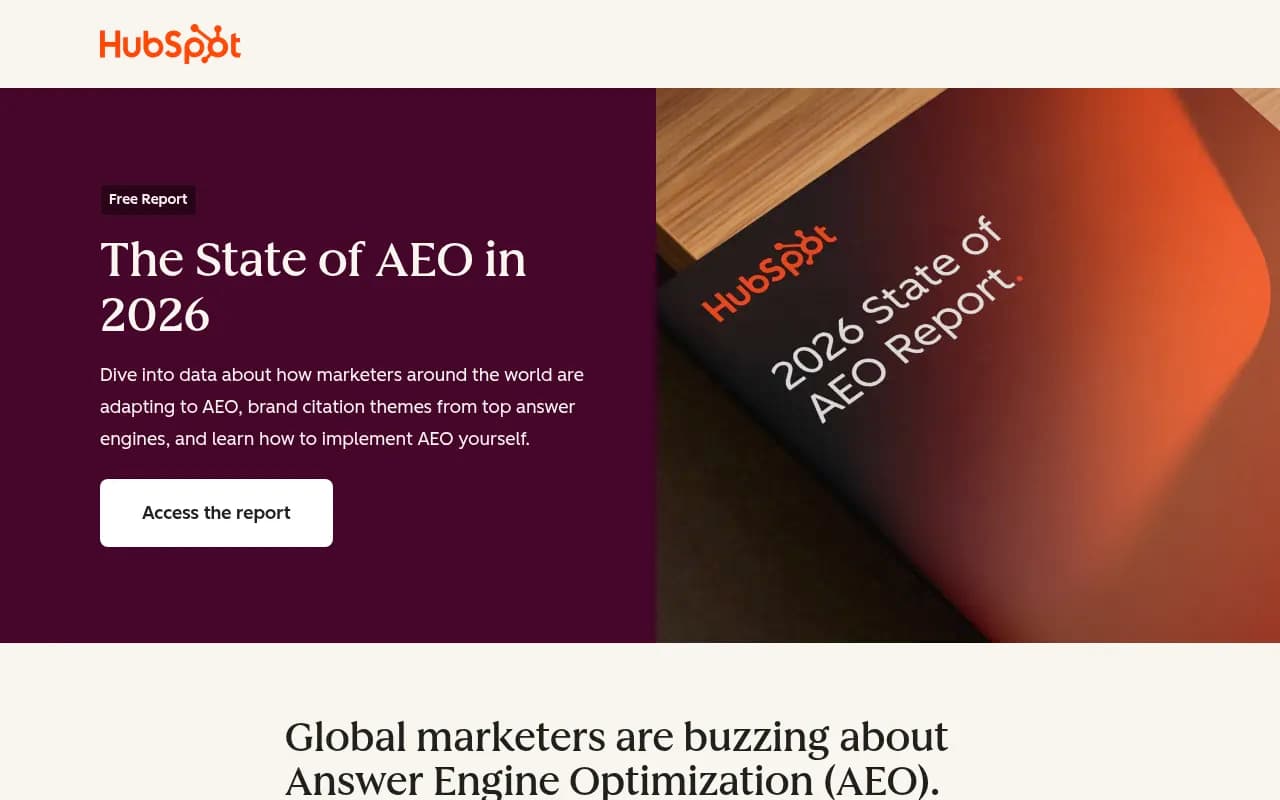
- More than half of marketers (58%) say their businesses are already optimizing content for answer engines, according to HubSpot's State of AEO report based on 4,000+ global marketers.
- ChatGPT now handles over 2 billion queries daily, and AI-referred sessions to websites grew 527% year-over-year through mid-2025 -- the traffic opportunity is real.
- Most brands treat AEO as a monitoring exercise. The ones seeing results (HubSpot reported a 433% brand citation improvement) are treating it as a content strategy.
- The biggest mistakes aren't technical. They're structural: thin content, no clear entity signals, and ignoring the prompts that actually drive purchase decisions.
- AEO and GEO (Generative Engine Optimization) are increasingly used interchangeably, but the distinction matters -- and understanding it changes how you prioritize.
Where AEO actually stands in 2026
A year ago, most marketing teams were still debating whether AI search was worth paying attention to. That debate is largely over.
HubSpot's State of AEO report, which surveyed more than 4,000 marketers globally, found that 58% say their businesses are already optimizing content for answer engines. That's a majority. And 44% of those same marketers have personally made a purchase based on a brand they discovered through an answer engine. This isn't a niche behavior anymore.
The numbers behind AI search growth are hard to ignore. ChatGPT alone processes over 2 billion queries per day. AI-referred sessions to websites grew 527% year-over-year through mid-2025. Google's AI Overviews now appear in a significant share of searches, and Perplexity has carved out a loyal user base among researchers and professionals.
But here's the tension: traffic is complicated. Zero-click searches are rising. AI Overviews answer questions without sending users anywhere. Reddit threads on r/digital_marketing are full of marketers watching organic traffic decline while their brand visibility in AI responses quietly grows. The metric that matters is shifting from "clicks" to "citations" -- and most analytics setups aren't built to track that yet.
AEO vs. GEO: why the distinction matters
These terms get used interchangeably, and that's causing real confusion in how teams prioritize their work.
Answer Engine Optimization (AEO) is specifically about formatting content so AI search features -- Google AI Overviews, Perplexity, Bing Copilot, ChatGPT -- select it as a cited source. It's about getting your content pulled into an AI-generated answer.
Generative Engine Optimization (GEO) is broader. It covers everything you do to influence how generative AI models represent your brand, including in conversational contexts where someone isn't explicitly "searching" but asking for recommendations, comparisons, or advice.
In practice, the tactics overlap heavily. But the distinction matters because AEO tends to focus on structured, factual content that answers specific questions, while GEO also involves things like entity building, brand narrative consistency across the web, and showing up in the sources AI models train on and cite repeatedly.
If you're a B2B company, you probably care more about GEO -- you want ChatGPT to recommend your software when someone asks "what's the best tool for X." If you're a publisher or content site, AEO is your immediate priority -- you want your articles cited in AI Overviews and Perplexity answers.
Most brands need both. But knowing which one to lead with changes where you spend your time.
What's actually working: the tactics with evidence behind them
Structured, direct answers to specific questions
AI engines don't cite content because it's comprehensive. They cite it because it's clear. The pattern that shows up consistently across citation studies is simple: content that directly answers a specific question, near the top of the page, in plain language, gets cited more often.
This means leading with the answer, not building up to it. FAQ sections work well not because of the format itself, but because the format forces you to state a question and then answer it immediately. That's the behavior AI models reward.
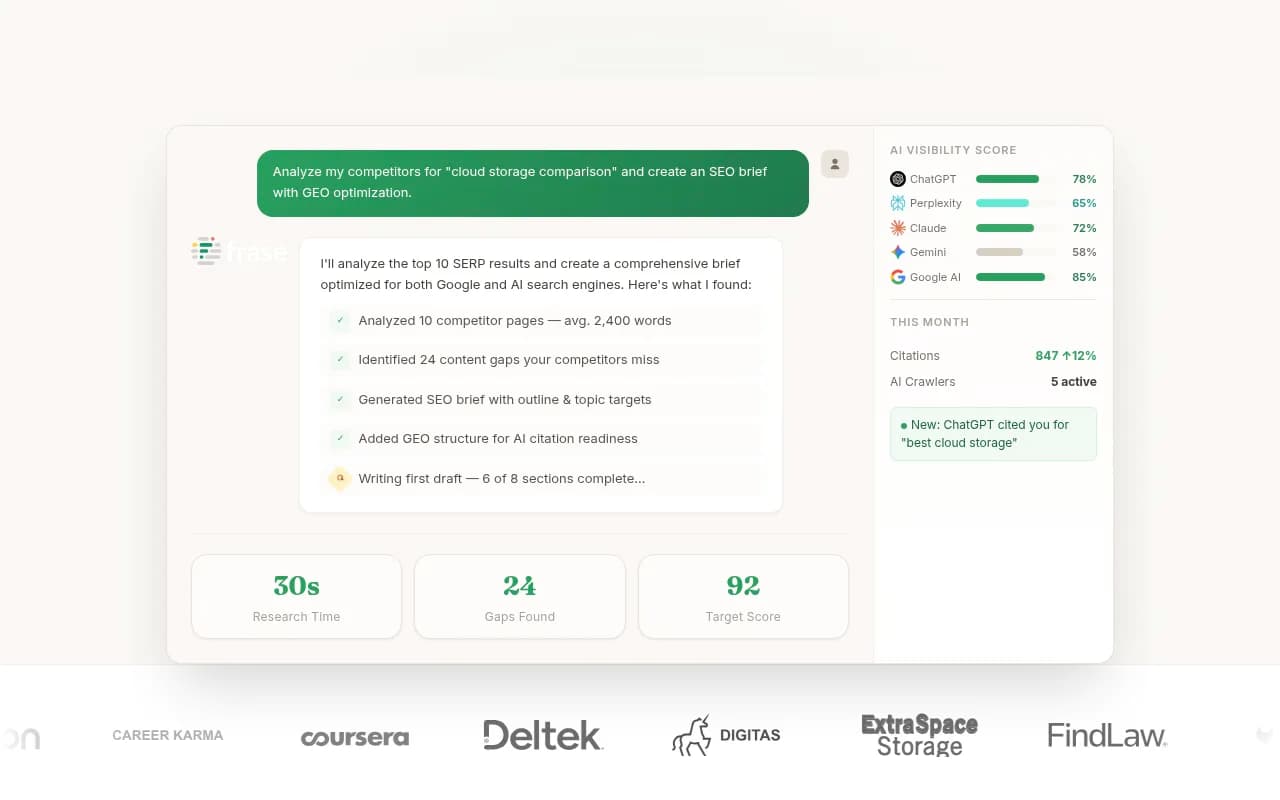
Frase's AEO guide puts it plainly: AI platforms "synthesize answers from multiple sources, cite the most authoritative content." The word "authoritative" here doesn't mean domain authority in the traditional SEO sense. It means the content that most directly and confidently answers the question.
Entity clarity and brand consistency
AI models build a picture of your brand from everything they've seen about you across the web. If your About page, your LinkedIn, your press mentions, and your third-party reviews all describe you differently, the model's internal representation of your brand is fuzzy. Fuzzy brands don't get cited with confidence.
This is one of the most underrated factors in AEO. Getting your entity signals right -- consistent name, clear description of what you do, accurate categorization, structured data where relevant -- has an outsized effect on citation rates. It's less glamorous than writing new content, but it's often the first thing to fix.
Topical depth over breadth
AI models favor sources that demonstrate genuine expertise on a topic. A site with 50 shallow articles about project management software will lose to a site with 10 deeply researched ones. The concept of topical authority, which SEOs have talked about for years, turns out to be even more important for AI citation than it was for traditional rankings.
The practical implication: pick fewer topics and go deeper. Cover the angles, the comparisons, the edge cases, the "but what about..." questions. That depth is what makes AI models trust your content as a reliable source.
Prompt-first content strategy
Most brands write content and then hope it gets cited. The brands seeing real results are doing the reverse: they're identifying the specific prompts their target customers are typing into ChatGPT, Perplexity, and Google AI Mode, and then building content to answer those prompts.
This requires knowing what prompts exist in your category, how often they're asked, and which ones you're currently invisible for. That's where tools like Promptwatch come in -- the Answer Gap Analysis feature shows exactly which prompts competitors are being cited for that you're not, so you can prioritize content creation around real gaps rather than guessing.

Where brands are still getting it wrong
Treating AEO as a monitoring exercise
This is the most common mistake, and it's expensive. A lot of teams have set up dashboards to track whether their brand appears in AI responses. That's useful data. But watching your visibility score without doing anything about it is like checking your search rankings every day without publishing new content.
The brands that are pulling ahead -- HubSpot's 433% citation improvement is the most cited example -- are using their visibility data to drive content decisions. They find the gaps, create content specifically designed to fill those gaps, and then track whether it worked. Monitoring is step one of a three-step loop, not the whole strategy.
Ignoring the prompts that drive purchase decisions
There's a natural tendency to optimize for informational queries because they're easier to rank for and easier to measure. But the prompts that actually matter for revenue are the ones where someone is evaluating options: "what's the best [category] for [use case]," "compare [your brand] vs [competitor]," "is [your brand] worth it."
These are the prompts where AI citations translate directly into consideration and purchase. HubSpot's research found that 44% of marketers have made a purchase based on a brand discovered through an answer engine. Those purchases didn't come from informational queries. They came from recommendation and comparison prompts.
If your AEO strategy is built entirely around "what is X" and "how to do Y" content, you're optimizing for visibility without optimizing for revenue.
Thin content dressed up with structure
Adding FAQ sections and schema markup to thin content doesn't work. AI models are good at detecting whether content actually answers a question or just gestures at it. A 200-word FAQ answer that doesn't go deep enough to be genuinely useful won't get cited, regardless of how it's formatted.
The structural signals (headers, Q&A format, schema) help AI models parse your content. But the content itself still has to be substantively good. Structure amplifies quality; it doesn't replace it.
Neglecting non-web sources
AI models don't just cite websites. They cite Reddit threads, YouTube videos, academic papers, and news articles. If your brand has no presence in the places AI models actually pull from -- if there are no genuine discussions of your product on Reddit, no reviews on third-party sites, no mentions in industry publications -- you're invisible in a significant portion of AI-generated responses.
This is why a pure on-site content strategy isn't enough. You need a presence in the broader ecosystem that AI models draw from. That means earning mentions, encouraging genuine reviews, and being part of real conversations in your category.
Not tracking AI traffic at all
Most Google Analytics setups don't properly attribute traffic from AI sources. Sessions from ChatGPT, Perplexity, and other AI tools often show up as direct traffic or get misclassified. If you can't see AI-referred traffic in your analytics, you can't measure whether your AEO efforts are working, and you can't make the case internally for continued investment.
Fixing this requires either a tracking code snippet, server log analysis, or a GSC integration that can separate AI-referred sessions from other direct traffic. It's a setup cost worth paying early.
The B2B vs. B2C divide
HubSpot's research includes B2B vs. B2C breakdowns, and the differences are meaningful.
B2B buyers are using AI engines for research-heavy, high-consideration decisions. They're asking about software categories, vendor comparisons, implementation complexity, and ROI. The purchase cycle is long, and AI citations in the early research phase can shape the consideration set before a buyer ever visits a vendor's website.
B2C behavior is more varied. AI engines are influencing product discovery and recommendations, but the path from AI citation to purchase is often shorter and less linear. ChatGPT's shopping features and Perplexity's product cards are increasingly relevant for B2C brands.
The implication for strategy: B2B brands should prioritize depth and authority on category-level topics, while B2C brands need to think more about product-level content and showing up in recommendation prompts.
The tools worth knowing about
The AEO tool landscape has grown fast. Here's a practical breakdown of what different tools are actually for:
| Tool | Primary use | Best for |
|---|---|---|
| Promptwatch | Full-cycle: gap analysis, content generation, tracking | Teams that want to act, not just monitor |
| Frase | Content research and optimization | Writers building AEO-focused content |
| Profound | AI visibility tracking across LLMs | Brands monitoring multi-platform presence |
| AthenaHQ | Brand monitoring across 8+ AI engines | Visibility dashboards and reporting |
| Otterly.AI | Affordable AI visibility monitoring | Smaller teams and agencies |
| Peec AI | Multi-language AI visibility tracking | International brands |
| SE Ranking | All-in-one SEO + AI visibility | Teams consolidating tools |
| Semrush | Traditional SEO + some AI features | Teams already in the Semrush ecosystem |




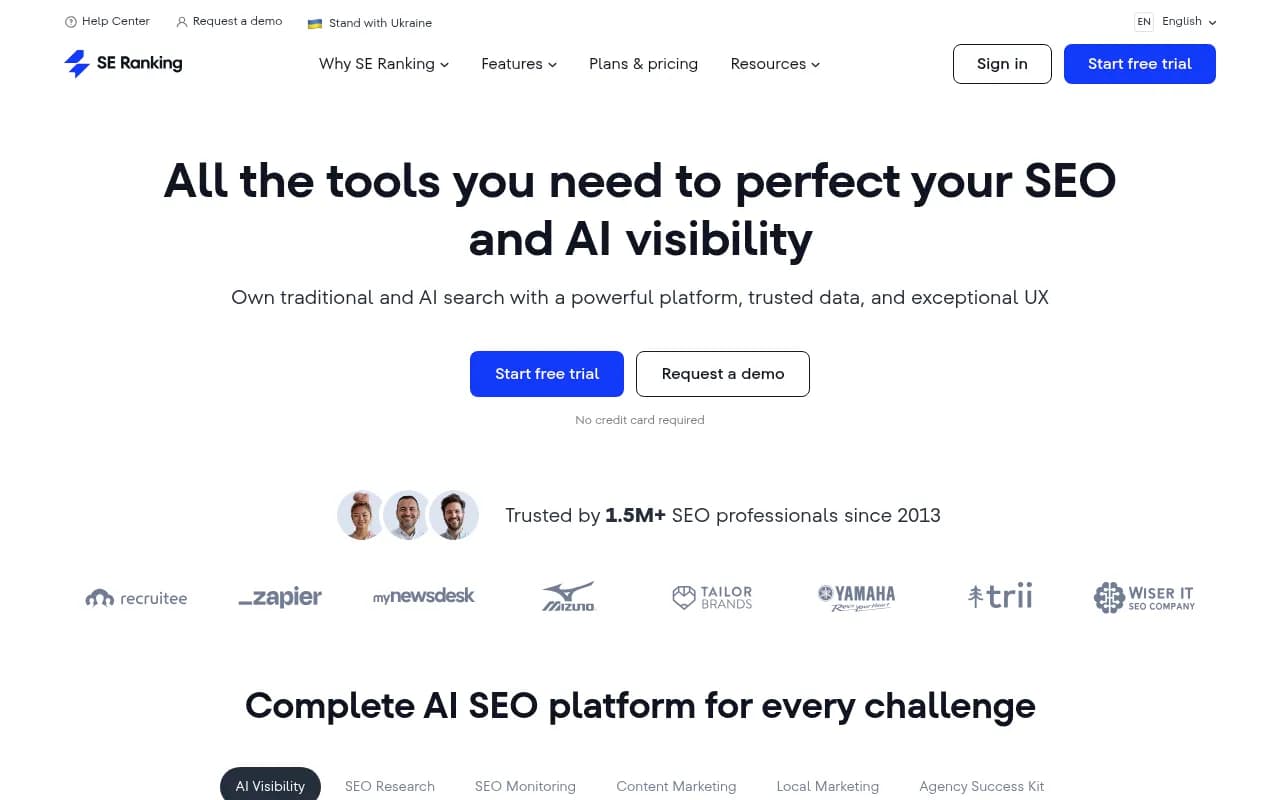
The honest assessment: most of these tools are monitoring dashboards. They show you where you're visible and where you're not. That's valuable, but it's not a strategy. The gap between "I can see I'm invisible for this prompt" and "I know what content to create and I've created it" is where most teams get stuck.
What the next 12 months look like
A few things are becoming clearer about where AEO is heading.
Agentic AI is changing the stakes. AI agents that browse the web, make bookings, and complete tasks on behalf of users are already in early deployment. When an AI agent is choosing which vendor to contact or which product to buy, the brand that gets cited in its reasoning process wins the transaction. AEO stops being about visibility and starts being about revenue in a very direct way.
Prompt volumes are growing but concentrating. More people are using AI search, but the prompts that drive real decisions are clustering around a smaller set of high-value queries. Knowing which prompts matter in your category -- and having content that answers them well -- is becoming a genuine competitive advantage.
Zero-click is real but overstated. Yes, AI Overviews answer questions without sending traffic. But the brands being cited in those answers are building awareness and trust even without the click. The value of a citation isn't always a session; sometimes it's being the brand that gets mentioned when someone is deciding what to buy.
The brands that will look back on 2026 as the year they got ahead are the ones treating AEO as a content strategy, not a reporting exercise. The data is there. The tools are there. The gap is in execution.