Key takeaways
- Radarkit, Ranksmith, and Airefs are all mid-tier AI visibility trackers aimed at growing teams that can't justify enterprise pricing but need more than a free tool
- All three cover the basics: multi-model monitoring, brand mention tracking, and some form of competitive comparison
- Ranksmith leans hardest into actionable insights and content recommendations; Radarkit focuses on clean dashboards and prompt tracking; Airefs competes mainly on price
- None of the three match the full action loop of a platform like Promptwatch, which adds crawler logs, content generation, and traffic attribution on top of monitoring
- The right choice depends on your team size, budget, and whether you need to just track visibility or actually improve it
Why this comparison matters right now
AI search is no longer a niche concern. ChatGPT crossed 900 million weekly active users in early 2026, according to Search Engine Land. Google AI Overviews now appear across a significant share of high-intent queries. Perplexity has carved out the research segment. Between them, these surfaces represent a demand layer that traditional SEO tools weren't built to see.
Growing marketing teams face a specific problem: enterprise platforms like Evertune or BrightEdge are priced for Fortune 500 budgets, but basic free tools don't give you enough data to make decisions. The mid-tier is where most teams actually land -- tools that cost somewhere between $50 and $300 a month, cover the major AI models, and give you enough to work with.
Radarkit, Ranksmith, and Airefs all sit in this bracket. They're genuinely different products, though, and picking the wrong one wastes months of setup time and budget. This guide breaks down what each one actually does, where each one falls short, and which type of team should use which.
What to expect from a mid-tier AI visibility tracker
Before getting into the tools, it's worth being clear about what "mid-tier" means in practice. These platforms generally offer:
- Prompt tracking across 4-8 AI models (ChatGPT, Perplexity, Google AI Overviews, Claude, Gemini at minimum)
- Brand mention rate and citation share metrics
- Competitive benchmarking against a handful of rivals
- Some form of historical trend data
- Basic reporting or dashboard exports
What they typically don't offer (and where enterprise platforms separate themselves):
- Real-time AI crawler logs showing which pages AI agents are actually reading
- Content gap analysis tied to specific prompts
- AI-native content generation to close those gaps
- Traffic attribution connecting AI citations to actual revenue
- Reddit and YouTube citation tracking
That last list is worth keeping in mind as you read. The question isn't just "does this tool track my brand?" -- it's "does this tool help me do anything about what it finds?"
Radarkit
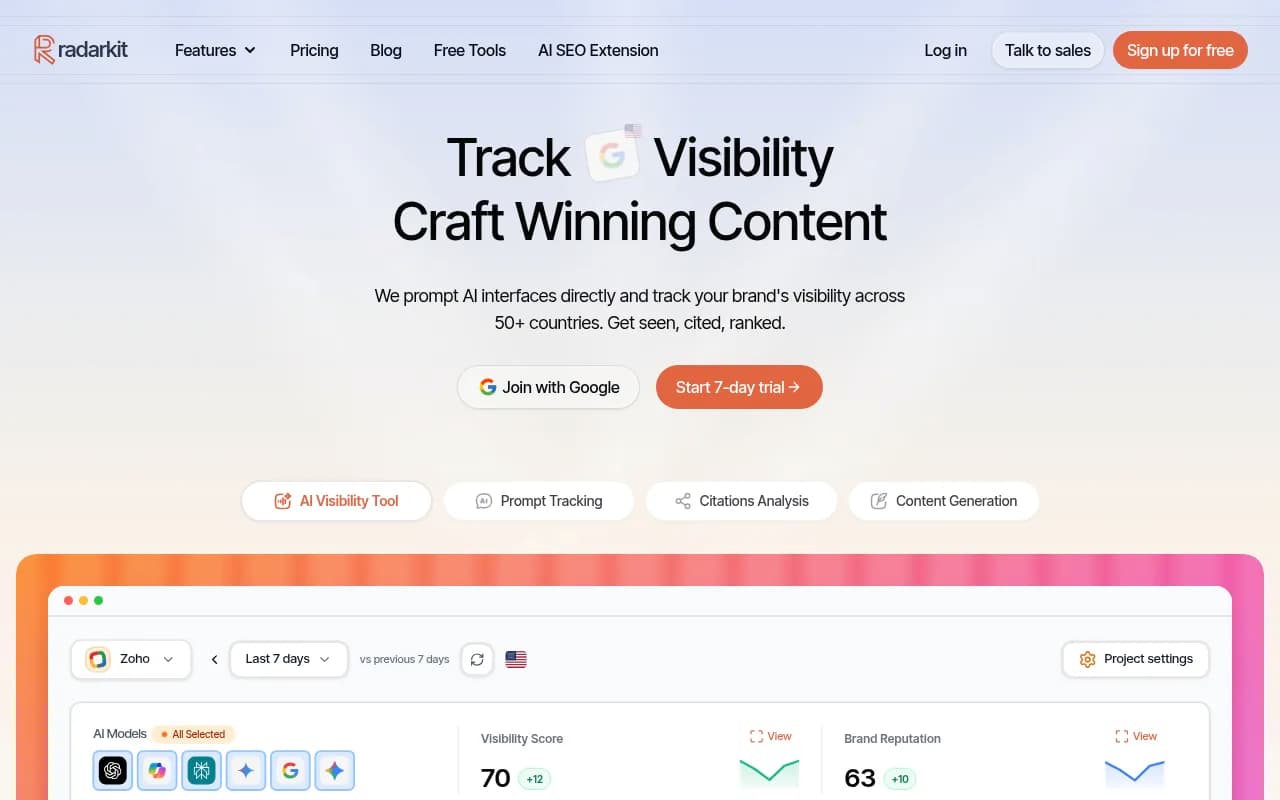
Radarkit positions itself as a clean, accessible AI visibility tracker for teams that want clear dashboards without a steep learning curve. The interface is one of its genuine strengths -- you can set up prompt tracking, add competitors, and start seeing data within an hour.
What it does well
Radarkit covers the core AI models you'd expect: ChatGPT, Perplexity, Google AI Overviews, Claude, and Gemini. Prompt scheduling is flexible -- you can run prompts daily or weekly depending on your plan -- and the competitive heatmap view makes it easy to see at a glance where you're winning and losing relative to named competitors.
The sentiment layer is reasonably useful. Radarkit doesn't just tell you whether your brand appeared in a response; it flags whether the mention was positive, neutral, or negative. For brand teams managing reputation, that distinction matters.
Where it falls short
Radarkit is primarily a monitoring tool. It tells you what's happening but doesn't tell you why, and it doesn't help you fix it. There's no content gap analysis, no brief generation, and no crawler log data. If your brand drops out of AI responses for a cluster of prompts, Radarkit will show you the drop -- but you're on your own figuring out what to do next.
The prompt volume is also limited on lower tiers. Teams tracking more than a handful of topics will hit plan limits quickly.
Best for
Teams that want a clean, low-friction way to monitor AI brand mentions and competitive position, and are comfortable doing their own content strategy work separately.
Ranksmith
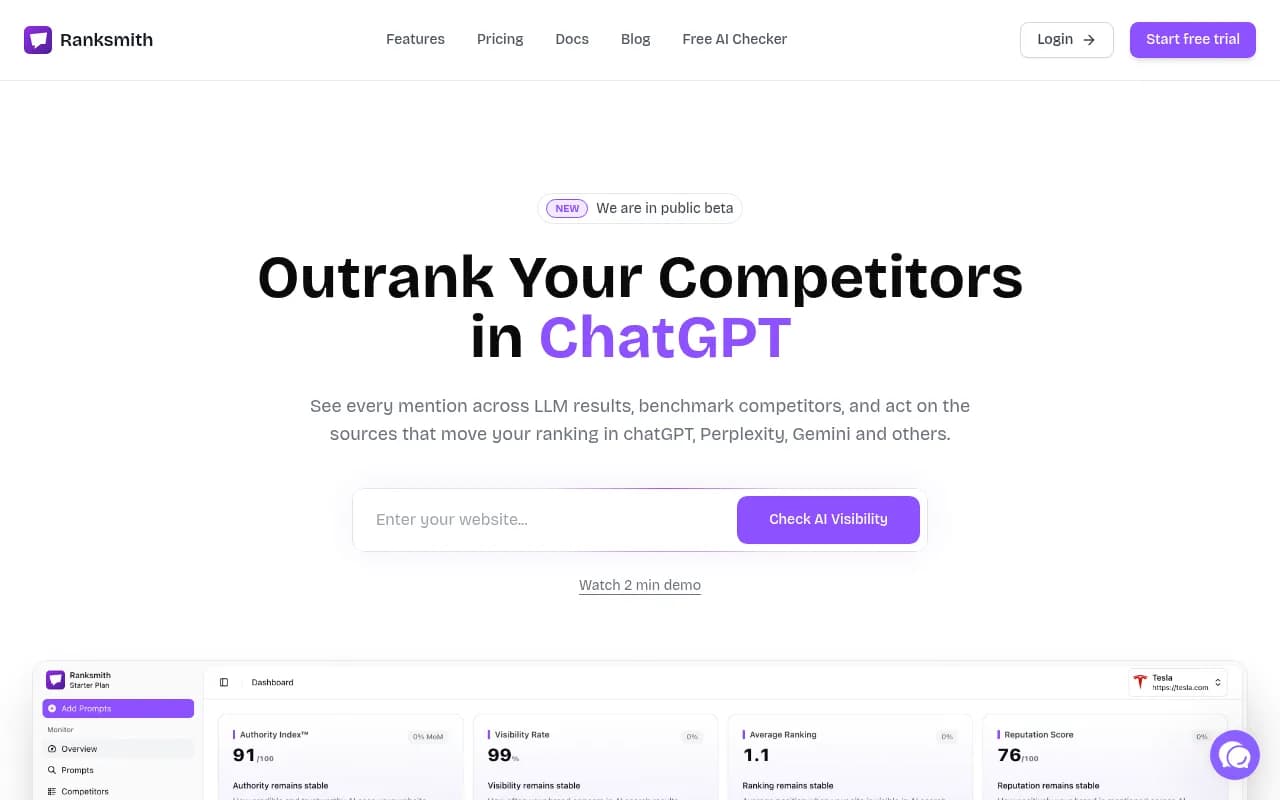
Ranksmith takes a different angle. Where Radarkit leads with dashboards, Ranksmith leads with recommendations. The product is built around the idea that visibility data is only useful if it tells you what to do next.
What it does well
The standout feature is Ranksmith's insight layer. After tracking your brand across prompts, it surfaces specific recommendations: which topics you're underrepresented on, which competitor content is getting cited instead of yours, and which prompt clusters are worth targeting. It's not full content generation, but it's closer to actionable than most mid-tier tools get.
Ranksmith also has solid multi-model coverage and a reasonably clean competitor comparison view. The prompt difficulty scoring -- an estimate of how competitive a given prompt is -- is a useful prioritization tool for teams that don't want to chase every gap at once.
Where it falls short
The recommendations are directional rather than deep. Ranksmith will tell you "you're missing coverage on [topic X]" but won't generate the content to fill that gap or tell you exactly what structure the content needs. It's a step above pure monitoring, but it's still a step short of a full optimization loop.
Crawler log data is absent, which means you can't see whether AI agents are actually visiting your pages or encountering errors. That's a meaningful blind spot if you're trying to understand why certain pages aren't getting cited.
Best for
Teams that want monitoring plus a starting point for content strategy -- particularly content marketers who can take directional recommendations and run with them independently.
Airefs
Airefs competes primarily on price. It's the most affordable of the three and is designed for smaller teams or solo marketers who want basic AI visibility data without committing to a larger platform budget.
What it does well
For the price, Airefs covers a reasonable number of AI models and gives you brand mention tracking, basic citation share metrics, and a simple competitive view. Setup is fast, and the reporting is straightforward enough that non-technical users can interpret it without much training.
If your main goal is answering the question "is my brand showing up in AI responses at all?", Airefs gets you there cheaply.
Where it falls short
Airefs is the most limited of the three in terms of depth. Prompt volume caps are tight, competitor tracking is basic, and there's no insight or recommendation layer to speak of. You get the data; you figure out what it means.
The model coverage is also narrower than Radarkit or Ranksmith -- some of the less mainstream models (Grok, DeepSeek, Mistral) aren't tracked, which matters if your audience skews technical or international.
Best for
Solo marketers, small businesses, or teams that just need a sanity check on AI visibility and aren't ready to invest in a more comprehensive platform.
Head-to-head comparison
| Feature | Radarkit | Ranksmith | Airefs |
|---|---|---|---|
| AI models covered | 6-8 | 6-8 | 4-5 |
| Prompt scheduling | Daily / weekly | Daily / weekly | Weekly |
| Sentiment analysis | Yes | Basic | No |
| Competitive heatmap | Yes | Yes | Basic |
| Actionable recommendations | No | Yes (directional) | No |
| Content gap analysis | No | Partial | No |
| Content generation | No | No | No |
| Crawler / agent logs | No | No | No |
| Traffic attribution | No | No | No |
| Reddit / YouTube tracking | No | No | No |
| Starting price (approx.) | ~$99/mo | ~$129/mo | ~$49/mo |
| Best for | Clean monitoring | Monitoring + insights | Budget monitoring |
The gap all three share
Looking at that table, one row stands out: none of these tools close the loop between finding visibility gaps and fixing them. They're all, to varying degrees, monitoring dashboards. Ranksmith gets closest with its recommendation layer, but even there you're getting direction without execution support.
This is the core limitation of mid-tier AI visibility tools in 2026. The category has matured enough that most platforms can tell you where you're invisible. Far fewer can help you become visible.
If your team has the bandwidth to take monitoring data and independently build a content strategy around it, any of these three tools can work. If you need the full cycle -- find gaps, create content that addresses them, track whether it worked -- you'll eventually outgrow all three.
Platforms like Promptwatch are built specifically around that action loop: Answer Gap Analysis shows which prompts competitors rank for that you don't, Content Agents generate articles and briefs grounded in real prompt data, and page-level tracking shows whether the new content is actually getting cited. It's a different category of tool, not just a more expensive version of the same thing.

How to choose between Radarkit, Ranksmith, and Airefs
The decision mostly comes down to three questions:
How much budget do you have? If you're working with under $60/month, Airefs is the only realistic option. If you can stretch to $100-130/month, both Radarkit and Ranksmith become viable.
Do you need insights or just data? If you have a content strategist who can interpret raw monitoring data and build a plan from it, Radarkit's clean dashboards are probably sufficient. If you need the tool to point you in a direction, Ranksmith's recommendation layer is worth the extra cost.
How many models and prompts do you need to track? Airefs' narrower model coverage and tighter prompt limits make it a poor fit for teams tracking multiple product lines or operating in competitive categories. Radarkit and Ranksmith both scale better.
A practical starting point: if you're new to AI visibility tracking and want to understand the landscape before committing, Airefs is a low-risk way to get your first data. After a month or two, you'll have a much clearer sense of whether you need the deeper features that Ranksmith or a more comprehensive platform can offer.
Other tools worth knowing about
The mid-tier isn't just these three. A few others in a similar price and feature range are worth a look depending on your specific needs:
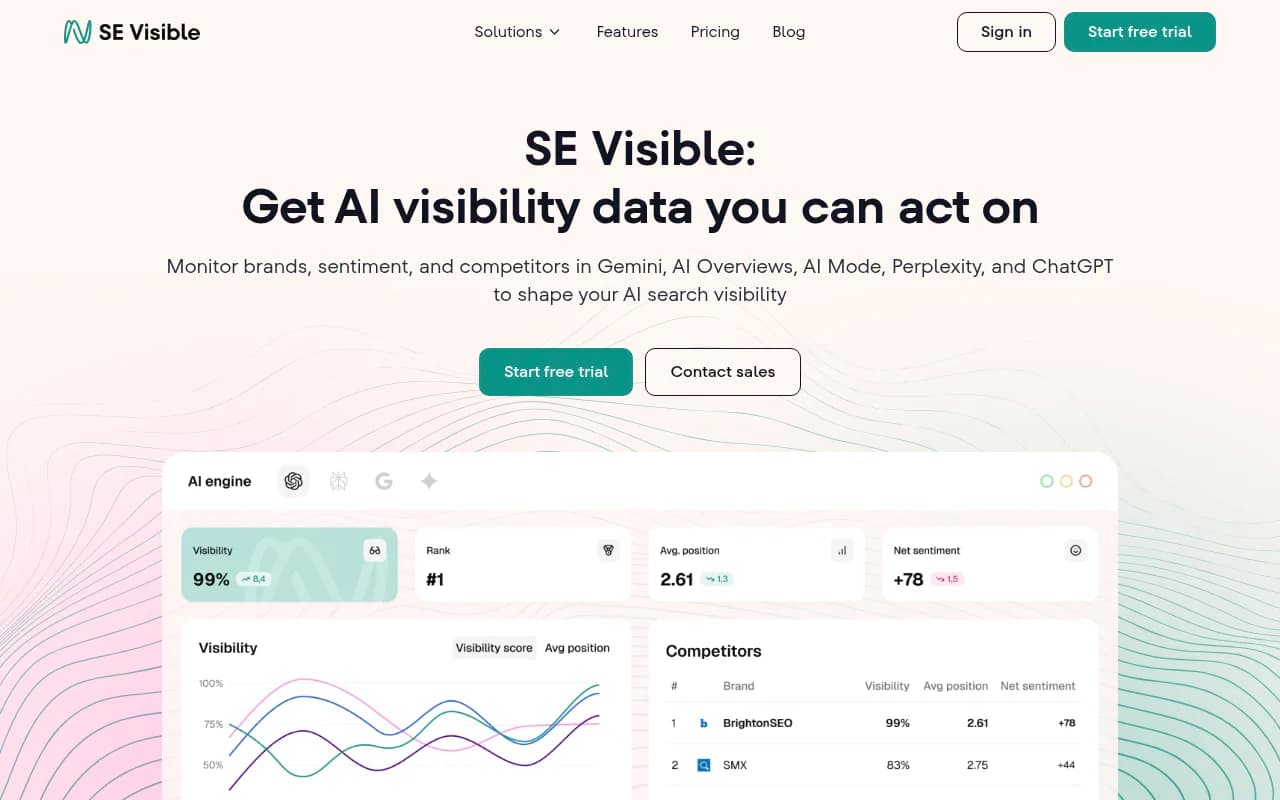
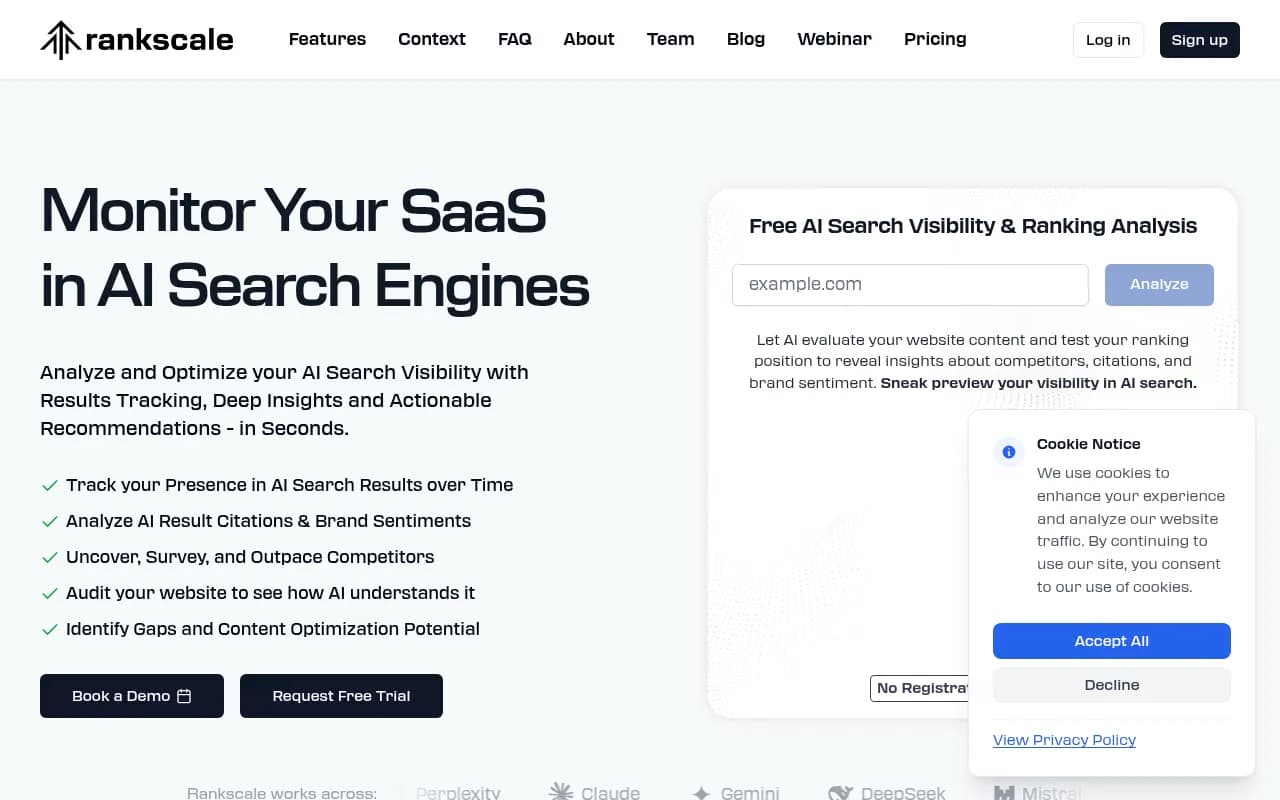
For monitoring with a clean UI:


For teams that want monitoring plus some SEO context:
For teams ready to move beyond monitoring into optimization:
Final take
Radarkit, Ranksmith, and Airefs are all legitimate tools for teams that need AI visibility data without enterprise pricing. Radarkit wins on interface and sentiment tracking. Ranksmith wins on actionability. Airefs wins on price.
None of them will tell you why your content isn't getting cited, help you write something better, or show you whether AI crawlers are even reaching your pages. For teams that are serious about improving their AI search presence rather than just measuring it, that gap matters -- and it's worth knowing it exists before you commit to a platform that can't close it.
The mid-tier is a good place to start. Just be clear about where you want to end up.