Key takeaways
- Competitor benchmarking in AI visibility tools varies wildly: some show you a simple share-of-voice chart, others let you drill into specific prompts, citations, and content gaps.
- Promptwatch leads on depth and actionability, combining prompt-level competitor data with content generation tools that help you close the gaps you find.
- Scrunch does a solid job surfacing where competitors replace you in AI answers, but stops short of telling you what to do about it.
- Qwairy positions itself as a GEO strategy platform with competitive intelligence baked in, though it's newer and less proven at scale.
- Searchable covers the basics but lacks the depth of prompt-level data and crawler insights that more mature platforms offer.
The question "where do I show up in AI search?" has a companion question that most marketers forget to ask: "where do my competitors show up instead of me?" That second question is where competitor benchmarking comes in, and in 2025, the platforms built to answer it ranged from genuinely useful to barely functional.
This guide looks at four platforms that all claim to offer competitive intelligence for AI visibility: Qwairy, Promptwatch, Scrunch, and Searchable. The goal isn't to declare a winner for every use case -- it's to be honest about what each one actually does when you try to benchmark yourself against a competitor in an AI search environment.
What "competitor benchmarking" actually means in AI visibility
Before comparing tools, it's worth being precise about what we're evaluating. In traditional SEO, competitor benchmarking means comparing keyword rankings, backlink profiles, and domain authority. In AI visibility, it's more complex.
A good AI visibility benchmarking feature should tell you:
- Which prompts your competitors appear in that you don't
- Which AI models (ChatGPT, Perplexity, Gemini, etc.) favor your competitors
- What sources and citations are driving competitor mentions
- How competitor visibility has changed over time
- Ideally, what content gaps on your site explain why you're losing
That last point is where most tools fall short. Monitoring who's winning is easy. Explaining why and helping you fix it is hard.
Promptwatch: the most complete competitive picture
Promptwatch approaches competitor benchmarking as part of a larger workflow rather than a standalone feature. The core of it is Answer Gap Analysis, which identifies prompts where competitors are being cited but you aren't. You're not just seeing a score -- you're seeing the specific questions AI models are answering with your competitor's content instead of yours.

The Competitor Heatmaps feature lets you compare your AI visibility against multiple competitors across different LLMs simultaneously. So you can see, for example, that a competitor is consistently winning on Perplexity for a particular topic cluster while you're holding your own on Google AI Overviews. That kind of model-by-model breakdown matters because different AI engines have different citation preferences.
What separates Promptwatch from the others in this comparison is what happens after you find the gap. The platform's Content Agents can generate articles, comparisons, and briefs specifically designed to address the prompts where competitors are outranking you. The brief includes competitor analysis, prompt volume data, citation sources, and brand guidance. You're not just learning you have a problem -- you're getting a path to fixing it.
The AI Crawler Logs (available on Professional and above) add another layer. You can see when AI crawlers visit your pages versus competitor pages, which helps you understand whether visibility gaps are a content problem or a crawlability problem. Most platforms in this comparison don't have anything like this.
Pricing starts at $99/month for the Essential plan (50 prompts, 1 site). Competitor benchmarking at meaningful depth requires the Professional plan at $249/month, which adds crawler logs and broader prompt tracking.
Qwairy: GEO strategy with competitive intelligence built in
Qwairy positions itself as a GEO strategy platform, and competitive benchmarking is part of that positioning. The platform lets you track how your brand and competitors appear across major AI models, with a focus on helping you build a GEO strategy rather than just monitor metrics.
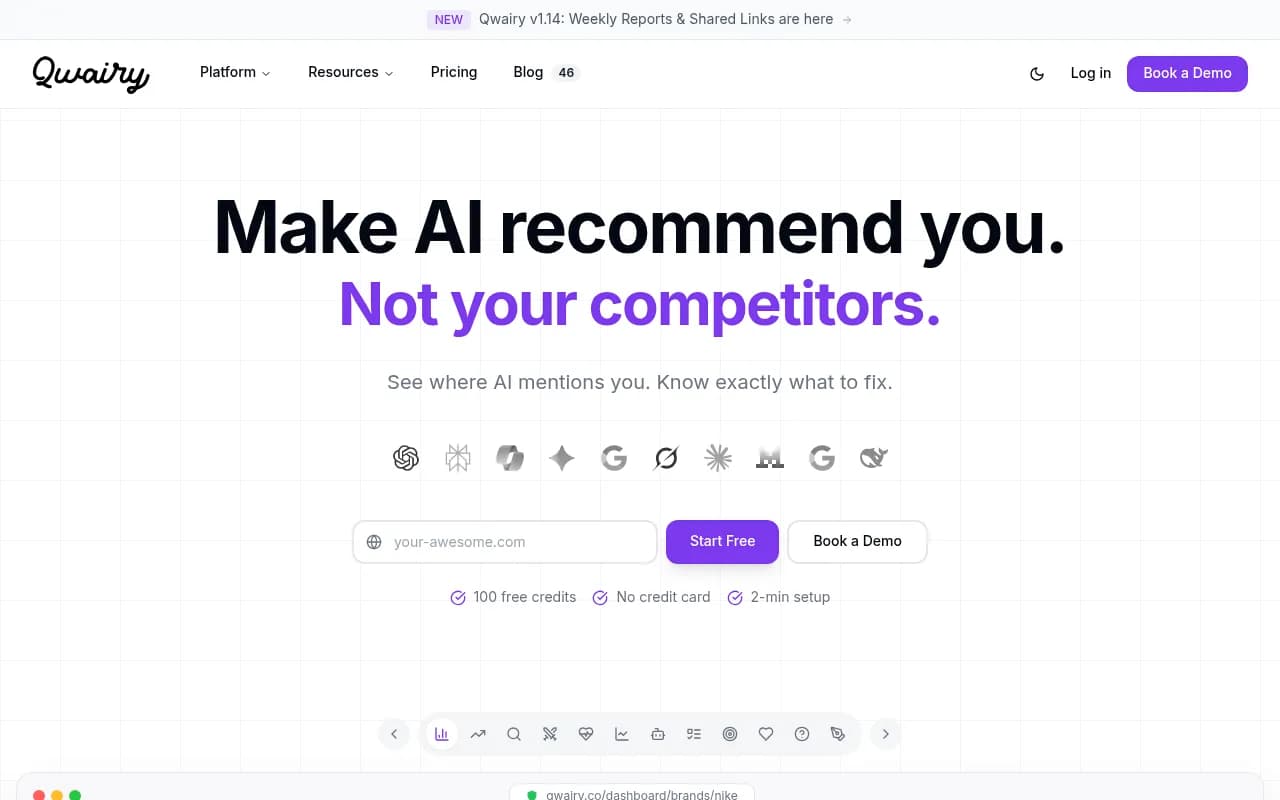
From what's publicly available, Qwairy's competitive features include share-of-voice comparisons, prompt-level tracking, and some form of content recommendation based on competitive gaps. The Reddit community around GEO tools has noted it as an option for teams that want to go beyond simple monitoring.
The honest assessment: Qwairy is newer than Promptwatch and hasn't processed the same volume of data (Promptwatch has over 4.5 billion citations, clicks, and prompts processed). That matters for benchmarking because the quality of competitive insights depends heavily on the breadth of prompt coverage. A platform that's tracking 500 prompts across 3 models will give you a very different picture than one tracking tens of thousands across 10+ models.
Qwairy is worth evaluating if you're looking for a platform that frames everything through a strategy lens and you're comfortable with a less established data set. For teams that need depth and confidence in the numbers, the data maturity gap is a real consideration.
Scrunch: honest about what it does and doesn't do
Scrunch has a clear and honest value proposition: it shows you when AI answers recommend your brand and where competitors replace you. That's a useful framing because it sets accurate expectations.
The competitive benchmarking in Scrunch is primarily visibility-focused. You can see competitor mention rates, track how often competitors appear in AI responses for your target prompts, and get alerts when competitor visibility changes. The interface is clean and the data is presented in a way that's easy to share with stakeholders.
Where Scrunch falls short for serious benchmarking is depth. There's no prompt-level gap analysis that tells you specifically which questions are driving competitor visibility. There's no content generation to help you close gaps. And there's no crawler log data to help you understand the technical reasons behind visibility differences.
Scrunch is a monitoring tool that happens to include competitive data. If you need a dashboard to track competitive share-of-voice in AI search and report it upward, it does that well. If you need to understand why you're losing and what to do about it, you'll hit a ceiling quickly.
Pricing for Scrunch is at the higher end of the market for what it delivers, which is worth factoring in if you're comparing value.
Searchable: covers the basics, limited on depth
Searchable offers AI search visibility monitoring with some competitive tracking features. It's positioned as a platform for brands that want to understand their AI presence, and the competitive benchmarking features are part of that.
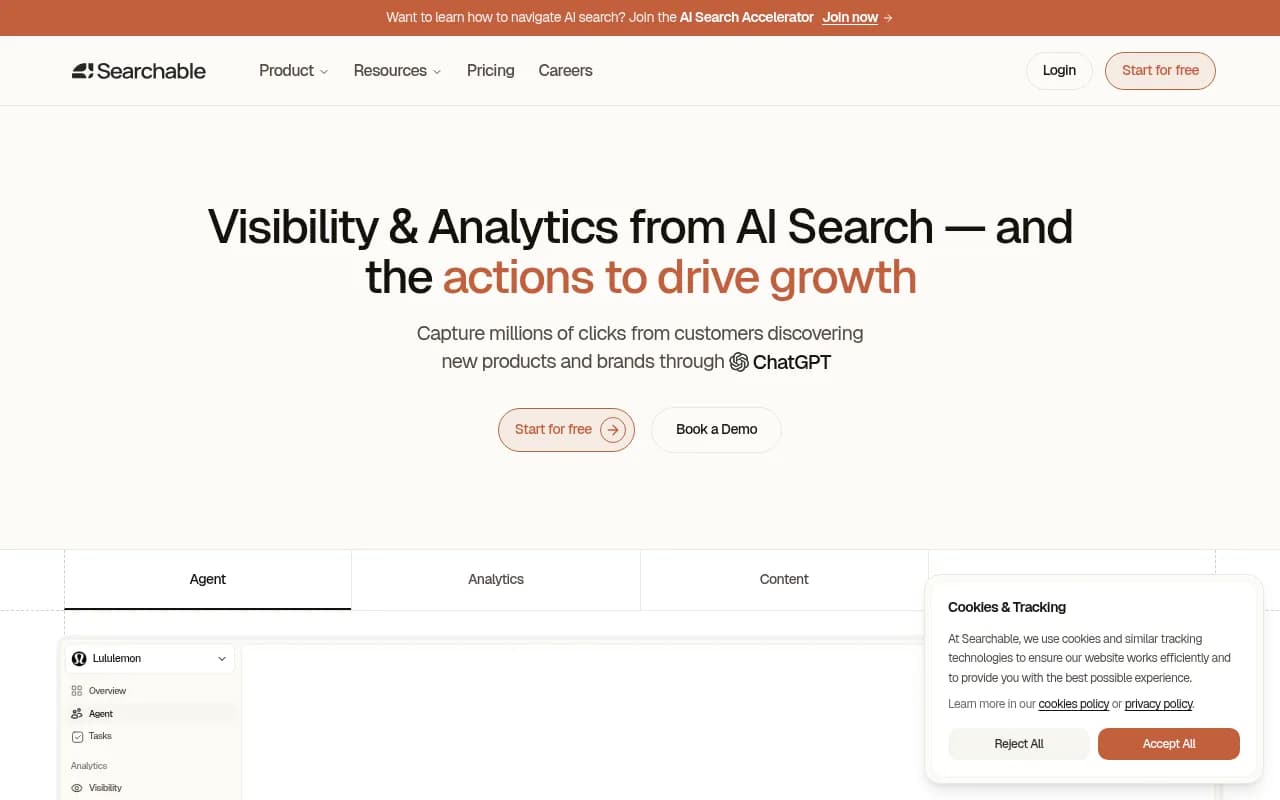
In practice, Searchable's competitive benchmarking is fairly surface-level. You can compare your visibility against competitors across AI models, track changes over time, and see which prompts competitors are appearing for. The interface is accessible and the setup is straightforward.
The limitations become apparent when you try to go deeper. Prompt-level data is less granular than what Promptwatch offers. There's no content gap analysis that maps your existing content against AI responses. No crawler logs. No content generation. The platform gives you a competitive snapshot but not the analytical depth to turn that snapshot into a strategy.
For smaller teams or brands just getting started with AI visibility, Searchable might be sufficient. For marketing teams that need to explain competitive gaps to leadership and build a content plan to address them, it's likely not enough.
Head-to-head comparison
| Feature | Promptwatch | Qwairy | Scrunch | Searchable |
|---|---|---|---|---|
| Prompt-level competitor data | Yes, detailed | Partial | Basic | Basic |
| Share-of-voice by AI model | Yes (10 models) | Yes | Yes | Yes |
| Answer gap analysis | Yes (core feature) | Limited | No | No |
| Content generation from gaps | Yes (Content Agents) | No | No | No |
| AI crawler logs | Yes (Pro+) | No | No | No |
| Competitor heatmaps | Yes | Partial | No | No |
| Reddit/YouTube citation tracking | Yes | No | No | No |
| ChatGPT Shopping tracking | Yes | No | No | No |
| Prompt volume & difficulty scores | Yes | No | No | No |
| Data maturity | 4.5B+ citations | Newer | Moderate | Moderate |
| Starting price | $99/mo | Contact | Higher end | Contact |
| Free trial | Yes | Unknown | No | Unknown |
Which platform actually wins on competitor benchmarking?
The honest answer depends on what you mean by "best."
If you mean the most comprehensive data on where competitors are winning and why, Promptwatch is the clear choice. The combination of prompt-level gap analysis, model-by-model heatmaps, citation source tracking, and crawler logs gives you a more complete picture than any of the other three platforms. The fact that it connects that data to content generation means you can actually do something with what you find.
If you mean the cleanest, simplest competitive dashboard for reporting purposes, Scrunch is worth a look. It's not deep, but it's clear and easy to use.
If you're evaluating Qwairy, the key question is whether the platform's data maturity has caught up with its strategic positioning. The concept is right -- framing competitive benchmarking as part of a broader GEO strategy is exactly how it should be approached. But strategy framing only works if the underlying data is reliable and comprehensive.
Searchable is fine for getting started but probably not the right choice if competitive benchmarking is a priority use case.
What good competitor benchmarking actually requires
One thing worth saying directly: the platforms that only show you monitoring data without helping you act on it are solving half the problem. Knowing that a competitor appears in 40% of AI responses for your target prompts while you appear in 12% is useful information. But it doesn't tell you which specific content you need to create, which prompts to prioritize, or whether the gap is a content problem or a technical crawlability issue.
The platforms that close that loop -- from finding gaps to creating content to tracking whether it worked -- are genuinely more valuable than the ones that stop at the dashboard. That's the core argument for Promptwatch over the other three: it's built around the full cycle, not just the monitoring step.
Other tools worth knowing about
If none of the four platforms above feel like the right fit, a few others are worth considering for competitive benchmarking in AI visibility:
Profound has strong enterprise-grade analytics and tracks 10+ AI engines. It's well-regarded for data depth, though pricing is at the higher end and it lacks the content generation capabilities that Promptwatch offers.

Peec AI is worth looking at if multi-language competitive tracking matters to you -- it supports 115+ languages, which is unusual in this space.

AthenaHQ focuses on entity signals and AI search visibility measurement. Good for understanding the structural reasons behind competitive gaps, though it doesn't generate content to fix them.

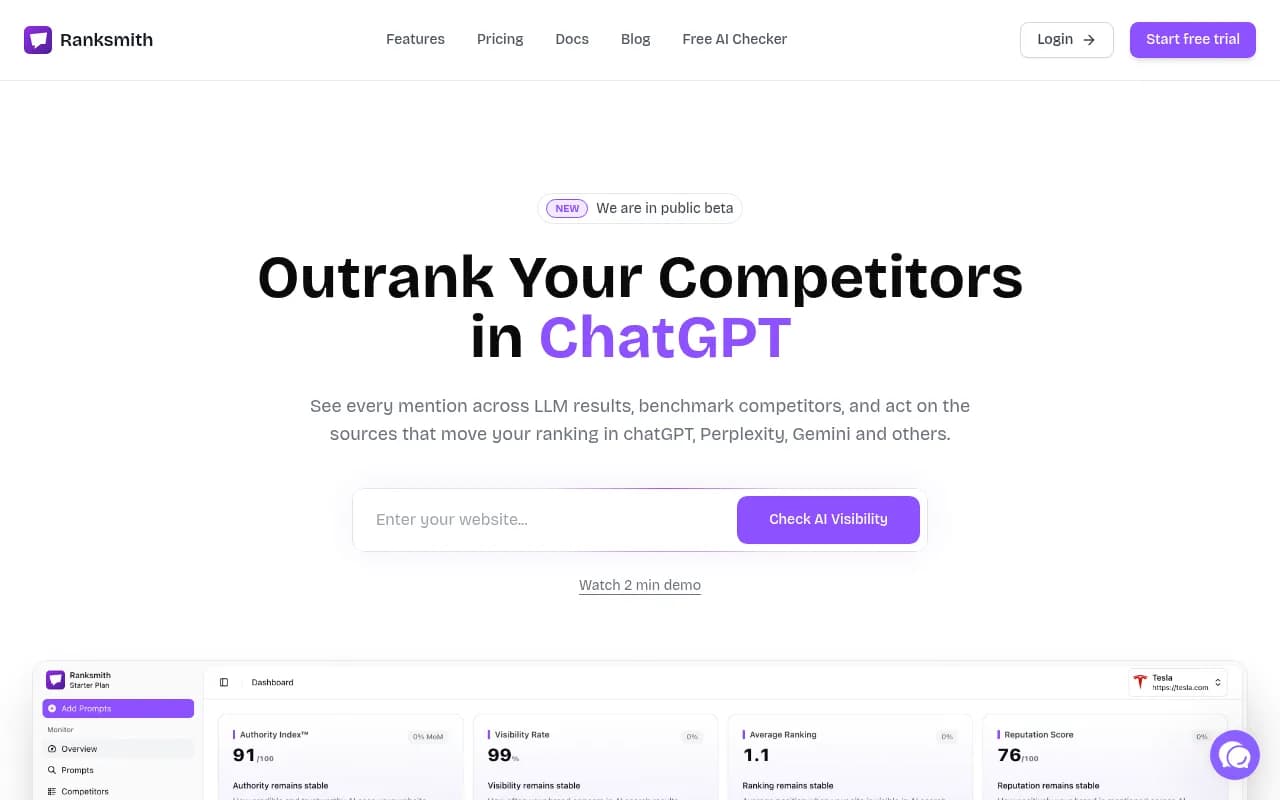
Ranksmith has been noted for actionable source attribution in competitive analysis -- showing which specific citations are driving competitor visibility rather than just the visibility score itself.
The bottom line
Competitor benchmarking in AI visibility is still maturing as a category. In 2025, the gap between platforms that just monitor and platforms that help you optimize was significant -- and it's only widened in 2026.
Of the four platforms in this comparison, Promptwatch offers the most complete competitive benchmarking capability, particularly because it connects competitive data to content creation and tracks whether that content actually improves your position. Scrunch and Searchable are useful for simpler monitoring needs. Qwairy has an interesting strategic framing but needs to prove out its data depth at scale.
If competitive benchmarking is a core use case for your team, start with a trial of Promptwatch and compare the depth of its gap analysis against whatever you're currently using. The difference in actionability tends to be immediately obvious.