Key takeaways
- Peec AI is built for agencies managing multiple clients -- unlimited users, clean UI, and solid multi-engine coverage make it a strong reporting tool
- Rankscale is better suited for competitive benchmarking -- it goes deeper on head-to-head visibility comparisons and AI crawler data
- Neither tool closes the loop from data to content creation; they're both primarily monitoring platforms
- If you need to actually fix your AI visibility gaps (not just measure them), you'll need something that goes beyond tracking
- For most teams, the right choice depends on whether you prioritize client reporting (Peec AI) or competitive intelligence (Rankscale)
The AI search tracking space has gotten crowded fast. Dozens of tools now promise to show you where your brand appears in ChatGPT, Perplexity, Google AI Overviews, and the rest. Most of them do roughly the same thing: run prompts, collect responses, count citations, show you a dashboard.
Peec AI and Rankscale are two of the more frequently compared options in this space. They're both credible tools with real users, but they're not interchangeable. They make different tradeoffs, serve different team types, and have meaningfully different strengths.
This guide breaks down exactly what each tool does, where each one falls short, and which one is actually worth your money in 2026.
What Peec AI actually does
Peec AI is an AI visibility and GEO tracking platform that monitors how your brand appears across AI engines including ChatGPT, Perplexity, Claude, Gemini, and Google AI Overviews. It uses UI-level scraping rather than API calls, which matters because the answers users actually see in a browser can differ from what an API returns.

The platform lets you track prompts, monitor citation rates, benchmark against competitors, and see share-of-voice data across AI models. It's reasonably well-rounded for a monitoring tool.
Where Peec AI has earned a genuine reputation is with agencies. It includes unlimited users on paid plans and offers free pitch workspaces -- features that are genuinely useful if you're managing five or ten client accounts and need to spin up a workspace quickly without paying per seat. The UI is clean and the reporting is presentable enough to share with clients directly.
Pricing starts at roughly €89/month for the Starter plan, with a 7-day trial. That's on the affordable end for this category.
The honest limitation: Peec AI is a monitoring tool. It tells you what's happening. It doesn't tell you what to do about it in any actionable way, and it doesn't help you create content to close the gaps it surfaces.
What Rankscale actually does
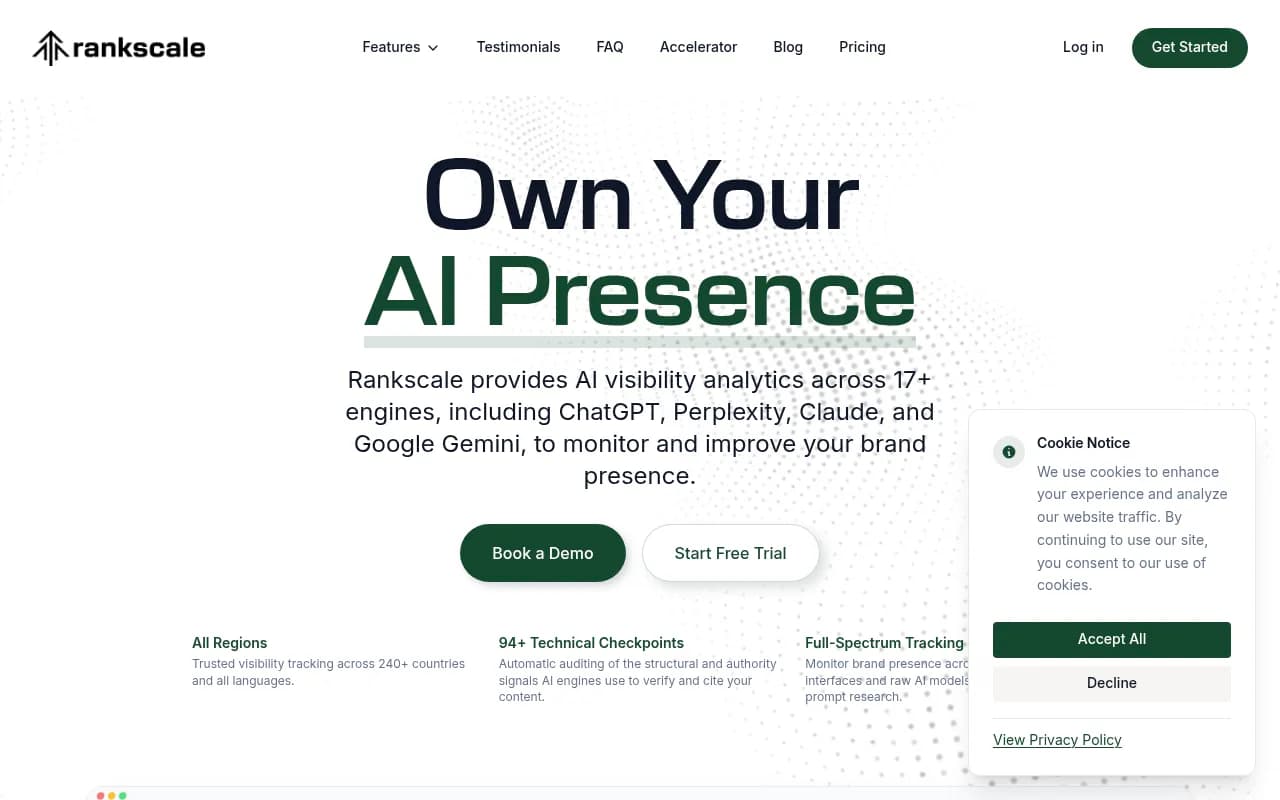
Rankscale is an AI search ranking and visibility platform with a stronger focus on competitive benchmarking. Where Peec AI is designed around client reporting workflows, Rankscale is built more for teams that want to understand how they stack up against specific competitors across AI models.
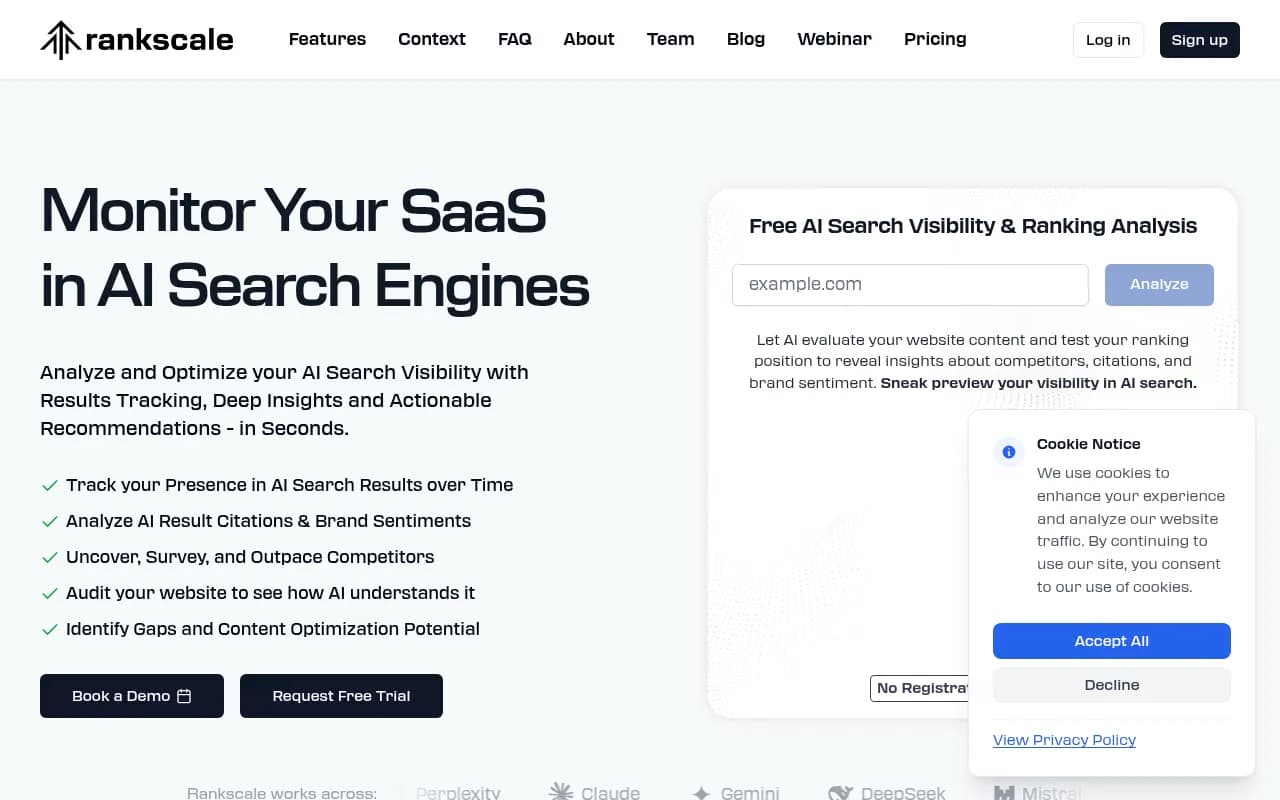
The platform tracks brand visibility across major AI engines, provides evidence trails for citations (so you can see the actual response text, not just a count), and includes AI crawler data that shows how models are discovering and referencing content. Multiple independent reviews have highlighted Rankscale's accuracy and evidence trails as particular strengths.
One review from Coalition Technologies specifically called out Rankscale as "the best AI rank tracking tool due to its coverage, high accuracy, evidence trails" in their head-to-head comparison of AI rank tracking tools. That's a meaningful endorsement for teams where data accuracy is non-negotiable.
The tradeoff: Rankscale is more narrowly focused. It doesn't have the agency-friendly features (unlimited users, pitch workspaces) that Peec AI offers, and it's similarly limited when it comes to turning data into action.
Head-to-head comparison
Here's how the two tools compare across the dimensions that actually matter for most teams:
| Feature | Peec AI | Rankscale |
|---|---|---|
| UI-level scraping (vs API) | Yes | Yes |
| AI engines covered | ChatGPT, Perplexity, Claude, Gemini, Google AI Overviews | ChatGPT, Perplexity, Gemini, Google AI Overviews |
| Competitor benchmarking | Basic | Strong (head-to-head focus) |
| Evidence trails / response text | Limited | Yes |
| AI crawler data | Limited | Yes |
| Unlimited users | Yes (paid plans) | No |
| Agency pitch workspaces | Yes | No |
| Content gap analysis | No | No |
| Content generation | No | No |
| Prompt volume / difficulty scoring | Limited | Limited |
| Pricing (entry) | ~€89/month | Varies |
| Free trial | Yes (7 days) | Yes |
The table tells a clear story: these tools overlap significantly on the basics, but diverge on who they're built for. Peec AI optimizes for agency workflows. Rankscale optimizes for competitive accuracy.
Where Peec AI wins
Agency and multi-client workflows
If you're running an agency and managing multiple client brands, Peec AI's unlimited users and free pitch workspaces are genuinely useful. You're not paying per seat, and you can set up a new client workspace without a billing conversation. That's a real operational advantage.
Cleaner UI and reporting
Multiple users across different review sources note that Peec AI has a cleaner, more approachable interface than Rankscale. For teams that need to present data to non-technical stakeholders or clients, this matters. A dashboard that looks good in a screen share is not a trivial feature.
Multi-language tracking
Peec AI has solid multi-language support, which is relevant for agencies working with international clients or brands operating in non-English markets. If you need to track how a brand appears in French, German, or Spanish AI responses, Peec AI handles this reasonably well.
Where Rankscale wins
Competitive benchmarking depth
Rankscale's head-to-head competitor analysis is more granular than Peec AI's. If your primary question is "why is our competitor appearing in AI responses where we're not, and what specifically are they being cited for?" -- Rankscale gives you better data to work with.
Evidence trails
Rankscale shows you the actual response text, not just a citation count. This is more useful than it sounds. Knowing that you were cited 47 times is less actionable than seeing the exact phrasing AI models use when they mention you -- or the exact phrasing they use when they mention your competitor instead.
AI crawler data
Rankscale includes data on how AI crawlers are interacting with content, which helps you understand the discovery layer, not just the citation layer. This is a meaningful capability that Peec AI doesn't match.
What neither tool does well
This is worth saying plainly: both Peec AI and Rankscale are monitoring tools. They show you data. They don't help you fix the problems they surface.
If you run either tool and discover that a competitor is appearing in AI responses for 30 prompts where you're invisible, neither platform will tell you what content to create, help you write it, or track whether your new content gets picked up by AI crawlers after you publish.
That gap -- from "here's what's missing" to "here's how to fix it" -- is where most AI visibility tools fall short in 2026. Teams that want to close that loop need a platform that combines monitoring with content gap analysis and content generation.
Promptwatch is one of the few platforms that actually addresses this. It tracks visibility across 10 AI models, surfaces specific answer gaps where competitors are visible but you're not, and includes Content Agents that generate articles and briefs grounded in real prompt data. It also logs AI crawler activity at the page level, so you can see when new content gets discovered and cited. Worth considering if you're finding that monitoring data alone isn't moving the needle.

Which tool should you choose?
The honest answer depends on what you're actually trying to accomplish.
Choose Peec AI if:
- You're an agency managing multiple client accounts
- You need clean, presentable reporting for clients or stakeholders
- Multi-language tracking is important
- You want unlimited team members without per-seat pricing
- A lower entry price point matters
Choose Rankscale if:
- Your primary goal is competitive benchmarking
- You want evidence trails and actual response text, not just citation counts
- AI crawler data is relevant to your workflow
- You're doing head-to-head comparisons against specific competitors
- Data accuracy is your top priority
Consider something else if:
- You need to actually create content to improve your AI visibility
- You want to track which pages AI crawlers are visiting on your site
- You need prompt volume and difficulty scoring to prioritize your efforts
- You want to connect AI visibility data to actual traffic and revenue
A few other tools worth knowing about
If neither Peec AI nor Rankscale feels like quite the right fit, there are other options in this space worth evaluating.
Otterly.AI is a solid, affordable option for teams that want focused AI search tracking without a lot of complexity.

AthenaHQ takes a sentiment-focused approach to AI brand monitoring, which is useful if you care about how AI models describe your brand, not just whether they mention it.

Profound is worth looking at for enterprise brands that need heavier-duty analytics and predictive insights.

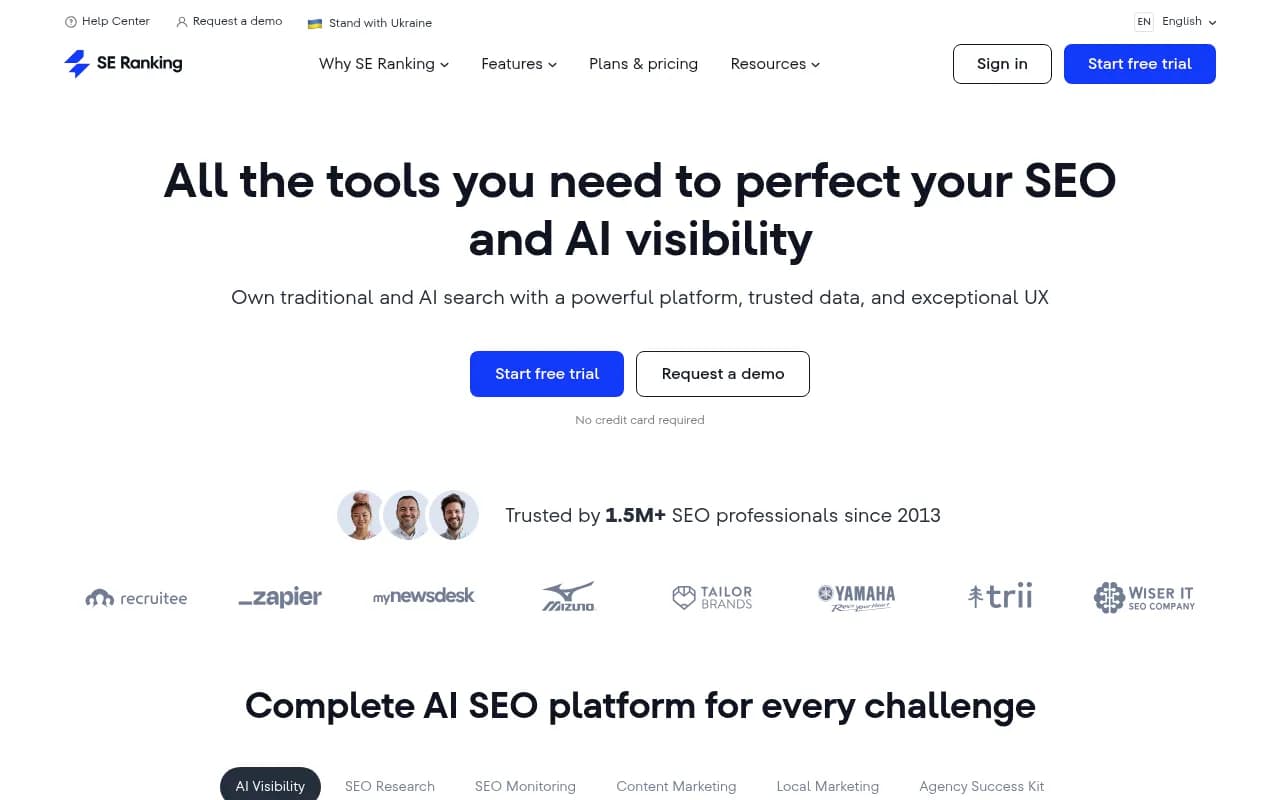
SE Ranking is a good option if you want AI visibility tracking inside a broader SEO suite rather than as a standalone tool.
The bottom line
Peec AI and Rankscale are both legitimate tools. Neither is dramatically better than the other in absolute terms -- they're just built for different use cases.
Peec AI is the better fit for agencies that need clean reporting and multi-client workflows. Rankscale is the better fit for teams focused on competitive intelligence and data accuracy.
What they share is a common limitation: both stop at monitoring. If you're at the point where you know you have AI visibility gaps but don't know how to close them, you've outgrown what either tool can offer on its own.