Key takeaways
- Peec AI is built for multi-country teams that need daily tracking across multiple AI engines with strong agency-style reporting.
- Rankscale has earned a reputation for high accuracy and broad engine coverage -- Coalition Technologies found near 100% mention and citation detection across ~2,700 prompt pulls.
- Both tools are monitoring-focused: they show you where you stand but offer limited help with what to do about it.
- Pricing starts around €89/month for Peec AI; Rankscale uses a credit-based model that scales more predictably across large prompt libraries.
- If you need to go beyond tracking and actually fix your AI visibility gaps, you'll likely outgrow both tools faster than you expect.
AI search is no longer a side experiment. ChatGPT, Perplexity, Google AI Overviews, and Gemini are now real traffic sources for a lot of brands, and the question of "are we showing up?" has moved from curious to urgent. That's pushed a wave of AI rank tracking tools into the market, and two names come up constantly in this space: Peec AI and Rankscale.
They're not identical products. They have different strengths, different pricing structures, and honestly different philosophies about what "tracking" should include. This guide breaks down both so you can make a clear call.
What each tool actually does
Peec AI
Peec AI monitors how your brand appears across AI engines -- ChatGPT, Perplexity, Claude, Gemini, and others -- using UI-level scraping rather than just API calls. That distinction matters more than it sounds. User-facing AI responses can differ from what an API returns, so scraping the actual interface gives you a more realistic picture of what real users see.
The platform tracks prompts, citations, share of voice, and competitor mentions. It's particularly strong for teams operating across multiple countries or languages, which is why it keeps showing up in recommendations for international marketing teams. Daily tracking cadence means you're not waiting a week to see if something changed.

Pricing starts at roughly €89/month for the Starter plan, with a 7-day trial. That's accessible for smaller teams, though the cost scales as you add more prompts and markets.
Rankscale
Rankscale covers 17+ AI engines including ChatGPT, Perplexity, Claude, and Google Gemini. Its pitch is breadth and accuracy: the platform is designed to give you evidence trails alongside visibility data, which is important because LLMs paraphrase and rotate citations constantly. Without an evidence log, you can't be sure whether a "mention" was real or a measurement artifact.
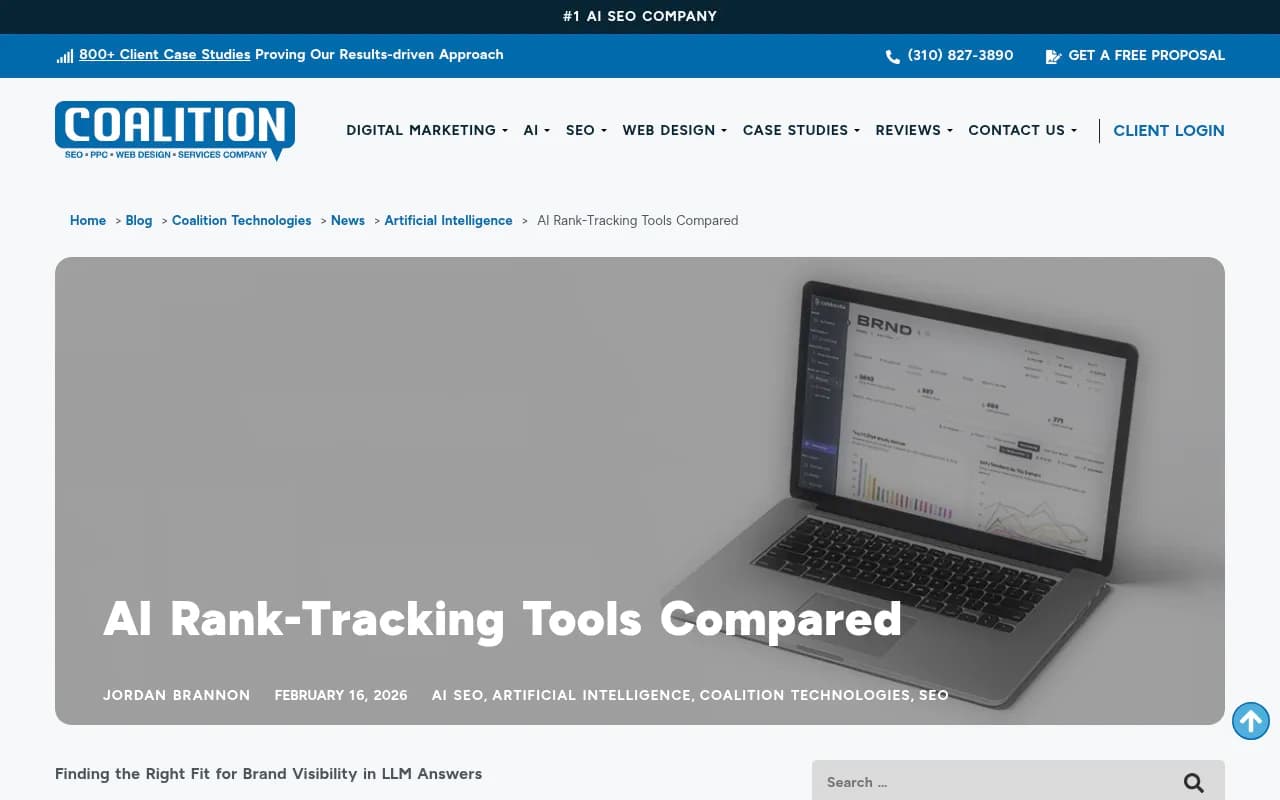
Coalition Technologies ran roughly 2,700 prompts across ChatGPT, Perplexity, Google AI Overviews, and Google AI Mode and found Rankscale delivered near 100% mention and citation detection accuracy. That's a meaningful data point, not just a marketing claim.
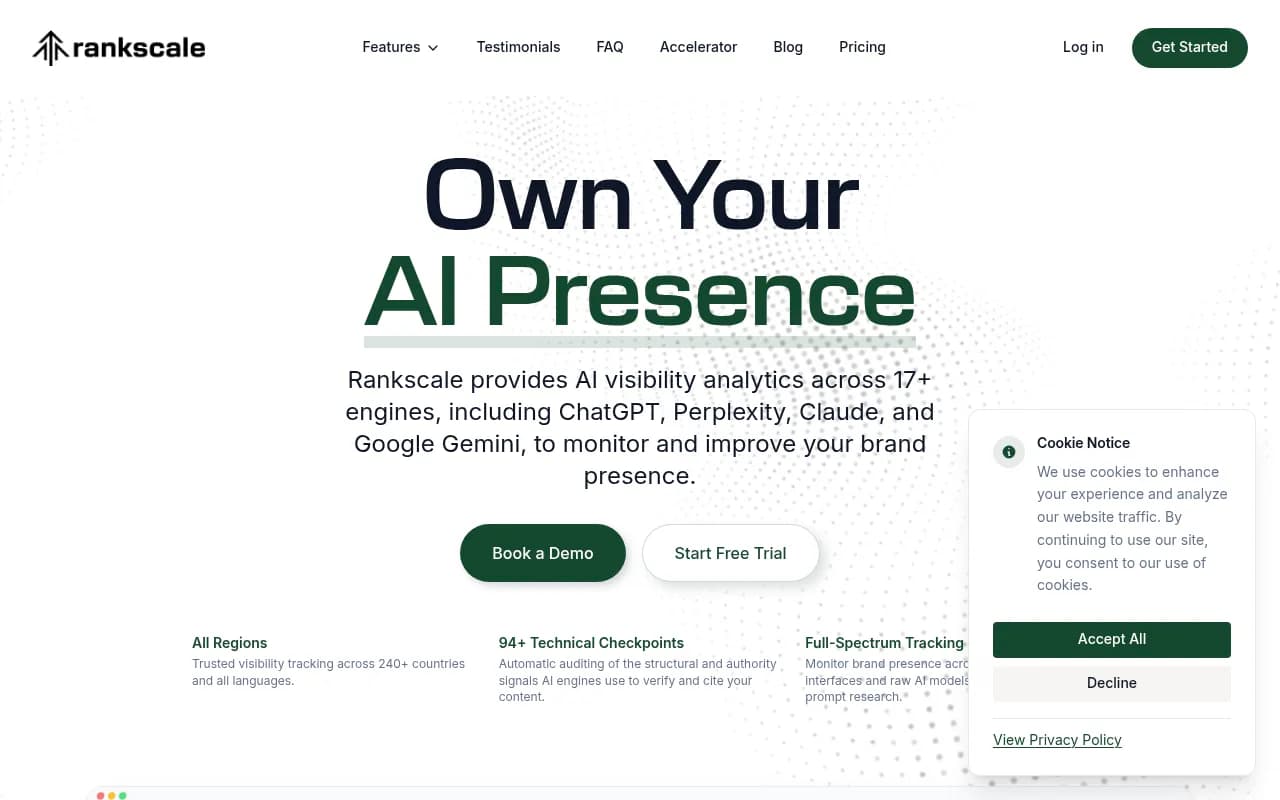
Rankscale uses a credit-based pricing model, which some teams find easier to budget for at scale compared to seat-based or prompt-tier pricing.
Head-to-head comparison
| Feature | Peec AI | Rankscale |
|---|---|---|
| Engine coverage | ChatGPT, Perplexity, Claude, Gemini, others | 17+ engines including all major LLMs |
| Tracking method | UI-level scraping | API + evidence trail logging |
| Daily tracking | Yes | Yes |
| Multi-country / multi-language | Strong | Available |
| Competitor benchmarking | Yes | Strong, with head-to-head comparison |
| Citation tracking | Yes | Yes, with evidence logs |
| Share of voice | Yes | Yes |
| AI crawler data | Limited | Available |
| Content gap analysis | Limited | Limited |
| Content generation | No | No |
| Pricing model | Tiered monthly (from ~€89/mo) | Credit-based |
| Free trial | 7-day trial | Available |
| Best for | Multi-country teams, agency reporting | Accuracy-focused teams, competitive benchmarking |
Where Peec AI wins
Peec AI's UI-scraping approach is genuinely useful if you care about what users actually see. API-based tools can miss formatting differences, citation placements, and shopping recommendations that only appear in the real interface. For teams managing brands across multiple regions, that accuracy at the user level is hard to replicate.
The reporting layer is also well-suited for agencies or teams that need to present data to clients or stakeholders. The interface is designed to be readable without requiring deep technical knowledge, which matters when you're sharing results with people who don't live in SEO dashboards.
Multi-language tracking is another real strength. If your brand operates in French, German, Spanish, and English markets simultaneously, Peec AI handles that more naturally than most competitors.
Where Rankscale wins
The evidence trail is Rankscale's clearest differentiator. LLM outputs are non-deterministic -- the same prompt can produce different answers on different days, and citations rotate. Without a logged record of what the AI actually said at a given moment, your data is hard to trust over time. Rankscale's approach of capturing evidence alongside the visibility metric solves that problem.
Engine breadth is also notable. Covering 17+ engines means you're not missing visibility in smaller or newer AI platforms that might matter for your specific audience.
The credit-based pricing model tends to work better for teams with large prompt libraries. Instead of hitting a hard cap and paying for a tier upgrade, you're consuming credits at a predictable rate -- which makes cost forecasting more straightforward.
What both tools are missing
Here's the honest part: both Peec AI and Rankscale are primarily monitoring tools. They're good at telling you where you stand. They're much less useful when you need to understand why you're not showing up -- and they offer almost nothing to help you fix it.
That gap is real. Knowing your brand appears in 12% of relevant AI responses is useful data. Knowing which specific prompts your competitors are winning that you're not, which pages on your site AI engines are actually crawling, and what content you need to create to close those gaps -- that's a different level of insight entirely.
For teams that want to move from tracking to optimization, tools like Promptwatch are built around that full loop: find the gaps, generate content to fill them, and track whether it worked. Most monitoring-only tools leave you with data and no clear next step.

Which team should use which tool
Use Peec AI if:
- You're managing AI visibility across multiple countries or languages
- Your team needs clean, shareable reports for clients or leadership
- You want UI-level accuracy rather than API-based approximations
- You're an agency that needs to track multiple brands under one account
Use Rankscale if:
- Accuracy and evidence trails are non-negotiable for your reporting
- You need the broadest possible engine coverage
- You're running large prompt libraries and want predictable credit-based costs
- Competitive benchmarking is a core part of your workflow
Consider something else if:
- You need to act on the data, not just see it
- You want content gap analysis that shows exactly what to write
- You need AI crawler logs to understand how engines are discovering your site
- You're trying to connect AI visibility to actual revenue
How to evaluate either tool before committing
Both tools offer trials, so there's no reason to commit based on feature lists alone. A few things worth testing specifically:
Prompt accuracy: Run the same 10-15 prompts manually in ChatGPT and Perplexity, then compare what the tool reports. Do the citations match? Does the sentiment match? This is the fastest way to validate whether the tracking method works for your use case.
Competitor data: Pull a competitor you know well and check whether their visibility data looks plausible. If a competitor you know is strong in AI search shows up as weak in the tool, that's a signal to investigate the methodology.
Reporting workflow: Export a sample report and imagine sending it to a client or your CMO. Is it self-explanatory? Does it answer the questions they'd actually ask?
Cadence: Check how often data refreshes. Daily tracking is table stakes now -- weekly cadence is too slow when AI responses can shift overnight.
Other tools worth knowing about
The AI visibility tracking space has expanded quickly. A few others that come up in this category:
Otterly.AI is a leaner option for teams that just need basic AI search monitoring without a lot of complexity.

AthenaHQ focuses on sentiment-led brand monitoring across AI engines, which is useful if brand perception is as important as citation frequency.

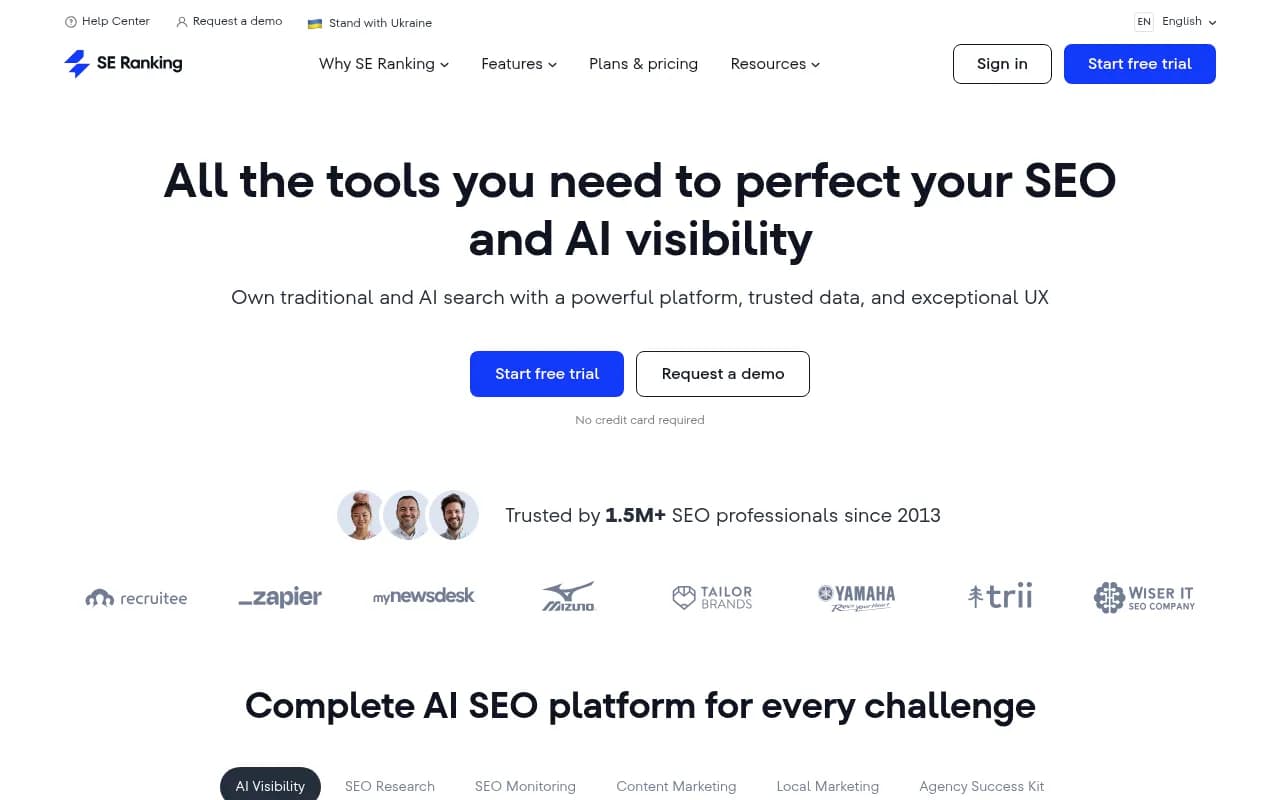
SE Ranking has added AI visibility features to its broader SEO suite, which makes it worth considering if you're already using it for traditional rank tracking.
Scrunch AI is aimed at enterprise teams that need monitoring at scale across a large content footprint.
The bigger picture
Peec AI and Rankscale are both legitimate tools doing real things. Peec AI's UI-scraping approach and multi-country support make it genuinely useful for international teams. Rankscale's accuracy and evidence trails make it a defensible choice for anyone who needs to trust their data over time.
The real question isn't which tracker is better -- it's whether tracking alone is enough for where your team is headed. As AI search continues to take share from traditional search, the gap between brands that just monitor and brands that actively optimize is going to widen. The monitoring tools are a starting point. What you do with the data is what actually moves the needle.