Key takeaways
- MarketMuse is built for large-scale content strategy: deep topic modeling, personalized difficulty scores, and site-wide inventory analysis across thousands of pages.
- Frase is better suited for teams that need fast, affordable content briefs and AI writing in one workflow, with lighter SEO optimization built in.
- Neither tool was designed primarily for AI search visibility (GEO/AEO) -- that's a separate problem requiring a different category of tool.
- For most mid-size teams, Frase offers more practical value per dollar. For enterprise content operations, MarketMuse's depth justifies the cost.
- If AI search visibility (ChatGPT, Perplexity, Google AI Overviews) is a priority, you'll need to layer in a dedicated GEO platform on top of either tool.
These two tools have been compared dozens of times, and most of those comparisons end with something like "it depends on your needs." That's technically true but not very useful. So let me be more direct: MarketMuse and Frase are solving different problems, and the right choice depends on where your content operation actually sits right now.
Let's get into it.
What each tool actually does
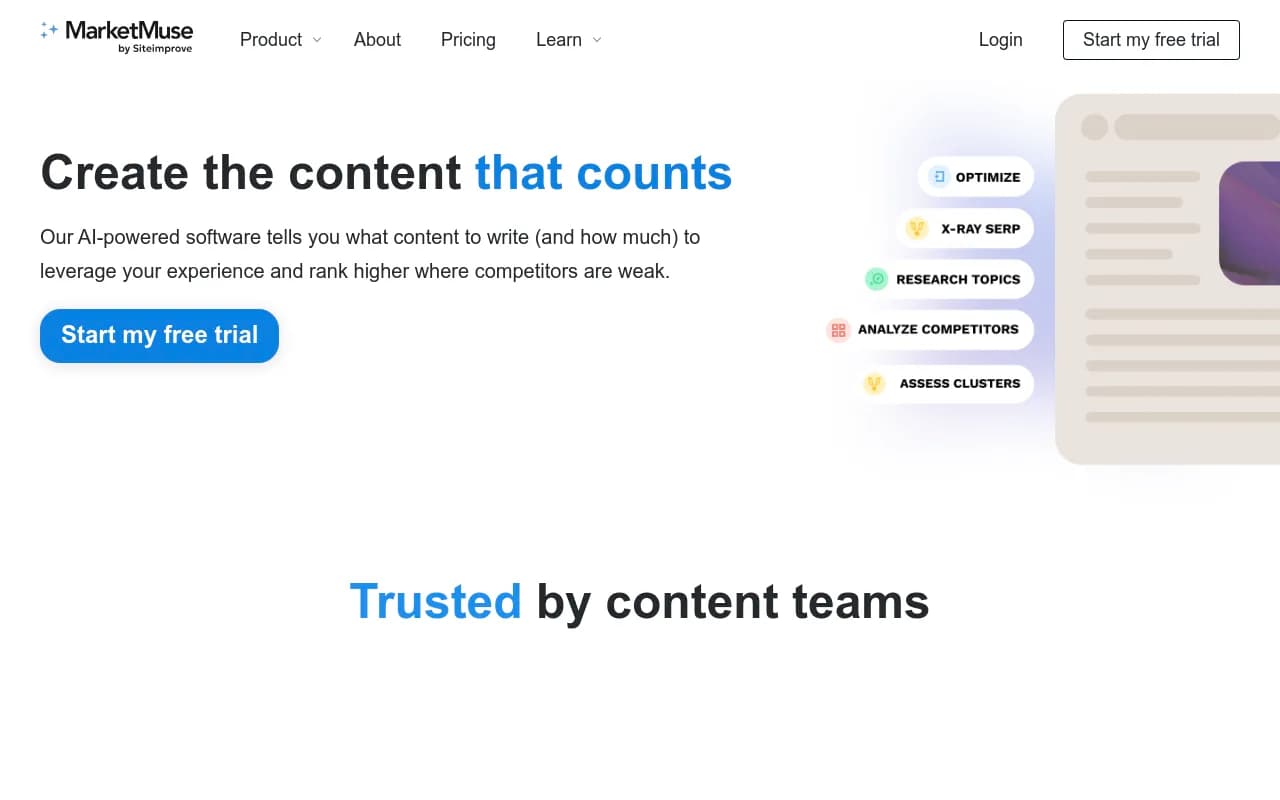
MarketMuse
MarketMuse is a content intelligence platform. Its core value is topic modeling: give it a subject, and it analyzes tens of thousands of related pages to build a model of what genuine expertise on that topic looks like. It then compares your content (and your competitors') against that model.
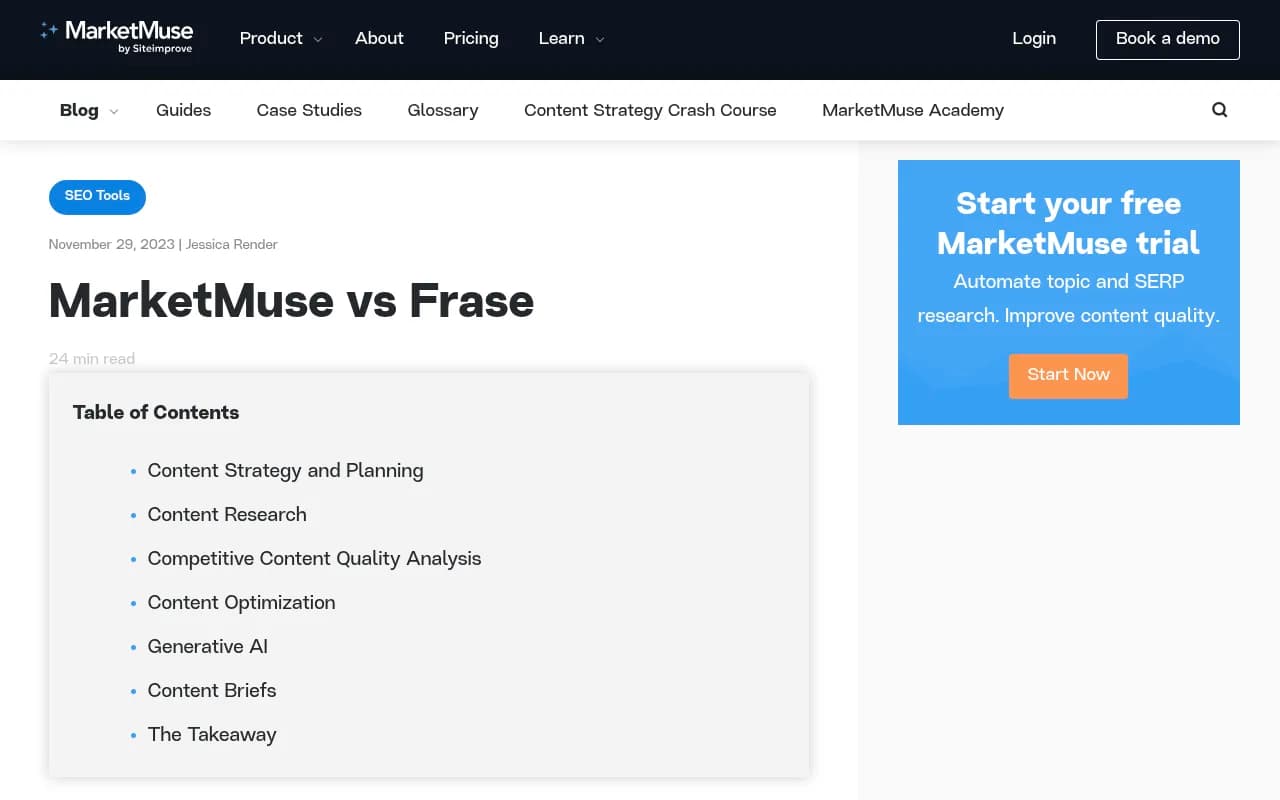
The key differentiator MarketMuse points to is that it doesn't just look at the top 20 ranking pages and tell you to copy them. It builds its model independently, then shows you how those top pages stack up against it. That's a meaningful distinction. Most SERP-based tools assume that what's already ranking is what you should emulate. MarketMuse is trying to show you what "authoritative" actually looks like, separate from what's currently winning.
It also introduced what it calls Personalized Difficulty scores -- a metric that accounts for your specific site's existing topic coverage when estimating how hard it will be to rank for something. A site that already has 40 articles on enterprise software will find it easier to rank for a new enterprise software topic than a site starting from scratch. Generic keyword difficulty tools don't capture that.
Frase
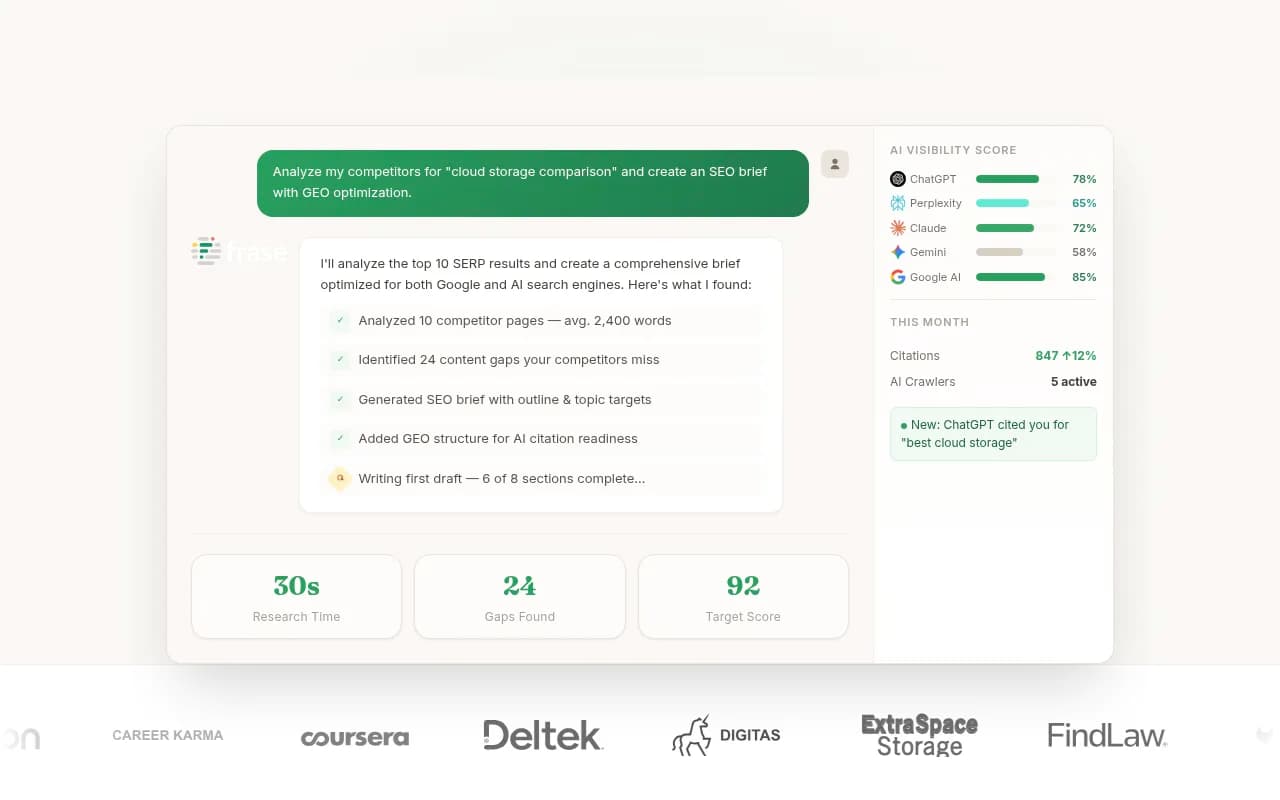
Frase takes a more workflow-oriented approach. It crawls the top search results for a given query, extracts related terms and entities, and helps you build a content brief quickly. Then it lets you write or generate content directly inside the same tool, with real-time optimization scoring as you go.
The criticism MarketMuse levels at Frase -- that it's essentially a "copy the top 20 results" machine -- is fair to a point. Frase's methodology is more SERP-dependent. But that's also why it's faster and more accessible. For teams that need to produce briefs at volume without a dedicated content strategist interpreting complex topic models, Frase's approach is genuinely practical.
Frase has also been expanding into GEO territory, adding content optimization features aimed at AI platforms alongside traditional SEO. It's not deep GEO tooling, but it's a sign of where the product is heading.
Feature-by-feature comparison
| Feature | MarketMuse | Frase |
|---|---|---|
| Topic modeling methodology | Independent AI model (tens of thousands of pages) | SERP-based (top 20 results) |
| Personalized difficulty scores | Yes | No |
| Content brief generation | Yes | Yes (faster, more template-driven) |
| AI writing assistant | Yes | Yes |
| Content optimization editor | Yes | Yes |
| Site-wide content inventory | Yes (continuous monitoring) | Limited |
| Content clustering / topical authority | Strong | Basic |
| GEO / AI search optimization | Limited | Partial (expanding) |
| CMS integrations | Yes | Yes (WordPress, etc.) |
| Pricing entry point | ~$149/mo (Standard) | $49/mo |
| Best for | Enterprise / large content teams | SMBs, agencies, solo creators |
Pricing: a significant gap
This is where the decision gets practical for most teams.
Frase starts at $49/month for a solo plan and scales to around $115/month for teams. That gets you content briefs, AI writing, and optimization for a reasonable number of documents per month.
MarketMuse's Standard plan starts around $149/month, and its Pro and Enterprise tiers go significantly higher. The depth of analysis justifies the cost for large operations, but for a team producing 10-20 pieces of content per month, paying 3x more for features you won't fully use is hard to defend.
The honest answer: if you're a content team of 1-3 people, Frase is almost certainly the right call on price alone. If you're managing a site with thousands of pages and need to make strategic decisions about which topics to prioritize across a whole content program, MarketMuse's investment pays off.
Content quality: the methodology debate
MarketMuse's argument against Frase is essentially that SERP-based optimization produces copycat content. If you're analyzing the top 20 results and telling writers to cover the same topics in roughly the same proportions, you're optimizing for what already exists -- not for what would actually be more useful or authoritative.
That's a real concern. Google's helpful content guidance and the general direction of AI search both push toward original, experience-backed content. A tool that helps you replicate existing content more efficiently isn't necessarily helping you win long-term.
But here's the counterpoint: for most content teams, the bottleneck isn't having a sophisticated topic model. It's having a clear brief that writers can actually execute. Frase solves that problem well. The briefs are fast to generate, easy to understand, and give writers enough structure to produce decent content without requiring a content strategist to interpret the output.
MarketMuse's topic models are more sophisticated, but they also require more interpretation. A junior writer handed a MarketMuse report without guidance can get lost. Frase's output is more immediately actionable.
The AI search visibility gap
Here's something neither tool handles particularly well in 2026: tracking and optimizing for AI search engines.
When someone asks ChatGPT, Perplexity, or Google AI Mode a question, the answer they get is drawn from a different set of signals than traditional Google rankings. Your content might rank #1 on Google but never get cited in an AI response. Or you might be invisible in Perplexity but showing up consistently in Claude.
MarketMuse and Frase were both built primarily around traditional search. MarketMuse's topic modeling is excellent for building topical authority that can help with AI visibility indirectly, and Frase has started adding GEO-adjacent features. But neither gives you direct visibility into which AI models are citing you, which prompts your competitors are winning that you're not, or how to close those gaps systematically.
That's a separate problem that requires a dedicated GEO platform. Tools like Promptwatch are built specifically for this -- tracking citations across ChatGPT, Perplexity, Google AI Overviews, Claude, Gemini, and others, identifying which prompts competitors appear for that you don't, and generating content specifically designed to close those gaps.

If AI search visibility is on your radar (and it should be -- AI search is now a meaningful traffic source for most content-heavy sites), you'll want to think about this as a separate layer on top of whatever content strategy tool you choose.
Who should use MarketMuse
MarketMuse makes the most sense for:
- Large content teams managing hundreds or thousands of pages
- Sites where topical authority is a core strategic asset (think: major publishers, enterprise SaaS, large e-commerce)
- Teams with a dedicated content strategist who can interpret and act on complex topic models
- Organizations that need site-wide content inventory and decay monitoring at scale
- Anyone who wants personalized difficulty scores that account for their specific site's existing coverage
If you're running a 20-person content operation at a B2B SaaS company and you're trying to build deep authority in a specific vertical, MarketMuse is genuinely powerful. The investment makes sense.
Who should use Frase
Frase makes more sense for:
- Small to mid-size teams that need to produce briefs quickly and at volume
- Freelancers and agencies managing multiple clients with different content needs
- Teams that want AI writing and optimization in one tool without a steep learning curve
- Anyone for whom $49-115/month is a more realistic budget than $149+
- Content operations where the bottleneck is execution speed, not strategic depth
Frase is also a reasonable starting point for teams that are newer to structured content optimization. The learning curve is gentler, and you can get value from it on day one without extensive onboarding.
A third option worth knowing
The comparison between these two tools sometimes misses a broader question: do you need a content intelligence platform, or do you need a content optimization platform?
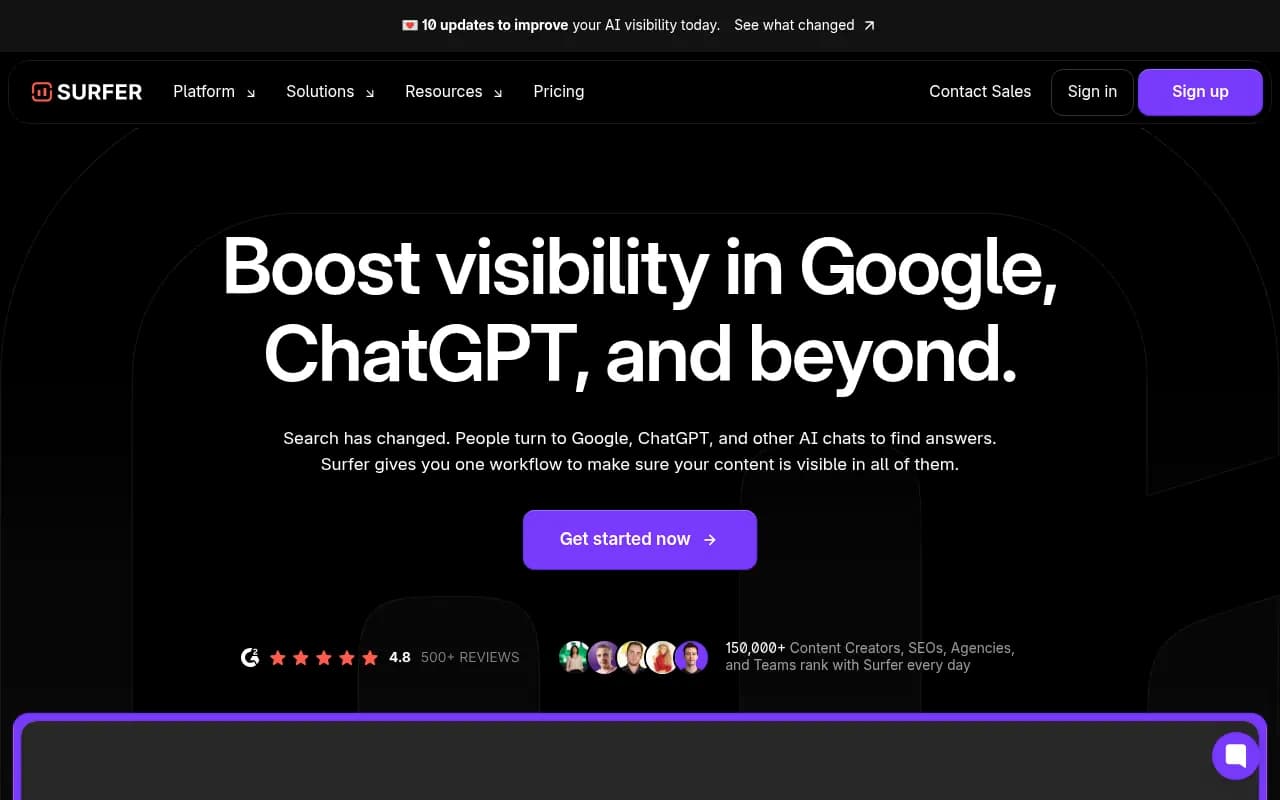
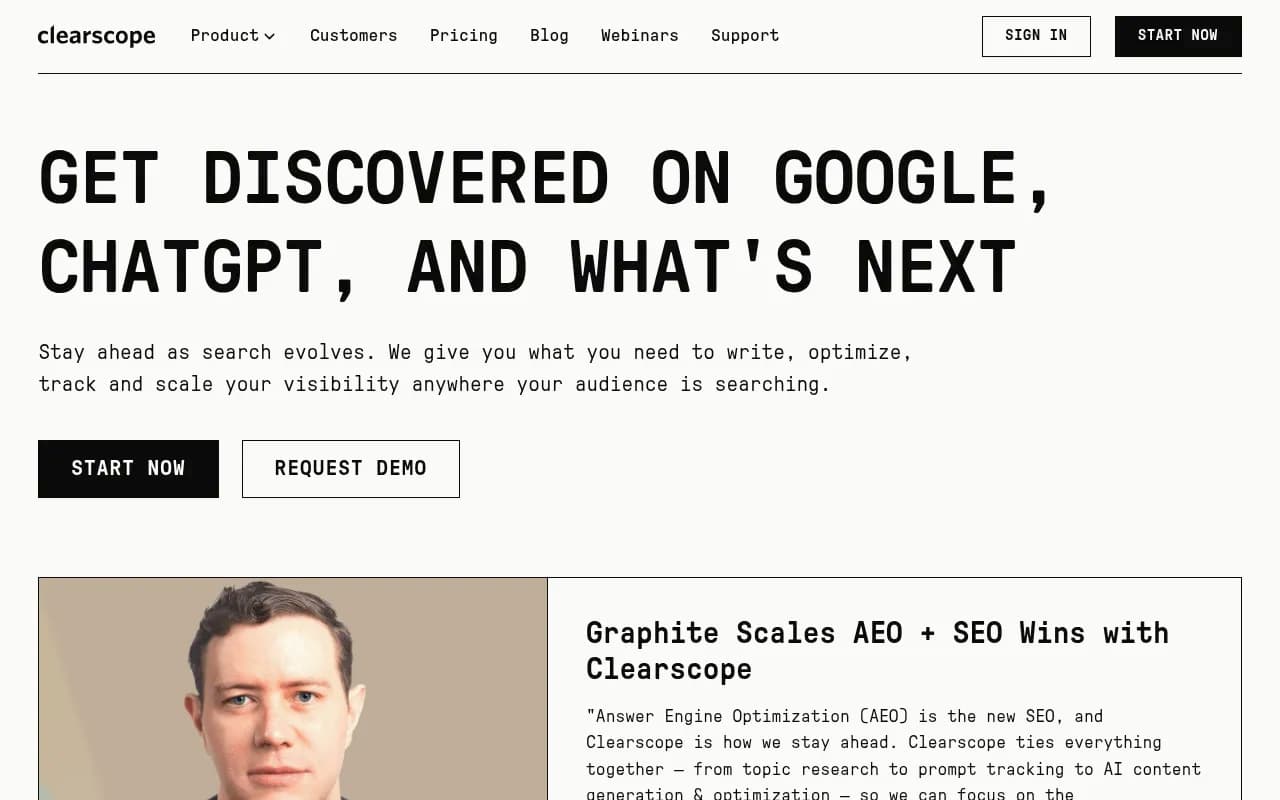
Tools like Surfer SEO and Clearscope sit in a slightly different space -- they're more focused on real-time content scoring and optimization as you write, rather than upfront strategy and planning. If your workflow is more "we know what we're writing, we just want to optimize it well," those tools might be a better fit than either MarketMuse or Frase.
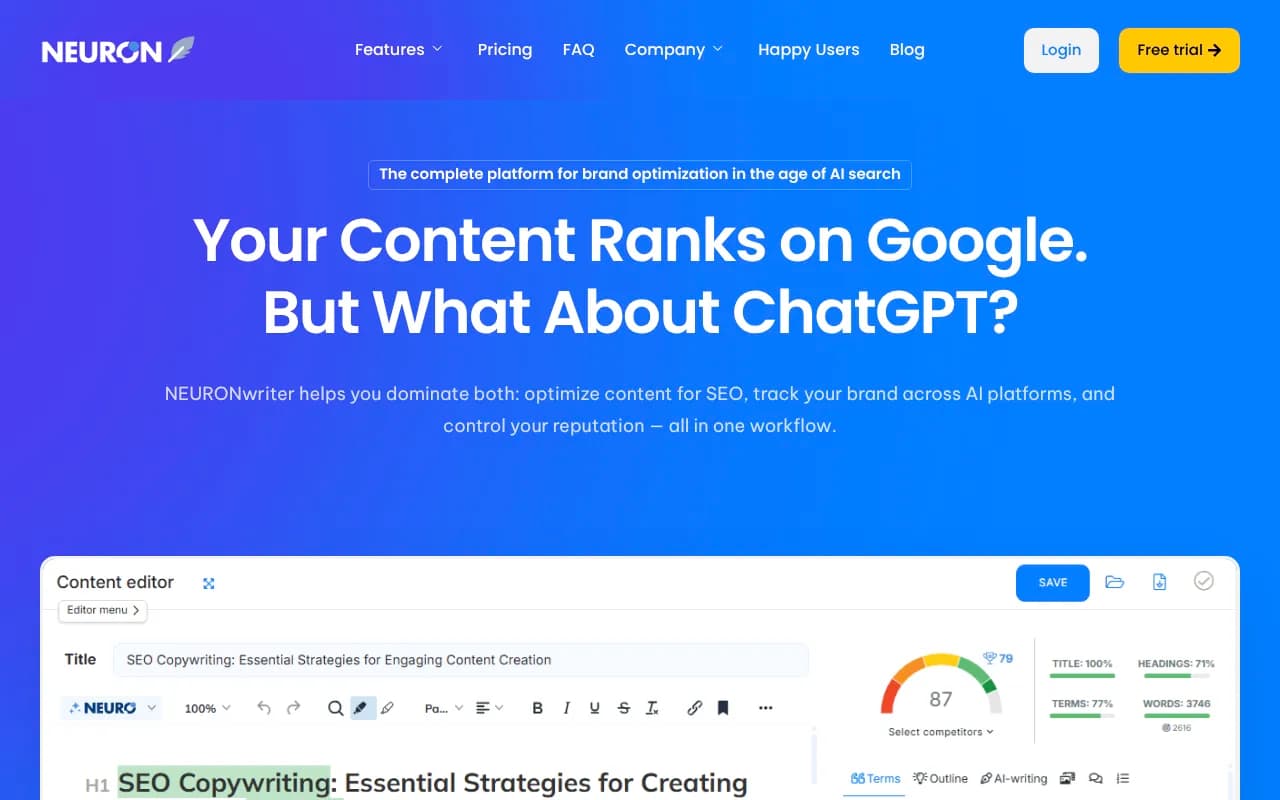
NeuronWriter is worth a mention for budget-conscious teams -- it has a free plan and paid tiers starting around $23/month with solid NLP-based optimization.
The honest verdict
MarketMuse is the more sophisticated tool. Its topic modeling methodology is genuinely differentiated, and for large content operations, the personalized difficulty scores and site-wide inventory are hard to replicate elsewhere.
But Frase is the more practical tool for most teams. It's faster, cheaper, easier to use, and covers the core workflow -- research, brief, write, optimize -- in a way that most content teams can actually adopt and sustain.
The choice isn't really "which is better." It's "which matches where your team is right now." A three-person content team at a startup should probably start with Frase. A 15-person content operation at an established company with thousands of indexed pages should seriously evaluate MarketMuse.
And regardless of which you choose, neither replaces the need to understand how your content is performing in AI search. That's a different problem, and it's growing in importance fast.
Quick decision guide
| Your situation | Recommended tool |
|---|---|
| Small team, tight budget, need briefs fast | Frase |
| Enterprise, thousands of pages, need topical authority strategy | MarketMuse |
| Want real-time optimization while writing | Surfer SEO or Clearscope |
| Need AI search visibility (ChatGPT, Perplexity, etc.) | Promptwatch |
| Budget under $30/month | NeuronWriter |
| Need AI writing + SEO in one tool | Frase |
| Need personalized keyword difficulty by site | MarketMuse |
The content strategy tool category is maturing quickly, and the lines between brief generation, optimization, and AI visibility are starting to blur. For now, MarketMuse and Frase remain distinct enough that the choice between them is fairly clear once you know your team's actual constraints. Pick the one that fits your workflow and budget, then build from there.