Key takeaways
- AI search engines synthesize answers from sources they trust -- your brief needs to engineer for citation, not just ranking
- Answer-first formatting, modular structure, and question-based headings are the three structural non-negotiables in 2026
- A good AI-optimized brief includes prompt data (not just keywords), competitor citation analysis, and explicit E-E-A-T signals
- Content gaps -- prompts your competitors appear for but you don't -- should drive your brief's topic focus
- Tools like Promptwatch can surface the exact prompts and gaps your brief should target before you write a single word
The content brief has always been a planning document. You drop in target keywords, a rough outline, some competitor URLs, maybe a word count. A writer picks it up and produces something. That workflow still works fine for traditional SEO.
But for AI search? It's not enough. Not even close.
When ChatGPT, Perplexity, or Google's AI Overviews generate an answer, they're not scanning a list of blue links and picking the top result. They're pulling from sources they've determined to be authoritative, well-structured, and directly responsive to the user's question. If your content isn't built to be cited, it won't be -- regardless of how well it ranks in traditional search.
Writing a content brief optimized for AI search in 2026 means rethinking what the brief is actually for. It's not a keyword brief anymore. It's a citation engineering document.
Here's how to build one.
Start with prompts, not keywords
The first thing to change is your research input. Traditional briefs start with keyword data -- search volume, difficulty, CPC. That data still has value, but it tells you what people type into Google. It doesn't tell you what they ask AI.
AI queries are conversational, specific, and often multi-part. Someone searching Google might type "best project management software." The same person asking Perplexity might say "What's the best project management tool for a 10-person remote team that already uses Slack and needs Gantt charts?"
Those are different inputs requiring different content.
Your brief should start by identifying the actual prompts your target audience is using in AI tools. This means:
- Mapping out question-format queries, not just head terms
- Identifying how a single topic fans out into sub-questions (what researchers call "query fan-outs")
- Noting which prompts your competitors are already being cited for -- and which ones nobody is answering well
That last point is where the real opportunity lives. If ChatGPT consistently cites a competitor when someone asks a specific question, and your site has nothing on that topic, that's a gap your brief should close.
Promptwatch has an Answer Gap Analysis feature that shows exactly this -- the prompts where competitors appear but you don't, with volume estimates and difficulty scores so you can prioritize which gaps are worth closing first.

Define the AI citation goal, not just the SEO goal
Every brief should have a stated purpose. For traditional SEO, that's usually "rank on page one for [keyword]." For AI search, the goal is different.
Ask: what question should this content answer so completely that an AI model would cite it as the source?
That's a more demanding standard. It forces you to think about:
- What the user actually needs to know, not just what keywords they used
- Whether your content provides a direct, quotable answer early on
- Whether the page covers the topic with enough depth and specificity to be trusted
Write this into the brief explicitly. Something like: "This article should be the definitive answer to [specific question], written so that an AI summarizing this topic would pull from it directly."
That framing changes how writers approach the piece.
Structure the brief around answer-first formatting
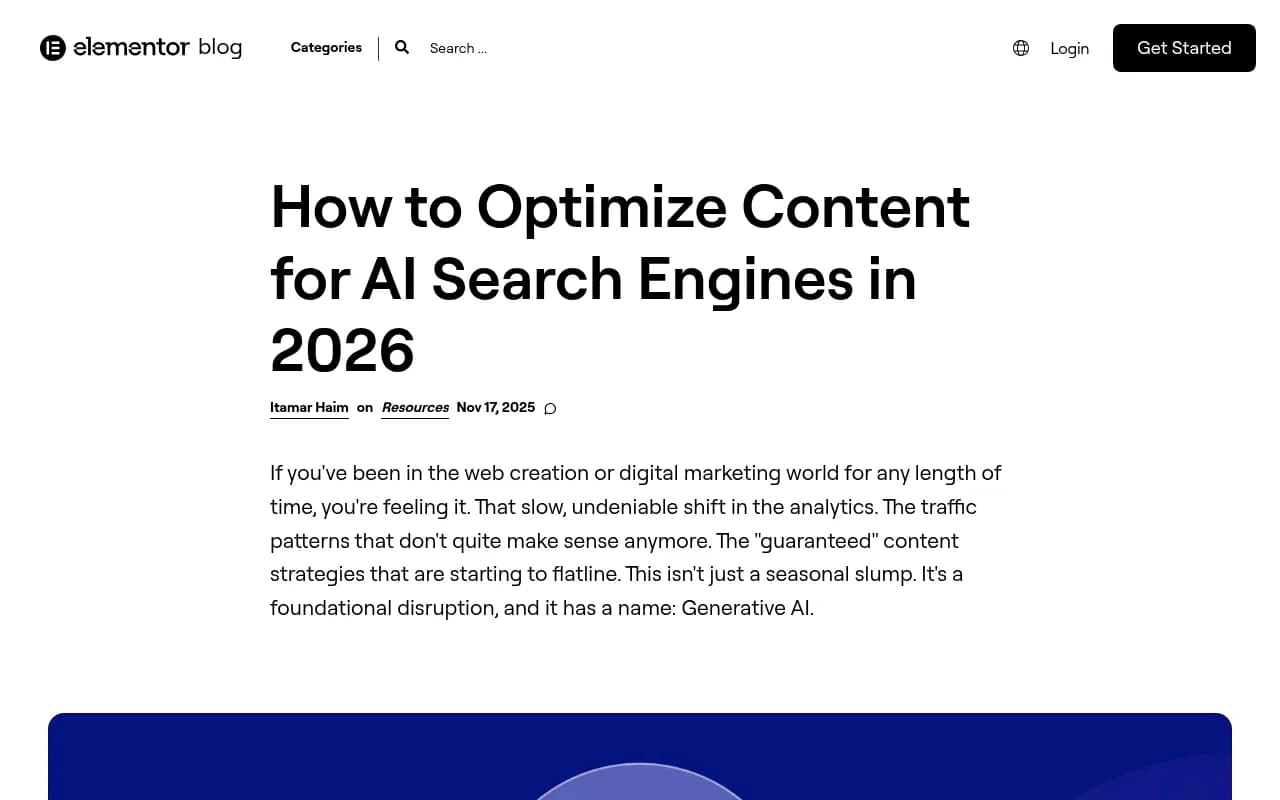
AI models parse content differently than humans browse it. They're looking for direct answers, not narrative build-up. The research from Elementor's 2026 AI search guide puts it plainly: you must write in modular "chunks" or "passages" and use "answer-first" formatting.
What this means for your brief:
Specify the answer-first structure
Tell the writer to lead each section with the direct answer, then support it. Not "In this section, we'll explore why X matters..." but "X matters because [direct answer]. Here's why..."
This mirrors how AI models extract information. They're more likely to cite a passage that opens with a clear, quotable claim than one that buries the answer three paragraphs in.
Map out question-based headings
Google AI Overviews and other AI tools often treat headings as anchors when generating responses. A heading that reads "What is the best way to structure a content brief for AI search?" is more useful to an AI model than "Content brief structure."
Your brief should specify the exact heading questions, not leave them to the writer's discretion. Think about how a real person would phrase the question in ChatGPT or Perplexity, then use that as the heading.
Break content into self-contained modules
Each section of the article should be able to stand alone as an answer. AI models don't always cite entire articles -- they often pull a specific passage. If your content is written as one long flowing narrative, it's harder to extract. If each section is a discrete, self-contained answer to a specific question, it's much easier for an AI to cite cleanly.
Specify in the brief: "Each H2 section should be independently readable and answer its heading question completely within 150-300 words."
Include competitor citation analysis
A traditional brief might include "top 5 ranking URLs to analyze." An AI-optimized brief needs something different: which sources are AI models currently citing for this topic?
This is not the same as who ranks on Google. Reddit threads, YouTube videos, third-party review sites, and niche publications often get cited heavily in AI responses even when they don't rank particularly well in traditional search.
Your brief should document:
- Which domains are being cited when AI models answer the target prompt
- What format those cited sources use (listicle, how-to, comparison, FAQ)
- What specific claims or data points appear in the AI-generated answers
- What's missing from existing cited sources that your content could provide
That last point is the brief's competitive angle. If every cited source covers the basics but nobody has addressed a specific nuance or use case, that's your opening.
Specify E-E-A-T signals explicitly
Experience, Expertise, Authoritativeness, and Trustworthiness (E-E-A-T) aren't just Google quality guidelines anymore. AI models weight these signals heavily when deciding what to cite.
Your brief should explicitly instruct the writer on how to demonstrate each one:
- Experience: Include first-person observations, specific examples, or case data. Not "some companies have found..." but "when we tested this with a 50-person team..."
- Expertise: Reference credentials, methodology, or specific technical knowledge. Vague claims don't help.
- Authoritativeness: Cite named sources with specific claims. "A 2025 Gartner report found that traditional search volume will drop 25% by 2026" beats "industry reports suggest search is declining."
- Trustworthiness: Acknowledge limitations, edge cases, and situations where the advice doesn't apply. Overconfident content reads as promotional to both humans and AI models.
Write these into the brief as explicit requirements, not suggestions.
Add schema markup instructions
This is one most content briefs skip entirely, but it matters for AI search. Schema markup helps AI models understand what type of content a page contains and how to interpret it.
For AI-optimized content, your brief should specify:
- FAQ schema for any question-and-answer sections
- HowTo schema for step-by-step guides
- Article schema with author information for E-E-A-T signals
- Speakable schema if the content is likely to be read aloud by voice assistants
You don't need to write the schema yourself in the brief -- just flag which sections warrant it and let your technical team implement it. But if you don't flag it in the brief, it won't happen.
Include brand voice and citation-friendly language guidelines
AI models tend to cite content that makes clear, specific, attributable claims. Vague, hedged writing is harder to cite usefully.
Your brief should include language guidelines like:
- Use specific numbers and data points wherever possible
- Make direct claims rather than hedging with "it could be argued that" or "some experts believe"
- Write sentences that could be pulled out of context and still make sense
- Avoid filler transitions that add length without adding information
This isn't about writing for robots -- it's about writing clearly. The same qualities that make content easy for AI to cite also make it more useful for human readers.
Define the content format based on prompt type
Not every prompt calls for the same content format. Your brief should match the format to the type of question being answered.
| Prompt type | Best format | Why it works for AI |
|---|---|---|
| "What is X?" | Definition + explainer | AI models pull definitional passages frequently |
| "How do I X?" | Step-by-step guide with numbered sections | Structured steps are easy to extract and cite |
| "Best X for Y" | Comparison listicle with clear criteria | AI shopping and recommendation responses favor structured lists |
| "X vs Y" | Side-by-side comparison with verdict | Comparative prompts need clear conclusions, not just feature lists |
| "Why does X happen?" | Explanation with cause-and-effect structure | AI models cite explanatory content for informational queries |
| "Should I X?" | Decision framework with clear recommendation | Advice-format content works well for nuanced queries |
Specifying the format in the brief prevents writers from defaulting to a generic blog post structure when a different format would perform better.
Tools that support AI-optimized brief creation
Several tools can help you build better briefs for AI search, depending on where you need the most support.
For content optimization and brief building:
For AI visibility tracking and gap analysis (to inform what the brief should target):


A quick comparison of what each type of tool contributes to the brief-writing process:
| Tool type | What it adds to your brief | Limitation |
|---|---|---|
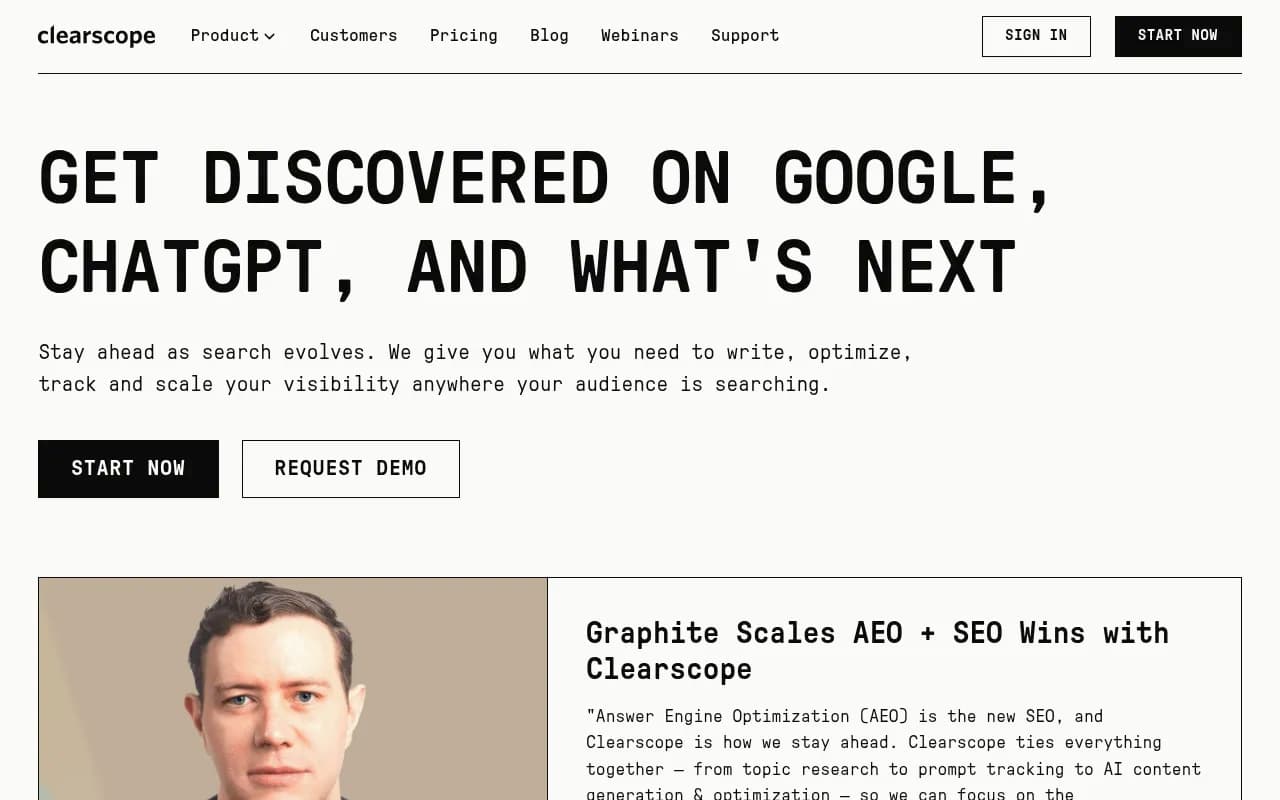
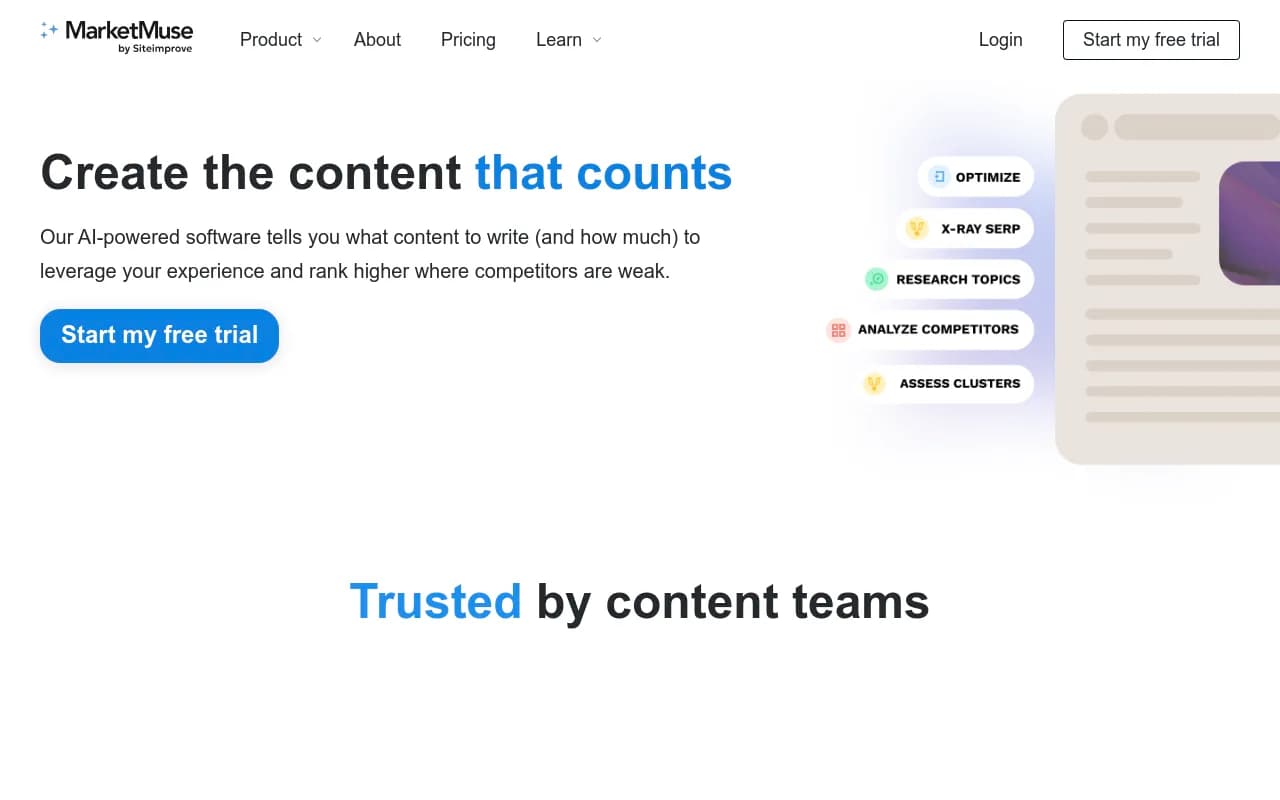
| Content optimization (Clearscope, MarketMuse) | Semantic coverage, related terms, content score | Focused on traditional search, not AI citation patterns |
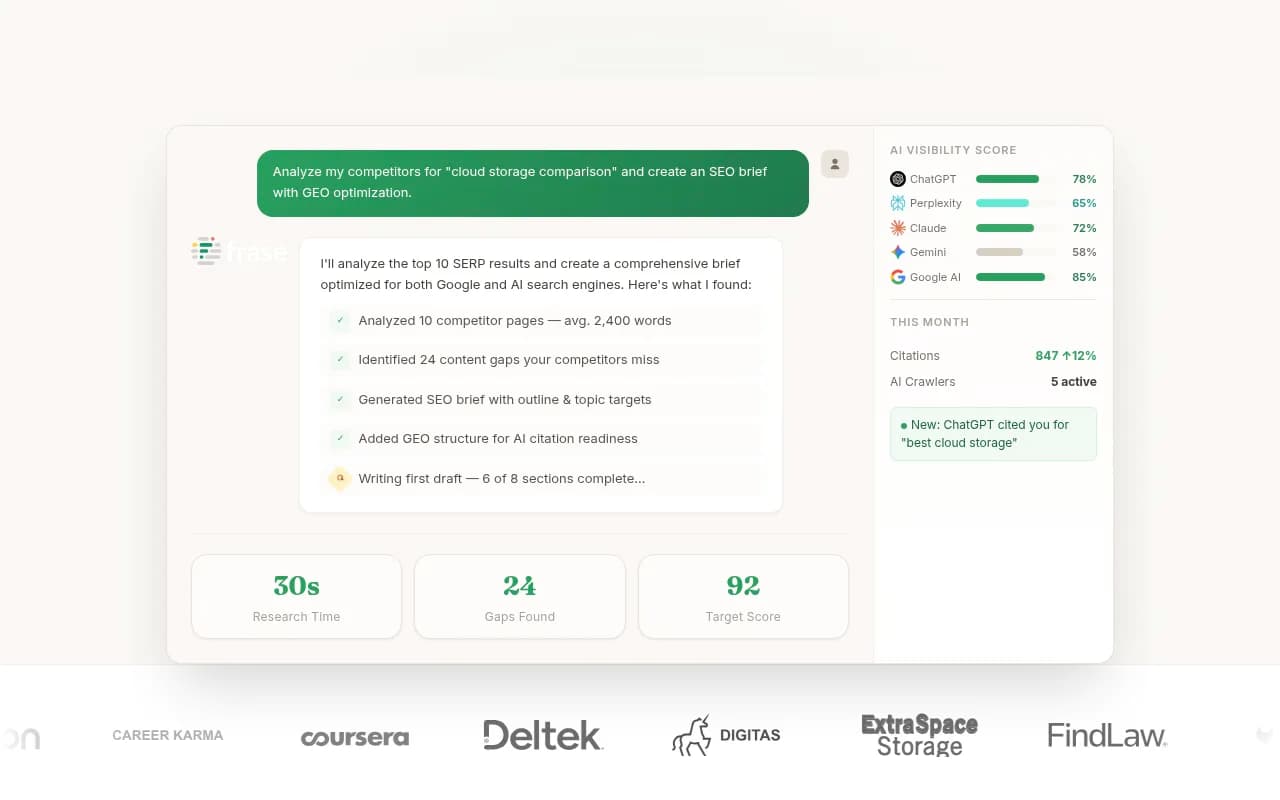
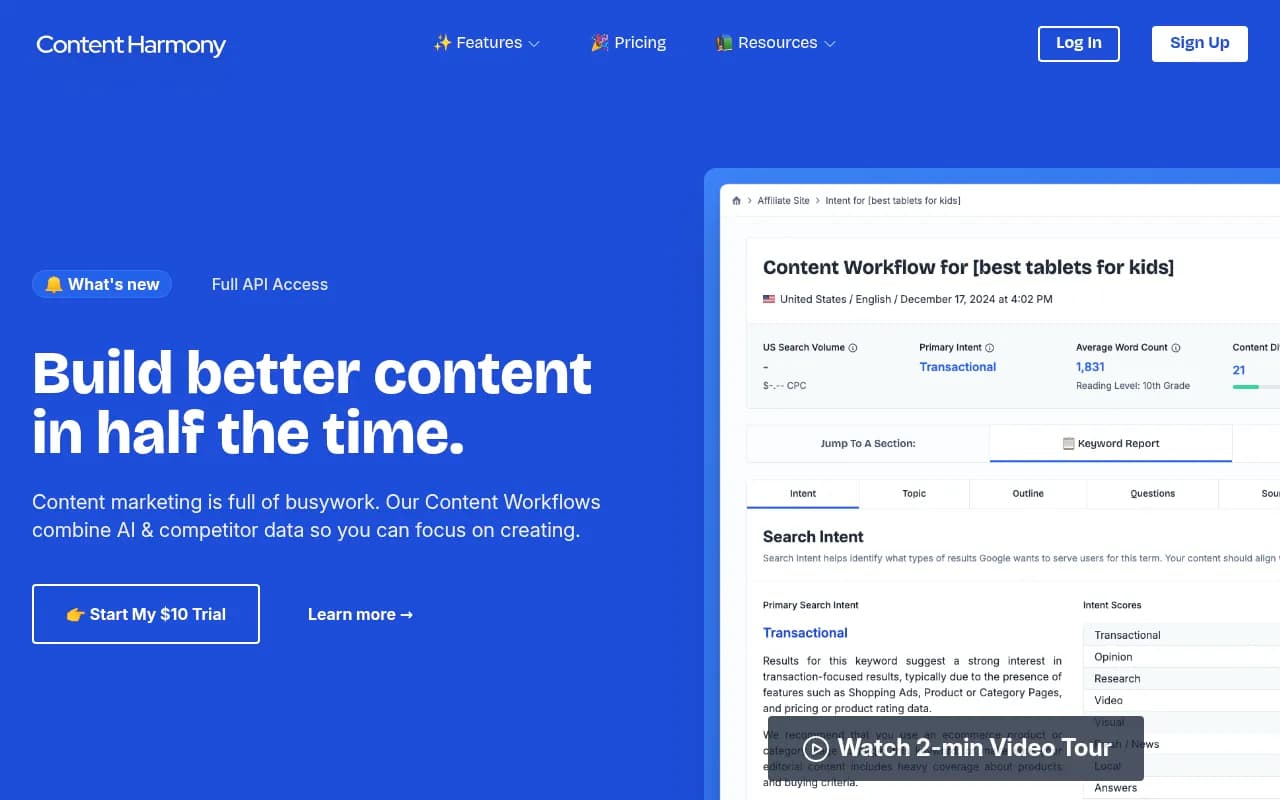
| Content brief builders (Content Harmony, Frase) | Competitor analysis, outline suggestions, SERP data | May not account for AI-specific formatting needs |
| AI visibility platforms (Promptwatch, Profound) | Prompt data, citation gaps, competitor AI visibility | Newer category -- varies in depth of content guidance |
The honest answer is that no single tool does everything yet. The most effective workflow combines prompt and gap data from an AI visibility platform with the structural guidance from a content optimization tool.
What a complete AI-optimized brief looks like
Pulling it all together, here's what your brief should contain that a traditional SEO brief probably doesn't:
- The specific prompt(s) the content should answer (not just target keywords)
- Which AI models are currently answering this prompt and what they say
- Which domains are being cited and what's missing from their coverage
- The citation goal: what claim or answer should AI models pull from this piece?
- Answer-first formatting instructions for each section
- Exact question-based headings (written as a user would ask them in ChatGPT)
- E-E-A-T requirements: what experience, data, or credentials to include
- Schema markup flags for technical implementation
- Language guidelines emphasizing specific, attributable claims
- Content format matched to the prompt type
That's a more detailed brief than most teams are used to writing. But the payoff is content that doesn't just rank -- it gets cited. In 2026, that's the difference between being visible in AI search and being invisible to it.
The teams getting this right aren't writing more content. They're writing more targeted content, built around the exact gaps AI models are already exposing. The brief is where that targeting happens.